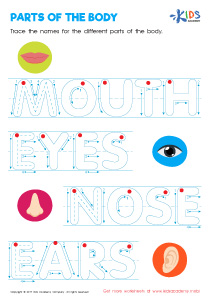
Physical Science Worksheets for Ages 6-8
3 filtered results
-
From - To
Discover our engaging Physical Science Worksheets designed specifically for children aged 6-8! Spark curiosity with fun activities that explore the wonders of the natural world. Our worksheets cover essential topics like matter, energy, and simple physical principles through interactive exercises, colorful illustrations, and real-life examples. Perfect for reinforcing classroom learning or homeschooling, these printable resources not only enhance your child's understanding of physical science but also promote critical thinking and problem-solving skills. Whether you're preparing for a science project or enriching daily learning, our comprehensive collection is tailored to inspire and educate young minds about the exciting world around them!
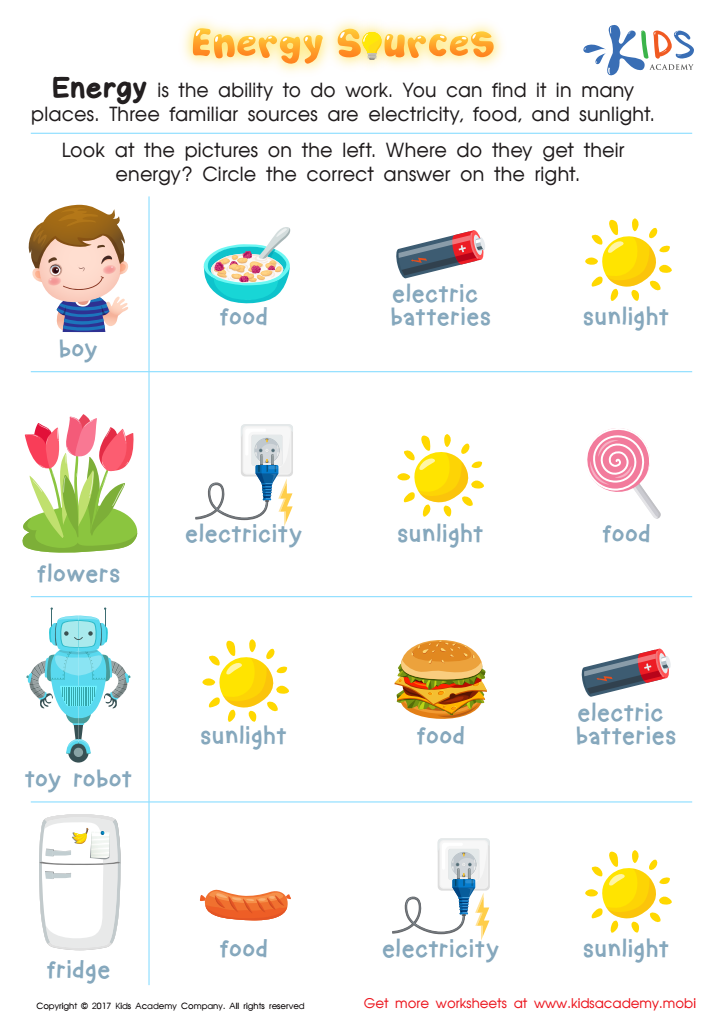
Energy Sources Printable
 Assign to My Students
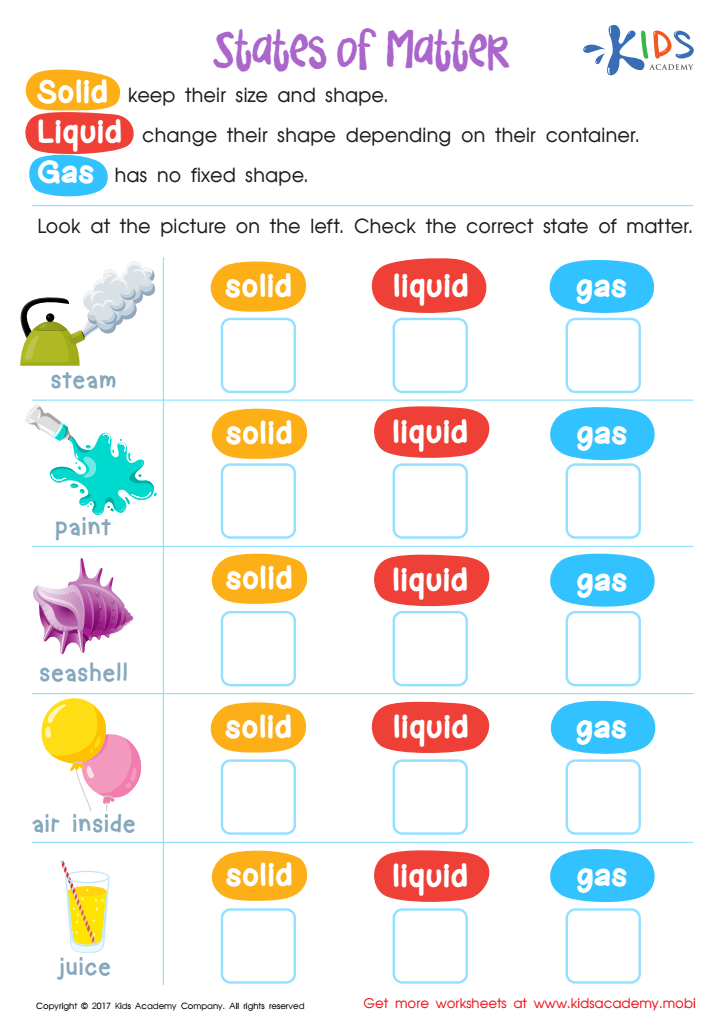
Physical Science: States of Matter Worksheet
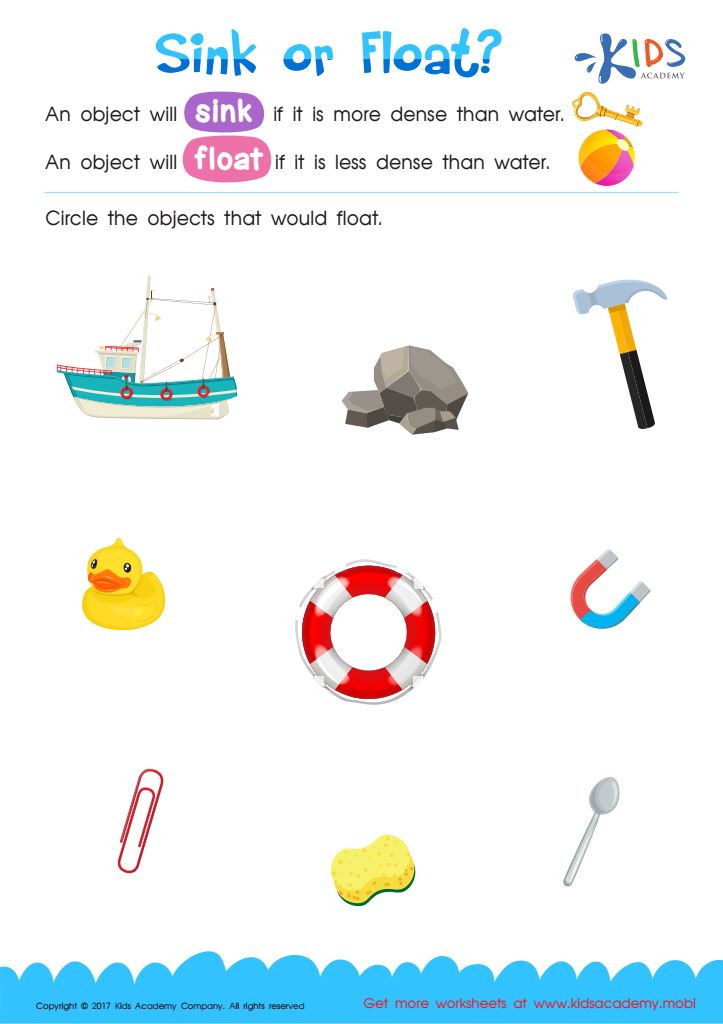
Sink or Float Printable






Parents and teachers should care about Physical Science for ages 6-8 because it lays the foundation for critical thinking and curiosity about the world. At this age, children are naturally inquisitive, exploring their surroundings and asking questions about how things work. Engaging with fundamental concepts in physics and chemistry not only satisfies their curiosity but also enhances their understanding of everyday phenomena.
Learning Physical Science encourages problem-solving skills as children experiment, make predictions, and observe outcomes. Activities like mixing substances or constructing simple machines foster hands-on experiences that reinforce theoretical knowledge. Furthermore, integrating Physical Science into their education helps children build a vocabulary rich in scientific concepts, promoting effective communication of their ideas.
Additionally, early exposure to science cultivates a sense of wonder about technology and the environment, steering young minds toward future interests in STEM fields. It helps children make connections between science and real-life situations, leading to informed decision-making as they grow. When parents and teachers actively support Physical Science education, they nurture lifelong learners who will approach challenges with resilience and creativity, ultimately contributing to a more scientifically literate society.