Missing Letters Worksheets for Ages 7-8
4 filtered results
-
From - To
Enhance your child's reading and writing skills with our engaging Missing Letters Worksheets, designed specifically for children ages 7-8. These worksheets provide interactive activities that challenge students to identify and fill in missing letters in words, improving their understanding of the alphabet and phonics. By practicing letter recognition and comprehension, kids will develop essential language skills while having fun. Our visually appealing worksheets are easy to use and suitable for both classroom and at-home learning. Give your child a head start in literacy with these effective resources that make learning enjoyable and rewarding! Download and can start printing today!
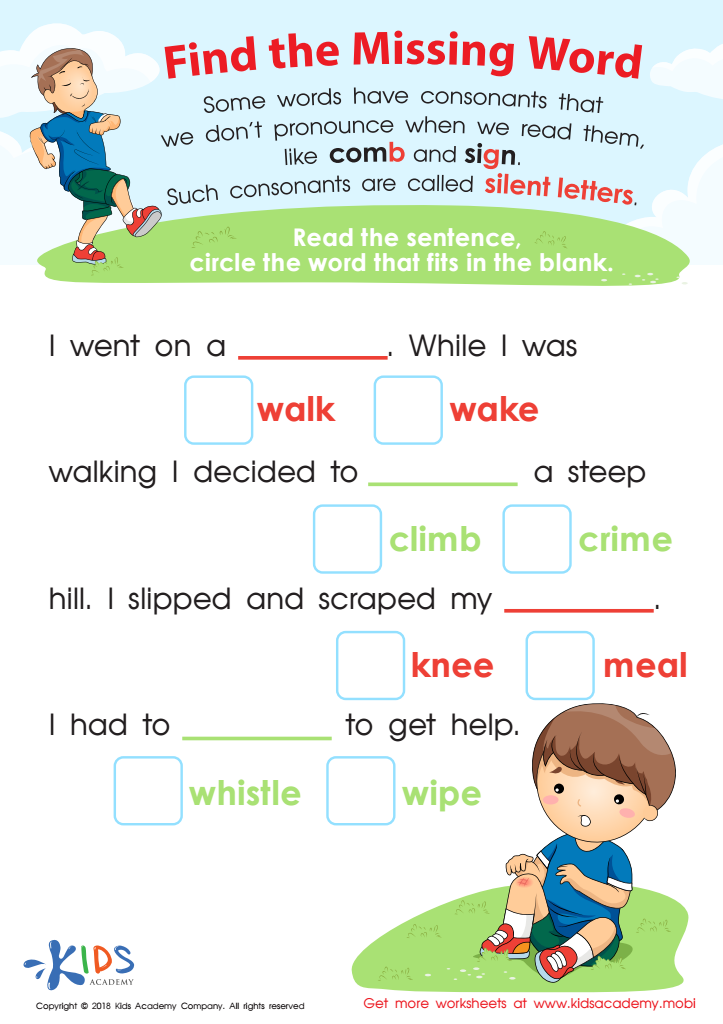
Find The Missing Word Worksheet
 Assign to My Students
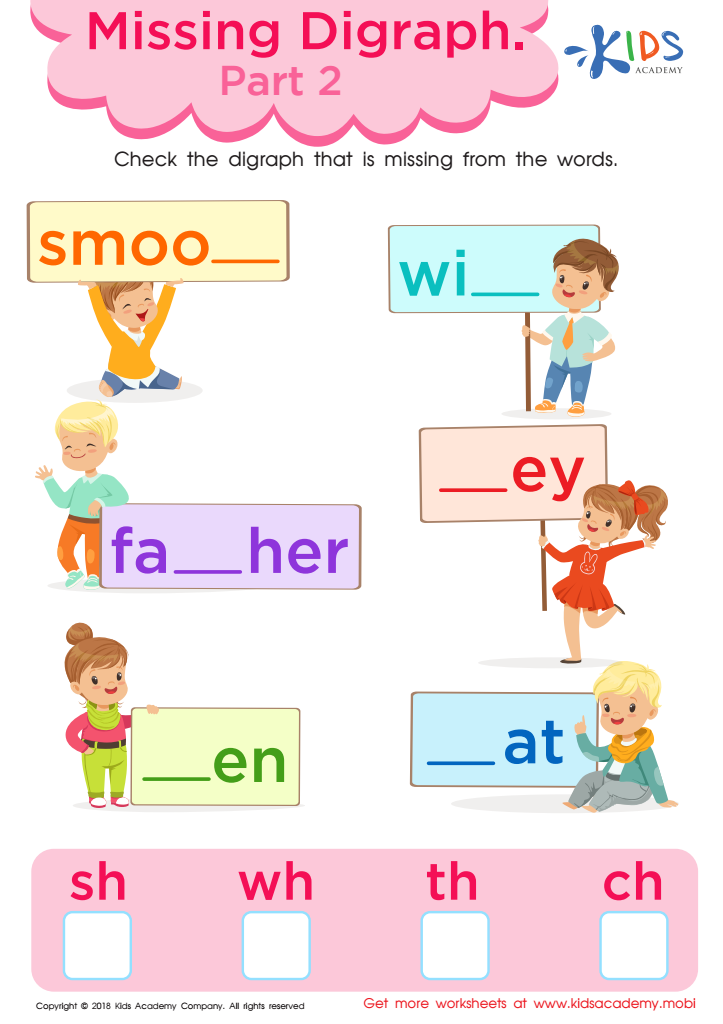
Missing Digraph: Part 2 Worksheet
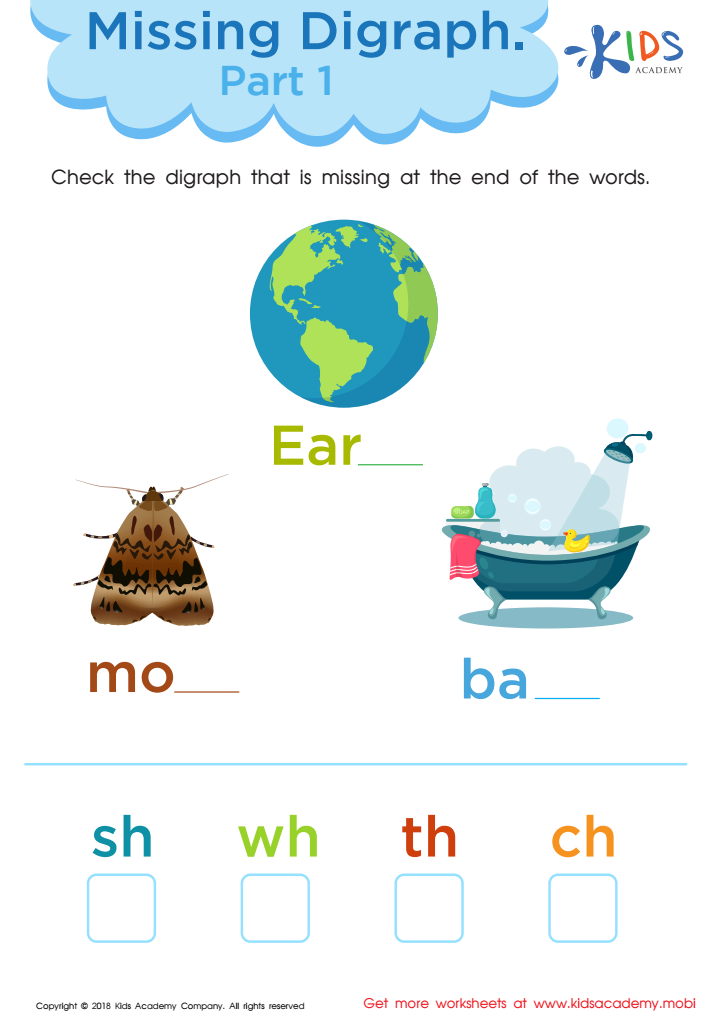
Missing Digraph: Part 1 Worksheet
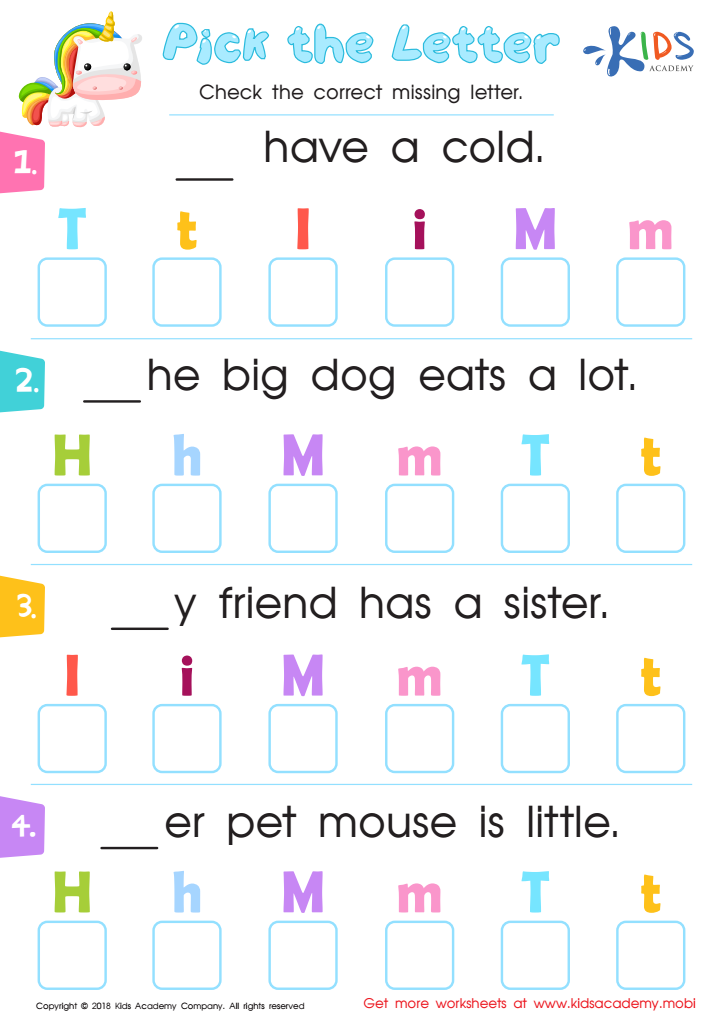
Pick the Letter Worksheet



Missing Letters is an essential tool for children aged 7-8, as it addresses fundamental aspects of literacy development. At this stage, children are typically refining their reading and writing skills, and understanding the connections between sounds and letters is crucial. Missing Letters activities effectively engage students in phonemic awareness, helping them recognize letter patterns and enhance their vocabulary, thereby laying a strong foundation for future literacy learning.
By incorporating Missing Letters into the curriculum, teachers and parents can create a supportive environment for practicing language skills in a fun and interactive manner. Engagement is key at this age, and these activities encourage participation through creative games and challenges, catering to diverse learning styles. Furthermore, they help to boost children's confidence as they successfully identify and fill in missing letters, reinforcing their understanding of language structure.
Ultimately, fostering strong literacy skills in early education enriches children’s overall academic experience. It enhances their ability to communicate effectively and develop critical thinking skills necessary for lifelong learning. By emphasizing the significance of Missing Letters, parents and teachers can collectively nurture confident and competent readers and writers, setting the stage for academic success.







