Filters

5 filtered results

Clear all filters
Favorites
With answer key
Interactive

5 filtered results

Difficulty Level

Grade


Explore the wonders of the human body with our engaging "5 Senses Worksheets" designed specifically for ages 8-9! These interactive worksheets provide a fun and educational way for young learners to understand sight, hearing, taste, touch, and smell. Through captivating activities such as word searches, matching exercises, and drawing prompts, children will enhance their comprehension of how the senses function and their importance in everyday life. Perfect for both classroom use and at-home learning, these resources foster curiosity and critical thinking. Dive into sensory adventures today and make learning about the five senses an exciting experience!

Check out this FREE Trial Lesson on The 5 Senses for age 8-9!

Observing Properties

Favorites
With answer key
Interactive
  • 8-9
  • Interactive
  • The 5 Senses
Matter: Assessment 1 Worksheet

Matter: Assessment 1 Worksheet

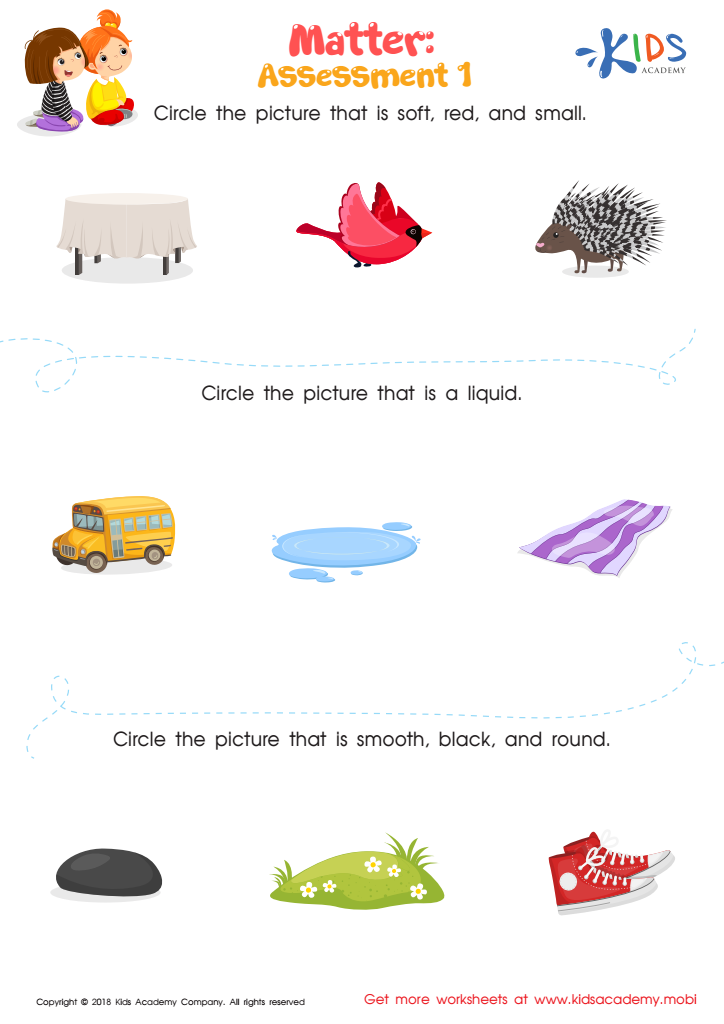
Have your children learn that anything that has weight and takes up space is matter. Examples include buses, tables, people, animals, and more. Use this worksheet to help them identify the objects and circle the soft, red, and small one; the liquid; and the smooth, black, and round one.
Matter: Assessment 1 Worksheet
Worksheet
States of Matter: Freezing and Melting Worksheet

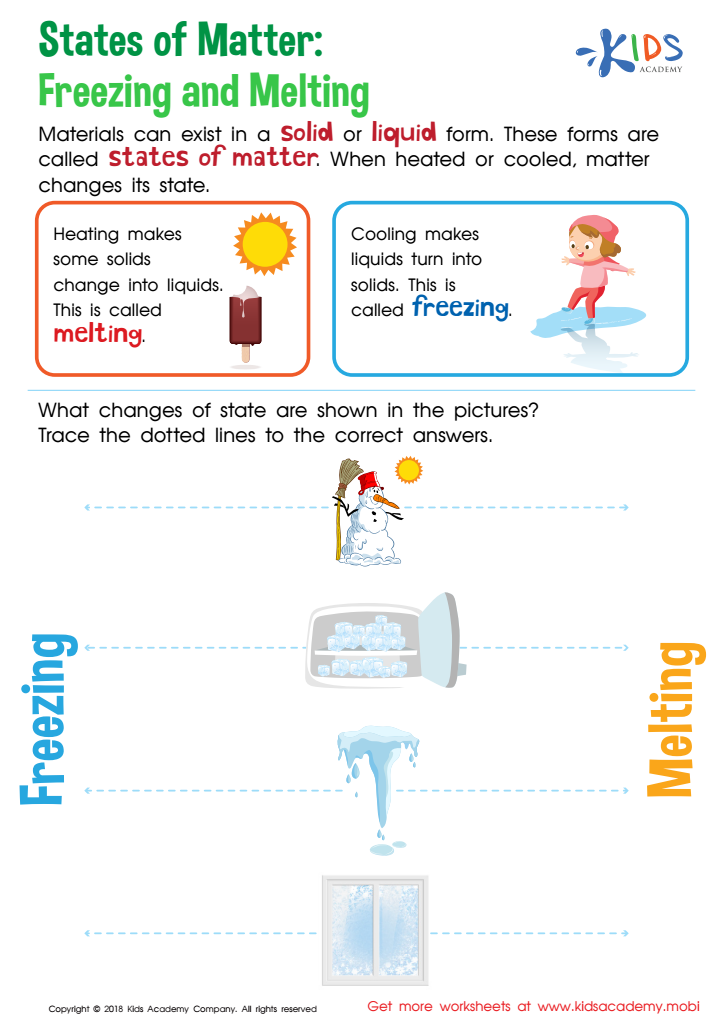
States of Matter: Freezing and Melting Worksheet

Have students look through the pics in the worksheet. Ask them what changes of state are shown, then trace the lines to the right answers. Matter can come in liquid or solid form, and changes between the two when heated or cooled (melting/freezing).
States of Matter: Freezing and Melting Worksheet
Worksheet
Matter all Around Worksheet

Matter all Around Worksheet

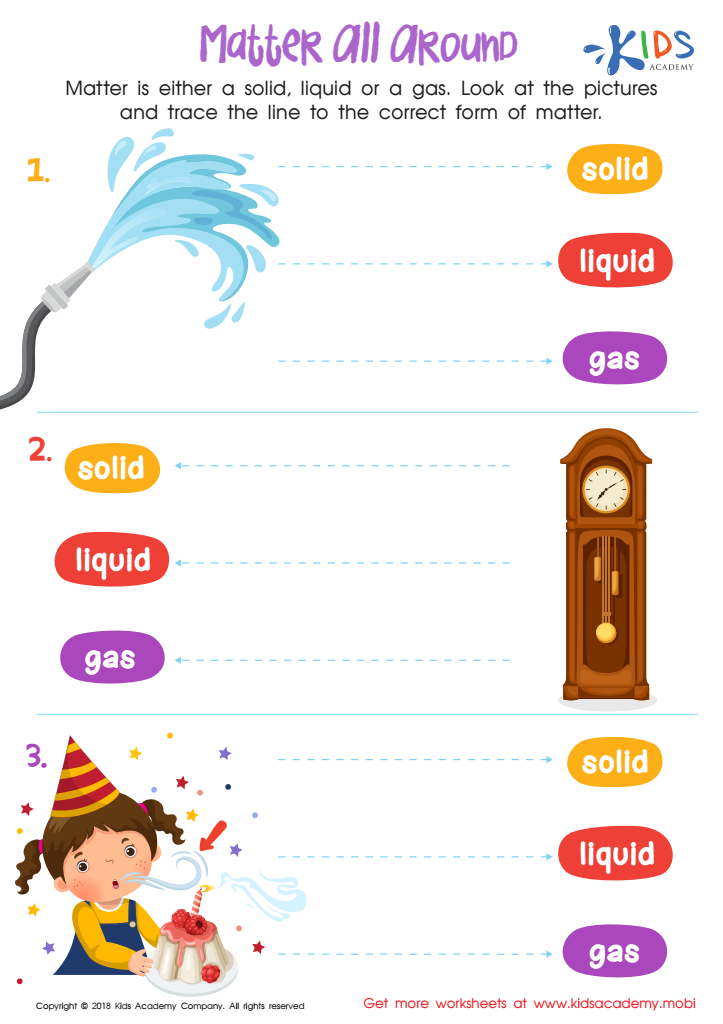
Have you taught your students about matter? Use this worksheet to help them understand that matter is anything that has weight and takes up space, either as a solid, liquid, or gas. Guide them to trace the line to the correct form of matter as they look at the pictures. This will be easy if they already know the topic, but it's also a great opportunity to teach them.
Matter all Around Worksheet
Worksheet
Observing Properties Worksheet

Observing Properties Worksheet

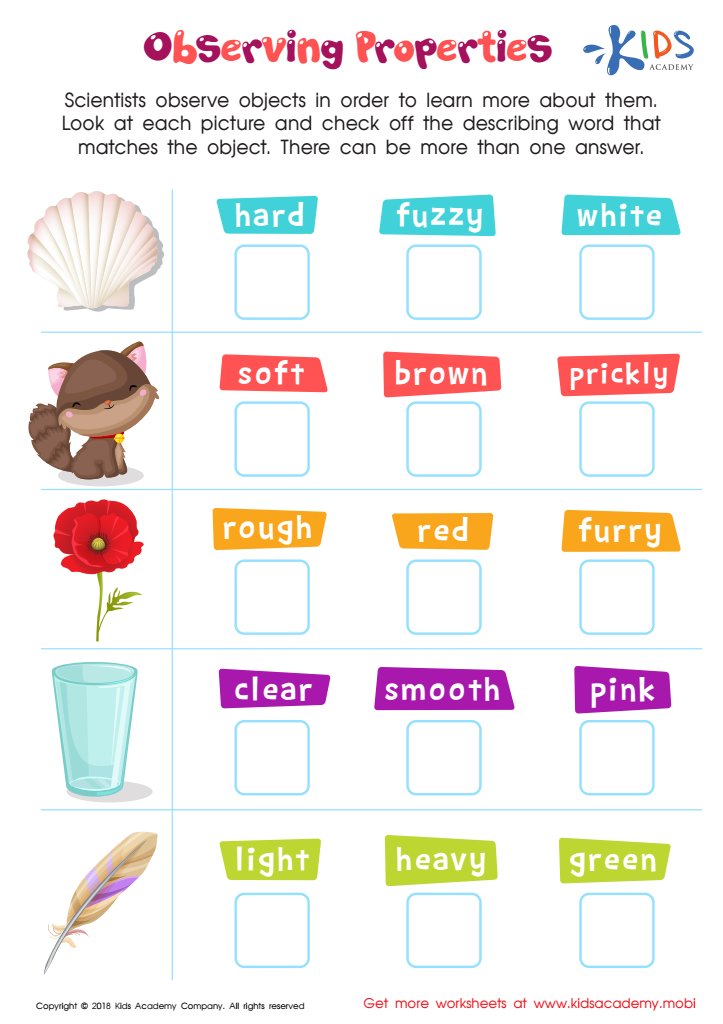
Encourage your kid's interest in science with this fun worksheet! Let them identify the five objects on the left, then choose the most accurate word from the options on the right. There might be more than one answer, so remind them to take their time observing the objects.
Observing Properties Worksheet
Worksheet
How We Taste Foods Worksheet


How We Taste Foods Worksheet

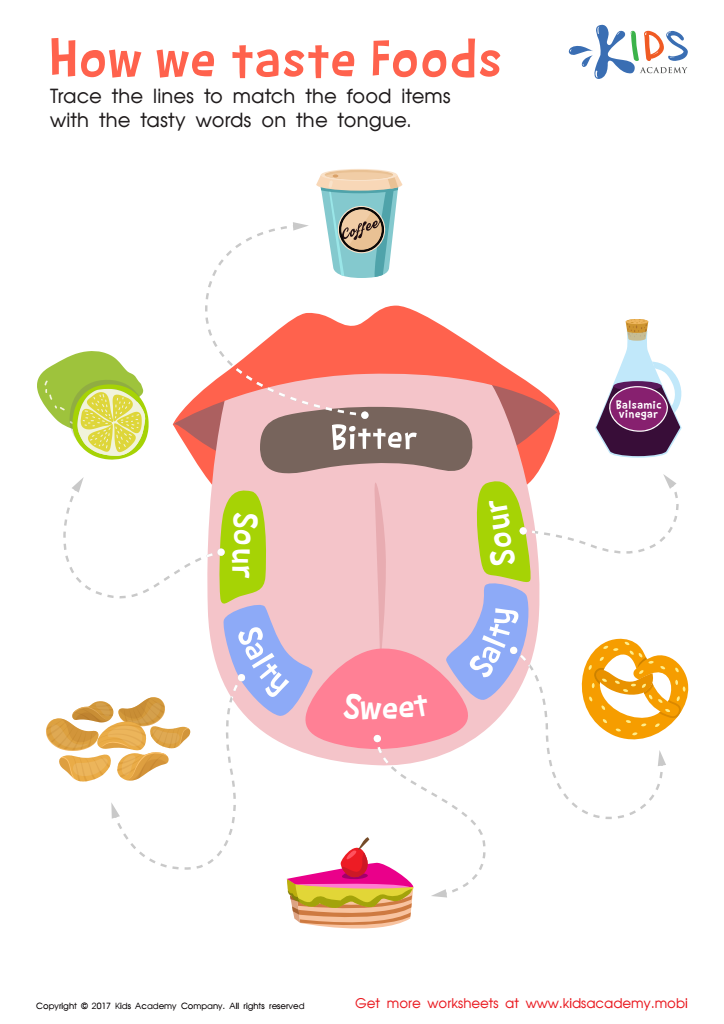
Learning sensory language is key for kids to express themselves and gain new words to explain their perceptions. This worksheet helps them learn the tastes that their tongue can perceive. It's important since kids lack the words to describe complex senses and introduces new vocabulary. For a fun review, have a snack and ask them to identify the tastes and determine if it's sweet, salty, bitter, or sour.
How We Taste Foods Worksheet
Worksheet


Understanding the five senses—sight, sound, touch, taste, and smell—is crucial for children aged 8 to 9 as it enhances their learning and daily experiences. At this age, children are naturally curious and eager to explore the world around them. By emphasizing the importance of the five senses, parents and teachers can help children develop critical thinking and observational skills that are foundational for scientific inquiry.

Incorporating sensory experiences into education enriches a child's learning environment. Lessons that include hands-on activities engage multiple senses, making concepts more relatable and memorable. For example, learning about plants can be vastly improved through touching leaves or smelling flowers.

Moreover, engaging the senses can aid in emotional and social development. Discussions about how different sounds, sights, or tastes make them feel fosters emotional intelligence and encourages communication among peers.

By nurturing a deeper understanding of their senses, parents and teachers guide children toward becoming more empathetic and aware individuals. Thus, caring about the five senses not only enriches academic success but also supports overall growth and well-being in children as they navigate their evolving world.