Common Core State Standards online worksheets - Page 14
1451 filtered results
Difficulty Level
Grade
Age
-
From - To
Subject
Activity
Standards
Favorites
With answer key
Interactive
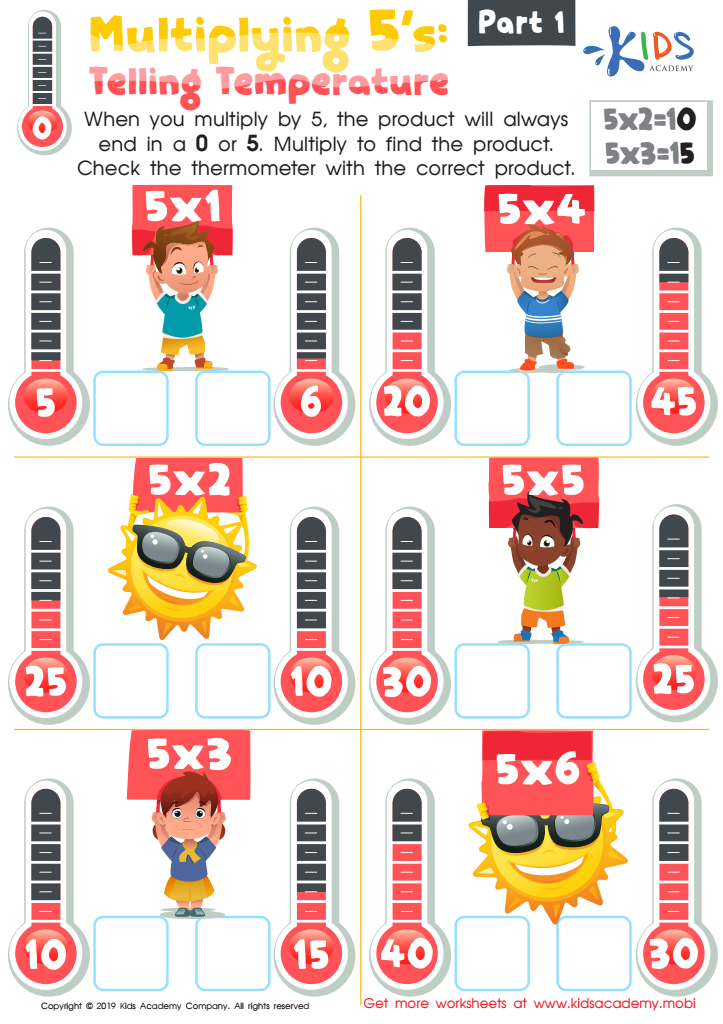
Multiplying 5’s: Telling Temperature Worksheet
To help your child learn their times tables, here's two tips. When multiplying by 10s, the product always ends in a 0. When multiplying by 5s, the product will end in either 0 or 5. Have a look at the problems in this worksheet, help them find the product and check the thermometer to verify the answer.
 Assign to My Students
Multiplying 5’s: Telling Temperature Worksheet
Worksheet
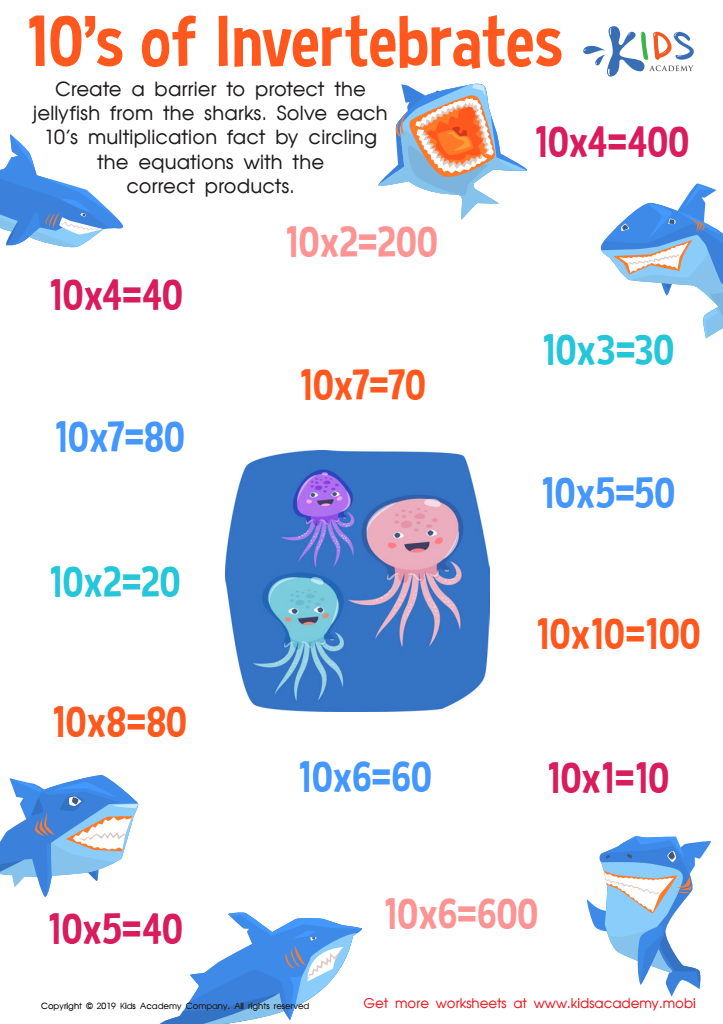
1s Invertebrates Worksheet
Invertebrates are animals without backbones, like squids, octopi, and jellyfish. Point to the jellyfish in the pic and have your kids create a barrier to protect it from the sharks. Ask them to solve 10's multiplication facts by circling the equations with the correct products.
1s Invertebrates Worksheet
Worksheet
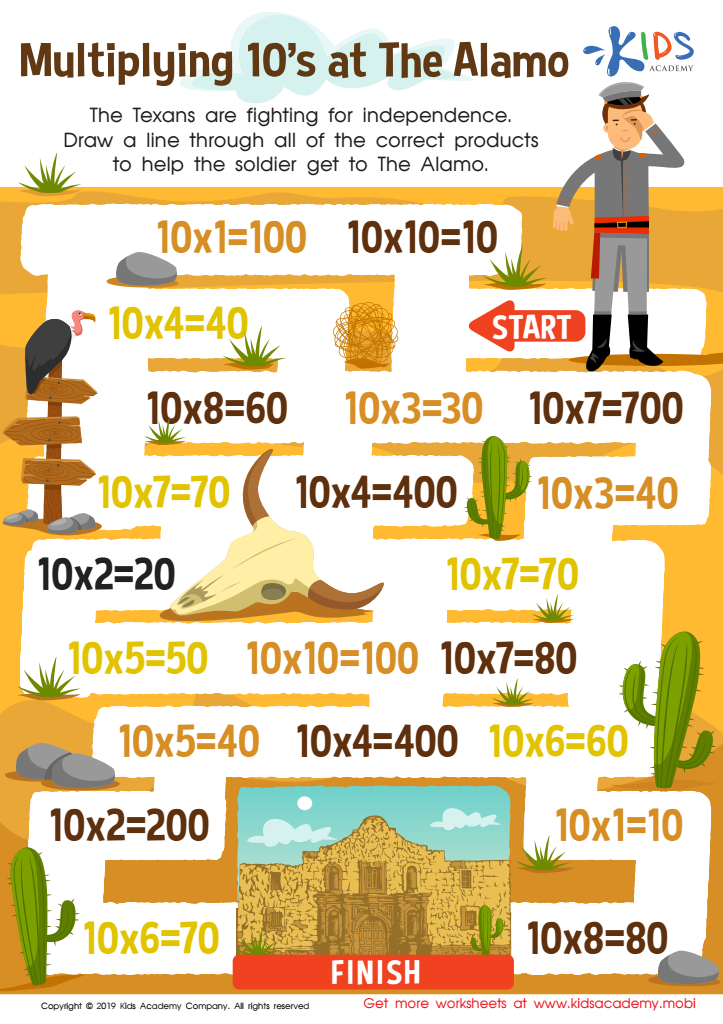
Multiplying 10’s at The Alamo Worksheet
Teach your kids easy tricks to simplify any multiplication problem. For example, when multiplying any number by 10, the result will always end in a zero. To help the Texans in this worksheet, draw a line through all of the correct products to get them to The Alamo.
Multiplying 10’s at The Alamo Worksheet
Worksheet
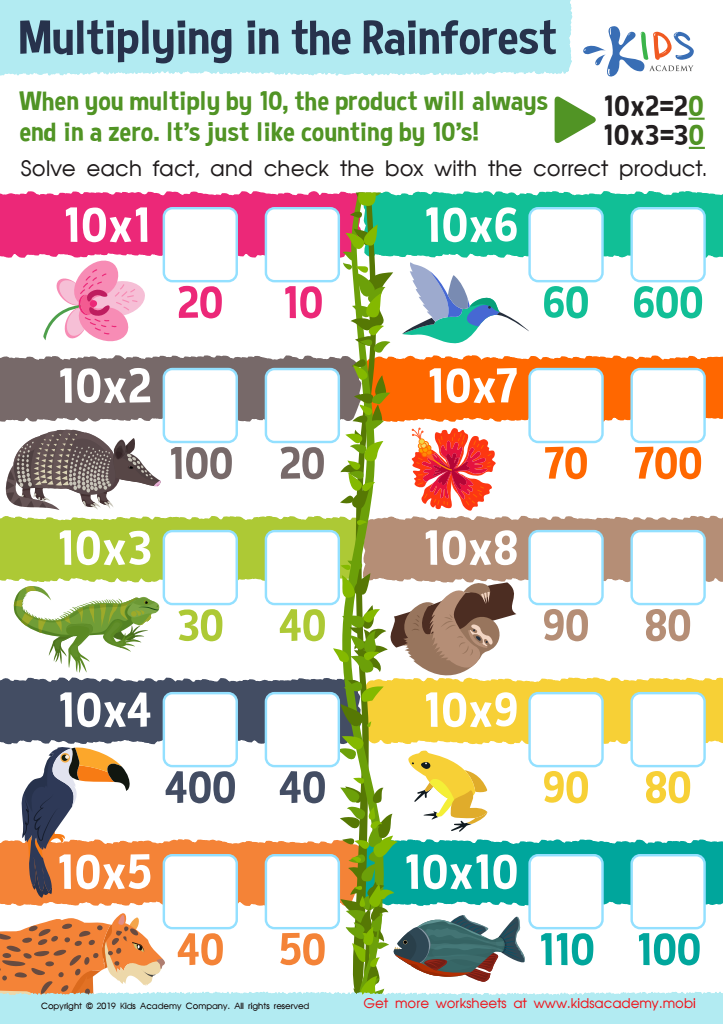
Multiplying in the Rainforest Worksheet
Teaching your child multiplication can be tricky. Help them out with some easy tips! Teach them that when multiplying by 10, the answer always ends in 0. Just like counting by 10's. Show them examples and encourage them to solve the facts, checking their answer with the correct product.
Multiplying in the Rainforest Worksheet
Worksheet
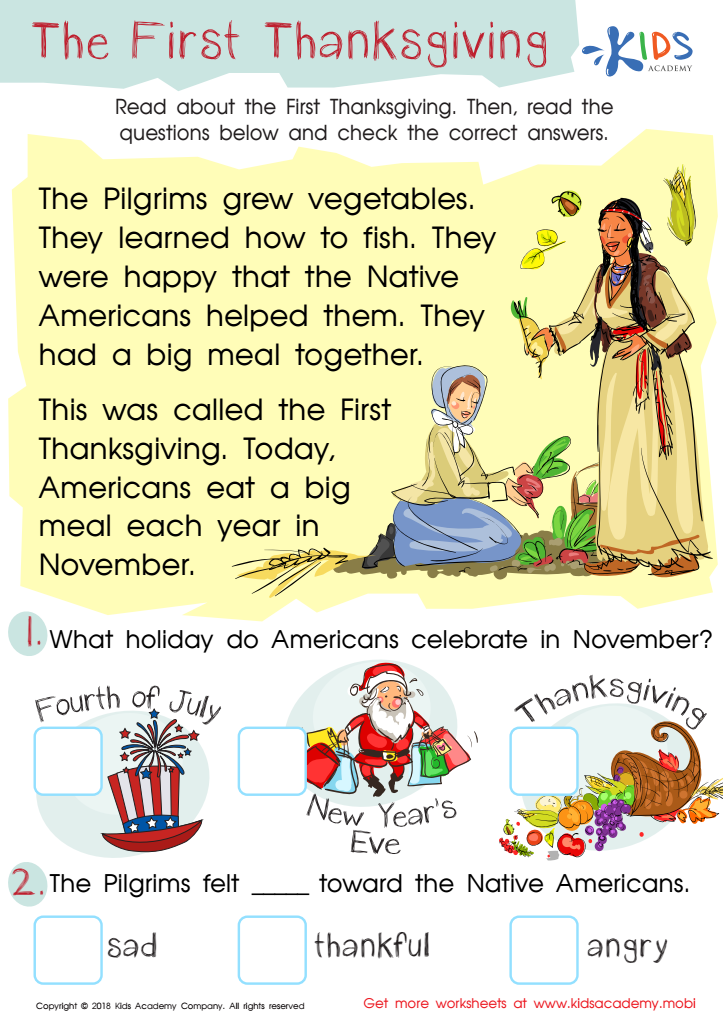
Assessment: First Thanksgiving Worksheet
When the Pilgrims arrived in America in 1620, they met the Native Americans and formed a pact to live in harmony. The Native Americans taught the Pilgrims how to survive in the new land, which helped them celebrate the First Thanksgiving. Read this text to your children and help them answer the questions below.
Assessment: First Thanksgiving Worksheet
Worksheet
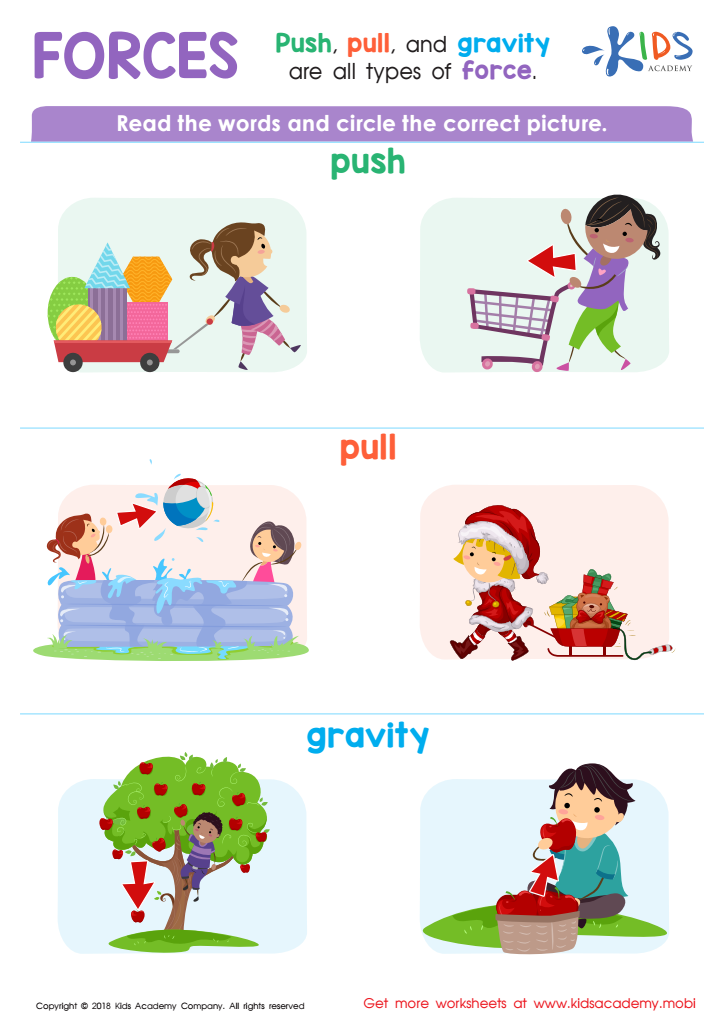
Forces Worksheet
Teach your child about forces! Ask them to identify which of six pictures shows push, pull or gravity. Read the words beside each picture and have them circle the correct one. It's a great way to learn about forces; push, pull and gravity!
Forces Worksheet
Worksheet
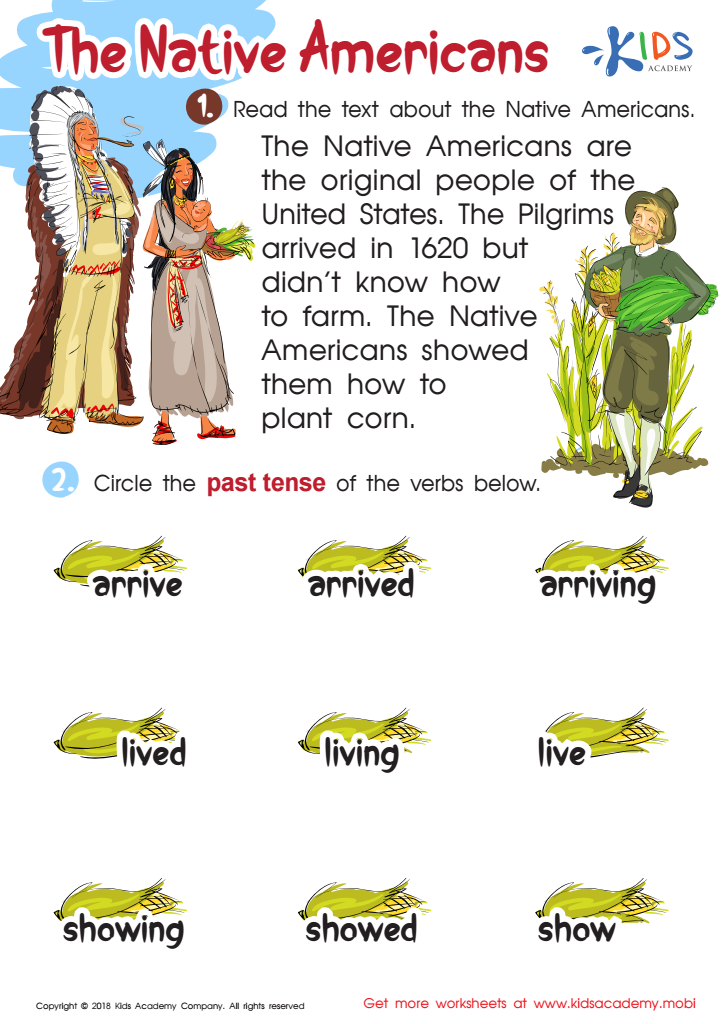
The Native Americans Worksheet
Ask your students who the Native Americans are and give them a history lesson if needed. Read the text about the Native Americans and circle the past tense verbs. The text describes events that occurred when the first Pilgrims arrived in America.
The Native Americans Worksheet
Worksheet
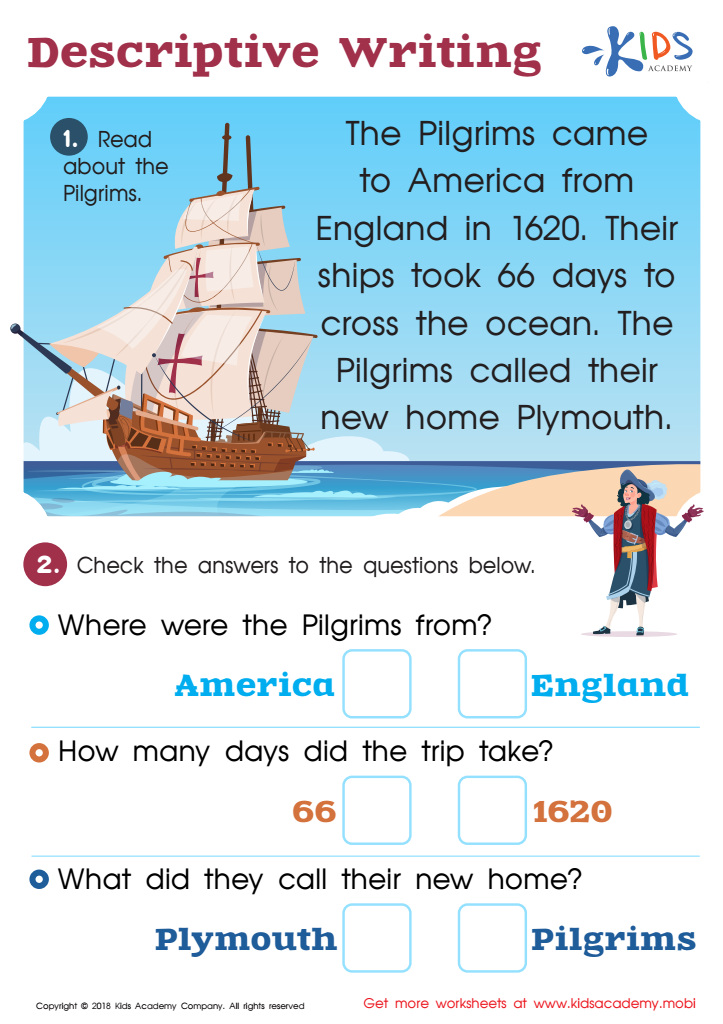
Descriptive Writing Worksheet: Part 1
Kids, let's learn about the Pilgrims! Read this short text about their voyage to America, then answer the questions at the bottom. Writing is an art: expressing emotions in artful words and sentences. Some writing informs, others describe. Here, discover the Pilgrims' journey!
Descriptive Writing Worksheet: Part 1
Worksheet
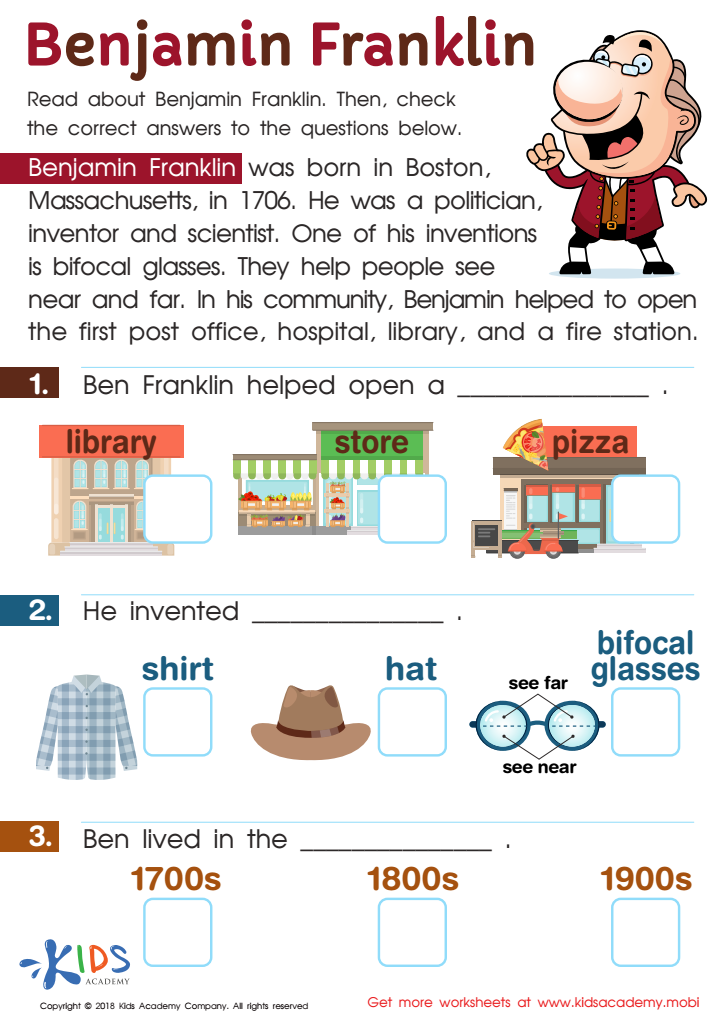
Benjamin Franklin Worksheet
Introduce your kids to one of history's most important figures - Benjamin Franklin! Tell them all about his remarkable contributions to the world and then use this worksheet to teach them even more. Read the text to them and check their answers against the questions afterwards.
Benjamin Franklin Worksheet
Worksheet
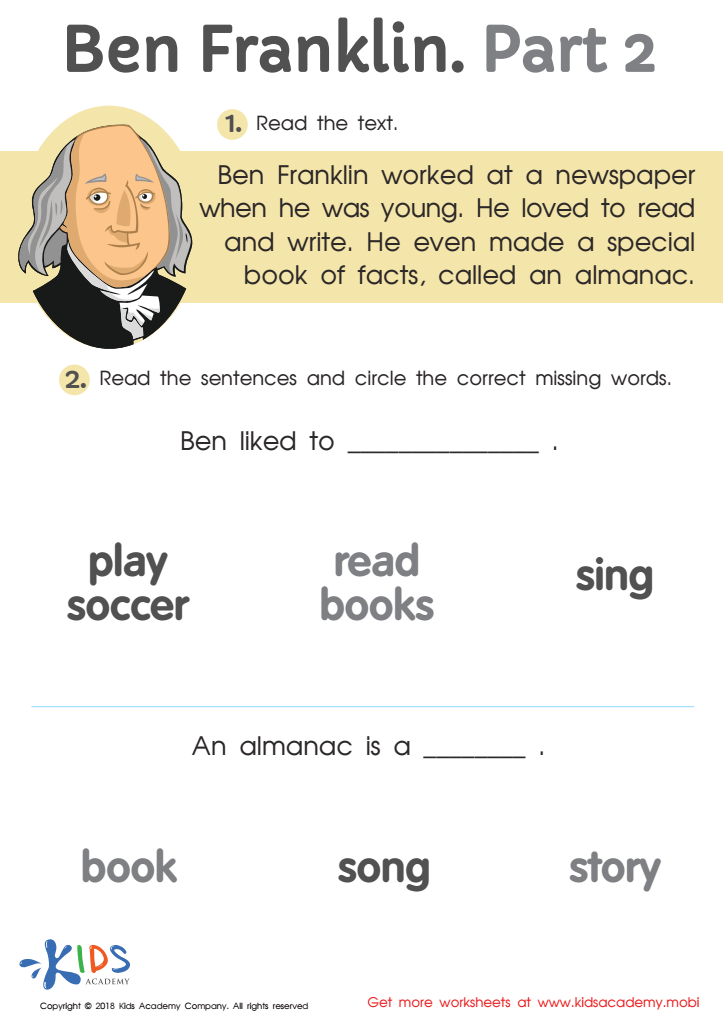
Ben Franklin Part 2 Worksheet
History is filled with great figures, like Benjamin Franklin. Let your kids in on the legacy by introducing them to the founder of the US fire department, diplomat, and inventor. Then, use a worksheet to have them fill in the blanks with the correct word to teach them more. Read the text, then read the sentences and have them circle the missing word.
Ben Franklin Part 2 Worksheet
Worksheet
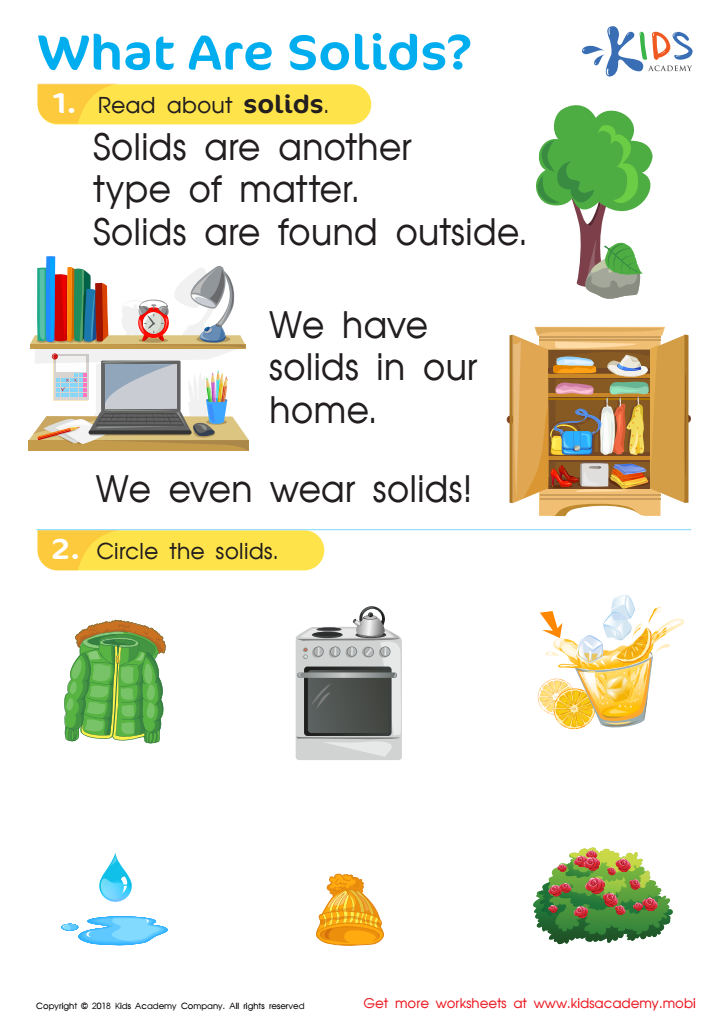
What Are Solids? Worksheet
Help your kids understand matter's three forms - solid, liquid, and gas - with examples. Ask them to give their own and where to find them. Then, read and discuss the worksheet's facts about solids. Afterward, have them circle the solids among the provided objects.
What Are Solids? Worksheet
Worksheet
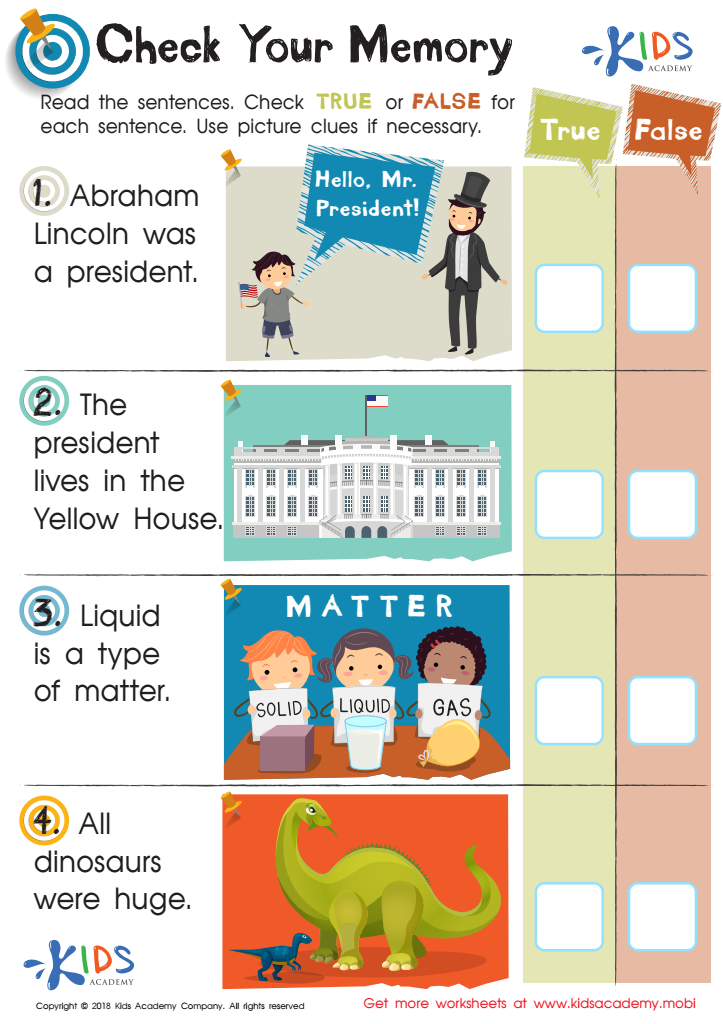
Check Memory Worksheet
Assisting your kids with their homework and using worksheets is a great way for them to learn. The vibrant visuals in this printout can help stimulate the mind and motivate your child. Have them read the sentences and then point to the associated images. Afterwards, ask them to state True or False for each sentence. If they are still uncertain, offer them the picture clues to assist further.
Check Memory Worksheet
Worksheet
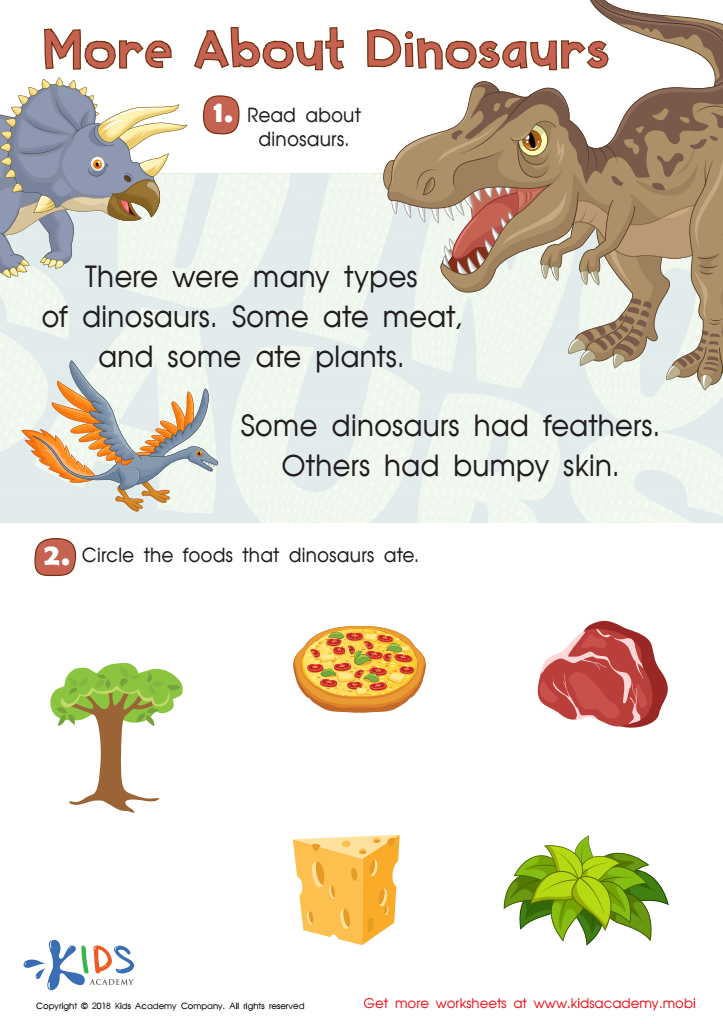
More About Dinosaurs Worksheet
Dinosaurs captivate us with the unknown. Long gone before us, they left behind clues in their bones. Kids love to explore and uncover the secrets of these extinct creatures. Read the facts in this worksheet to them and help them answer the question at the end. Let their imaginations soar!
More About Dinosaurs Worksheet
Worksheet
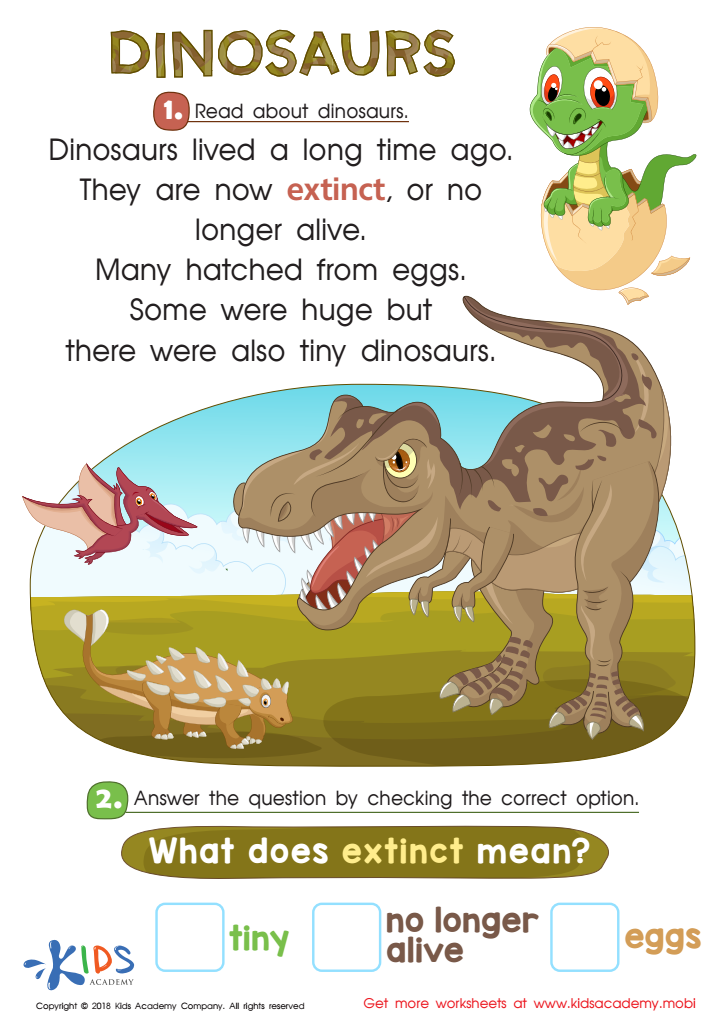
Dinosaurs Worksheet
Kids are often fascinated by dinosaurs, creatures that roamed the Earth before man. Sadly, they are now extinct. To learn more, read facts on this worksheet to your kids and help them answer the question at the end by selecting the correct option.
Dinosaurs Worksheet
Worksheet
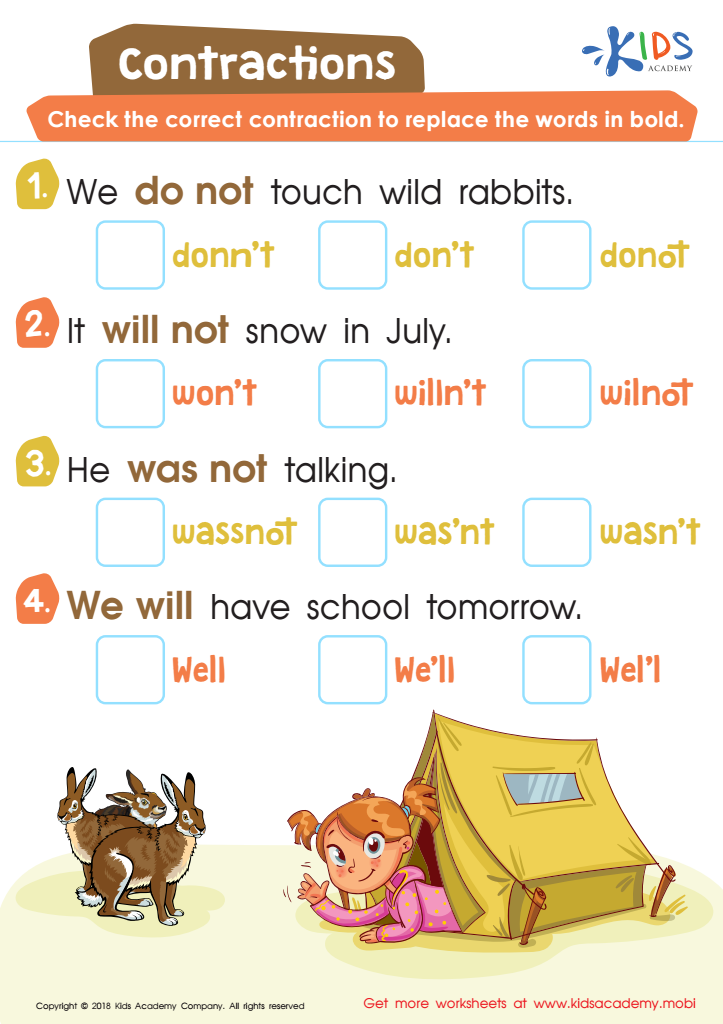
Contractions Worksheet
Contractions are popular in English and make writing/reading easier. For example: I'm, they're, she's. Ask your students to give more examples. Then, read the sentences in this worksheet and help them check the correct contraction to replace the words in bold.
Contractions Worksheet
Worksheet
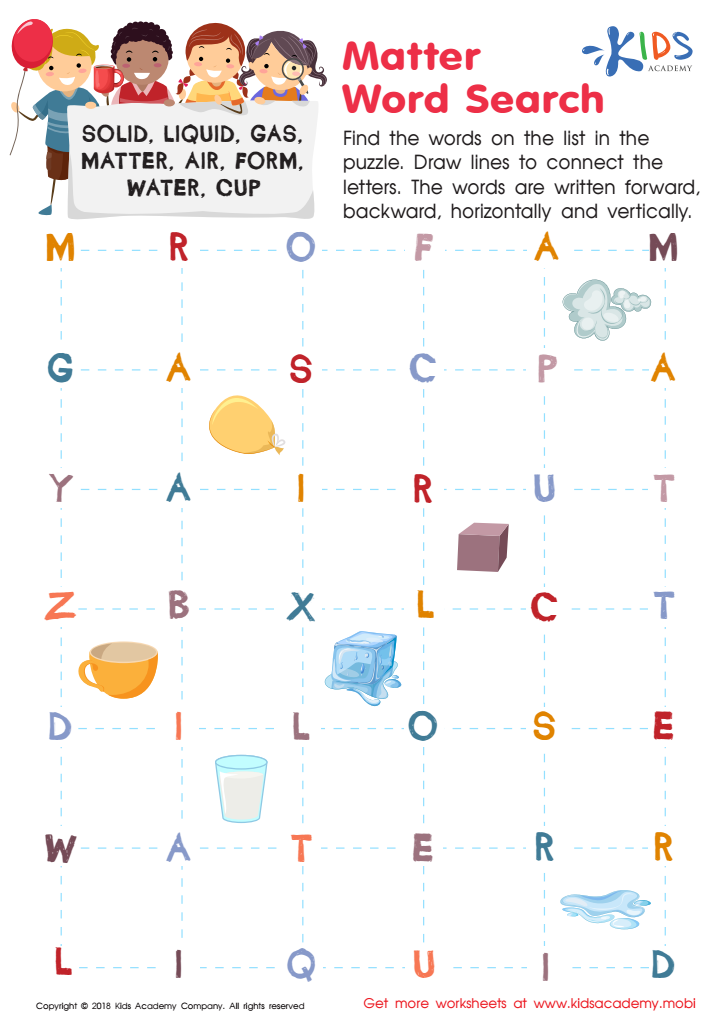
Matter Word Search Worksheet
Matter is anything with weight and taking up space. It exists in three forms: solid, gas and liquid. Examples of these are ice, air and water. Help kids find the words in the puzzle, which are written forward, backward, horizontally and vertically. Connect the letters!
Matter Word Search Worksheet
Worksheet
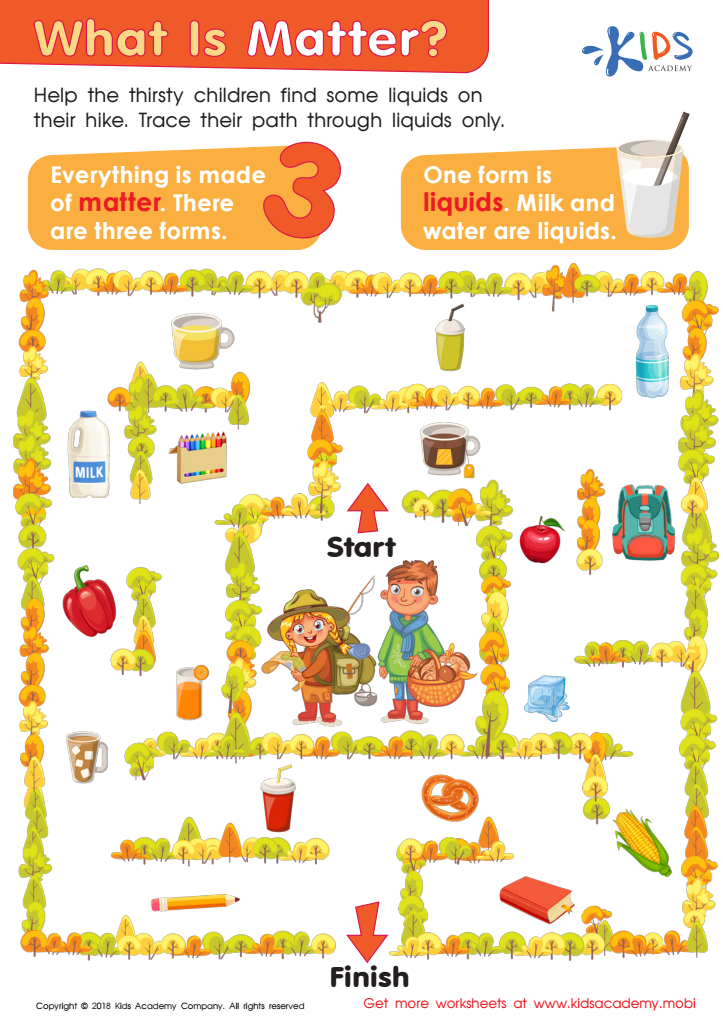
What Is Matter? Worksheet
Matter is anything that occupies space and has weight. Show your child examples, like people, cars, food, animals, objects etc. Ask them to name more. Help the thirsty kids in the picture find liquids - have them trace the path in the tracing sheet.
What Is Matter? Worksheet
Worksheet
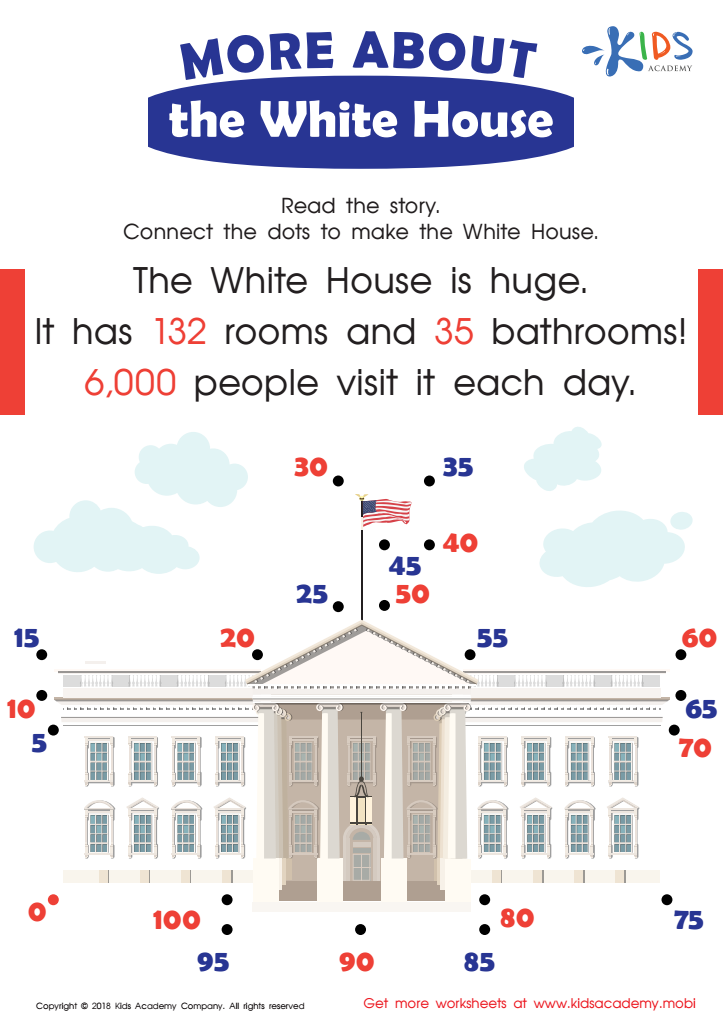
More About the White House Worksheet
The President of the United States lives in the White House, a huge building with 132 rooms and 35 bathrooms. It's home to the President's family, plus 6,000 visitors every day, and full of interesting stories. Teach your kids about it with this printout; help them connect the dots and learn more about this famous home. Learning never ends!
More About the White House Worksheet
Worksheet
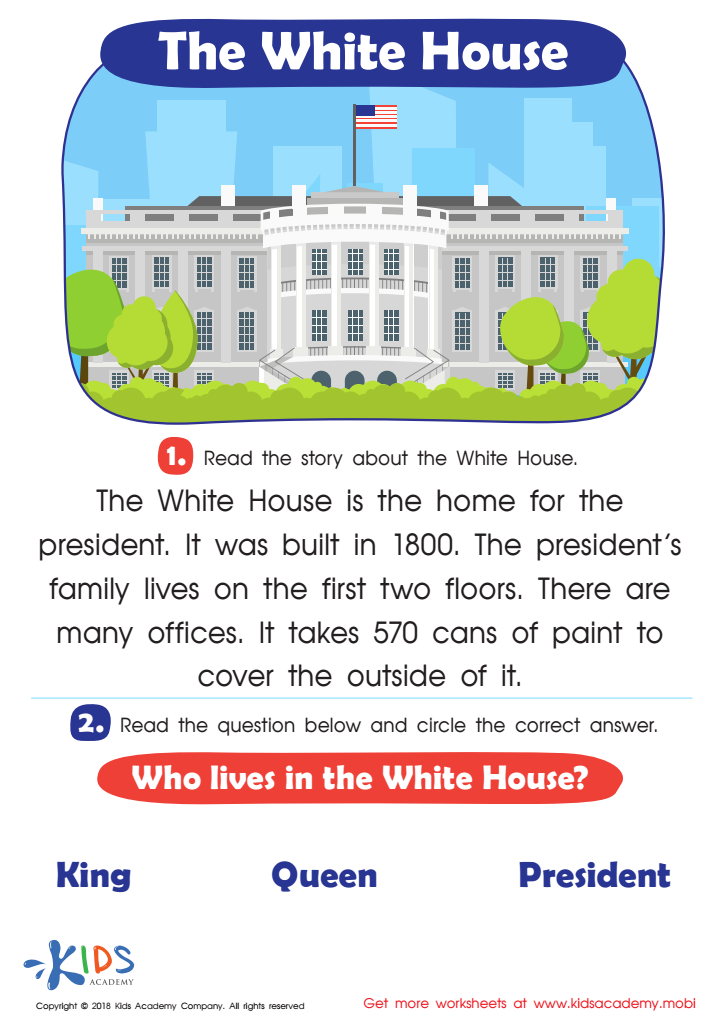
White House Worksheet
Read stories to your students to teach them new words, and about the White House. Before reading, ask your kindergartners what they already know. Then read short sentences for them to learn about the building the U.S President resides in.
White House Worksheet
Worksheet
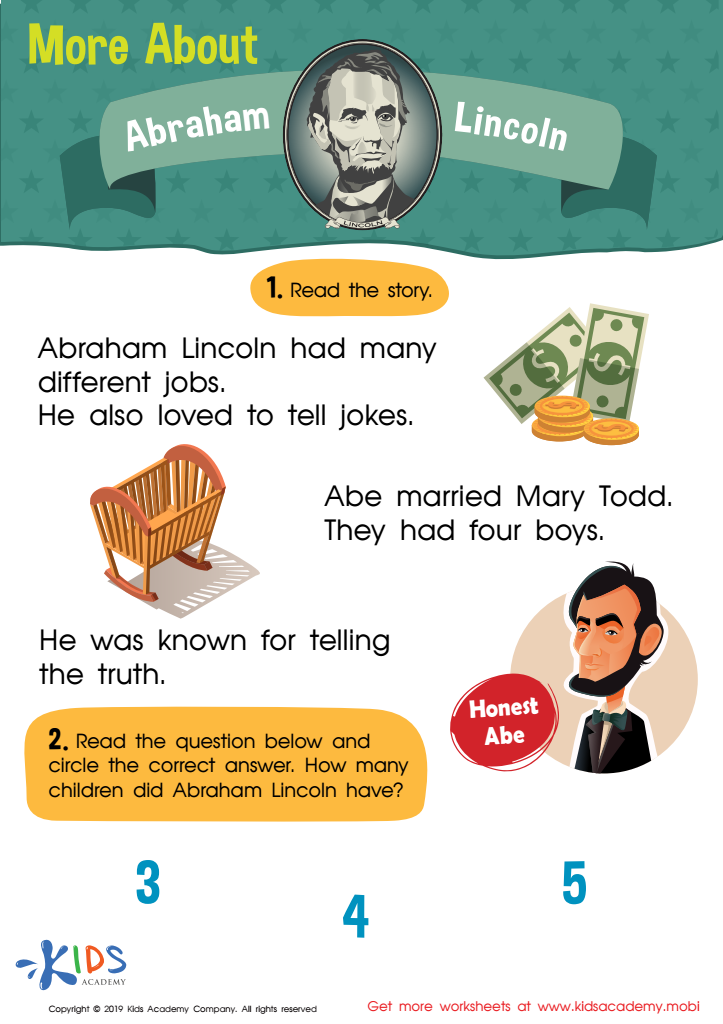
More About Abraham Lincoln Worksheet
Read the short story in the worksheet with your kids. Show them the pictures representing the sentences, then ask the questions and help them circle the correct answer. Make sure they are actually paying attention and learning from the stories.
More About Abraham Lincoln Worksheet
Worksheet
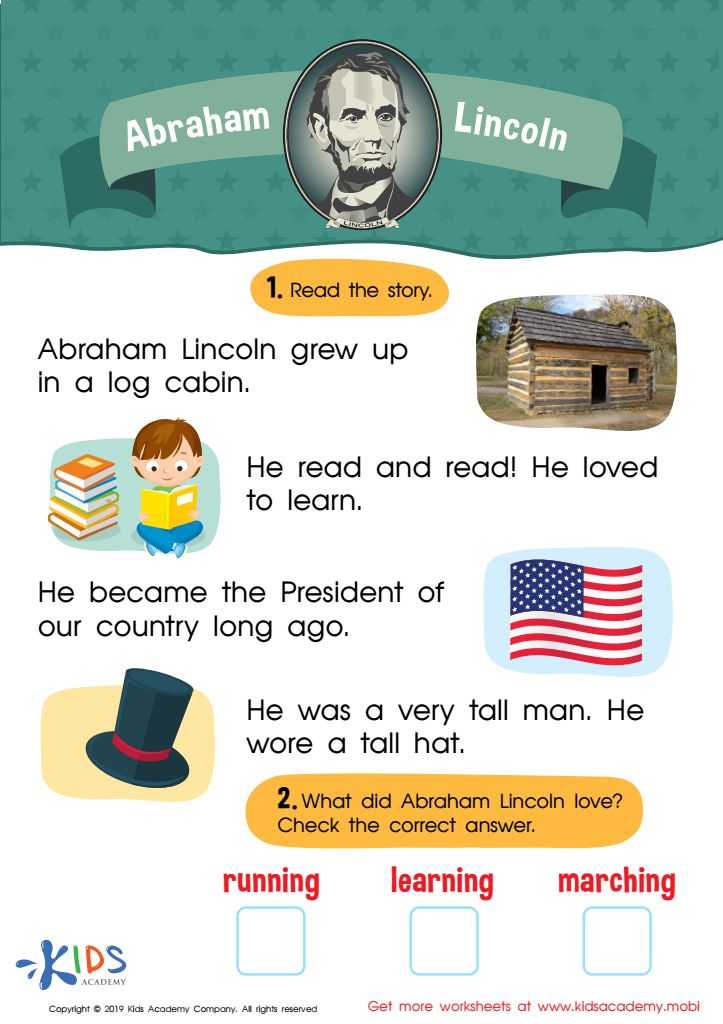
Abraham Lincoln Worksheet
Let your kids listen to interesting stories while having fun! Read the short story in this worksheet, point to the picture representing each sentence, then ask the questions and check the answers. Doing this will help your children learn new things and build their vocabulary.
Abraham Lincoln Worksheet
Worksheet
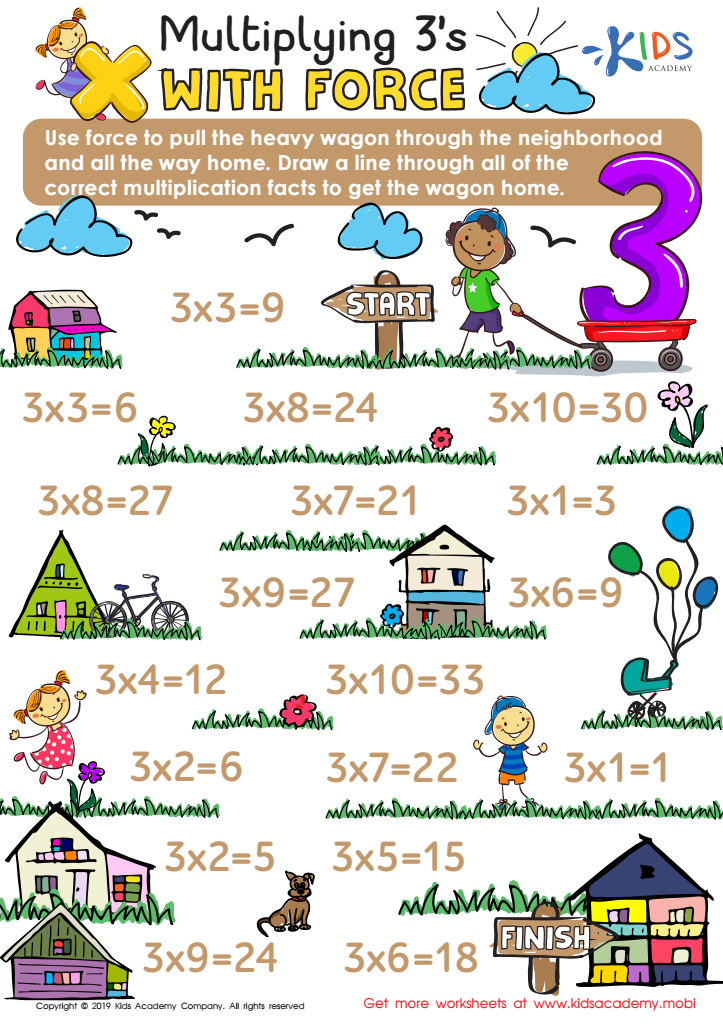
Multiplying 3s with Force Worksheet
Help your kids understand force. Examples: jumping in a playground, wind blowing leaves, pulling a wagon. Show them how to use force to pull the wagon in this worksheet by drawing a line through all the correct multiplication facts.
Multiplying 3s with Force Worksheet
Worksheet
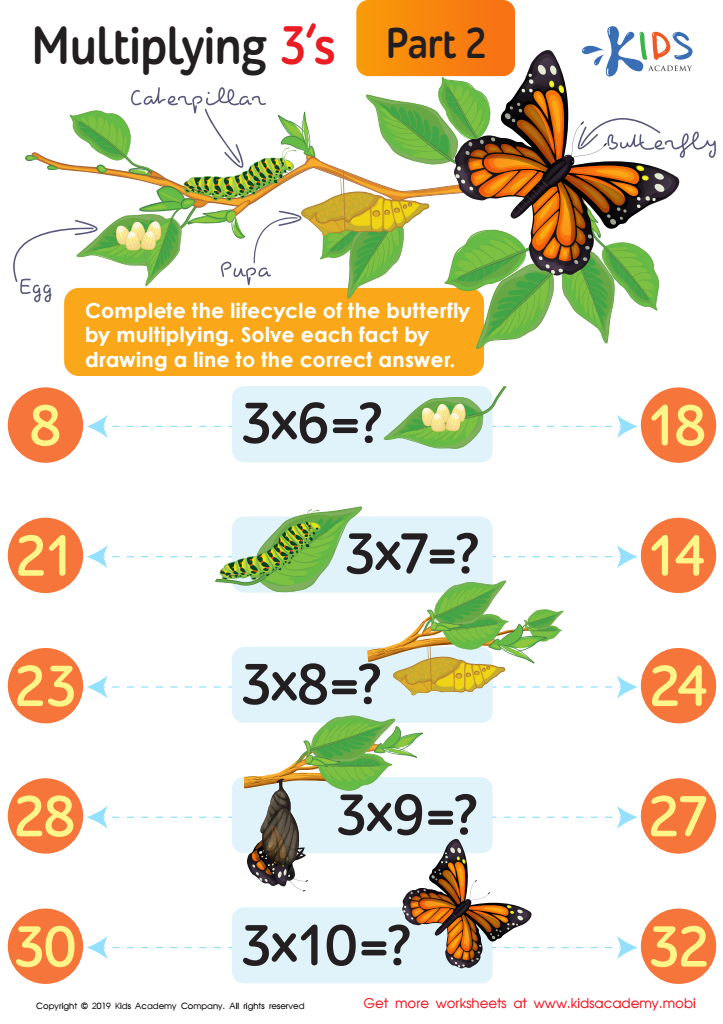
Multiplying 3s Part 2 Worksheet
Once a tiny egg, a butterfly goes through its life cycle. From egg to caterpillar to cocoon to beautiful winged creature! Ask your kids to complete the lifecycle by solving the facts on the worksheet. Help them draw a line to the right answer and let them marvel at the butterfly's amazing transformation!
Multiplying 3s Part 2 Worksheet
Worksheet
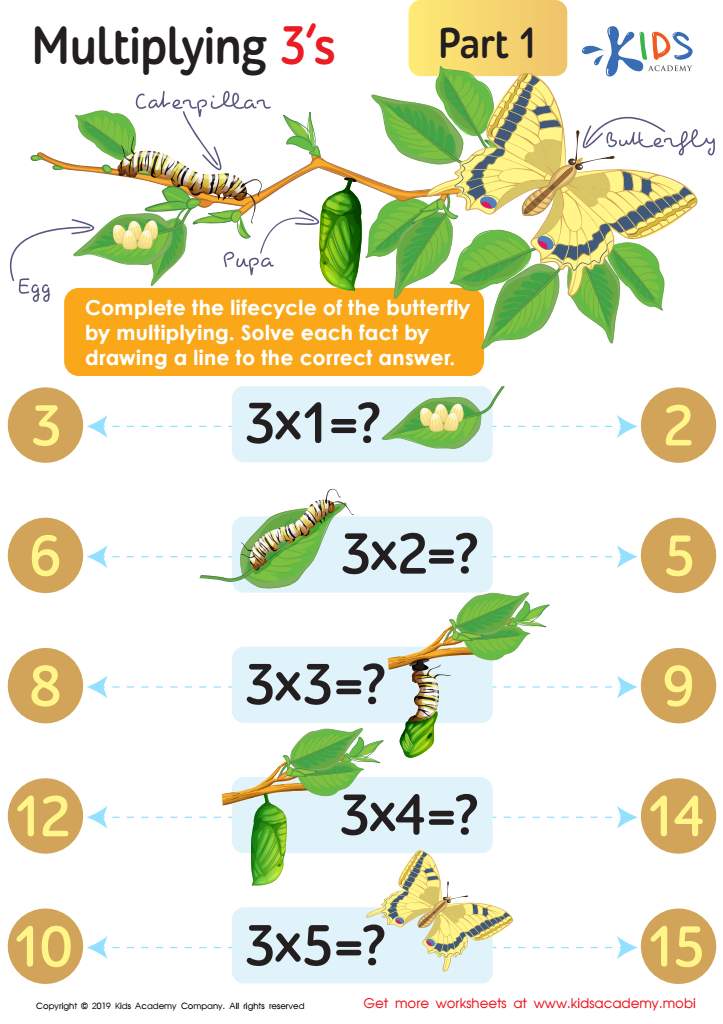
Multiplying 3’s Part 1 Worksheet
Once an egg, then a caterpillar, then a cocoon, then a beautiful butterfly: the lifecycle of the butterfly! Complete the worksheet with your kids and help them draw the lines to get the correct answers for each fact. Let them explore the fascinating transformation of this creature!
Multiplying 3’s Part 1 Worksheet
Worksheet
Join Kids Academy for Free
Who is primarily going to use this learning content?