Easy Punctuation Worksheets for Ages 3-4
4 filtered results
-
From - To
Discover our "Easy Punctuation Worksheets for Ages 3-4," designed to introduce young learners to the basics of punctuation in a fun and engaging way. Tailored for early childhood education, these worksheets feature colorful illustrations and simple exercises that make learning enjoyable. Through activities like spotting and identifying punctuation marks, children will develop essential writing skills while enhancing their fine motor abilities. Our resource is perfect for parents and teachers aiming to foster a love for language and improve literacy skills at a young age. Explore these interactive worksheets and inspire your child's journey into the world of punctuation today!
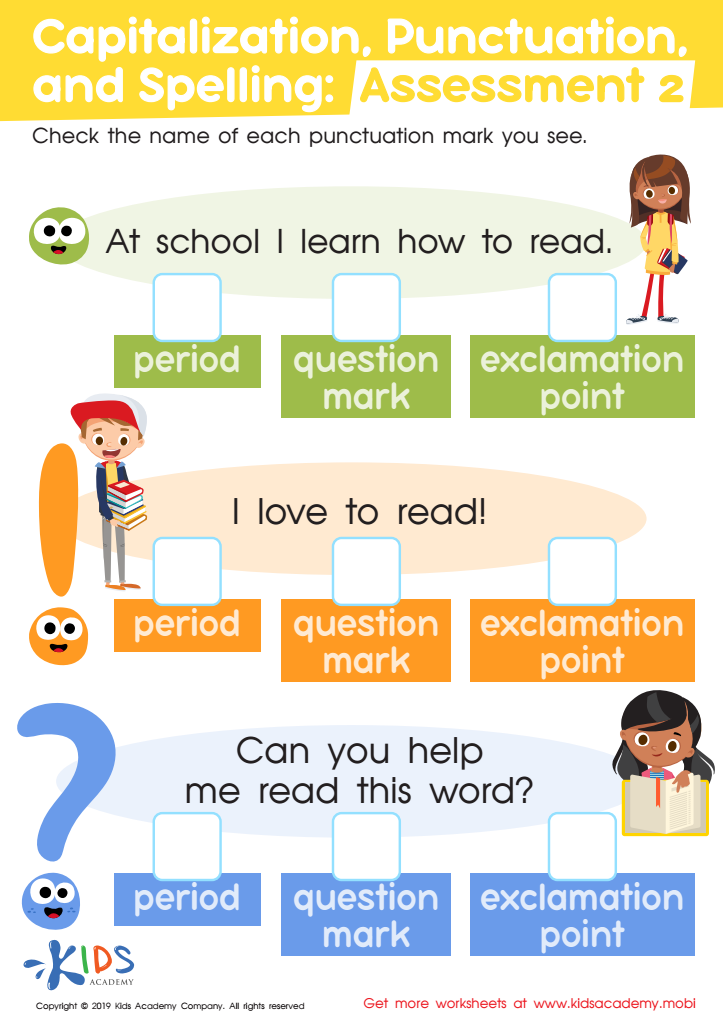
Capitalization. Punctuation. Spelling: Assessment 2 Worksheet
 Assign to My Students
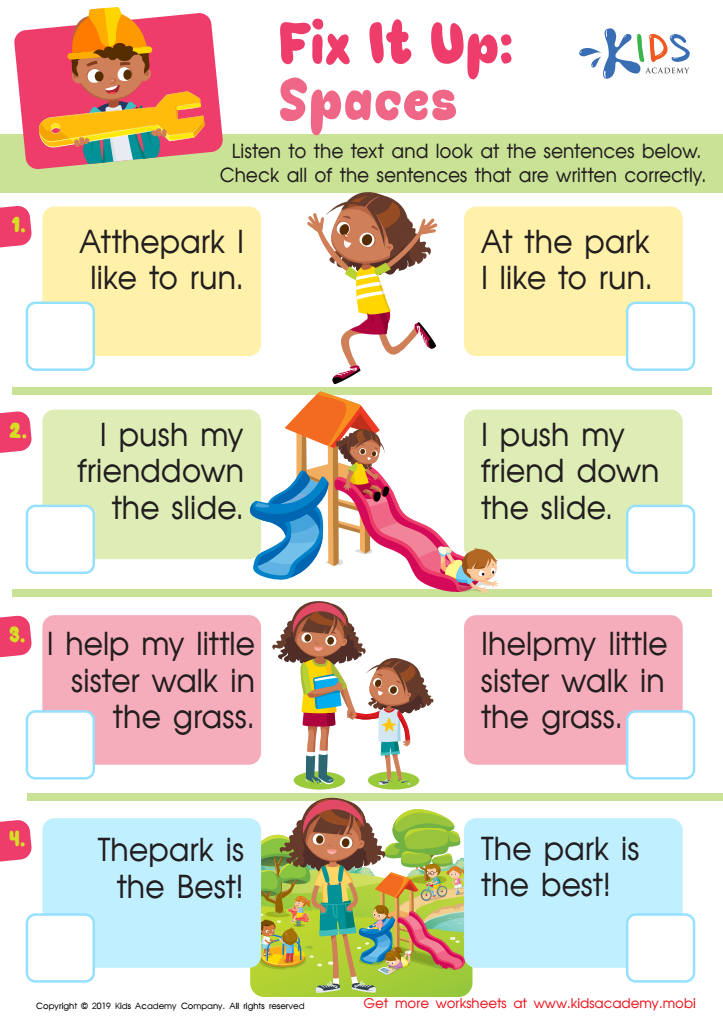
Fix Spaces Worksheet
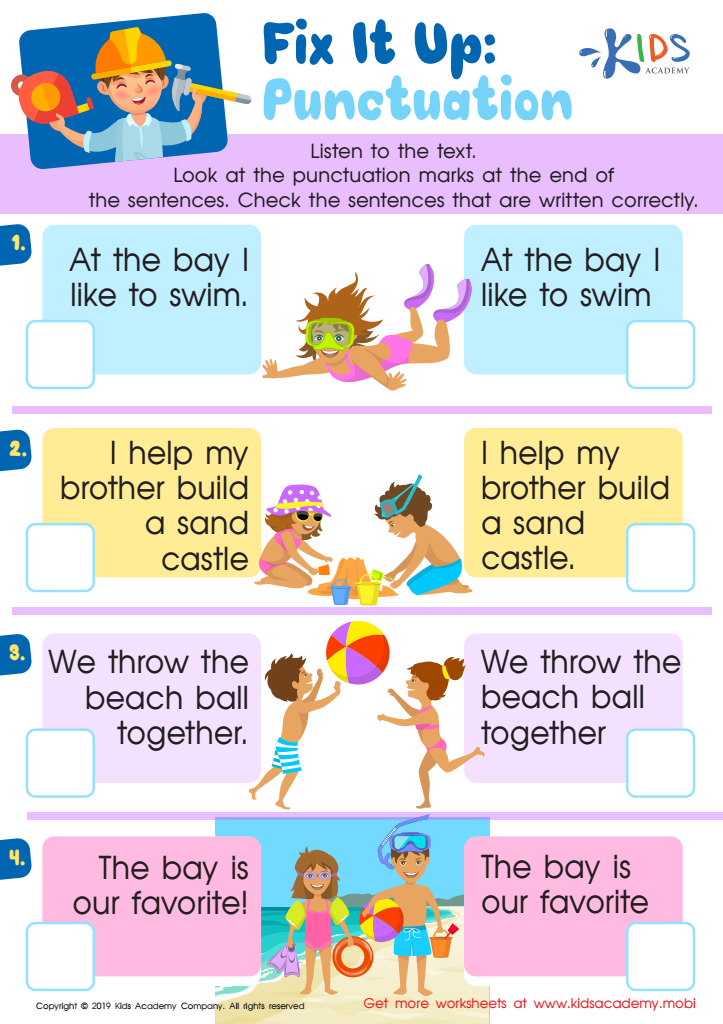
Fix Punctuation Worksheet
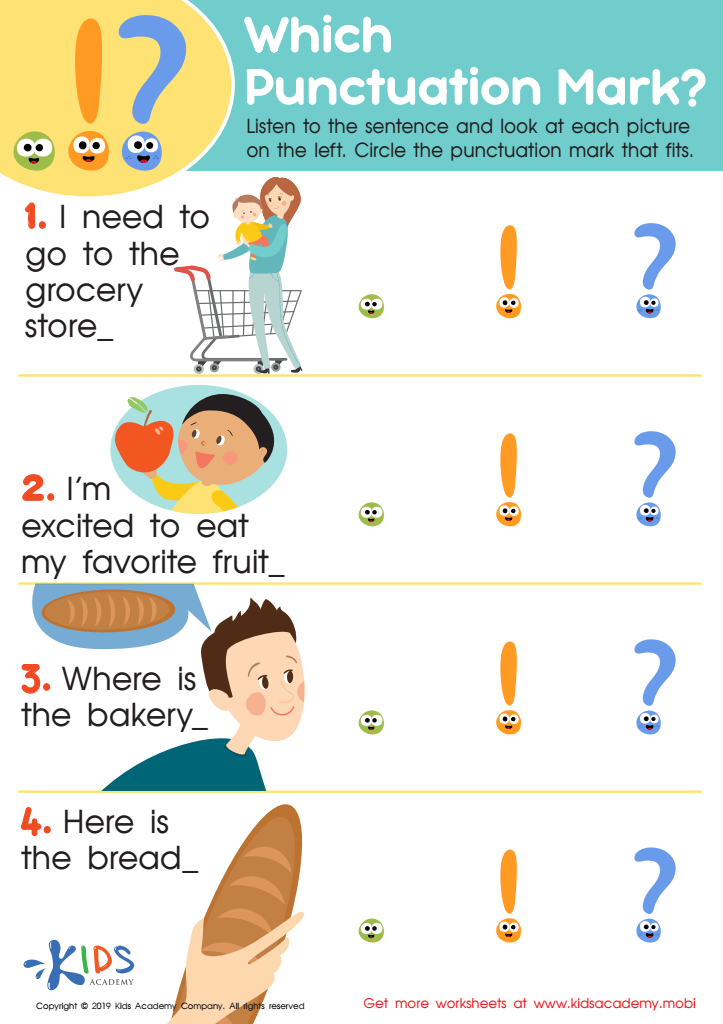
Which Punctuation Mark Worksheet








Easy Punctuation for Ages 3-4 lays the foundation for early literacy and language skills, making it essential for parents and teachers to care about. At this young age, children are shaped by their language environment, which includes understanding the basics of writing and reading. Introducing simple punctuation concepts, like periods, question marks, and exclamation points, can enhance their communication skills and make their writing clearer and more expressive.
Using engaging and age-appropriate methods, such as colorful visual aids and interactive activities, helps children grasp these concepts in a fun way. Mastering basic punctuation encourages children to experiment with writing, empowering them to express their feelings and ideas more effectively. Moreover, understanding punctuation contributes to the development of cognitive skills, such as critical thinking and attention to detail.
Furthermore, early exposure to punctuation supports social interactions by helping children understand the nuances in conversations, such as excitement or questioning through tone and sentence structure. With these fundamental skills in place, young learners are better equipped for future academic success. Therefore, investing time and resources into teaching easy punctuation at this critical age fosters confident communicators and lifelong learners.