Easy Comparison Worksheets for Ages 3-6
3 filtered results
-
From - To
"Easy Comparison Worksheets for Ages 3-6" offer engaging activities designed to help young learners differentiate and compare sizes, quantities, and other attributes. These thoughtfully crafted worksheets employ vibrant visuals and simple tasks to build crucial early math skills. Ideal for preschoolers and kindergarteners, they make learning fun and effective by encouraging hands-on exploration and critical thinking. Whether at home or in the classroom, these printable and digital resources provide a perfect way to support your child's educational journey, laying a solid foundation for understanding fundamental mathematical concepts. Start comparing and discover the joy of learning with us!
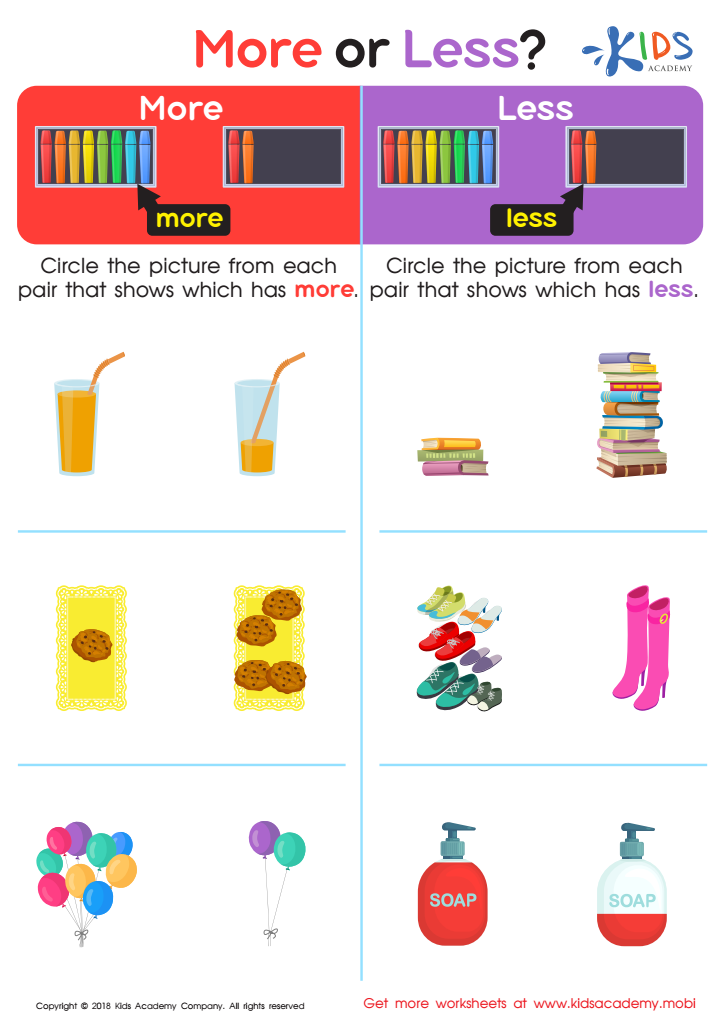
More or Less? Worksheet
 Assign to My Students
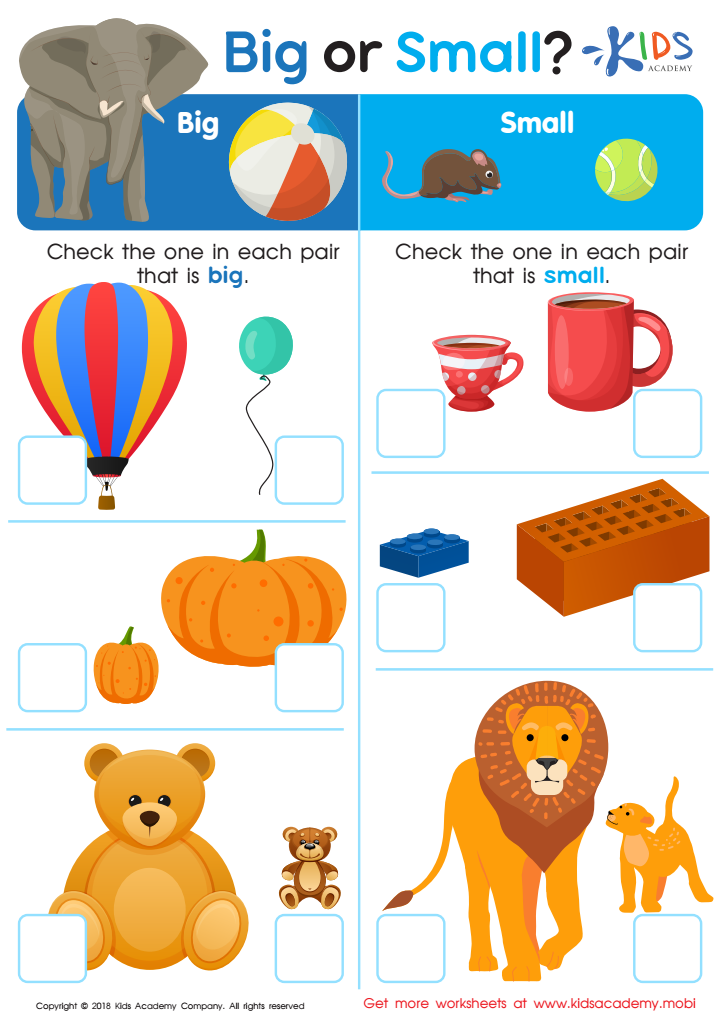
Big or Small? Worksheet
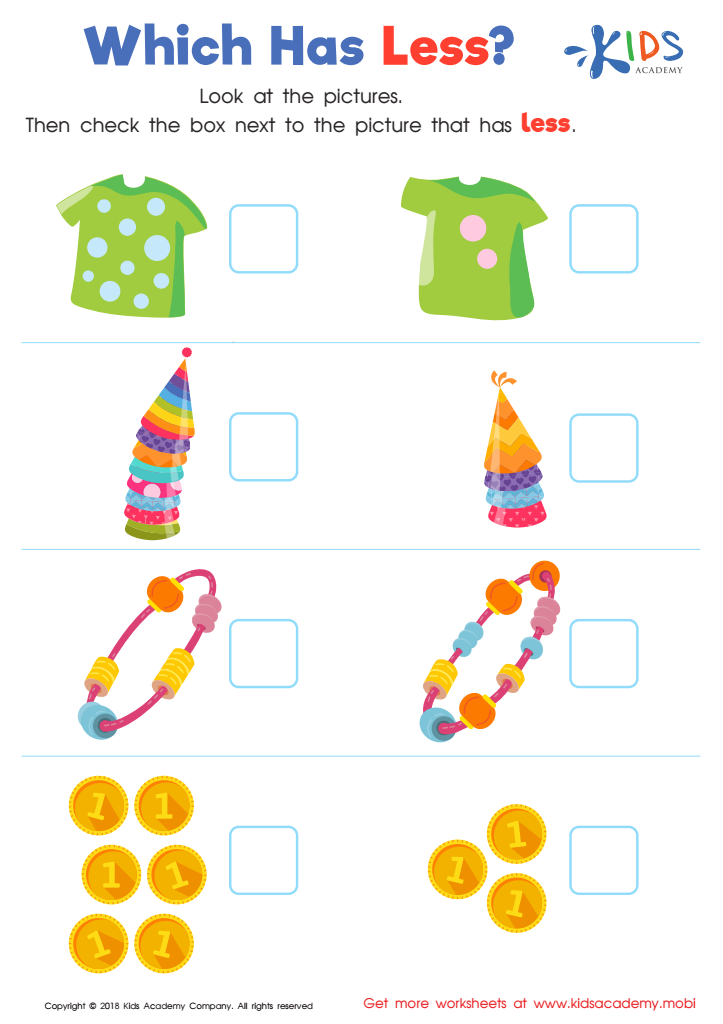
Which Has Less? Worksheet








Easy Comparison is a valuable tool for young children aged 3-6 because it lays the foundation for essential cognitive and mathematical skills. This early stage is a critical period for brain development, where children are naturally curious and absorb information quickly. Introducing simple comparison activities helps them develop an understanding of basic concepts such as size, quantity, and weight. These activities, such as comparing the lengths of objects or the number of items in groups, enhance their observational skills and vocabulary.
When children practice comparing differences and similarities, they also improve their problem-solving abilities and critical thinking. This not only prepares them for more complex mathematical concepts but also for real-world decision-making. Easy comparison activities can be integrated into play, making learning both enjoyable and effective.
Additionally, developing these skills early fosters confidence and a positive attitude towards learning. When children are given the tools to understand their world, they feel more competent and motivated. Parents and teachers should care about Easy Comparison because it builds a solid foundation for academic success, critical life skills, and a lifelong love for learning. This proactive approach helps in ensuring a well-rounded development of a child’s intellectual capabilities.








