Easy Addition Worksheets for Ages 3-7 - Page 2
39 filtered results
-
From - To
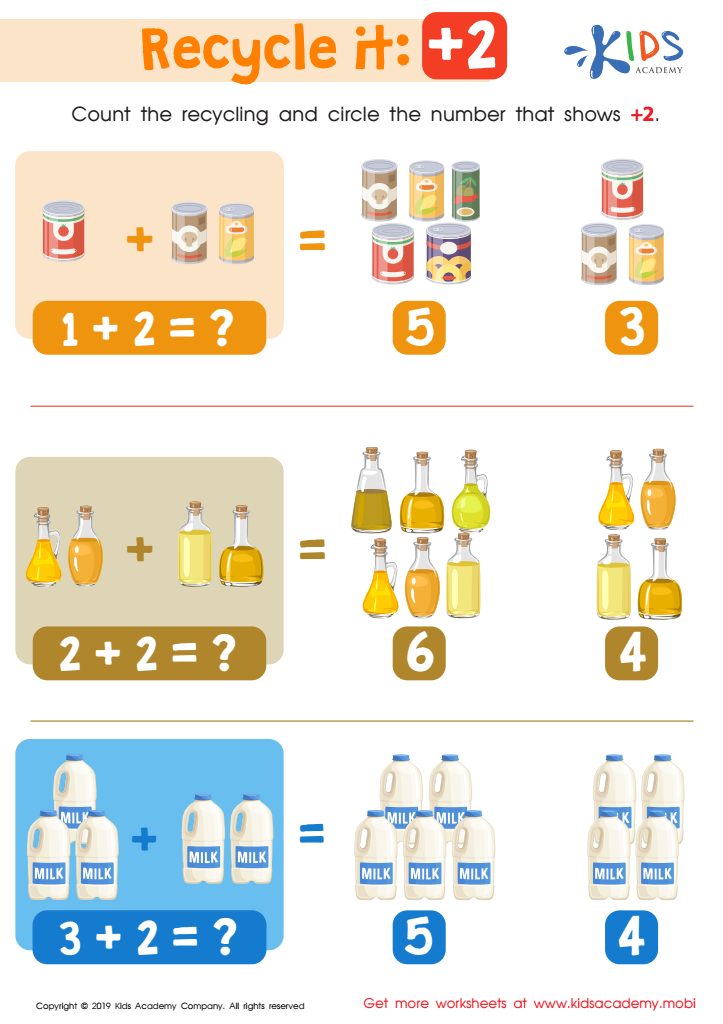
Recycle It: +2 Worksheet
 Assign to My Students
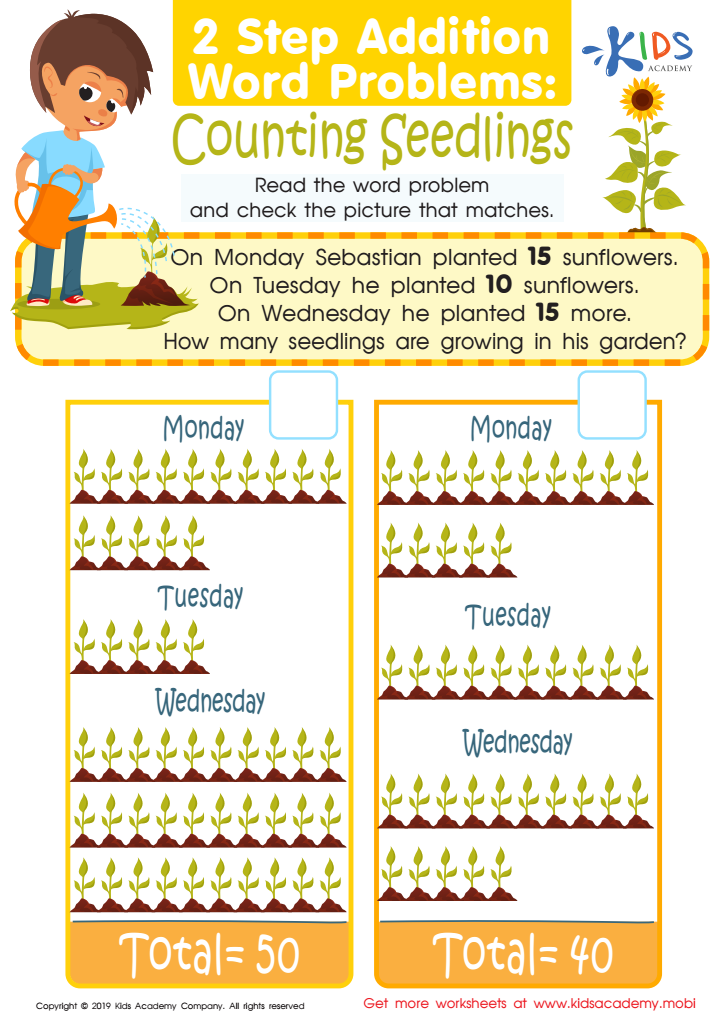
Counting Seedlings Worksheet
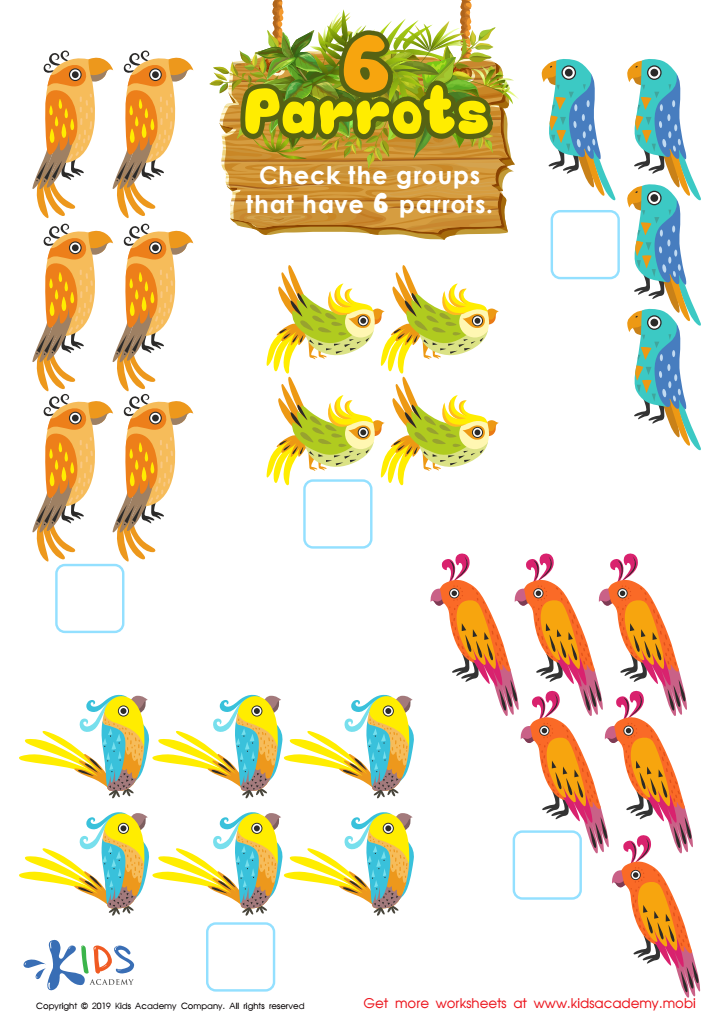
6 Parrots Worksheet
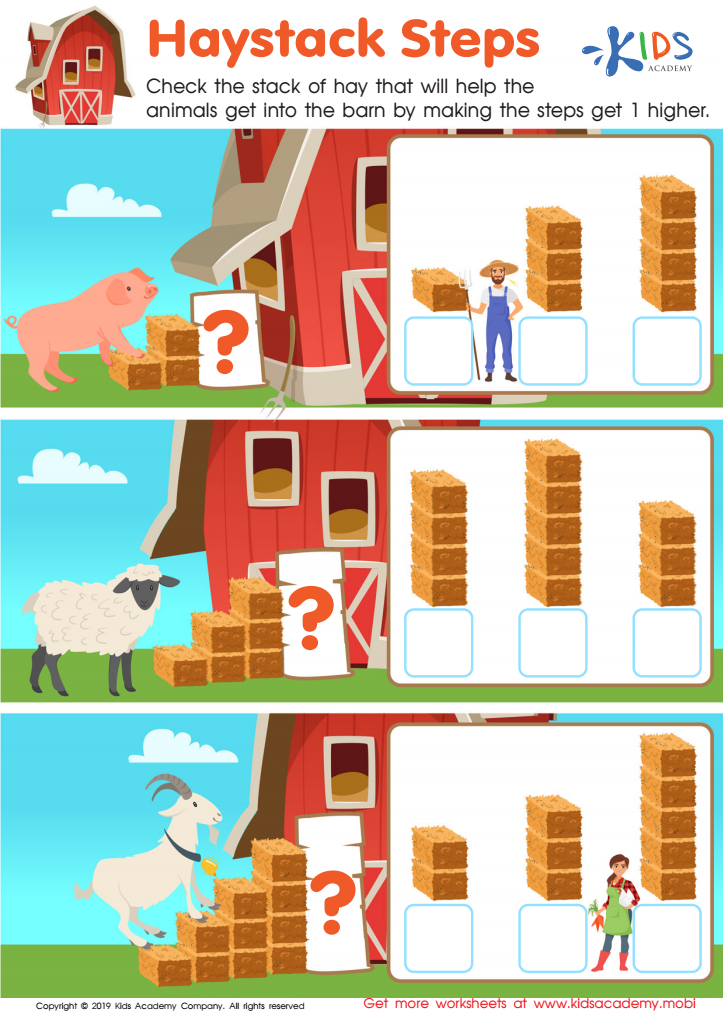
Haystack Steps Worksheet
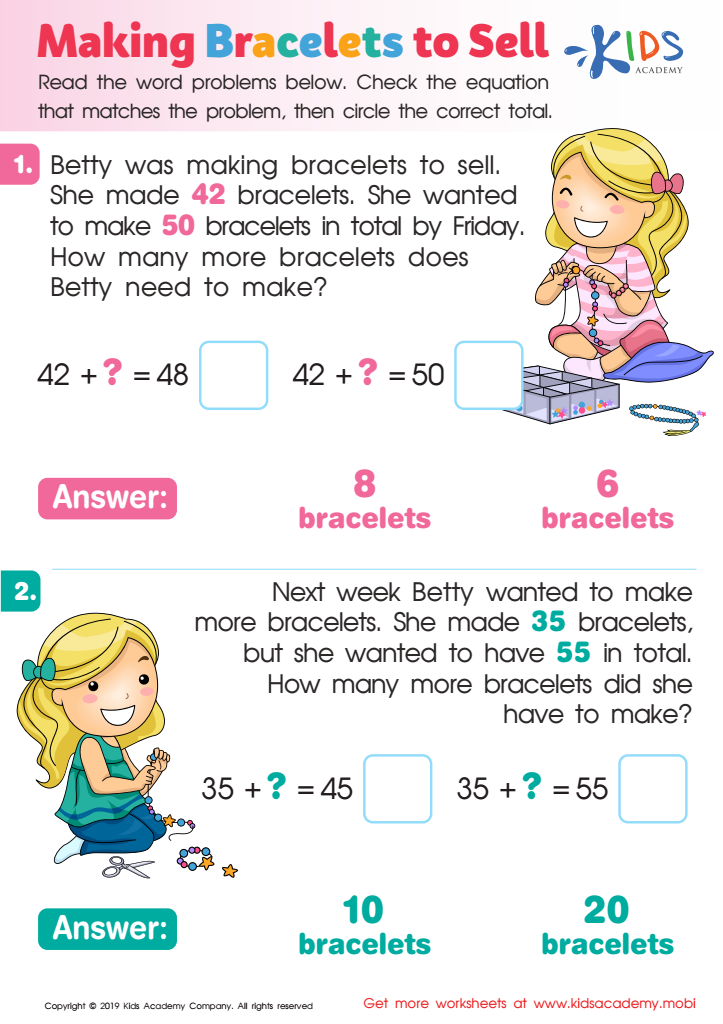
Making Bracelets to Sell Worksheet
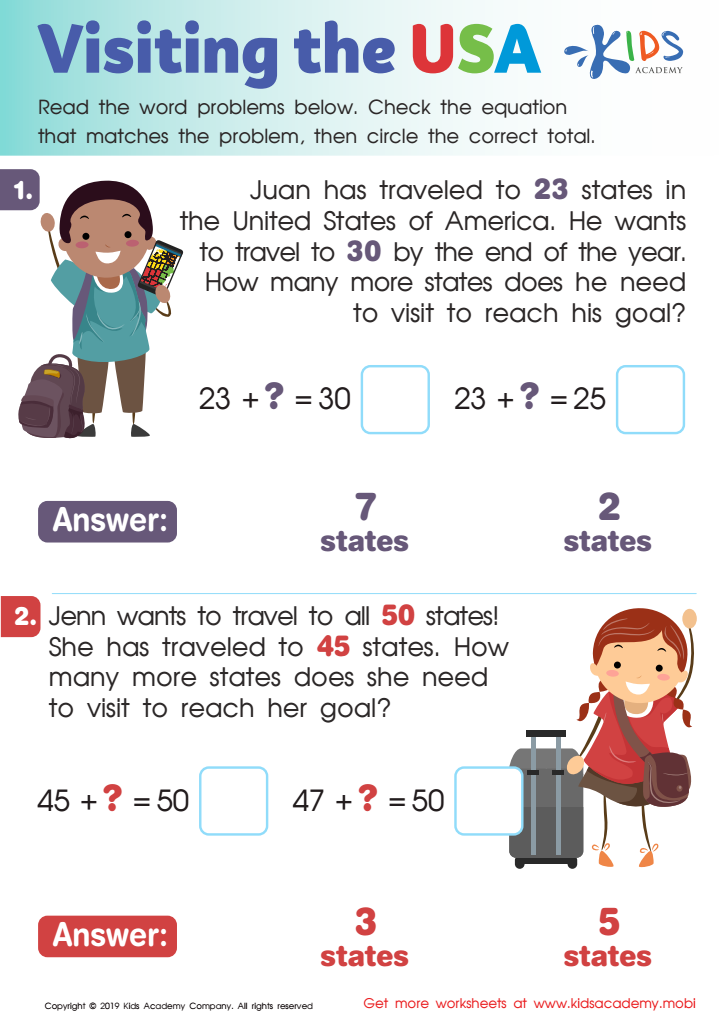
Visiting the USA Worksheet
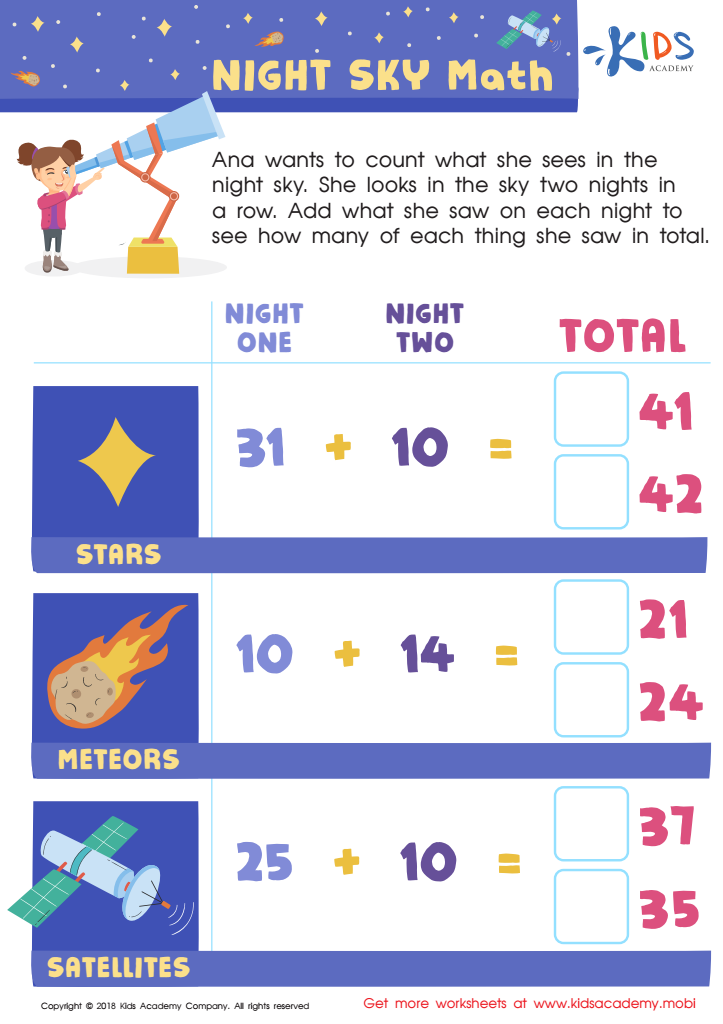
Night Sky Math Worksheet
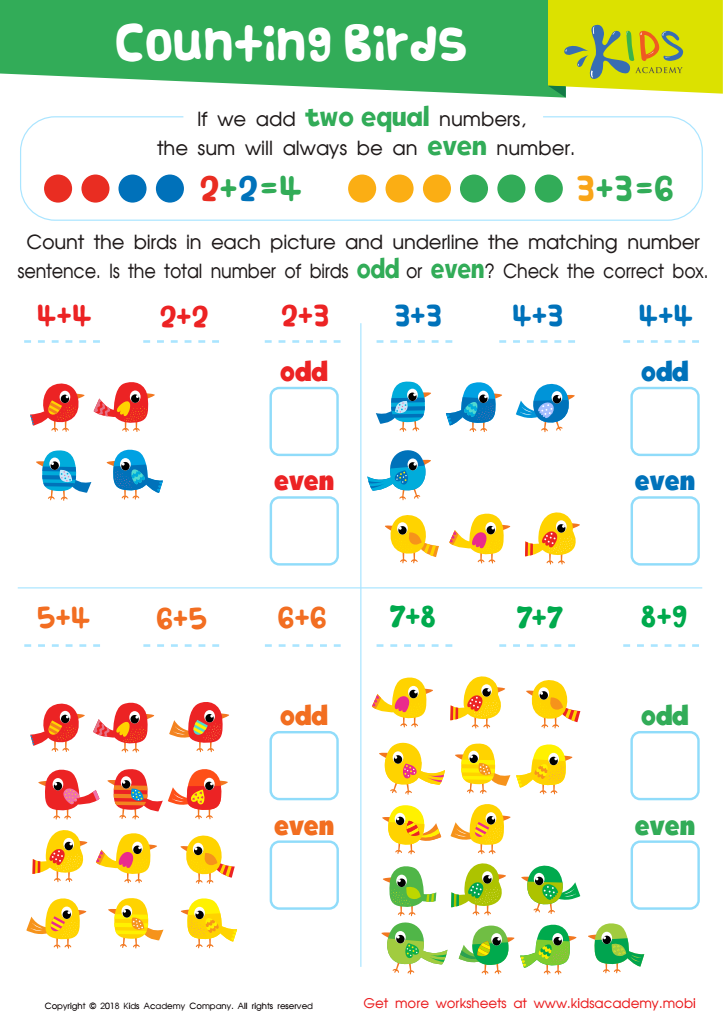
Counting Birds Worksheet
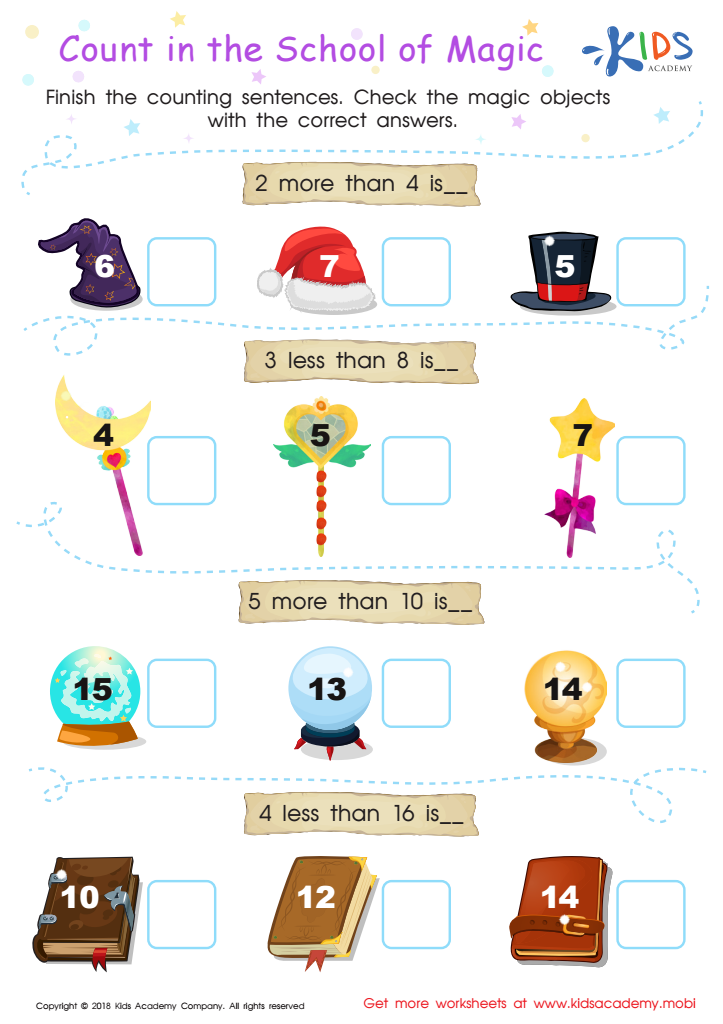
Count in the School of Magic Worksheet
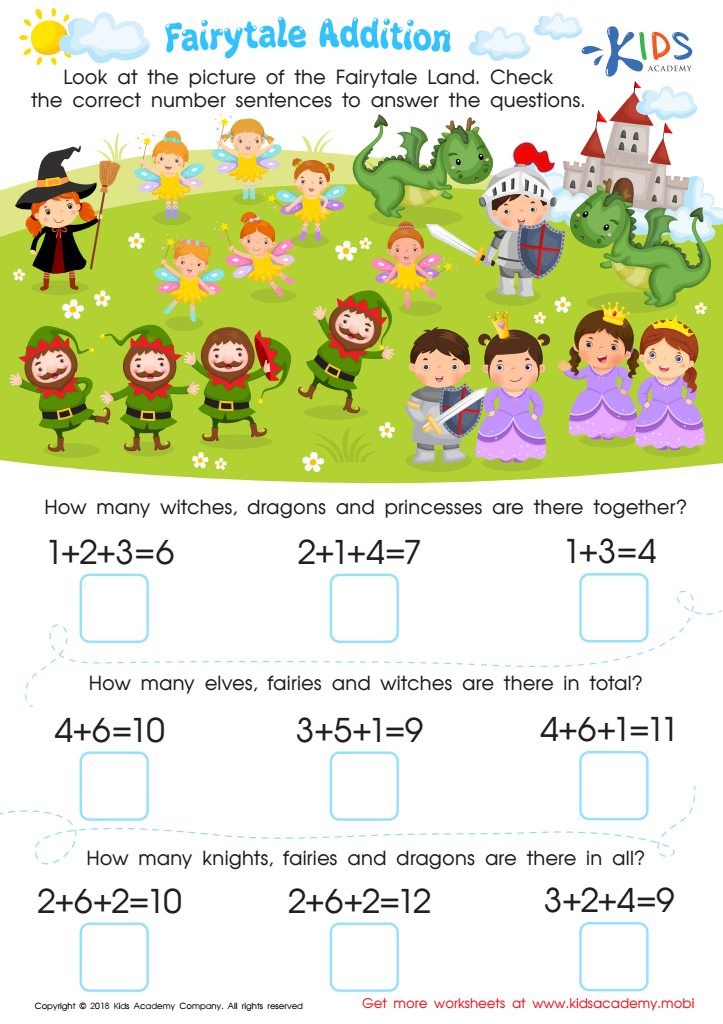
Fairytale Addition Worksheet
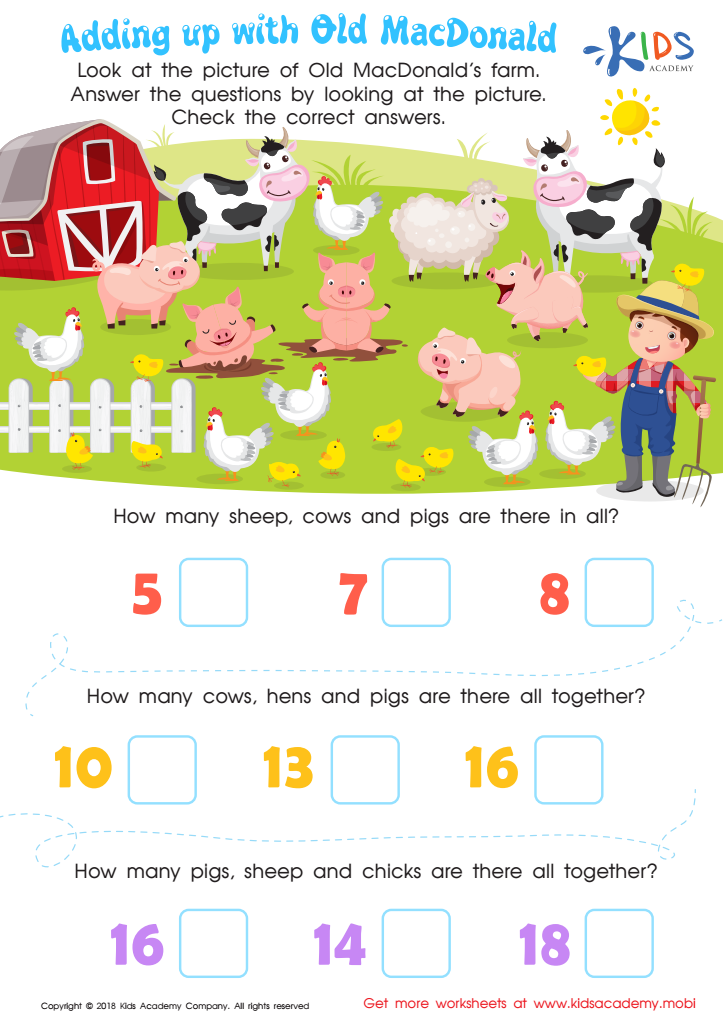
Adding Up with Old MacDonald Worksheet
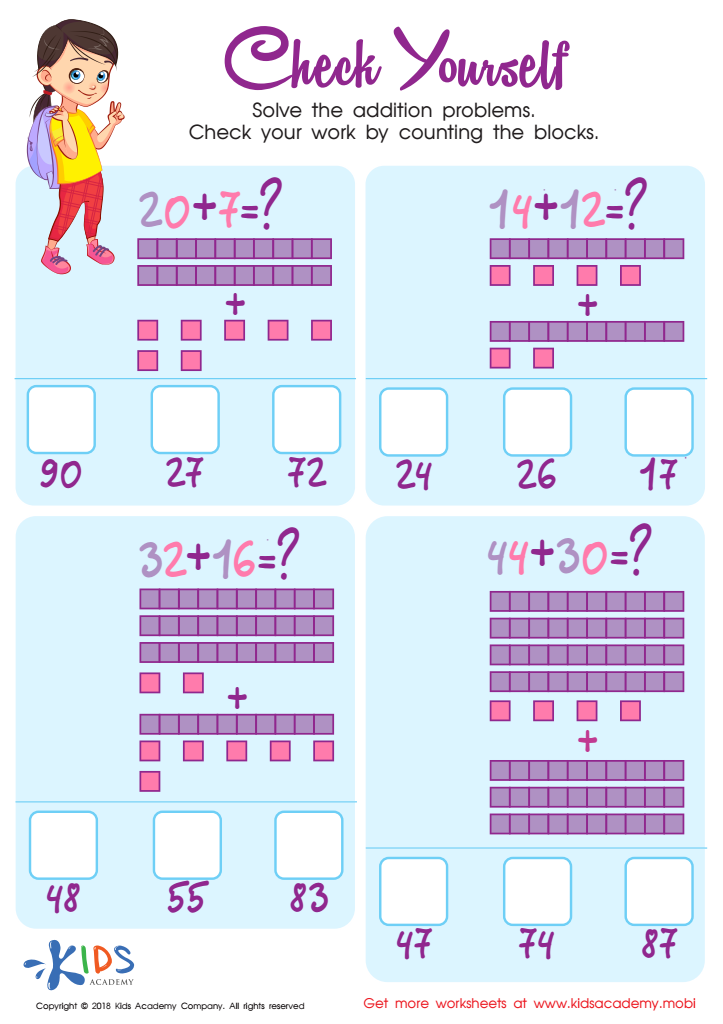
Adding with Base 1 Blocks Worksheet: Check Yourself
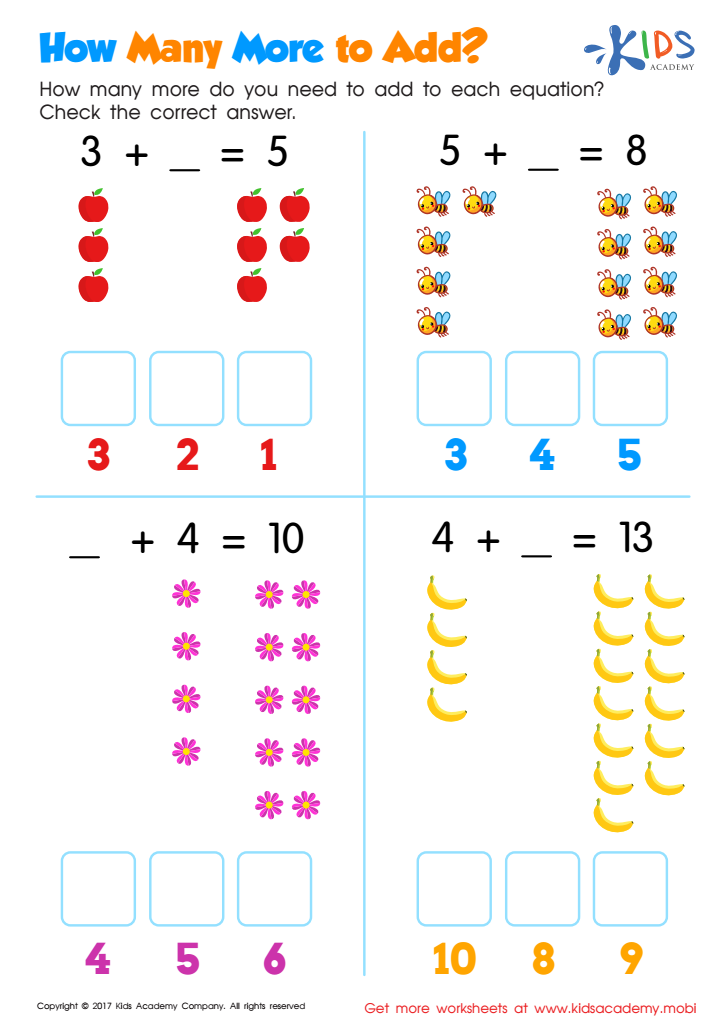
How Many More to Add Worksheet
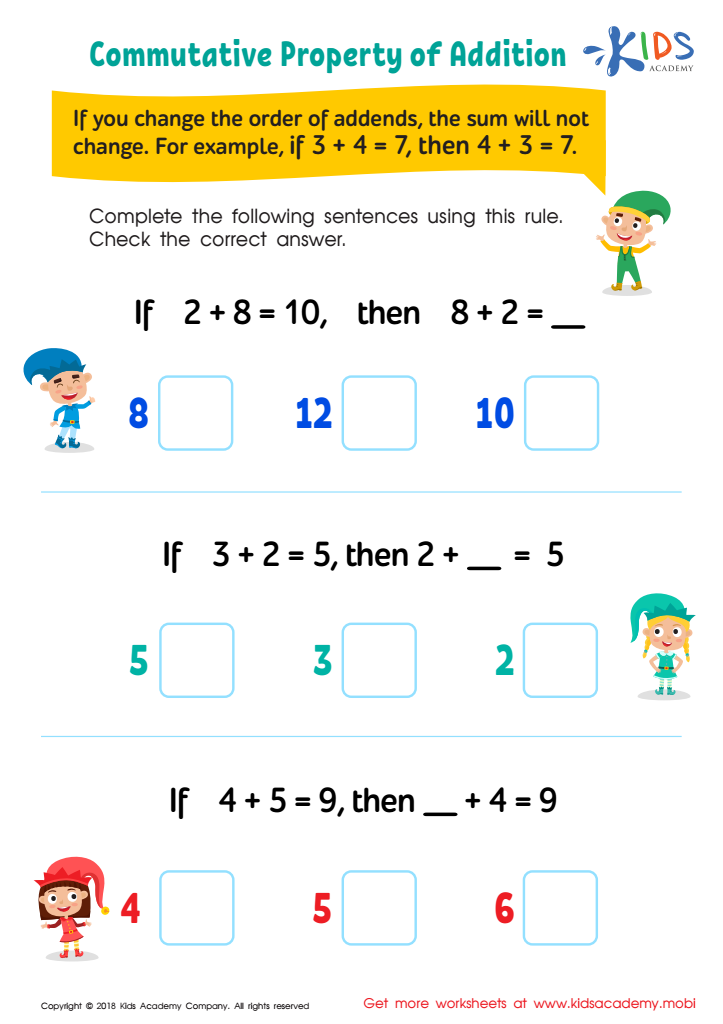
Commutative Property of Addition Worksheet
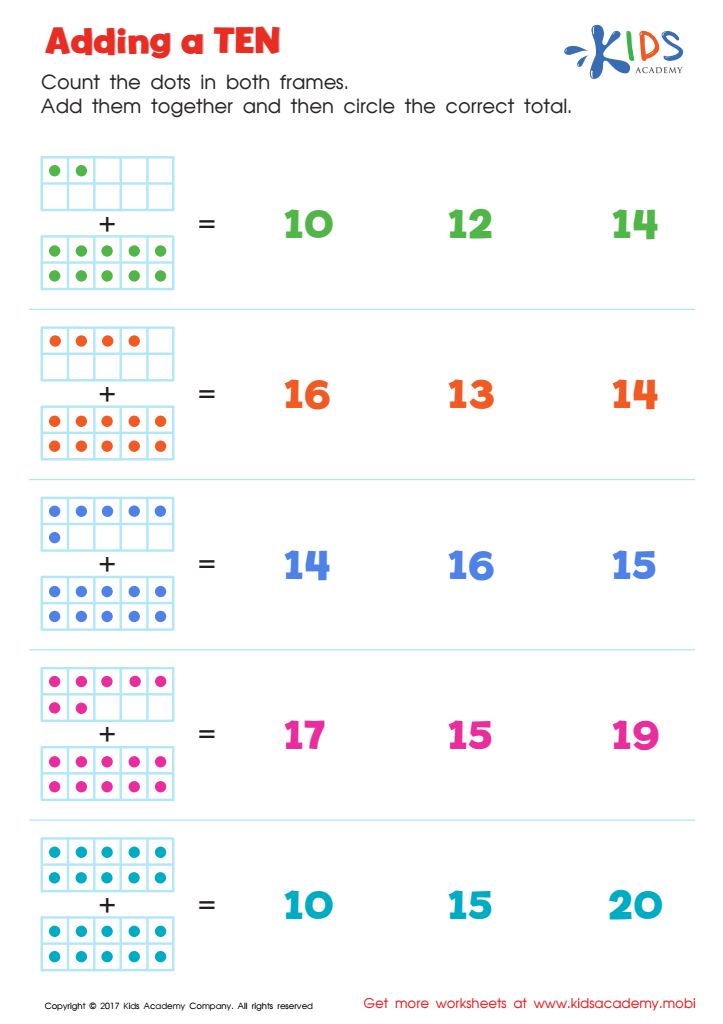
Adding a Ten Worksheet








Parents and teachers should prioritize Easy Addition for children aged 3-7 because it lays the foundational groundwork for future mathematical learning and cognitive development. During this critical period of early childhood, children's brains are highly adaptable and primed for new information. Introducing simple addition helps cultivate essential math skills, such as number sense, pattern recognition, and problem-solving.
Engaging young children in easy addition activities can make learning feel like a game, thus fostering a positive attitude toward mathematics. This early exposure reduces the likelihood of developing math anxiety later in life. As children engage with addition, they also enhance their logical reasoning and critical thinking abilities, which are transferable to other subjects and everyday situations.
Furthermore, acquiring basic addition skills at an early age sets the stage for more complex mathematical concepts, including subtraction, multiplication, and division. This scaffolded learning approach makes future math lessons less intimidating and more manageable.
Parents and teachers should care because developing these skills early provides children with the confidence needed to excel academically. It also prepares them for a world increasingly reliant on STEM (Science, Technology, Engineering, and Mathematics) knowledge. By focusing on Easy Addition for ages 3-7, adults support the holistic growth of a child's intellectual, emotional, and social capabilities.








