
Easy Graphs Worksheets for Ages 3-8
6 filtered results
Difficulty Level
Grade
Age
-
From - To
Subject
Activity
Standards
Welcome to our "Easy Graphs Worksheets for Ages 3-8" page! Here, you'll find a delightful collection of engaging, printable worksheets designed to help young learners grasp basic graphing concepts. Our easy-to-follow activities introduce children to visual data representations, enhancing their understanding of how to organize and interpret information through colorful graphs and charts. Perfect for early math skills development, these worksheets encourage creativity and critical thinking, making learning fun for kids. Whether at home or in the classroom, our resources cater to various learning styles, ensuring that every child can enjoy exploring the world of graphs. Start your child’s educational journey today!
Favorites
With answer key
Interactive
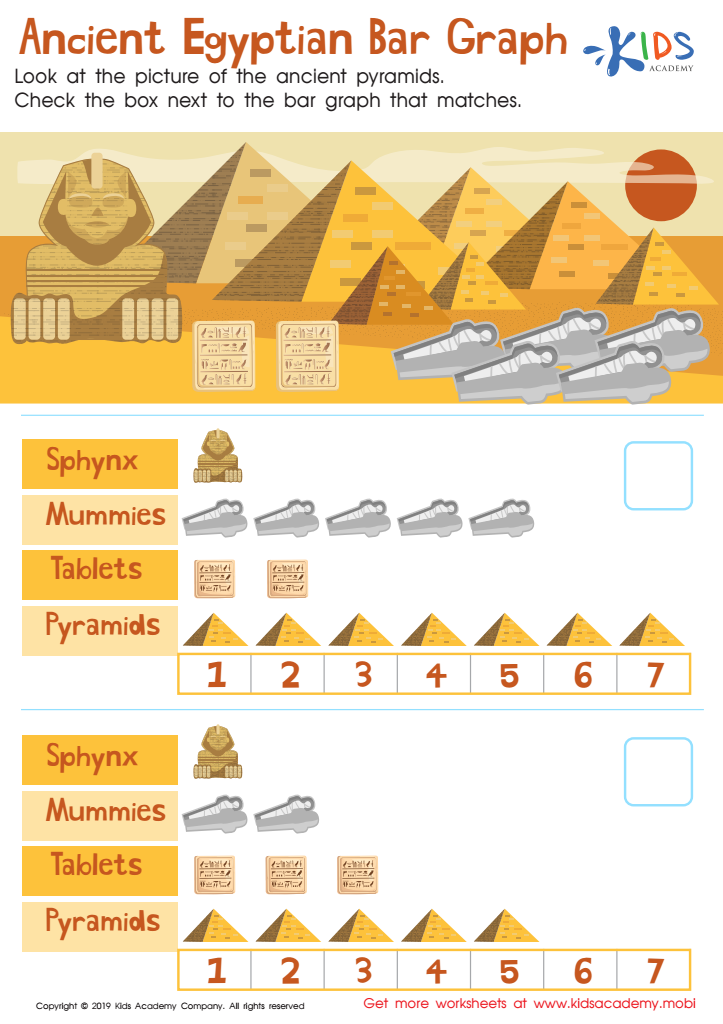
Egyptian Bar Graph Worksheet
Help your kids get a hang of bar graphs with this fun worksheet. Examine the picture of the ancient pyramids and help them match the bar graph to it. Check the box next to the correct bar graph and watch your little ones learn quickly!
 Assign to My Students
Egyptian Bar Graph Worksheet
Worksheet
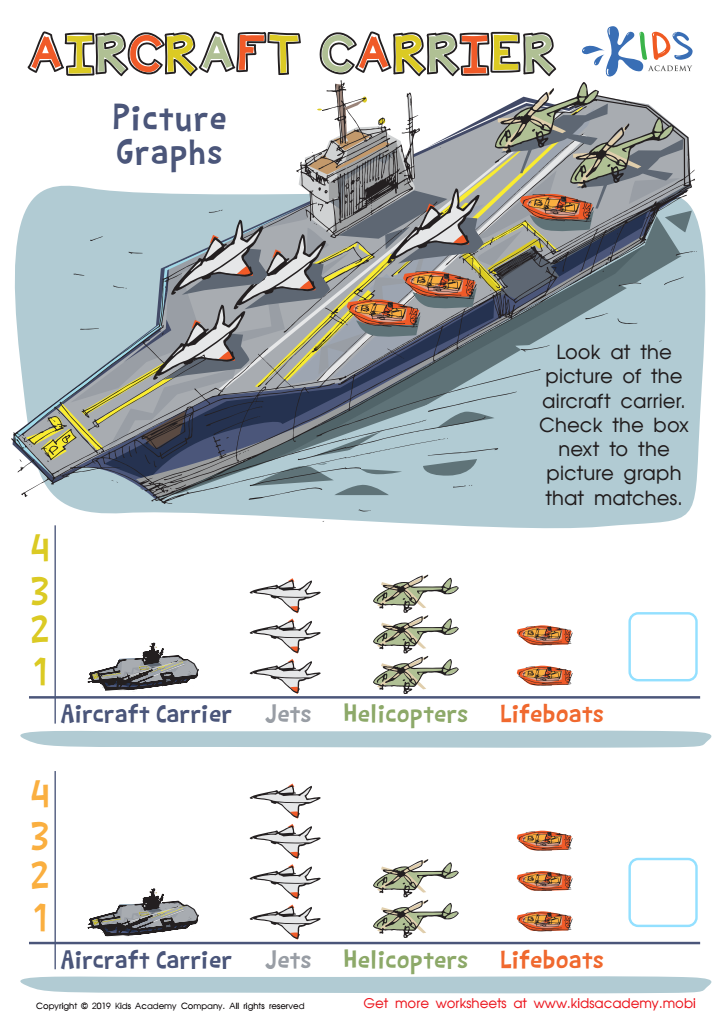
Aircraft Carrier Picture Graphs Worksheet
Kids love learning about jets and boats with this awesome worksheet! It's a great way to engage them as they work on picture graphs. Representing numerical values with pictures, this free PDF requires them to choose which picture graph and representation best match the carrier in the picture. It's also great practice for visual discrimination!
Aircraft Carrier Picture Graphs Worksheet
Worksheet
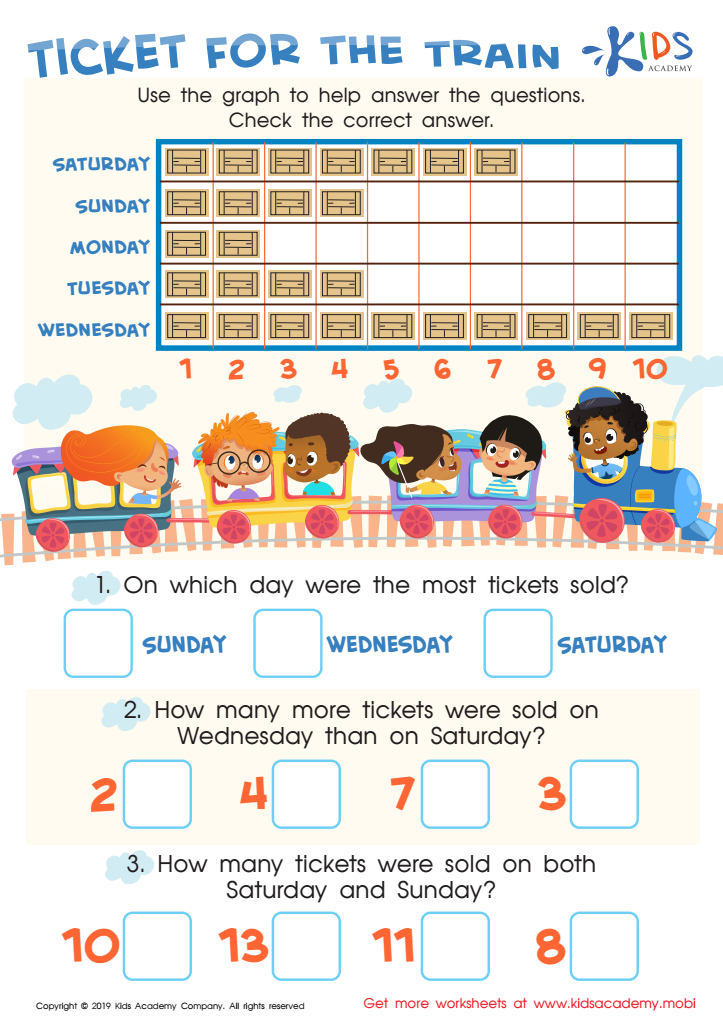
Ticket for the Train Worksheet
It's important to use fun scenarios with familiar objects when teaching kids. Try discussing train rides and the accompanying picture graph. Ask questions about it, then help kids check the correct answers. Let them enjoy the learning process!
Ticket for the Train Worksheet
Worksheet
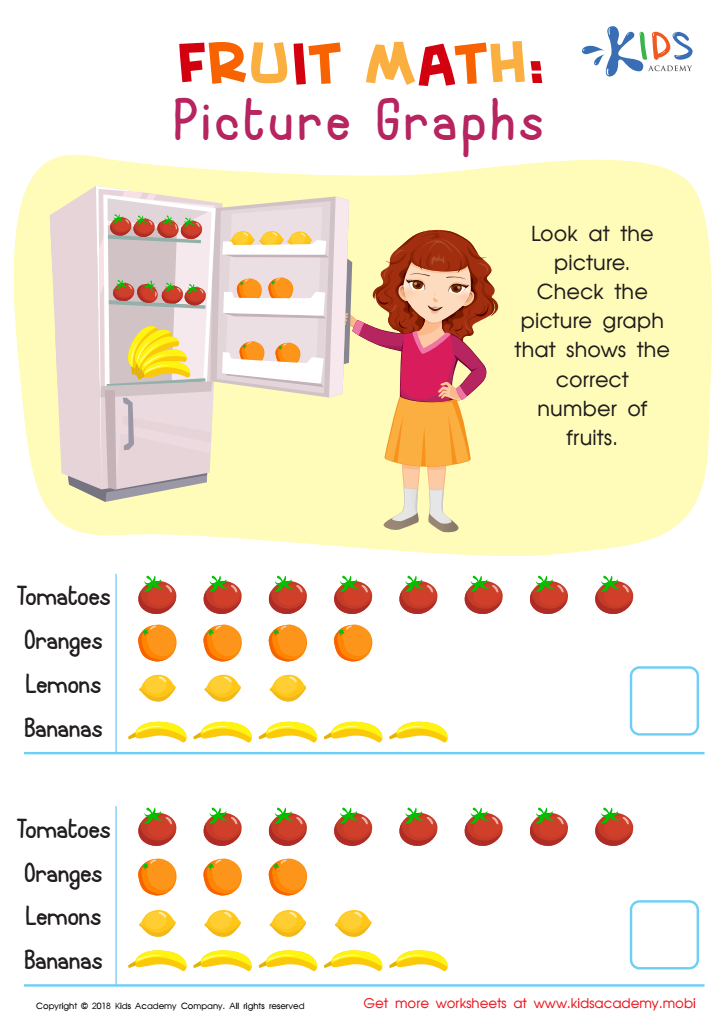
Fruit Math: Picture Graphs Worksheet
Help your child learn to draw graphs by having them look at pictures. Ask them to identify a graph that accurately portrays the data and have them explain why. This will prepare them to easily draw more complex graphs in the future. For example, have them look at the picture with the number of fruits in the colorful worksheet and explain why the graph is accurate.
Fruit Math: Picture Graphs Worksheet
Worksheet
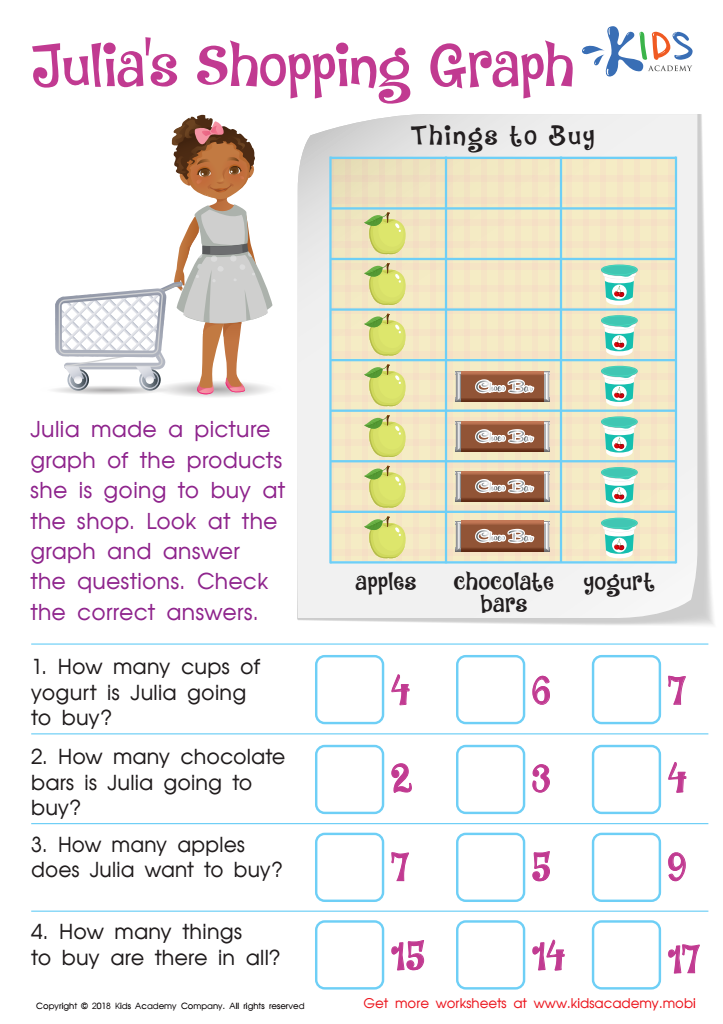
Julia's Shopping Graph Worksheet
This fun PDF worksheet provides little mathematicians with practice using pictographs. They will answer questions about Julia's graph, helping to assess their understanding of reading and interpreting data. Counting and choosing the correct answer is sure to be an enjoyable experience!
Julia's Shopping Graph Worksheet
Worksheet
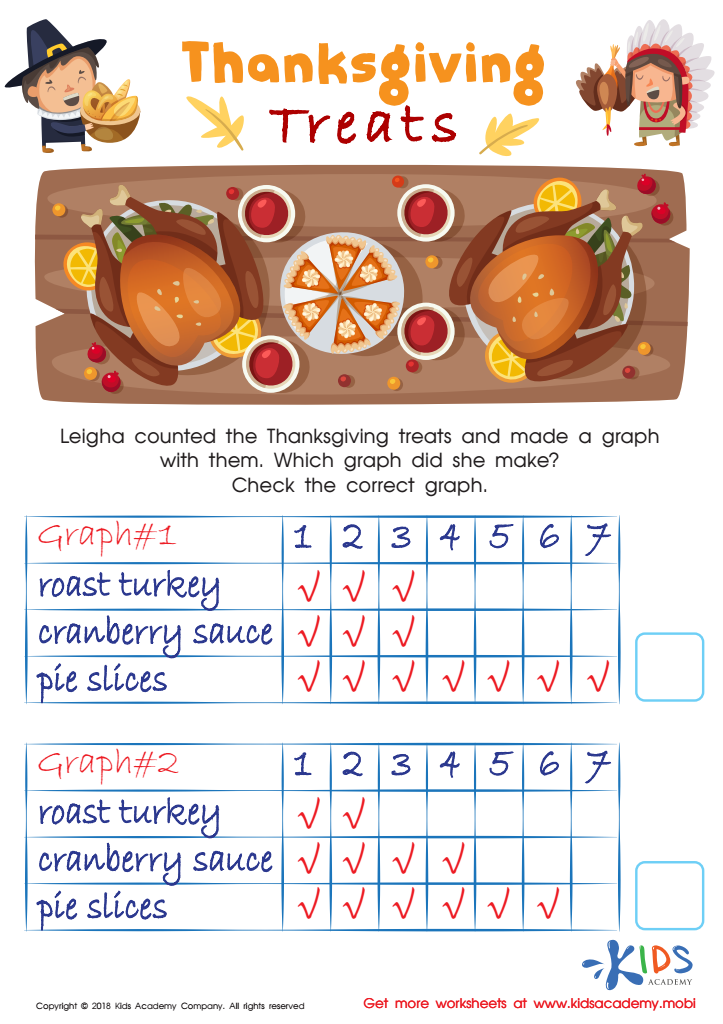
Graphs: Thanksgiving Treats Worksheet
Enjoy Thanksgiving treats with this fun PDF worksheet! Kids will count the treats and choose which graph accurately shows the number of each item. From turkey to cranberry sauce to pie slices, children will develop visual discrimination and graphing skills while assigning value to pictures.
Graphs: Thanksgiving Treats Worksheet
Worksheet
Join Kids Academy for Free
Who is primarily going to use this learning content?








Easy Graphs for Ages 3-8 is an invaluable tool for parents and teachers, as it introduces foundational concepts in math, particularly graphing and data interpretation, in a fun and engaging manner. At this pivotal age, children begin to develop their analytical skills, and Easy Graphs provides a tangible way to make sense of the world around them.
By using visual representations, children can learn to categorize information, recognize patterns, and comprehend relationships among different sets of data. These early experiences with graphs foster critical thinking skills and promote visual literacy, essential for later subjects, including science and statistics.
Furthermore, Easy Graphs encourages collaboration and communication as children often work in pairs or groups to interpret data. This promotes social skills and helps children articulate their findings. For parents, being involved in these activities strengthens their bond with their child, making learning a shared adventure.
Teachers also benefit by incorporating Easy Graphs into their curriculum to create interactive and collaborative classroom environments. Understanding how to collect and analyze data not only enhances children's math competence but also prepares them for advanced topics in later grades. Consequently, Easy Graphs serves as a bridge to a deeper understanding of mathematics and analytical reasoning.








