
Easy Skip Counting Worksheets for Ages 3-8
6 filtered results
Difficulty Level
Grade
Age
-
From - To
Subject
Activity
Standards
Our "Easy Skip Counting Worksheets for Ages 3-8" offer a fun and interactive way for young learners to bolster their math skills. Designed with engaging visuals and tailored for early learners, these worksheets help children grasp the concept of skip counting by 2s, 5s, and 10s with ease. Each worksheet is crafted to stimulate interest while developing essential early math foundations. Perfect for home or classroom use, our skip counting exercises transform learning into an enjoyable experience, making math exciting and accessible for your child. Explore our printable resources and give your young mathematicians a head start today!
Favorites
With answer key
Interactive
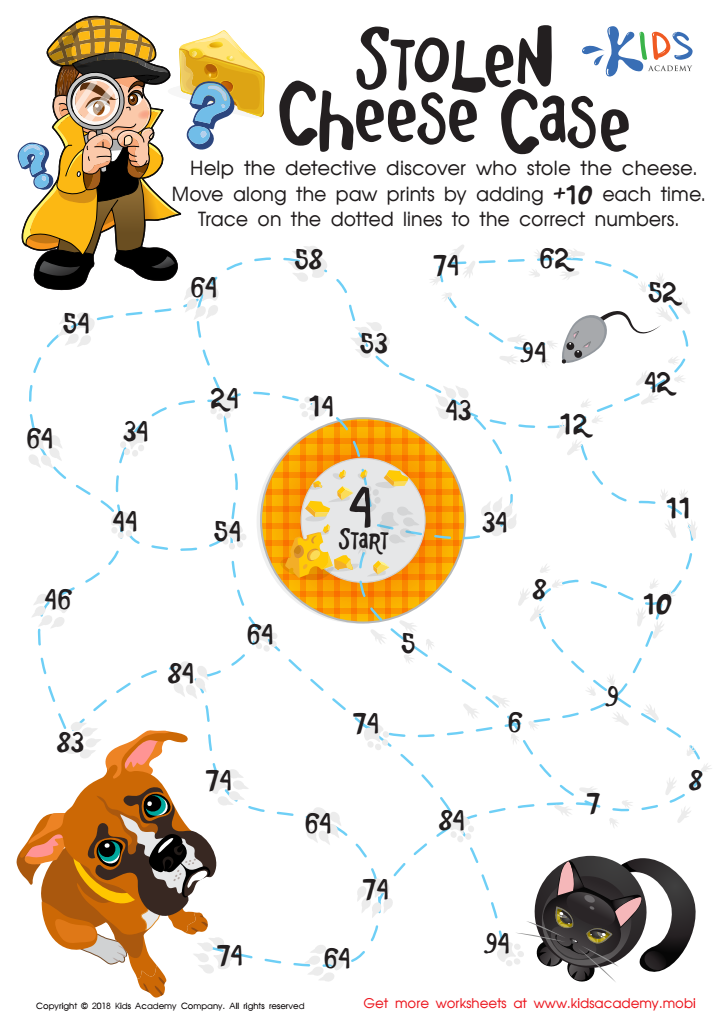
Stolen Cheese Case Maze Worksheet
Someone has stolen the cheese! Can your mathematician detective figure out who it is? Was it the dog, cat or mouse? Have them use traceable lines to skip count by 10 on this free PDF worksheet to solve the case. They'll be having fun and developing their skip-counting strategy at the same time!
 Assign to My Students
Stolen Cheese Case Maze Worksheet
Worksheet
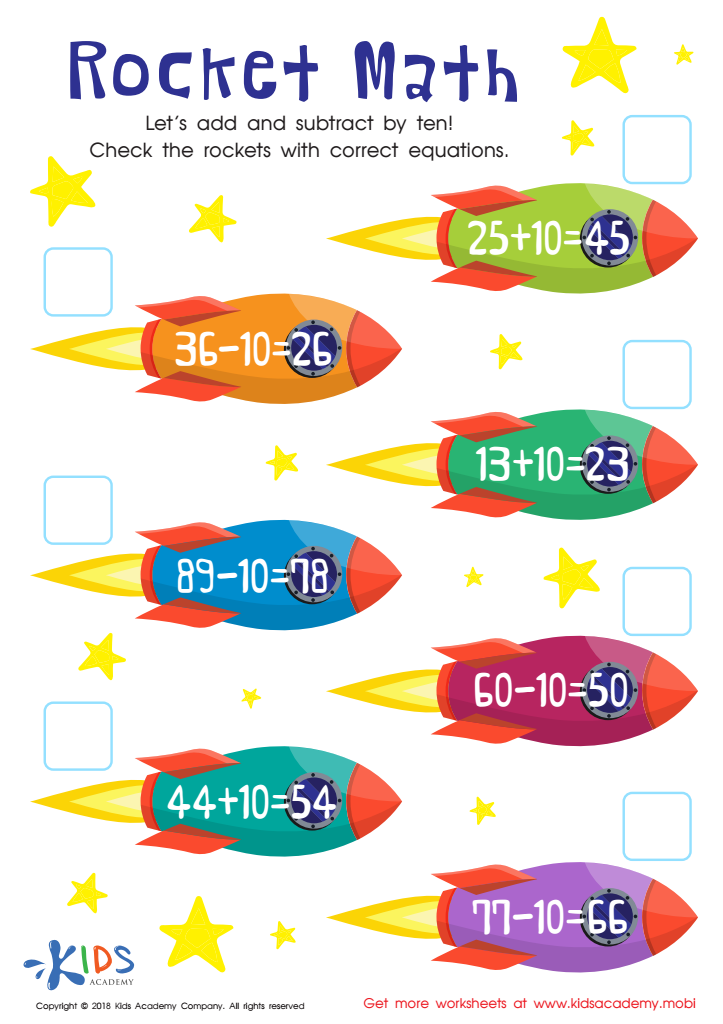
Rocket Math Worksheet
Your students will be math wizards in no time as they blast off on this exciting and colorful PDF worksheet. They'll use the 10s strategy to practice addition and subtraction, and they'll learn to skip count forwards and backwards. Keep them engaged and make learning fun!
Rocket Math Worksheet
Worksheet
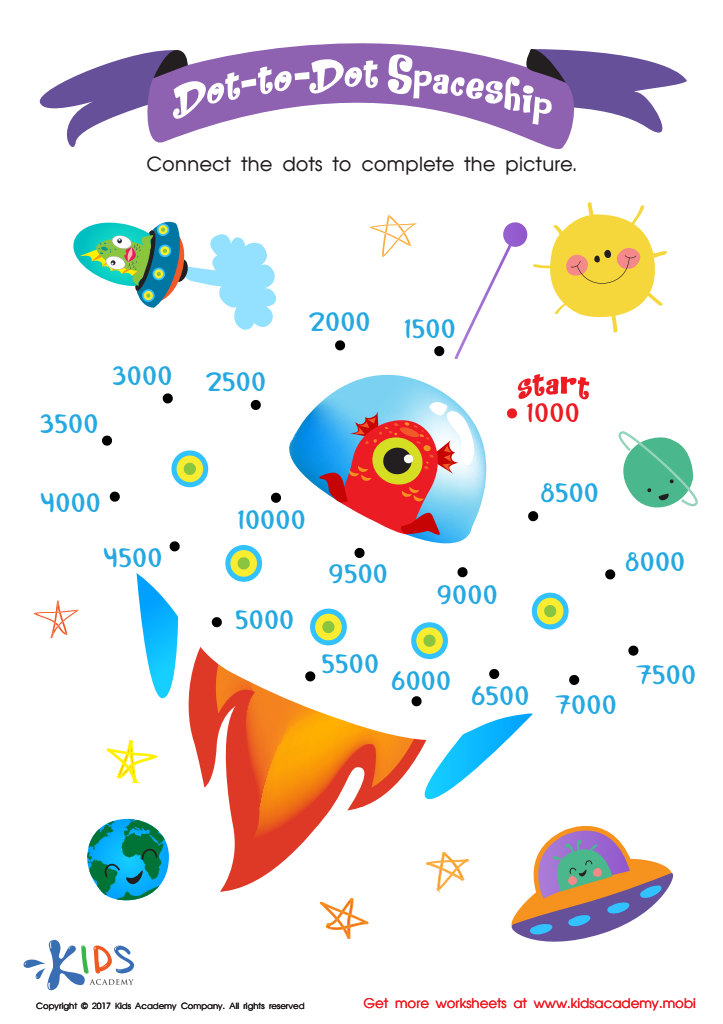
Dot to Dot Worksheet for 3rd Grade
Let your 3rd grader develop better number skills with this dot-to-dot worksheet! They can have fun outlining a spaceship as they skip count by 500 up to 10,000. It's a great way to boost their number sense and make learning more exciting.
Dot to Dot Worksheet for 3rd Grade
Worksheet
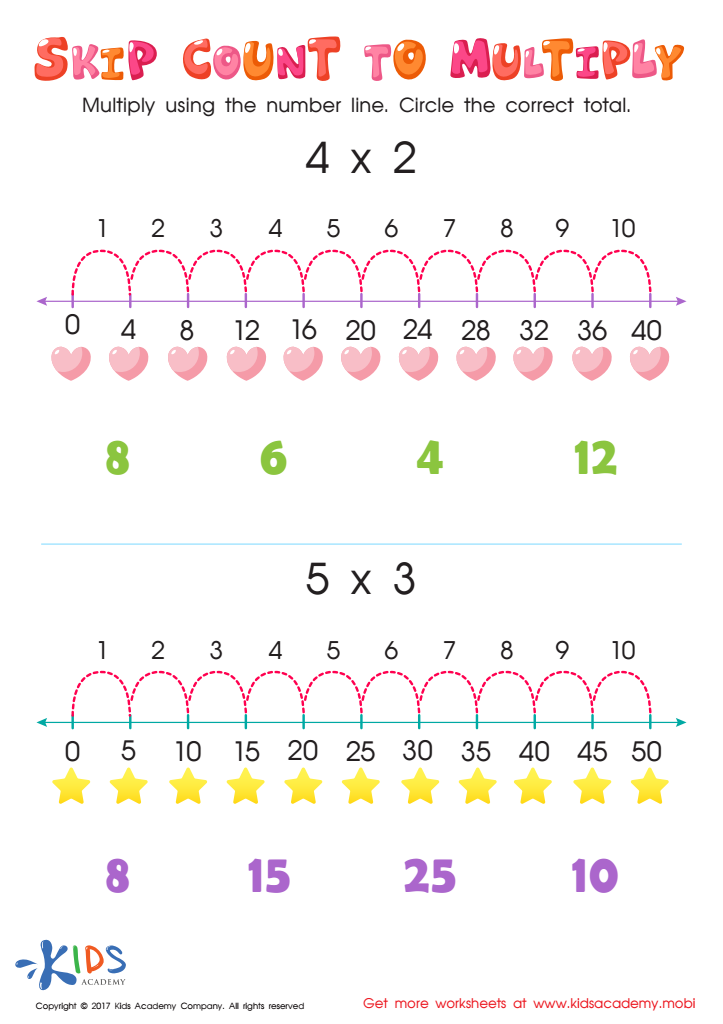
Skip Count Multiplication Worksheet
This colorful worksheet helps kids multiply by skip counting on a number line. Kids gain a better understanding of multiplication by seeing how the answer is calculated.
Skip Count Multiplication Worksheet
Worksheet
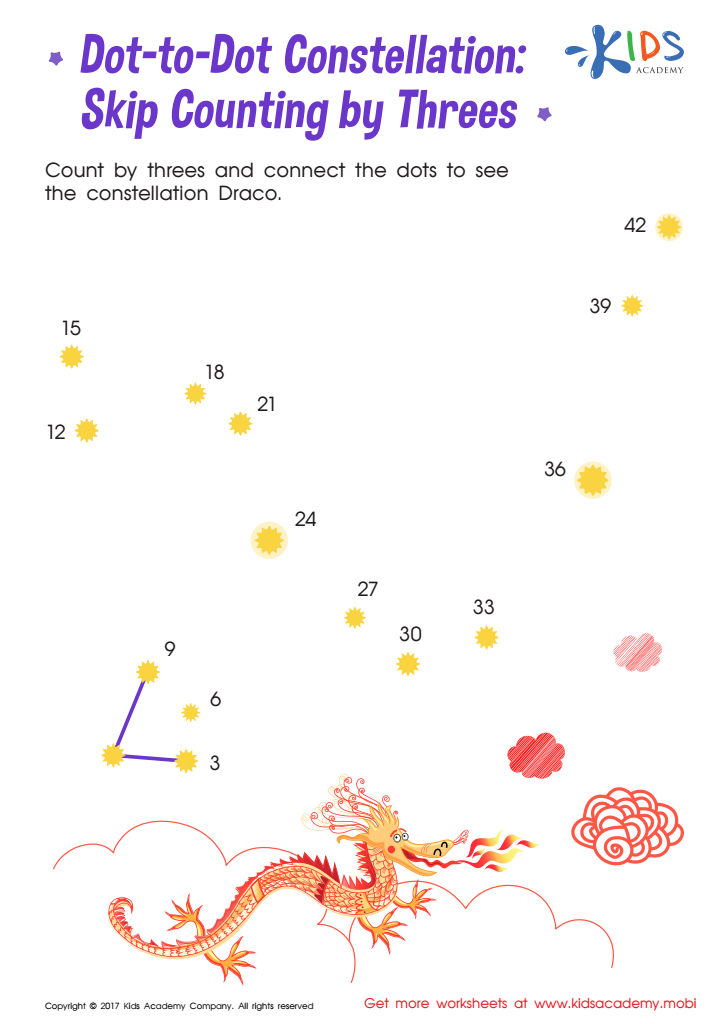
Skip Counting by 3s: Dot–to–Dot Constellation Printable
Worksheet
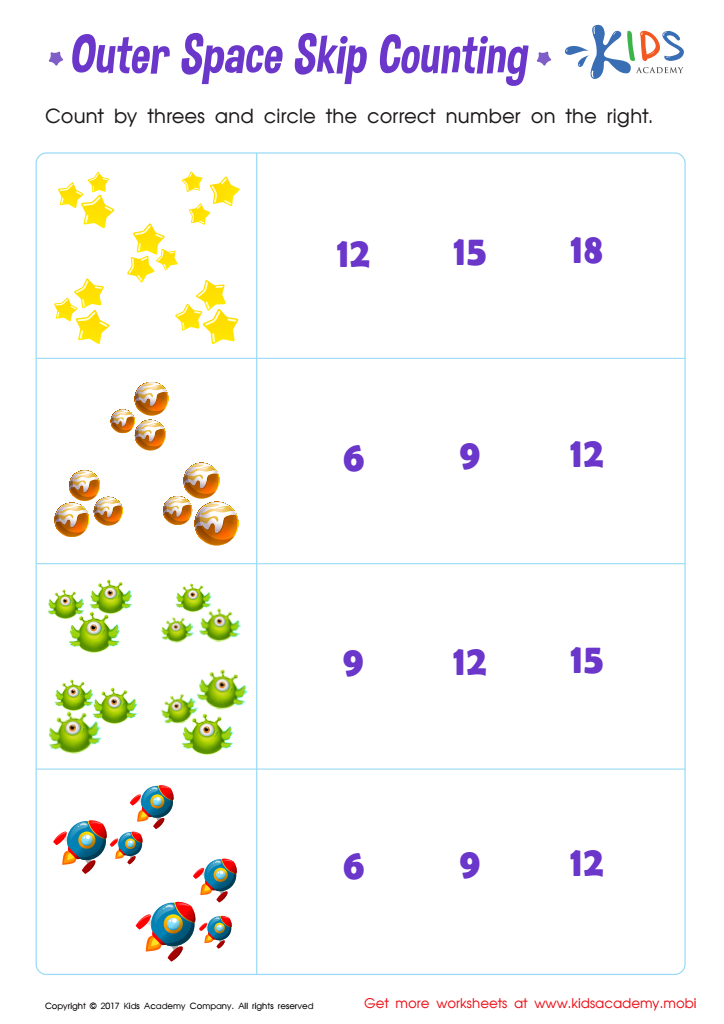
Skip Counting by 3s: Outer Space Skip Counting Printable
Want to set your child up for math success? Get them this printable worksheet that helps them practice counting in groups of 3’s, building a foundation for more advanced math skills. Skipping counting helps kids master logical reasoning and cognitive skills, making a connection between counting objects individually and in groups. The colorful images will keep them engaged and having fun - without realizing how hard they're working!
Skip Counting by 3s: Outer Space Skip Counting Printable
Worksheet
Join Kids Academy for Free
Who is primarily going to use this learning content?







%20(1).jpg)
Parents and teachers should prioritize Easy Skip Counting for children ages 3-8 because it lays a foundational cornerstone in mathematical development. This early math skill helps kids understand patterns and sequences, which are essential for more advanced arithmetic and problem-solving abilities. When children practice skip counting by numbers such as 2s, 5s, and 10s, they begin to see connections between these values and develop a sense of number sense and grouping, which is paramount for comprehension of later mathematical concepts such as addition, multiplication, and even algebra.
Moreover, skip counting enhances cognitive development by encouraging children to recognize numerical sequences and relationships, thus sharpening their memory and attention span. It also provides practical life skills, making everyday tasks like telling time, dealing with money, and measuring objects much more intuitive.
Introducing fun and engaging skip-counting activities early on, through songs, games, or visual aids, makes learning enjoyable and reinforces these essential math skills. This supportive and stimulating learning environment can boost a child’s confidence and foster a positive attitude towards math, ultimately setting them up for academic success and a lifelong appreciation of numeracy. For these reasons, integrating easy skip counting into early education is a crucial investment in a child's future learning.








