Easy Arrays Worksheets for Ages 4-7
8 filtered results
-
From - To
Introduce young learners to the basics of mathematics with our engaging "Easy Arrays Worksheets" designed for ages 4-7. These printable worksheets from Kids Academy make learning fun and interactive, helping children grasp foundational concepts in arrays through colorful visuals and intuitive activities. By practicing with these sheets, kids will develop crucial early math skills such as counting, addition, and pattern recognition. Perfect for both parents and educators, these worksheets simplify the learning process, ensuring kids stay motivated and confident as they explore the world of numbers. Download now to give your child a head start in math today!
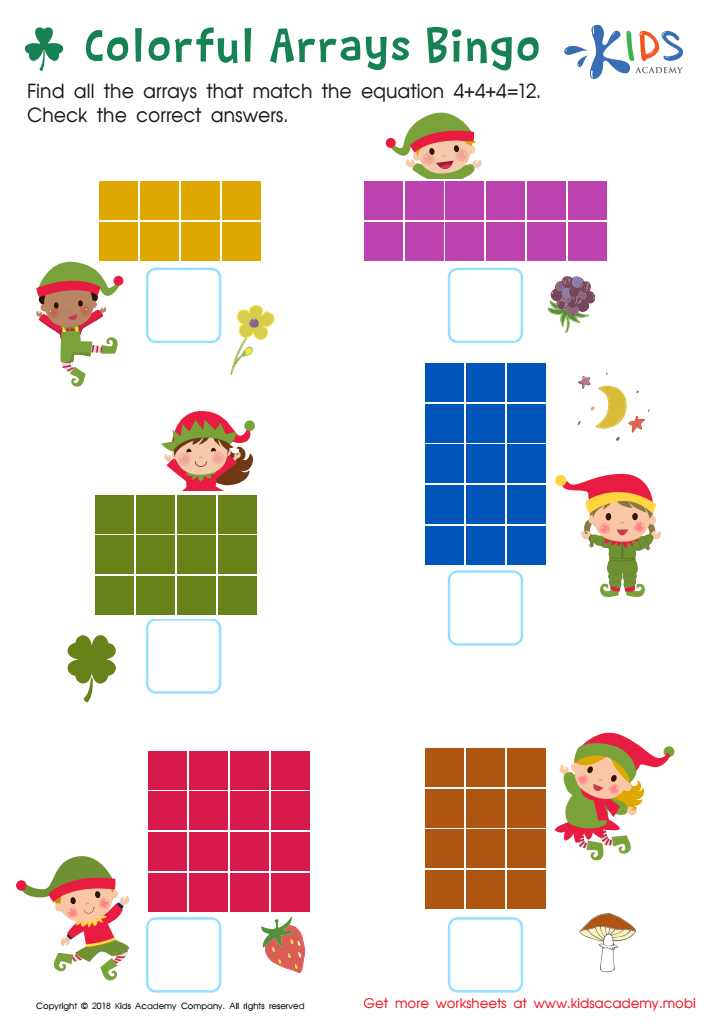
Colorful Arrays Bingo Worksheet
 Assign to My Students
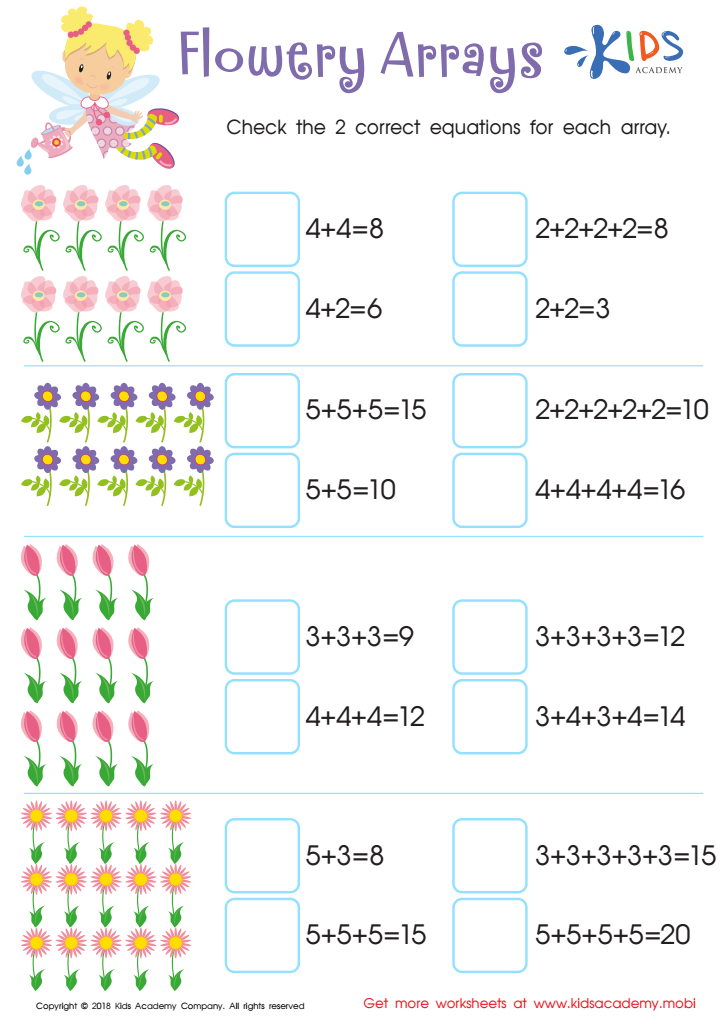
Flowery Arrays Worksheet
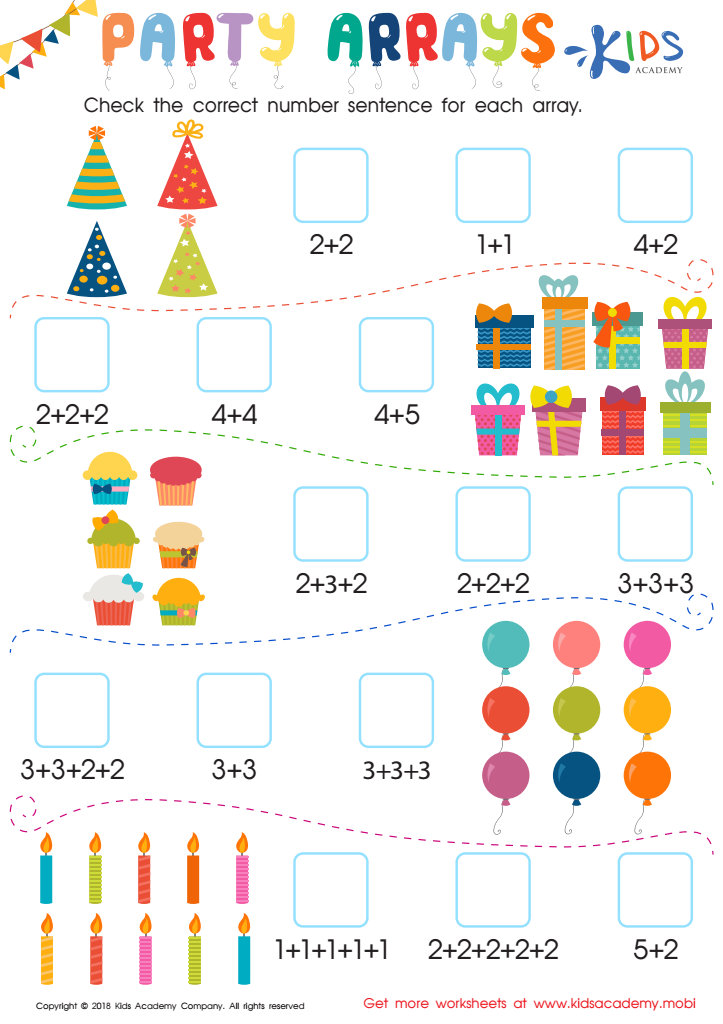
Party Arrays Worksheet
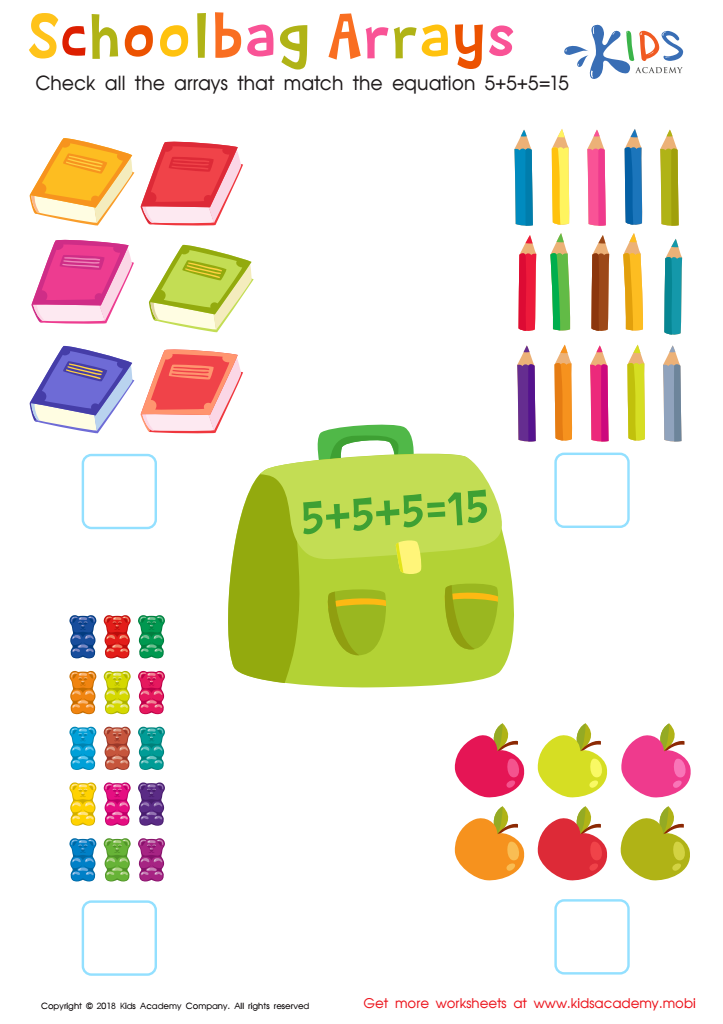
Schoolbag Arrays Worksheet
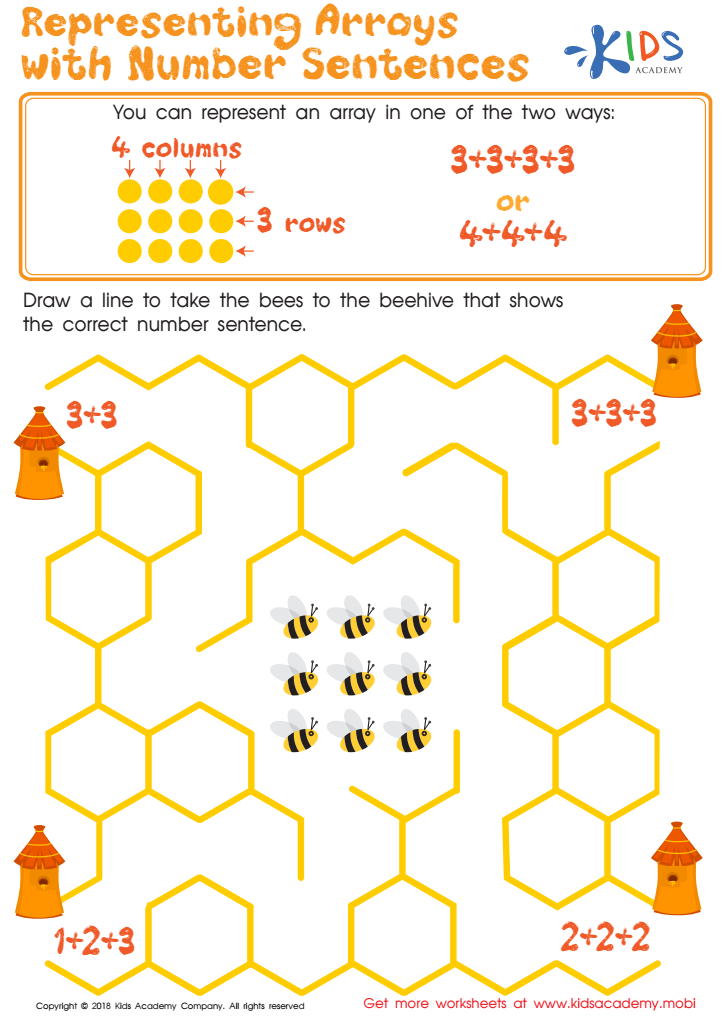
Representing Arrays with Number Sentences Worksheet
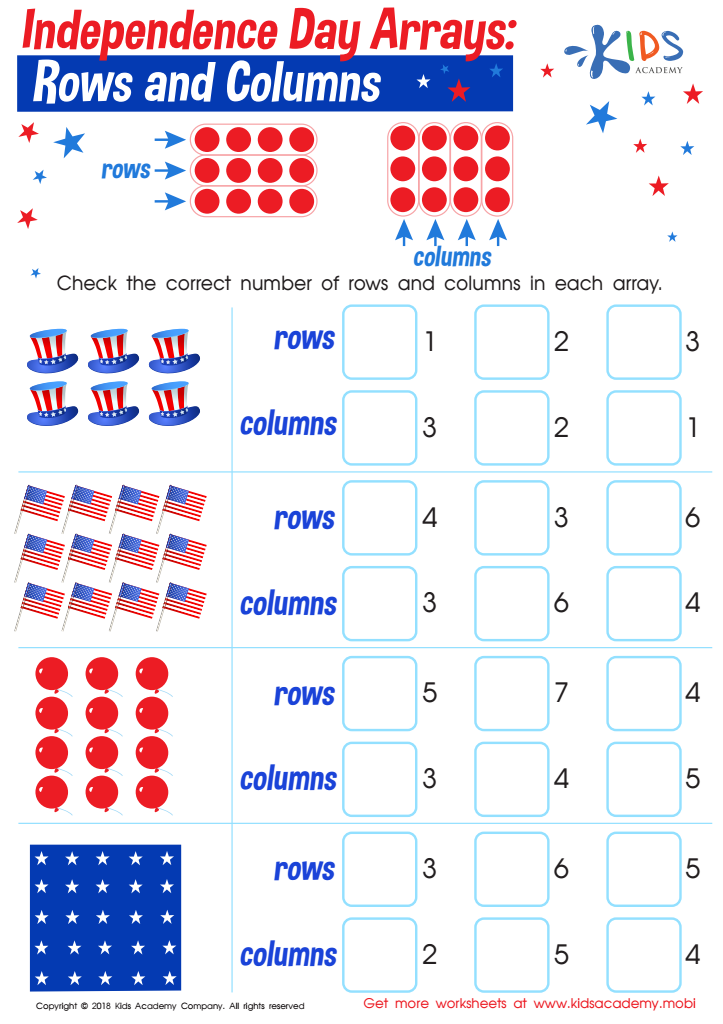
Independence Day Arrays: Rows and Columns Worksheet
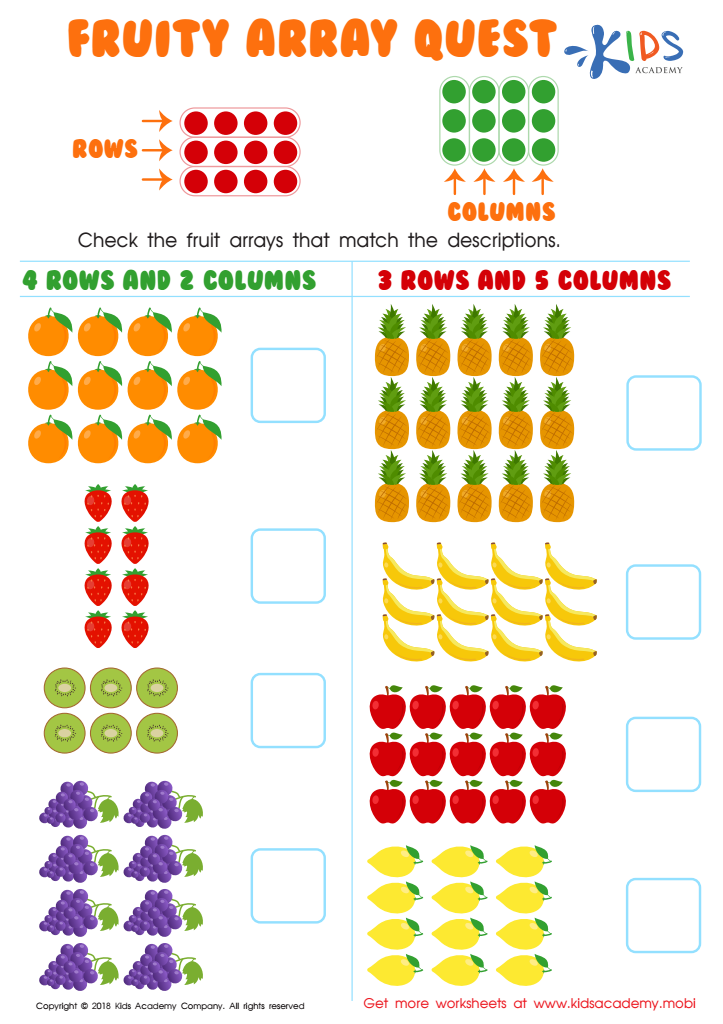
Fruity Array Quest Worksheet
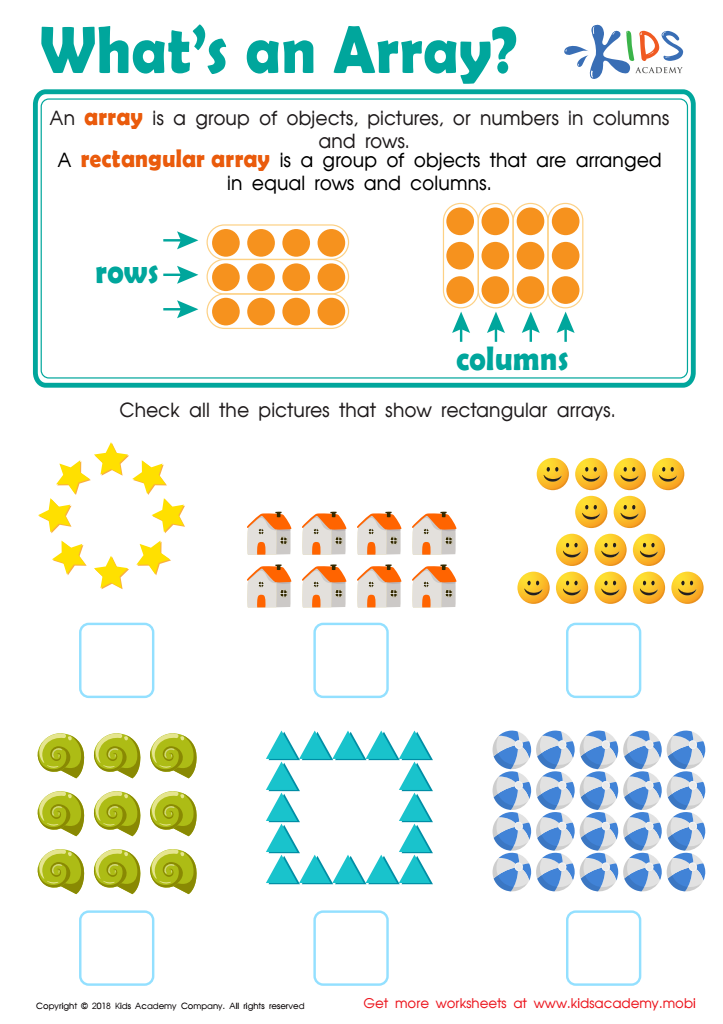
What's an Array? Worksheet







Parents and teachers should embrace "Easy Arrays" for children aged 4-7 because they lay the foundational groundwork for mathematical understanding in a simple and engaging way. Arrays, which are arrangements of objects, symbols, or numbers in rows and columns, can significantly aid in the comprehension of early arithmetic concepts like counting, addition, and the basics of multiplication. At this tender age, visual learning is key, and arrays provide a clear, organized way to visualize mathematical problems.
Using arrays can help young learners grasp the idea of groupings and patterns, essential skills for more advanced math topics. For instance, seeing a 3x3 array helps children understand multiplication as repeated addition, which is more intuitive than abstract numbers alone. This visual representation makes numerical patterns easier to spot and concepts more accessible.
Additionally, when children work with arrays, they build critical thinking and problem-solving skills by exploring different ways to organize objects. It encourages curiosity and makes learning fun and interactive. Moreover, the tangible nature of arrays, such as using everyday items like blocks or stickers, bridges the gap between abstract and concrete learning.
By integrating arrays into early education, parents and teachers set the stage for stronger mathematical abilities, fostering confidence and competence in young learners that will benefit them throughout their educational journey.








