
Easy Measurement Worksheets for Ages 4-9
43 filtered results
Difficulty Level
Grade
Age
-
From - To
Subject
Activity
Standards
Unlock the joy of learning with our Easy Measurement Worksheets for Ages 4-9! Perfectly designed for young minds in school or at home, our worksheets make mastering measurement concepts engaging and fun. From comparing lengths to understanding weight and volume, each page is filled with colorful illustrations and age-appropriate challenges. Whether your child is just starting or seeking extra practice, these printables ensure a smooth and enjoyable learning journey. Explore our collection today and give your child the tools to succeed with easy-to-understand and exciting measurement activities. Discover full that all have joined 부모!
Favorites
With answer key
Interactive
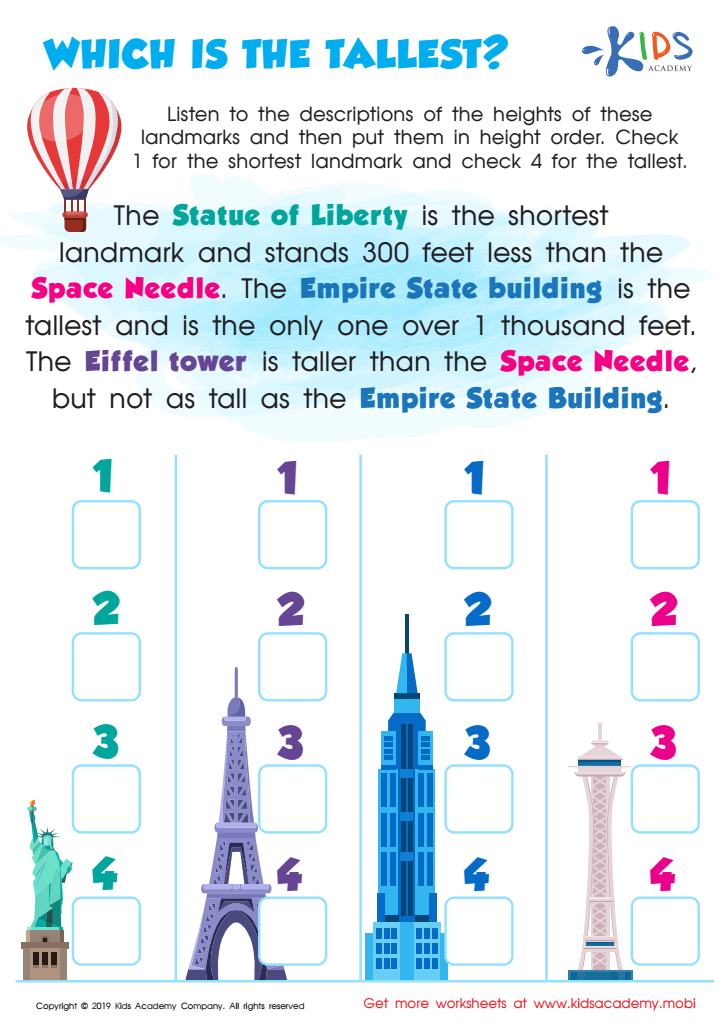
Which is the Tallest? Worksheet
Help your kids arrange the buildings in order of height: highest (4) to lowest (1). Ask them if they can think of other ways things can be measured. Read the texts describing the buildings and check 4 for the tallest and 1 for the shortest.
 Assign to My Students
Which is the Tallest? Worksheet
Worksheet
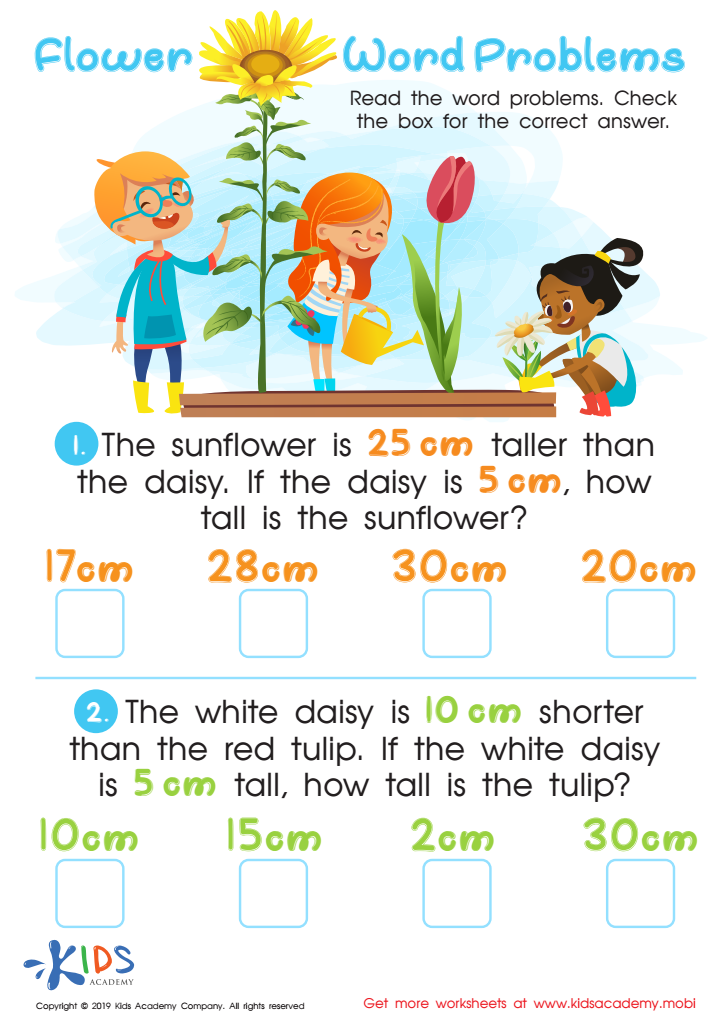
Flower Word Problems Worksheet
Practice measuring with word problems on this worksheet. Read the two sentences to your kids, interpret them, and have them check the correct answer. Equations can be presented in various ways; sentences or numbers. Help your kids understand the different forms.
Flower Word Problems Worksheet
Worksheet
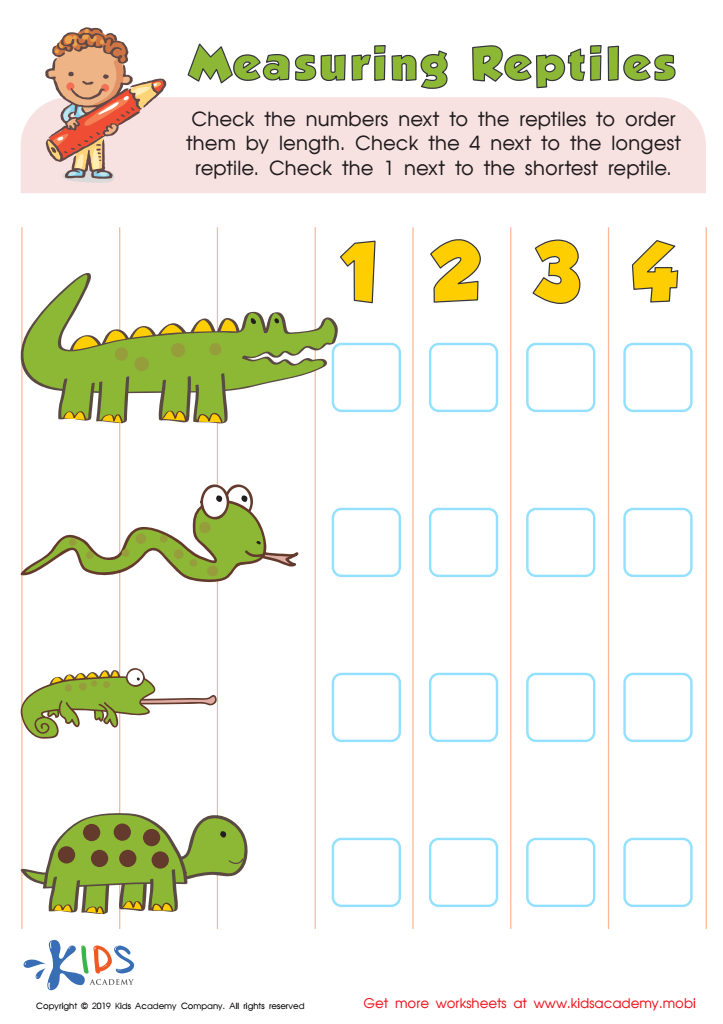
Measuring Reptiles Worksheet
Do your kids know what reptiles are? Ask them to name some and name features. In this activity, your kindergartners will measure with reptiles. Show them the picture and get them to order by length, starting with the one with 4 by the longest reptile, then the one with 1 by the shortest.
Measuring Reptiles Worksheet
Worksheet
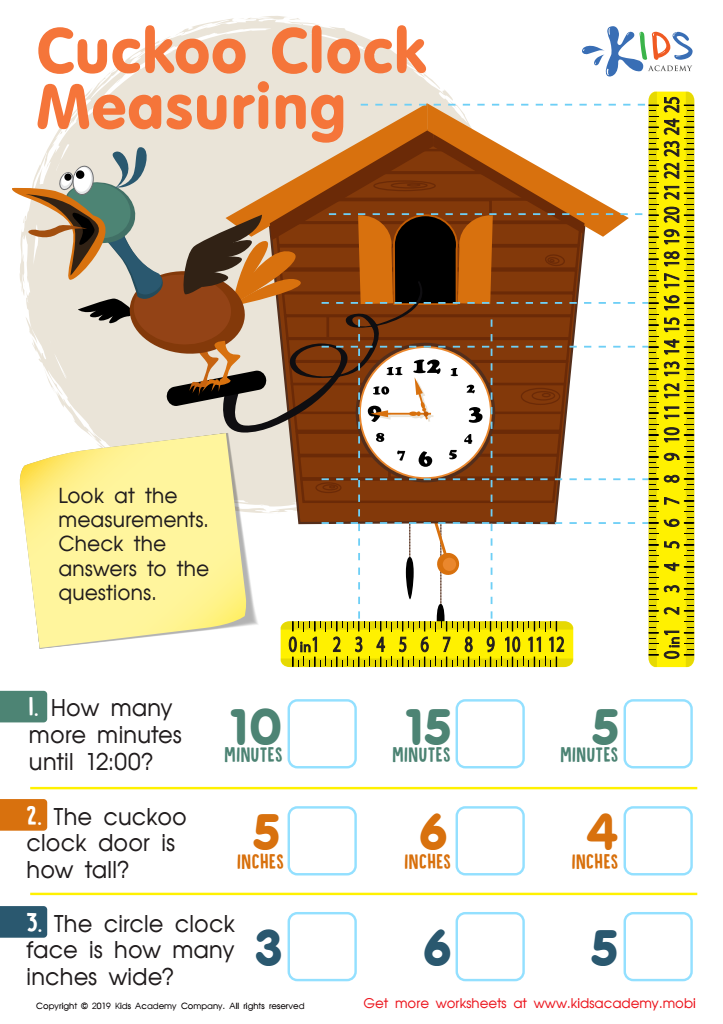
Cuckoo Clock Measuring Worksheet
Check out the fun picture in this worksheet. Ask your kids to identify the object. It's a cuckoo clock - the bird pops out every hour to announce the time. See if your child knows how to measure the clock. Help them answer the 3 questions and test their knowledge of time!
Cuckoo Clock Measuring Worksheet
Worksheet
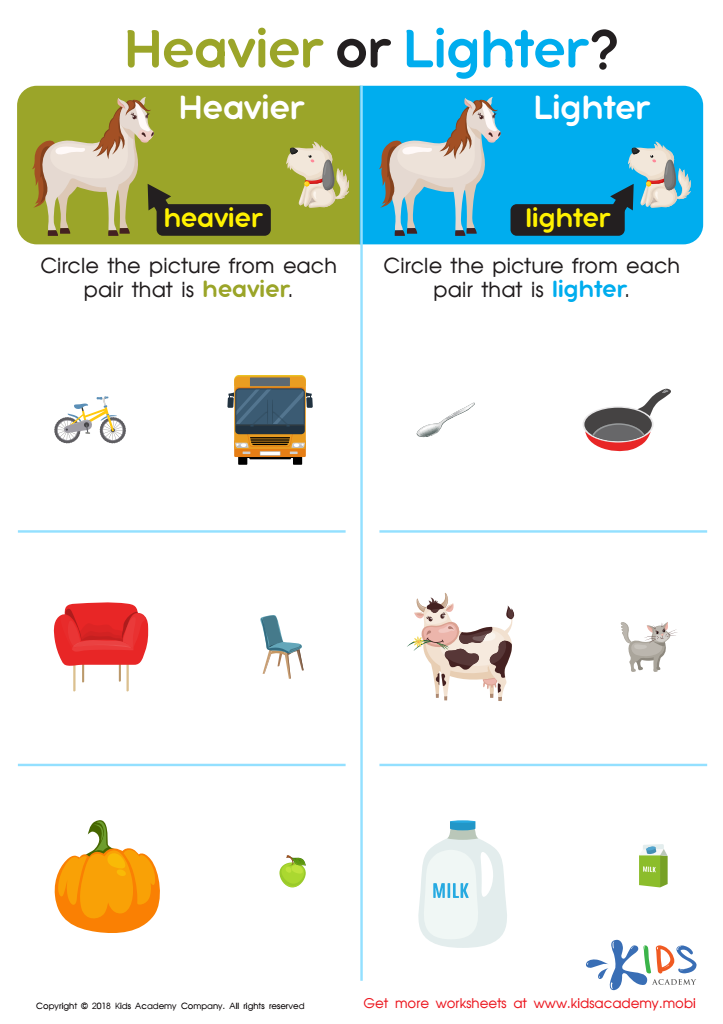
Heavier or Lighter? Worksheet
This PDF provides children an opportunity to practice concepts of heavier and lighter with familiar pictures. They must use fine-motor skills to circle the heavier or lighter item in each pair. Picture clues help build a foundation for future, harder concepts. Kids will love this fun worksheet!
Heavier or Lighter? Worksheet
Worksheet
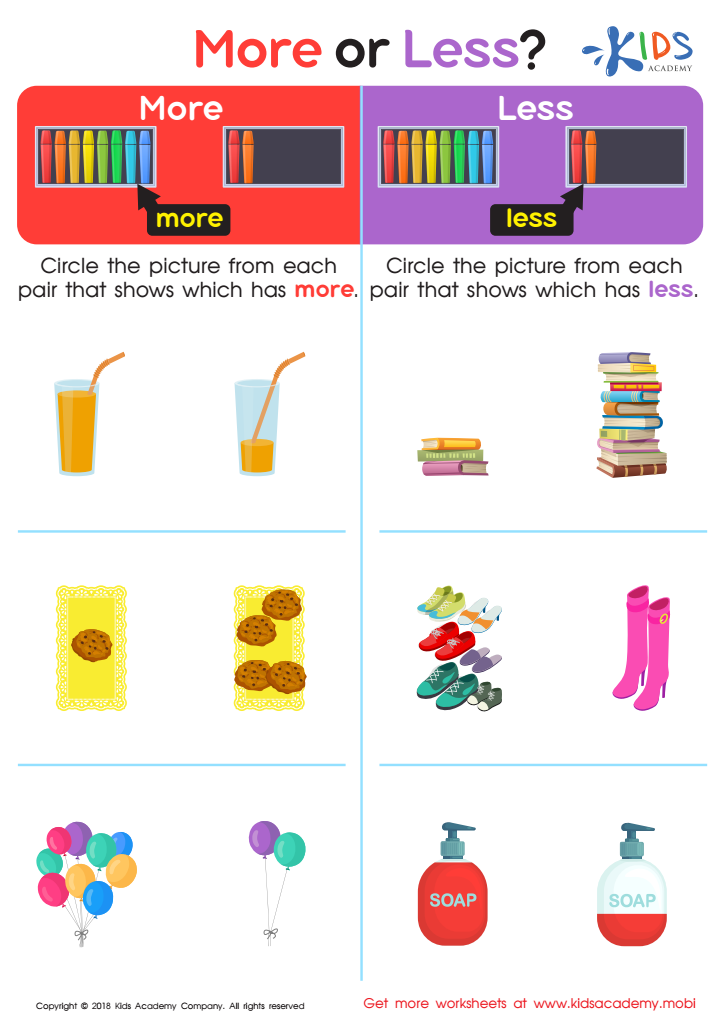
More or Less? Worksheet
Understanding "more or less" can be hard for kids. This PDF uses colorful images to help them learn. By matching the right picture pairs, children can gain a better understanding and strengthen their comparison skills for more complex tasks.
More or Less? Worksheet
Worksheet
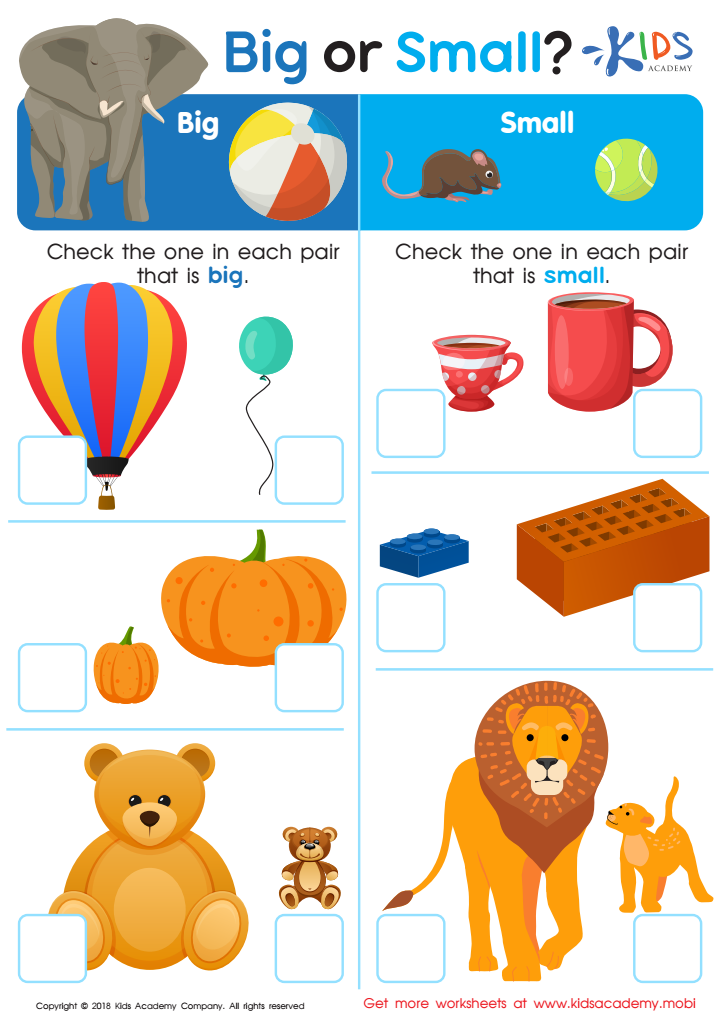
Big or Small? Worksheet
Kids need visuals to understand bigger and smaller concepts. This free PDF worksheet offers fun pictures that let them compare and gain a stronger understanding of sizes. Kids will enjoy it and won't realize they're learning since the pictures are so engaging. It's great preparation for future measurements.
Big or Small? Worksheet
Worksheet
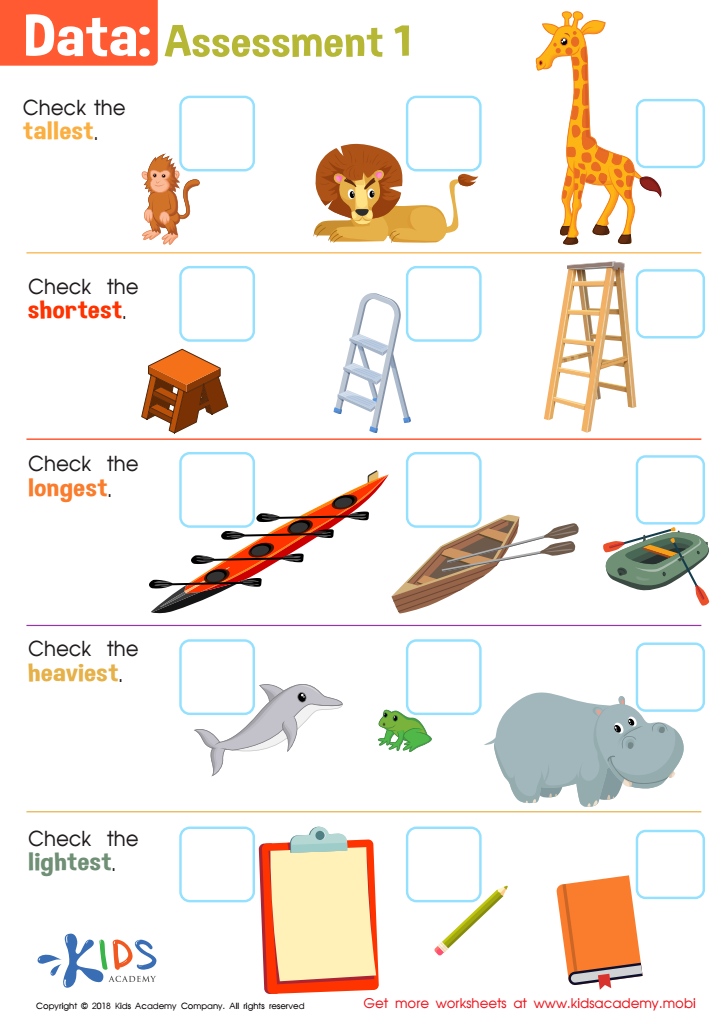
Data: Assessment 1 Worksheet
This free worksheet helps you assess where your young students are with measurement superlatives like tallest, shortest, heaviest, longest and lightest. It features cute, colorful pics of familiar objects so your kids have a reference, and helps you identify areas to work on.
Data: Assessment 1 Worksheet
Worksheet
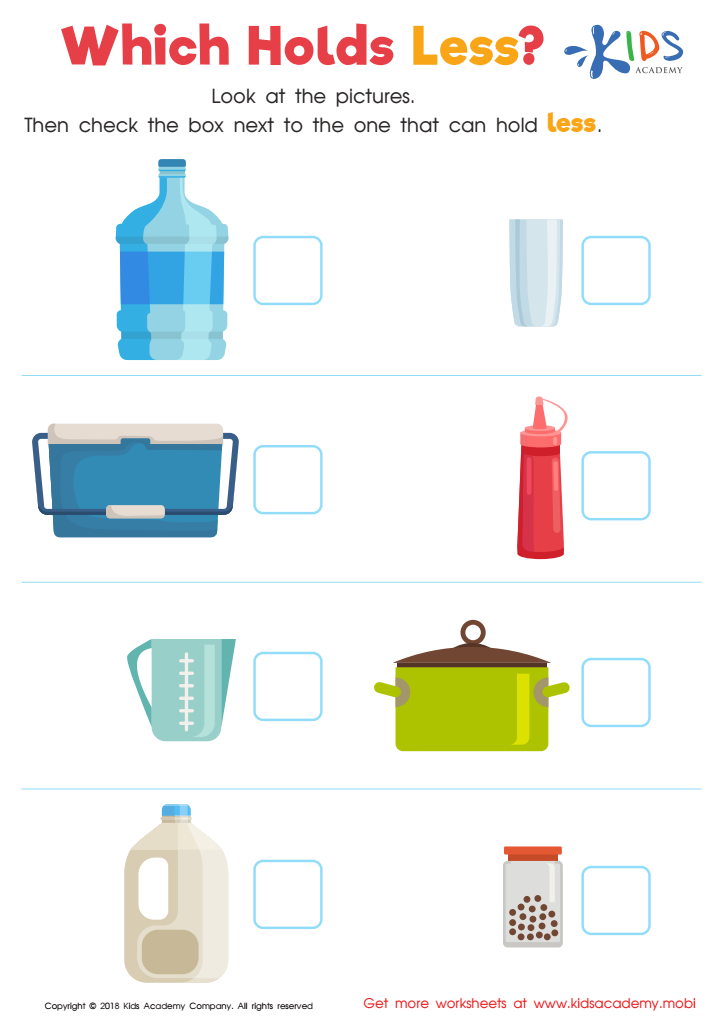
Which Holds Less? Worksheet
Students may find it hard to grasp volume without a visual aid. This free, downloadable worksheet helps with understanding by providing pictures of familiar objects. It allows students to practice comparing volumes and deciding which container holds less. It's a great introduction before they move onto using greater than and less than symbols.
Which Holds Less? Worksheet
Worksheet
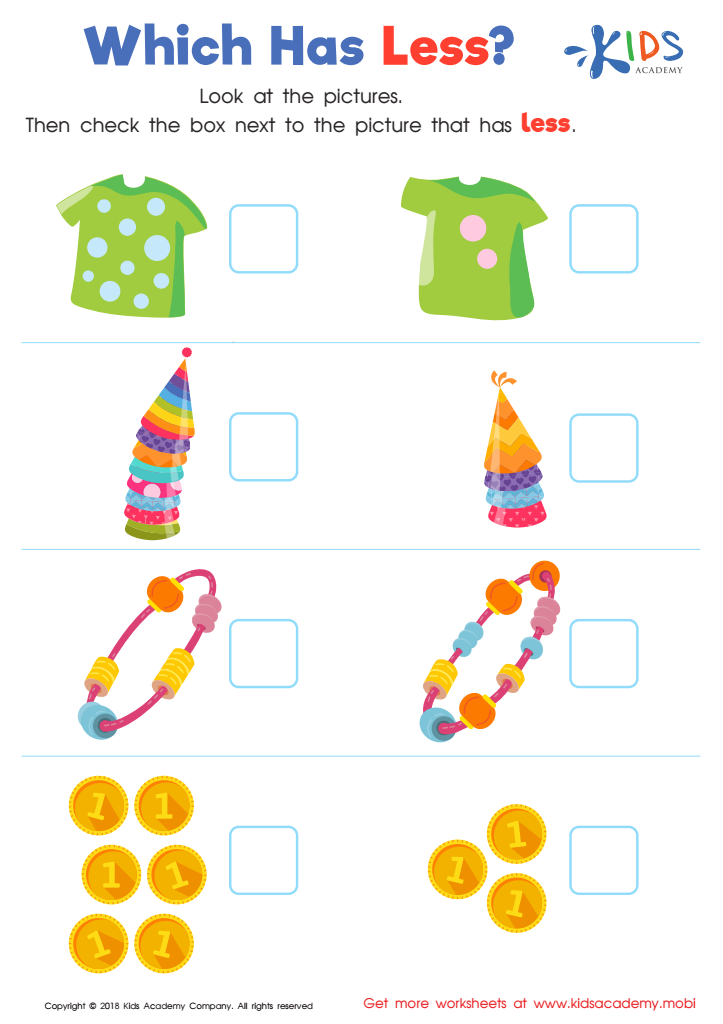
Which Has Less? Worksheet
Kids can develop their number sense by comparing and contrasting objects to identify which has less. This worksheet helps them practice: it's bright and colorful, featuring familiar objects and pictures to count, strengthening basic counting skills. It's the perfect warm-up for comparing and contrasting larger numbers.
Which Has Less? Worksheet
Worksheet
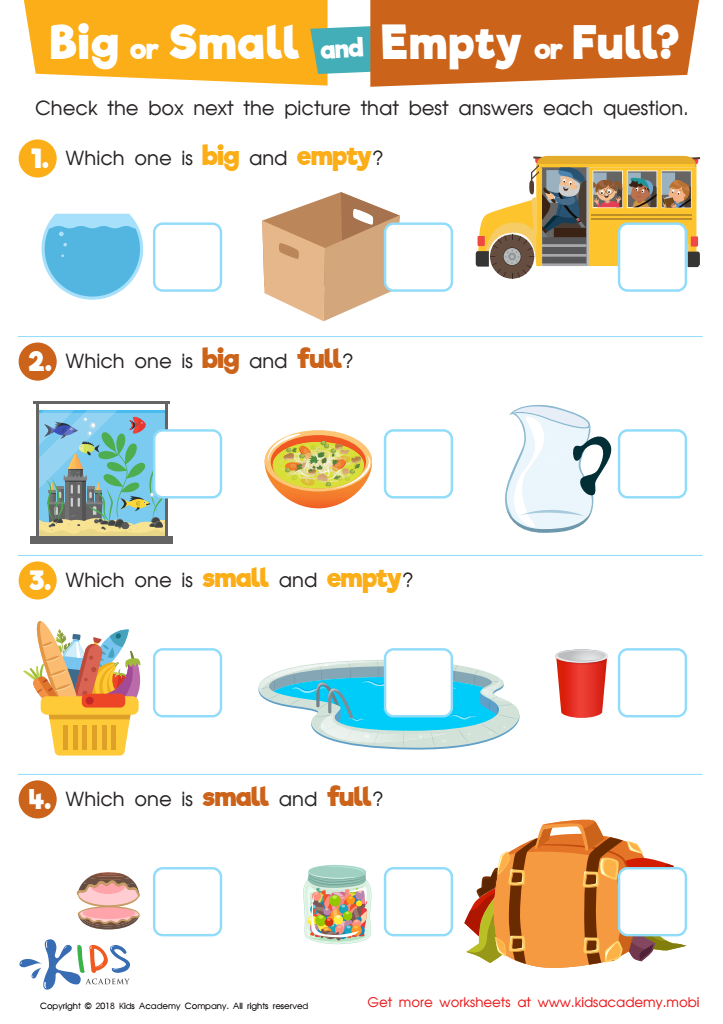
Big or Small and Empty or Full? Worksheet
Early learners can develop their math skills by using this Worksheet with fun, familiar pictures. It reinforces concepts like big/small and empty/full, helping them to differentiate and identify objects that meet those definitions.
Big or Small and Empty or Full? Worksheet
Worksheet
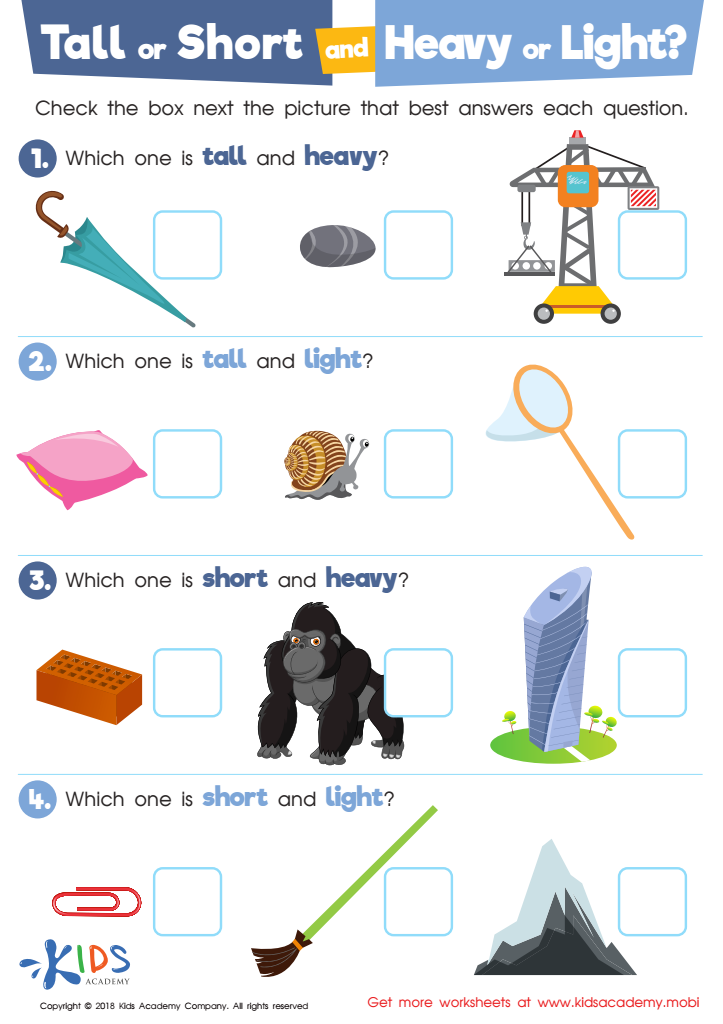
Tall or Short and Heavy or Light? Worksheet
Young children can find basic measurement concepts tricky. This PDF introduces them to the appropriate vocabulary for describing heavy, light, tall and short items, by using familiar pictures. It helps them accurately select which items fit each category.
Tall or Short and Heavy or Light? Worksheet
Worksheet
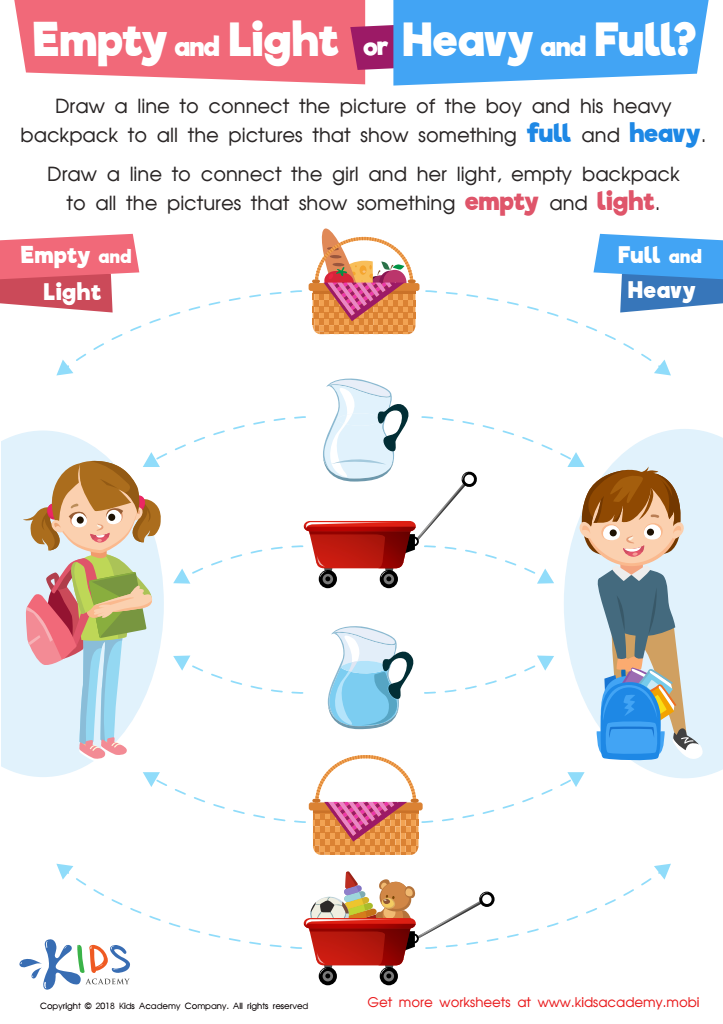
Empty and Light or Heavy and Full? Worksheet
Kids can have trouble understanding measurement, like the differences between heavy and light. This worksheet helps them associate full with heavy and empty with light, using familiar images. Plus, it's a fun way to practice fine motor skills, tracing the lines to connect the pictures.
Empty and Light or Heavy and Full? Worksheet
Worksheet
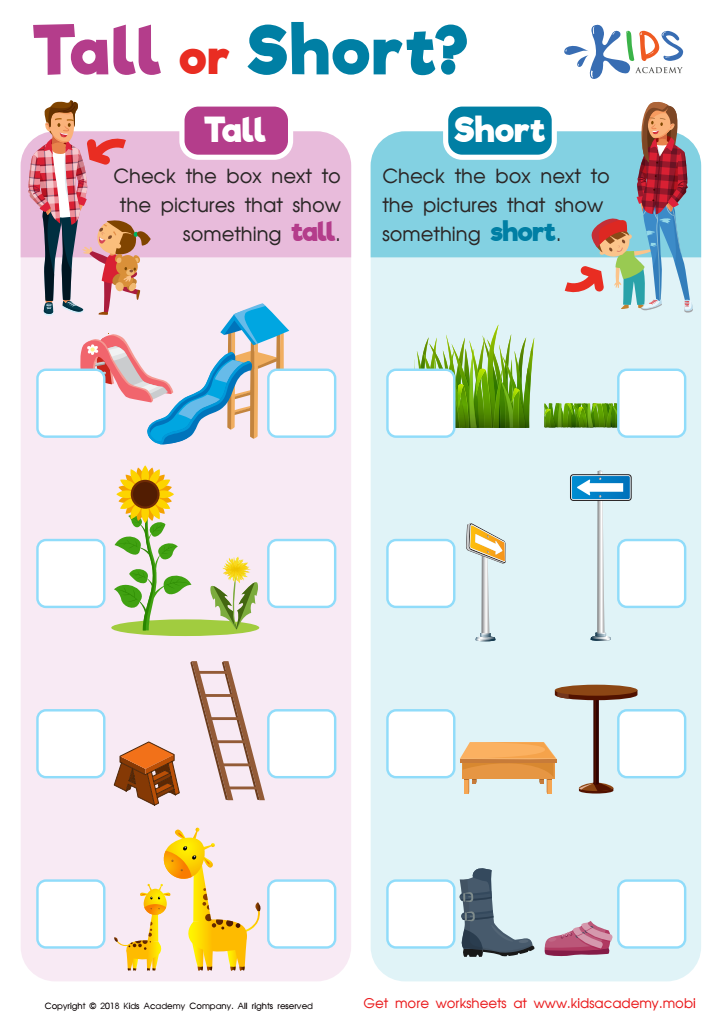
Tall or Short? Worksheet
Comparing tall and short objects is an early math skill. Our free worksheet uses fun colors and pictures to help kids practice. This will give them a head start for higher-level measurement skills, and they'll remember tangible objects for comparison.
Tall or Short? Worksheet
Worksheet
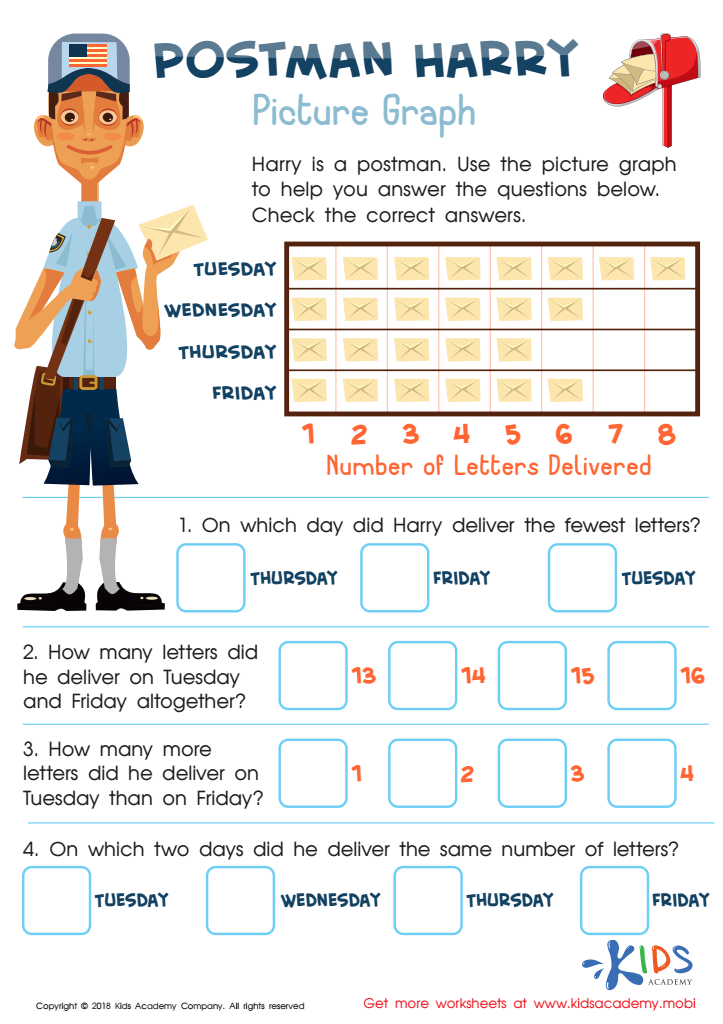
Postman Harry: Picture Graph Worksheet
Show your kids a picture of Harry the Postman and ask if they can identify his profession. Then, with this simple picture graph worksheet, help Harry out by having your kids answer the questions below the picture graph. It shows the number of letters he delivered, and on what day. Get your kids to use the picture graph to solve it.
Postman Harry: Picture Graph Worksheet
Worksheet
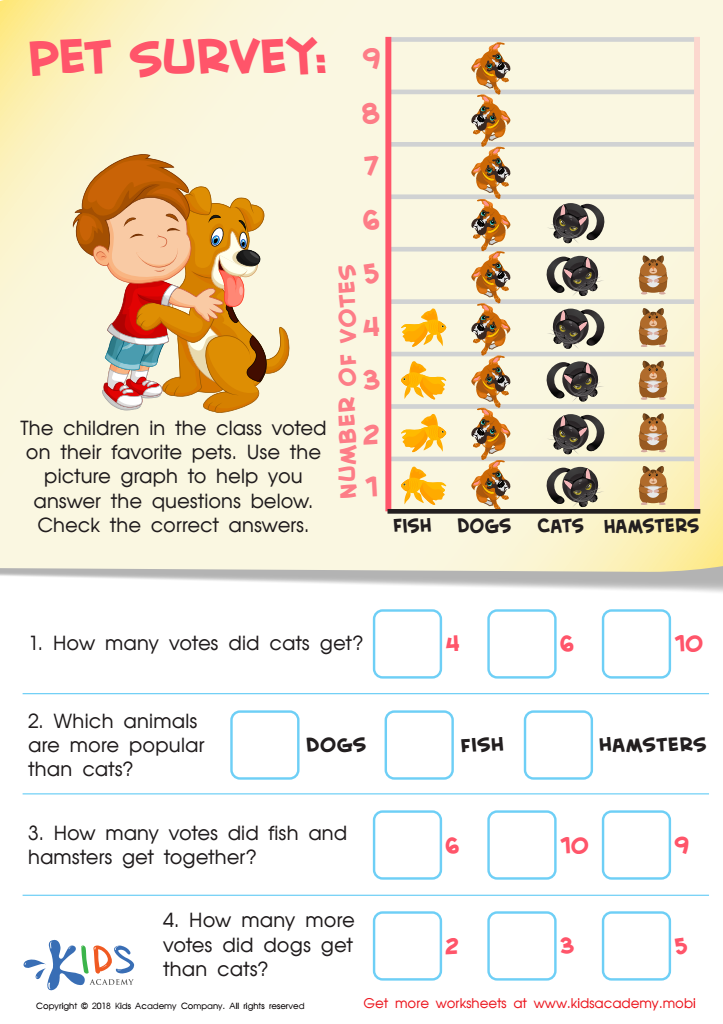
Pet Survey Worksheet
Do you have a furry family member? If the answer is yes and your kids love animals, they'll enjoy this worksheet. The picture graph shows the children's votes for their favorite pet - fish, dog, cat and hamster. Ask your child to use the graph to answer the questions. Guide them to check the right answer.
Pet Survey Worksheet
Worksheet
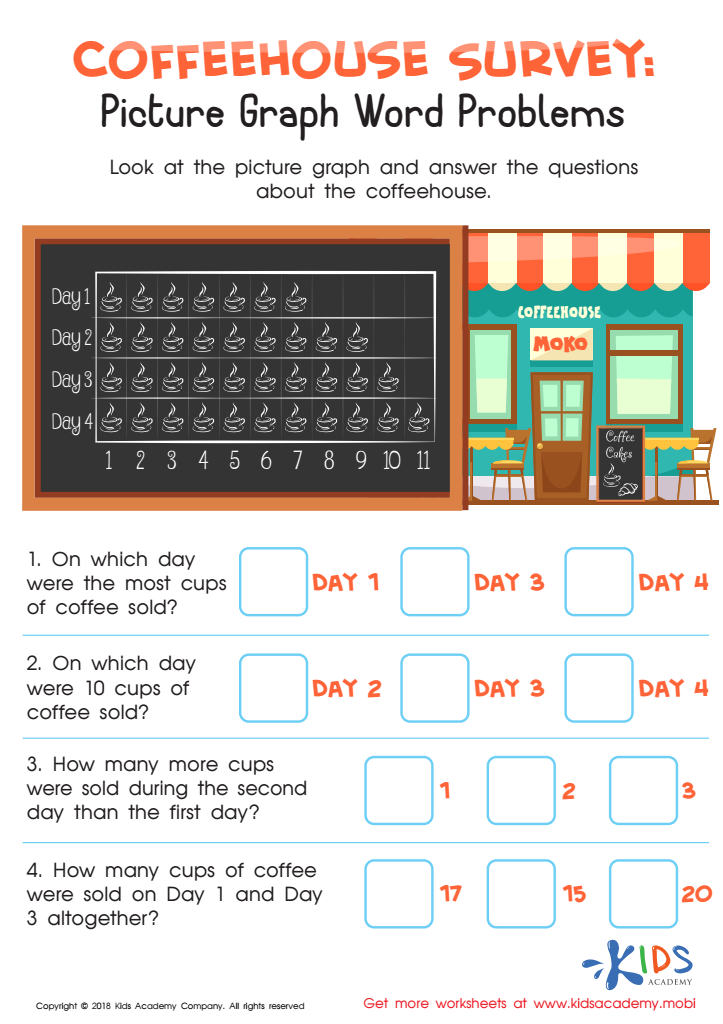
Coffeehouse Survey: Picture Graph Word Problems Worksheet
This coffeehouse survey helps children interpret pictures and answer questions. Your child will look at a picture graph displaying daily coffee cup sales from Day 1 to Day 4. Aid them in answering questions on the number of cups sold and which day had the most sales.
Coffeehouse Survey: Picture Graph Word Problems Worksheet
Worksheet
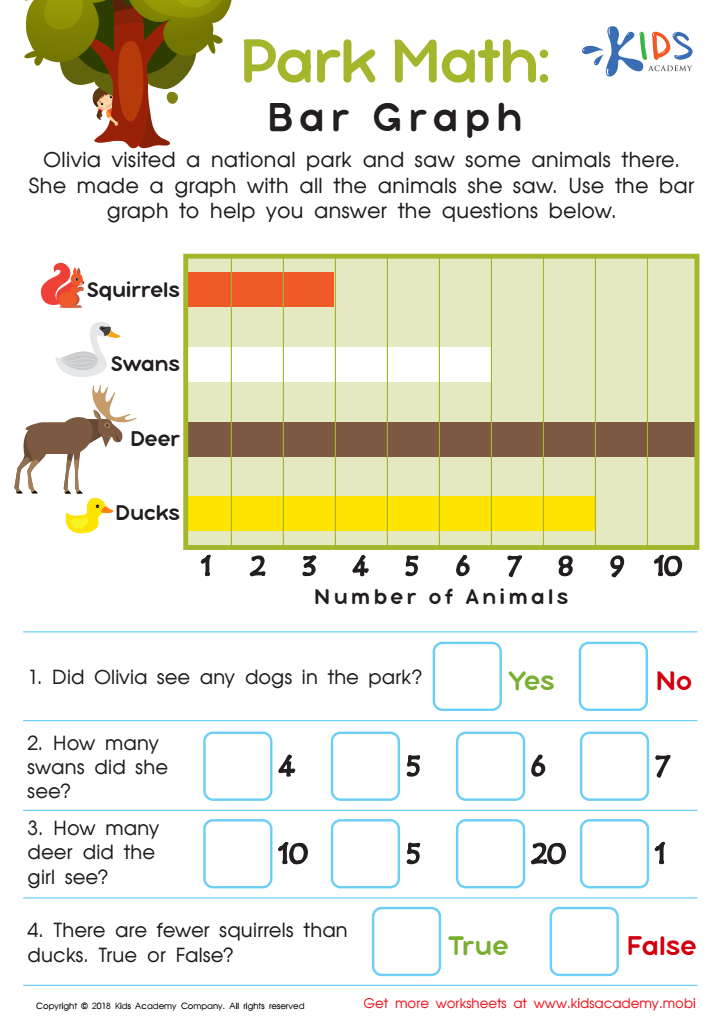
Park Math: Bar Graph Worksheet
Do your children love the park? Ask them to tell you some of their favorite animals. Then, have them look at Olivia's graph. She visited a National Park and recorded all the animals she saw. Use the graph to answer the questions given.
Park Math: Bar Graph Worksheet
Worksheet
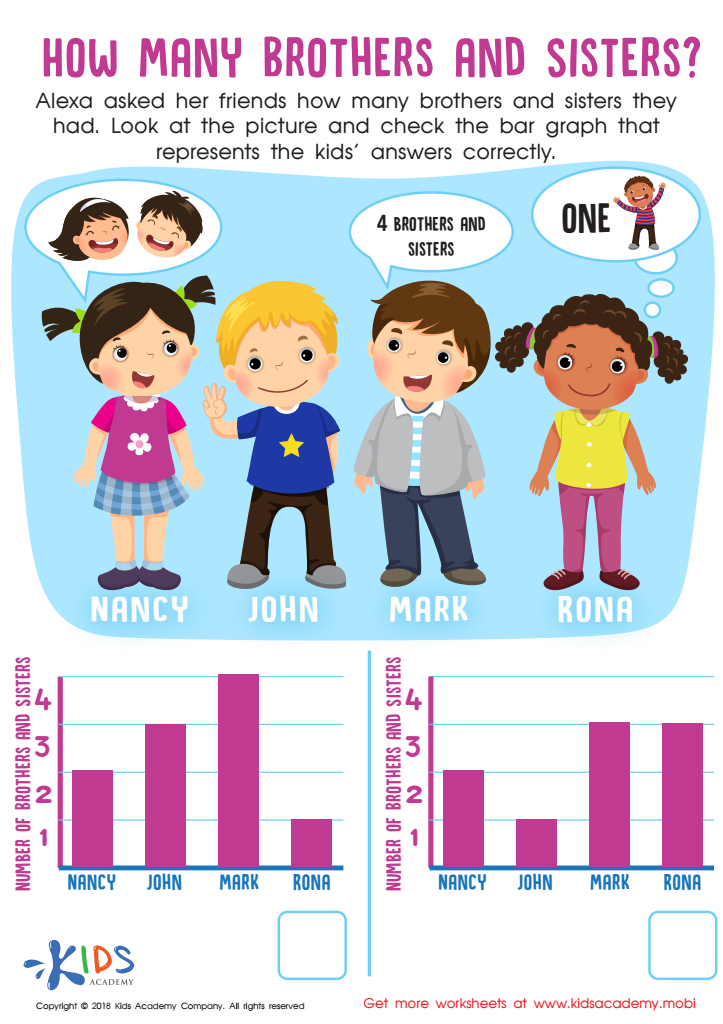
How Many Brothers and Sisters? Worksheet
With this worksheet, Alexa has asked her friends how many siblings they have. Have your child look at the picture and use it to answer the bar graph correctly. Can they tell you how many siblings their friends have? See if they can get it right!
How Many Brothers and Sisters? Worksheet
Worksheet
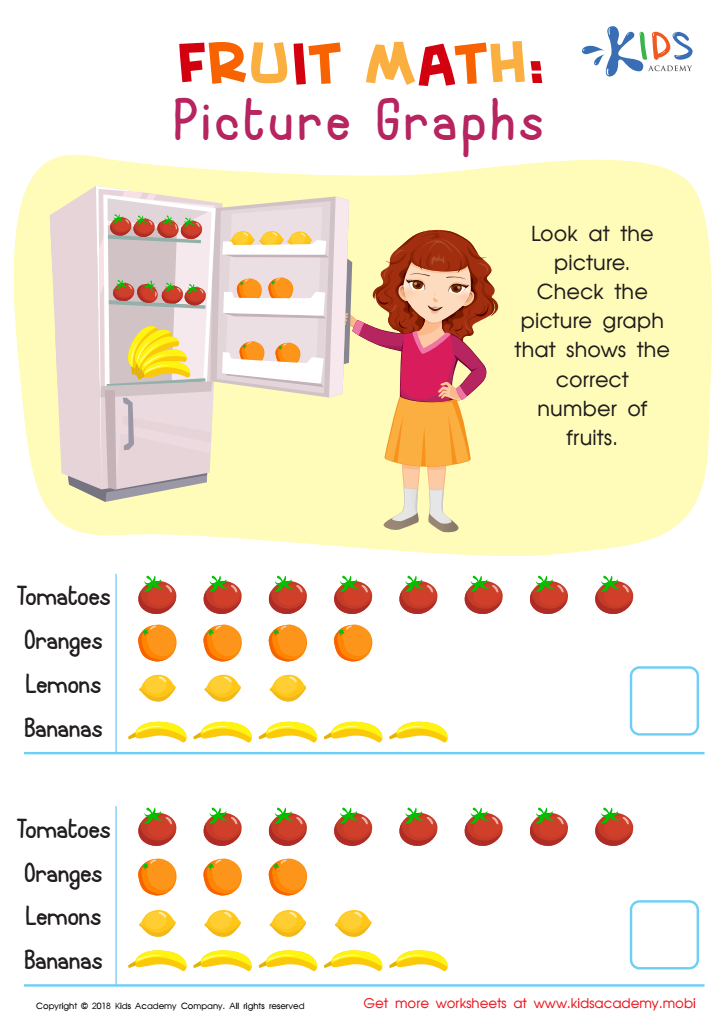
Fruit Math: Picture Graphs Worksheet
Help your child learn to draw graphs by having them look at pictures. Ask them to identify a graph that accurately portrays the data and have them explain why. This will prepare them to easily draw more complex graphs in the future. For example, have them look at the picture with the number of fruits in the colorful worksheet and explain why the graph is accurate.
Fruit Math: Picture Graphs Worksheet
Worksheet
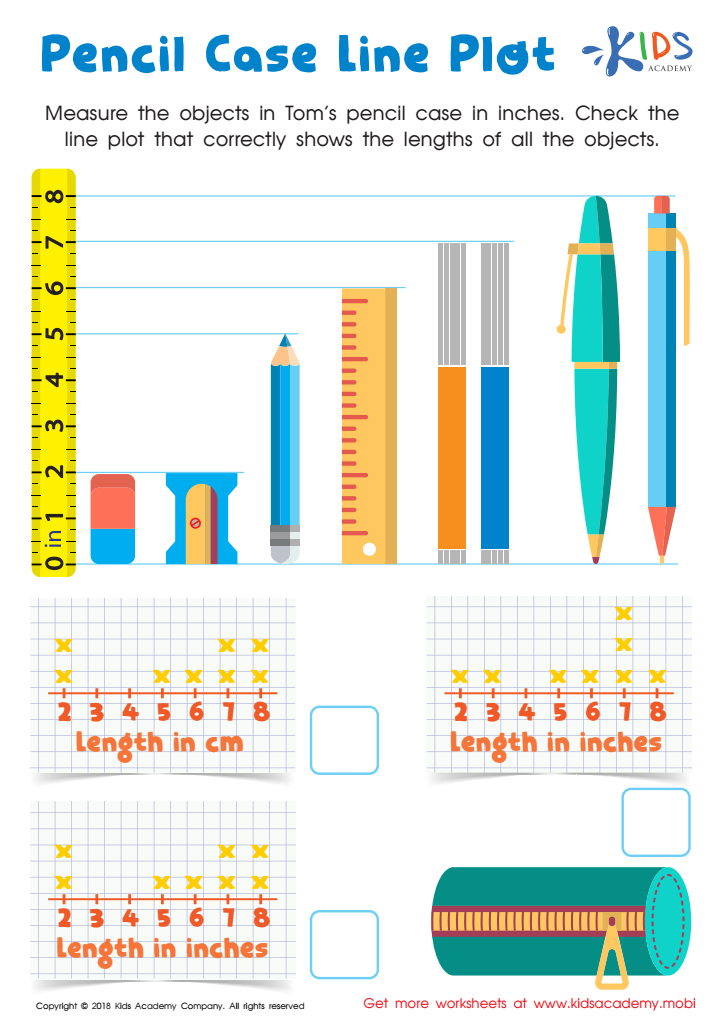
Pencil Case Line Plot Worksheet
Explain to your child that a line plot is a way to organize information. For example, if they need to arrange objects, they should draw a line plot. Now, have them help Tom measure the objects in his pencil case in inches. Then, have them check the line plot that accurately shows the length.
Pencil Case Line Plot Worksheet
Worksheet
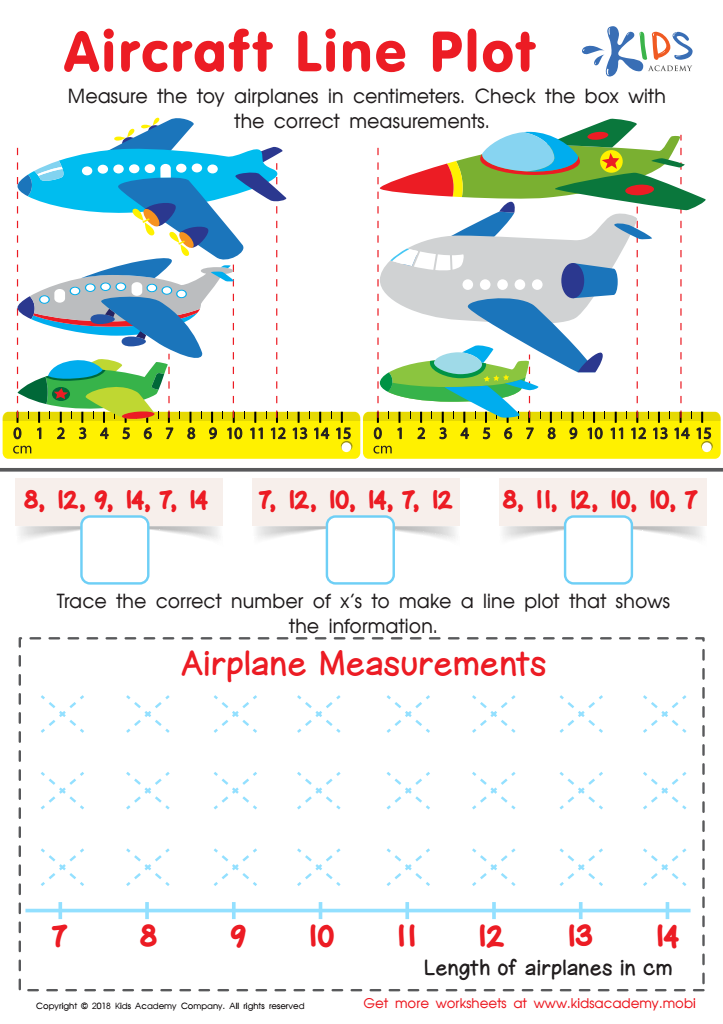
Aircraft Line Plot Worksheet
If your kids are aviation enthusiasts, they'll love this worksheet! Look at the picture with them, then ask them to measure the toy planes in cm. Check the box with the right measurements and then trace the x's to make a line plot with the data.
Aircraft Line Plot Worksheet
Worksheet
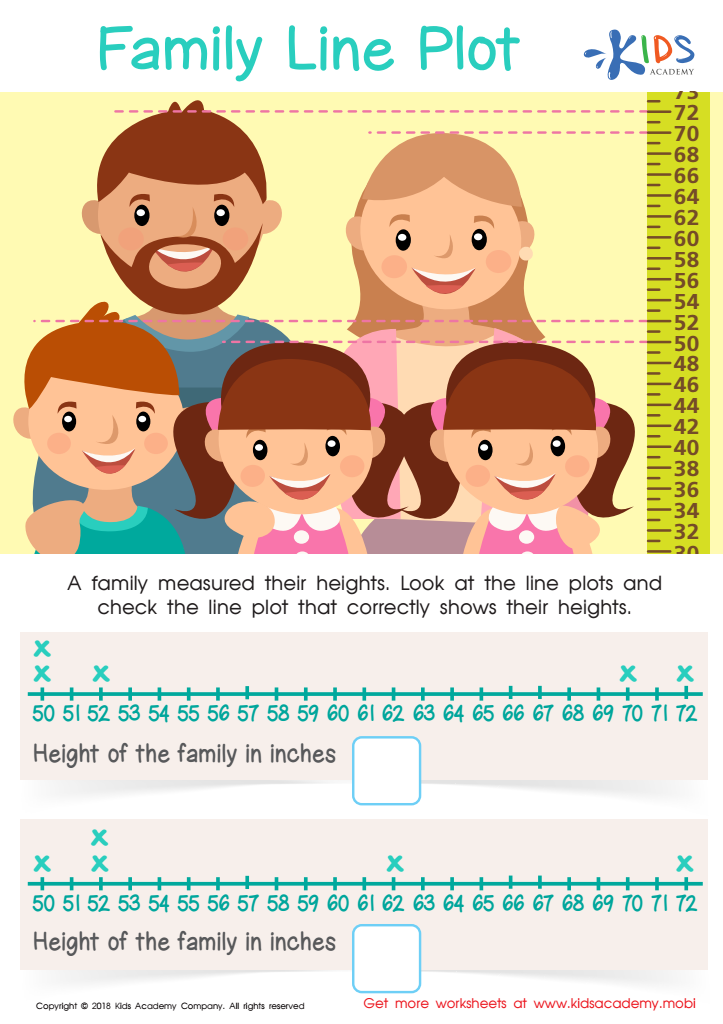
Family Line Plot Worksheet
Have you and your kids ever done a family height measurement? How did it go? If they're familiar with it, this worksheet may be simpler. The picture shows a family with their heights recorded. Get your kid to look at the line plots and choose the one that shows the family's heights accurately.
Family Line Plot Worksheet
Worksheet
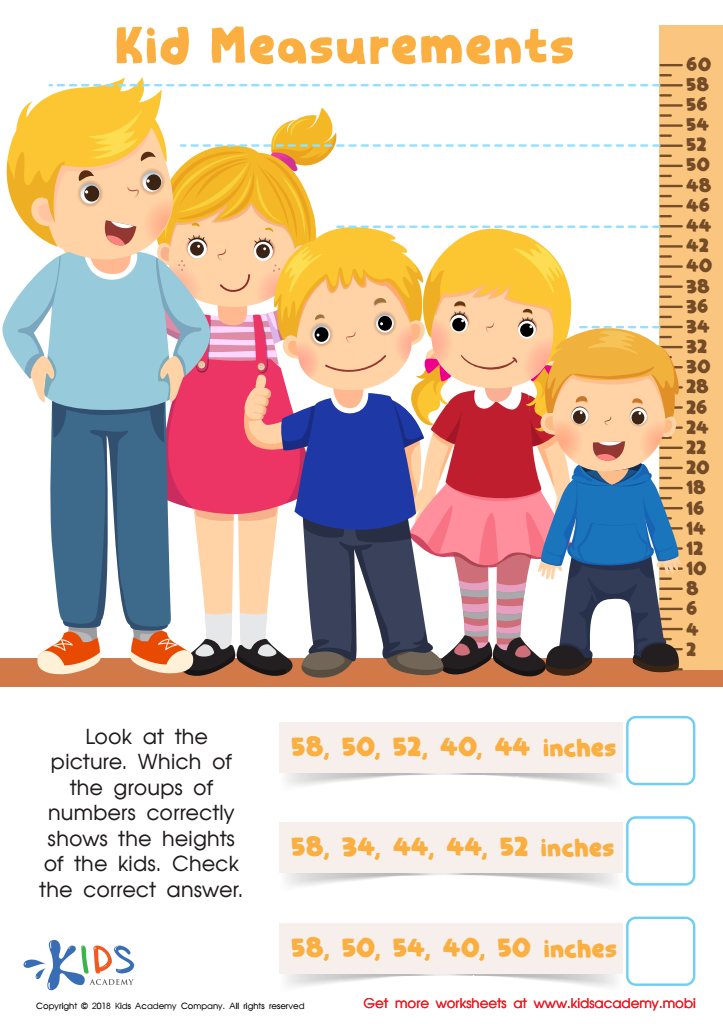
Kids Measurements Worksheet
Help your kids look at the groupings on the bottom right of the worksheet. Compare the heights of the kids shown in the picture to the numbers in each group. Have them check which of the groups of numbers correctly shows the heights.
Kids Measurements Worksheet
Worksheet
Join Kids Academy for Free
Who is primarily going to use this learning content?








Parents and teachers should care about easy measurement for ages 4 to 9 because it lays a crucial foundation for early math skills and overall cognitive development. Measurement activities enhance young children's understanding of various physical quantities—length, weight, volume, and time—which are fundamental concepts in both academic and everyday contexts.
First, measurement connects abstract mathematical ideas with tangible real-world scenarios, making learning relevant and engaging. By using relatable objects like toys, food items, and household items, children can better grasp concepts such as big versus small, heavy versus light, and longer versus shorter in a fun and interactive manner.
Second, measurement tasks foster critical problem-solving and reasoning skills. As children compare, estimate, and quantify objects, they develop analytical thinking and improve their ability to make informed decisions. These skills are not just academic; they are life skills that will benefit children throughout their lives.
Additionally, measurement activities support the development of fine motor skills and hand-eye coordination. Handling rulers, measuring cups, and scales helps improve manual dexterity, which is crucial for other daily tasks and writing skills.
Finally, early exposure to measurement concepts sets a strong groundwork for future STEM learning. Appreciating and understanding measurements can spark a lifelong interest in science, technology, engineering, and mathematics, areas essential for the evolving job market. By fostering these skills early on, parents and teachers equip children with the tools needed for academic success and beyond.








