Easy Punctuation Worksheets for Ages 5-6
4 filtered results
-
From - To
Introducing Easy Punctuation for Ages 5-6: Dive into the essentials of punctuation in a fun and effortless way! Designed specifically for young learners, this worksheet collection empowers kids to master punctuation marks through engaging activities and vibrant illustrations. With Easy Punctuation for Ages 5-6, children will explore the basics of periods, question marks, and exclamation points, turning them into confident and skilled communicators. Each worksheet is crafted to ensure a gradual and enjoyable learning process, making punctuation an exciting adventure rather than a daunting task. Perfect for both classroom and home use, get ready to watch your child's writing skills flourish with Easy Punctuation!
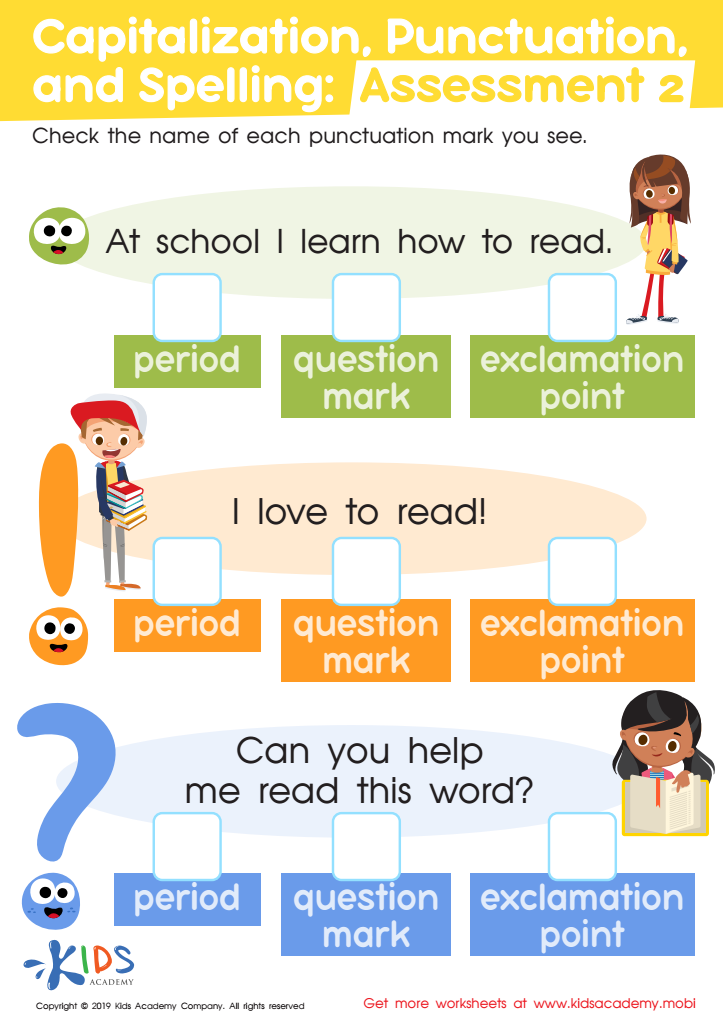
Capitalization. Punctuation. Spelling: Assessment 2 Worksheet
 Assign to My Students
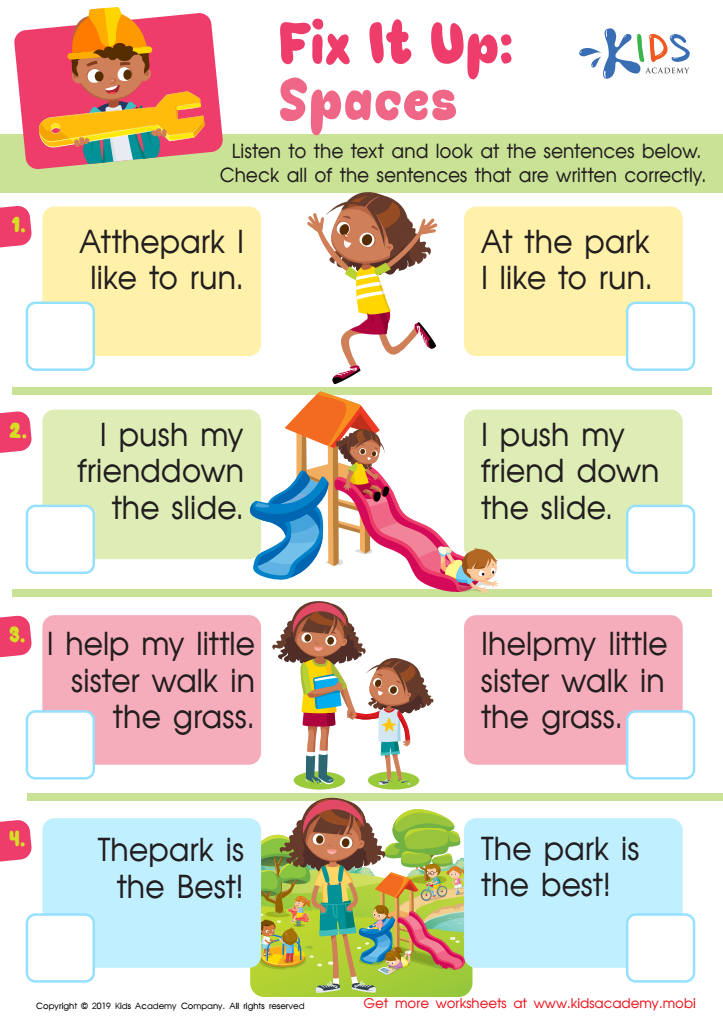
Fix Spaces Worksheet
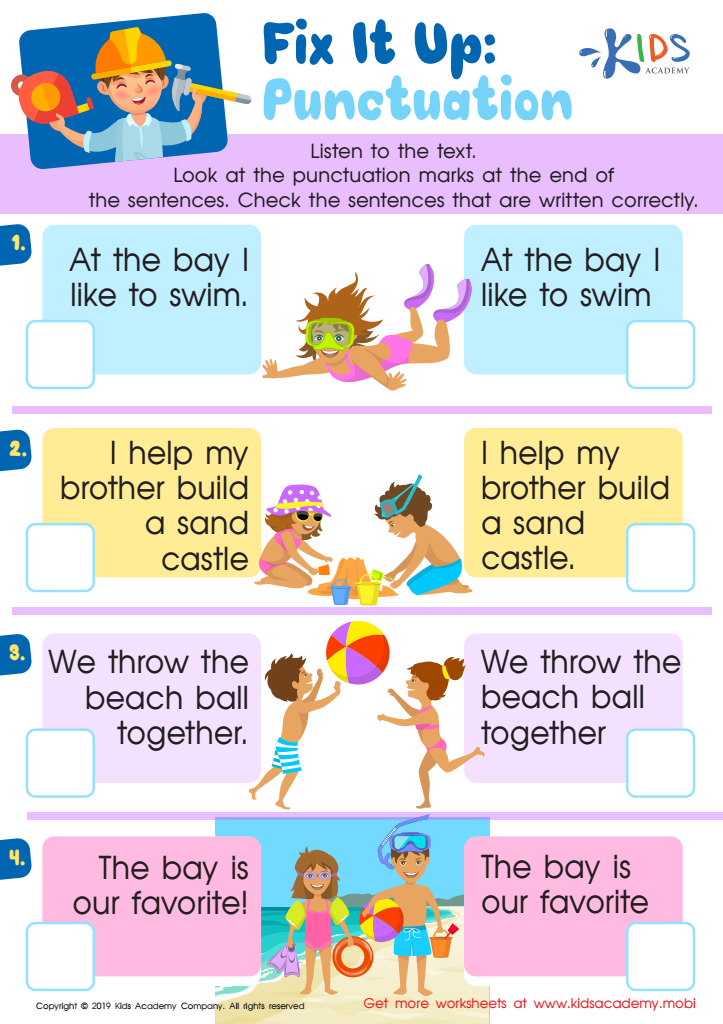
Fix Punctuation Worksheet
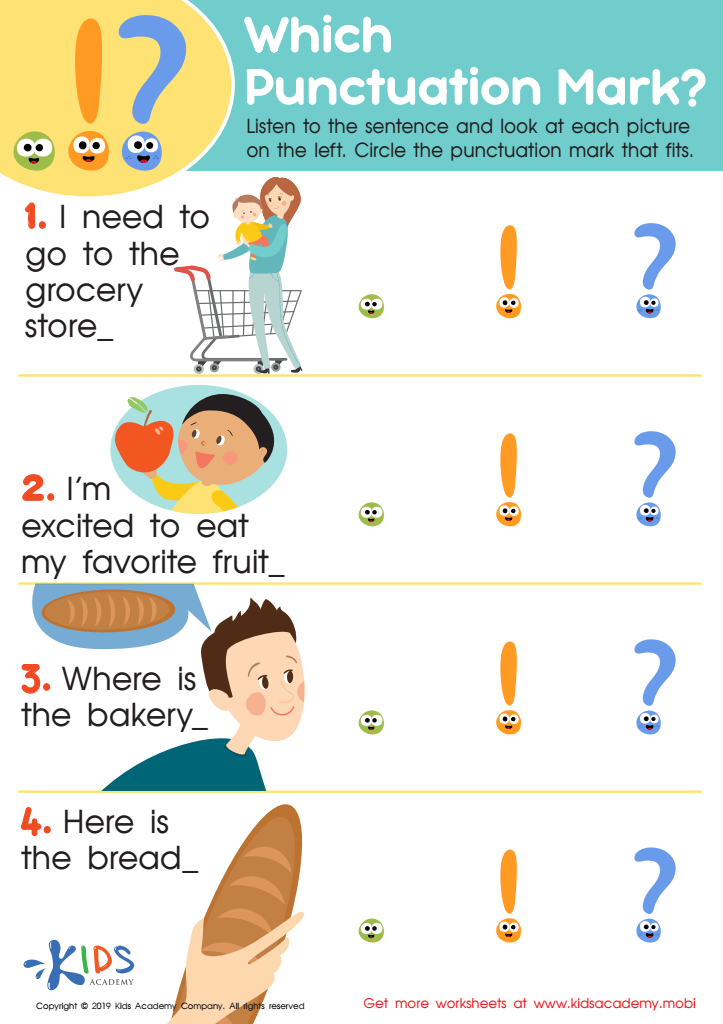
Which Punctuation Mark Worksheet





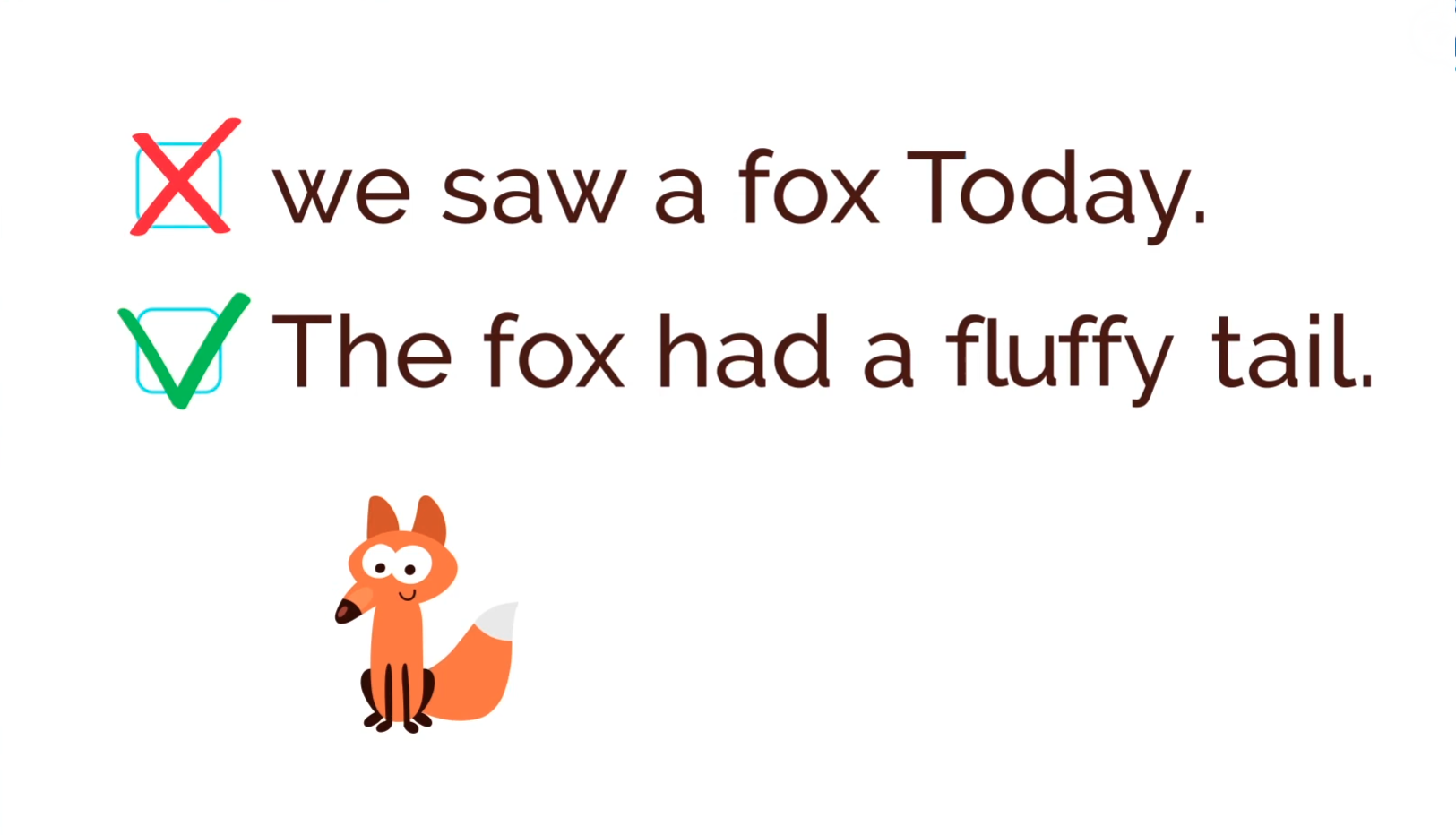


Easy punctuation worksheets designed specifically for ages 5-6 play a crucial role in laying the foundation of language skills in young learners. At this developmental stage, children are just beginning to form sentences and express their thoughts through writing. Introducing them to the basics of punctuation through easy-to-understand worksheets helps demystify the rules of the English language, making the learning process engaging and less intimidating.
These worksheets are tailored to meet the learning capabilities of 5 to 6-year-olds, ensuring that the concepts are introduced in a fun and interactive manner. By integrating activities such as matching punctuation marks to sentences, filling in missing punctuation, and simple sentence construction, children can grasp these essential rules without feeling overwhelmed. This gradual and age-appropriate introduction to punctuation not only enhances their writing skills but also improves their reading comprehension, as they learn to recognize and understand the function of different punctuation marks.
Moreover, easy punctuation worksheets for ages 5-6 encourage independent learning. As children work through these exercises at their own pace, they gain confidence in their ability to navigate the complexities of language. This early sense of achievement fosters a positive attitude toward learning, setting a strong foundation for their future educational journey.