Easy Letter Sounds Worksheets for Ages 5-7
6 filtered results
Difficulty Level
Grade
Age
-
From - To
Subject
Activity
Standards
Discover engaging and effective Easy Letter Sounds Worksheets for children ages 5-7! Designed to support early literacy development, these worksheets help young learners master the fundamental sounds associated with each letter of the alphabet. Our interactive activities make learning fun, promoting sound recognition through colorful illustrations and straightforward exercises. Perfect for both classroom settings and home practice, these worksheets cater to various learning styles and help build confidence in reading and writing. Spark your child's love for learning and lay a strong foundation for their educational journey with our carefully crafted, accessible materials! Explore our collection today to enhance their phonetic skills!
Favorites
With answer key
Interactive
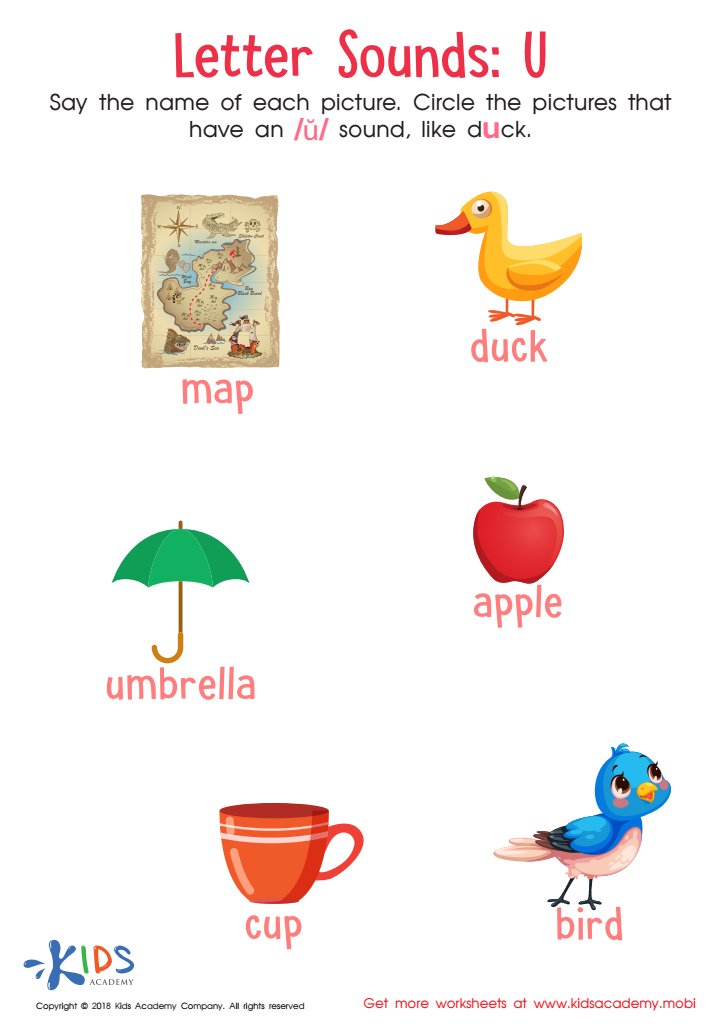
Letter U Sounds Worksheet
The letter U is special with multiple pronunciations. This worksheet helps kids identify the short «u» in words like duck and cup. Read the words aloud and listen closely to the sounds. Circle only words with the correct sound to complete the sheet. Kids will quickly know that words like "map" don't contain a U.
 Assign to My Students
Letter U Sounds Worksheet
Worksheet
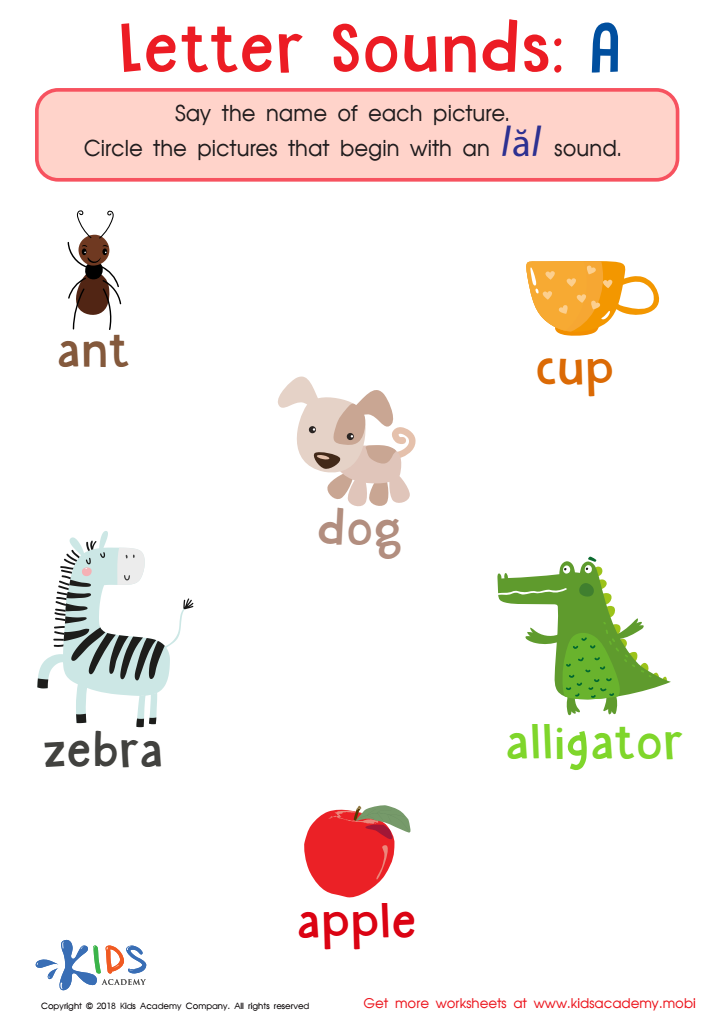
Letter A Sounds Worksheet
Encourage your new reader to practice the «ă» sound with this fun, free PDF worksheet. With the help of picture clues, they'll say the name of each word and trace circles around the items that start with «ă». This worksheet is an effective way to boost beginning sound skills while having fun!
Letter A Sounds Worksheet
Worksheet
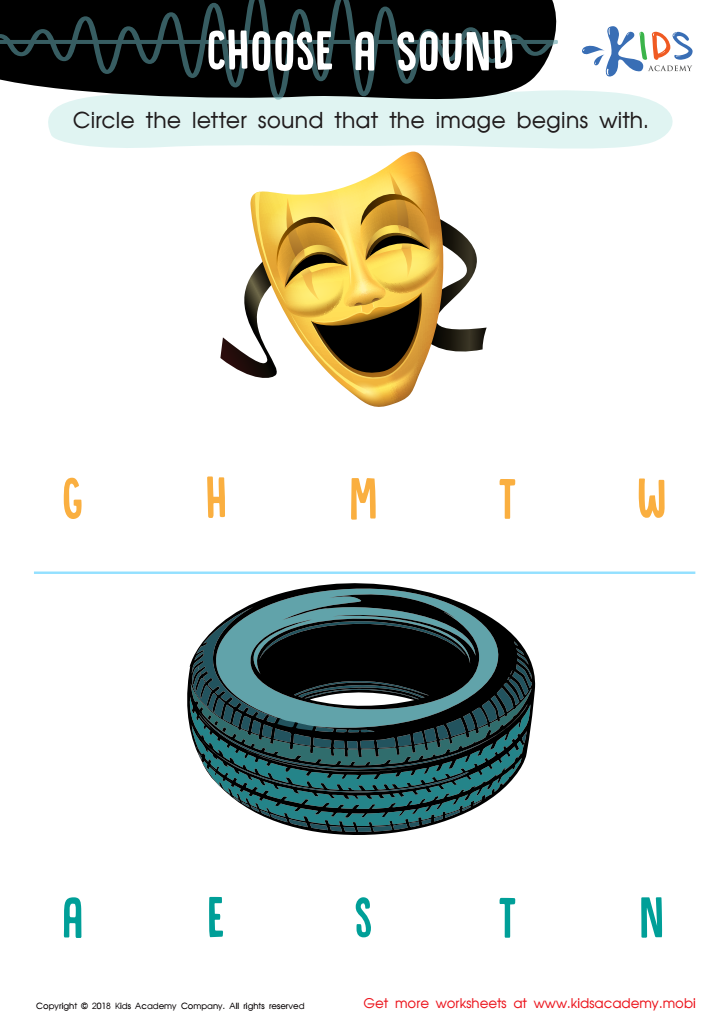
Choose a Sound Worksheet
Help your child hone pre-reading skills with this colorful worksheet! They'll practice tracing letter sounds, develop phoneme awareness, and gain confidence. Plus, it's a fun way to work on their fine motor skills.
Choose a Sound Worksheet
Worksheet
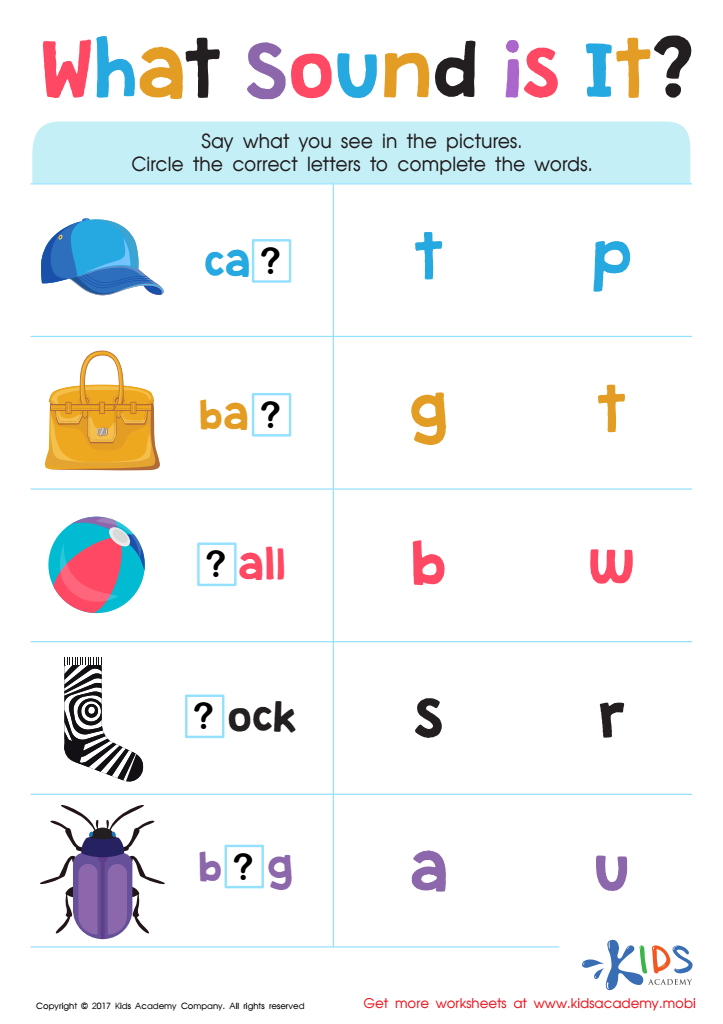
What Sound Is it? Worksheet
Have your child say the words for the pictures on this fun worksheet. As he or she sounds out the word, your child will use the provided letter choices to complete it, building reading and phonics skills. Visual cues make it easier to identify the correct beginning, middle, or end sound.
What Sound Is it? Worksheet
Worksheet
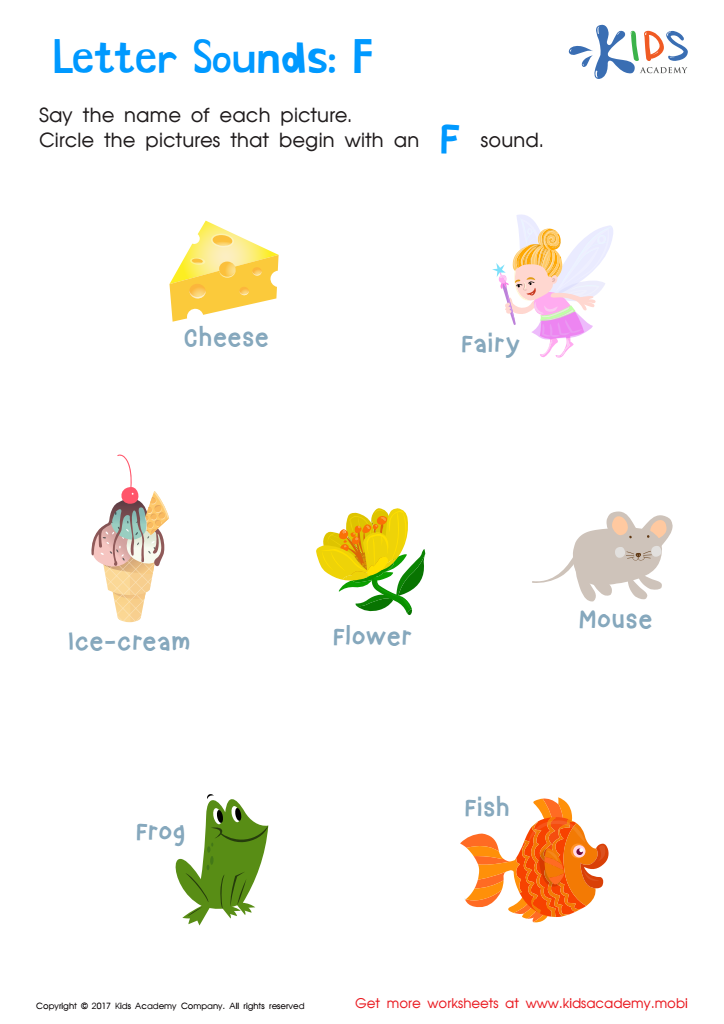
Letter F Sounds Worksheet
Kids will practice identifying 'f' words, tracing, and coloring the letter F for a great way to learn phonics.
Help your child discover the wonders of the letter 'F' with this fun worksheet! Kids will practice identifying 'F' words, tracing and coloring the letter, and building early reading skills. Stimulate their learning and let them connect letter sounds to words they know. An enjoyable way to practice phonics!
Letter F Sounds Worksheet
Worksheet
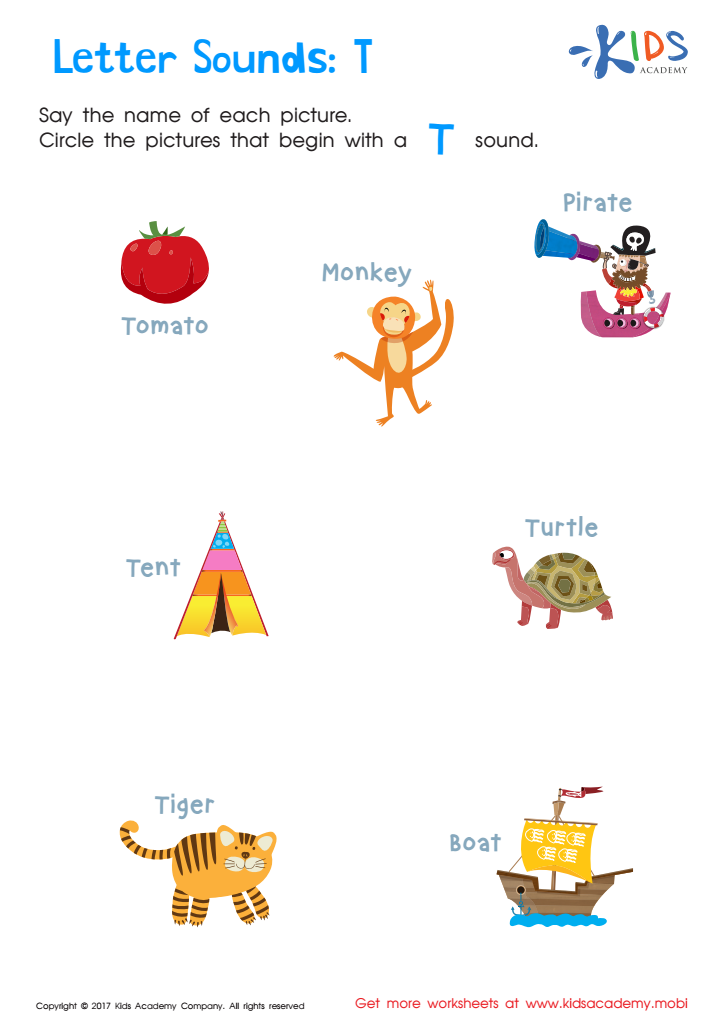
Letter T Sounds Worksheet
This worksheet is a fun way to help kids learn the t sound. It has familiar pictures and an easy-to-follow format, so kids can quickly recognize and learn the letter t.
Letter T Sounds Worksheet
Worksheet
Join Kids Academy for Free
Who is primarily going to use this learning content?








Parents and teachers should prioritize Easy Letter Sounds for children ages 5-7 because it lays the groundwork for literacy development. At this crucial stage, children begin to form a connection between letters and their corresponding sounds, which is fundamental for reading and writing. By immersing kids in phonics, they develop critical skills such as decoding words and enhancing vocabulary.
Understanding letter sounds fosters confidence as children begin to read independently, while simultaneously reducing frustration that can arise from unfamiliar texts. Aquiring effective reading skills also impacts other areas of learning, promoting better comprehension in subjects across the curriculum.
Moreover, children learn through play at this age, so engaging with materials that make learning fun can inspire a lifelong love of reading. Incorporating activities like rhyming games, songs, and interactive storybooks creates an enriching environment that motivates young learners.
In summary, attention to Easy Letter Sounds not only equips children with vital literacy skills but also nurtures their enthusiasm for learning, ultimately shaping successful students and readers in the future. Parents and teachers should strive to support this foundational phase with dedicated tools and approaches that emphasize phonics and letter recognition.