Easy Beginning Consonants Worksheets for Ages 6-8
3 filtered results
-
From - To
Explore our engaging Easy Beginning Consonants Worksheets designed specifically for children ages 6-8! These worksheets provide a fun way for young learners to develop essential phonics skills by practicing with simple consonant sounds. From matching to tracing and sorting activities, our resources help reinforce letter recognition and pronunciation. Designed with vibrant illustrations, these worksheets keep kids motivated and eager to learn. Perfect for classroom use or at-home learning, these tools are tailored to support early literacy and nurture a love for reading. Join us in helping your child confidently master beginning consonants while enjoying the learning process!
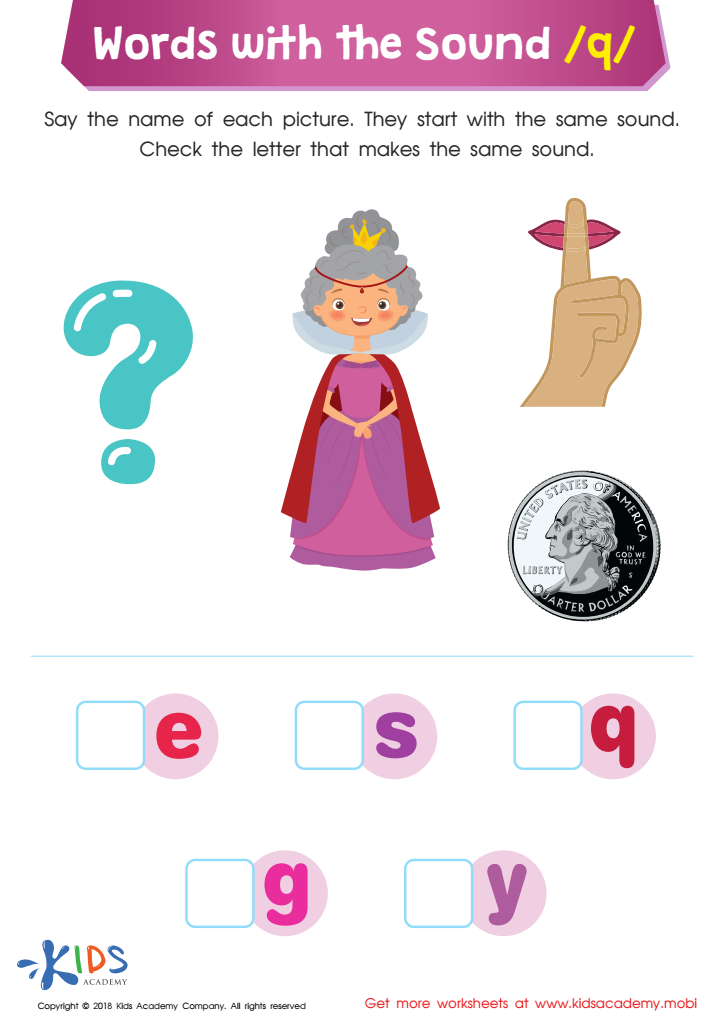
Words with Sound Q Reading Worksheet
 Assign to My Students
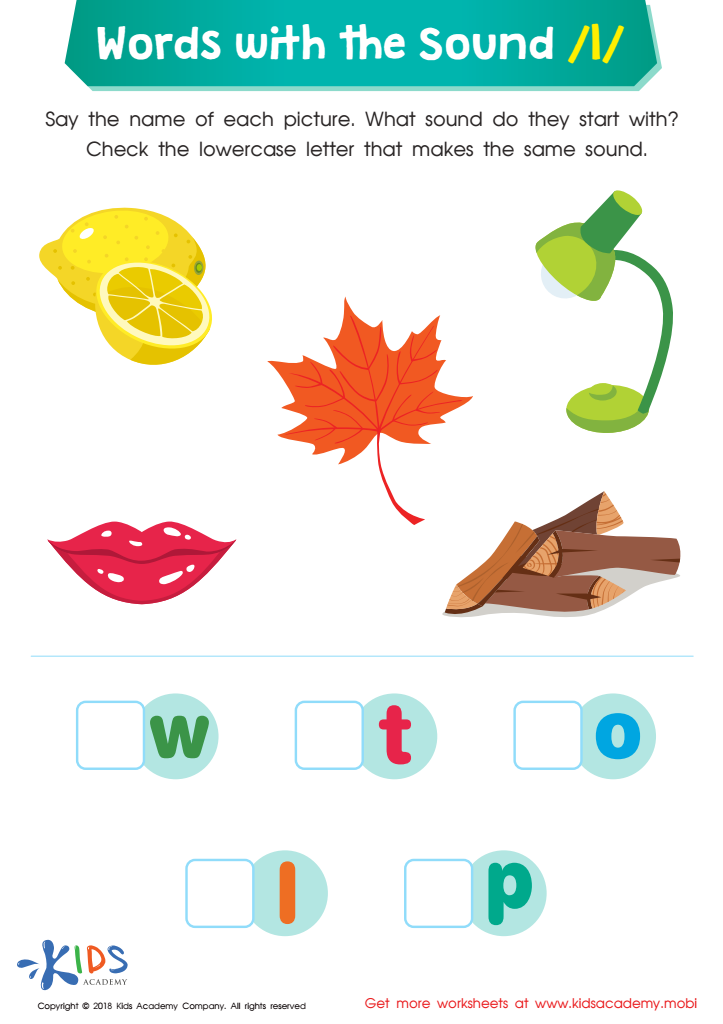
Words with Sound L Reading Worksheet
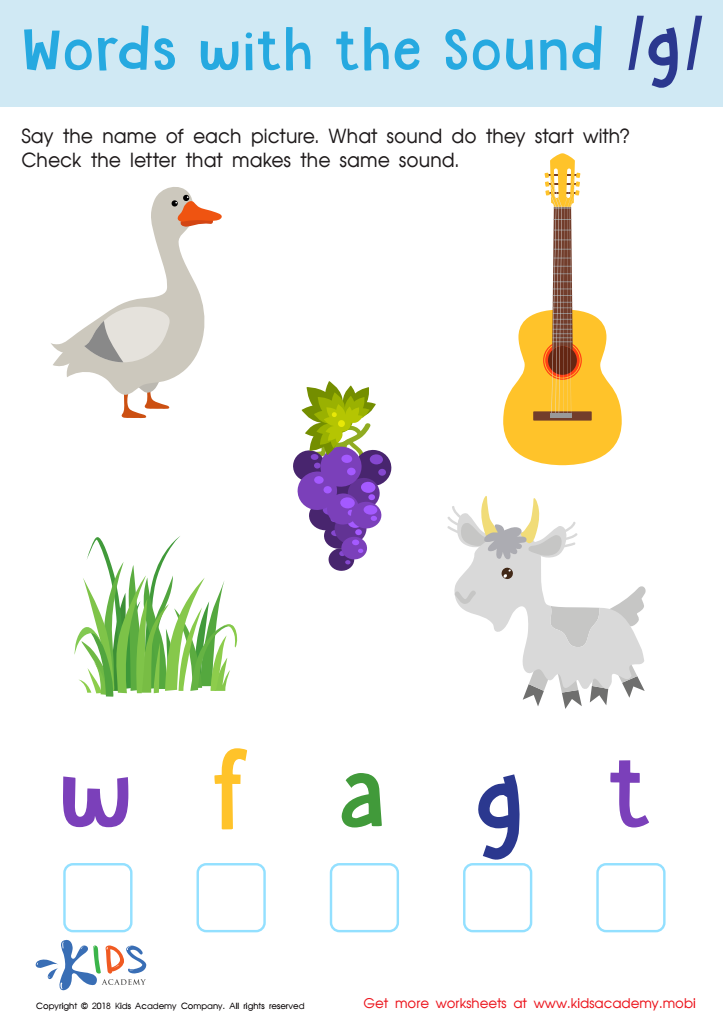
Words with sound g Reading Worksheet


Beginning consonants are crucial for young readers aged 6-8 as they lay the foundation for successful reading and writing skills. Understanding these initial sounds helps children decode words, making it easier for them to read confidently and fluently. Mastery of consonant sounds enhances phonemic awareness—the ability to hear, identify, and manipulate sounds in spoken words, which is a precursor to effective reading.
Furthermore, recognizing beginning consonants supports vocabulary development. When children grasp how consonants work in words, they can expand their language skills and better understand the connection between sounds and their corresponding letters. This skill is not only beneficial for reading but also helps with spelling as children learn to segment words into their individual sounds.
Parents and teachers who focus on beginning consonants can create engaging activities, like rhyming games and letter-sound matching, to foster learning. By creating a supportive and rich literacy environment, adults can nurture a child’s love for reading and empower them with skills needed for academic success. Ultimately, paying attention to beginning consonants is an investment in a child's future literacy development, paving the way for more complex reading and comprehension as they progress through their educational journey.








