Easy Lowercase/Small Letters Worksheets for Ages 6-9
3 filtered results
-
From - To
Unlock the joy of learning with our "Easy Lowercase/Small Letters Worksheets for Ages 6-9"! Specifically designed to help young learners master the alphabet, these engaging worksheets make the process of identifying, tracing, and writing lowercase letters both fun and educational. Ideal for classroom use or at-home practice, each worksheet incorporates clear instructions and vibrant images to keep children motivated. By focusing on letter formation, fine motor skills, and visual recognition, our worksheets provide a solid foundation for literacy. Perfect for ages 6-9, these resources are sure to boost your child's confidence and reading abilities!
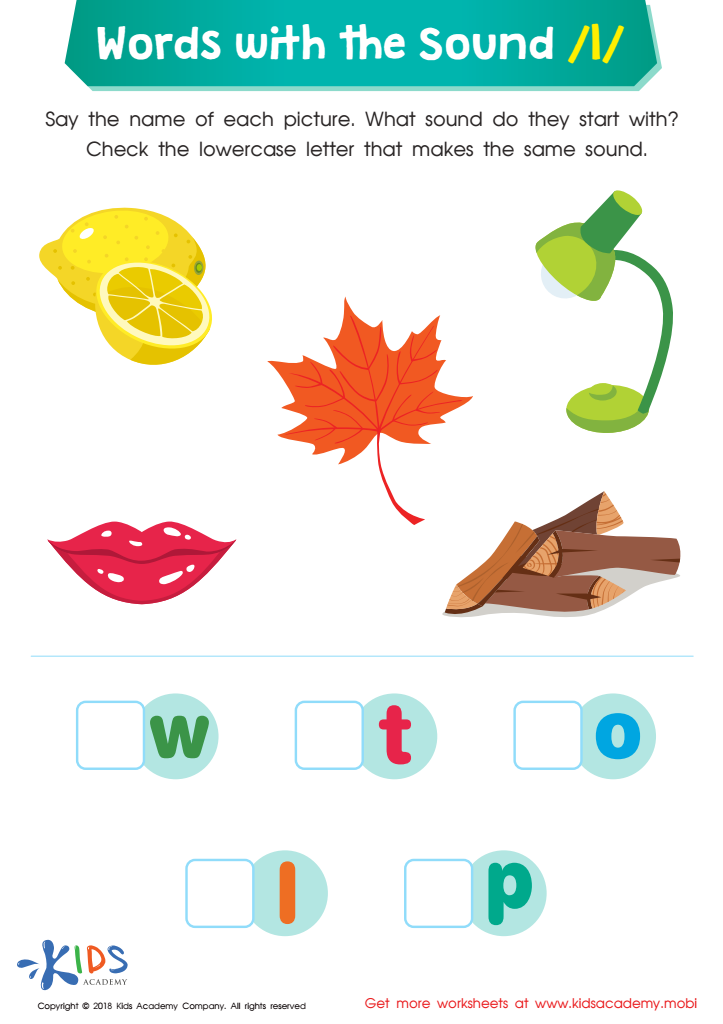
Words with Sound L Reading Worksheet
 Assign to My Students
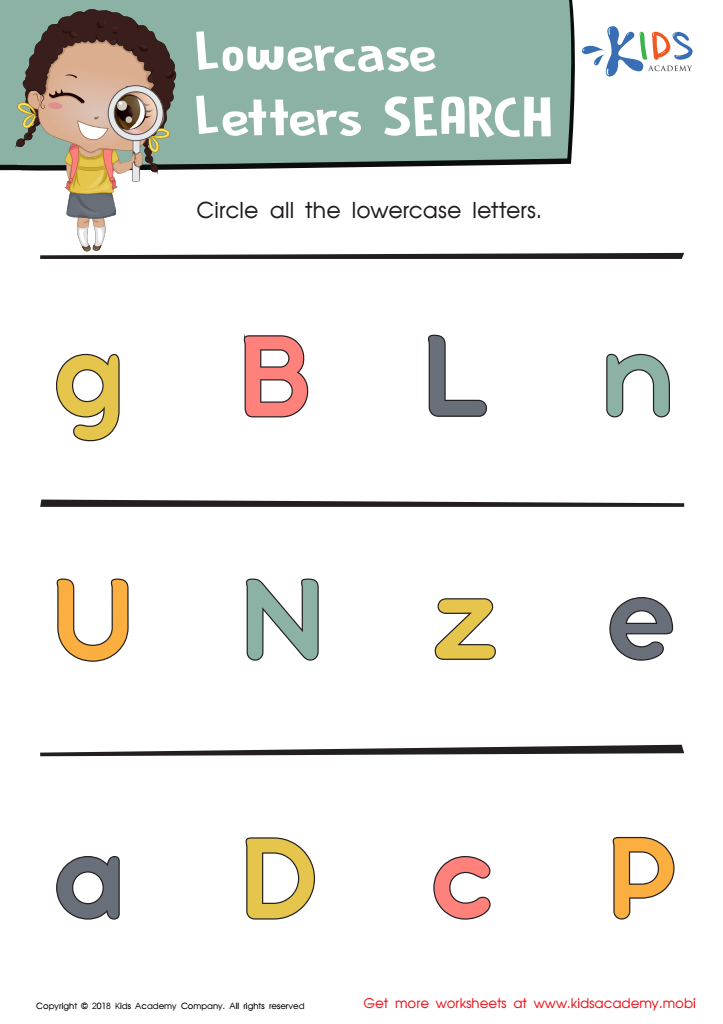
Lowercase Letters Search: Assessment Worksheet
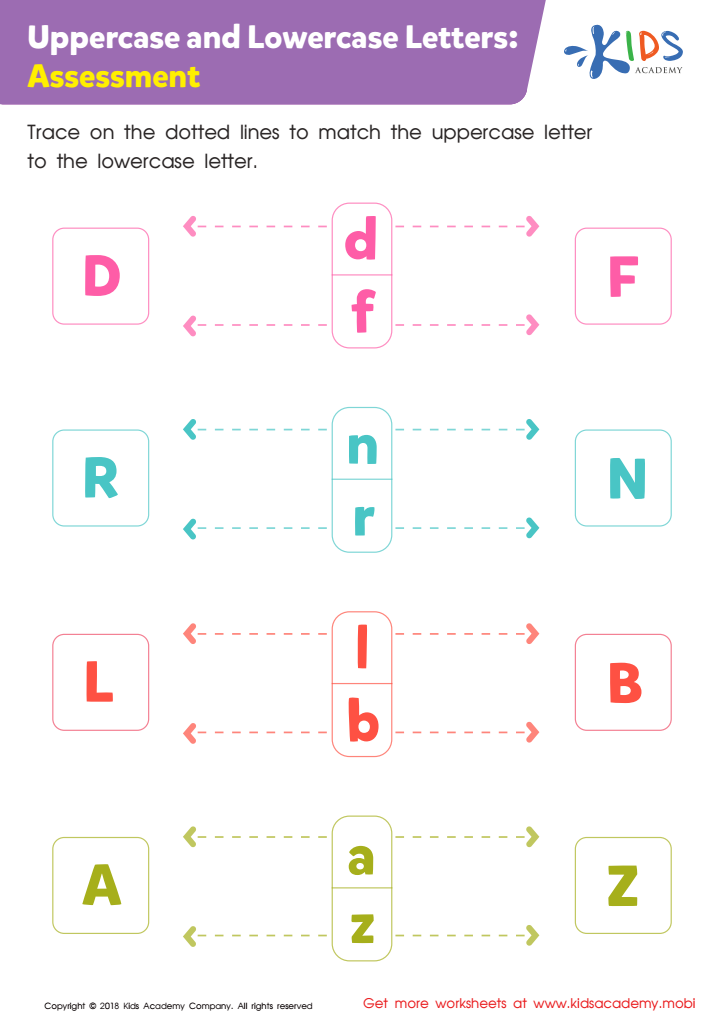
Uppercase and Lowercase Letters: Assessment Worksheet


Ensuring that children aged 6-9 can easily write lowercase letters is crucial for their literacy development, setting a strong foundation for future academic success. At this developmental stage, children are transitioning from learning basic letter recognition to mastering both writing and reading skills. Lowercase letters appear more frequently in texts than uppercase letters, so proficiency in writing them enables smoother, more fluent reading and writing experiences.
For teachers and parents, prioritizing lowercase letter practice supports better penmanship, aids in the legibility of their written work, and enhances their confidence. When children consistently write lowercase letters correctly, they are less likely to struggle with mix-ups that can lead to frustration and disengagement.
Moreover, legible handwriting is essential for effective communication. As children progress through school, clear handwriting is important for completing assignments, taking notes, and participating fully in classroom activities. Early mastery of these skills helps prevent potential learning delays and promotes higher academic achievement.
Additionally, teaching children how to comfortably write lowercase letters promotes fine motor skill development, encouraging hand-eye coordination and control that are imperative for more advanced tasks. Overall, understanding and writing lowercase letters is a cornerstone of early education, impacting literacy, cognitive development, and academic confidence.