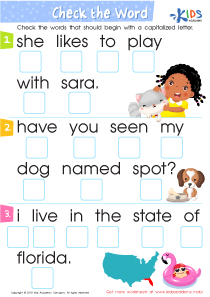
Normal Punctuation Worksheets for Ages 3-4
4 filtered results
-
From - To
Introducing our Normal Punctuation Worksheets for Ages 3-4, meticulously designed to lay the foundation of proper punctuation from an early age. Tailored specifically for young learners, these engaging worksheets make understanding commas, periods, and question marks an enjoyable journey. Through a mix of colorful activities, fun exercises, and simple explanations, these worksheets aim to cultivate an early appreciation and understanding of normal punctuation rules. Perfect for both classroom and home learning environments, our Normal Punctuation Worksheets for Ages 3-4 are your child's first step towards mastering the basics of proper grammar and writing with confidence. Get ready to explore the world of punctuation in the most delightful way!
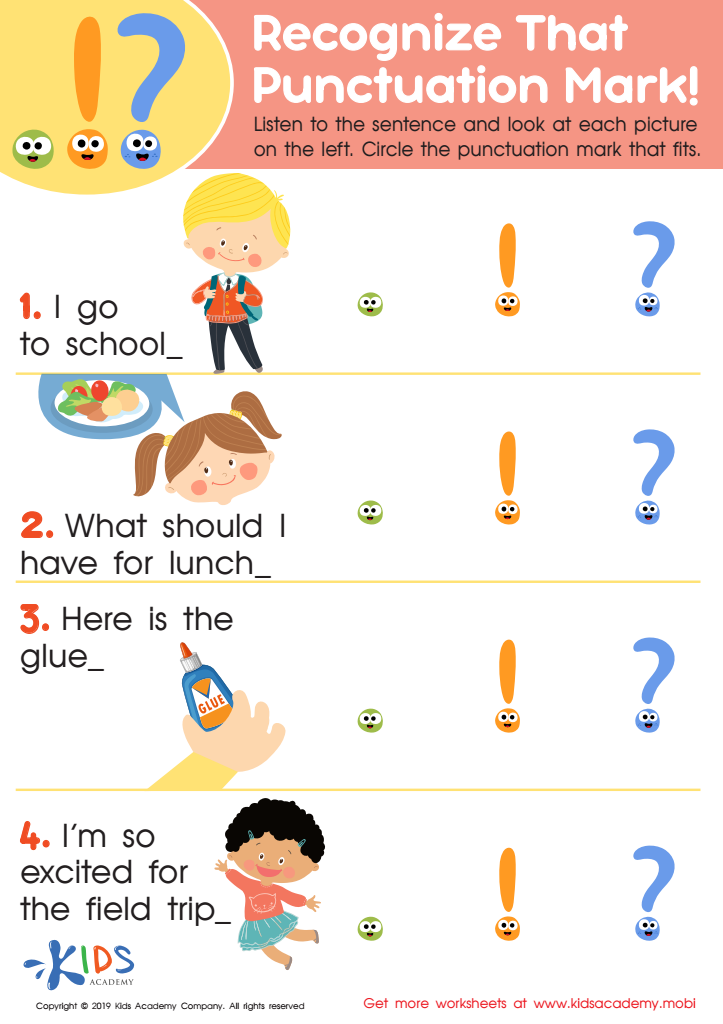
Recognize Punctuation Marks Worksheet
 Assign to My Students
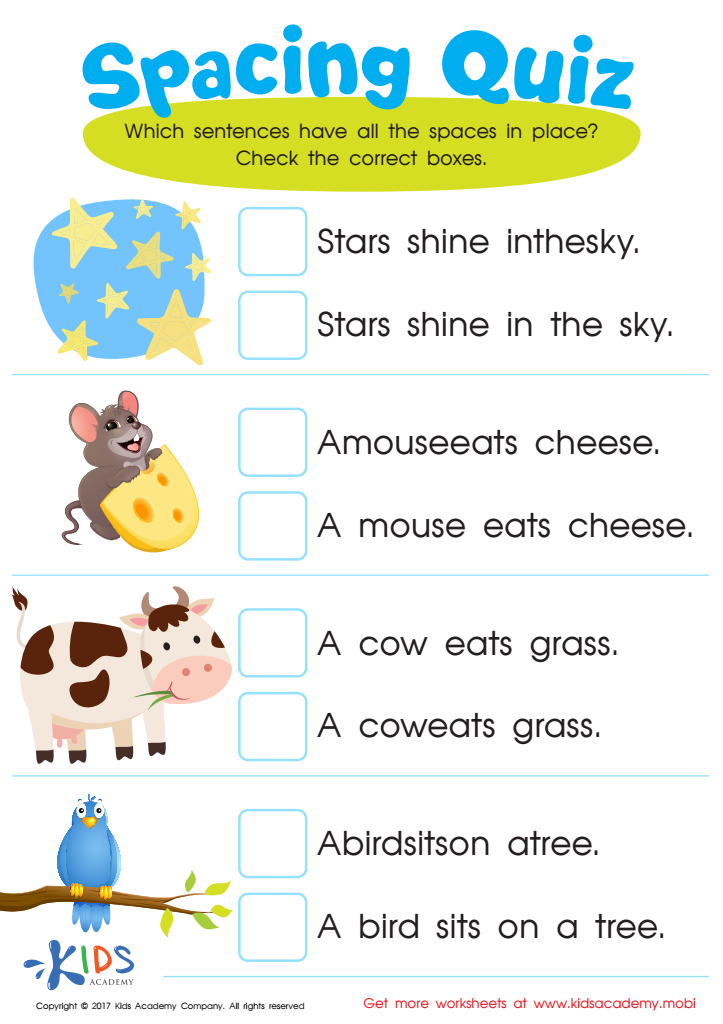
Spacing Quiz Worksheet
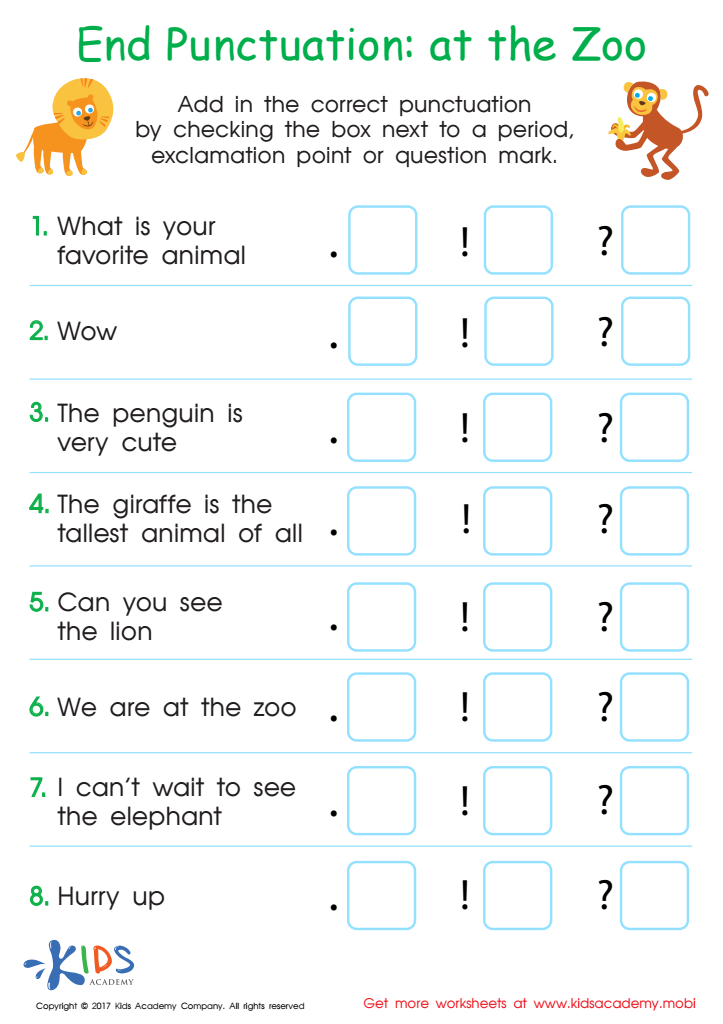
End Punctuation: At the Zoo Worksheet
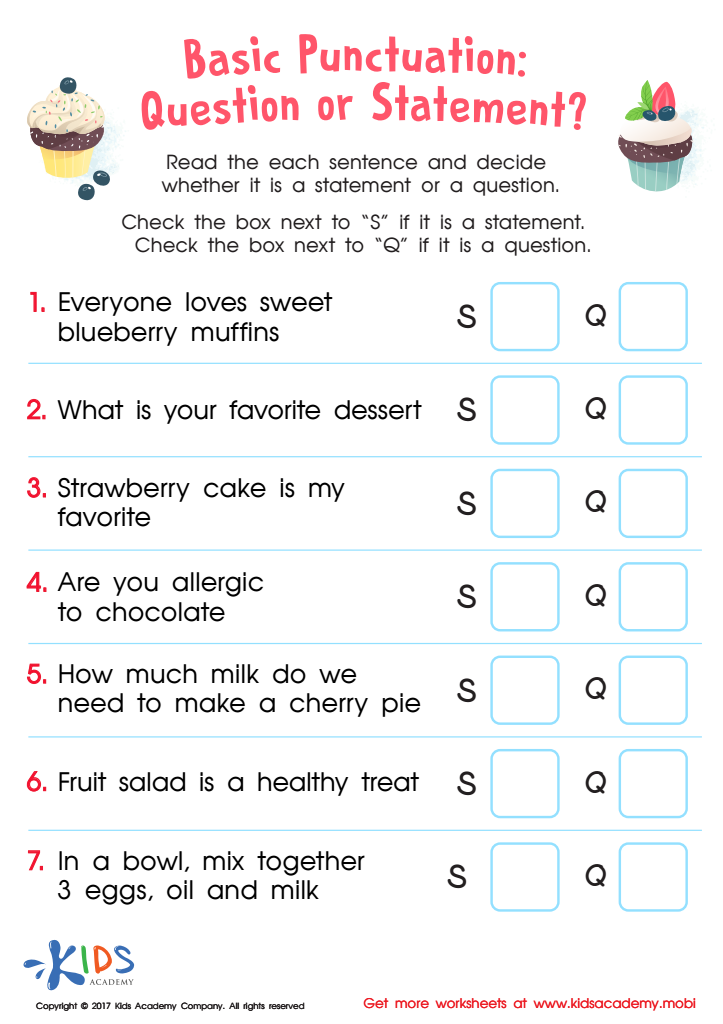
Basic Punctuation: Question or Statement Printable



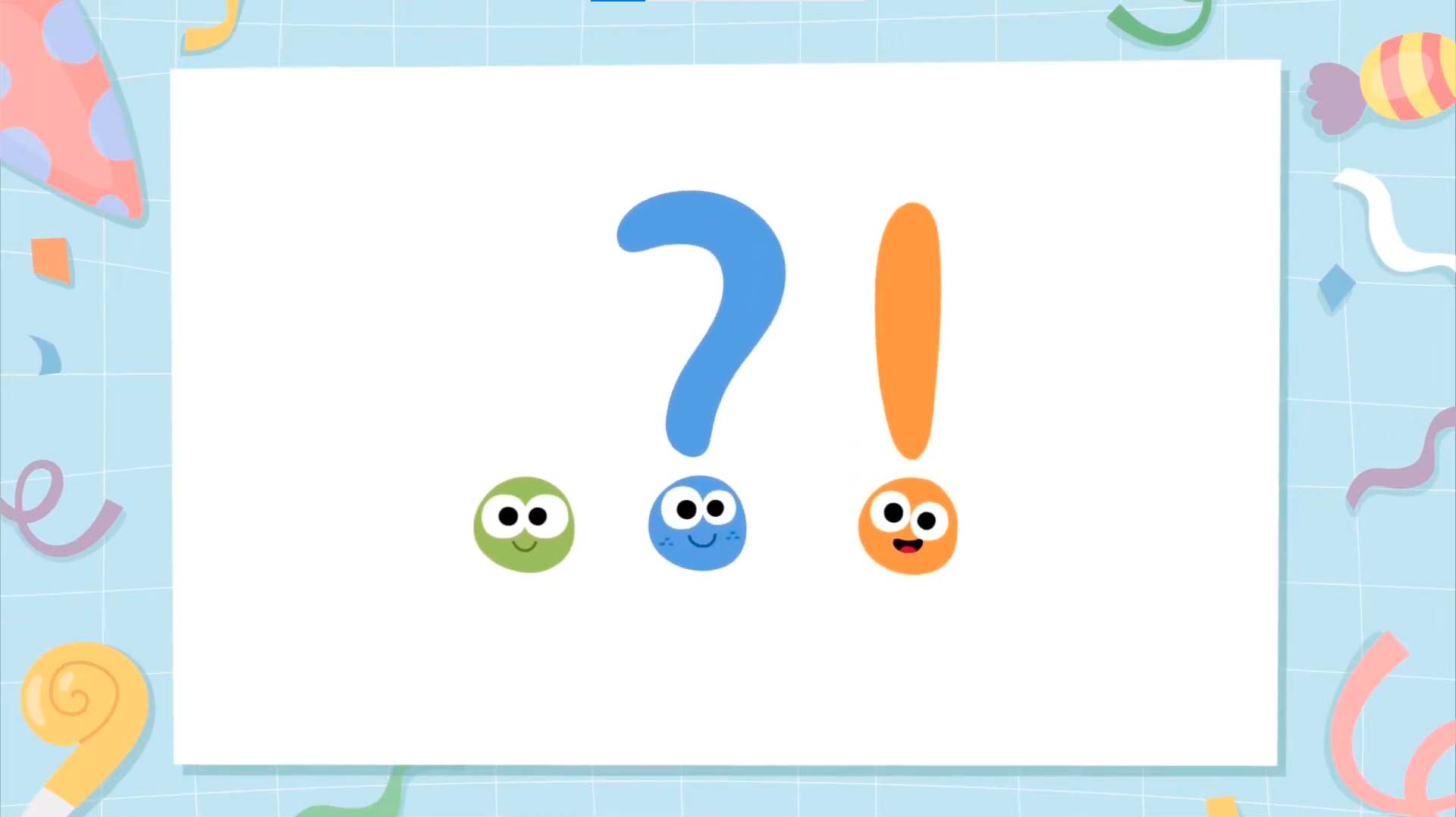




Normal Punctuation worksheets for Ages 3-4 serve as a foundational tool in early childhood education, emphasizing the importance of clear communication from a young age. Punctuation, though it might seem advanced for such young learners, is introduced in a manner that suits their developmental stage, focusing on the basics such as periods, question marks, and exclamation points. These worksheets are crafted with engaging activities that not only introduce children to punctuation but also enhance their reading and writing skills.
Using Normal Punctuation worksheets for Ages 3-4, children begin to understand the concept of ending a sentence with a period, asking questions with a question mark, and expressing excitement or strong emotion with an exclamation point. This early exposure to punctuation marks helps in nurturing a solid foundation for literacy, ensuring that as they progress to more complex sentences and structures, they are well-equipped with the necessary knowledge.
Moreover, these worksheets are designed to be interactive and enjoyable, encouraging young learners to explore the world of punctuation through games, matching exercises, and simple writing tasks. This approach ensures that children are engaged and motivated to learn, making the process of understanding punctuation both fun and educational. Ultimately, Normal Punctuation worksheets for Ages 3-4 are invaluable resources in starting children on the path to effective communication and literacy.