Filters

9 filtered results

Clear all filters
Favorites
With answer key
Interactive

9 filtered results

Difficulty Level

Grade


Subject

    Discover our exciting collection of Normal Elementary Phonics Worksheets designed for children aged 3-7! Perfect for early learners, these engaging worksheets promote phonetic awareness, letter recognition, and language skills through fun activities. Each printable worksheet features colorful illustrations, easy-to-follow exercises, and a variety of phonics-focused challenges that captivate young minds. From matching letters to phonetic sounds to constructing simple words, our resources cater to different learning styles. Enhance your teaching toolkit and help your child develop essential reading skills with our comprehensive phonics worksheets. Start fostering a love for literacy today and empower your young learners with the gift of reading!

    Check out this FREE Trial Lesson on Elementary Phonics for age 3-7!

    Sight Word Review

    Favorites
    With answer key
    Interactive
    • 3-7
    • Interactive
    • Elementary Phonics
    • Normal
    Tricky Words Worksheet
    Tricky Words Worksheet

    Tricky Words Worksheet

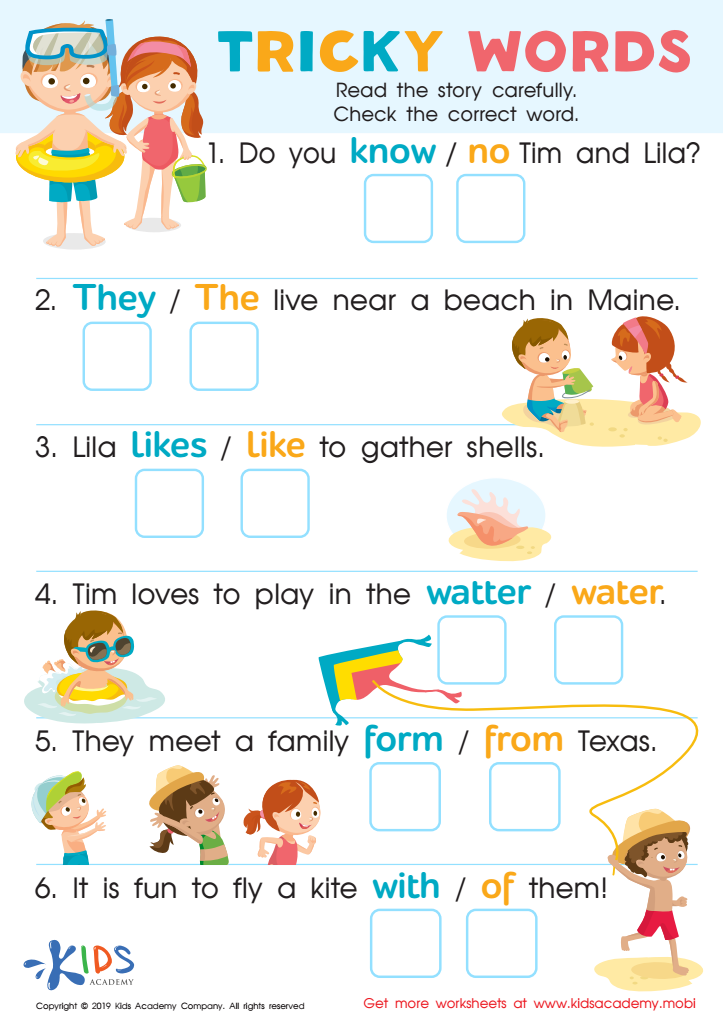
    Reading can be tricky to start with, but this worksheet helps kids learn the basics of editing and strengthens their attention to detail. They'll select the right word from tricky choices, improving their reading and grammar skills.
    Tricky Words Worksheet
    Worksheet
    Phonological Awareness: Assessment 1 Worksheet
    Phonological Awareness: Assessment 1 Worksheet

    Phonological Awareness: Assessment 1 Worksheet

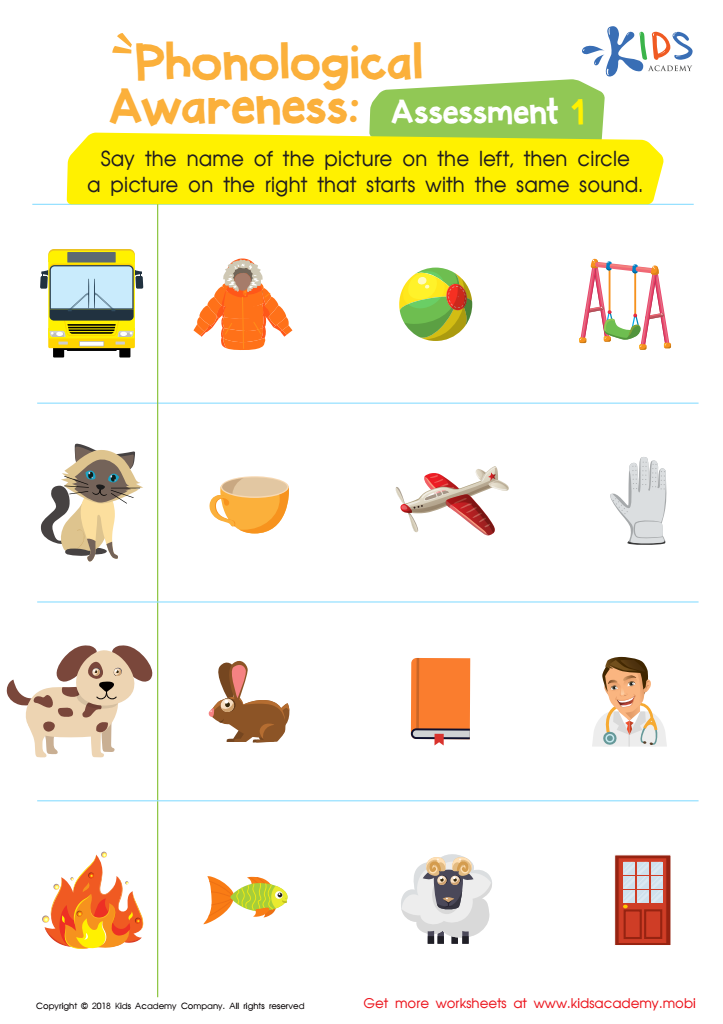
    This worksheet helps kids build key phonics skills for pre-reading. They say each picture name aloud, focusing on the starting sound. Then, they match the sound with an image in the same row. Use as a checkpoint for kindergarten or grade 1 phonics readiness.
    Phonological Awareness: Assessment 1 Worksheet
    Worksheet
    1, 2 or 3? Worksheet
    1, 2 or 3? Worksheet

    1, 2 or 3? Worksheet

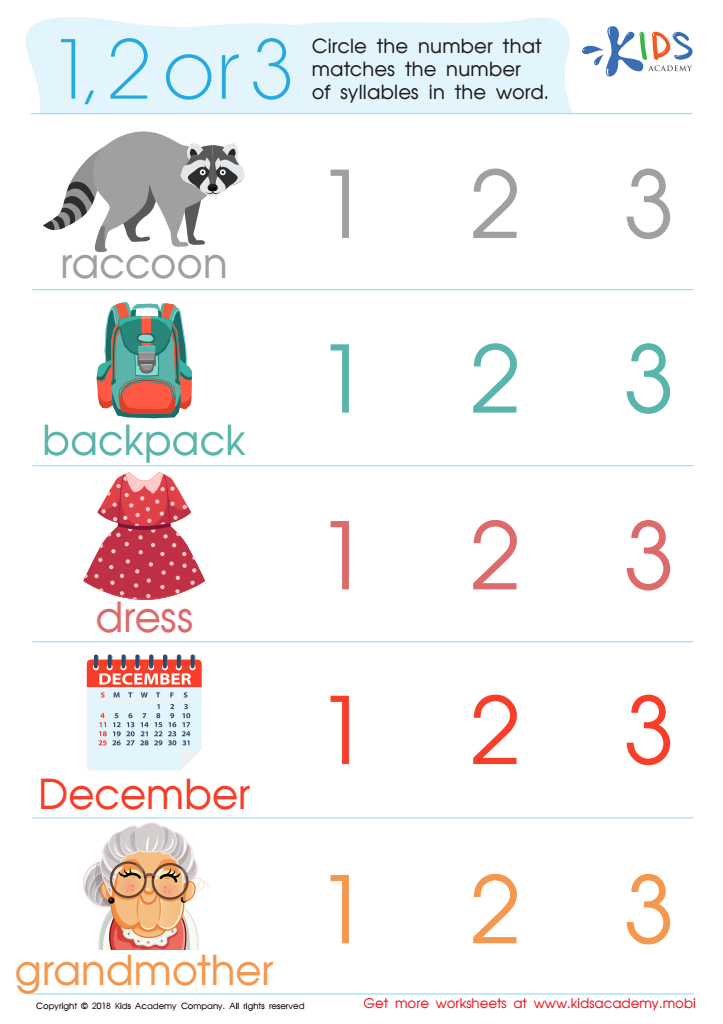
    Do your kids know about syllables? Test their understanding with this worksheet. Read the words aloud and ask them to say them with you. Help them circle the number that matches the number of syllables in each word. Perfect for expanding knowledge or testing how much they've already learned.
    1, 2 or 3? Worksheet
    Worksheet
    What's Like Pizza? Worksheet
    What's Like Pizza? Worksheet

    What's Like Pizza? Worksheet

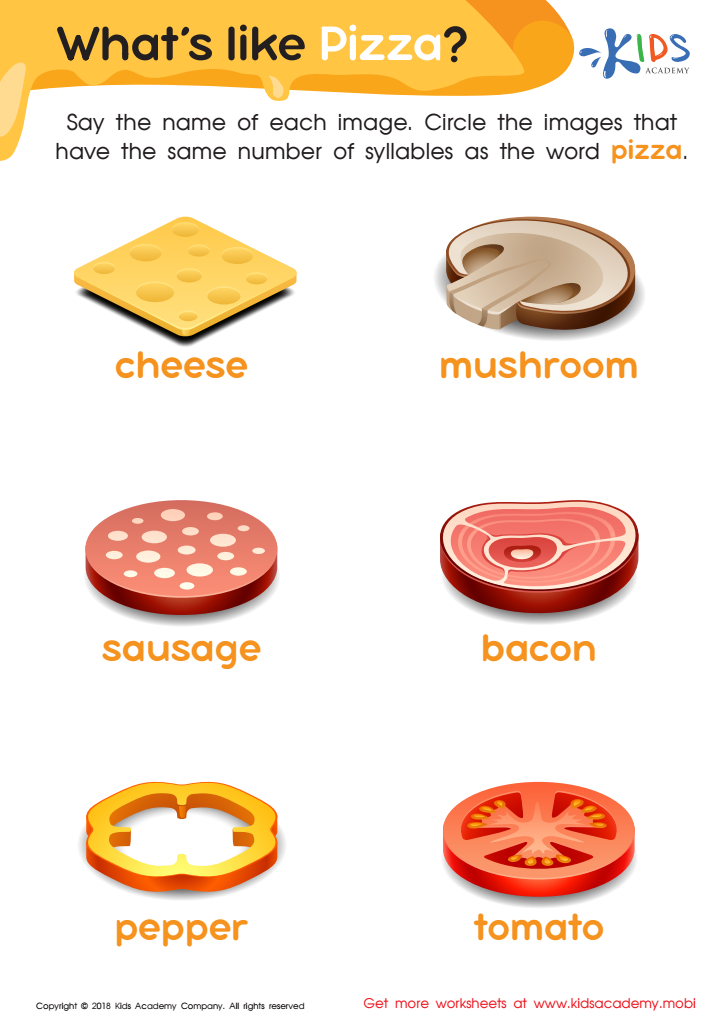
    Encourage your kids to exercise their minds with this pizza worksheet! Ask them to name the ingredients they like on their favourite pizzas. Then, help them circle the images that have the same number of syllables as 'pizza'. They'll have fun while learning too!
    What's Like Pizza? Worksheet
    Worksheet
    Reading: Break Them Apart Worksheet
    Reading: Break Them Apart Worksheet

    Reading: Break Them Apart Worksheet

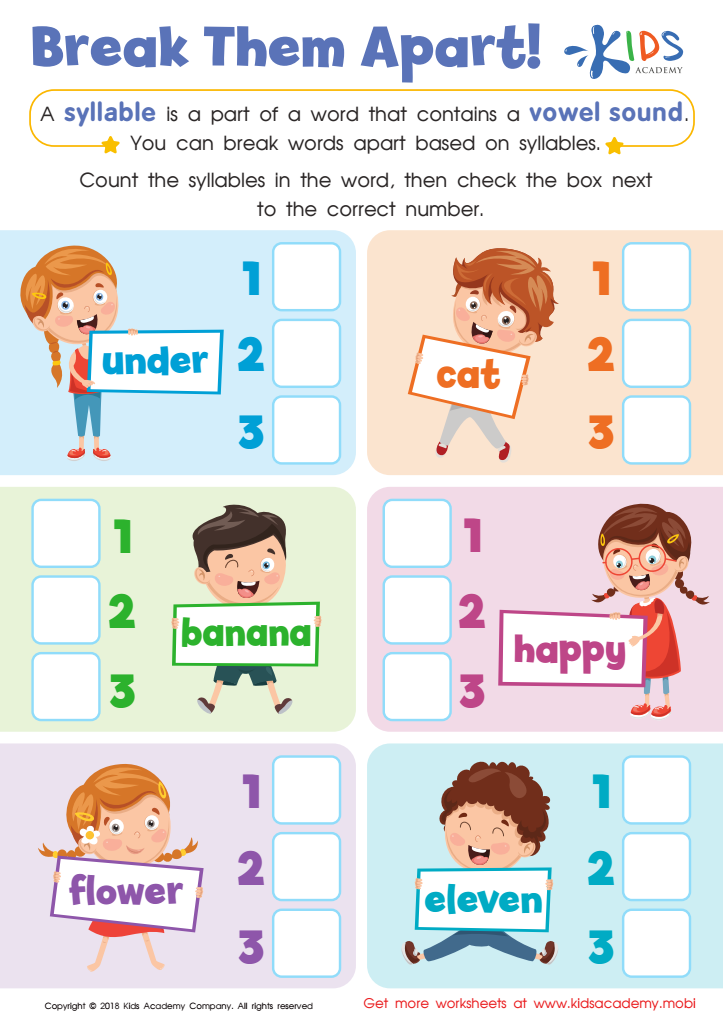
    See if students understand syllables with this fun worksheet. It teaches them that a syllable is a word part with a vowel sound. Kids read each word and choose how many parts it has. Doing this often helps them decode new words and gain confidence.
    Reading: Break Them Apart Worksheet
    Worksheet
    How Many Syllables? Worksheet
    How Many Syllables? Worksheet

    How Many Syllables? Worksheet

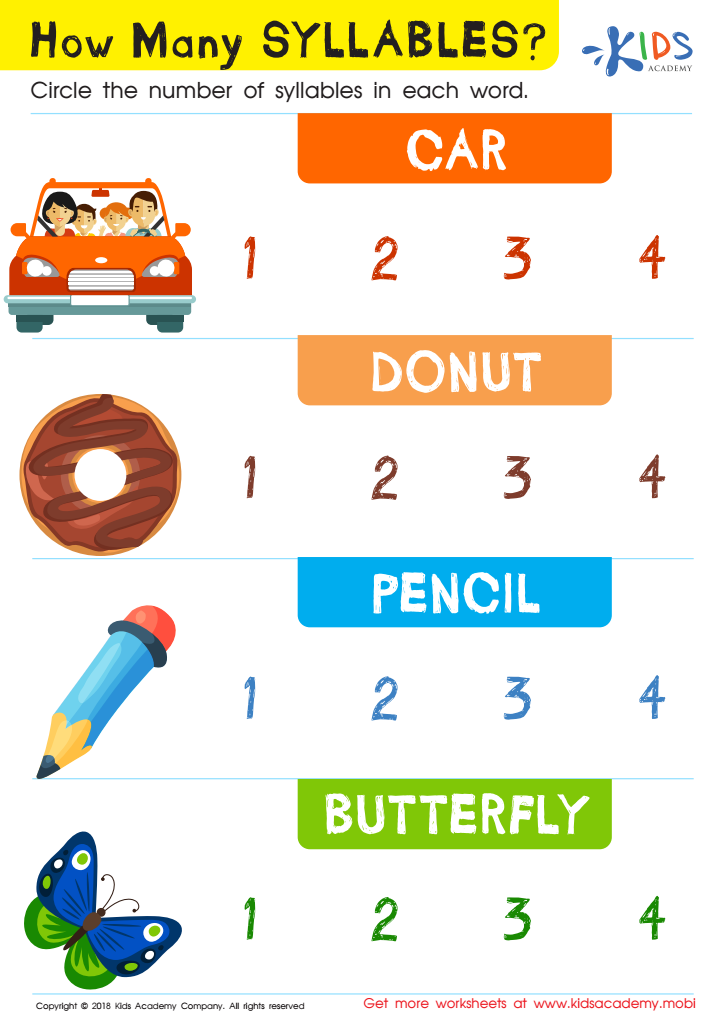
    Syllabication or 'chunking' helps students decode words more quickly and increase fluency. This traceable worksheet is great for emerging readers, combining fun and fine motor practice with chunking words and counting syllables.
    How Many Syllables? Worksheet
    Worksheet
    The Order of Syllables Worksheet
    The Order of Syllables Worksheet

    The Order of Syllables Worksheet

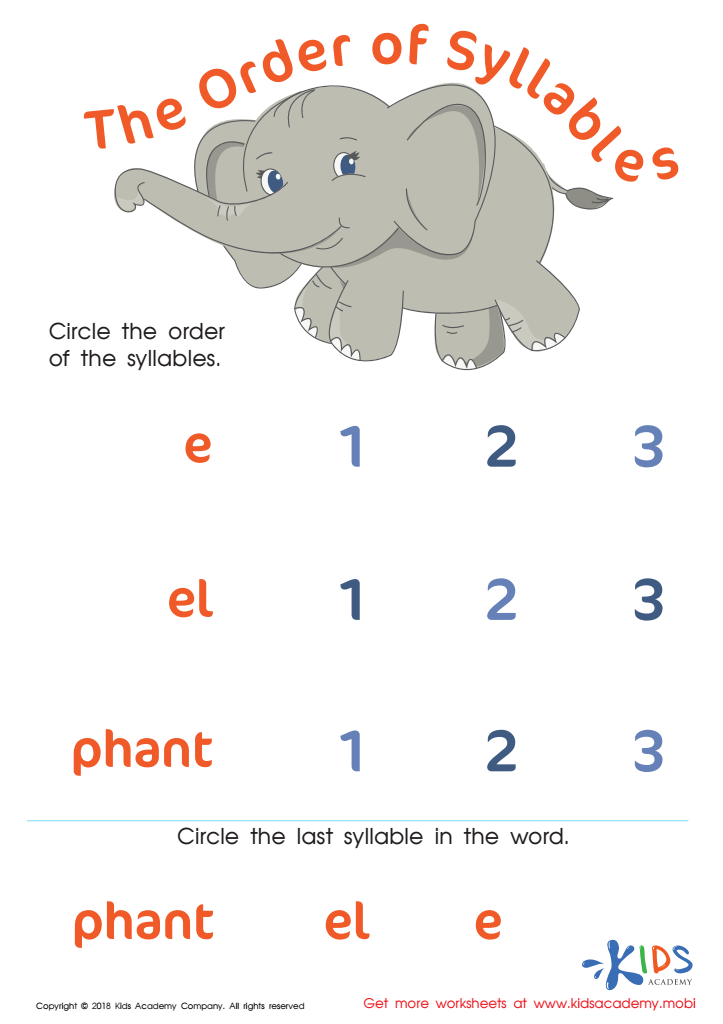
    Syllabication is vital for prereading and decoding words. Download this fun, free worksheet to help your reader practice breaking words into syllables and arranging them for reading. It also strengthens fine motor skills as they trace the numbers for each syllable, guided by a cheerful elephant!
    The Order of Syllables Worksheet
    Worksheet
    Word Matching Game Worksheet
    Word Matching Game Worksheet

    Word Matching Game Worksheet

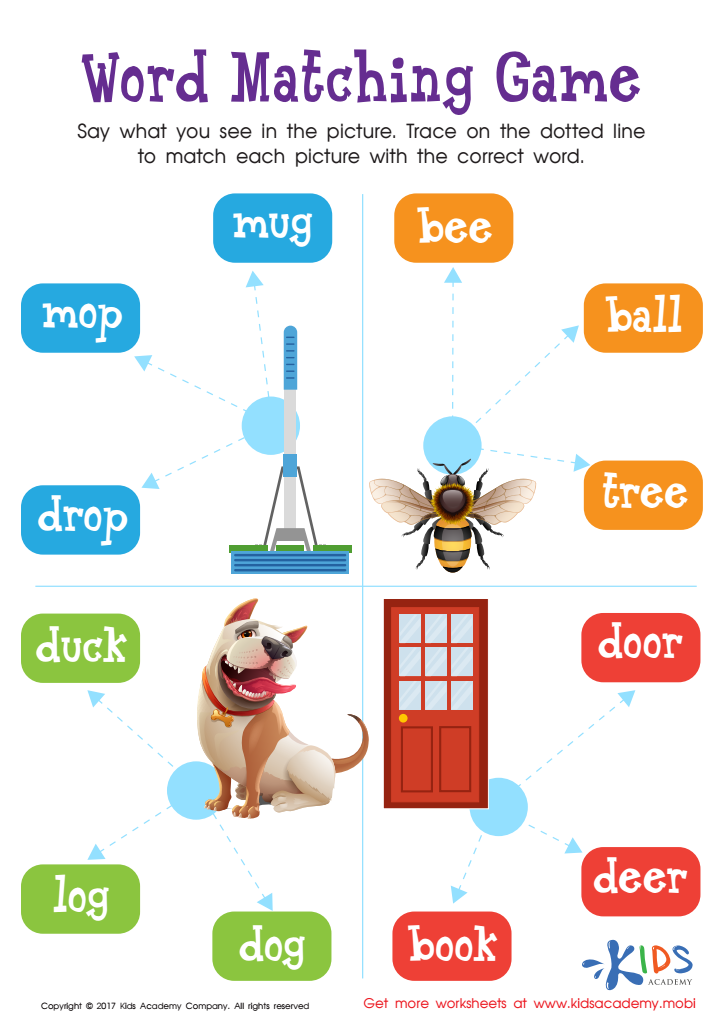
    Help your early reader develop prereading skills with this fun matching worksheet! Visual cues help them learn sight words, decode words in word families, and identify phonetic patterns. They'll practice discerning sounds past initial consonants while saying the name of the picture and finding the matching word - and reading at the same time!
    Word Matching Game Worksheet
    Worksheet
    Lets Count Syllables Worksheet

    Lets Count Syllables Worksheet

    Lets Count Syllables Worksheet

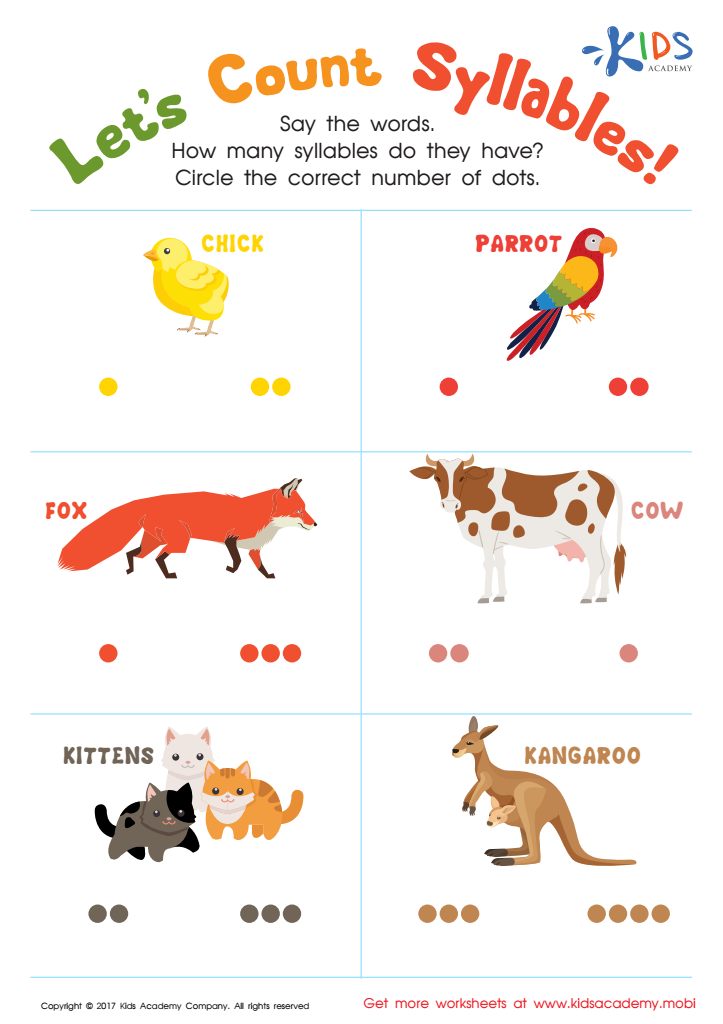
    This fun animal worksheet makes learning to read easier by breaking words into syllables. Bright, cheery pictures give context and help kids choose the right syllable count. Count together and enjoy as your child learns and gains success!
    Lets Count Syllables Worksheet
    Worksheet


    Parents and teachers should prioritize Normal Elementary Phonics for Ages 3-7 because it plays a crucial role in establishing foundational literacy skills. This approach emphasizes the relationship between sounds and letters, helping children develop essential reading and writing abilities at a young age. By learning phonics, children can decode words, recognize patterns, and build their vocabulary more effectively, leading to improved comprehension and fluent reading.

    Engaging with phonics at this early stage supports a love for reading, crucial for academic success. It approaches learning in a systematic way, allowing students to gain confidence as they gradually master sound-letter relationships. Additionally, children with a strong phonics background experience greater success in school, setting a positive trajectory for their education.

    Furthermore, early phonics instruction addresses various learning styles and can be adapted to support diverse learners, including those with reading difficulties. Teachers and parents often find phonics programs easy to implement, providing structured yet flexible resources to enhance learning experiences.

    Overall, investing time and effort into Normal Elementary Phonics fosters a stimulating environment for young learners, equipping them with vital skills that transcend the classroom and contribute to lifelong literacy habits.