Normal Good Citizenship Worksheets for Ages 4-5
5 filtered results
-
From - To
Introduce your little learners to the fundamentals of good citizenship with our engaging worksheets designed specifically for ages 4-5! These normal good citizenship worksheets encourage young minds to explore concepts like kindness, sharing, and respect for others in a fun and interactive way. Through vibrant illustrations and easy-to-follow activities, children will learn the importance of being a responsible citizen in their community. Whether at home or in the classroom, these materials are perfect for fostering a sense of belonging and understanding civic duties. Download our worksheets today and instill foundational values that will last a lifetime!
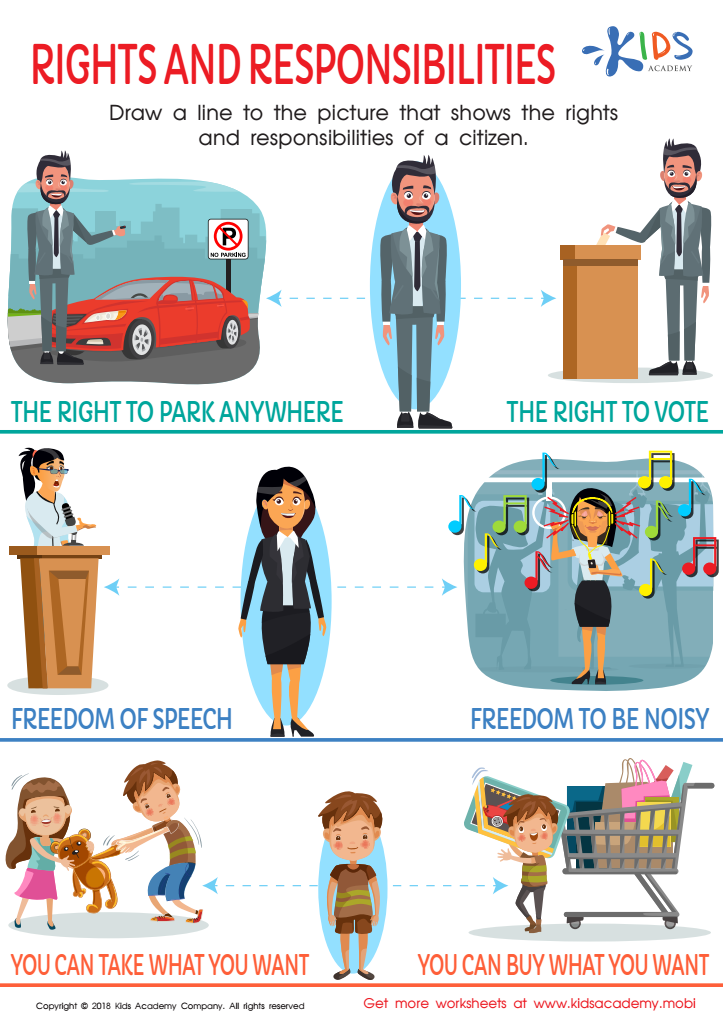
Rights and Responsibilities Worksheet
 Assign to My Students
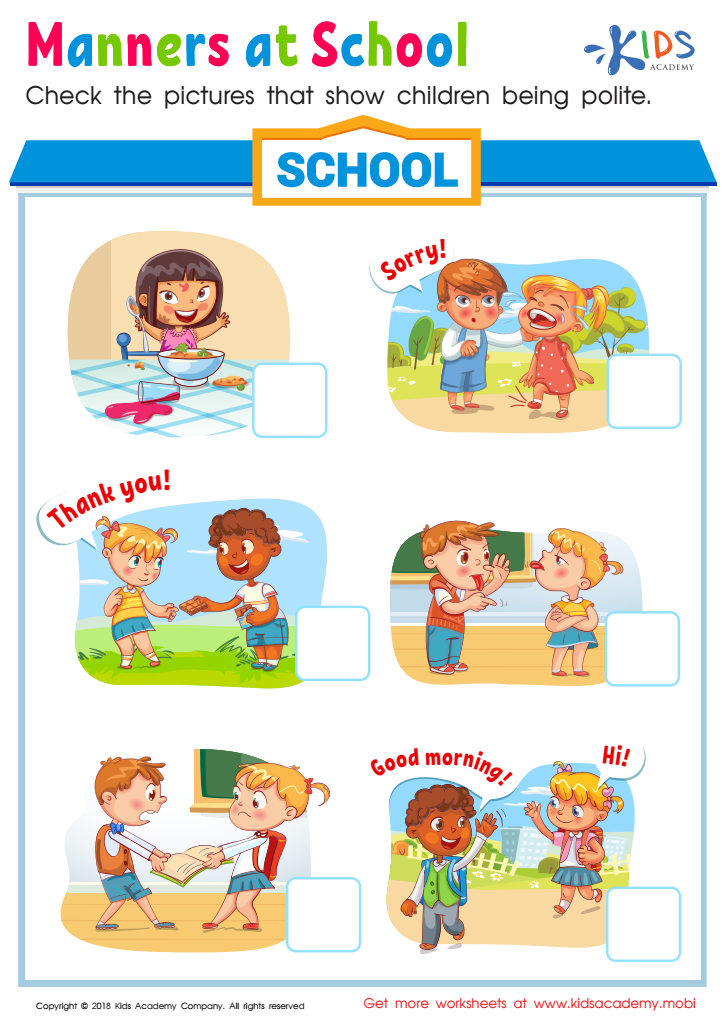
Manners at School Worksheet
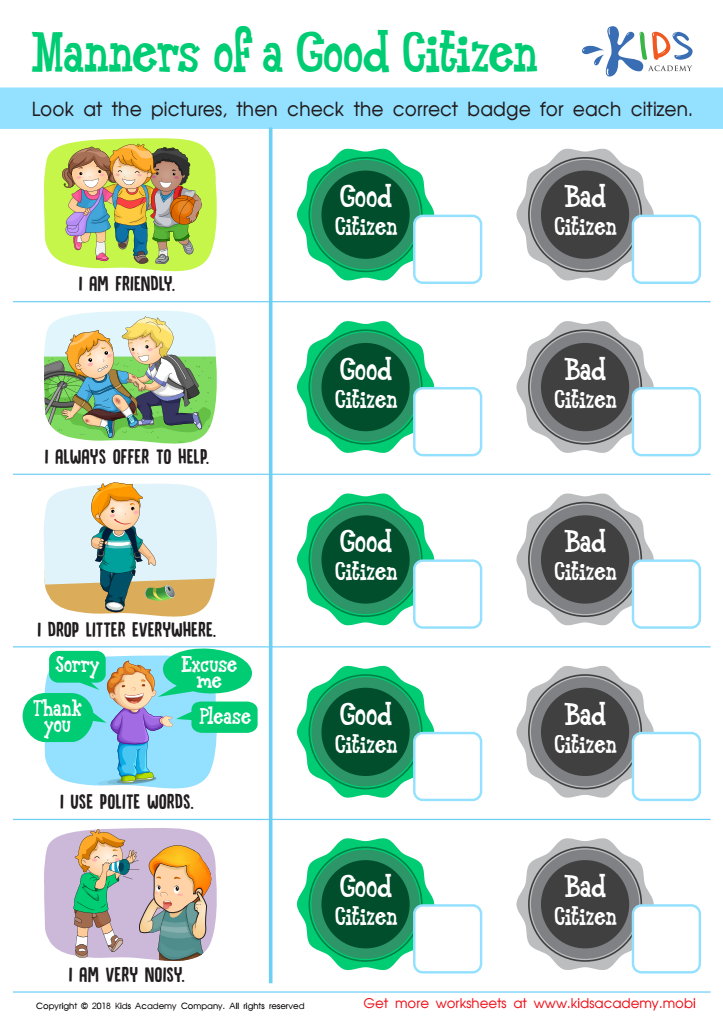
Manners of a Good Citizen Worksheet
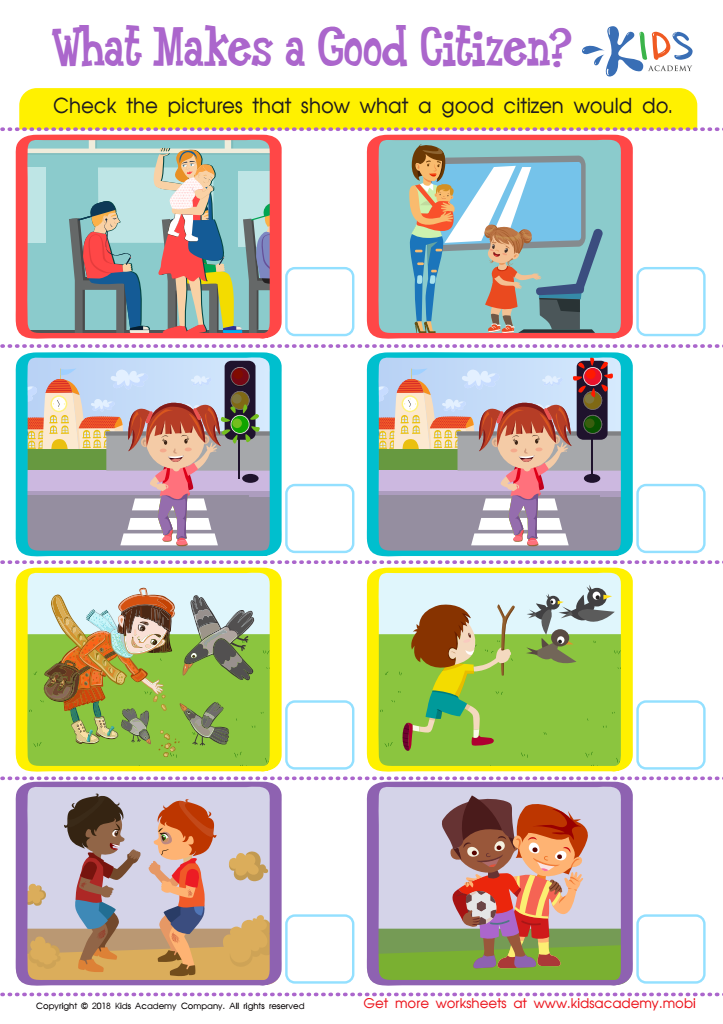
What Makes a Good Citizen? Worksheet
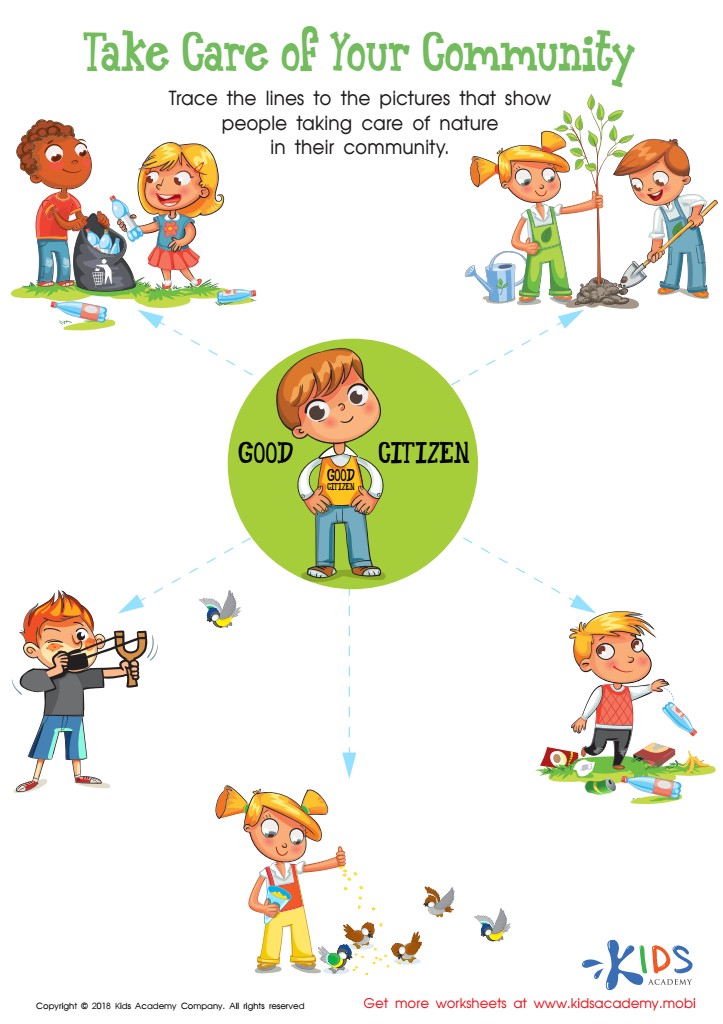
Take Care of your Community Worksheet




Normal Good Citizenship for children ages 4-5 is crucial for their social and emotional development. At this age, children begin to understand their role within a community, learning important values like kindness, sharing, and respect for others. Teaching good citizenship helps them develop empathy and build healthy relationships with peers and adults, fostering a sense of belonging.
Engaging in discussions about sharing, taking turns, and showing gratitude shapes their behavior patterns and encourages cooperation. This early understanding lays the groundwork for responsible decision-making, aiding children in resisting negative peer pressure in later years.
In addition, practicing good citizenship nurtures a sense of empowerment. When children learn their actions can positively impact others, it boosts their self-esteem and confidence. They realize they can solve conflicts amicably and contribute to their environment, whether at school or home.
Furthermore, creating a culture of good citizenship models values for parents and teachers alike, reinforcing community expectations. By emphasizing these principles early on, educators and caregivers not only prepare young learners for school but also instill lifelong values essential for thriving in a diverse society. Ultimately, it lays the foundation for future responsible citizens who contribute positively to their communities.








