Normal Silent Vowels Worksheets for Ages 4-6
3 filtered results
Difficulty Level
Grade
Age
-
From - To
Subject
Activity
Standards
Discover our engaging "Normal Silent Vowels Worksheets for Ages 4-6," designed to enhance your child's phonetic awareness and letter recognition. These fun, interactive worksheets introduce young learners to the concept of silent vowels in words, promoting essential reading skills. Each worksheet features colorful images and activities that captivate children's attention while making learning enjoyable. Ideal for both classroom and home use, our resources encourage parents and educators to support early literacy development. With a focus on foundational skills, these worksheets help build confidence as children explore the world of sounds. Download and watch your child thrive in language learning!
Favorites
With answer key
Interactive
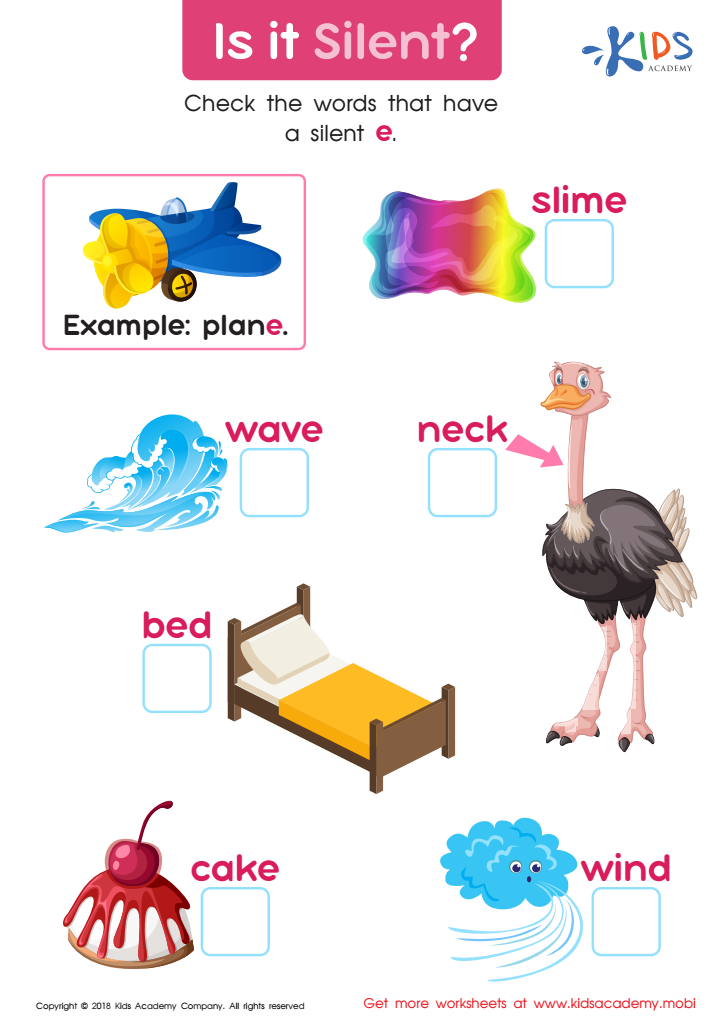
Is It Silent? Worksheet
Phonetics can be tricky, like the sound of /e/ in 'egg' vs. the silent /e/ at the end of 'slime'. Ask your students to give more examples. Read out the words in this worksheet with your kids and ask them to identify the silent /e/ ones.
 Assign to My Students
Is It Silent? Worksheet
Worksheet
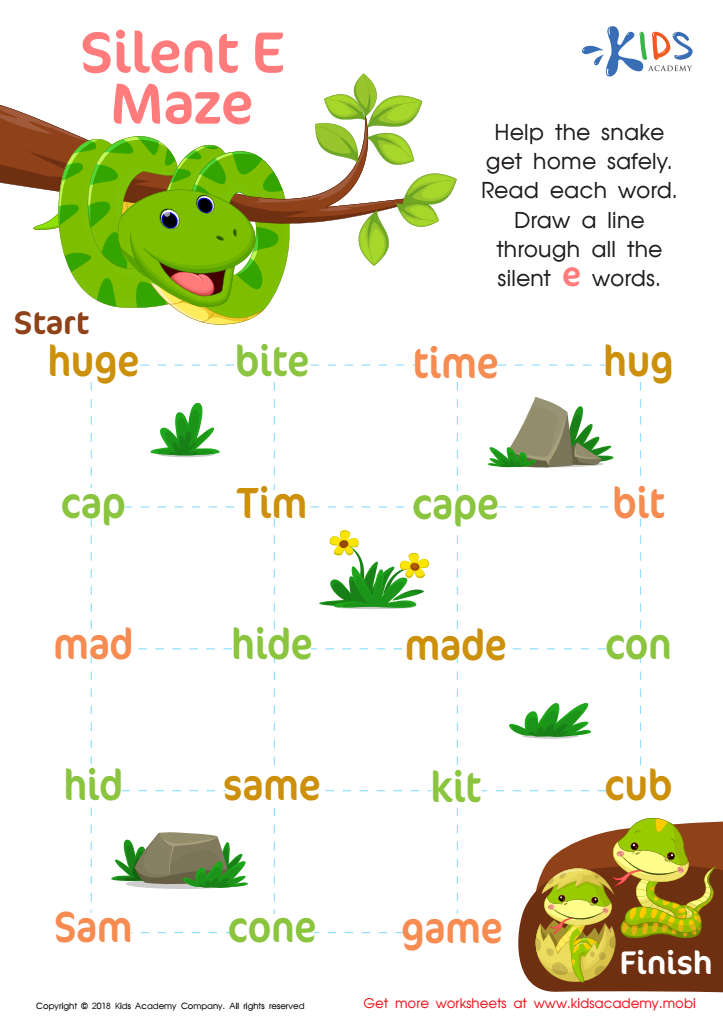
Silent E Maze Worksheet
Kids love mazes! This fun printable worksheet lets them help a mama snake get home to her babies, using Silent E words. They'll practice fine motor skills, while they draw lines through words that have Silent E and words with closed syllables that don't. It's a great way to help them recognize Silent E words!
Silent E Maze Worksheet
Worksheet
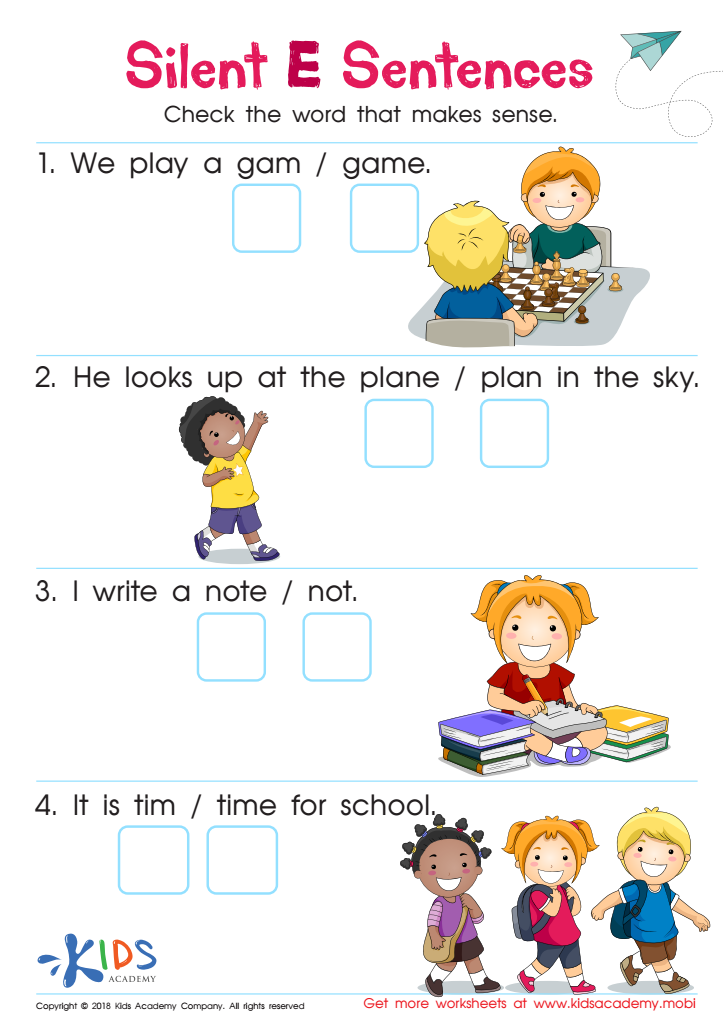
Silent E Sentences Worksheet
Young readers can find learning Silent E tricky, so this helpful worksheet can help! It teaches them to distinguish words that look the same but for the Silent E and choose the right word for sentence blanks. Kids can mark the correct answer and become familiar with closed syllables and words that require the E.
Silent E Sentences Worksheet
Worksheet
Join Kids Academy for Free
Who is primarily going to use this learning content?


Normal Silent Vowels are crucial for early literacy development, particularly for children aged 4-6. Understanding these vowels helps build a strong foundation for reading and spelling. Young learners often encounter words where vowels are present but not pronounced, such as in “cake” or “bike.” By recognizing the presence and role of silent vowels, children become more proficient in decoding words, thus enhancing their reading skills.
Furthermore, early exposure to these concepts can foster greater phonemic awareness, which is vital for language acquisition. When children grasp how silent vowels function within words, they begin to understand more complex spelling patterns and improve their overall language comprehension.
Teachers and parents should care because this knowledge not only supports children in mastering basic literacy skills but also encourages a love for reading. Making learning fun through engaging activities that highlight silent vowels—such as games and songs—promotes curiosity and enthusiasm for language.
In summary, by prioritizing Normal Silent Vowels, educators and parents can significantly impact a child’s ability to read fluently and understand language intricacies, setting them on a successful literacy journey for years to come. Investing time in this aspect helps create confident readers who will thrive academically and socially.