Normal Color Words Worksheets for Ages 4-6
8 filtered results
-
From - To
Introducing our "Normal Color Words Worksheets" designed for ages 4-6! These engaging and educational resources are perfect for young learners, especially those starting with English as a second language. Each worksheet helps children identify, learn, and write basic color words in a fun and interactive way. Vibrant images and simple exercises enhance vocabulary and cognitive skills, promoting confidence in language use. Ideal for home or classroom settings, our worksheets provide a foundation for reading readiness and color recognition. Make learning enjoyable and effective with these expertly crafted tools, tailored specifically for early childhood development.
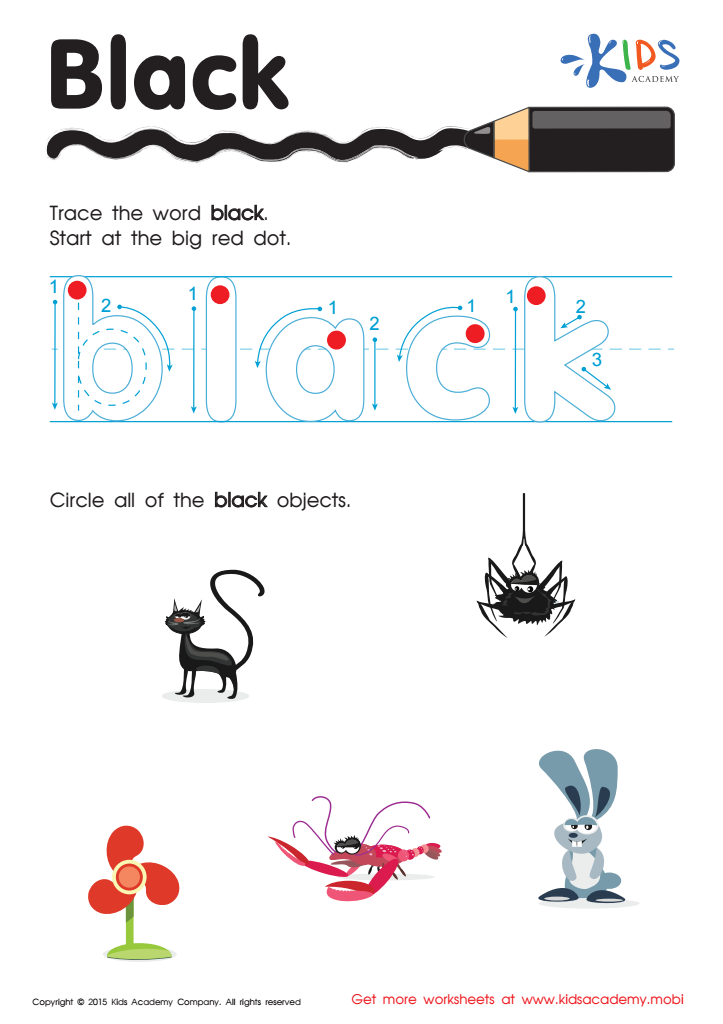
Black Tracing Color Words Printable
 Assign to My Students
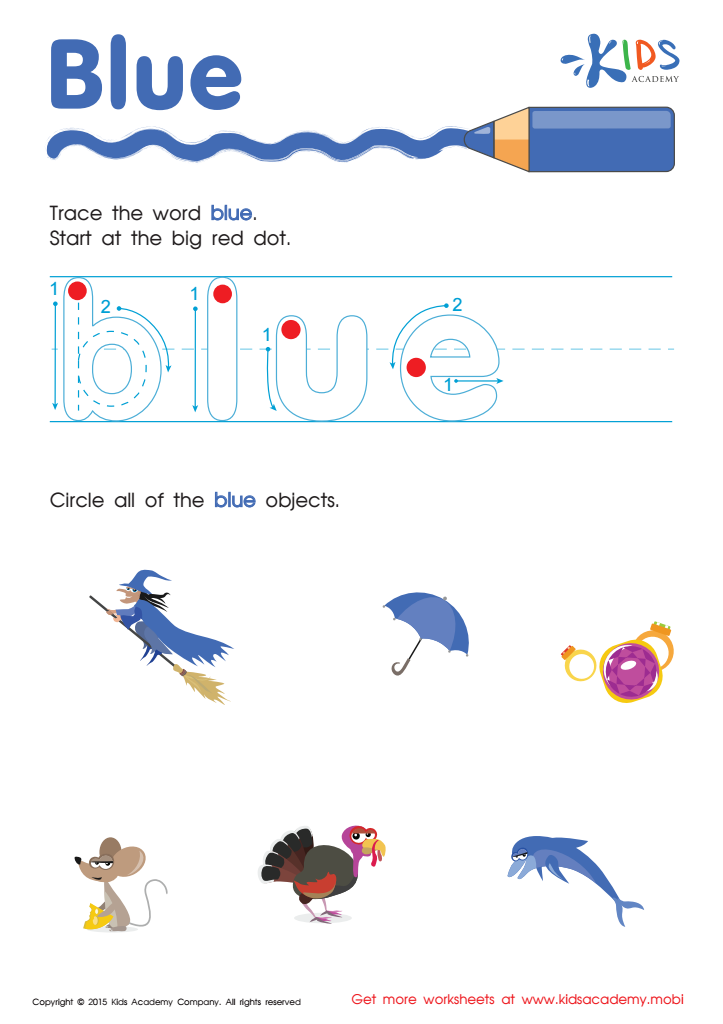
Blue Tracing Color Words Printable
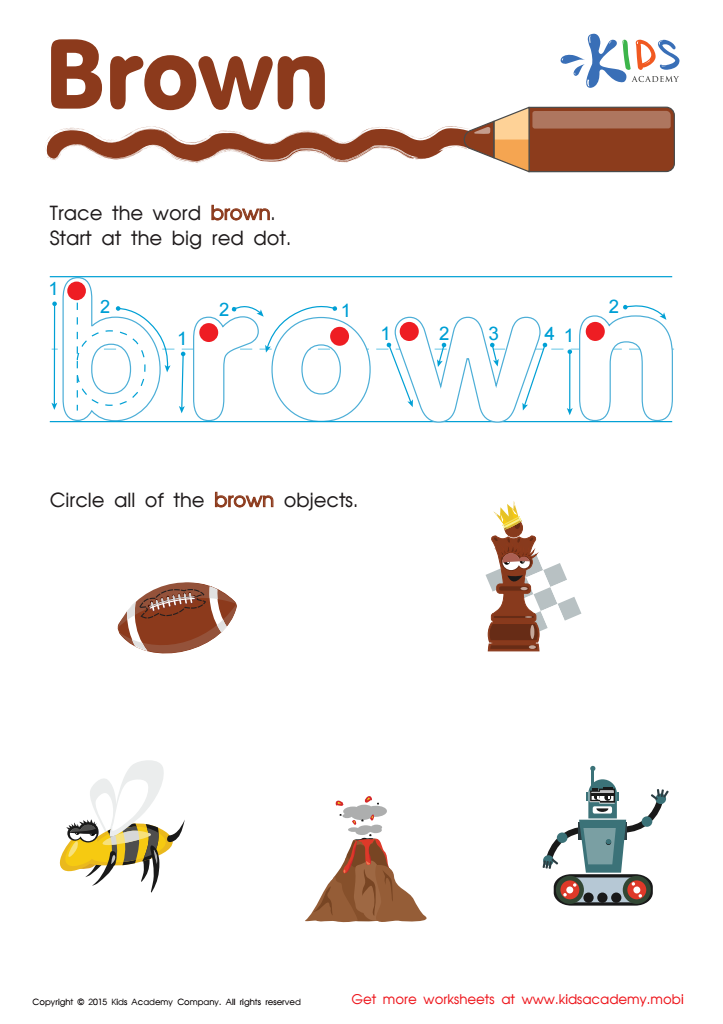
Brown Tracing Color Words Worksheet
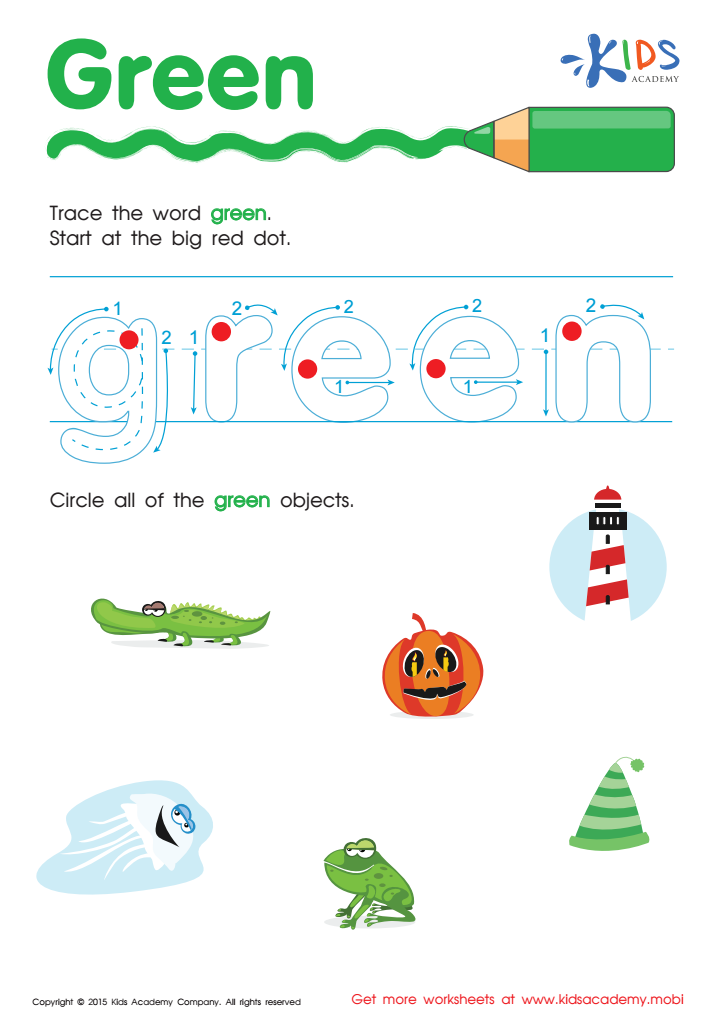
Green Tracing Color Words Worksheet
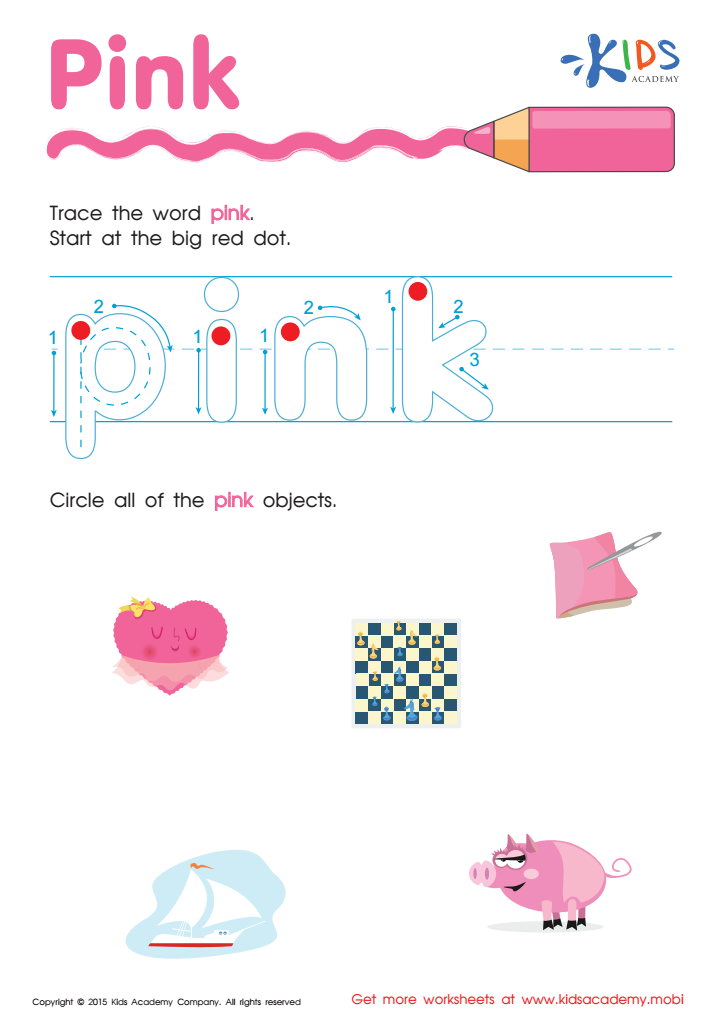
Pink Tracing Color Words Worksheet
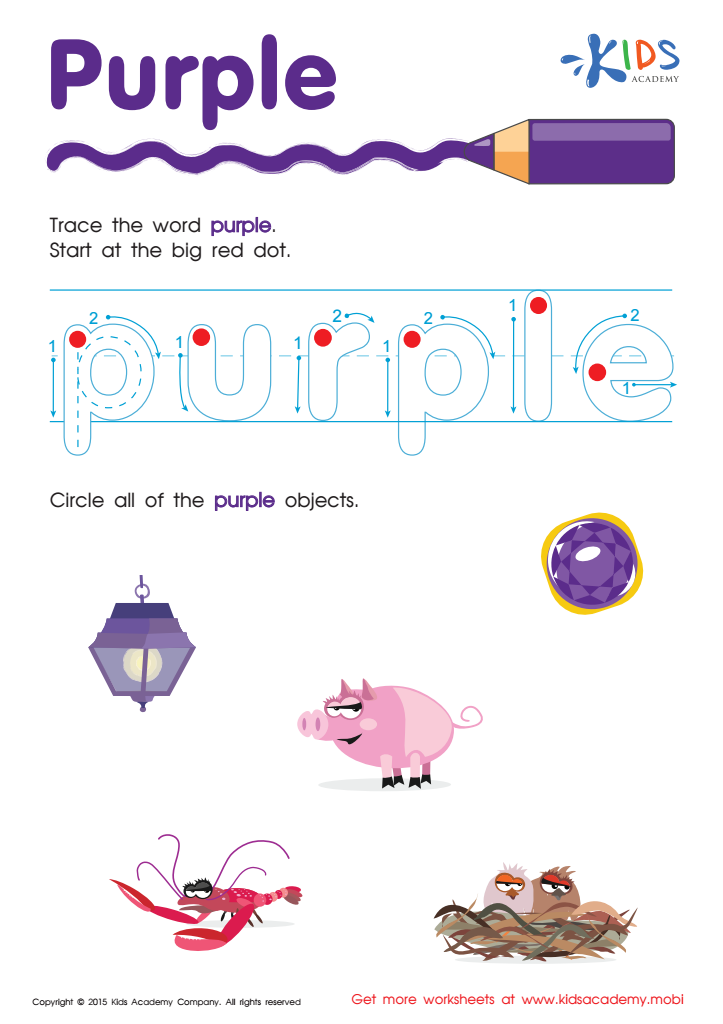
Purple Tracing Color Words Worksheet
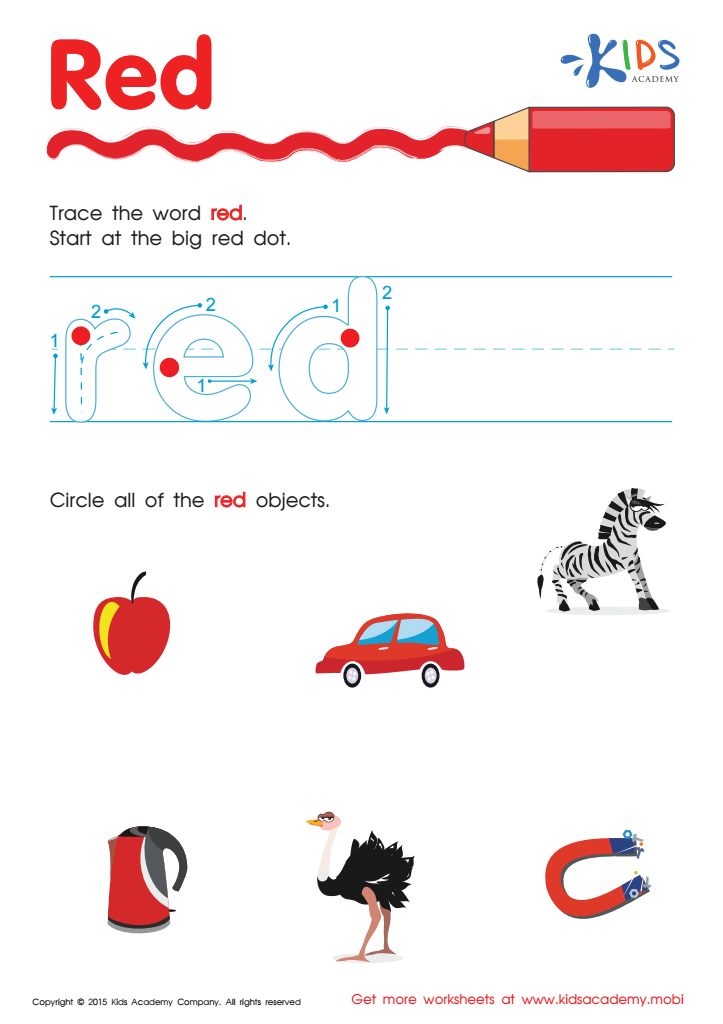
Red Tracing Color Words Printable
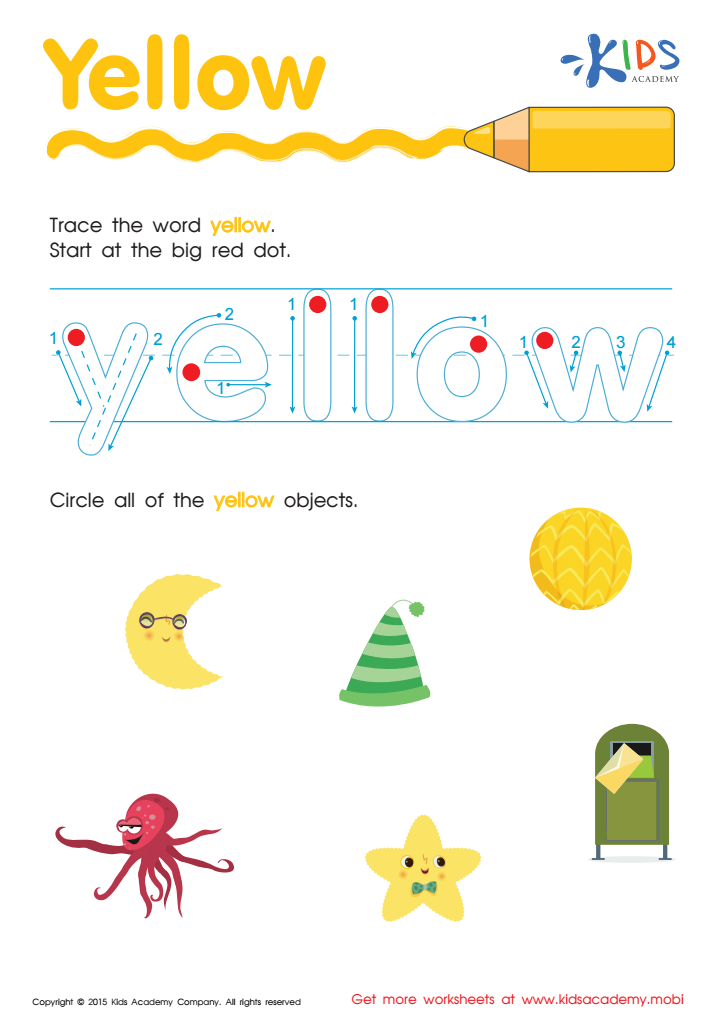
Yellow Tracing Color Words Worksheet



Understanding "normal color words"—basic colors such as red, blue, yellow, and green—is crucial for children aged 4-6, as it lays the foundation for cognitive, language, and perceptual development. Parents and teachers should prioritize this aspect for several important reasons.
Firstly, grasping color terminology enhances language skills. It expands children's vocabulary, improves communication abilities, and boosts confidence in social interactions. Knowing colors helps kids describe and differentiate objects, fostering clearer and more effective conversations.
Secondly, recognizing and naming colors aids cognitive development. Colors are often the first categorical concept children learn, which reinforces their abilities to organize and classify information. This skill is translatable to other learning areas such as math, where understanding patterns and sequences is essential.
Thirdly, color knowledge supports creative expression. Whether it's through drawing, coloring, or choosing outfits, colors allow children to make choices, encouraging decision-making and self-expression.
Lastly, teachers use color words to give instructions and organize classroom activities. This helps kids follow directions, especially in group settings, thus improving listening and cooperation skills.
In conclusion, familiarity with color words is not just a trivial part of early education. It significantly contributes to language development, cognitive organization, creative expression, and classroom behavior, making it vital for parents and teachers to nurture this skill in young children.








