Filters

1336 filtered results

Clear all filters
Favorites
With answer key
Interactive

1336 filtered results

Difficulty Level

Grade


Check out this FREE Trial Lesson for age 4-7!

Sound Is All Around Us

Favorites
With answer key
Interactive
  • 4-7
  • Interactive
  • Normal
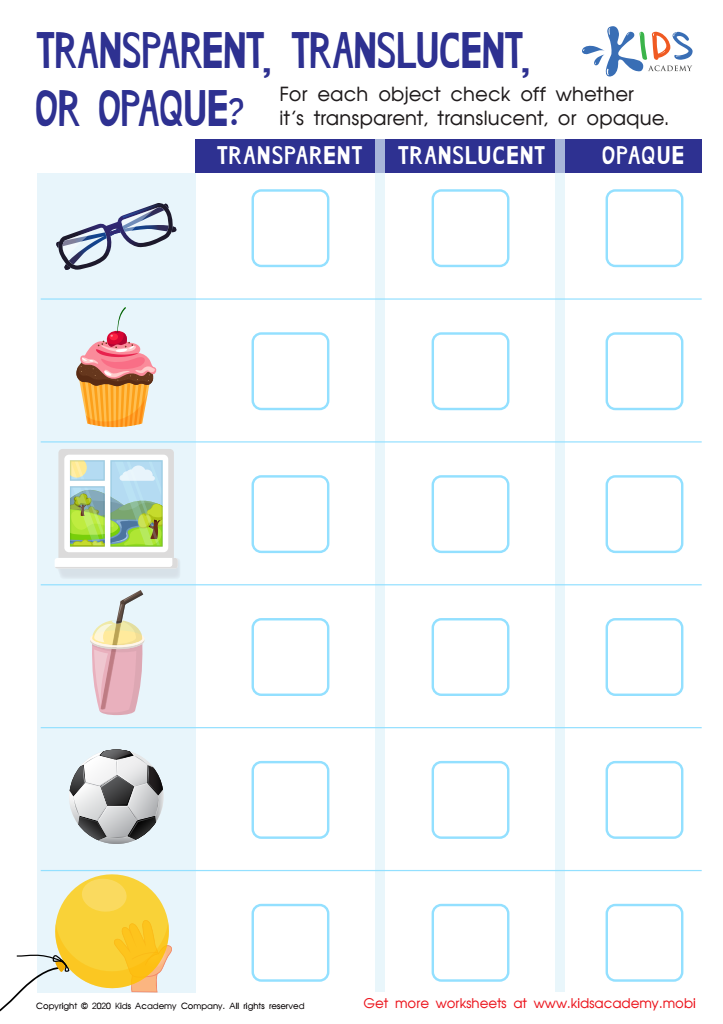
Transparent, Translucent, or Opaque Worksheet

Transparent, Translucent, or Opaque Worksheet

Remind students that transparent objects allow us to see through them, translucent objects let some light pass through, and opaque objects block all light. Have them look at pictures and decide if each object is transparent, translucent, or opaque.
Transparent, Translucent, or Opaque Worksheet
Worksheet
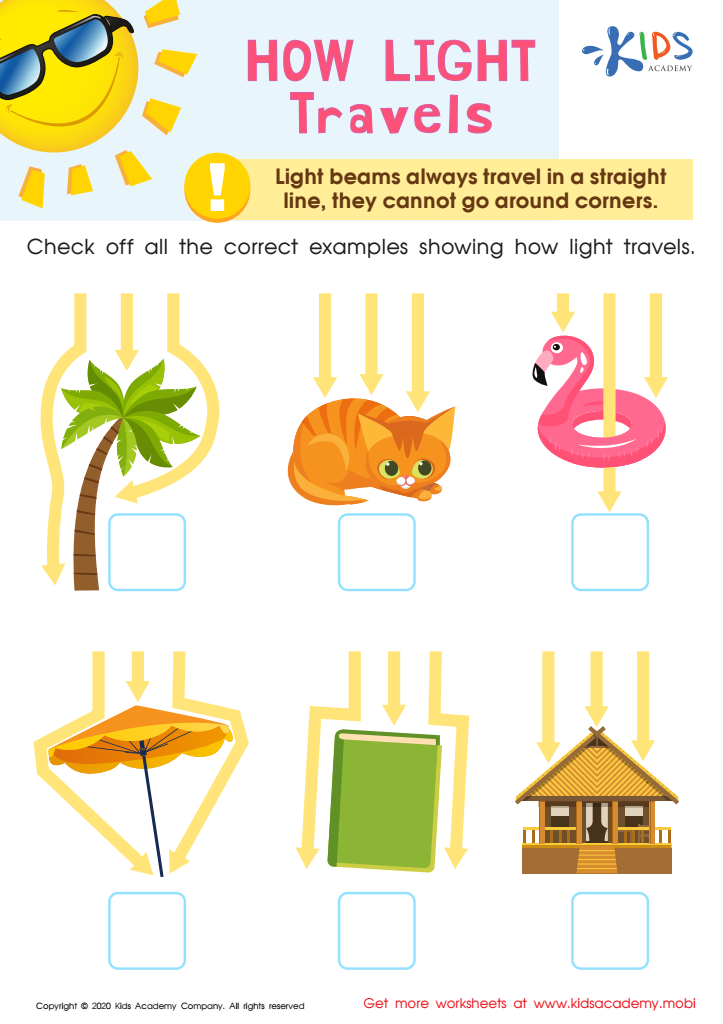
How Light Travels Worksheet

How Light Travels Worksheet

This colorful worksheet teaches students about light travel: beams move in a straight line and can't go around corners. Students view pictures and check off all the correct examples.
How Light Travels Worksheet
Worksheet
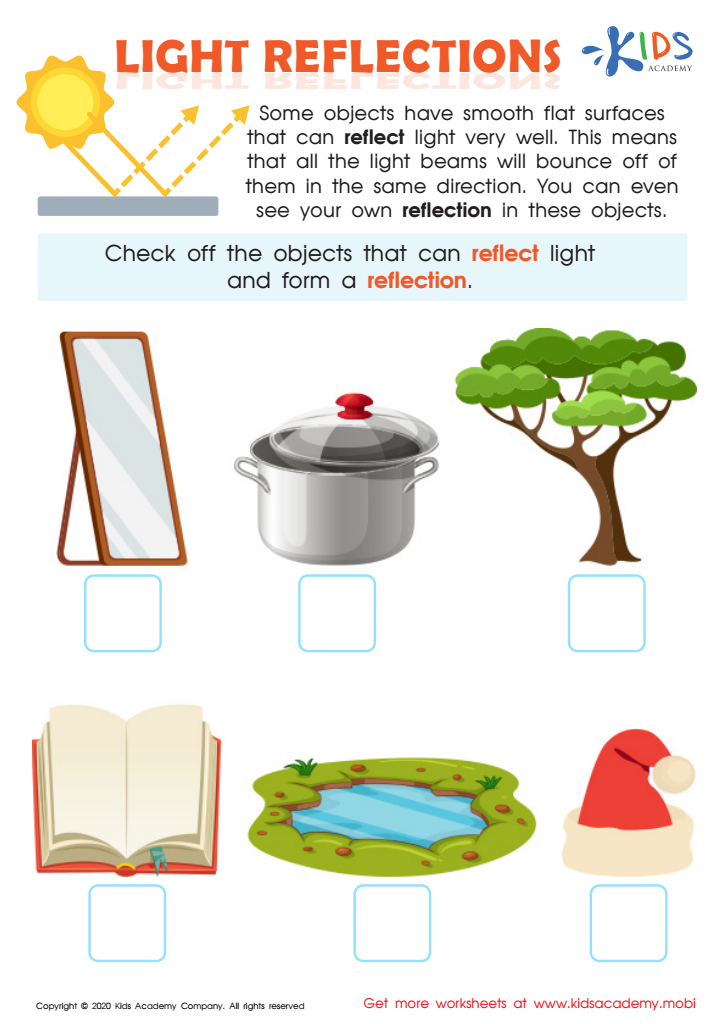
Light Reflections Worksheet

Light Reflections Worksheet

Teach your students that some objects reflect light and form a reflection. Ask them to name examples, then look at pictures and check off which objects can do this. Have them note how the light bounces off these surfaces, and observe their own reflections.
Light Reflections Worksheet
Worksheet
Which Is Brighter? Worksheet

Which Is Brighter? Worksheet

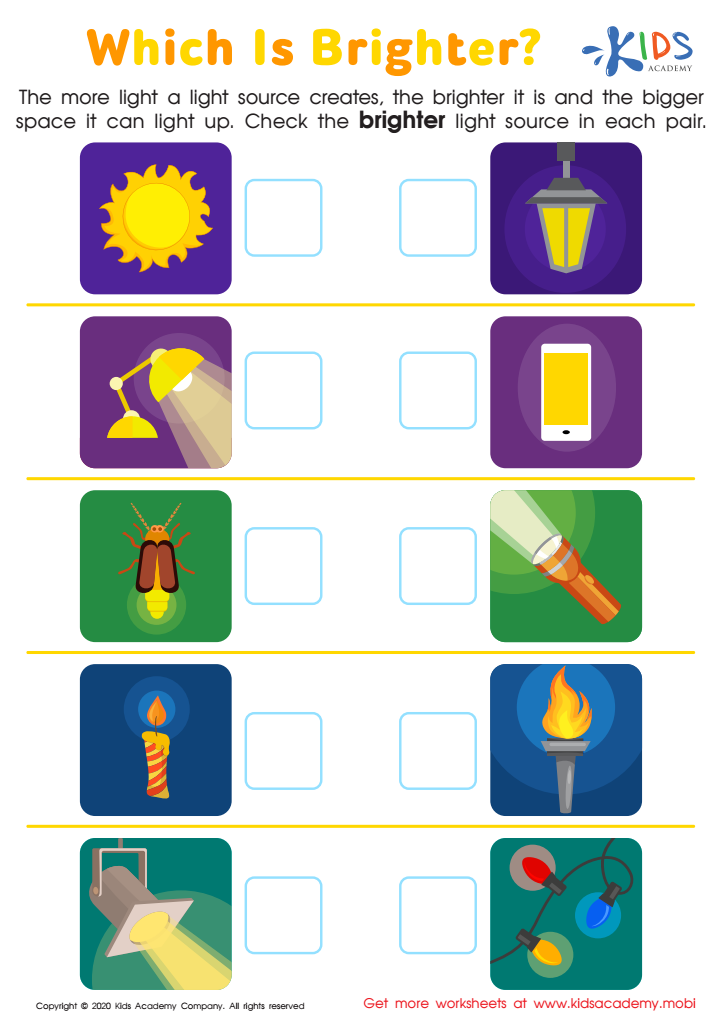
Before the exercise, ask students to recall sources of light. Use this worksheet to explain that the brighter the light source, the more space it can light up. Identify the different light sources in the pictures, then check the brighter light source in each pair. The biggest natural source of light is the sun.
Which Is Brighter? Worksheet
Worksheet
Noisy Park Worksheet

Noisy Park Worksheet

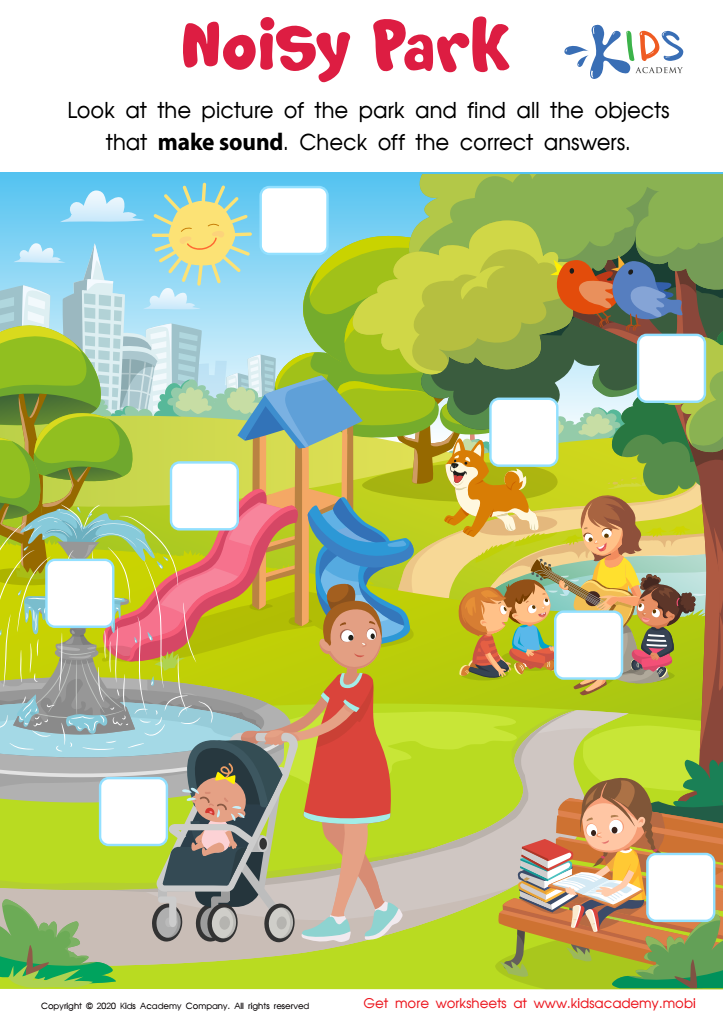
Get your students ready for the exercise by asking them to name things they see and do at the park. Then, have them identify the things in the picture, look for objects that make sounds, and verify the answers.
Noisy Park Worksheet
Worksheet
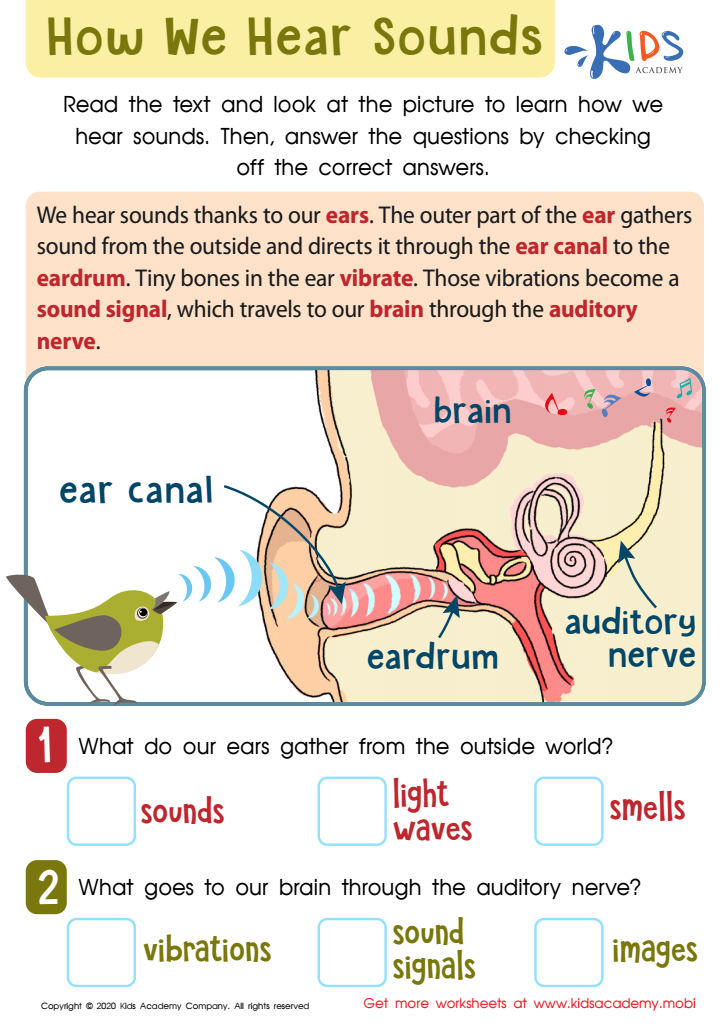
How We Hear Sounds Worksheet

How We Hear Sounds Worksheet

Before beginning this worksheet, make sure your students are aware of the five senses: sight, taste, touch, smell, and hearing. This worksheet will help them explore how we hear sounds with our ears. Read or listen to the text, study the images, and answer the questions. Check off the correct answers.
How We Hear Sounds Worksheet
Worksheet
How We See Objects Worksheet

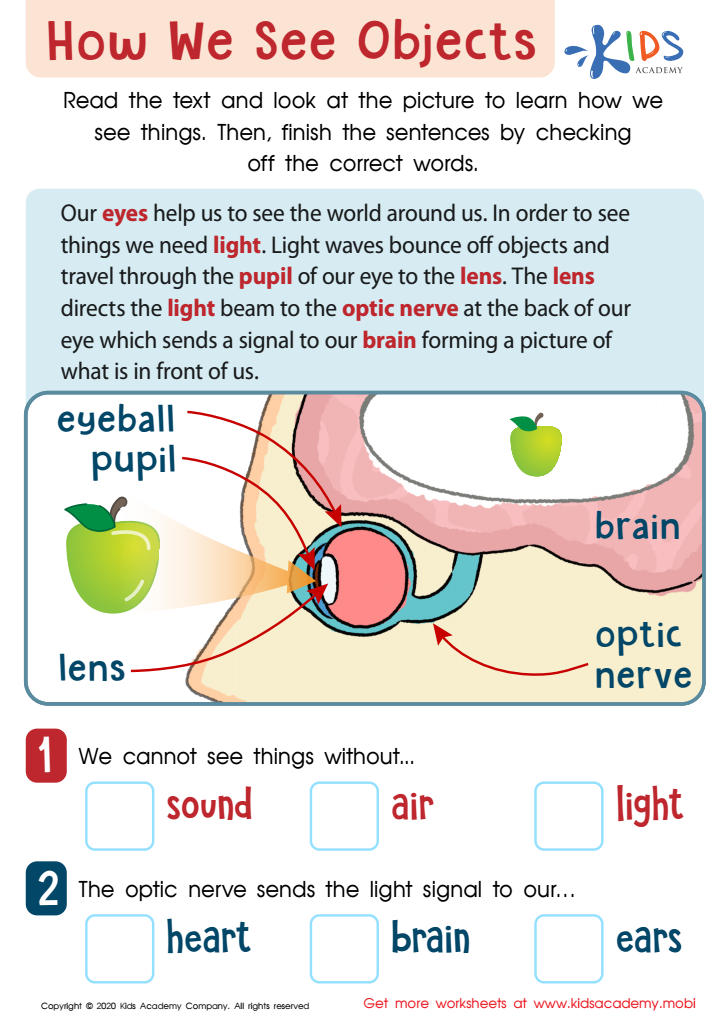
How We See Objects Worksheet

Remind your students of our five senses! This worksheet will teach them more about sight: read/listen to the text, look at pictures, then help them complete sentences. Check off the right words!
How We See Objects Worksheet
Worksheet
Seeing and Hearing Worksheet

Seeing and Hearing Worksheet

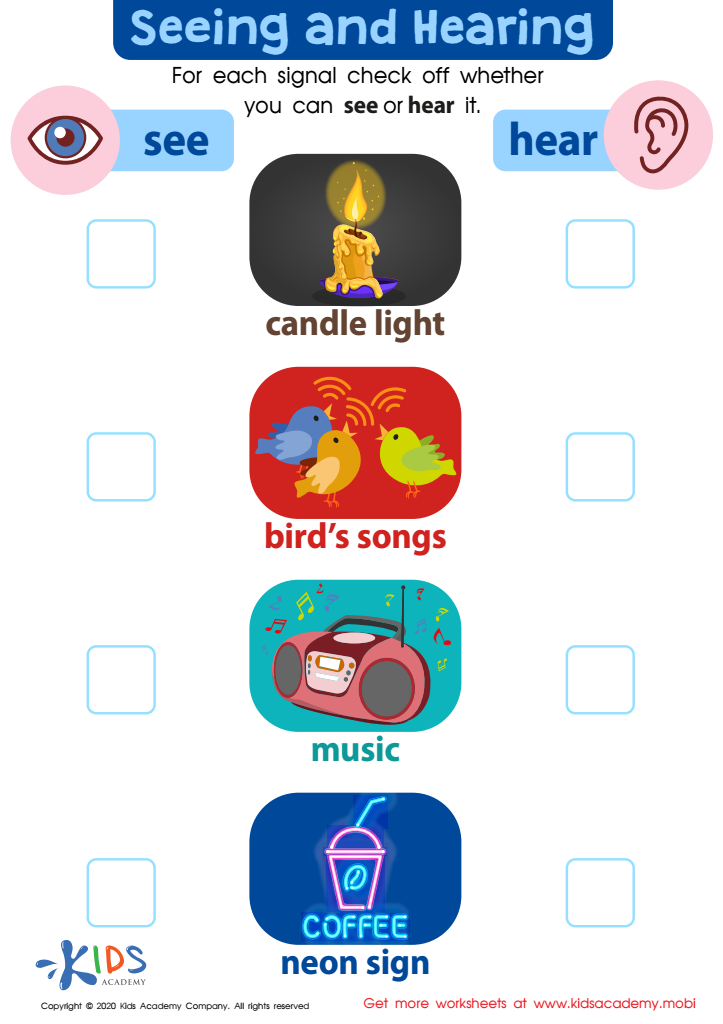
Before beginning this worksheet, ensure your students know that we have five senses: eyes (seeing), tongue (tasting), skin (feeling), nose (smelling), and ears (hearing). This worksheet will explore seeing and hearing - ask your students what they can see/hear in the picture and get them to check it off.
Seeing and Hearing Worksheet
Worksheet
Towns Worksheet
Towns Worksheet

Towns Worksheet

Towns are generally quiet and safe, making them attractive for young families. Cities have more people, businesses and tall buildings. Roads are busy, and there is often plenty to do and see. Help your kids check which pictures in this worksheet show towns.
Towns Worksheet
Worksheet
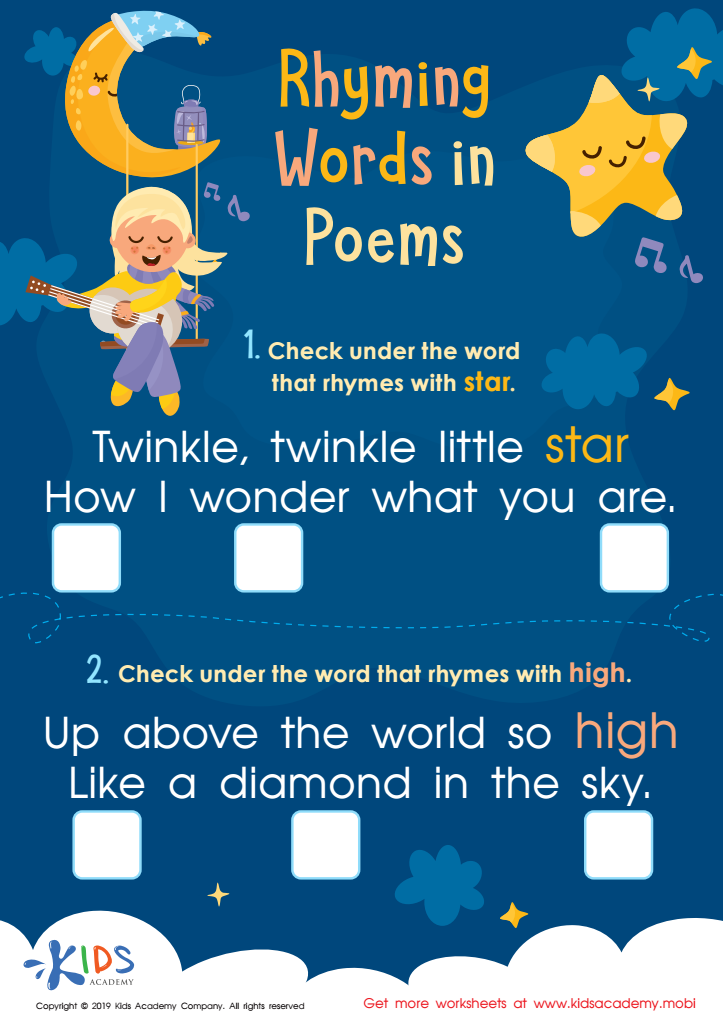
Rhyming Words in Poems Worksheet

Rhyming Words in Poems Worksheet

If your kids love poems, get them to recite some to you or have them write their own. Use this worksheet to help them find words that rhyme. Read the short poems and have them check the highlighted words for rhyming.
Rhyming Words in Poems Worksheet
Worksheet
Identifying Poems Worksheet

Identifying Poems Worksheet

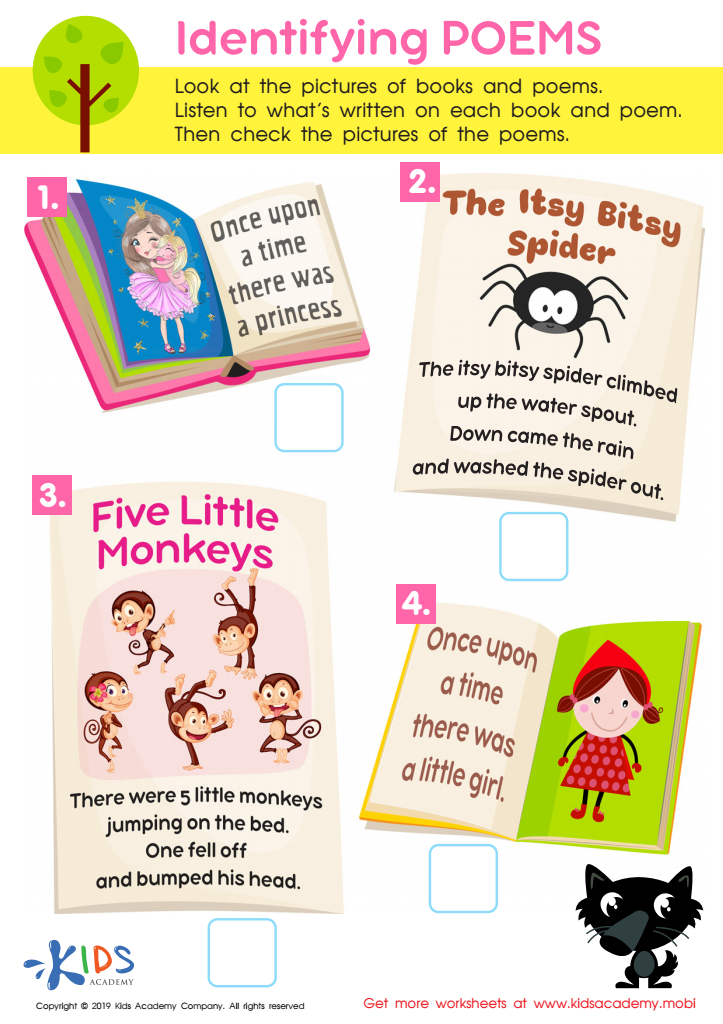
Read to your kids often and look at the pictures of books and poems in this worksheet. Guide them by reading aloud each book and poem. Make sure they are paying attention and help them check the pictures. This is a great way for your kids to learn to read properly.
Identifying Poems Worksheet
Worksheet
Finish Rhyming Poem Worksheet

Finish Rhyming Poem Worksheet

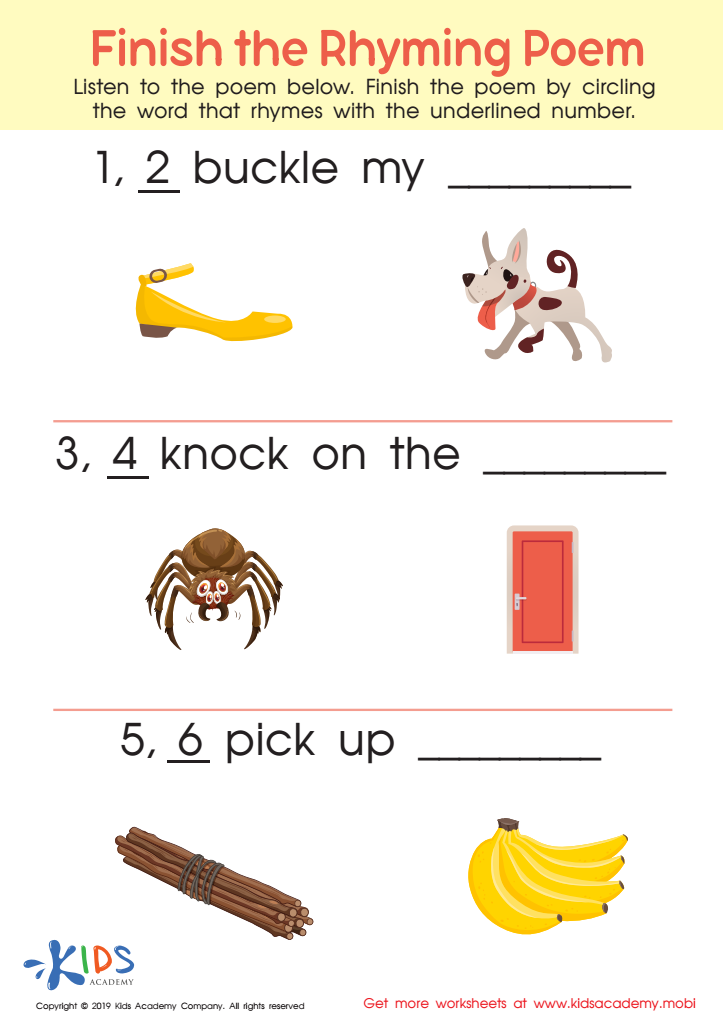
Poems are a great way to express emotions and spark imagination. Does your child enjoy poetry and even have their own creations? If so, they'll love this worksheet. It's a great way to develop their rhyming skills. Challenge them to find and circle the words that rhyme with the ones underlined.
Finish Rhyming Poem Worksheet
Worksheet
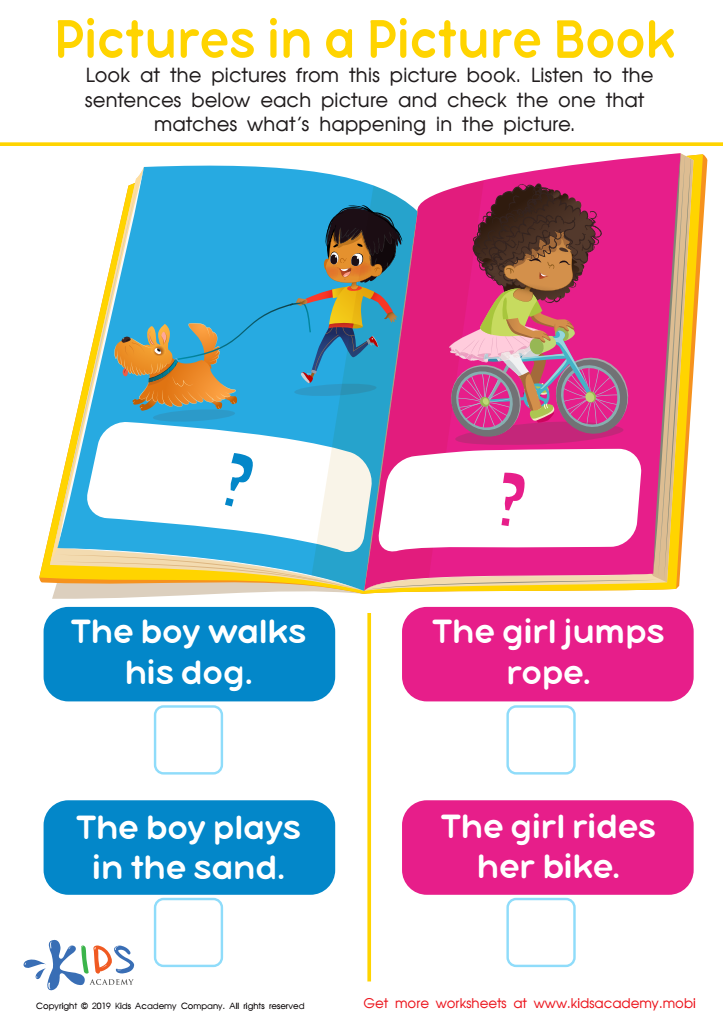
Picture in Books Worksheet

Picture in Books Worksheet

Picture books are popular with students - they're easier to read and understand because of the captions and illustrations. With preschoolers, look at the pictures in the book and read the sentences in the worksheet. Help them choose the one that matches the scene.
Picture in Books Worksheet
Worksheet
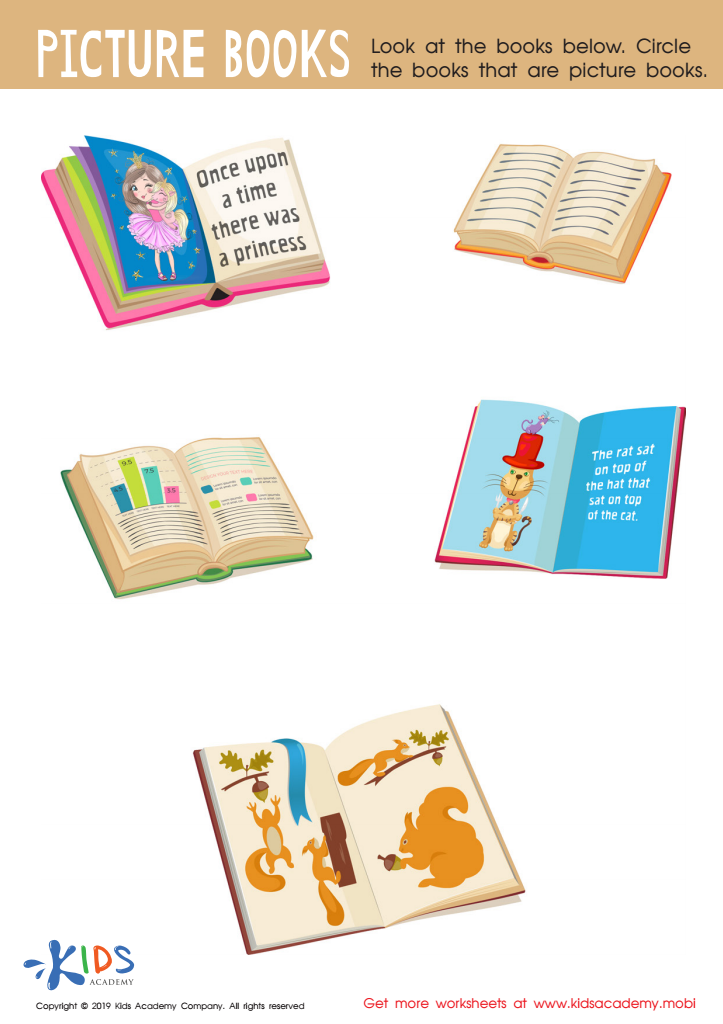
Picture Books Worksheet
Picture Books Worksheet

Kids will love this exercise! Get their imaginations going with five colorful picture books. Ask them to circle the books that are picture books and have them enjoy the exciting stories, along with the colorful images. Reading can become that much more enjoyable!
Picture Books Worksheet
Worksheet
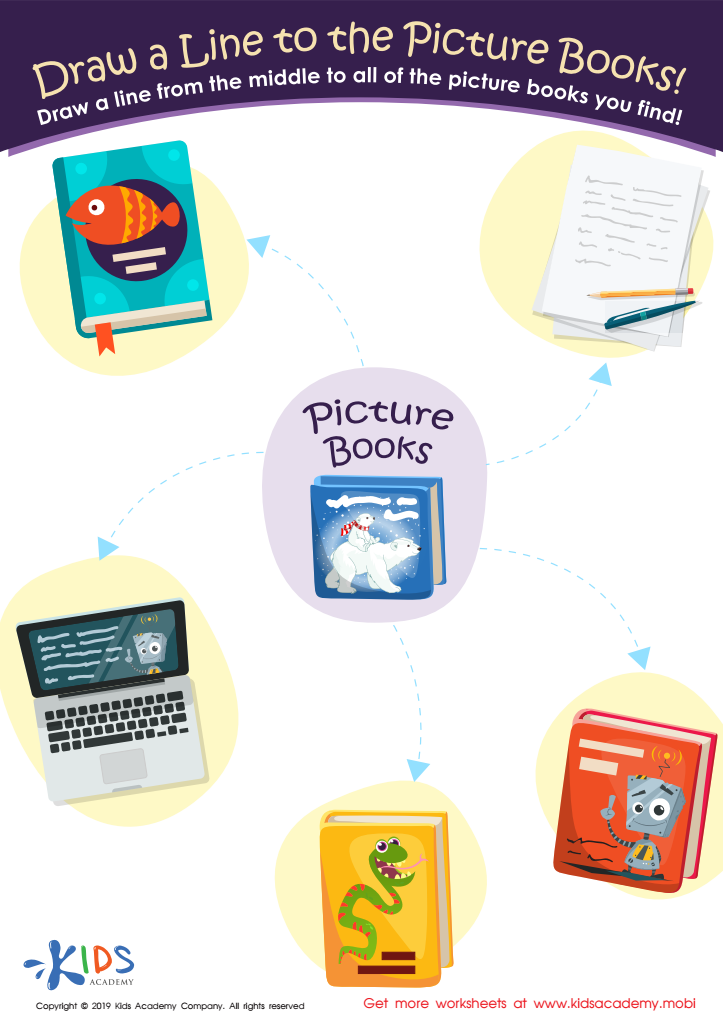
Draw a Line to the Picture Books Worksheet

Draw a Line to the Picture Books Worksheet

Encourage your students to read and explore with this fun exercise! They'll draw a line from the word 'picture books' to the five objects. Picture books are exciting, with stories and colorful images. Make story time even more enjoyable with this worksheet!
Draw a Line to the Picture Books Worksheet
Worksheet
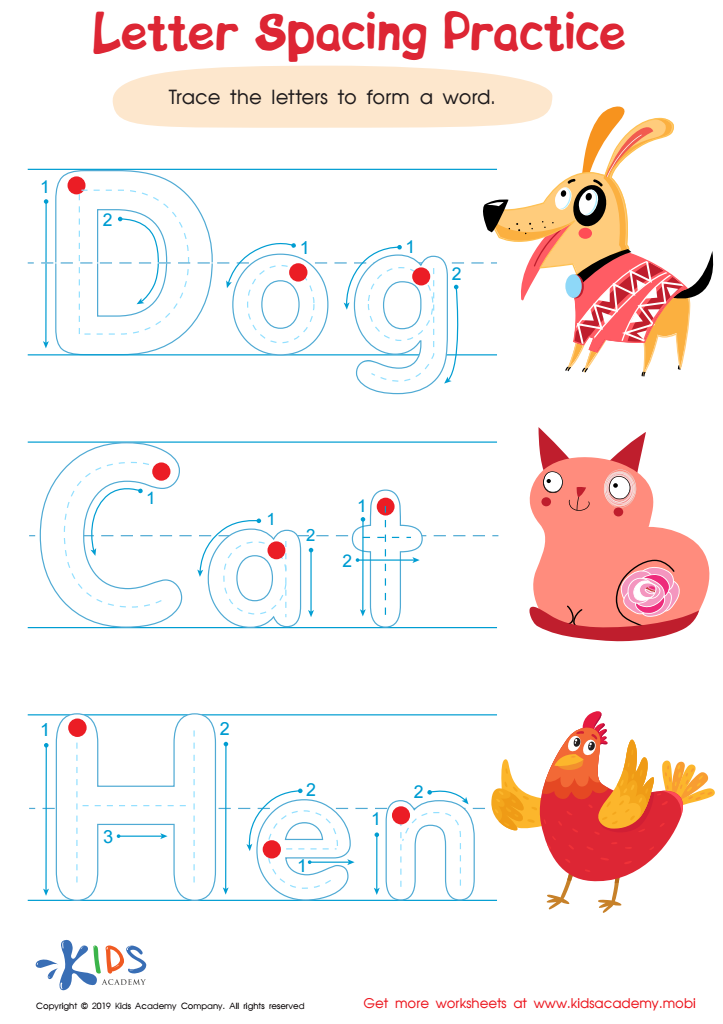
Letter Spacing Practice Worksheet

Letter Spacing Practice Worksheet

Encourage your preschoolers to practice writing with this worksheet. Ask them to identify the animals in the picture and help them trace the letters to form the words. It'll help develop their writing skills and even if they make mistakes, you can guide them with a helping hand.
Letter Spacing Practice Worksheet
Worksheet
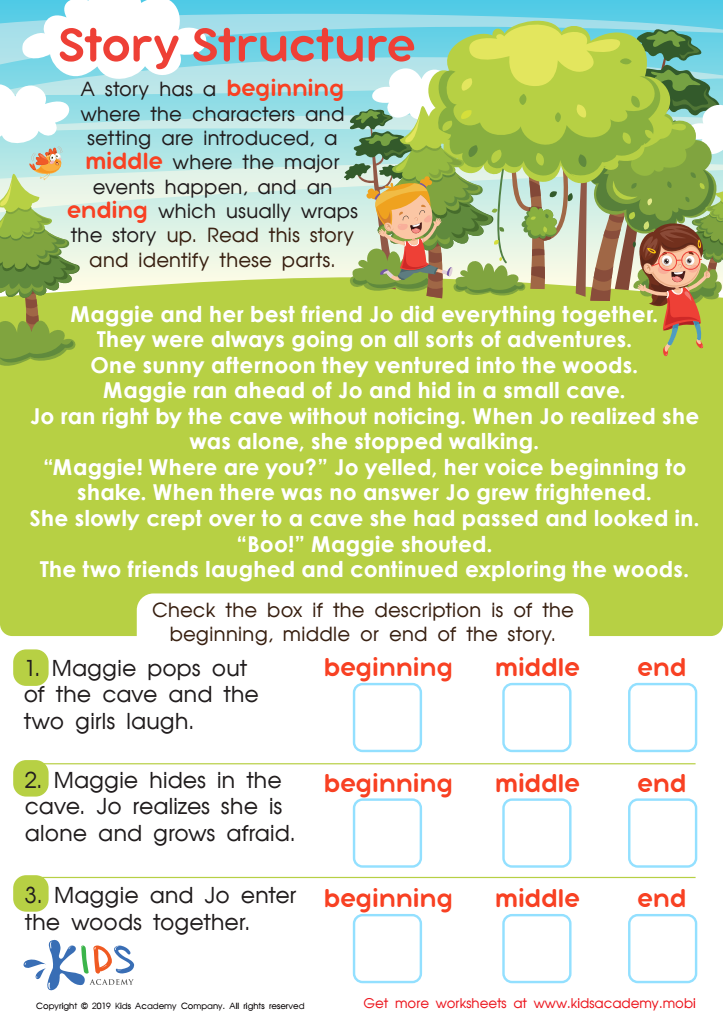
Story Structure Worksheet

Story Structure Worksheet

Help your students read and identify the parts of the story in this worksheet: the beginning (characters and setting), middle (major events), and ending (events are resolved). Show them how to structure a story for clarity.
Story Structure Worksheet
Worksheet
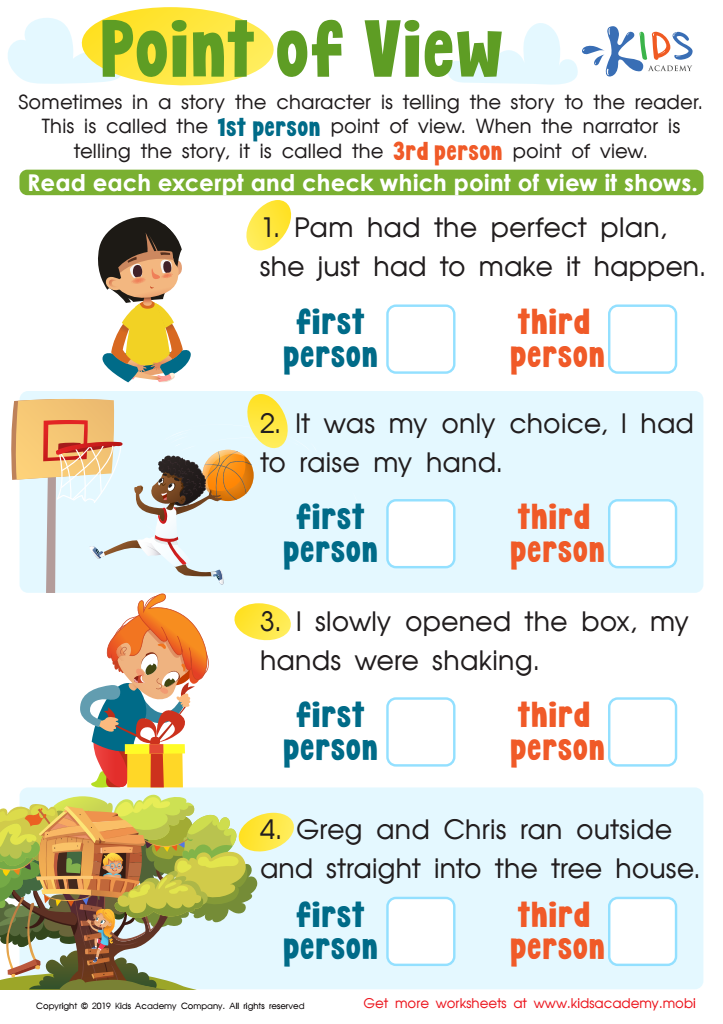
Point of View Printable

Point of View Printable

Teach your kids about points of view with this worksheet! In a story, characters can tell the story in first person or it can come from a narrator in third person. Read the excerpt in the worksheet and ask your kids to identify which point of view it is.
Point of View Printable
Worksheet
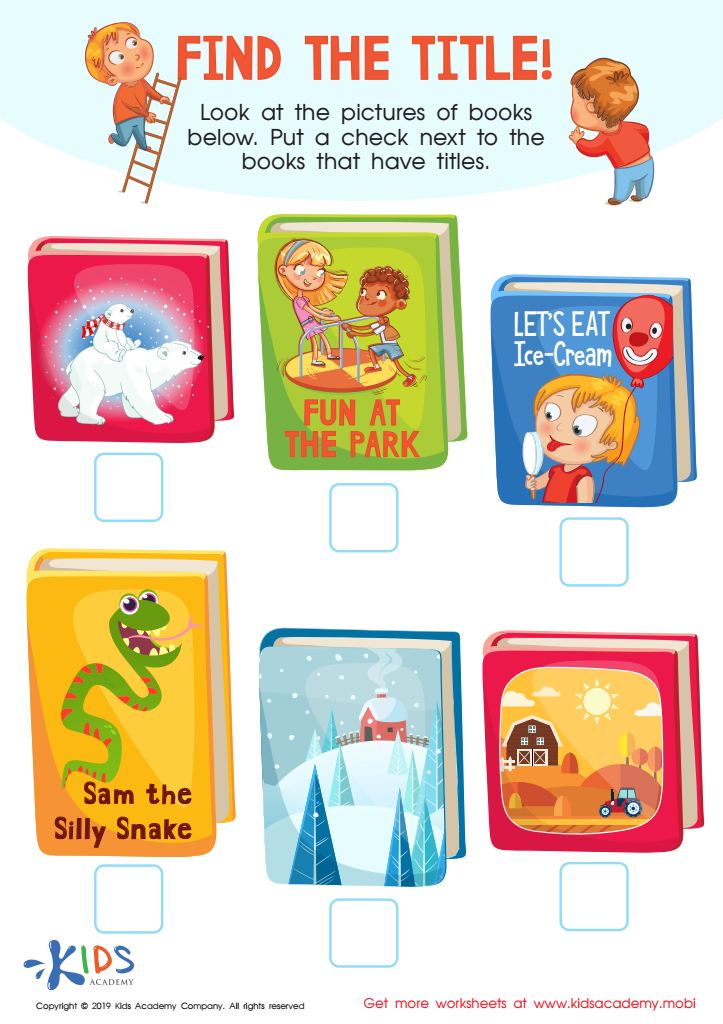
Find the Title Worksheet

Find the Title Worksheet

Help your kids to identify the colors of the books on this worksheet. Ask them to spot the differences between the six books, such as which ones have titles printed on their covers. Ask them to put a check next to the books with titles. This activity will promote your kids' thinking skills.
Find the Title Worksheet
Worksheet
Community Places Vocabulary Worksheet

Community Places Vocabulary Worksheet

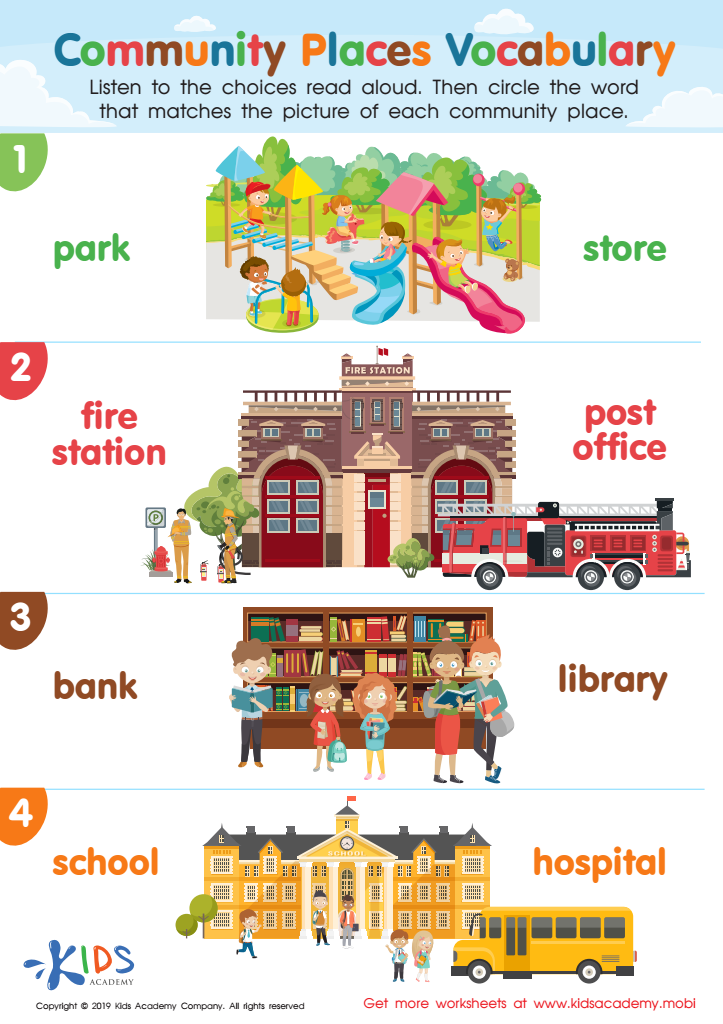
Help your kids identify community places with this fun worksheet. Ask them to listen to the choices read aloud and circle the word that matches the picture. This activity encourages dialogue about different people, places, and things in their community and the places they love to visit.
Community Places Vocabulary Worksheet
Worksheet
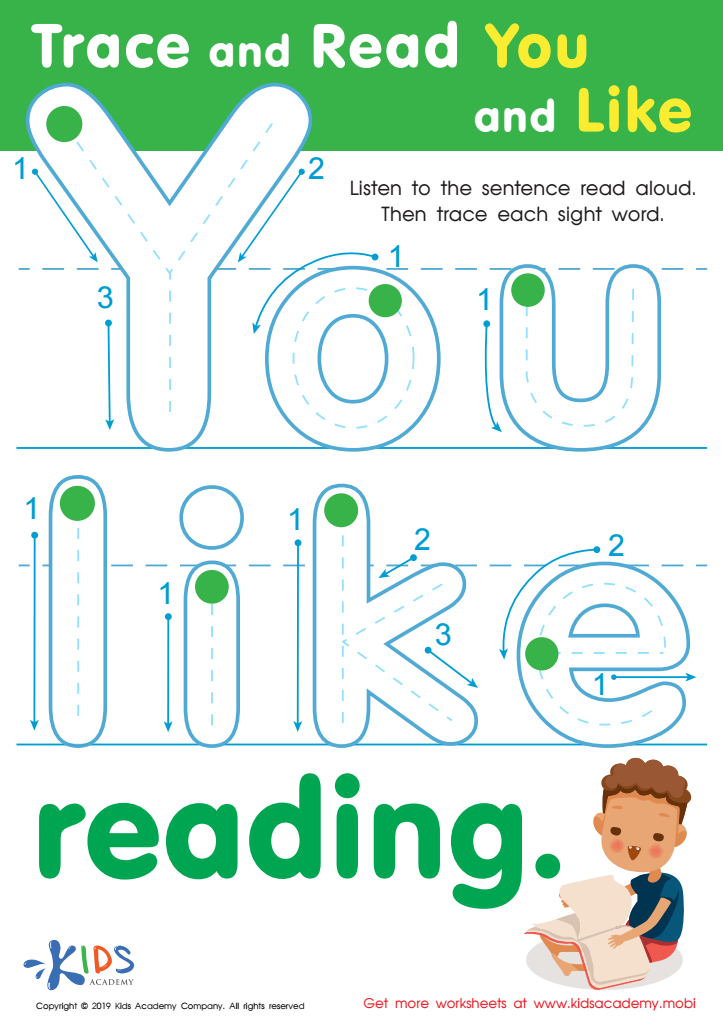
Trace Read You Like Worksheet

Trace Read You Like Worksheet

Sight words help children become confident and fluent readers. This free worksheet encourages success with basic 'you' and 'like' words. Writing them with traceable lines and green dots shows motion and builds sight word vocabulary. Help your child master the basics and boost their reading progress!
Trace Read You Like Worksheet
Worksheet
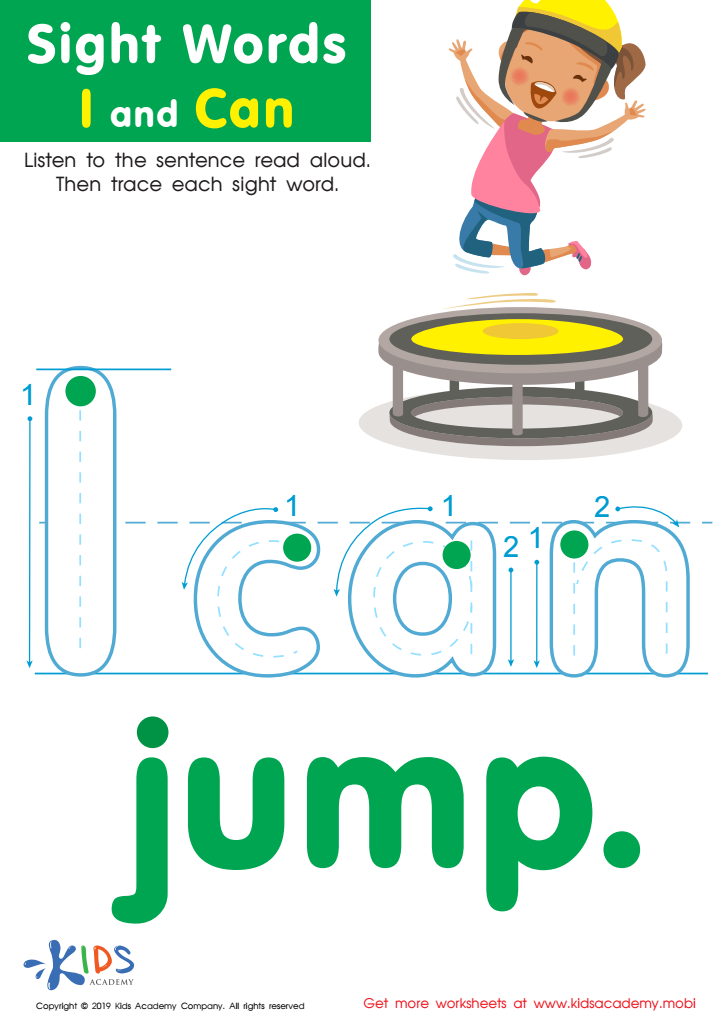
Sight Words I Can Worksheet

Sight Words I Can Worksheet

Emerging readers can build confidence and improve reading skills with this free worksheet! They'll trace the lines to complete the "I Can" phrase then use the picture clue to decode the last word. This activity encourages reading and writing, and is empowering for kids as they explore all the things they can do!
Sight Words I Can Worksheet
Worksheet
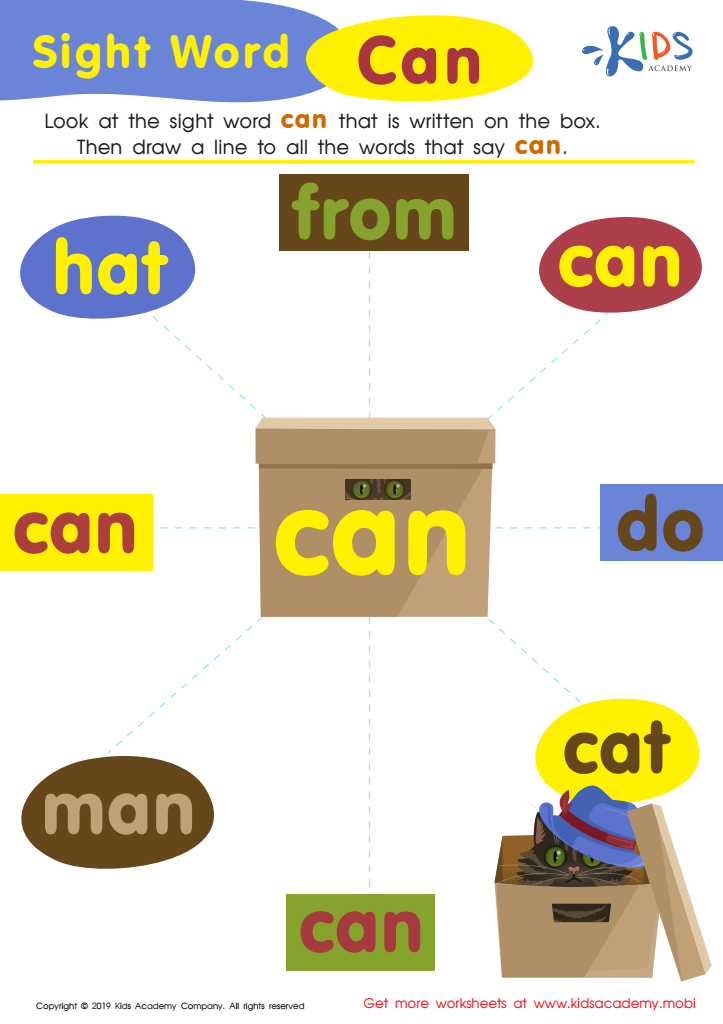
Sight Word Can Worksheet
Sight Word Can Worksheet

Learning sight words is key for strong readers. Kids with large word bases find reading simpler, since they don't have to decode words they already know. This free worksheet uses the word 'can' to help kids improve their visual discrimination and refine motor skills, while providing pictures to help them along.
Sight Word Can Worksheet
Worksheet
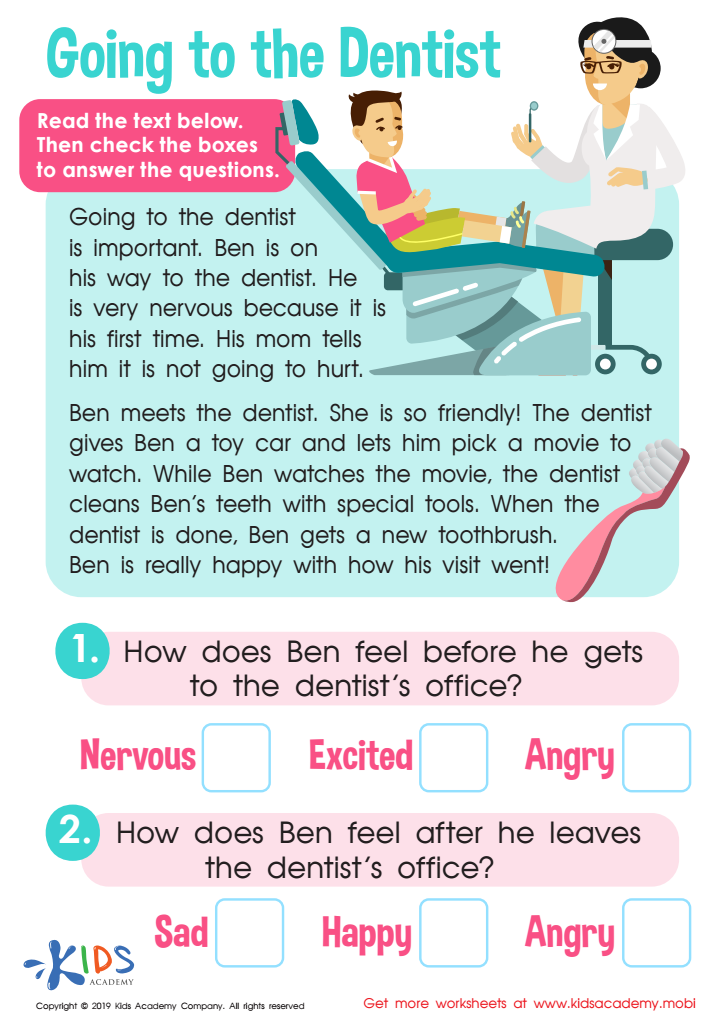
Going to the Dentist Worksheet


Going to the Dentist Worksheet

Kids can feel anxious when going to the dentist, but understanding why they go helps them cope. This free text helps them learn, as they read and answer questions about Ben's visit. They'll gain insight into Ben's emotions, while honing their critical thinking skills.
Going to the Dentist Worksheet

Worksheet


It’s essential for parents and teachers to care about what’s considered "normal" development for children aged 4-7, as it provides a foundation for understanding and supporting a child's growth. These early years are a critical period of development, encompassing emotional, social, cognitive, and physical aspects. Being aware of developmental milestones can help adults spot potential delays or issues that may need intervention.

For example, by age 4, children typically develop basic social skills, such as making friends and sharing. If a child struggles in these areas, early intervention can foster these skills, preventing future social challenges. Similarly, understanding language development milestones, such as speaking in full sentences or following basic directions, is crucial for supporting literacy and effective communication.

Moreover, knowledge of normal physical development helps to ensure children's safety and proper physical growth. For instance, recognizing age-appropriate motor skills like basic hand-eye coordination or the ability to ride a tricycle can help identify if a child needs guidance in fine or gross motor skills.

In summary, being informed about normal developmental milestones allows parents and teachers to provide the right support and resources, ensuring each child's needs are met, promoting their overall well-being and future success.