Normal Consonants Worksheets for Ages 4-8 - Page 2
26 filtered results
-
From - To
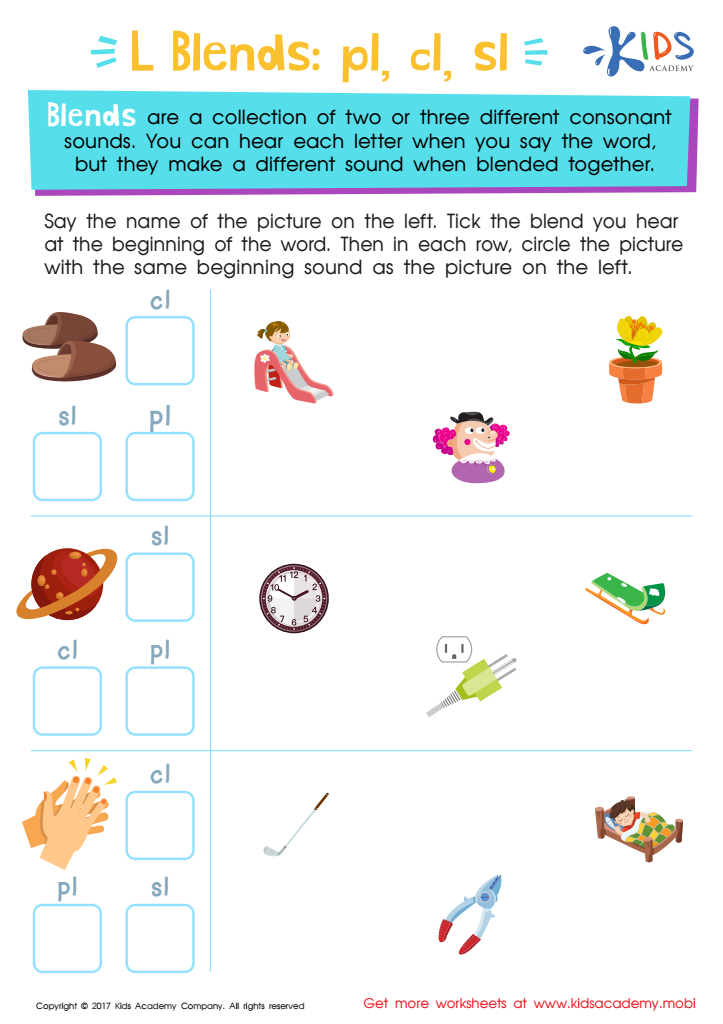
L Blends: "Pl", "Cl" and "Sl" Printable
 Assign to My Students
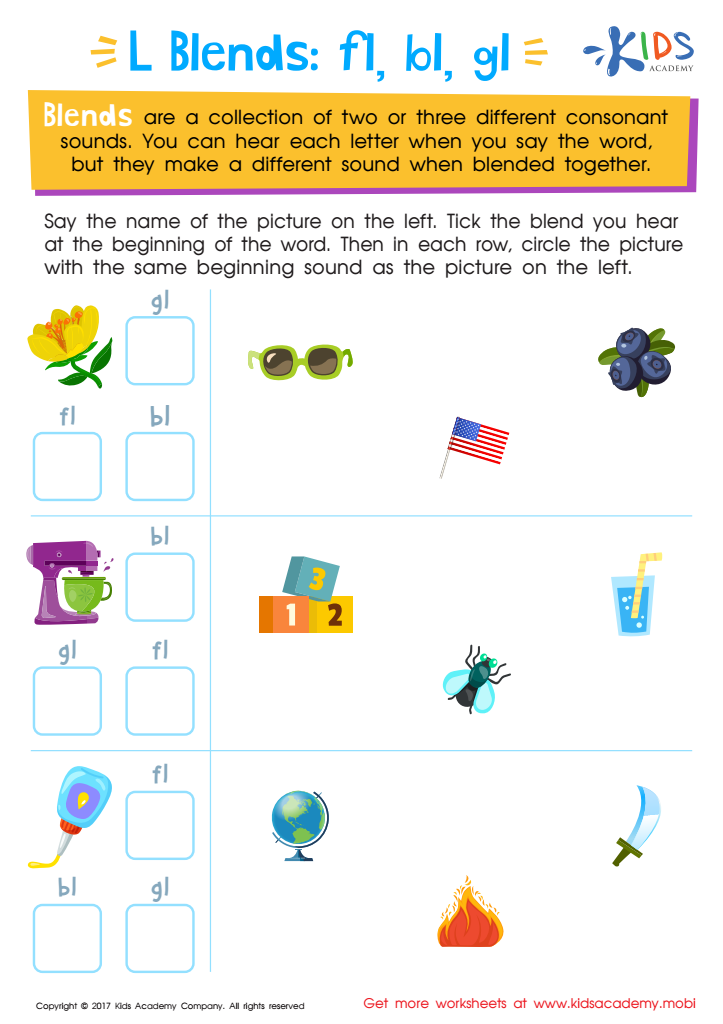
Blending Consonants: "Fl", "Bl" and "Gl" Printable



Caring about normal consonant development for children ages 4-8 is essential because these are the formative years for speech and language skills. At this age, children are building the foundation for effective communication, literacy, and academic success. Mastery of normal consonants enables clear and understandable speech, which is critical for expressing needs, forming relationships, and participating fully in classroom activities.
When parents and teachers pay attention to consonant development, they can identify and address potential speech issues early, such as articulation disorders or phonological processing problems. Early intervention can prevent these speech issues from hindering a child's social interactions and self-esteem. Additionally, proper pronunciation of consonants aids in learning to read and write, as children match sounds to letters and words.
By fostering normal consonant use, parents and teachers support a child's overall language development, making it easier for the child to acquire new vocabulary, understand instructions, and engage with educational material. Focusing on consonant sounds through games, reading aloud, and intentional conversation encourages a child's confidence and readiness for higher levels of learning. In essence, attending to normal consonants not only nurtures immediate speech clarity but also sets the stage for a child's long-term communicative and academic success.






