Normal Vowels Worksheets for Ages 4-8 - Page 4
73 filtered results
-
From - To
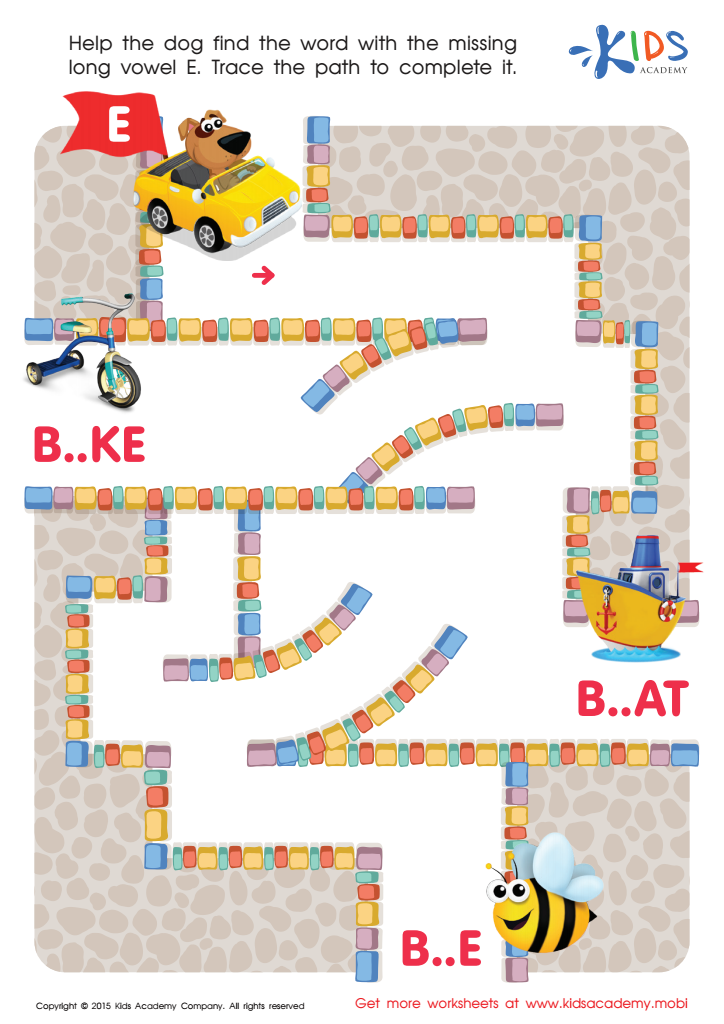
Long Vowel Sound E Worksheet
 Assign to My Students





Understanding and teaching normal vowels is crucial for young children's literacy development, particularly for ages 4-8. At this formative stage, children are acquiring foundational skills that will influence their reading and writing abilities throughout their academic journey.
Vowels are the building blocks of phonics, the method that teaches reading by understanding the relationship between sounds and their spellings. Normal vowels—specifically the five vowel sounds (a, e, i, o, u)—are used in almost every word. When children learn to recognize and pronounce these vowels correctly, they improve their ability to decode new words, spelling, and more importantly, develop fluency in their reading.
Proper vowel pronunciation aids in enhancing comprehension. If a child struggles with vowels, it might lead to misunderstandings, causing them to lose confidence and interest in reading. Early proficiency in vowels enables smoother transitions to more complex literacy skills, such as diphthongs and digraphs, boosting their overall academic performance.
Moreover, mastering vowel sounds supports vocabulary expansion since children can differentiate and understand more words accurately. For parents and teachers, focusing on normal vowels ensures that children develop a strong literacy foundation, leading to greater educational success and helping them become lifelong learners and readers.