Normal Patterns Worksheets for 4-Year-Olds
5 filtered results
-
From - To
Introducing our Normal Patterns worksheets, specially designed for 4-Year-Olds! Engage your little one with a variety of captivating pattern activities tailored to nurture their early pattern recognition skills. Perfect for preschoolers, these worksheets are meticulously crafted to enhance critical thinking and problem-solving abilities in young minds. Through fun and interactive exercises, your 4-year-old will explore and understand Normal Patterns, laying a strong foundation for mathematical concepts and beyond. Ideal for both home and classroom settings, these worksheets promise an educational journey filled with discovery and joy. Unlock your child's potential with our Normal Patterns worksheets for 4-Year-Olds today!
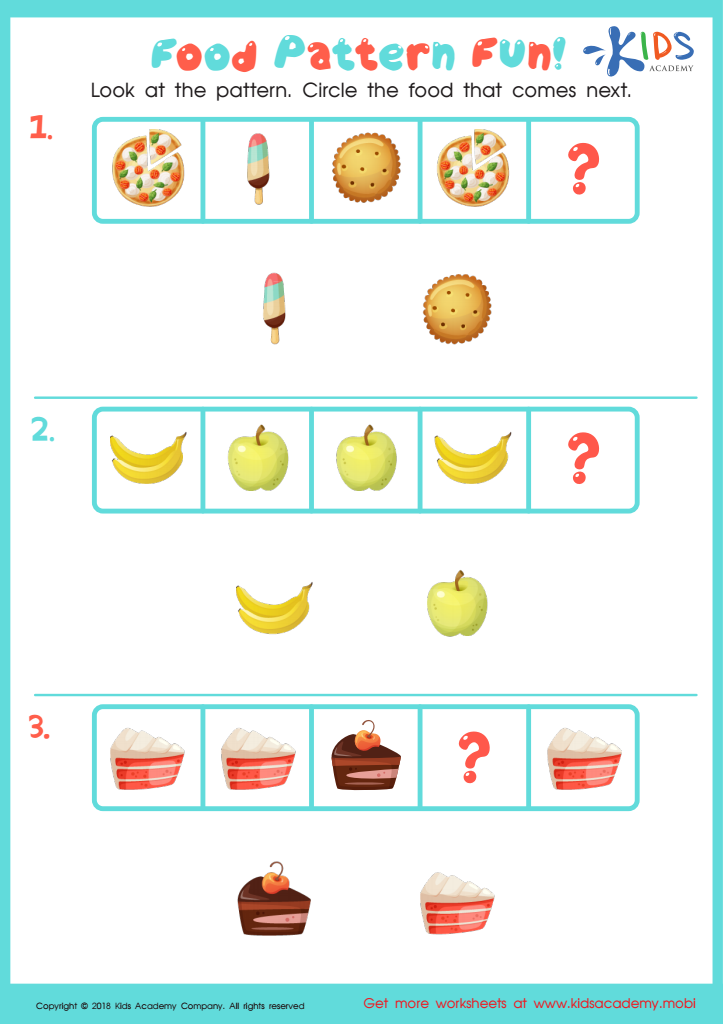
Food Pattern Fun Worksheet
 Assign to My Students
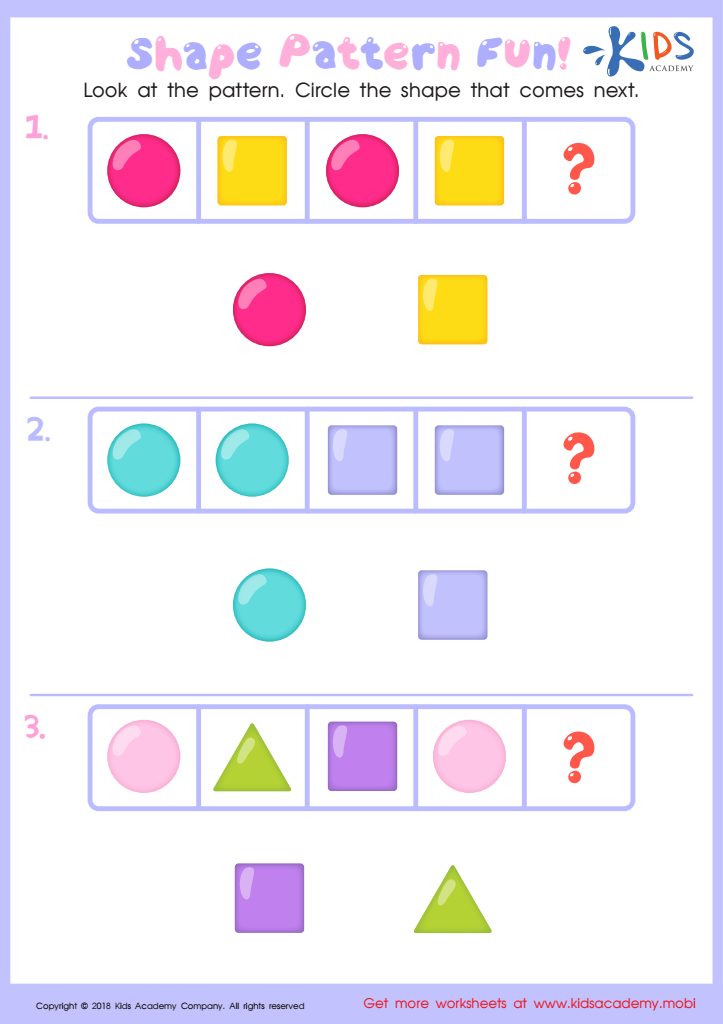
Shape Pattern Fun Worksheet
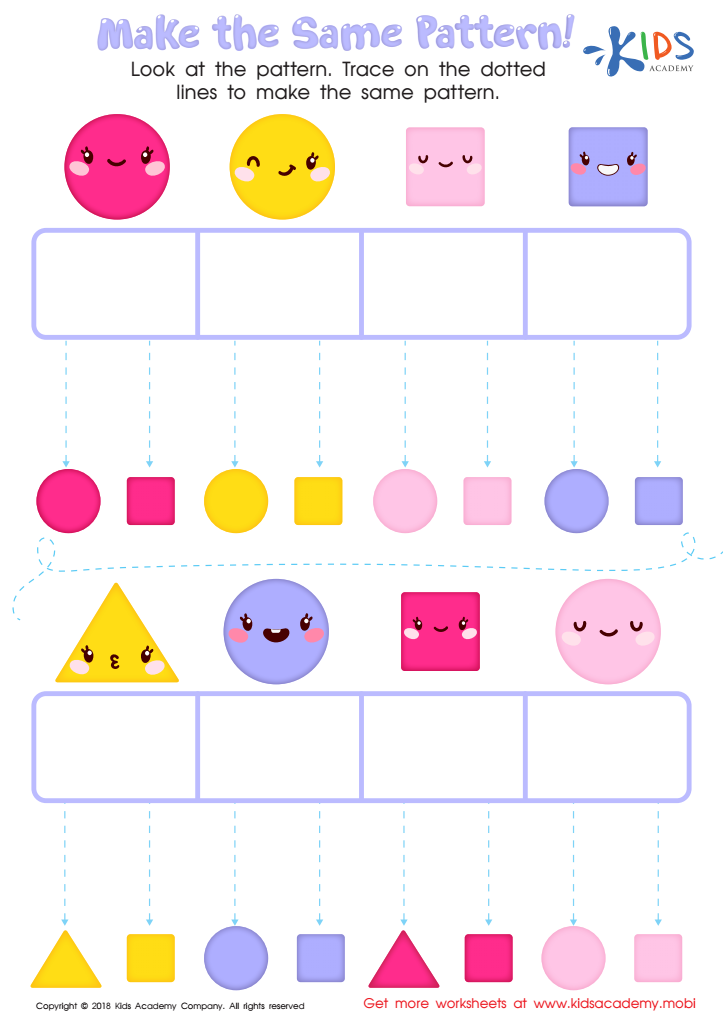
Make the Same Pattern Worksheet
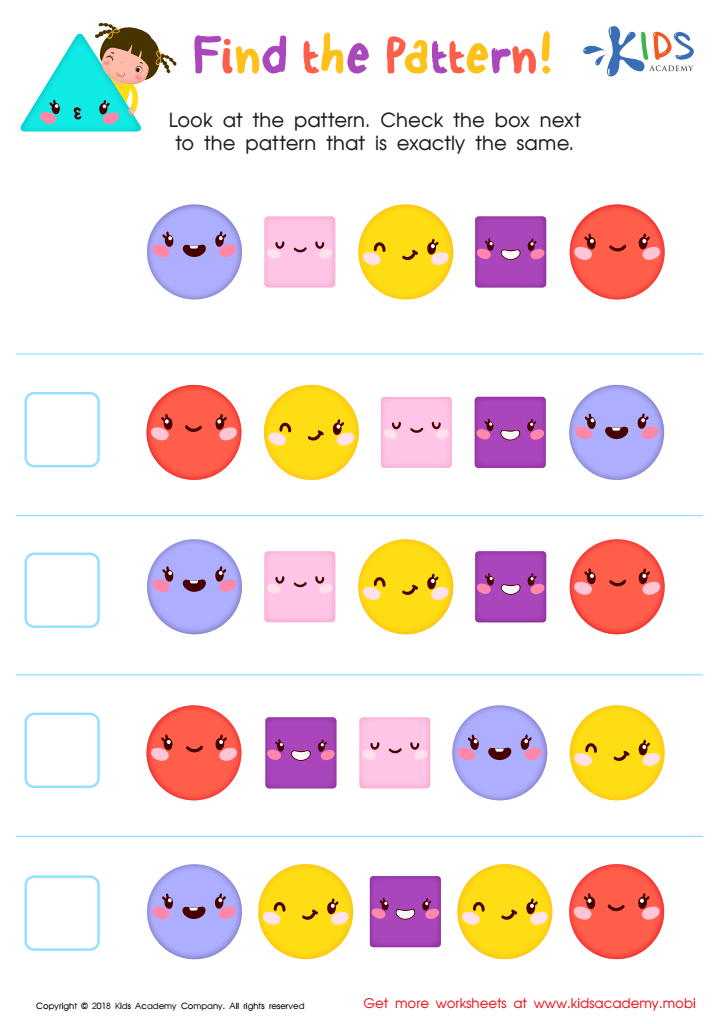
Find the Pattern Worksheet
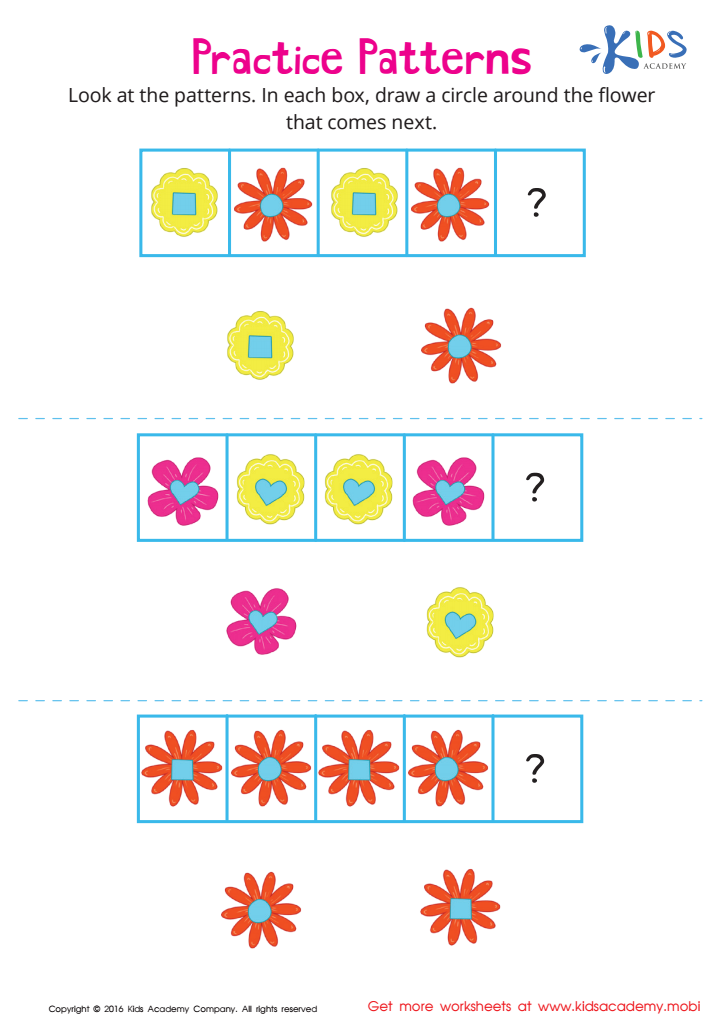








Understanding normal patterns is incredibly beneficial for 4-year-olds as it lays the foundation for complex cognitive skills and mathematical understanding. Normal patterns worksheets designed specifically for 4-year-olds are crafted to cater to their developmental stage, making learning both effective and engaging.
Firstly, these worksheets introduce young learners to the concept of sequences and order, core components of logical thinking and problem-solving. By identifying, creating, and predicting normal patterns, 4-year-olds develop early analytical skills, enhancing their capacity for mathematical reasoning later in life.
Moreover, engaging with patterns through these worksheets helps improve children's observation skills. They begin to notice patterns not just on paper but in their environment, from the rhythms in music to the cycles of day and night. This awareness fosters a deeper understanding of the world around them.
Additionally, normal patterns worksheets for 4-year-olds are designed to be interactive and visually appealing, holding the attention of young learners. The use of colors, shapes, and objects in these worksheets makes learning a fun activity, encouraging kids to explore patterns with enthusiasm.
In conclusion, normal patterns worksheets offer 4-year-olds an essential learning tool. They not only build foundational mathematical skills but also enhance cognitive abilities, making them a valuable resource in early childhood education.








