Normal Skip Counting Worksheets for 4-Year-Olds
1 filtered results
-
From - To
Introducing our engaging Normal Skip Counting Worksheets, specifically tailored for the curious minds of 4-Year-Olds! Designed to introduce the foundational concept of skip counting in a fun and accessible manner, these worksheets are perfect for young learners. Through a variety of captivating activities, children will explore counting by 2s, 5s, and 10s, laying the groundwork for future math skills. Each activity is carefully crafted to hold the attention of a 4-year-old, ensuring a delightful learning experience. Embark on a mathematical journey with your child and discover the joy of Normal Skip Counting together! Perfect for at-home learning or as part of a preschool curriculum.
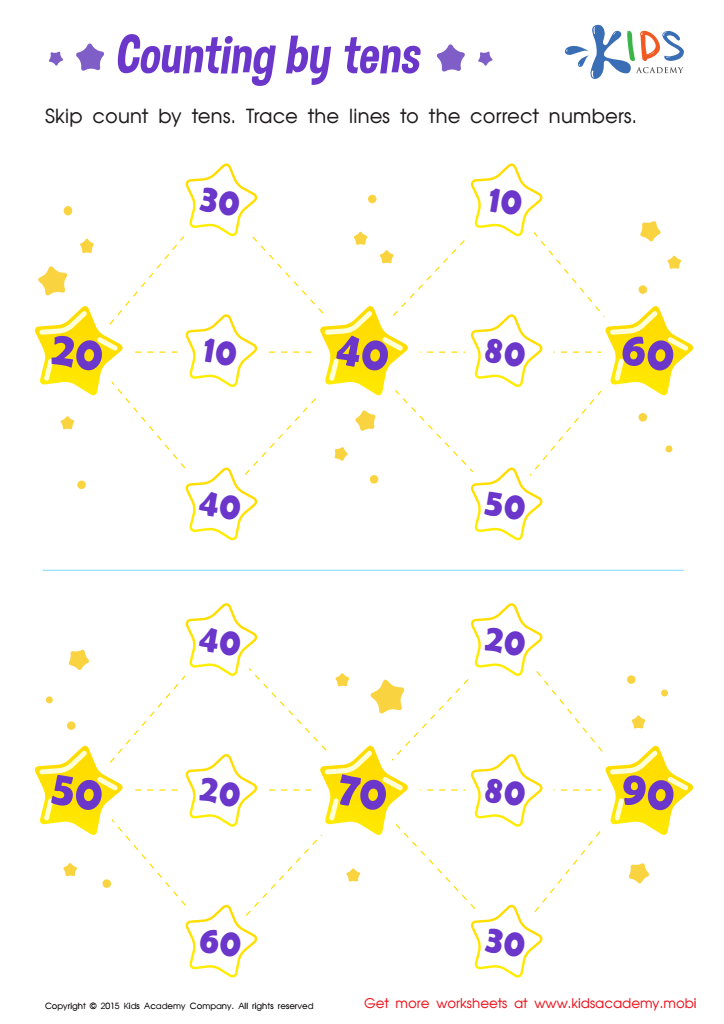
Learn Dozens: Counting by Tens Printable
 Assign to My Students








When it comes to laying a strong foundation in mathematics for young learners, normal skip counting worksheets for 4-year-olds offer a world of benefits. These worksheets are not just about counting numbers in order; they are a vital tool in developing a child's number sense, enhancing their ability to recognize patterns, and introducing them to the basics of addition and multiplication.
Skip counting is a critical skill in the early years of education because it paves the way for more complex mathematical concepts. By engaging with normal skip counting worksheets, 4-year-olds begin to understand the sequence of numbers and how they relate to one another. This understanding is crucial in building their confidence in mathematics, making them more inclined to participate and enjoy the subject as they progress in their schooling.
Moreover, these worksheets are designed with young learners in mind. They incorporate colorful illustrations and engaging activities that capture the interest of 4-year-olds, making learning not just educational but also fun. The repetition and practice provided by these worksheets reinforce learning, ensuring that the child grasps the concept of skip counting thoroughly.
In summary, normal skip counting worksheets for 4-year-olds are an indispensable educational resource. They offer a fun and effective way to introduce young learners to important mathematical concepts, setting a solid foundation for their future academic success in mathematics and beyond.








