Division practice Normal Worksheets for Ages 5-6
4 filtered results
-
From - To
Unlock your child's potential with our "Division Practice Normal Worksheets for Ages 5-6." Designed for young learners, these worksheets are perfect for introducing basic division concepts in a fun and engaging way. With colorful illustrations and easy-to-follow problems, kids will build foundational math skills while boosting their confidence. Ideal for classroom use or extra practice at home, these worksheets cater to different learning styles and paces. Help your child develop a strong mathematical foundation today with Kids Academy's expert-crafted resources. Download now for effective and enjoyable learning!
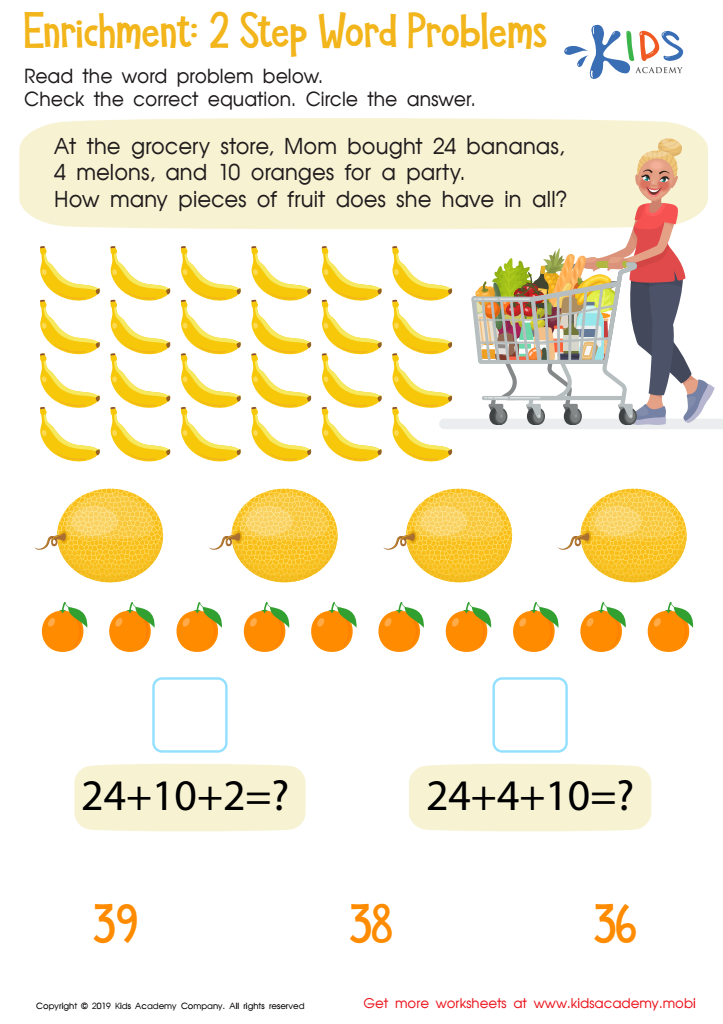
Enrichment -2 Step Word Problems Worksheet
 Assign to My Students
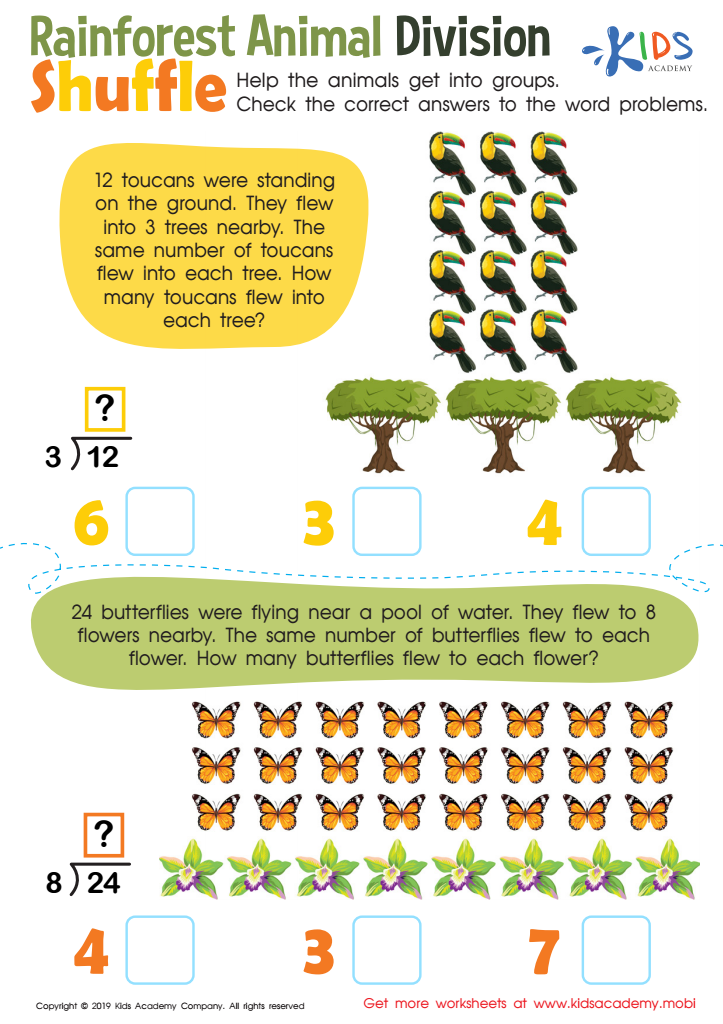
Rainforest Animal Division Worksheet
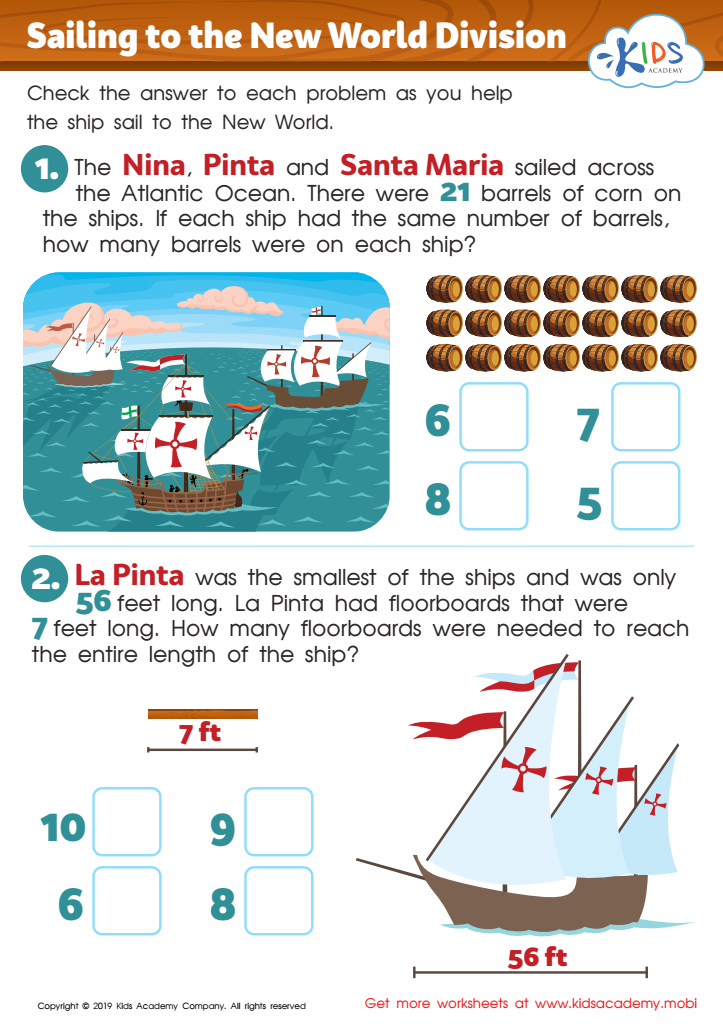
Sailing to the New World Division Worksheet
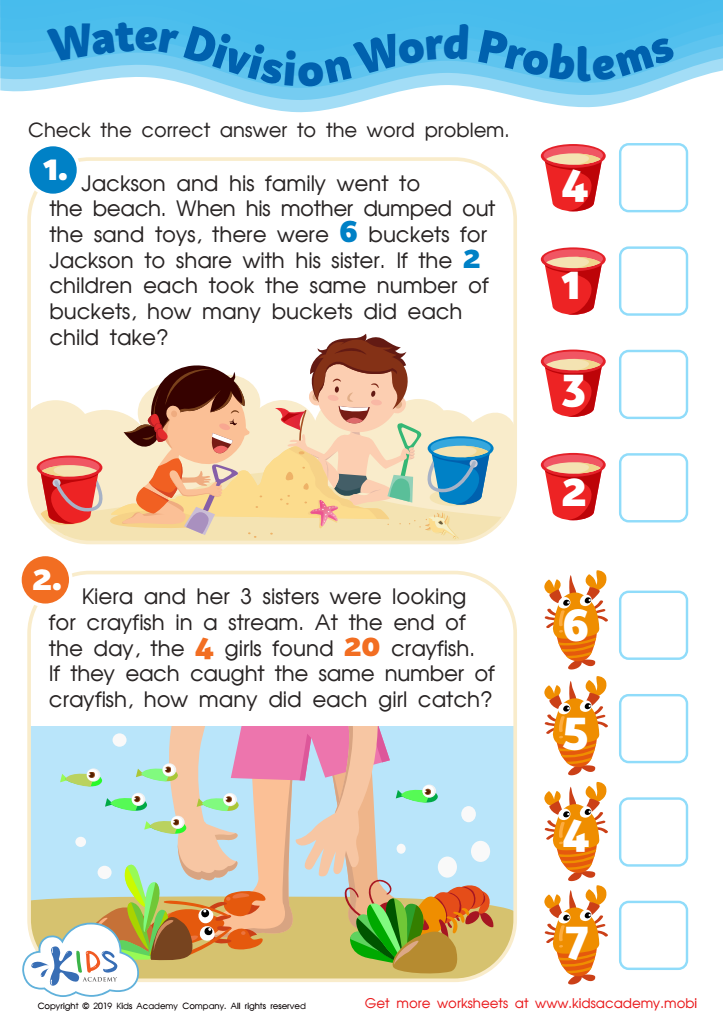
Water Division Word Problems Worksheet







Parents and teachers should care about division practice for children aged 5-6 because it lays a vital foundation for their mathematical understanding and critical thinking skills. Introducing division concepts early helps young learners grasp the idea of fair sharing and equal grouping, essential aspects of real-life problem solving.
At this age, children are naturally curious and open to new ideas. By incorporating division in a fun, engaging manner, such as through games or everyday situations, they can begin to develop a positive relationship with math. Early familiarity with division also supports the learning of multiplication, as these concepts are intrinsically linked. Strengthening one often reinforces the other, building a more robust mathematical foundation.
Moreover, practicing division helps improve cognitive abilities like reasoning and logic. It teaches patience and perseverance as children must often try different approaches to find the correct solution. This skill is transferable beyond mathematics, fostering overall learning comprehension and discipline.
Lastly, early exposure to division helps children build confidence in their abilities. When children feel competent in a subject, they are more likely to be engaged and interested in further exploration. By caring about division practice, parents and teachers are setting the stage for long-term academic success and a positive attitude toward math.








