Vocabulary expansion Normal Worksheets for Ages 5-8 - Page 3
146 filtered results
Difficulty Level
Grade
Age
-
From - To
Subject
Activity
Standards
Favorites
With answer key
Interactive
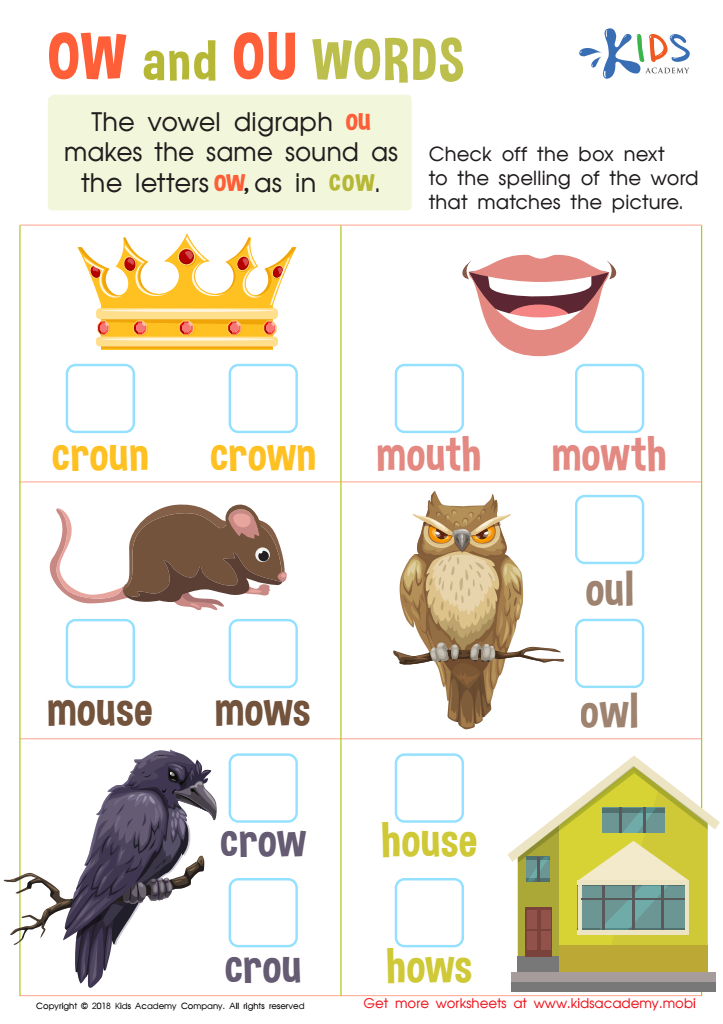
Reading: OW and OU Words Worksheet
Help your kids learn phonetics! Explain the different sounds and long/short variations. Emphasize that some vowel sounds are the same, e.g. ou = ow in cow. For practice, have them read aloud the words in the worksheet and check the box next to the spelling that matches the picture.
 Assign to My Students
Reading: OW and OU Words Worksheet
Worksheet
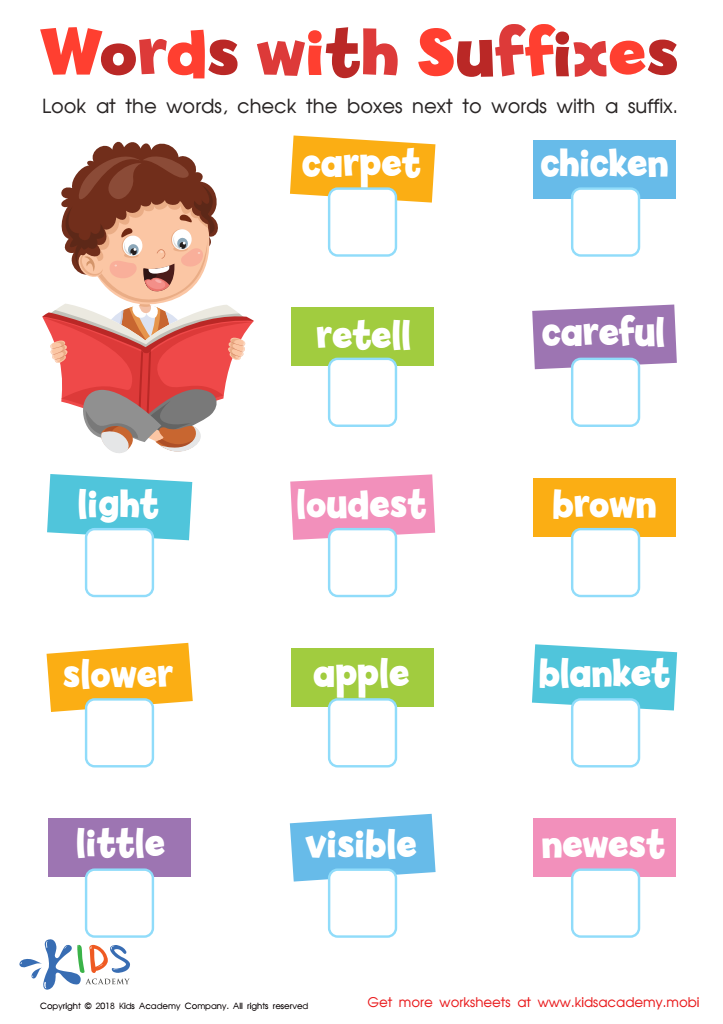
Reading: Words With Suffixes Worksheet
Help your students understand suffixes and build reading fluency with this worksheet. Have them read each word, then choose the ones with a suffix. Practicing this will lead to better comprehension and more confident reading. Save it for future use in language and reading classes.
Reading: Words With Suffixes Worksheet
Worksheet
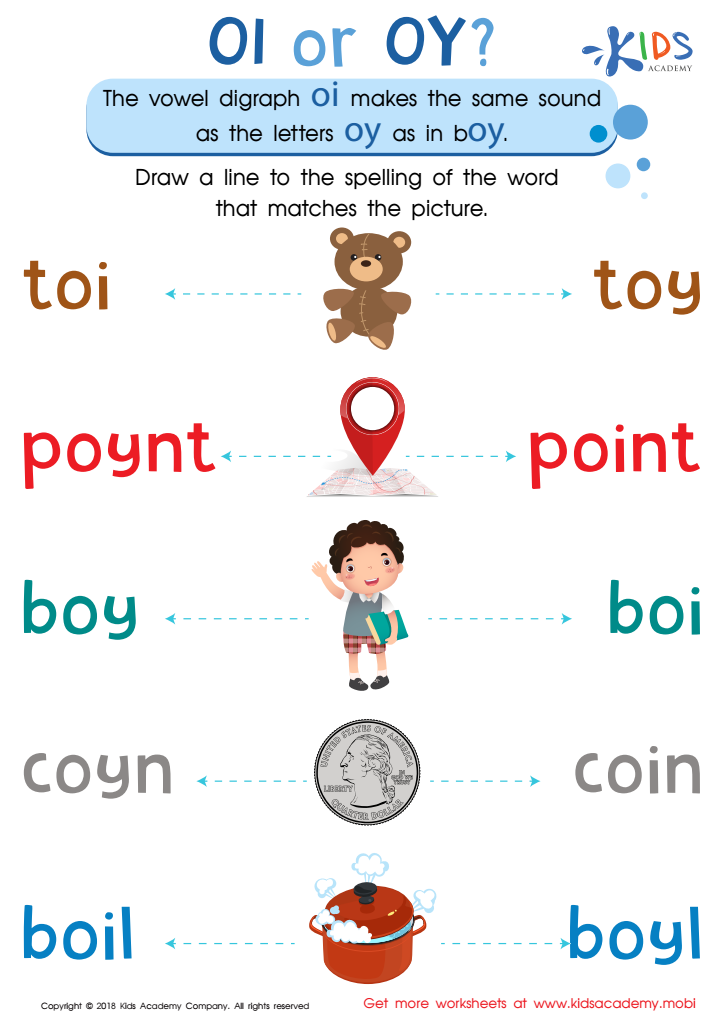
Reading: OI and OY Worksheet
Ask your students if they know the rule for words with /oi/ or /oy/ sound. If not, it's easy to learn! Rule: If /oy/ at end of word, spell with 'oy'; if /oi/ in middle of word, spell with 'oi'. Use this worksheet to help them master these digraphs and improve their ability to decode.
Reading: OI and OY Worksheet
Worksheet
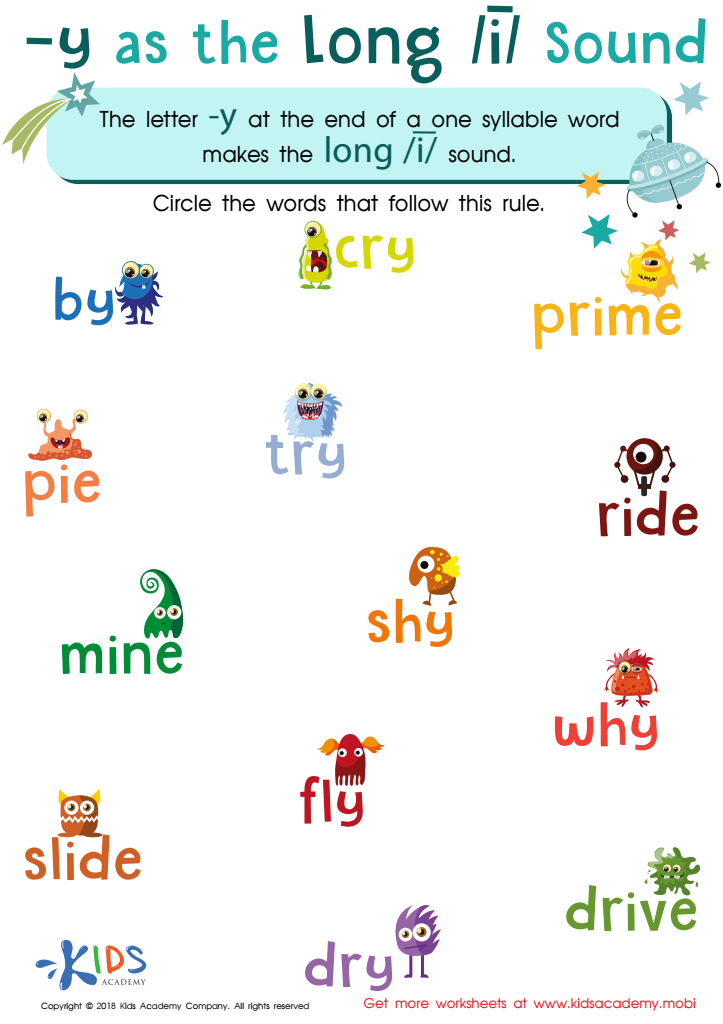
Reading: Y as Long I Worksheet
Students need practice and exposure to letters that make different sounds for decoding and reading success. This printable is a great resource for language arts classes: it explains that words ending with Y and having only one syllable make the long I sound. Students will circle all words with Y that have this sound.
Reading: Y as Long I Worksheet
Worksheet
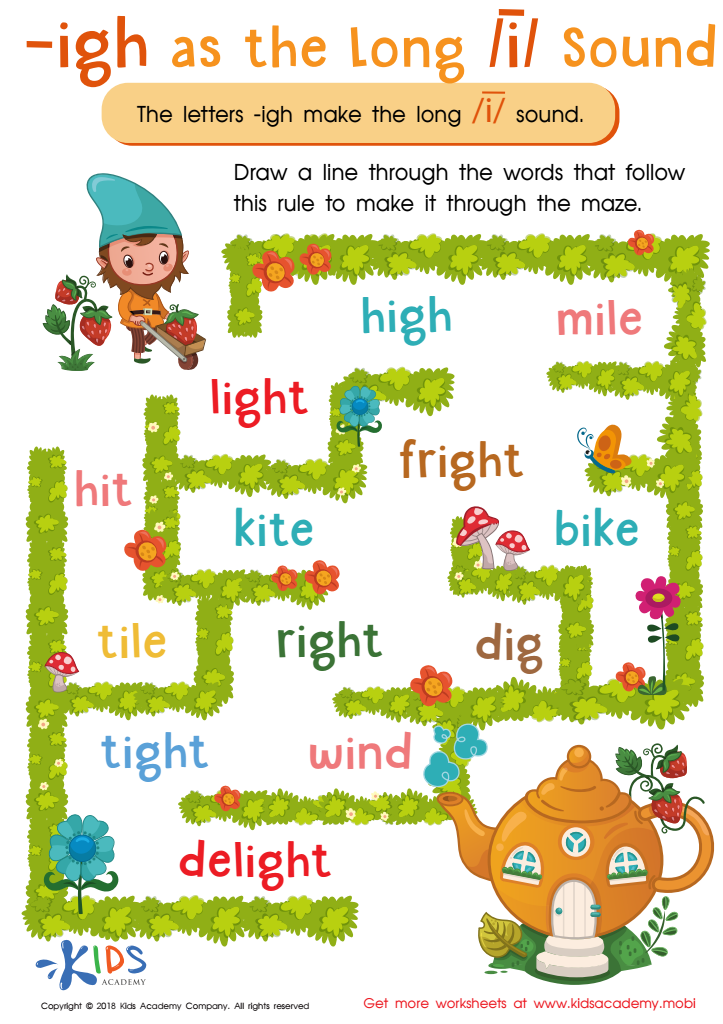
Reading: IGH as Long I Worksheet
Kids can have fun and learn with this maze! They'll look for and read words with the 'long I' sound spelled 'igh'. Most words ending with 'T' have this spelling. Decode words while learning about long vowel sounds and their spellings.
Reading: IGH as Long I Worksheet
Worksheet
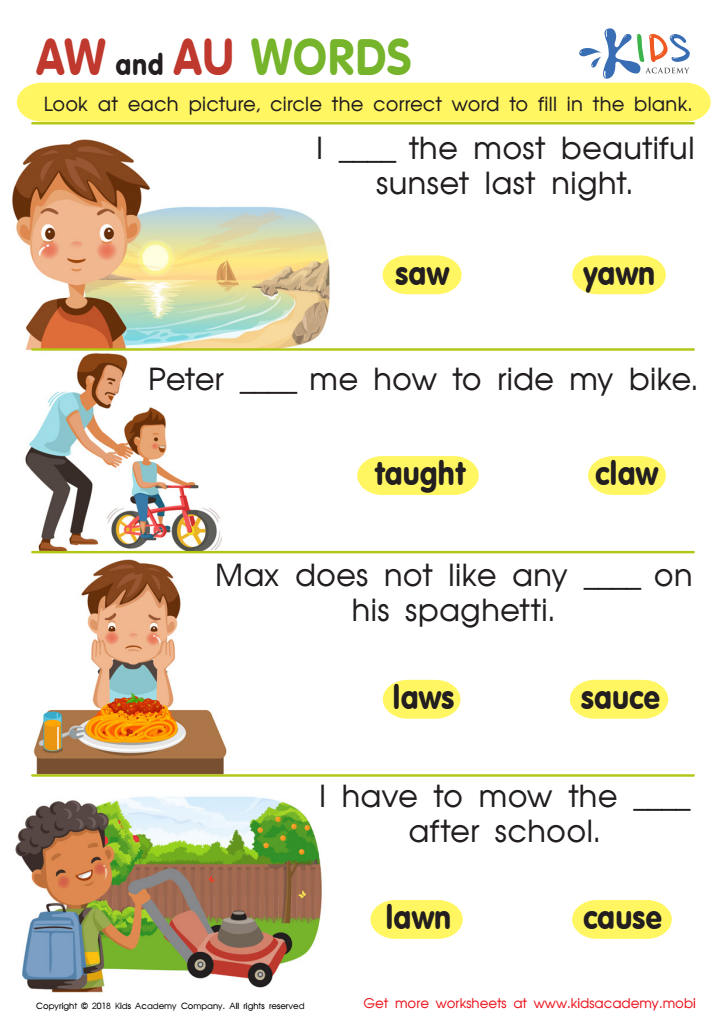
Reading: AW and AU Words Worksheet
This worksheet helps kids recognize that /au/ and /aw/ can make the same sound. Students read sentences and pick the correct word with one of the digraphs. Understanding digraphs improves decoding and reading fluency. Perfect for reading and phonics classes.
Reading: AW and AU Words Worksheet
Worksheet
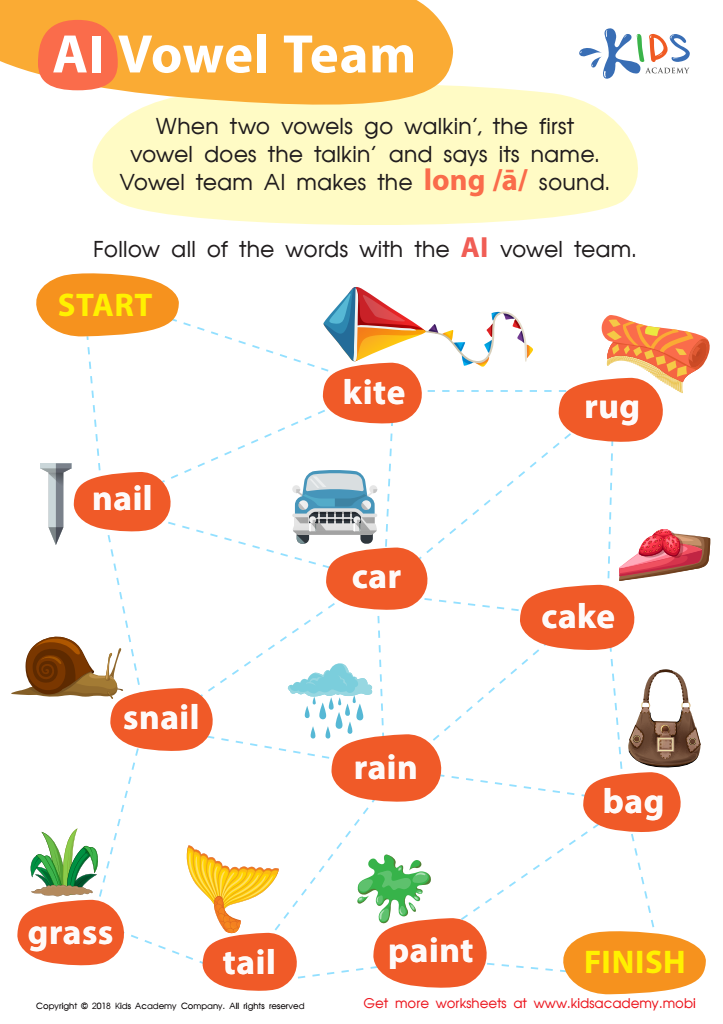
Reading: AI Vowel Team Worksheet
This worksheet focuses on the vowel team /ai/ which makes the long A sound. Students are challenged to find the correct path through the puzzle following only words with the /ai/ sound. Bright illustrations help kids understand unknown words.
Reading: AI Vowel Team Worksheet
Worksheet
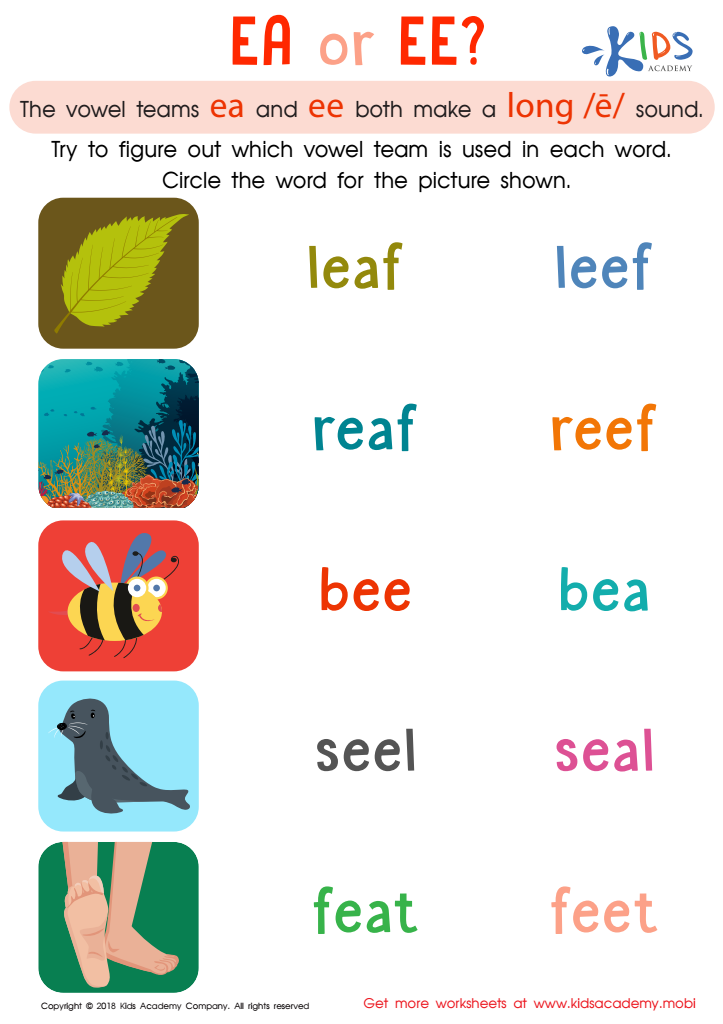
Reading: EA and EE Worksheet
Confused by the long E sound's varying spellings? Give students practice with this printable. It will improve their reading and spelling skills by helping them identify the correct spellings for words with the /ee/ and /ea/ vowel teams. Clear up the confusion and sharpen their skills.
Reading: EA and EE Worksheet
Worksheet
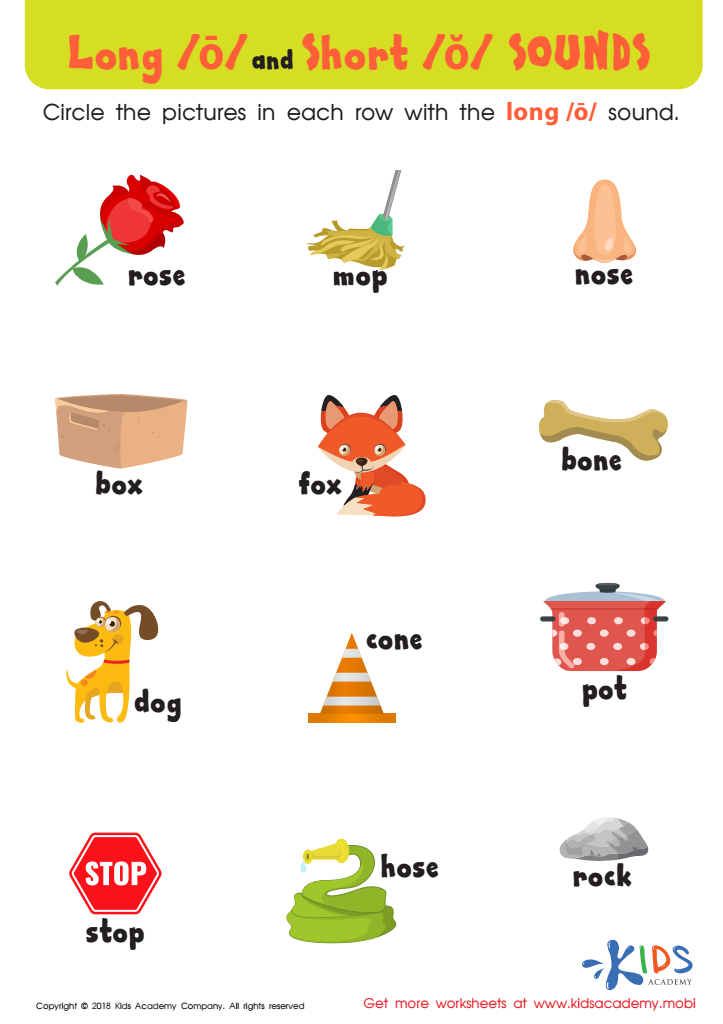
Reading: Long O and Short O Sounds Worksheet
Students practice distinguishing between short and long O sounds with this reading worksheet. They sound out each word, then circle the pictures with the long O sound. Perfect for individual practice or to work with peers! Improves understanding of this skill and helps avoid confusion.
Reading: Long O and Short O Sounds Worksheet
Worksheet
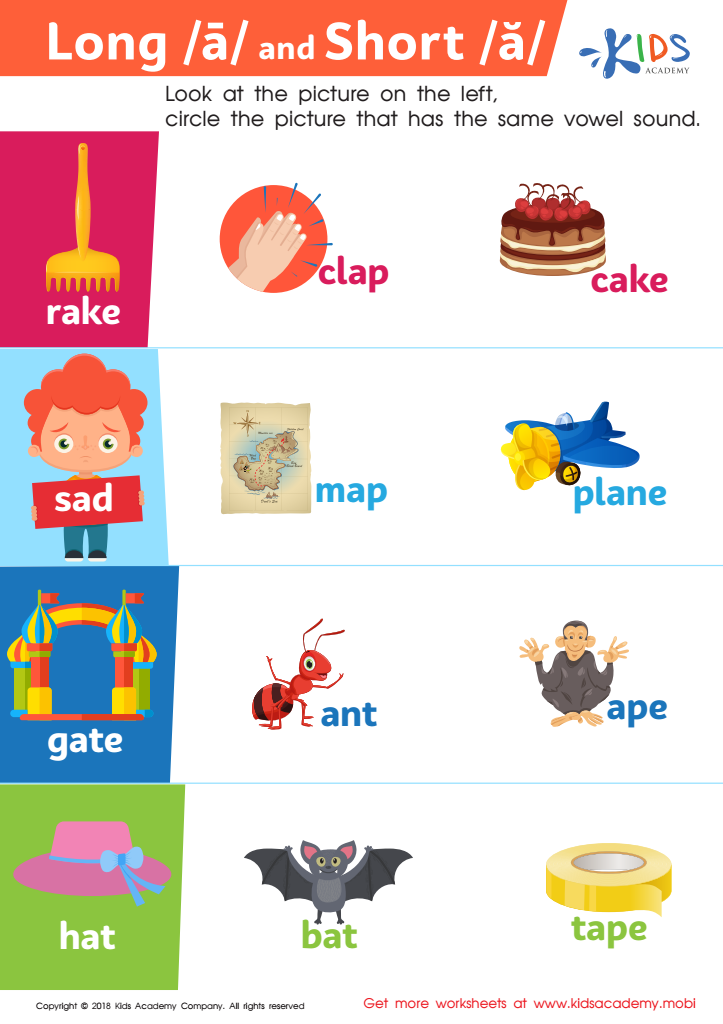
Reading: Long a and Short a Worksheet
This printable helps students practice distinguishing the long and short A sound. Pictures provide clues to read each word and students identify if it has a short or long sound. By completing this worksheet, children gain mastery of the phonics skill.
Reading: Long a and Short a Worksheet
Worksheet
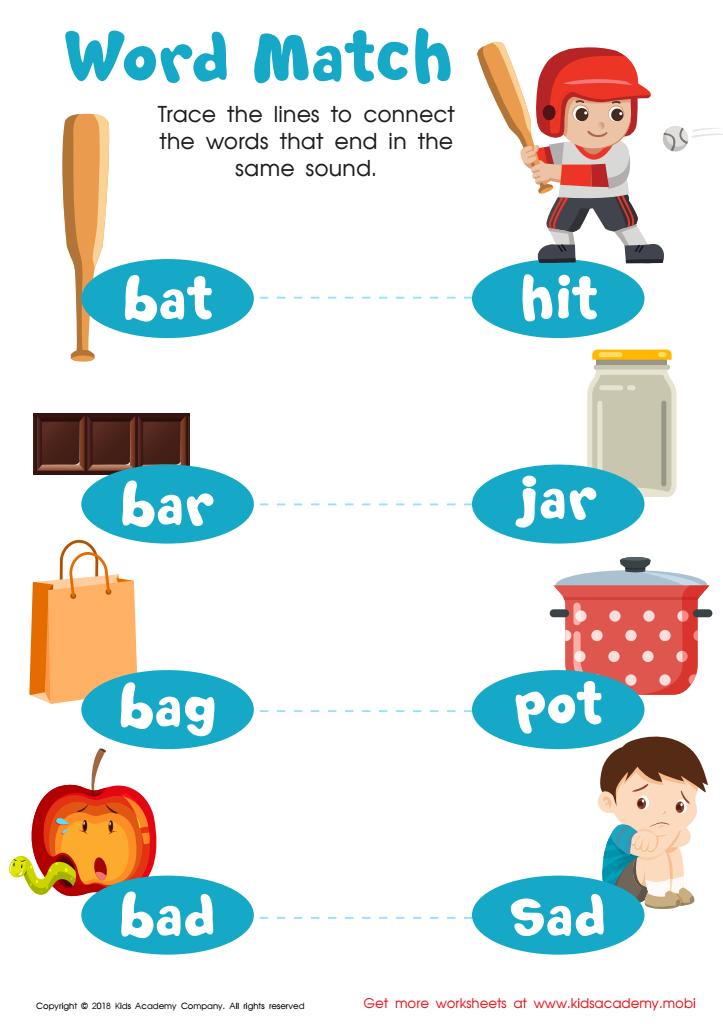
Word Match Reading Worksheet
This printout helps children learn to read fluently by connecting words with the same sound. Colorful pictures aid understanding and context for kindergarten-level students. Tracing lines, they learn to identify the sounds made by letters of the alphabet and deepen their knowledge of phonics.
Word Match Reading Worksheet
Worksheet
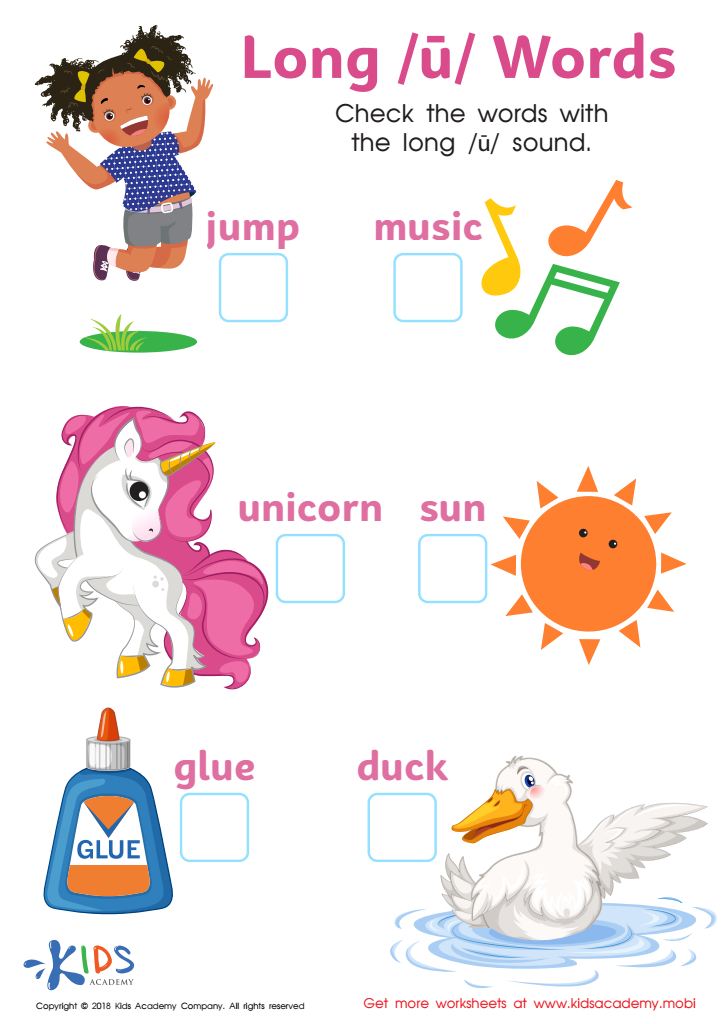
Long U Words Reading Worksheet
Emerging readers will love this free worksheet! It's a great way to practice distinguising between long and short vowel sounds, while identifying high-frequency words. They'll also get to develop fine motor skills and gain confidence in decoding and reading skills.
Long U Words Reading Worksheet
Worksheet
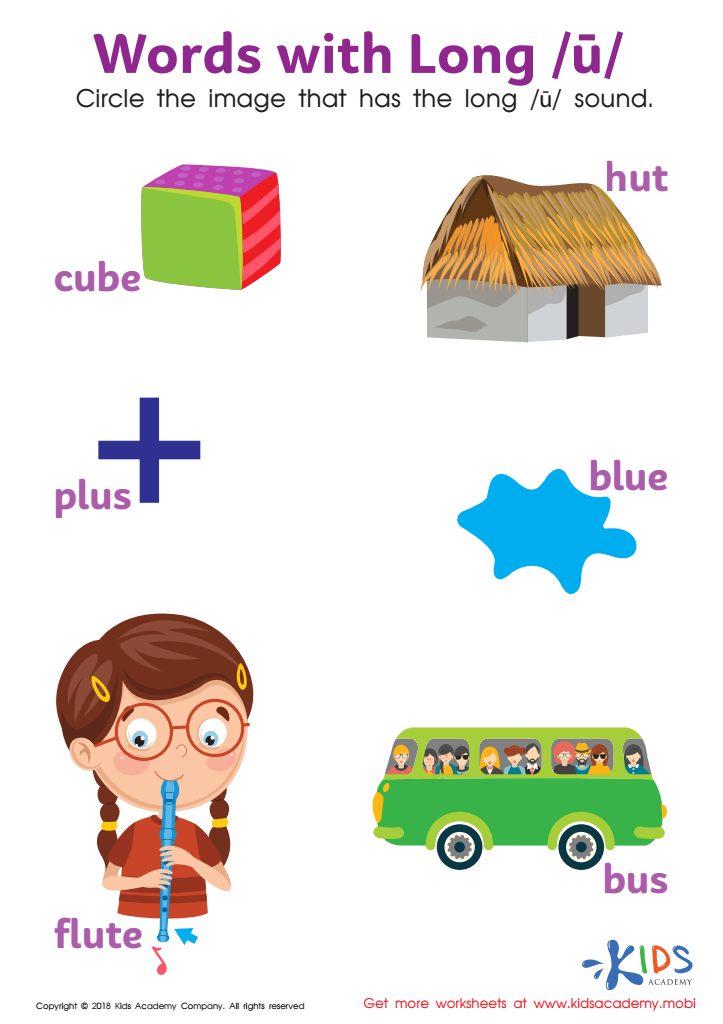
Words with Long U Reading Worksheet
Help your new reader master vowel recognition with this fun worksheet. By using picture clues and practicing fine motor skills, they'll learn to differentiate between words with the long and short «u» sound. Your learner will also get to practice vowel discrimination in high-frequency words. It's a great way to learn the importance of vowels in reading!
Words with Long U Reading Worksheet
Worksheet
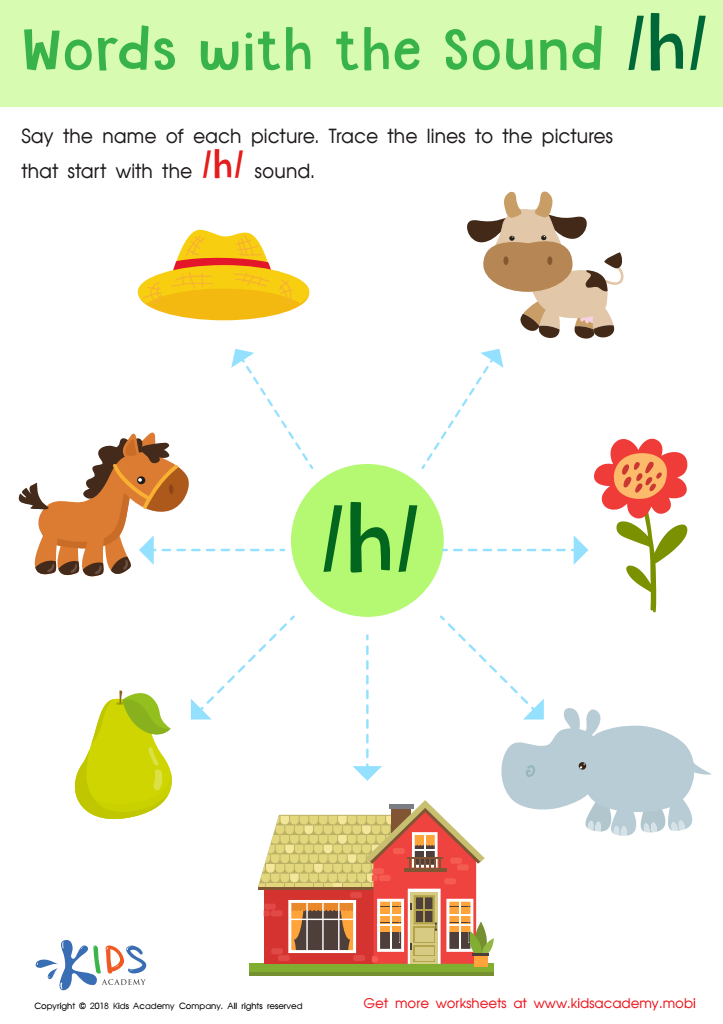
Words with sound h Reading Worksheet
The letter H can often be heard in words! Check your child's knowledge with an engaging worksheet from Kids Academy. Ask them to go around a circle and name each image aloud. Listen for the starting sound and trace the line from the middle letter to the images with the sound. This is a great way to practice phonics!
Words with sound h Reading Worksheet
Worksheet
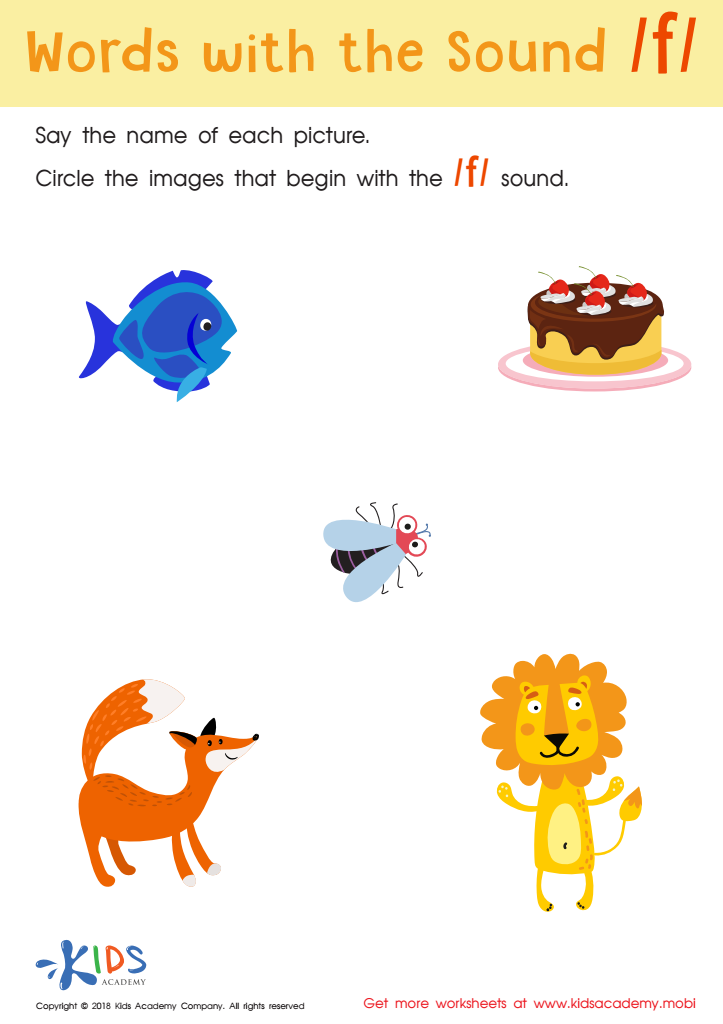
Words with sound f Reading Worksheet
This illustrated phonics worksheet is ideal for preschool or kindergarten. It helps boost learners' literacy skills with a focus on the letter "f". Ask your child to name all the pictures, listening for that sound. Examples are fish, fox, lion, bug. When they can identify which words start with "f", have them circle the images. Congratulate them on a job well done!
Words with sound f Reading Worksheet
Worksheet
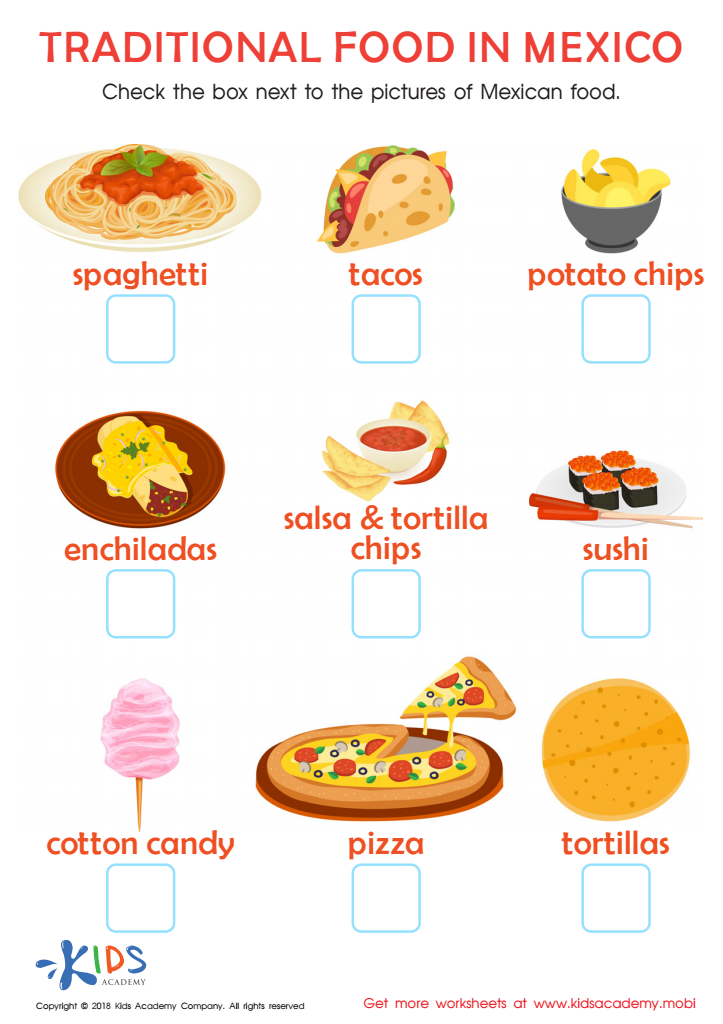
Traditional Food in Mexico Worksheet
This colorful worksheet offers a great opportunity to learn about traditional Mexican foods, build vocabulary and practice visual discrimination. As many of the words are not phonetic, this practice can help improve fluency, vocabulary and comprehension when encountered in reading. Culturally diverse, it's great for readers looking to expand their knowledge.
Traditional Food in Mexico Worksheet
Worksheet
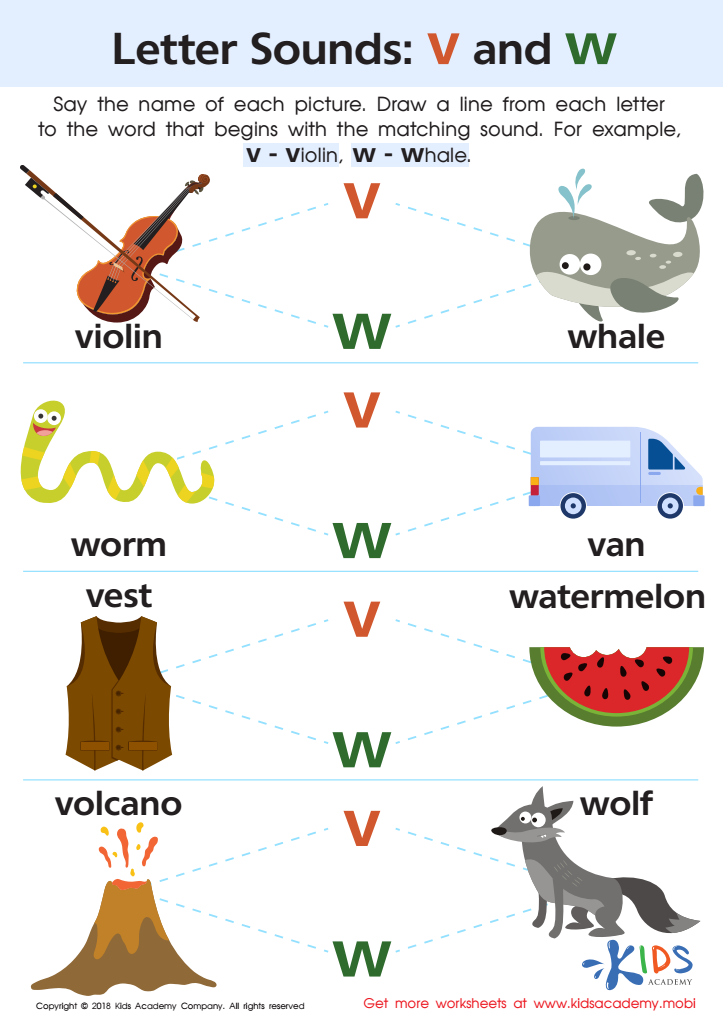
Letter V and W Sounds Worksheet
Help your child master the sounds of W & V while completing this fun phonics worksheet. Have them trace the dotted line from letter to picture while saying words like "worm", "violin" and "van" aloud to notice how each word begins with either W or V. Listen and pay attention to the pronunciation to complete the practice.
Letter V and W Sounds Worksheet
Worksheet
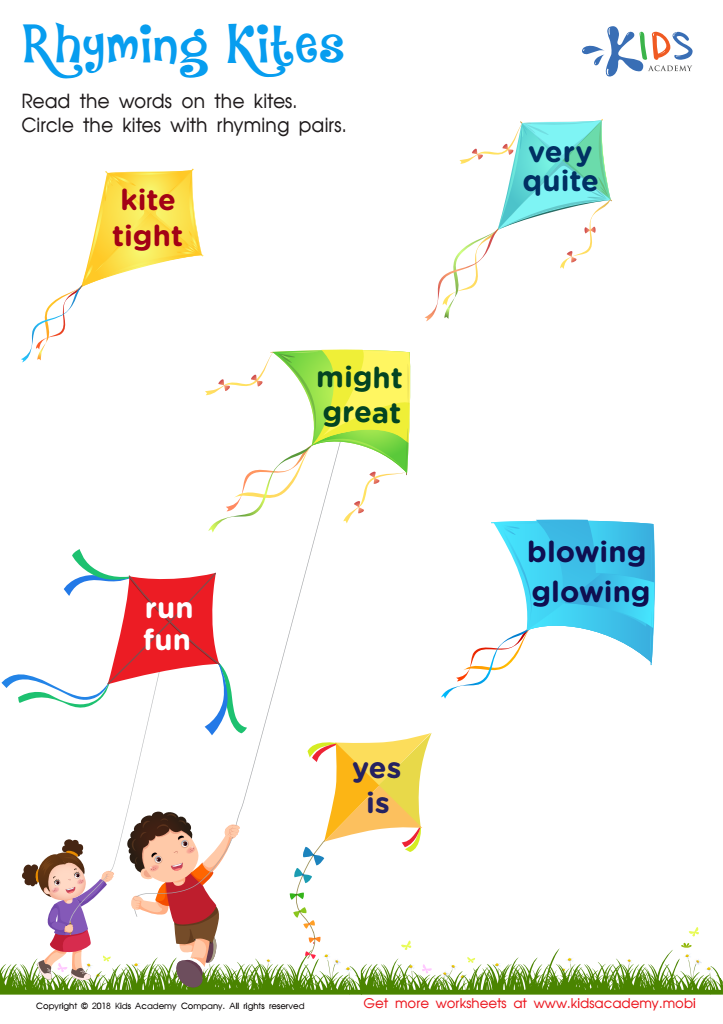
Rhyming Kites Worksheet
On a spring day, fly a kite! Kids Academy has a rhyming worksheet to boost your child's skills. Read the pairs of words aloud. Circle the kites if they rhyme, leave them blank if they don't. Listen carefully and find all the rhyming word pairs to complete this sheet!
Rhyming Kites Worksheet
Worksheet
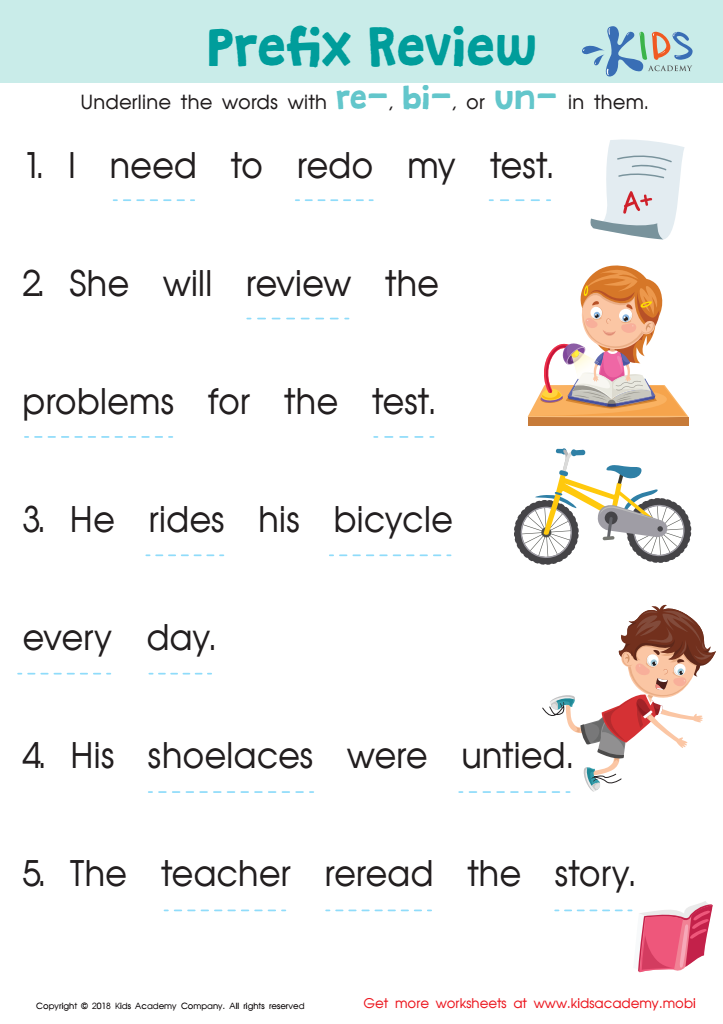
Prefix Review Worksheet
Learning prefixes is key for effective communication. Help your child master re-, bi-, and un- with a Kids Academy worksheet. Ask them to go through each sentence, underlining words with one of the prefixes. This will help them appreciate how prefixes alter the meaning of a root word.
Prefix Review Worksheet
Worksheet
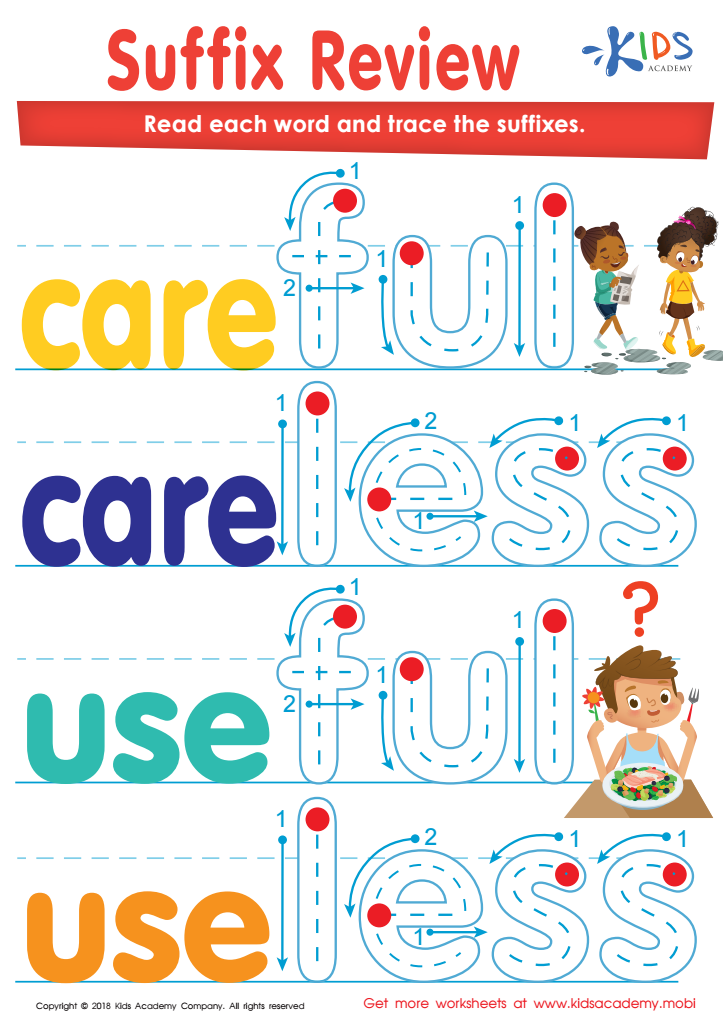
Suffix Review Worksheet
Help your child build language skills by reviewing suffixes with this illustrated worksheet! Trace suffixes and talk about how each change the word's meaning using familiar words. Vivid illustrations make the process fun and engaging. Get the building blocks of language your child needs!
Suffix Review Worksheet
Worksheet
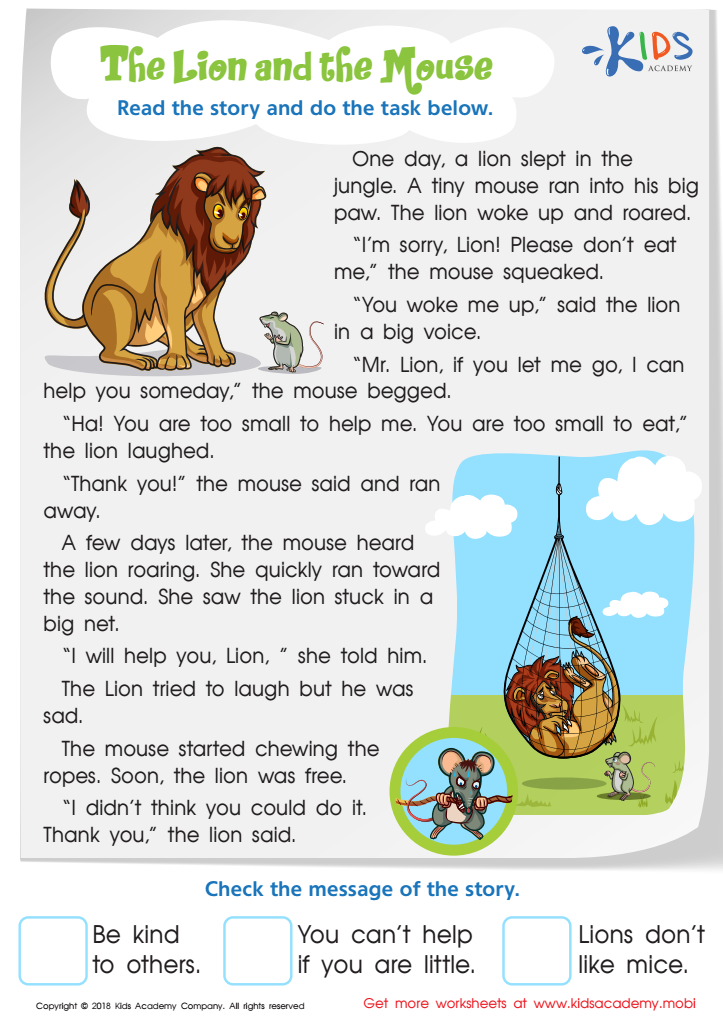
The Lion and the Mouse Worksheet
Writers often have a hidden message or theme in their stories. This printable worksheet helps readers uncover these themes by looking at what characters do and say in "The Lion and the Mouse". It's a great practice resource for learning to interpret stories.
The Lion and the Mouse Worksheet
Worksheet
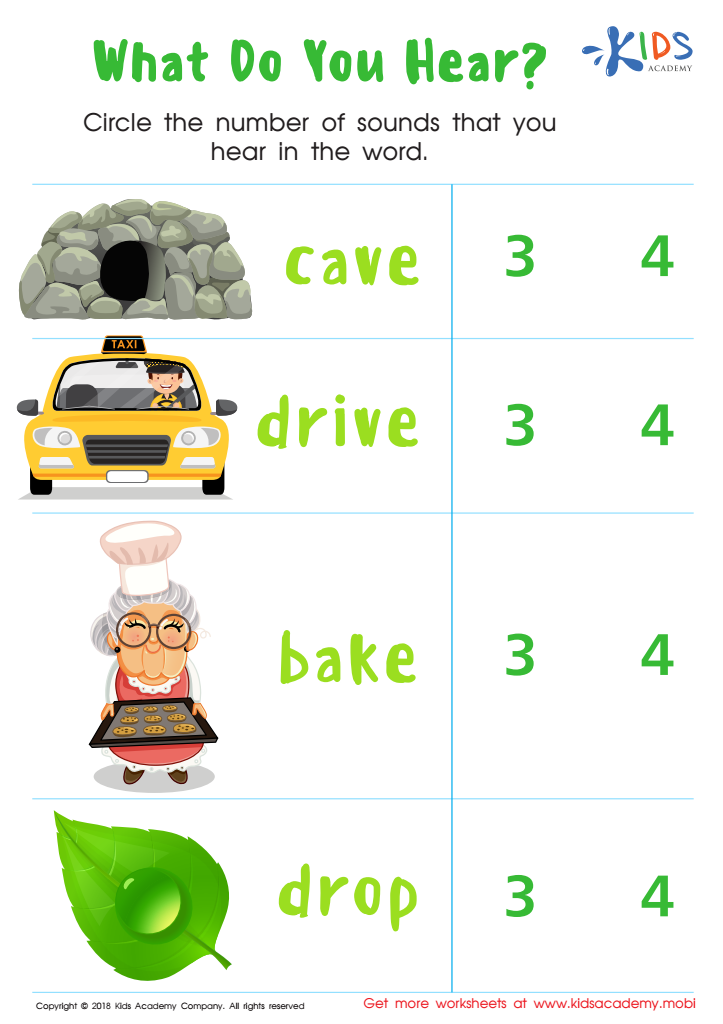
What Do You Hear? Worksheet
New readers can develop phonological awareness with this fun worksheet. They'll isolate sounds in words and count them, then circle the number of sounds heard. It'll help build their auditory discrimination and decoding skills, leading to more fluent reading. Without even knowing it, their reading skills are improving!
What Do You Hear? Worksheet
Worksheet
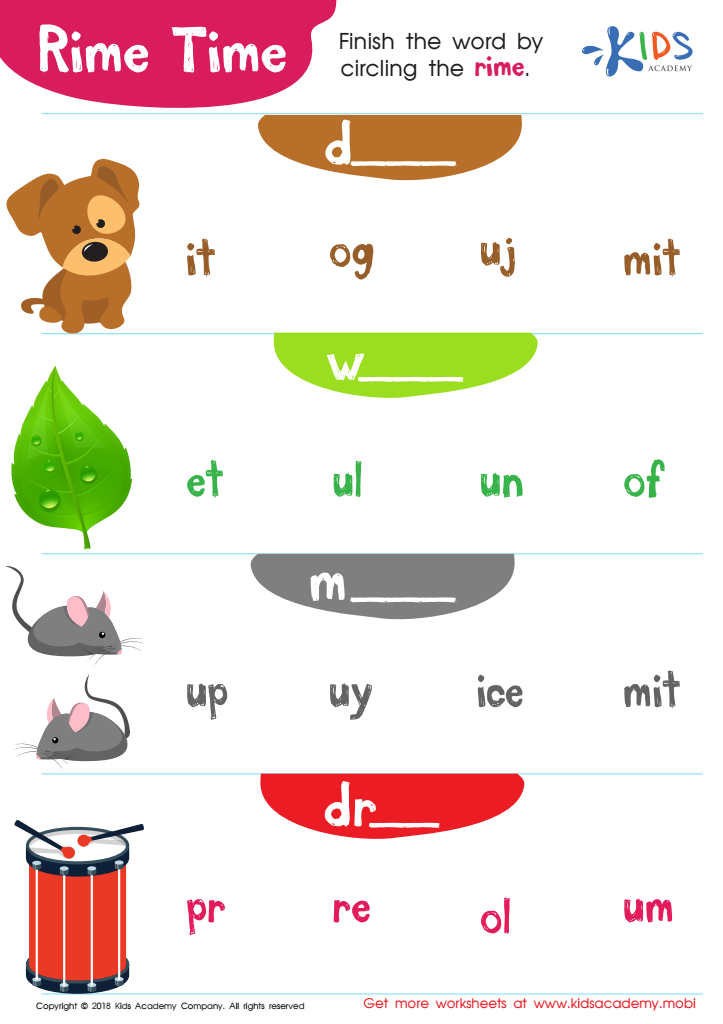
Rime Time Worksheet
This free PDF worksheet helps new and emerging readers identify rimes (the letters after initial consonants) and practice fine motor skills. Kids trace the correct rimes for each picture and increase their fluency and decoding skills with each one!
Rime Time Worksheet
Worksheet
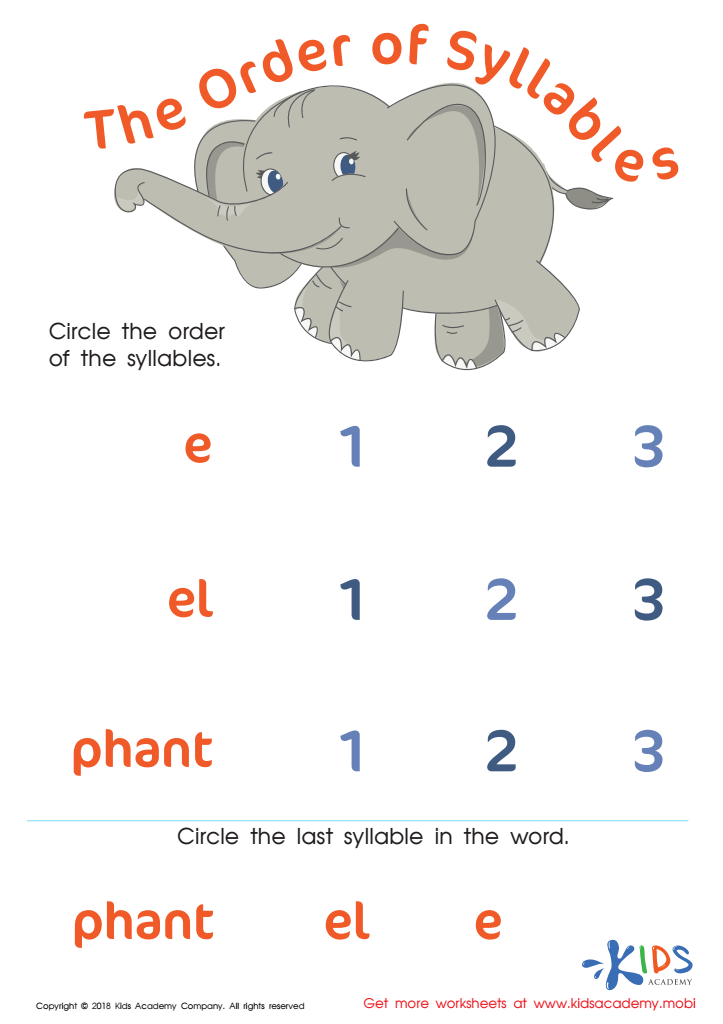
The Order of Syllables Worksheet
Syllabication is vital for prereading and decoding words. Download this fun, free worksheet to help your reader practice breaking words into syllables and arranging them for reading. It also strengthens fine motor skills as they trace the numbers for each syllable, guided by a cheerful elephant!
The Order of Syllables Worksheet
Worksheet
Join Kids Academy for Free
Who is primarily going to use this learning content?