Normal Color Words Worksheets for Ages 5-9
8 filtered results
-
From - To
Discover engaging "Normal Color Words Worksheets for Ages 5-9" at Kids Academy! Perfect for young learners, these printable worksheets help children master color vocabulary through fun and educational activities. Tailored for English as a Second Language (ESL) learners, each worksheet is thoughtfully designed to promote language skills and boost confidence. Kids practice identifying, reading, and writing common color words, enhancing their phonics, sight word recognition, and comprehension abilities. Ideal for home or classroom use, our worksheets make learning colors an enjoyable adventure for kids. Explore our collection and watch your child's language skills blossom!
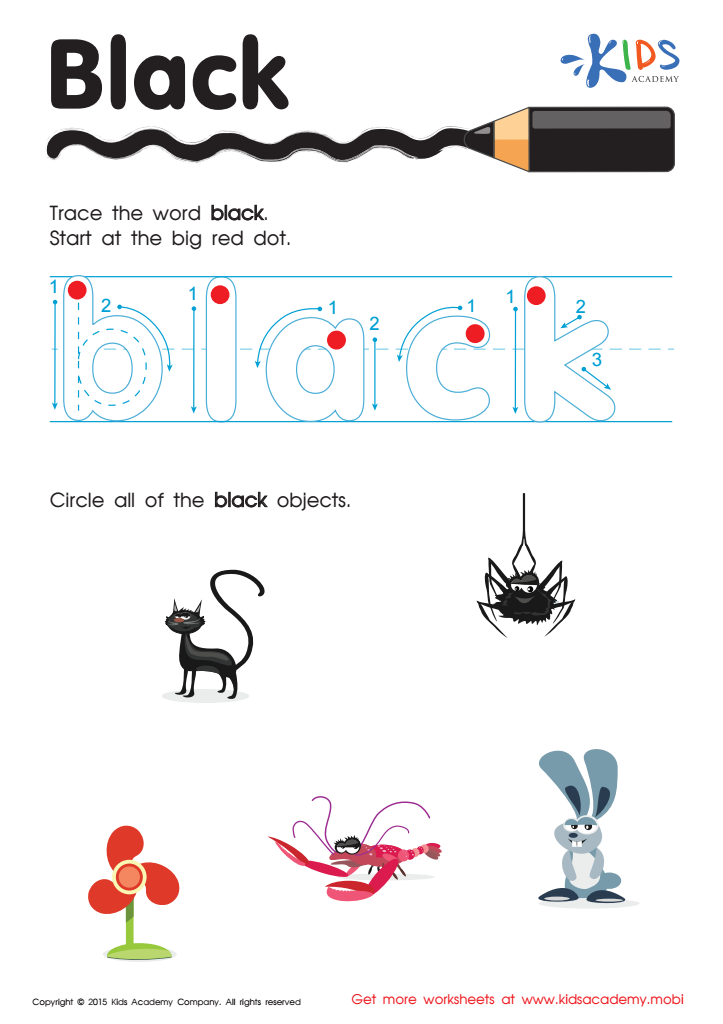
Black Tracing Color Words Printable
 Assign to My Students
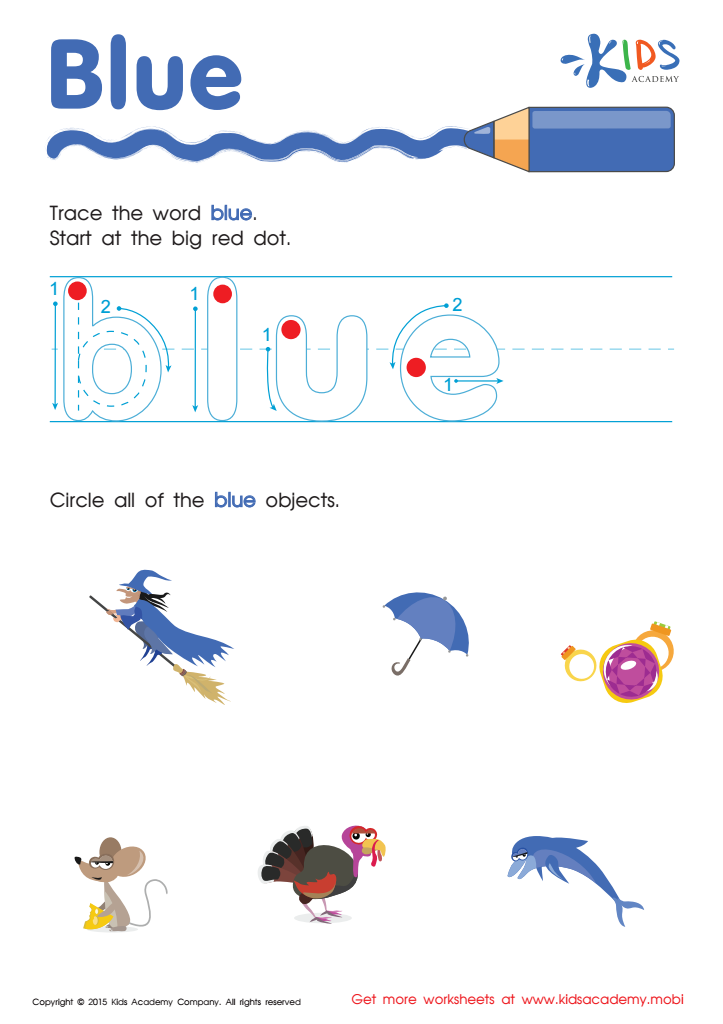
Blue Tracing Color Words Printable
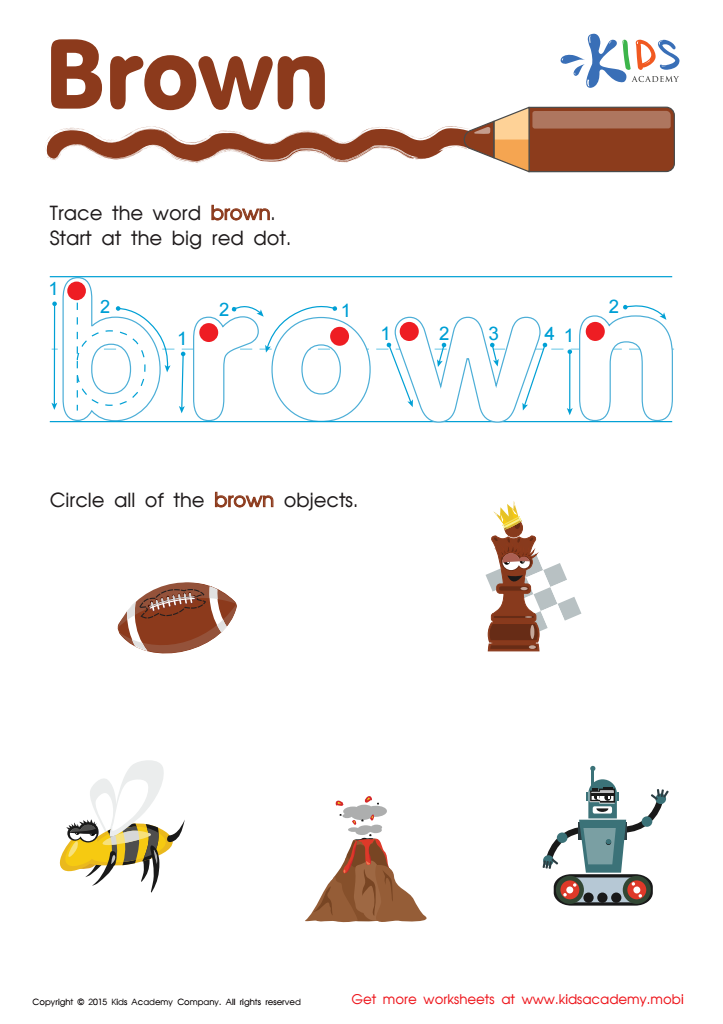
Brown Tracing Color Words Worksheet
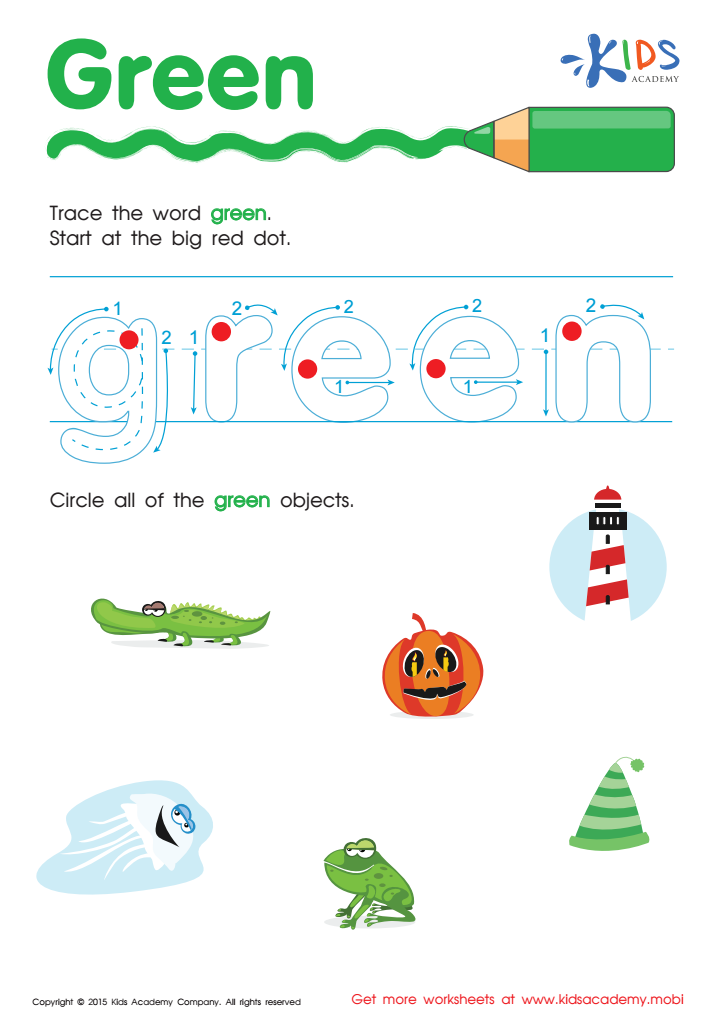
Green Tracing Color Words Worksheet
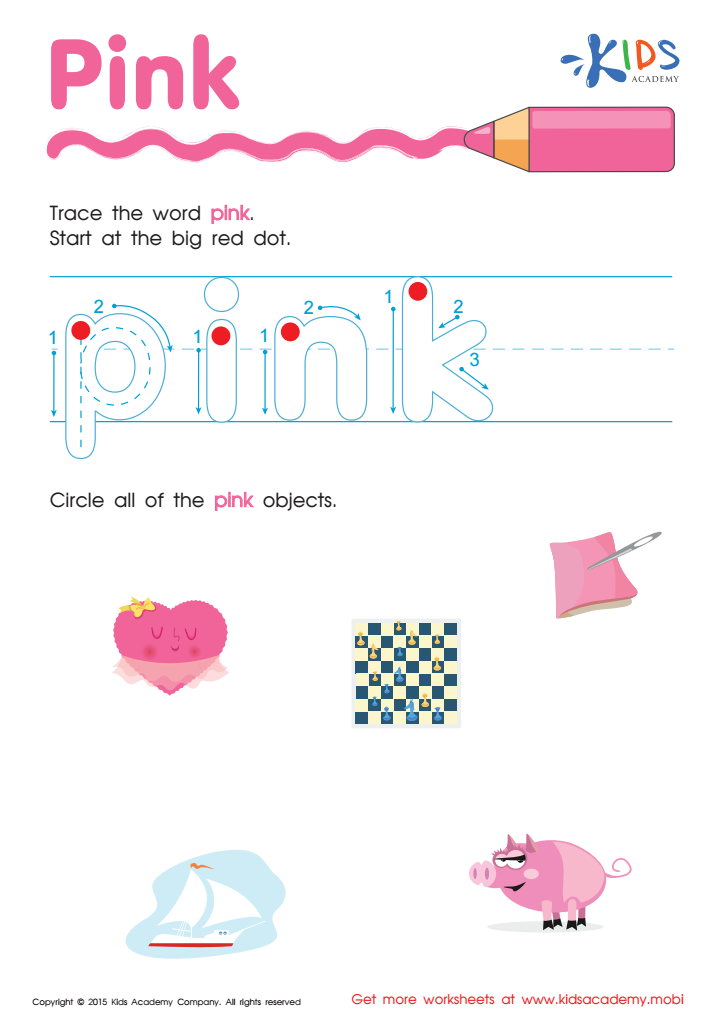
Pink Tracing Color Words Worksheet
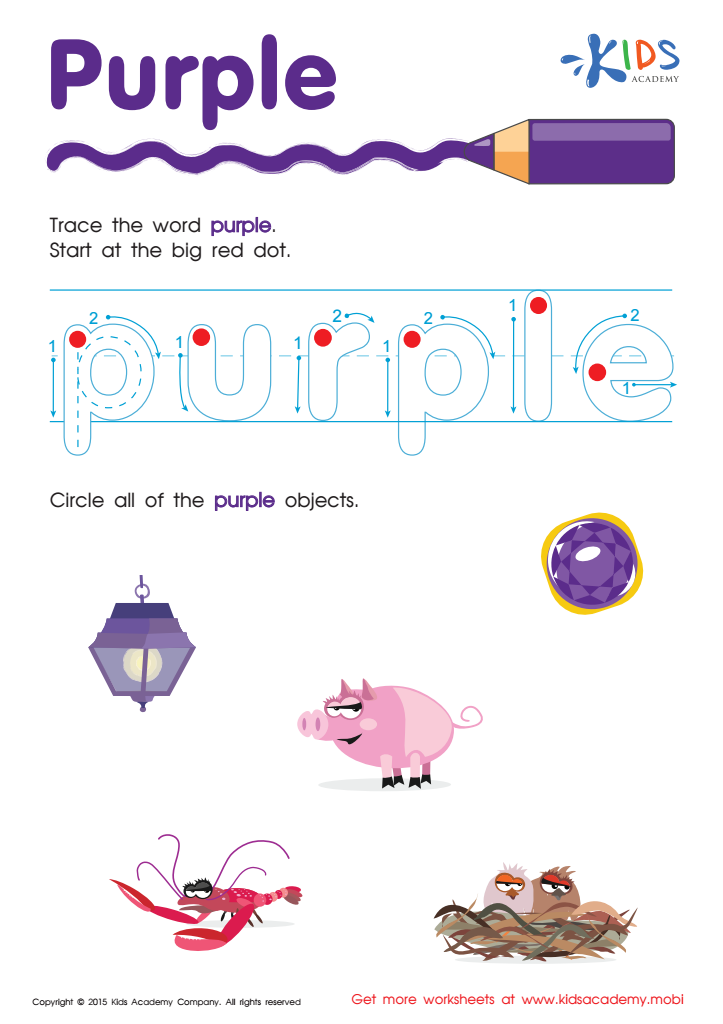
Purple Tracing Color Words Worksheet
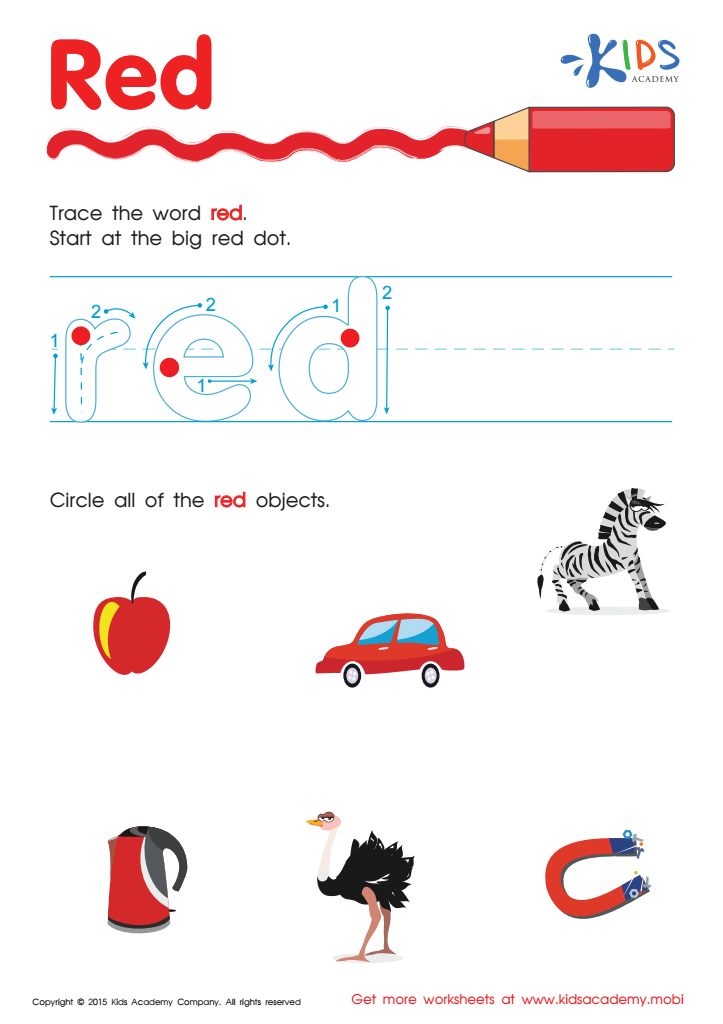
Red Tracing Color Words Printable
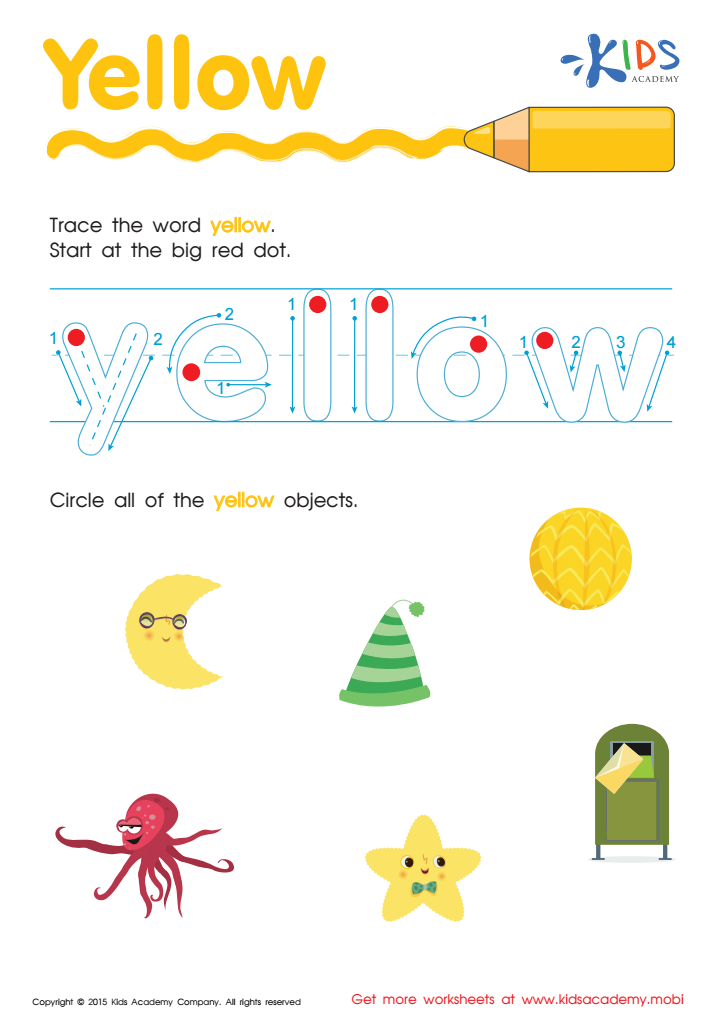
Yellow Tracing Color Words Worksheet



Understanding normal color words is a crucial developmental milestone for children ages 5-9. During this period, mastering basic colors enhances cognitive development and builds a foundation for critical thinking and visual perception. Knowing colors helps children describe the world around them, improving their vocabulary and language skills. It aids in following instructions, such as "color the apple red," fostering listening skills and the ability to follow directions.
Moreover, recognizing colors supports learning in subjects like math and science. For instance, sorting objects by color is a precursor to grasping more complex classification and pattern recognition. Art and creative activities also hinge on color knowledge, stimulating imagination and self-expression.
For teachers, awareness of any delays in color recognition can be critical in identifying early learning difficulties, such as dyslexia or color blindness. By addressing these issues early, they can tailor education strategies to accommodate each child's needs. Parents benefit from engaging their children in color-related activities, strengthening parental bonds and contributing to a supportive home learning environment.
In summary, proficiency in color words is not just about knowing colors; it is integral to a child's broader cognitive, language, emotional, and academic development, making it essential for parents and teachers to prioritize and support this aspect of early learning.








