Normal Area and Perimeter Worksheets for Ages 5-9
7 filtered results
-
From - To
Unlock your child's potential with our engaging Normal Area and Perimeter Worksheets for ages 5-9! Designed to build foundational math skills, these worksheets feature a variety of exercises that teach young learners how to calculate the area and perimeter of different shapes. With colorful illustrations and fun activities, your child will enjoy learning while developing critical problem-solving abilities. Perfect for classroom use or additional practice at home, our printable worksheets offer a comprehensive approach to mastering essential math concepts in an enjoyable and interactive way. Start exploring today and watch your child's confidence in math soar!
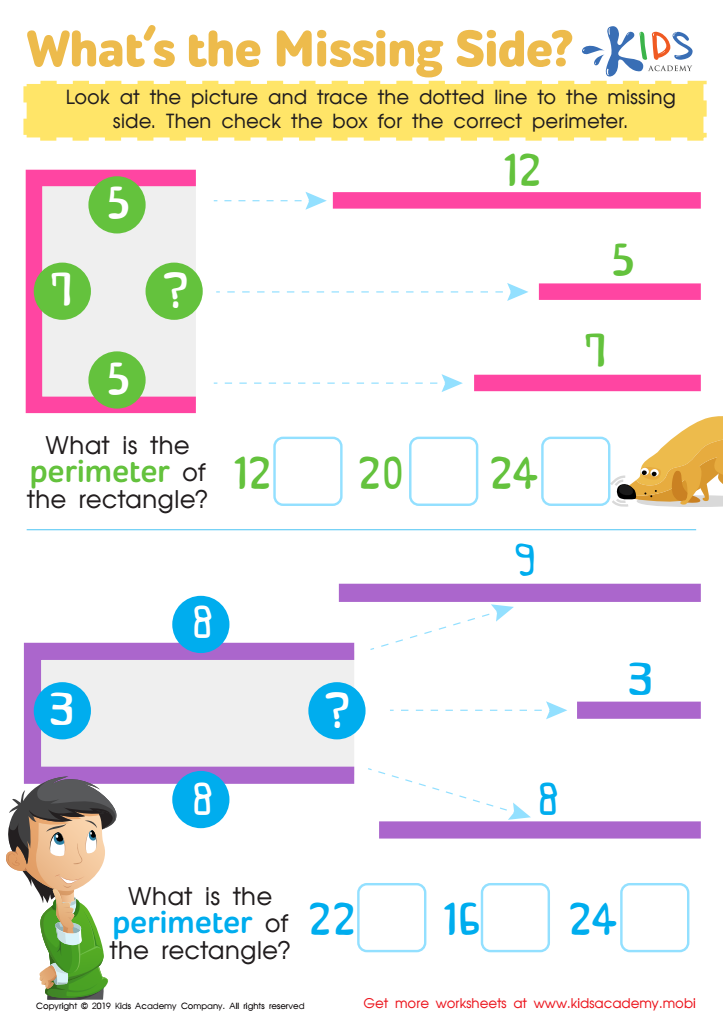
What's the Missing Side Worksheet
 Assign to My Students
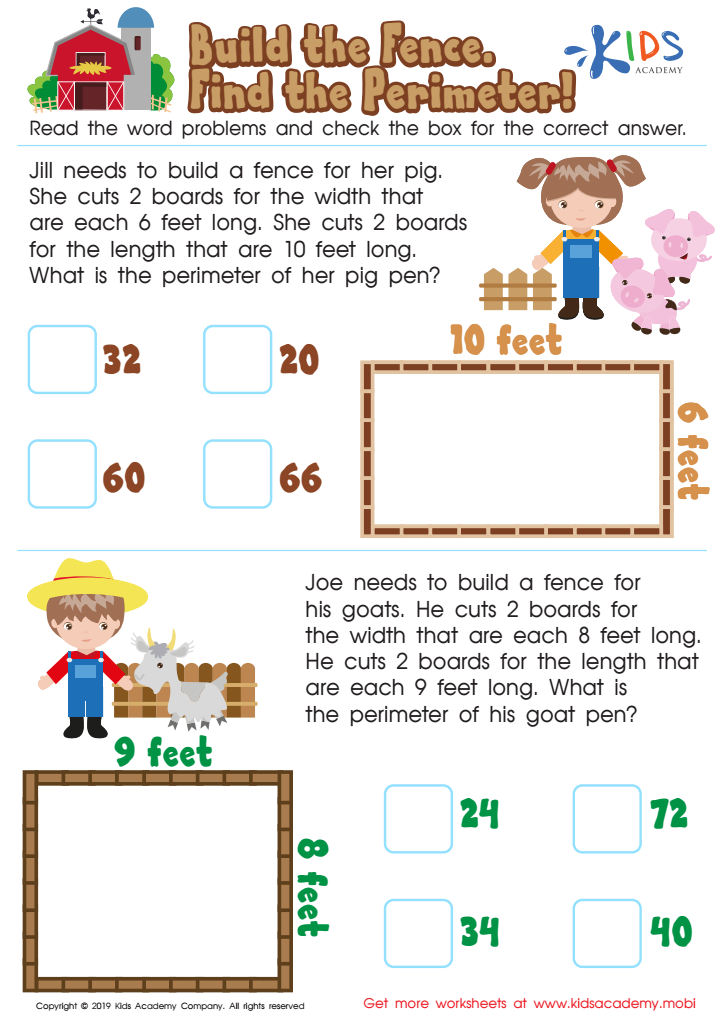
Build the Fence, Find the Perimeter Worksheet
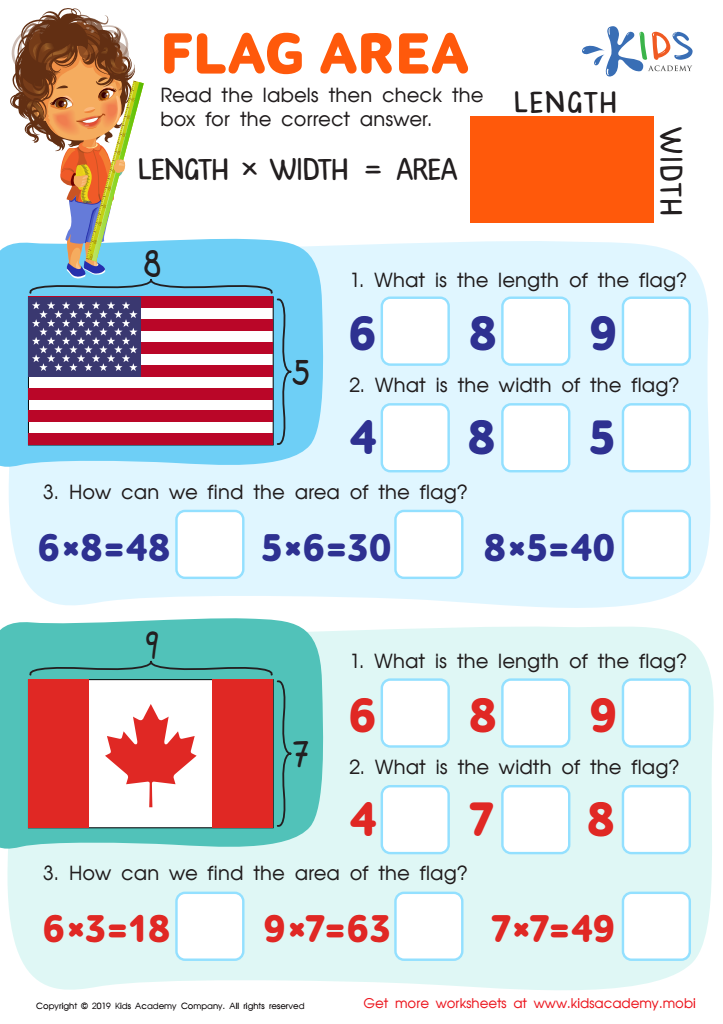
Flag Area Worksheet
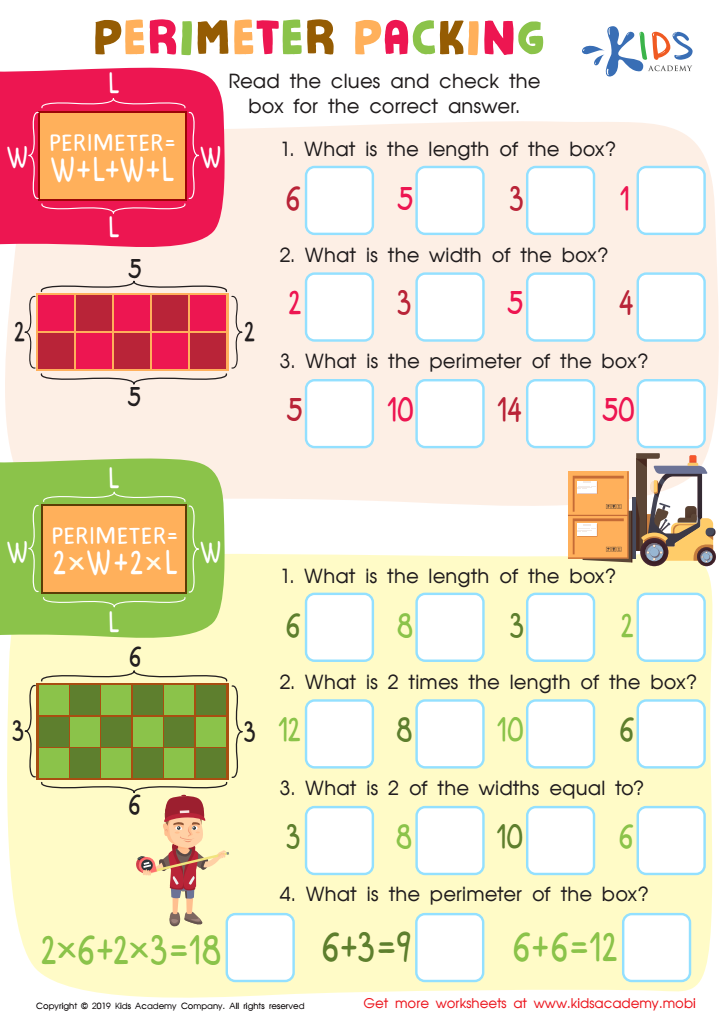
Perimeter Parking Worksheet
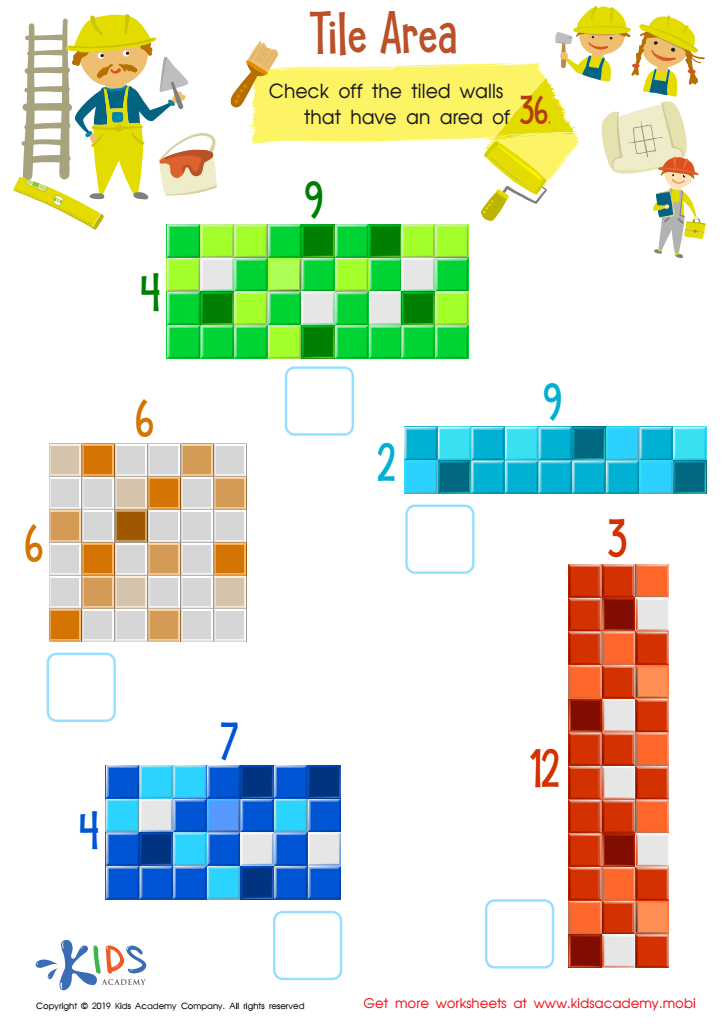
Tile Area Worksheet
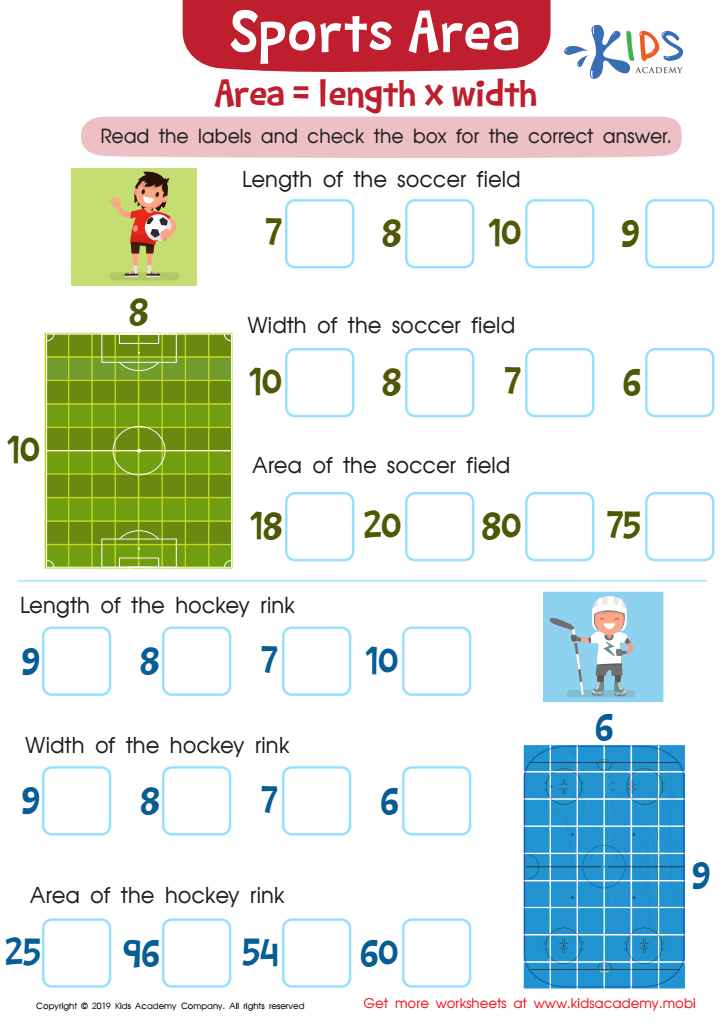
Sports Area Worksheet
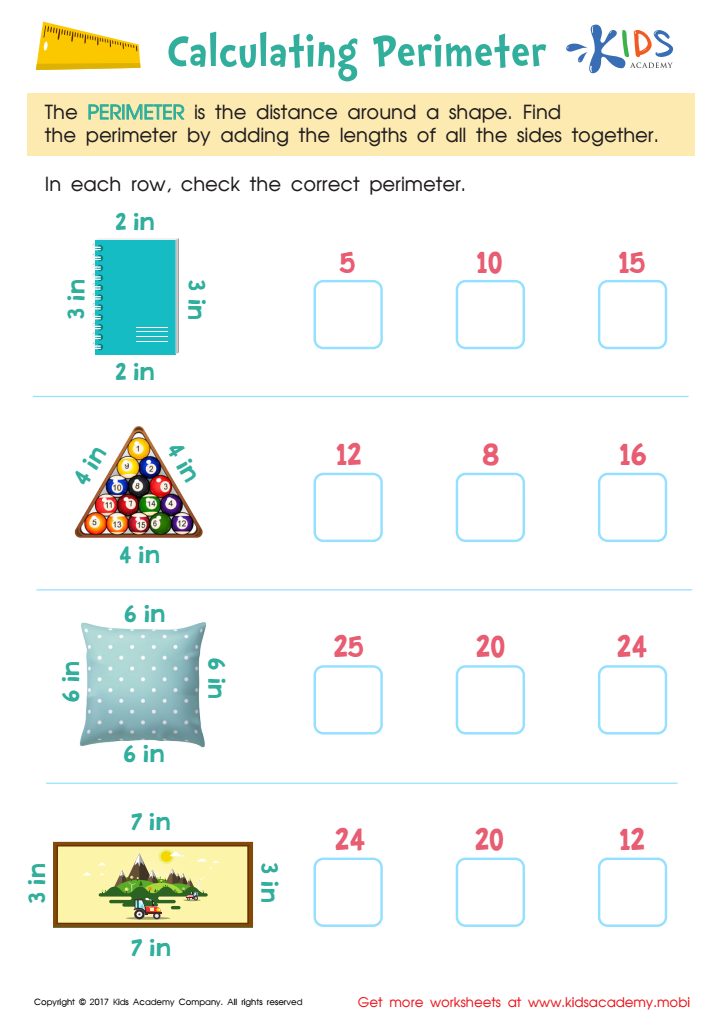
Calculating Perimeter Worksheet








Introducing the concepts of area and perimeter to young children aged 5-9 is crucial for multiple reasons. Firstly, these foundational mathematical concepts enhance their problem-solving and critical-thinking skills. Understanding area and perimeter allows children to comprehend and organize their physical world more effectively. For instance, when they grasp that a larger area can fit more objects or how the perimeter determines the boundary, they start making everyday connections that stimulate practical application of math in real life.
Secondly, early exposure to these ideas ensures a smoother transition to more complex geometric and algebraic concepts later in their academic journey. Grasping the basics early helps build a robust mathematical foundation, minimizing the risk of future academic struggles.
Moreover, learning about area and perimeter fosters spatial reasoning and geometry skills. These are essential in diverse fields like engineering, architecture, and any design-related career. Encouraging an interest in these concepts can spark curiosity and inspire future pursuits in STEM disciplines.
Lastly, these lessons foster positive attitudes towards math. Engaging, hands-on activities such as measuring playground spaces or drawing shapes create an enjoyable learning environment. When children associate math with fun and real-world utility, they are more likely to develop a lifelong appreciation for the subject.