Normal Good Citizenship Worksheets for Ages 5-9
6 filtered results
-
From - To
Explore our engaging "Normal Good Citizenship Worksheets for Ages 5-9," designed to instill essential citizenship values in young learners. These interactive resources cover fundamental concepts such as respect, responsibility, and community involvement, making it easy for kids to understand their role as good citizens. Each worksheet is tailored to promote critical thinking and creativity through fun activities like drawing, matching, and storytelling. Perfect for home or classroom use, these worksheets help reinforce the importance of kindness, working together, and making positive choices. Download these free printable worksheets today and empower your children to become responsible, caring members of their community!
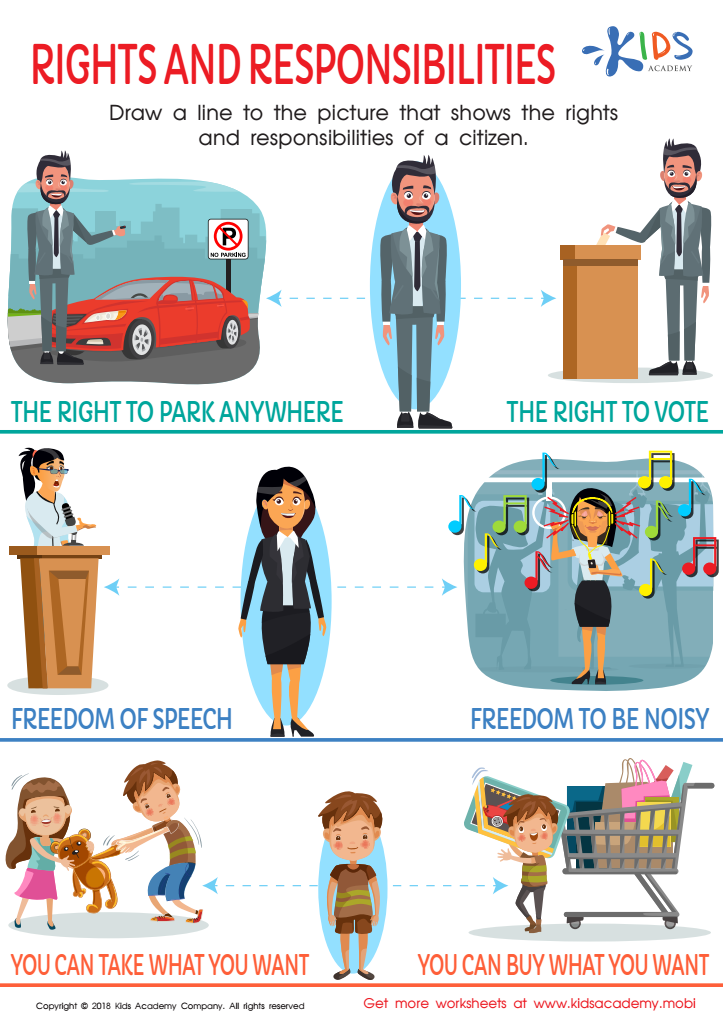
Rights and Responsibilities Worksheet
 Assign to My Students
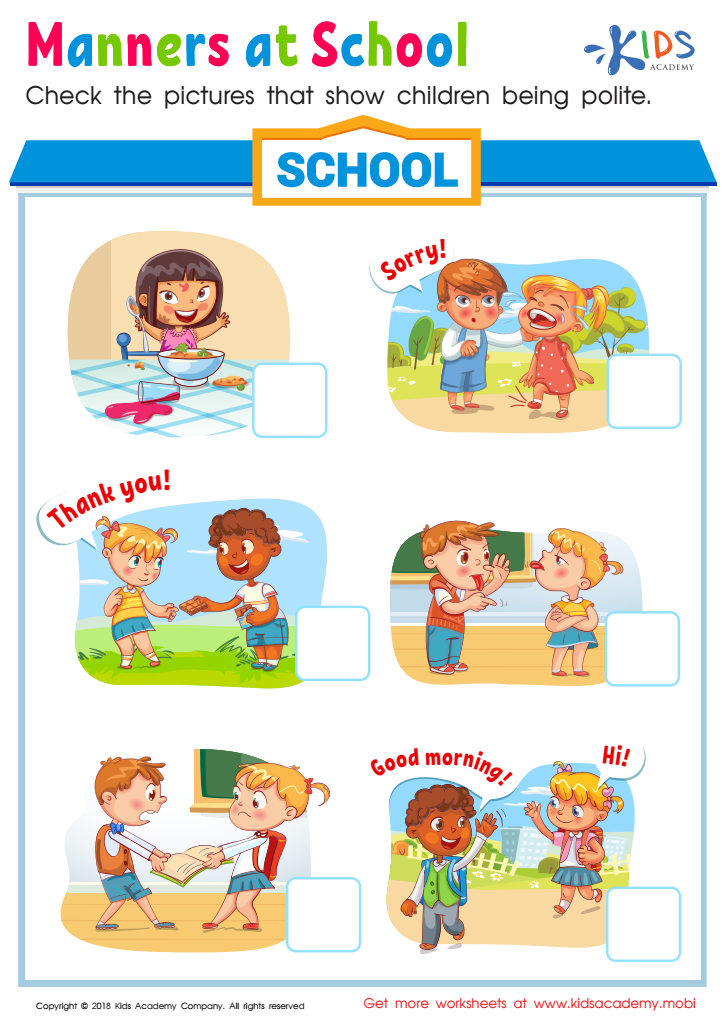
Manners at School Worksheet
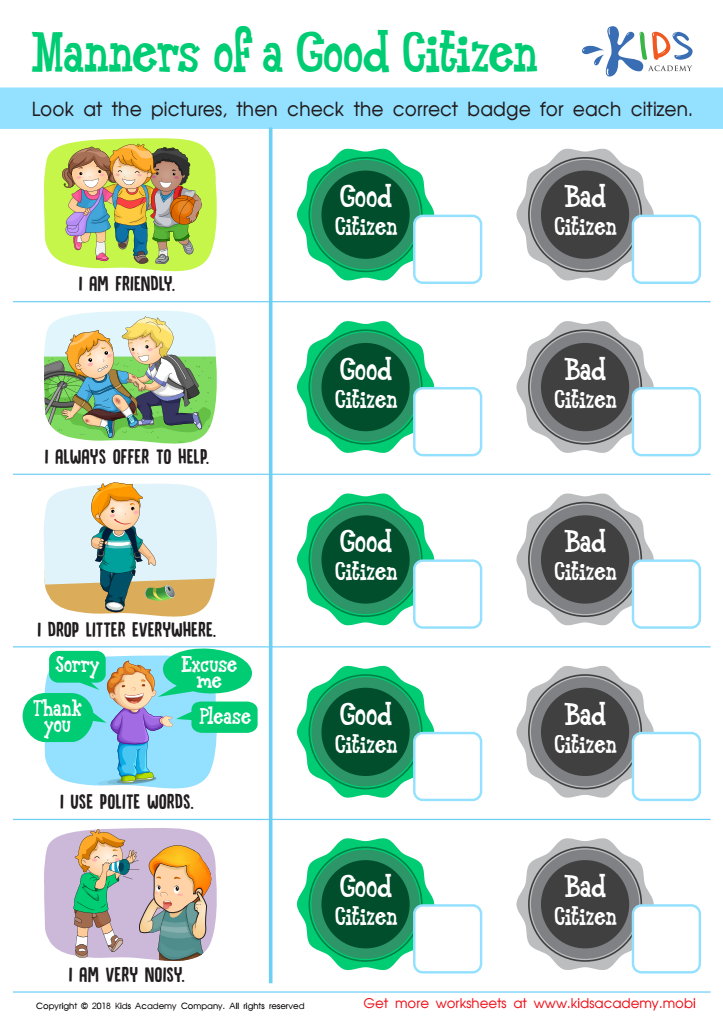
Manners of a Good Citizen Worksheet
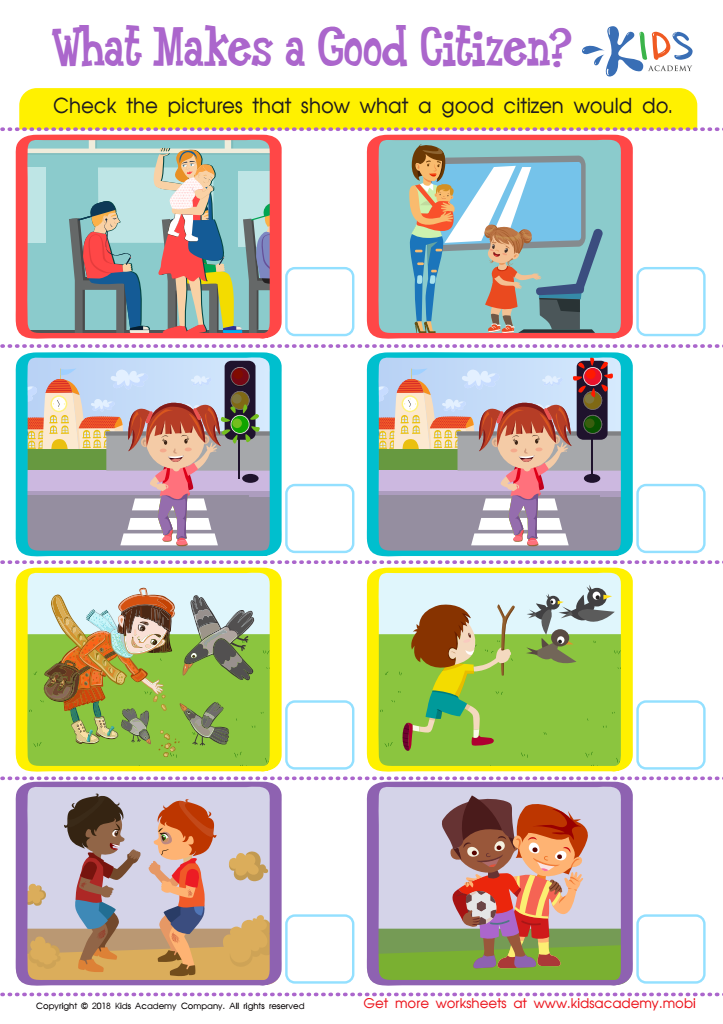
What Makes a Good Citizen? Worksheet
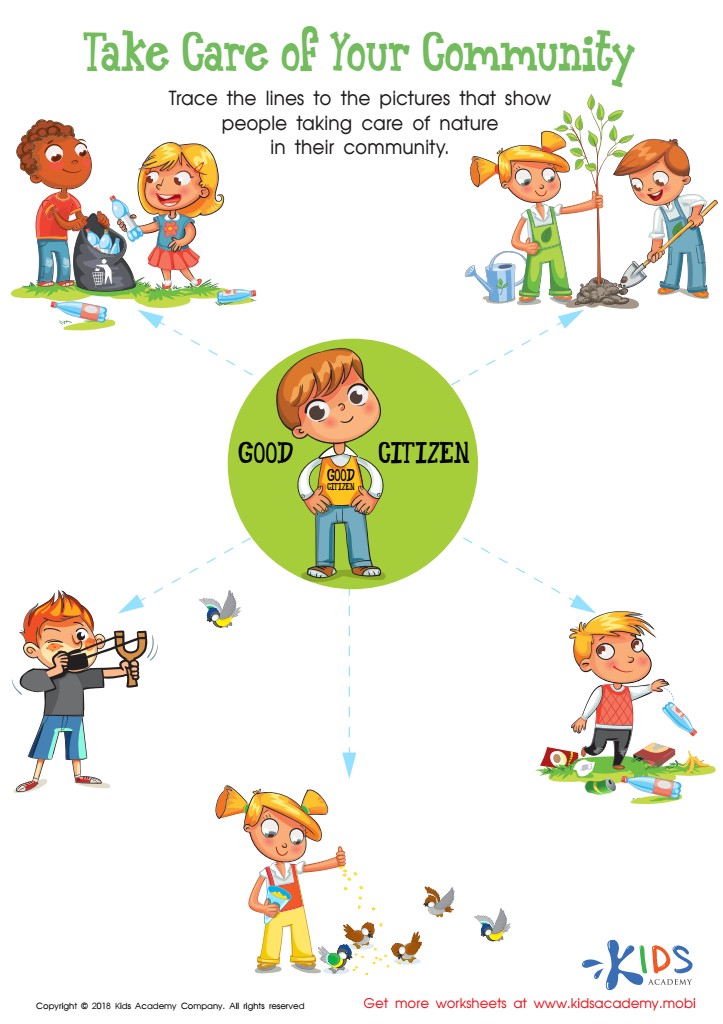
Take Care of your Community Worksheet
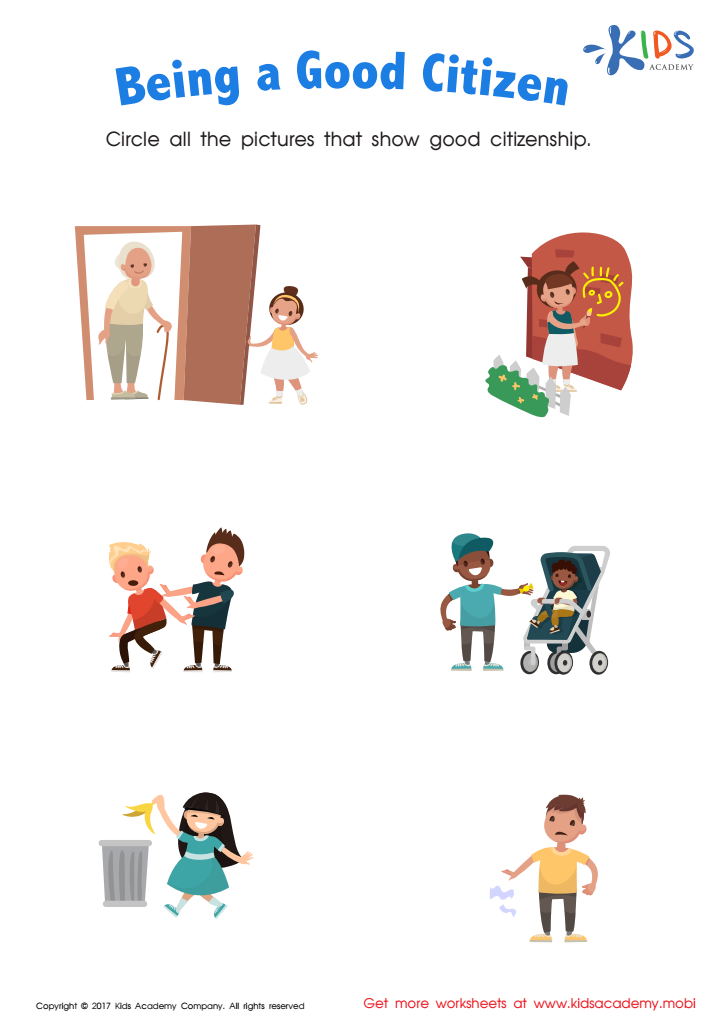
Being a Good Citizen Printable



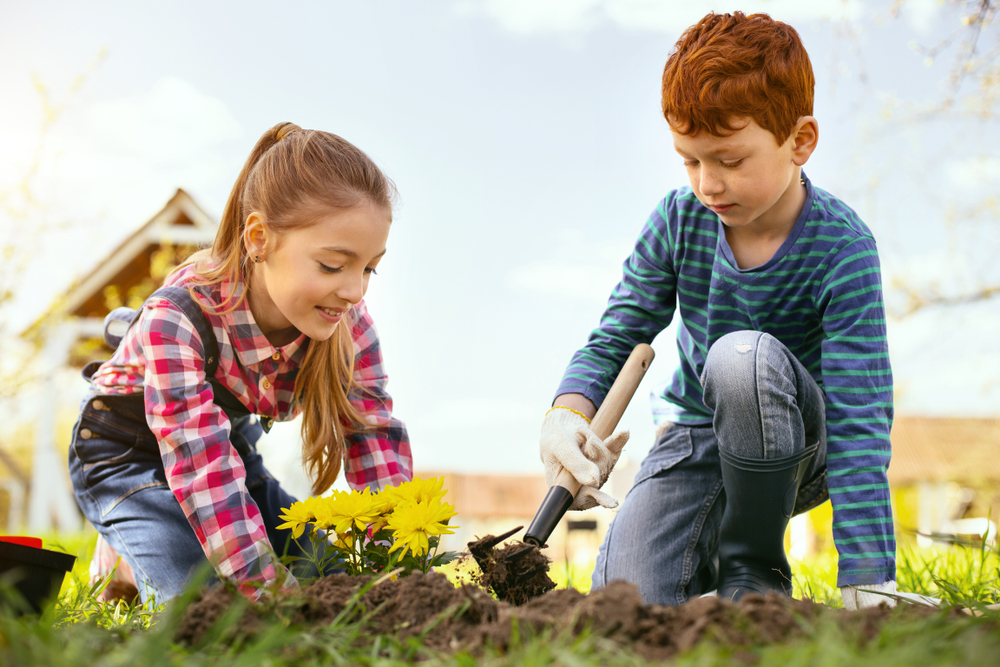
Normal good citizenship for ages 5-9 fosters essential social and emotional skills that significantly impact a child's development. At this formative stage, children begin to understand the importance of respect, responsibility, and community involvement. Teaching good citizenship instills in them a sense of belonging and helps shape their identity as members of society.
Engaging with citizenship concepts introduces children to values such as empathy, cooperation, and fairness. By participating in discussions, group activities, and community projects, children learn how their actions affect others, promoting kindness and respectful behavior. Such participation not only enhances their social skills but also strengthens their ability to resolve conflicts positively.
Furthermore, teaching normal good citizenship encourages accountability. Children learn how to make thoughtful decisions, understand rules, and participate in group dynamics, cultivating their sense of responsibility towards themselves and others.
Parents and teachers play a crucial role in modeling these behaviors. Through their guidance, children can internalize the importance of being constructive contributors to their communities, equipping them with the tools necessary to navigate their social environments successfully. Ultimately, instilling the values of good citizenship creates foundational habits that will benefit the child and society as they grow.