Normal Long Vowels Worksheets for Ages 7-9
18 filtered results
Difficulty Level
Grade
Age
-
From - To
Subject
Activity
Standards
Explore our engaging Normal Long Vowels Worksheets for children aged 7-9! Designed to enhance phonemic awareness, these worksheets help students practice and master long vowel sounds through fun activities and exercises. Kids will enjoy a variety of tasks, including matching words, completing sentences, and identifying long vowels in context. These interactive resources cater to different learning styles, making phonics learning enjoyable and effective. Perfect for classrooms or homeschool settings, our worksheets foster independence and build confidence in reading skills. Support your child's literacy journey with our thoughtfully crafted materials that are aligned with educational standards. Unlock their potential today!
Favorites
With answer key
Interactive
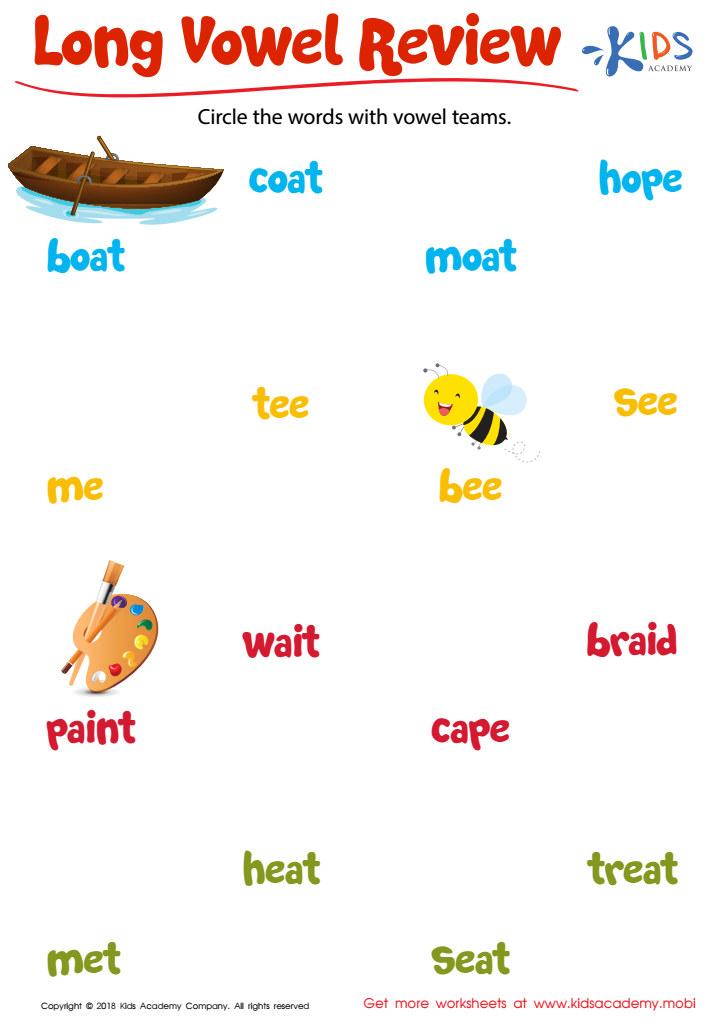
Long Vowel Review Worksheet
Vowel teams like "ea" and "ai" help us make words, and understanding these patterns aids emerging readers in becoming more fluent. This review worksheet has students finding words with vowel teams that make the long vowel sound, and helps them recognize high-frequency words.
 Assign to My Students
Long Vowel Review Worksheet
Worksheet
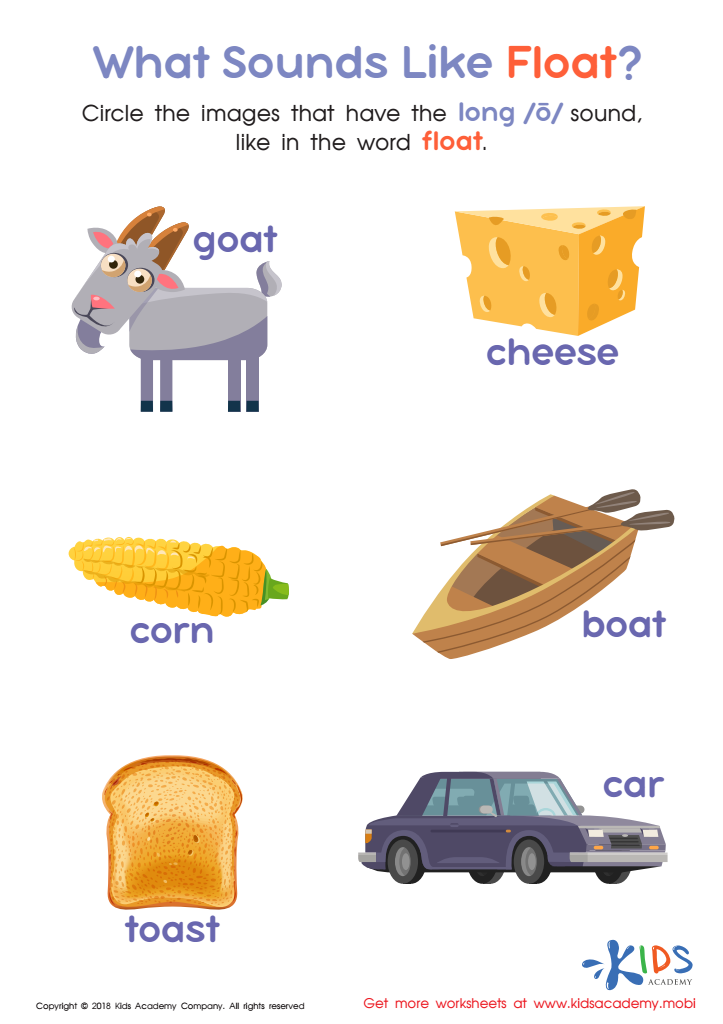
What Sounds Like Float? Worksheet
Help your kids practice the long /o/ sound with words such as 'boat', 'goat' and 'float'. Ask them to identify and circle the images in the worksheet that have the same sound. Award bonus points if they come up with more words with 'oa' spelling!
What Sounds Like Float? Worksheet
Worksheet
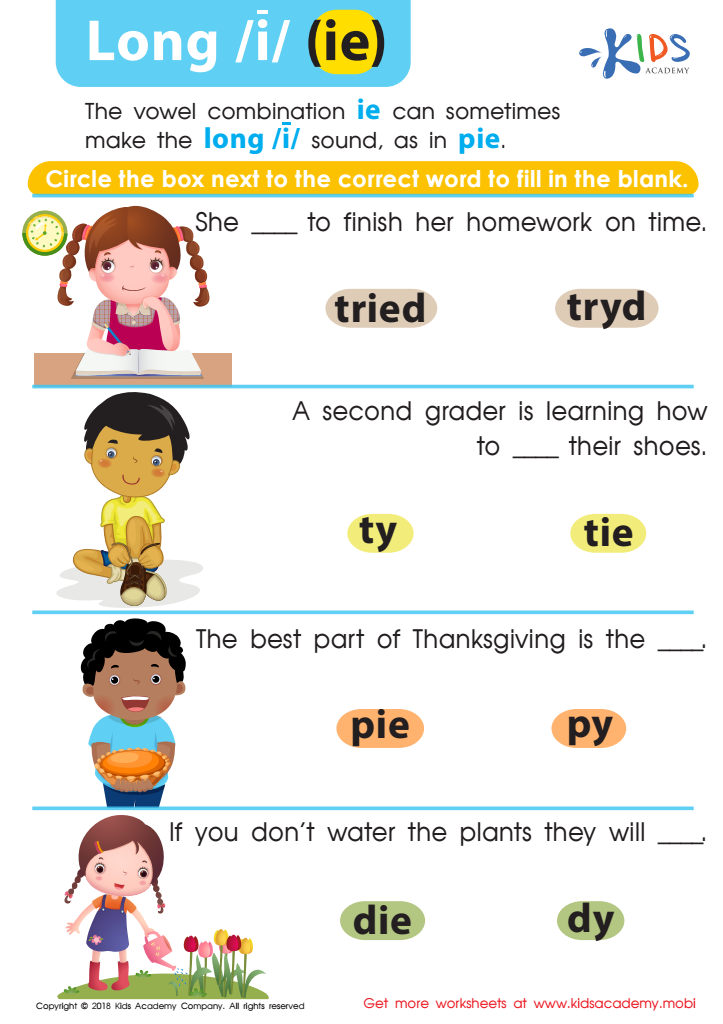
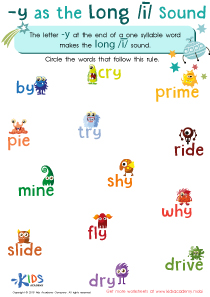
Reading: Long I and IE Worksheet
Have your child list words with the long /i/ sound (eg. 'pie'), and if needed, help them out with some examples. Read each word in the worksheet together and check their answer by having them circle the correct word.
Reading: Long I and IE Worksheet
Worksheet
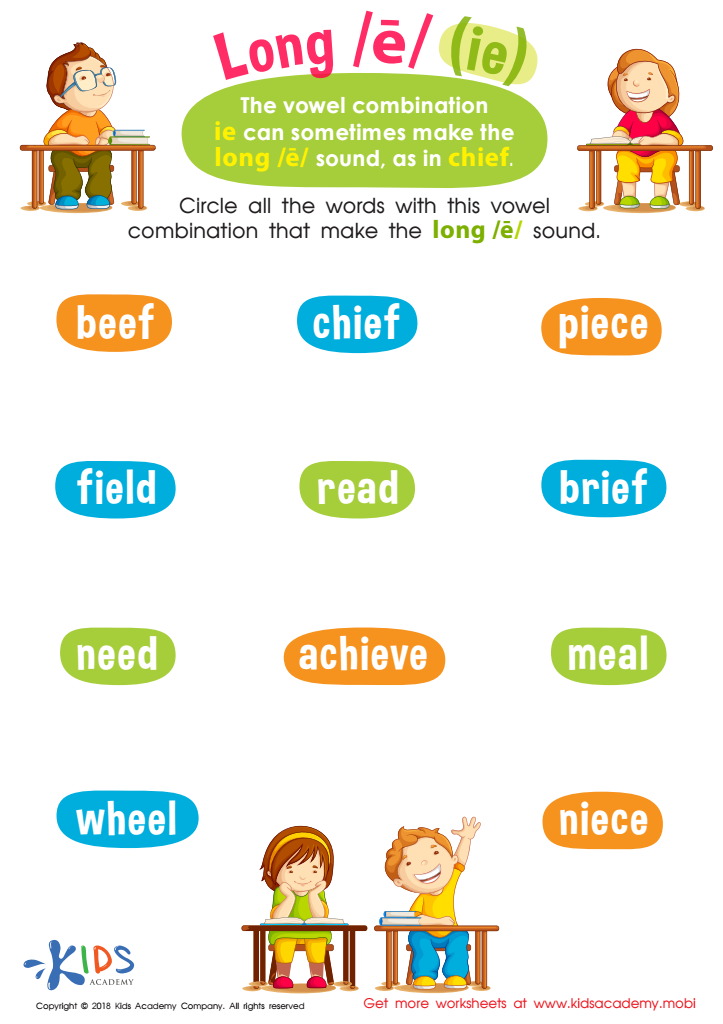
Reading: Long E and IE Worksheet
Ask your child to name some words with the long /e/ sound they hear every day. Then, read aloud all the words in the worksheet with them. Ask them to circle the words containing ie that make this sound.
Reading: Long E and IE Worksheet
Worksheet
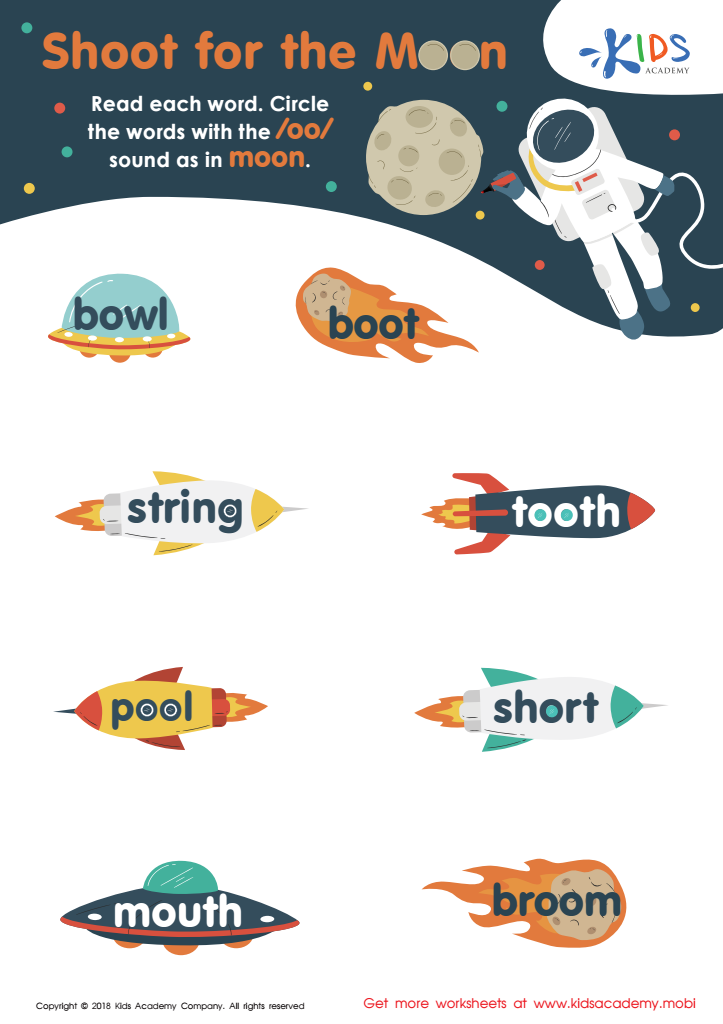
Reading: Shoot for the Moon Worksheet
Ask your kids if they can name any common words with the /oo/ sound. Read each word with them and help them pronounce it. Then, have them circle the words that have the /oo/ sound as in moon.
Reading: Shoot for the Moon Worksheet
Worksheet
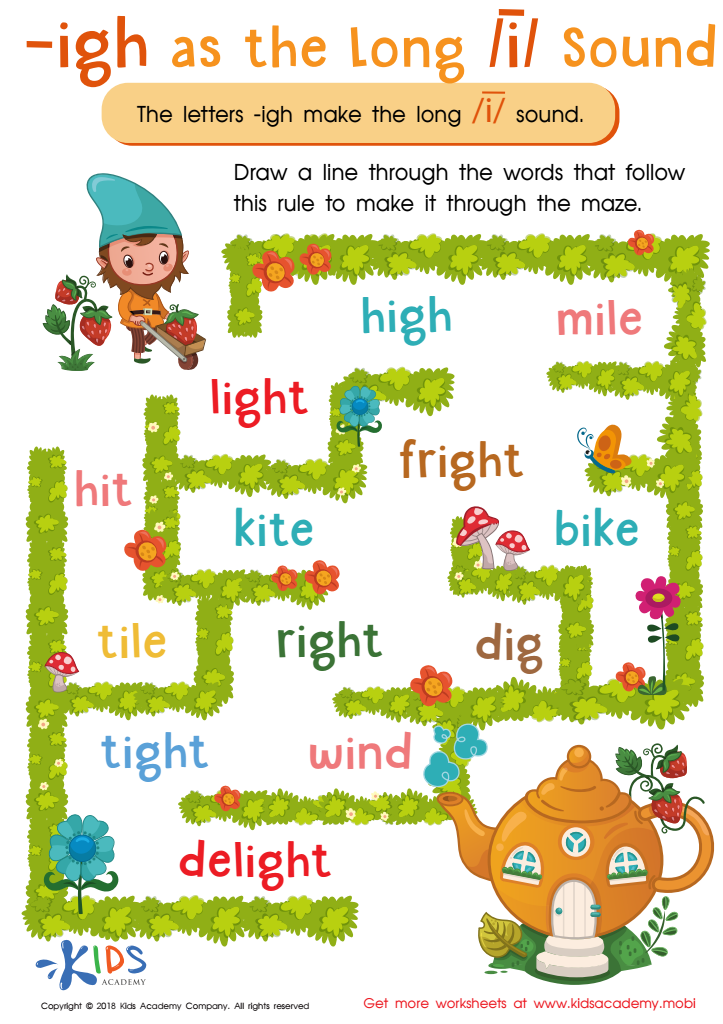
Reading: IGH as Long I Worksheet
Kids can have fun and learn with this maze! They'll look for and read words with the 'long I' sound spelled 'igh'. Most words ending with 'T' have this spelling. Decode words while learning about long vowel sounds and their spellings.
Reading: IGH as Long I Worksheet
Worksheet
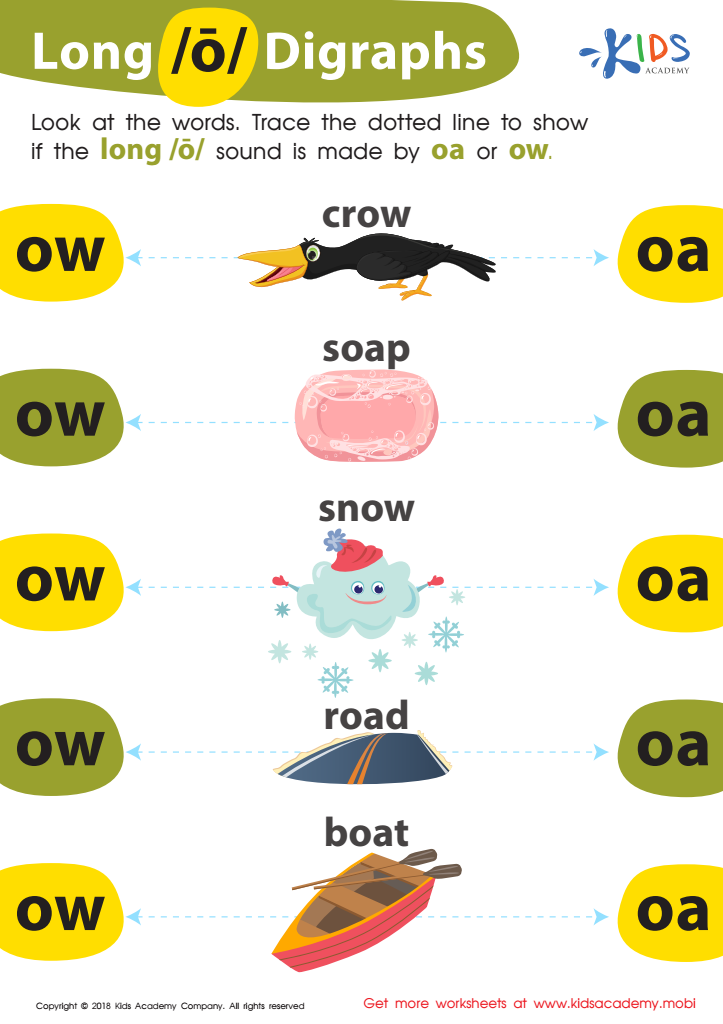
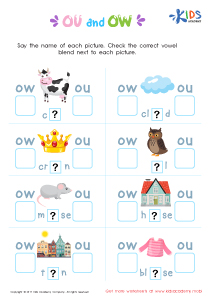
Reading: Long O Digraphs Worksheet
Reading and decoding words can be complex for learners when they start studying digraphs, two letters that make one sound. This worksheet focuses on the long O sound, /oa/ and /ow/. With the understanding of digraphs, students can decode more words and build their reading confidence.
Reading: Long O Digraphs Worksheet
Worksheet
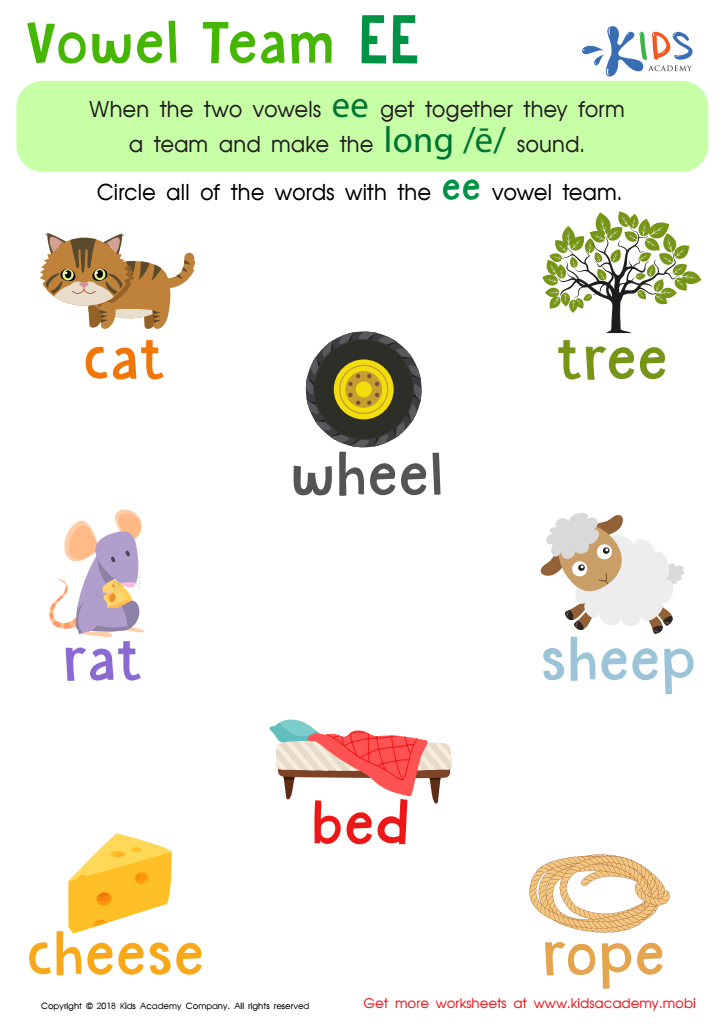
Reading: Vowel Team EE Worksheet
This worksheet is perfect for helping young learners master the /ee/ vowel team. It shows the first vowel with a long sound and the second vowel silent. It also provides pictures for unfamiliar words for readers of all levels. It's an ideal resource for teaching phonics skills.
Reading: Vowel Team EE Worksheet
Worksheet
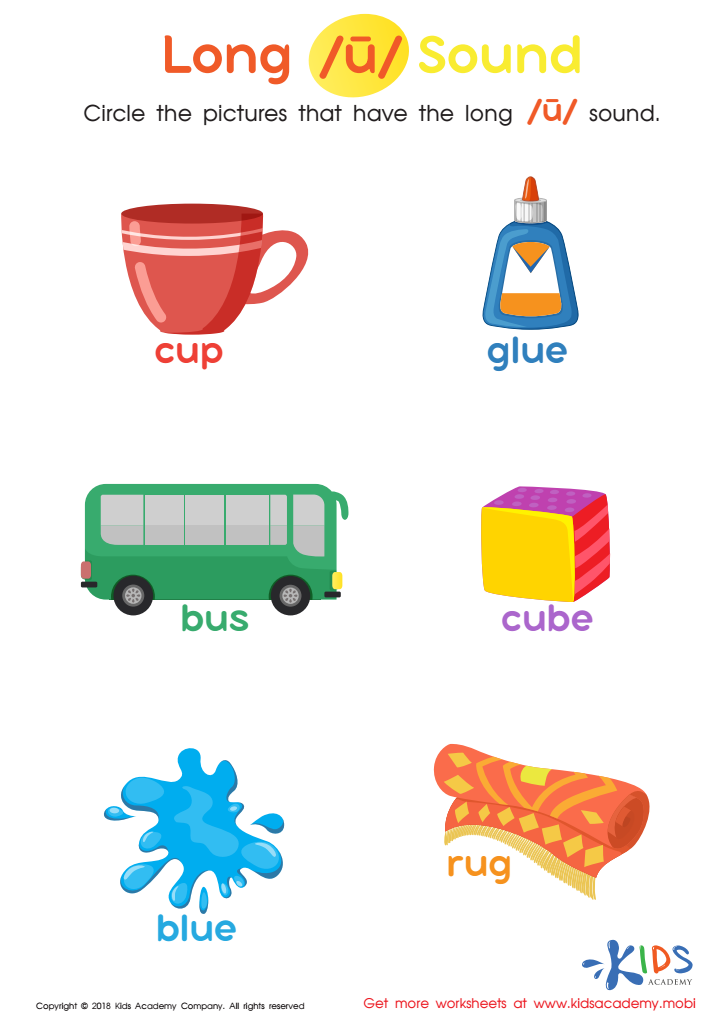
Long «u» Sound Worksheet
This fun and engaging free PDF worksheet teaches kids to differentiate between long and short «u» sounds. Through tracing circles around the correct words, they'll practice their fine motor skills while also recognizing patterns (silent-e for «ū» sound) in closed-syllable words. Bright and cheery pictures make it a great confidence booster for new readers!
Long «u» Sound Worksheet
Worksheet
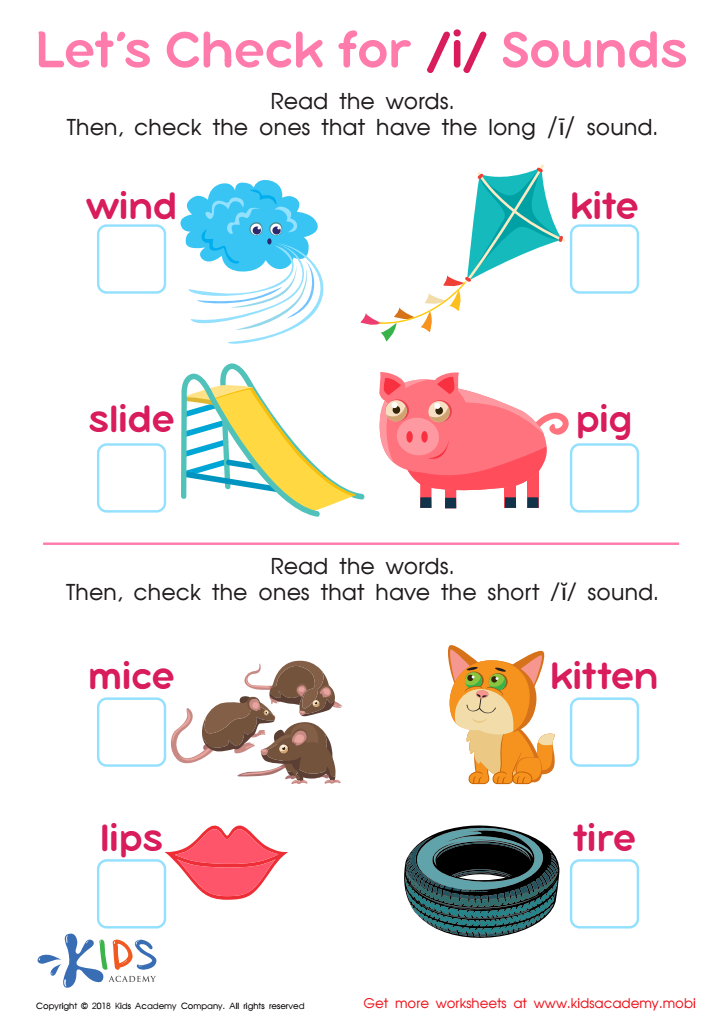
Let's Check for «i» Sounds Worksheet
This fun worksheet with pictures boosts phonics skills - differentiating between long «ī» and short «i» sounds in 1- and 2-syllable words. Kids use picture clues to read words, then check off the correct ones. It's a great way for new readers to practice early reading skills and find success on their own.
Let's Check for «i» Sounds Worksheet
Worksheet
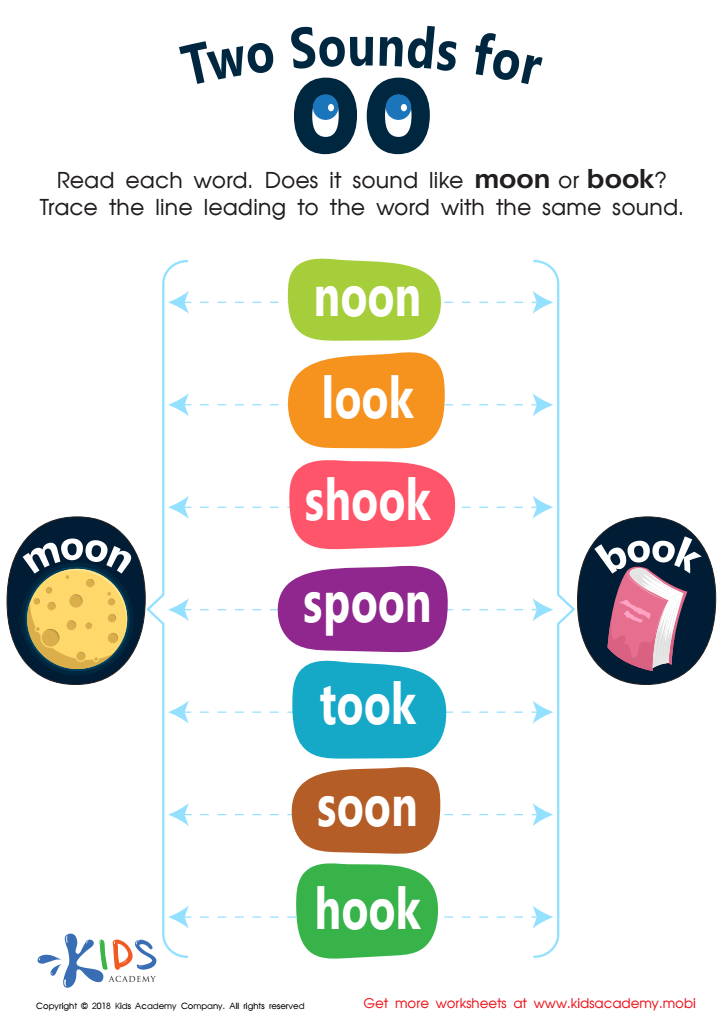
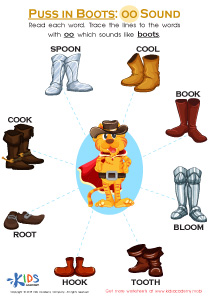
Two Sounds for OO Worksheet
This worksheet helps kids learn the different sounds of the -oo digraph. They match words based on whether they sound like moon or book, plus practice fine motor skills tracing lines. Fun and educational!
Two Sounds for OO Worksheet
Worksheet
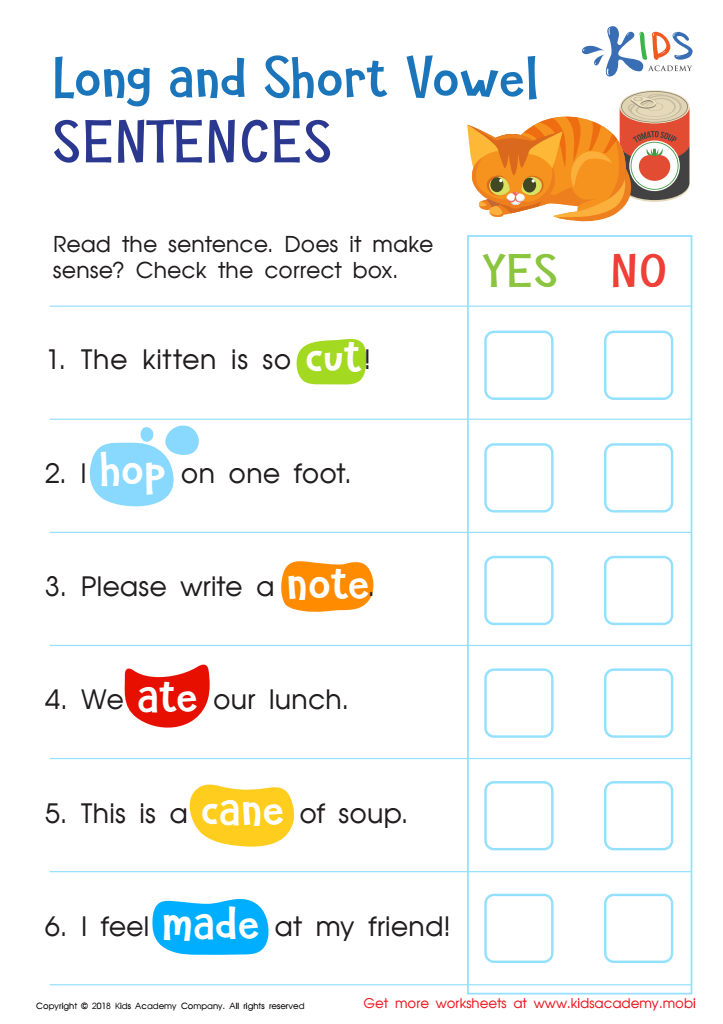
Long and Short Vowel Sentences: Assessment Worksheet
This printable worksheet helps kids practice differentiating between short and long vowel sounds. They'll use context clues to figure out which words make sense in simple sentences. A great way to build reading and writing skills!
Long and Short Vowel Sentences: Assessment Worksheet
Worksheet
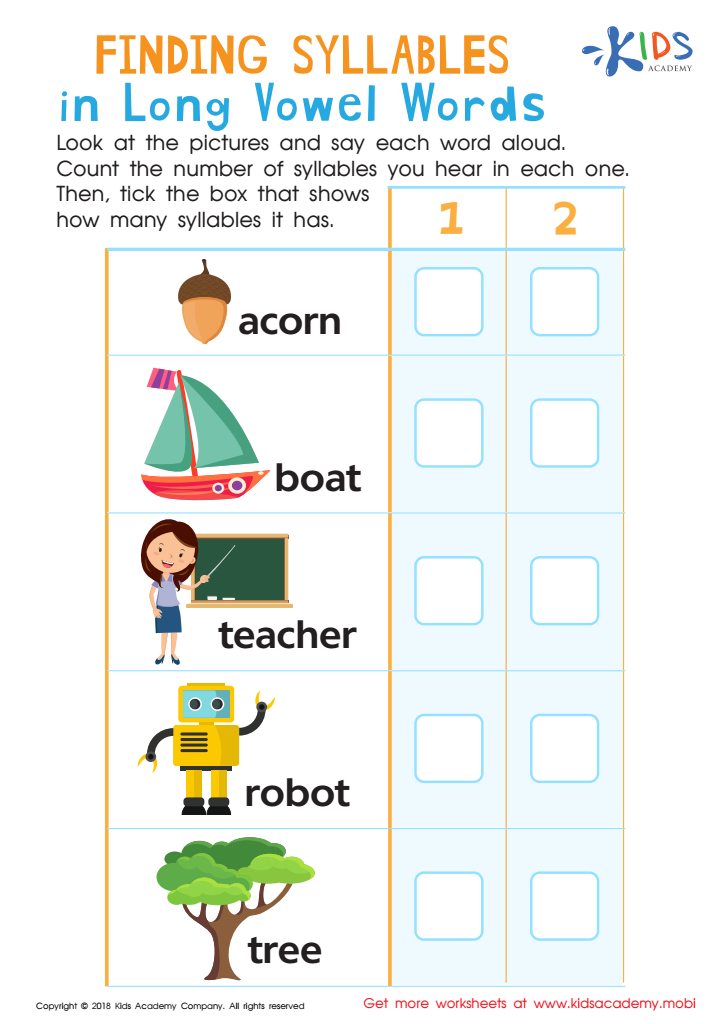
Finding Syllables in Long Vowel Words Worksheet
Help your kids identify objects and better count syllables in words. Look at the printout images with them and have them say each word out loud. Ask them to count syllables and tick the box with the correct number. With this worksheet, your kids will become more skilled.
Finding Syllables in Long Vowel Words Worksheet
Worksheet
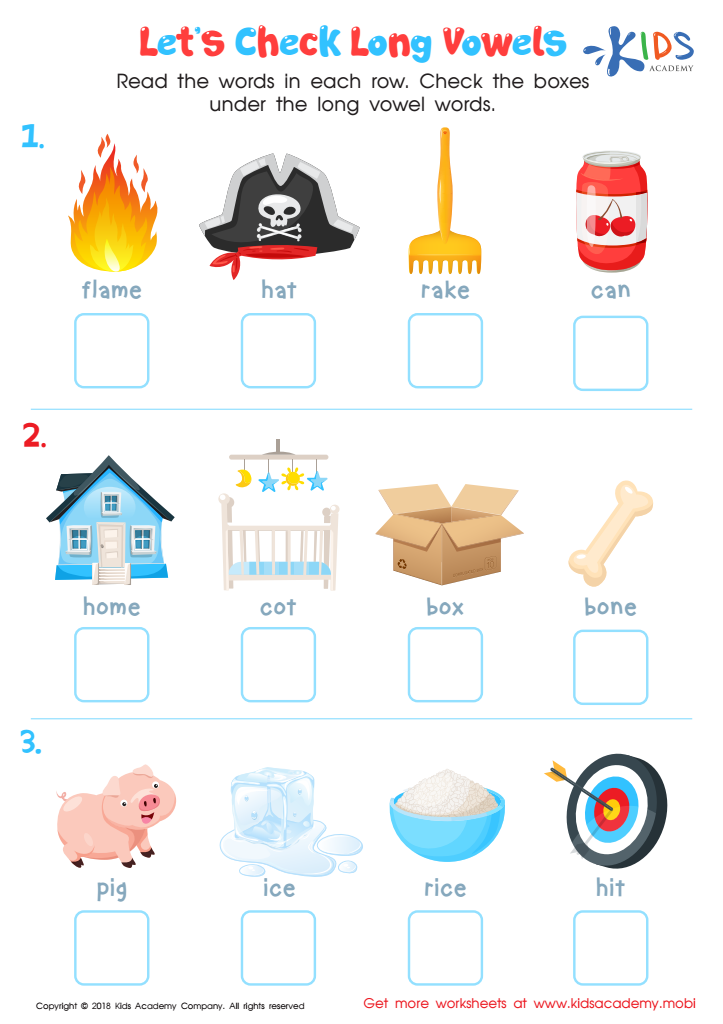
Let's Check Long Vowels: Assessment Worksheet
This worksheet helps your child identify objects and learn long vowel sounds. Ask them to say the names of the four objects in each row. Then, help them check the boxes to confirm they know the long vowel sounds. This will help them develop their reading skills.
Let's Check Long Vowels: Assessment Worksheet
Worksheet
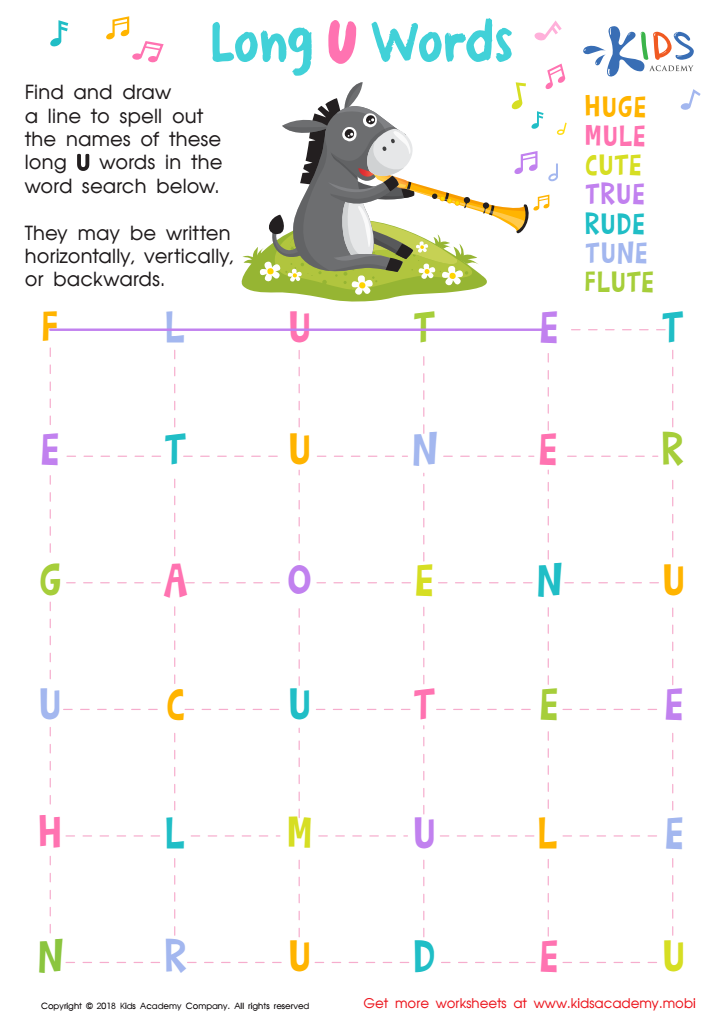
Long /u/ Words Worksheet
Your child needs to learn phonetics to enunciate and differentiate words. This fun worksheet encourages them to find and draw lines connecting the long 'U' words in the word search. Help them read the words on the right side of the picture, then look for them in the word search (horizontally, backwards or vertically).
Long /u/ Words Worksheet
Worksheet
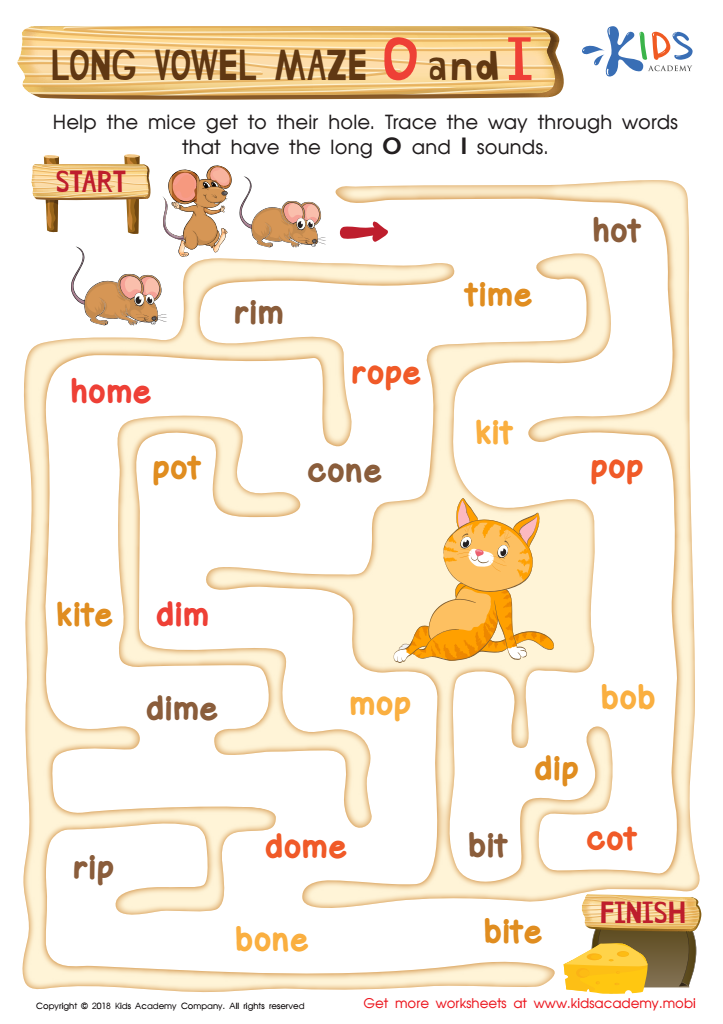
Long Vowel Maze /o/ and /i/ Worksheet
Help your new readers have fun and build their sight word vocabulary! Guide the mice to their prize cheese by having them trace the route on the worksheet, using words with the long o and long i sounds. But watch out for the kitty!
Long Vowel Maze /o/ and /i/ Worksheet
Worksheet
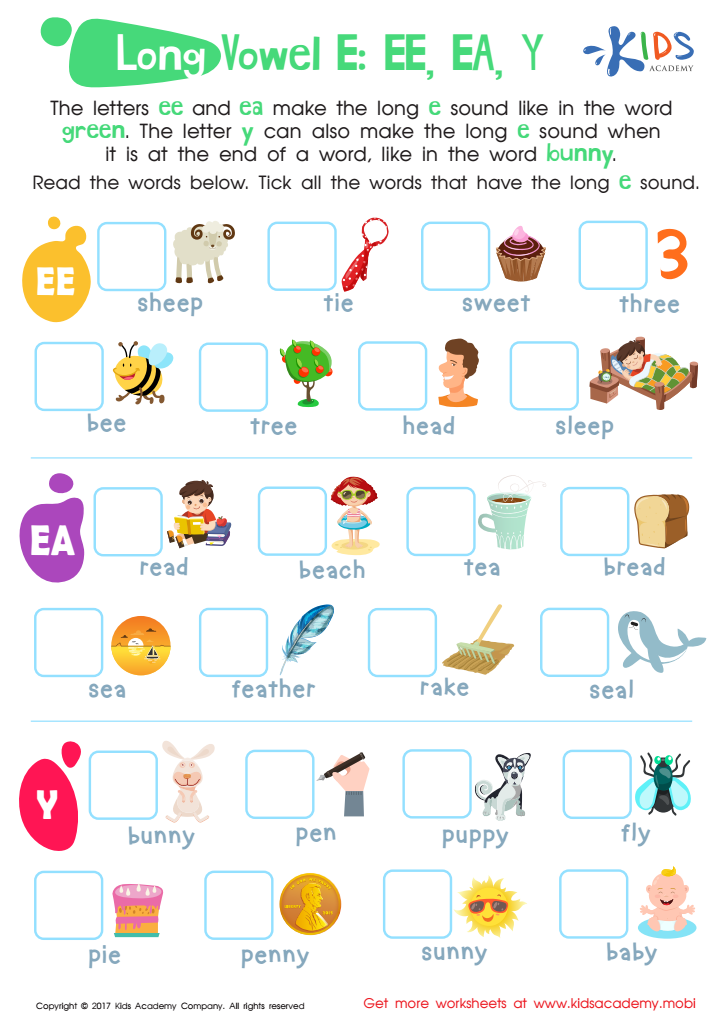
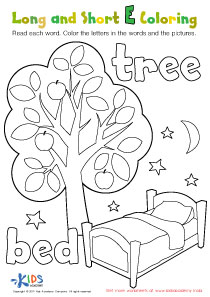
Long Vowel E Printable
Help your child learn to read and spell with long vowel E with this printable worksheet. It'll teach them different spellings of E and how to recognize words with similar spellings that might not sound the same. They'll become a pro in no time!
Long Vowel E Printable
Worksheet
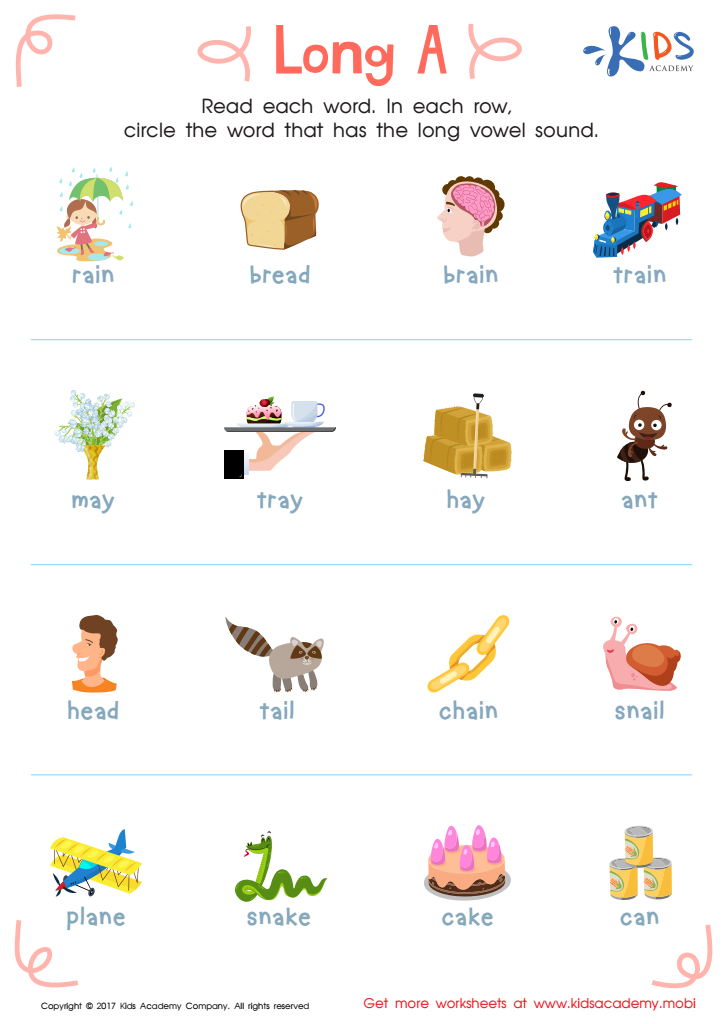
Join Kids Academy for Free
Who is primarily going to use this learning content?



Normal long vowels play a crucial role in the language development of children aged 7-9, and both parents and teachers should prioritize their understanding and teaching. At this age, children are refining their reading and writing skills, transitioning from simple phonics to more complex literacy concepts. Long vowels, which are often pronounced like their letter sounds (e.g., 'a' as in "cake," 'e' as in "meet"), are foundational for fluent reading and spelling.
Caring about long vowels aids in phonemic awareness, enhances vocabulary, and supports comprehension. As children encounter longer texts, recognizing and applying long vowel patterns enables them to decode new words with confidence. This matures their reading fluency, allowing for better understanding and engagement with literature and educational materials.
Additionally, proficiency with long vowels encourages children to write more effectively. They begin to express ideas more clearly and creatively when they have a solid grasp of vowel sounds, leading to improved writing skills.
Ultimately, a strong foundation in long vowels sets children on the path to literacy success, empowering them academically and socially. For parents and teachers, fostering this understanding is essential for helping young learners thrive in their reading and writing journeys.