Normal Phonics Worksheets for Ages 7-9 - Page 6
123 filtered results
-
From - To

Rhyming Words Rhyming Worksheet
 Assign to My Students
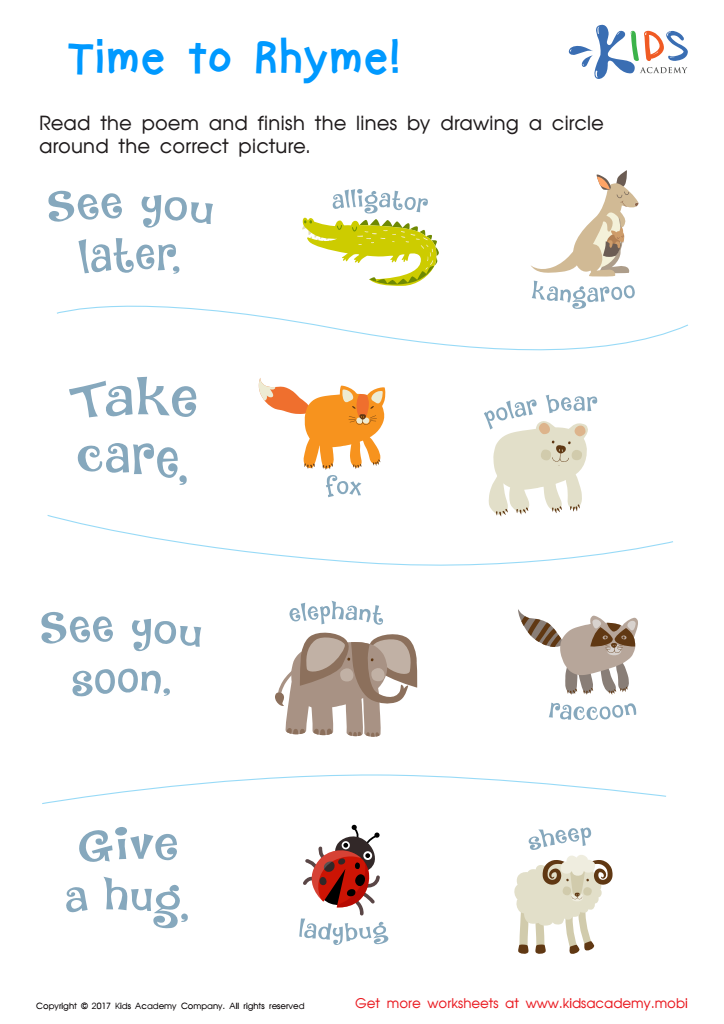
Time to Rhyme Rhyming Worksheet
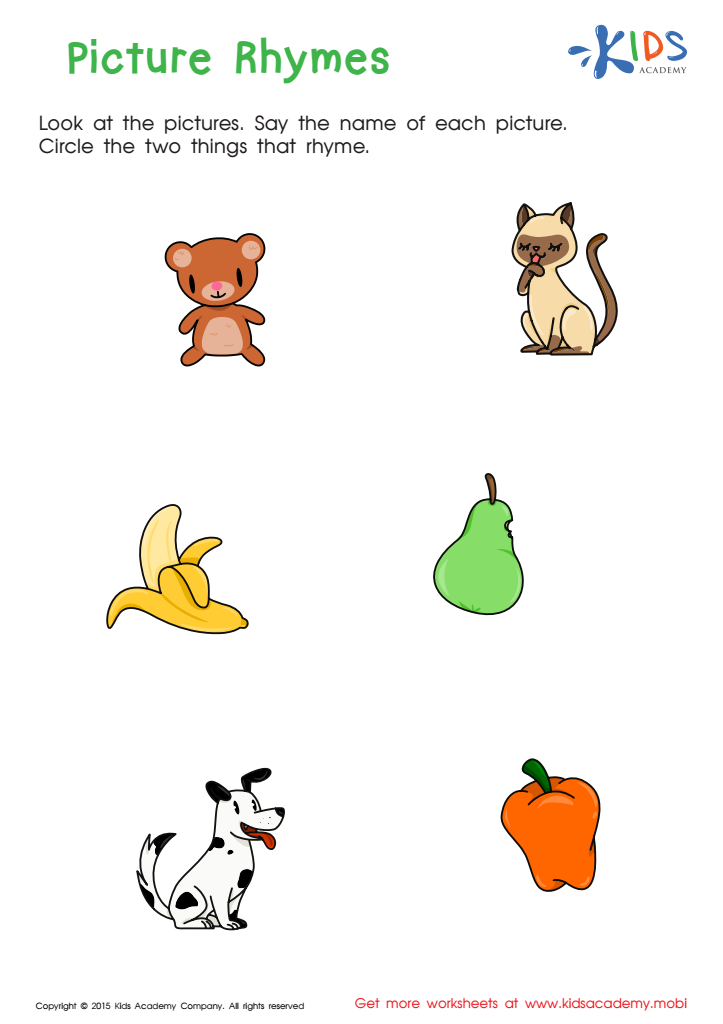
First Words: Picture Rhymes Worksheet








Normal Phonics for ages 7-9 is crucial because it builds foundational literacy skills necessary for academic success and lifelong learning. At this age, children are transitioning from learning to read to reading to learn. A strong grasp of phonics enables them to decode unfamiliar words, improving their reading fluency and comprehension. This vital skill is not just about recognizing words; it fosters confidence and encourages a love for reading.
Parents and teachers should care about phonics instruction as it directly impacts children's ability to grasp more complex texts encountered in school subjects, especially in science and math. Effective phonics programs can help identify and address reading difficulties early, preventing long-term challenges like dyslexia or reading anxiety.
Moreover, engaging with Normal Phonics helps create a supportive home or classroom environment where collaborative learning can flourish. Activities like phonics games can be enjoyable, reinforcing skills while building stronger bonds between parents, teachers, and students.
Ultimately, fostering phonics skills in children age 7-9 lays the groundwork not only for future academic achievement but also for better communication skills and expanded vocabulary, contributing positively to their overall development and self-esteem.







