Normal Silent Vowels Worksheets for Ages 7-9
5 filtered results
-
From - To
Enhance your child’s reading and spelling skills with our Normal Silent Vowels Worksheets for Ages 7-9. Specifically designed for early learners, these engaging worksheets help students identify and understand silent vowels within words, making reading more fluid and precise. Through a variety of exercises and practice activities, children will develop a stronger grasp of English phonics, improve their vocabulary, and boost their confidence. Perfect for classroom and home use, these printable resources offer a fun and interactive way to master silent vowels, laying a foundation for future literacy success. Unlock the power of silent vowels today!
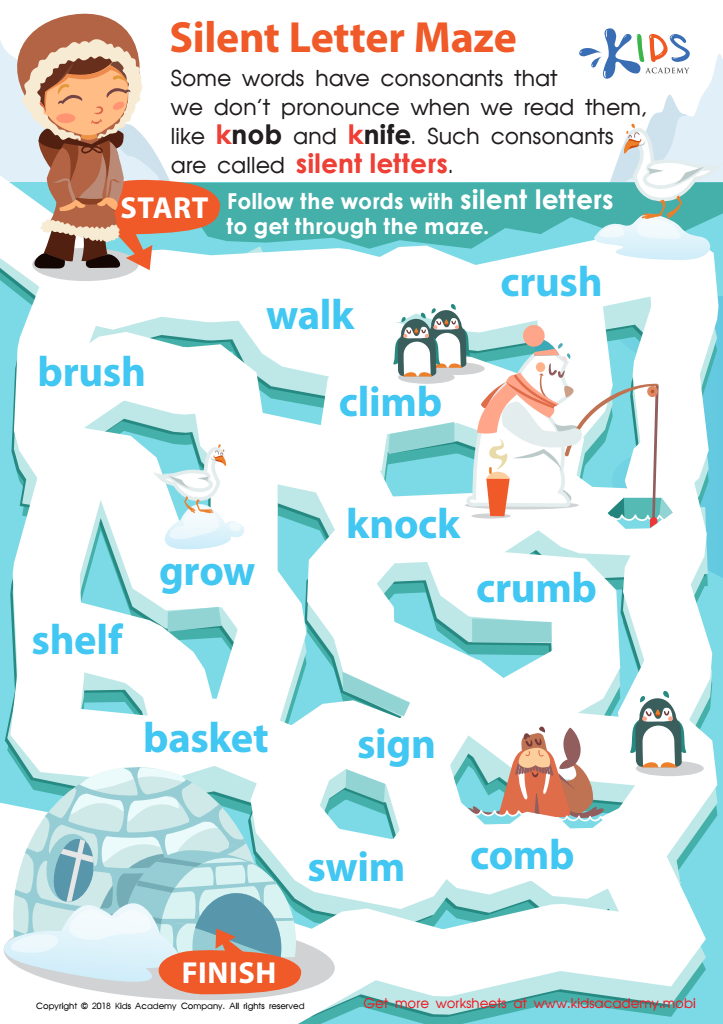
Silent Letter Maze Worksheet
 Assign to My Students
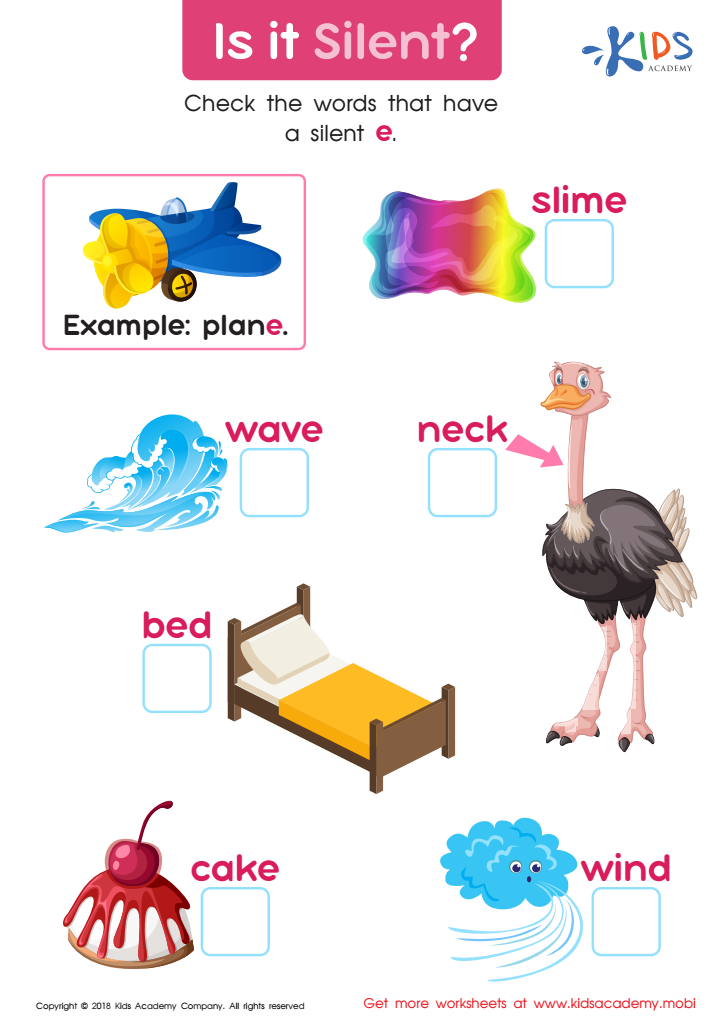
Is It Silent? Worksheet
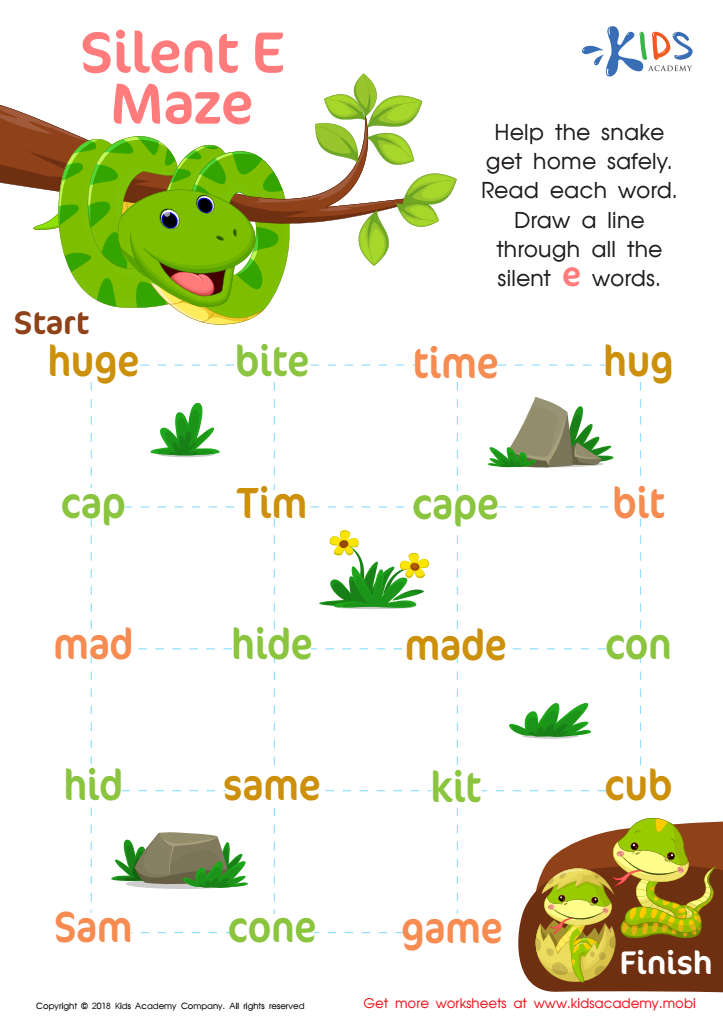
Silent E Maze Worksheet
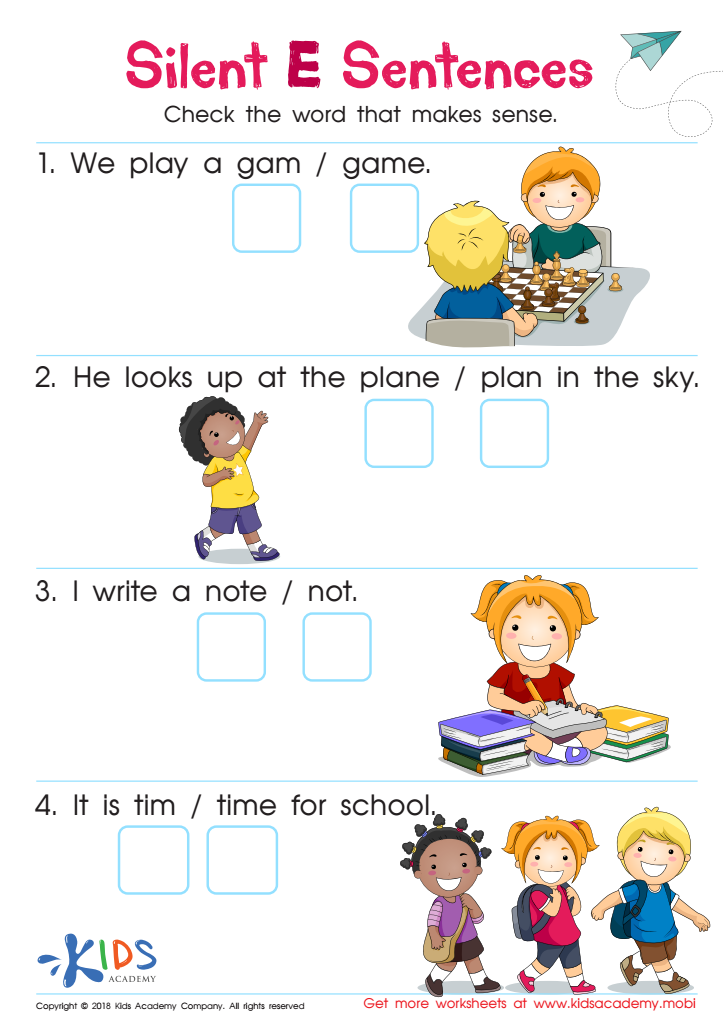
Silent E Sentences Worksheet
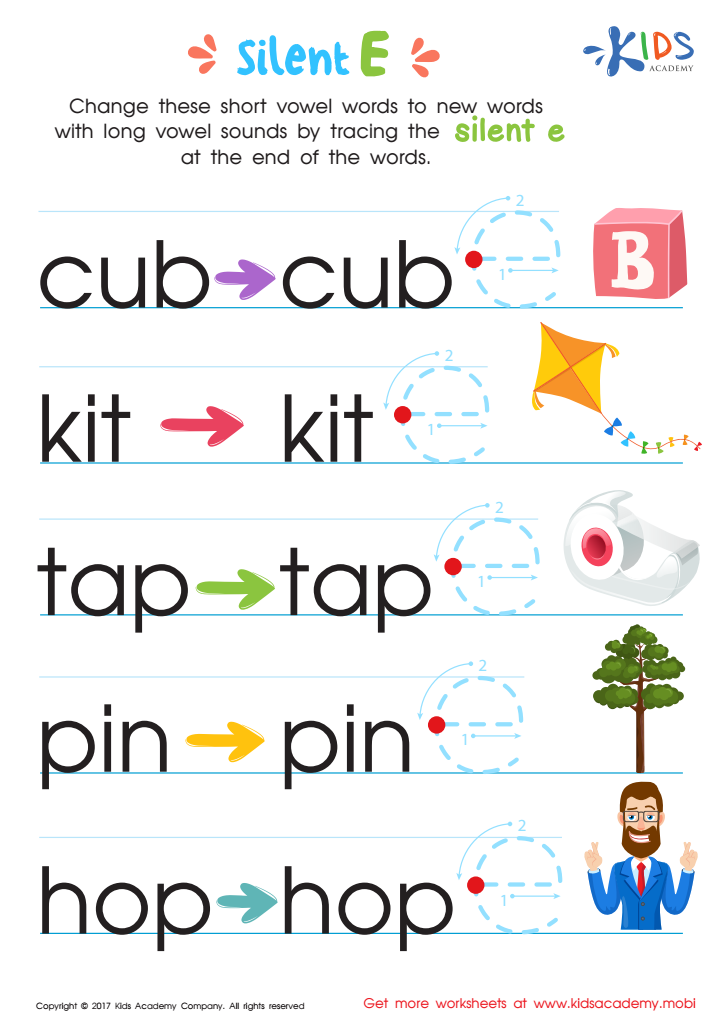
Silent E Words Worksheet


Normal silent vowels refer to vowels in words that make almost no sound when pronounced, yet they play an essential role in the word construction and meaning. For children aged 7-9, these silent vowels can be tricky to master but are an important component of literacy development. By understanding silent vowels, students improve their reading fluency, spelling accuracy, and overall comprehension.
Parents and teachers should care about normal silent vowels because early recognition and proper handling of these can significantly impact a child's literacy journey. For instance, knowing why an 'e' at the end of 'kite' and 'bake' remains silent but makes the preceding vowel sound louder can help children decode complex words with ease. It refines their understanding of phonics—a foundational reading skill.
Additionally, teaching silent vowels at an early age sets a strong groundwork for more advanced linguistic concepts, including word etymology and morphology. According to research, these literacy skills, when developed early, contribute not just to academic success but also to effective communication skills later in life.
By creating engaging and supportive learning environments, parents and teachers empower children to embrace these subtly silent letters and become confident readers and writers, laying the groundwork for long-term educational achievements.