Reading comprehension Normal Building Vocabulary Worksheets for Ages 8-9
40 filtered results
Difficulty Level
Grade
Age
-
From - To
Subject
Activity
Standards
Favorites
With answer key
Interactive
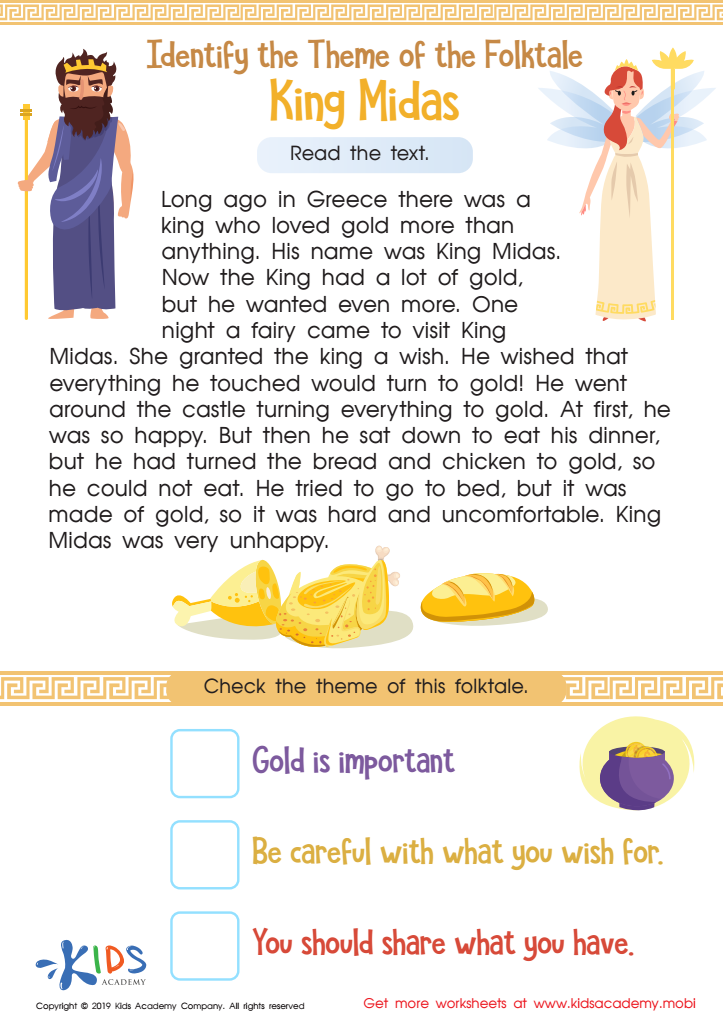
King Midas Worksheet
Read the ancient Greek history of King Midas to your kids. If they're into Greek gods and mythology, they'll be excited to complete the exercise. Read the text carefully, and if needed, twice. Help your kids locate the story's theme at the bottom of the page. 80 words.
 Assign to My Students
King Midas Worksheet
Worksheet











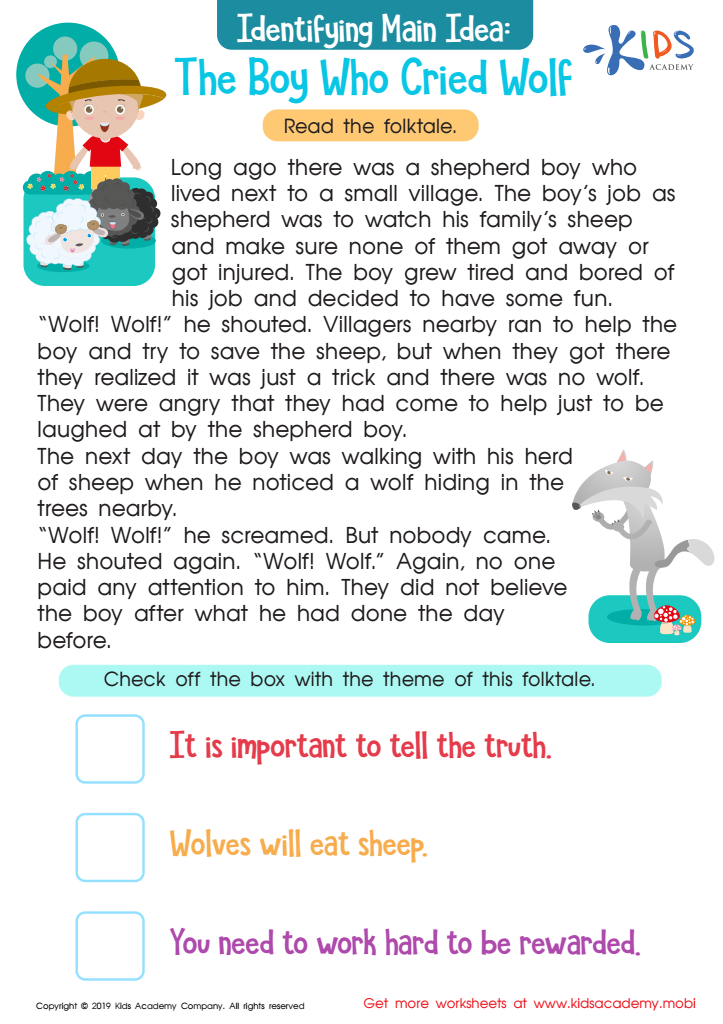
The Boy Who Cried Wolf Part 2 Worksheet
Kids love story time - no doubt they know their favorites! This worksheet tells a story with a theme or main idea. Read it carefully with your kids and ensure they understand every word. Then, help them answer the simple questions at the bottom of the page.
The Boy Who Cried Wolf Part 2 Worksheet
Worksheet
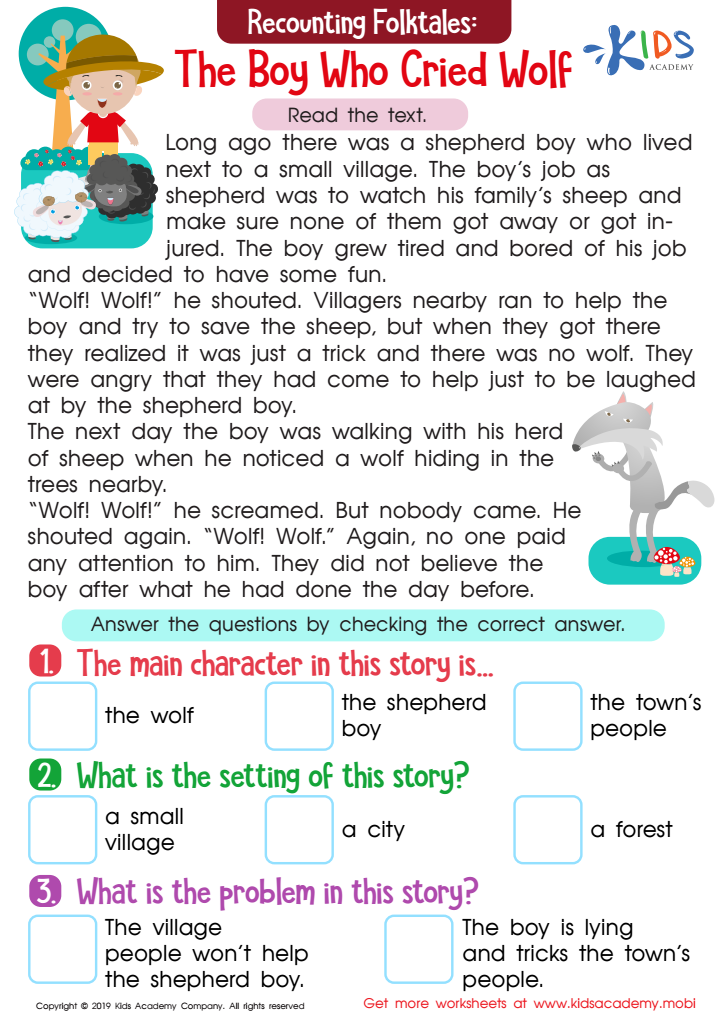
The Boy Who Cried Wolf Part 1 Worksheet
Storytime can be your kid's favorite part of the day. Ask them what their favorite stories are, then read the text in the printout. Read along with them, making sure they understand each word. At the end, go over the questions and have them check the correct answers.
The Boy Who Cried Wolf Part 1 Worksheet
Worksheet
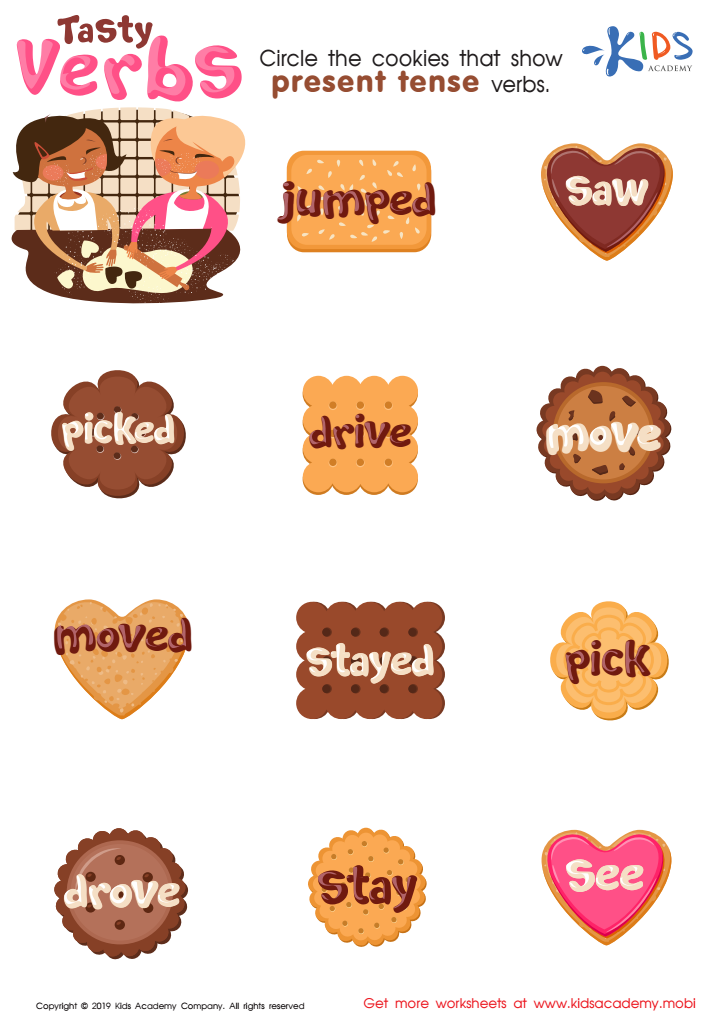
Tasty Verbs Worksheet
Verbs can show actions, past events, and future happenings. Master present tense verbs with this cookie-themed worksheet! Read the verbs on each cookie and help kids form sentences using the word in present tense. Circle the correct answers for each cookie. Give them a tasty treat while learning something new!
Tasty Verbs Worksheet
Worksheet
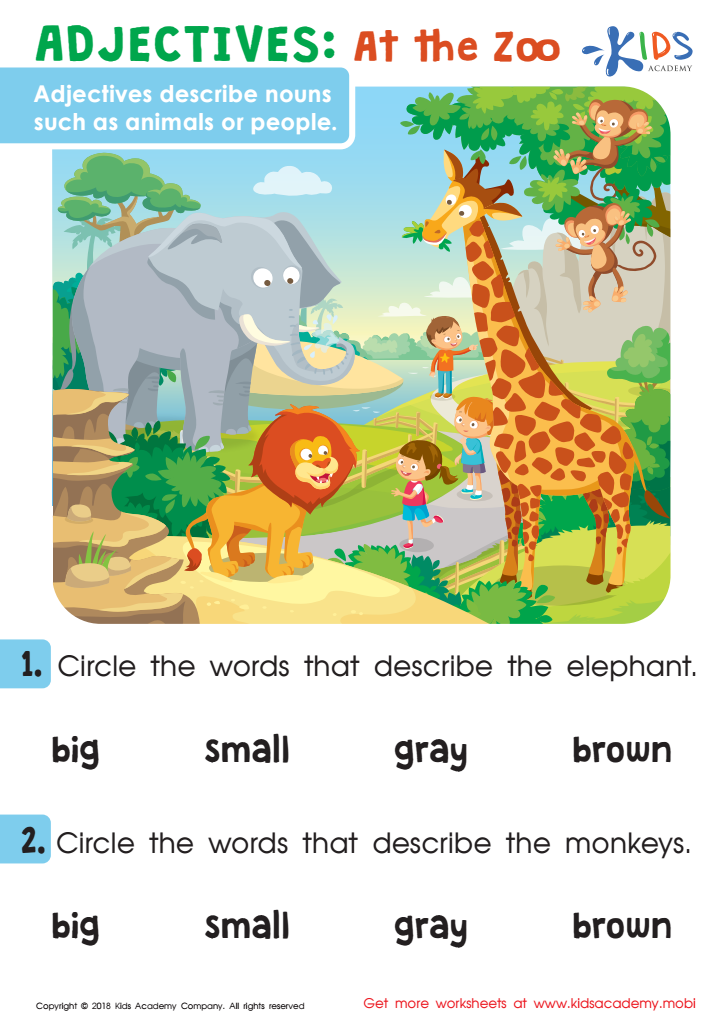
Adjectives: At The Zoo Worksheet
Take your kids to the zoo and ask them about their favorite activities and animals. This worksheet is a great way for kids to learn about adjectives. Explain that adjectives describe nouns like people or animals (e.g. big, tall, dark). Look at the printout with your kids and help them circle words that describe the animals in the picture.
Adjectives: At The Zoo Worksheet
Worksheet
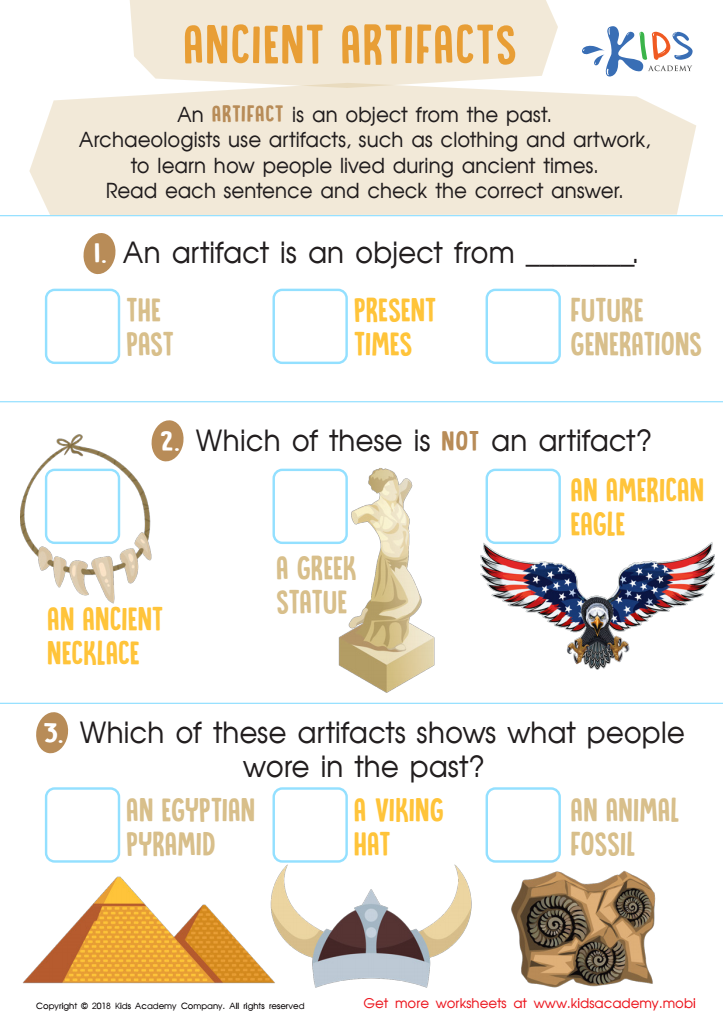
Ancient Artifacts Worksheet
This free worksheet helps kids understand ancient artifacts, from statues to necklaces to fossils. They'll read comprehension questions and select answers from multiple choice options, with pictures to help them grasp the concept. It's a great way for children to learn about artifacts and what they may look like.
Ancient Artifacts Worksheet
Worksheet
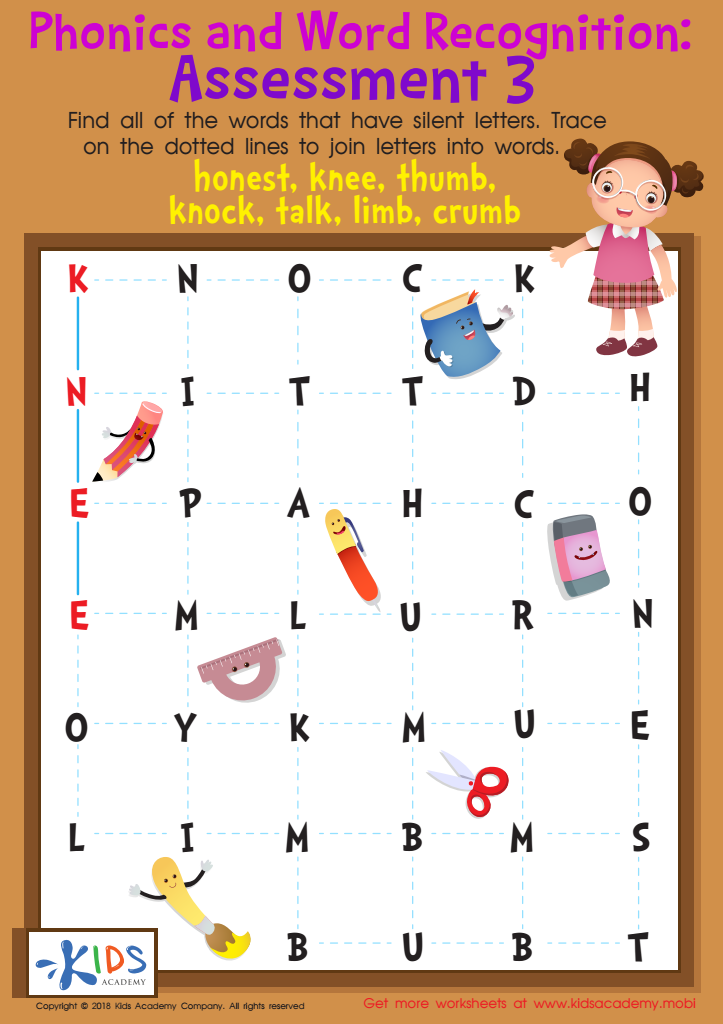
Phonics and Word Recognition: Assessment 3 Worksheet
Silent letters can be tricky for kids learning to read and write. Show them how they work with words like 'knee' and 'dumb'. Then, challenge them to come up with their own. Give them a worksheet with silent letters and trace the lines to join the letters into words.
Phonics and Word Recognition: Assessment 3 Worksheet
Worksheet
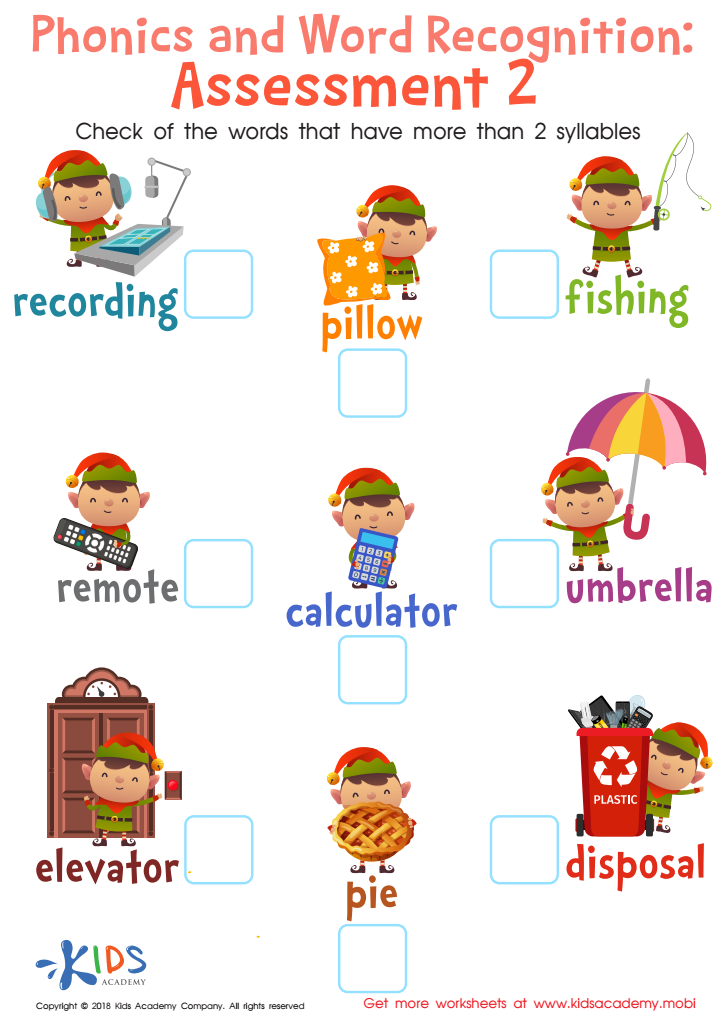
Phonics and Word Recognition: Assessment 2 Worksheet
Help your kids learn proper pronunciation by counting syllables. Most words they'll encounter have 1-3 syllables, making them simple to say. Have them repeat the words in your worksheet after you. Focus on longer words with more than two syllables.
Phonics and Word Recognition: Assessment 2 Worksheet
Worksheet
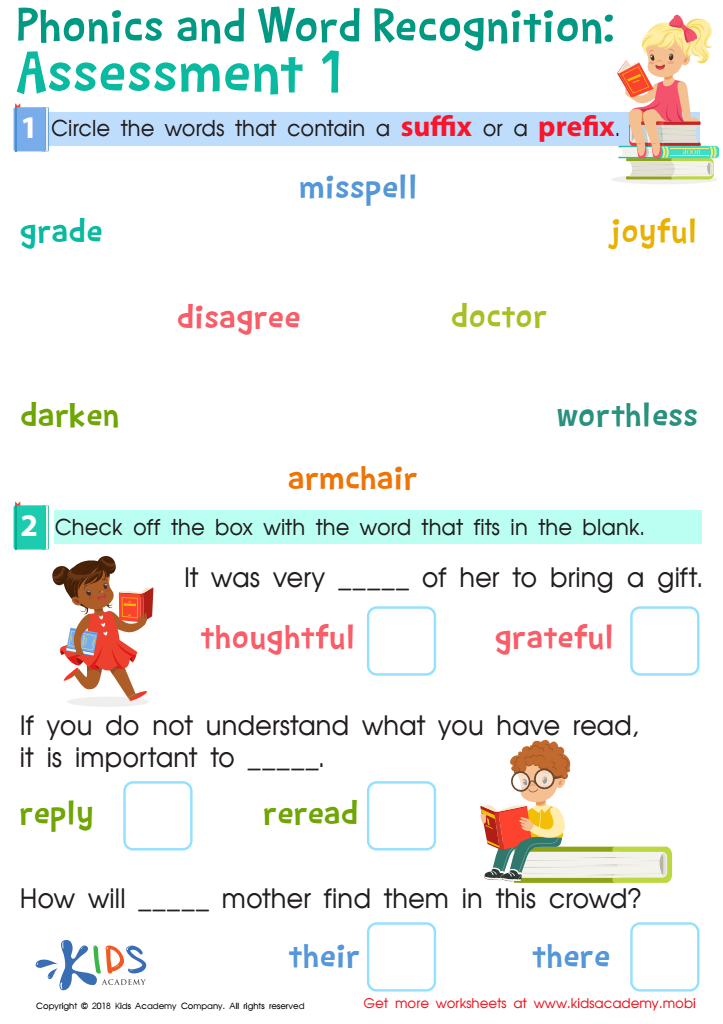
Phonics and Word Recognition: Assessment 1 Worksheet
Explain prefixes (words added to start of another word to give it a new meaning) and suffixes (added to end of word to change its meaning) to your kids with examples like 'unhappy' (prefix) and 'forgetful' (suffix). Now, help your child complete this worksheet, including circling words and checking boxes.
Phonics and Word Recognition: Assessment 1 Worksheet
Worksheet
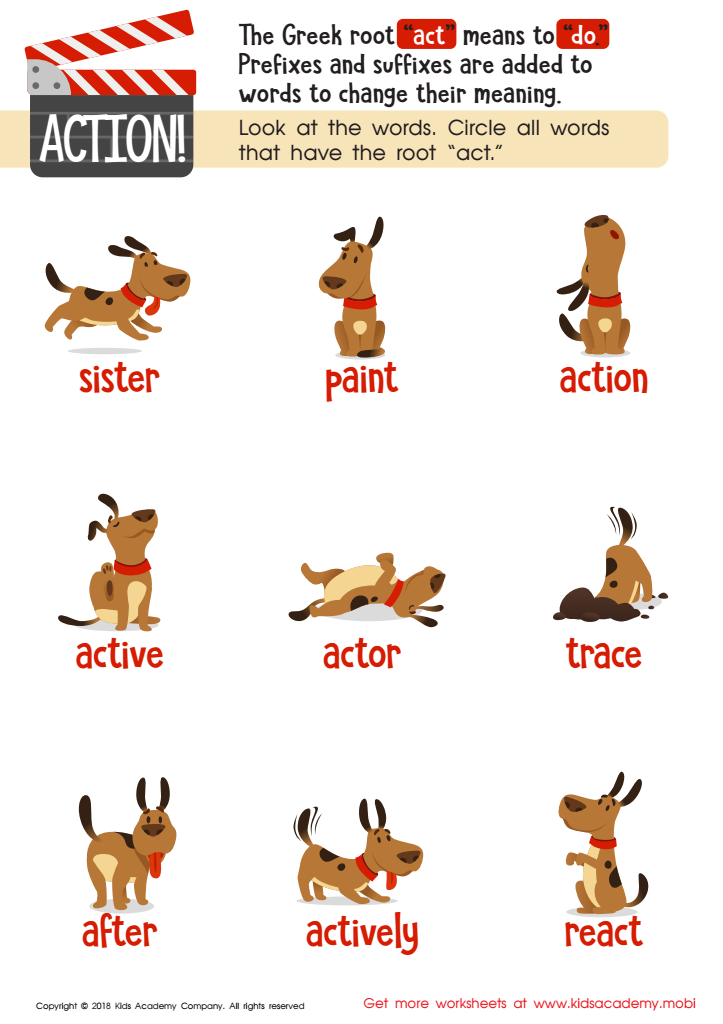
Action! Worksheet
Most English words are borrowed, and prefixes and suffixes are added to change the meaning. A popular prefix is 'act', from the Greek root meaning 'to do'. With your kids, look at the words in this worksheet and circle those with the root 'act'.
Action! Worksheet
Worksheet
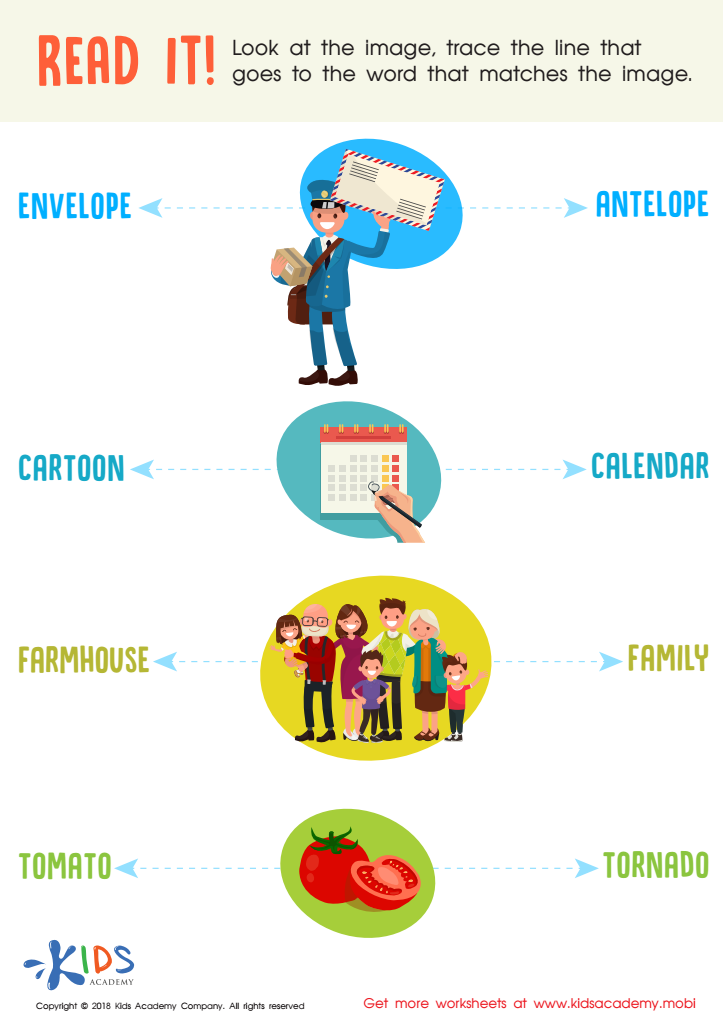
Read It! Worksheet
Point to each image on this worksheet, asking your child what it is. Read the 2 options then help your child trace the line to the correct word. It'll keep them engaged and provide visual stimulation.
Read It! Worksheet
Worksheet
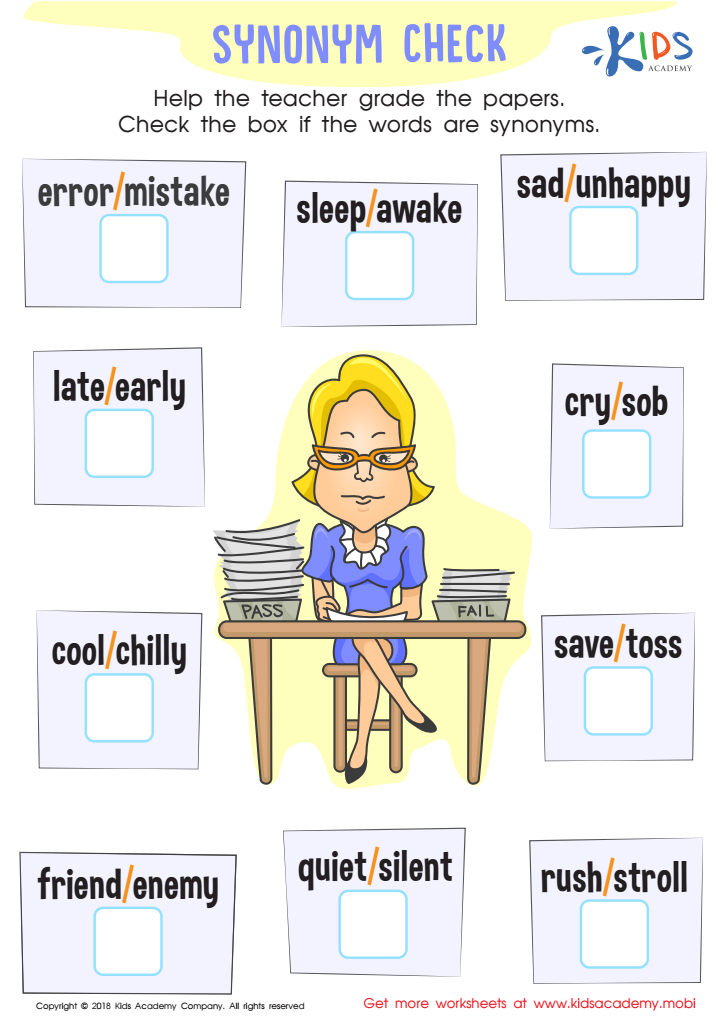
Synonym Check Worksheet
Ask your kids what a synonym is, and listen to their definitions. If needed, explain it's a word that has a similar meaning to another. Give examples, then ask them to do the same. For this worksheet, get them to help grade the papers. Have them check the boxes if the words are synonyms.
Synonym Check Worksheet
Worksheet
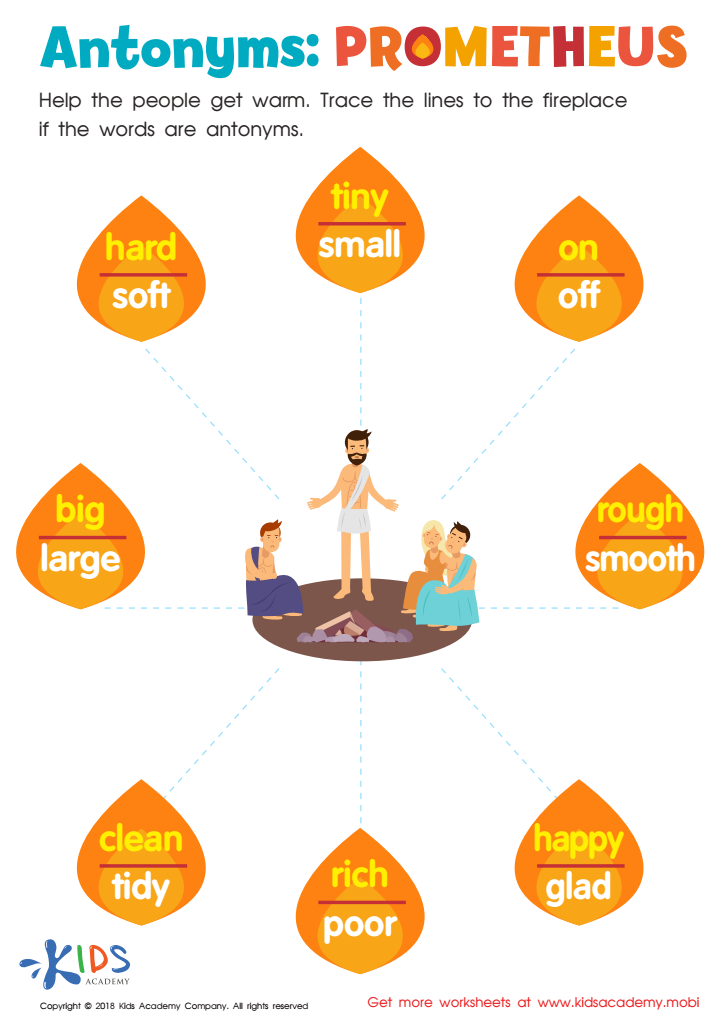
Antonyms: Prometheus Worksheet
Antonyms are words with opposite meanings to another. For example, the antonyms of 'good' are 'bad', 'poor' and 'wicked'. Ask your child to give you antonyms for 'Prometheus', which relates to fire. Invite your kids to trace the lines to the fireplace if the words are antonyms, helping the people in the tracing sheet get warm.
Antonyms: Prometheus Worksheet
Worksheet
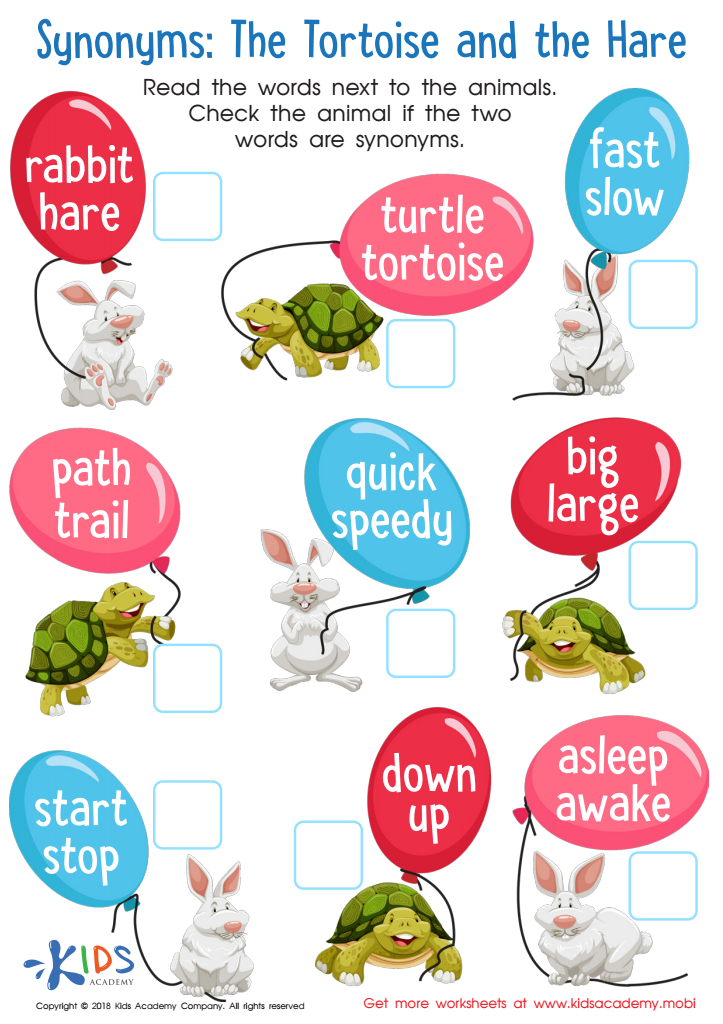
Synonyms: The Tortoise and Hare Worksheet
Help your kids identify words with similar meanings with this worksheet featuring a colourful picture of the Tortoise and the Hare. Show them how to check the boxes of animals with words that have similar meaning, then let them find more on their own. They'll love the challenge and you'll appreciate the educational value.
Synonyms: The Tortoise and Hare Worksheet
Worksheet
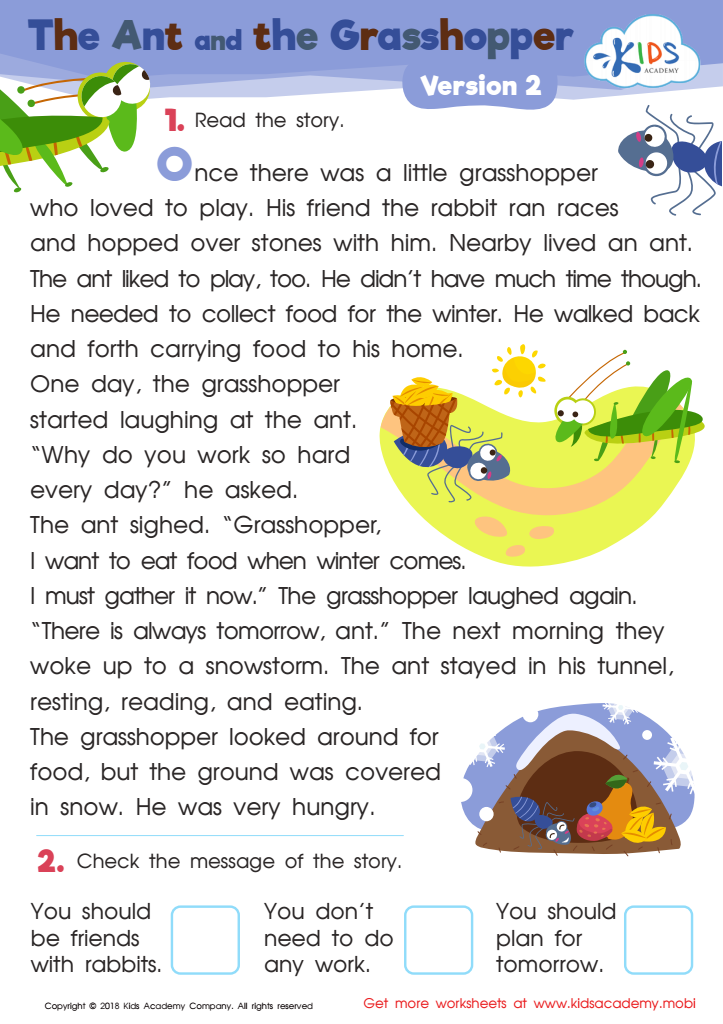
The Ant and The Grasshopper Version 2 Worksheet
Story time is a great way to bond with kids and share a fun story. The Ant and the Grasshopper is a classic with a lesson for everyone. Listen together and then ask your students what the message of the story was. Prompt them with choices from the worksheet and see which one they select. It's a great way to increase their vocabulary and help them learn important lessons.
The Ant and The Grasshopper Version 2 Worksheet
Worksheet
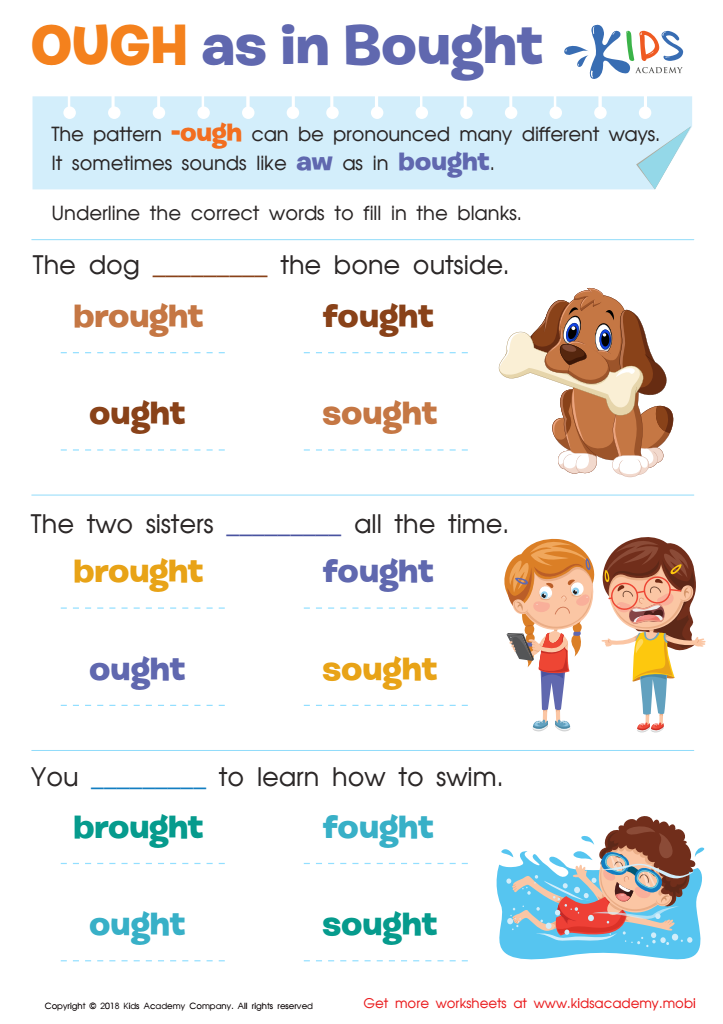
OUGH as in Bought Worksheet
Use this worksheet to teach your child the different pronunciations of -ough. For example, -ough can sound like ‘aw’ in ‘bought’. Ask your child to give more examples and help them underline the correct answers to fill in the blanks.
OUGH as in Bought Worksheet
Worksheet
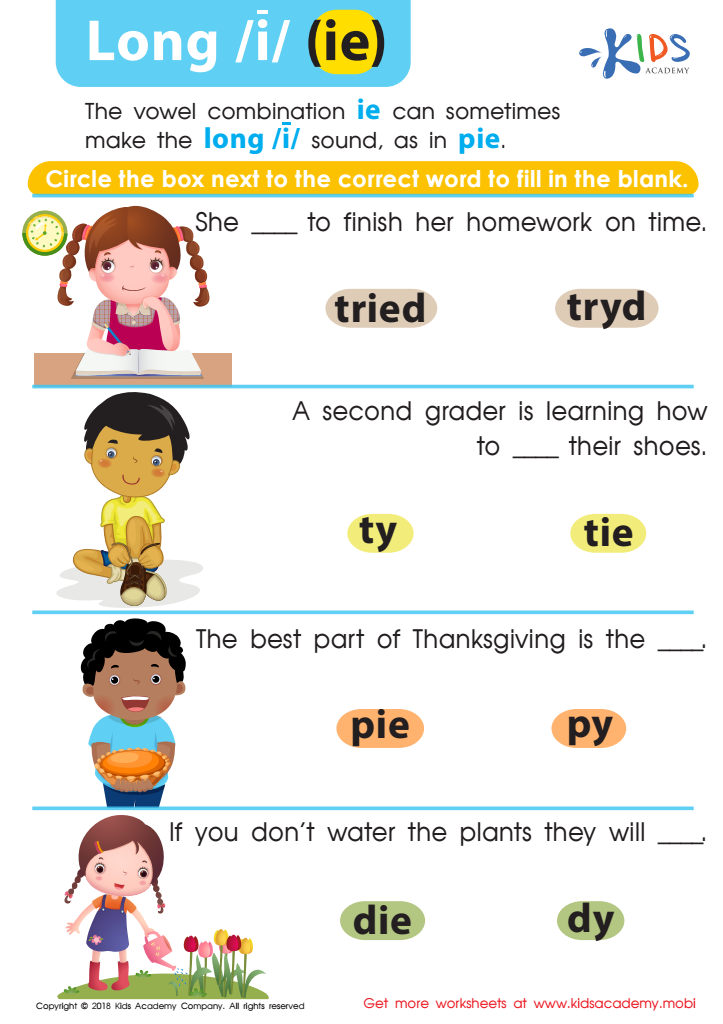
Reading: Long I and IE Worksheet
Have your child list words with the long /i/ sound (eg. 'pie'), and if needed, help them out with some examples. Read each word in the worksheet together and check their answer by having them circle the correct word.
Reading: Long I and IE Worksheet
Worksheet
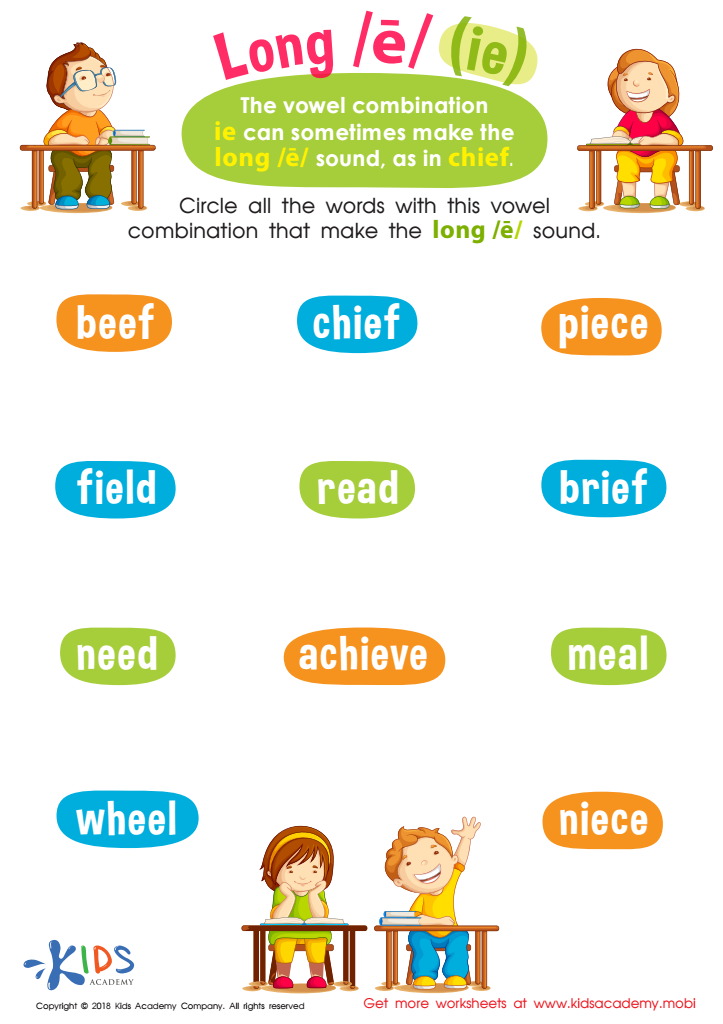
Reading: Long E and IE Worksheet
Ask your child to name some words with the long /e/ sound they hear every day. Then, read aloud all the words in the worksheet with them. Ask them to circle the words containing ie that make this sound.
Reading: Long E and IE Worksheet
Worksheet
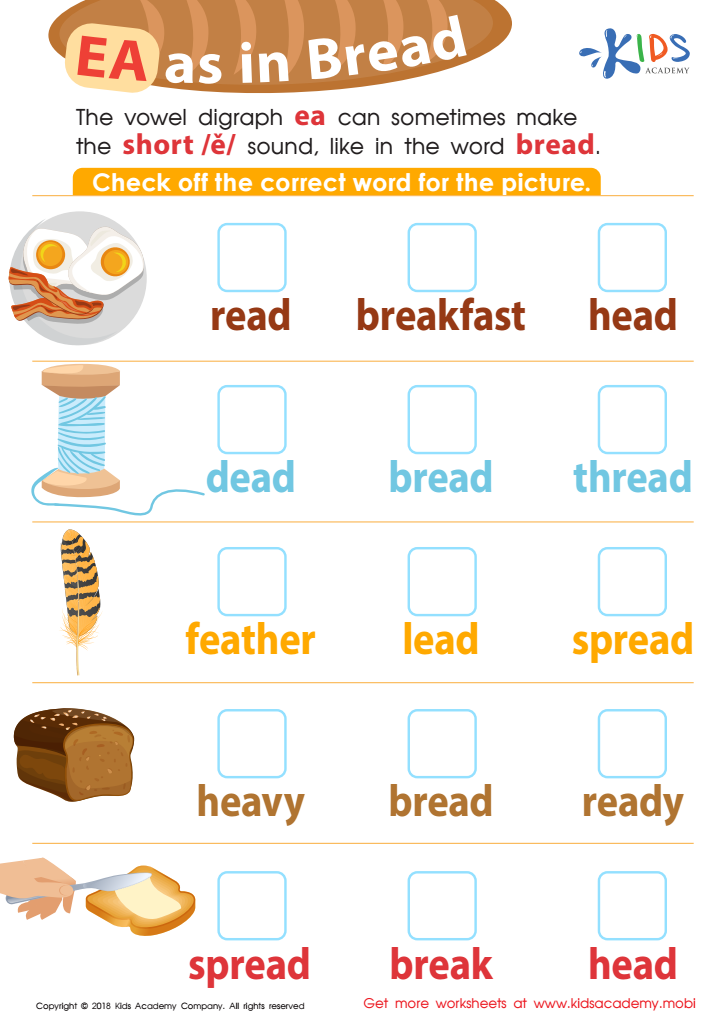
Reading: EA as in Bread Worksheet
The vowel digraph ea can be read in two ways. Examples of the long sound are "read" and "lead"; examples of the short sound are "bread" and "head". Ask your kids to give you more examples and then have them check off the correct word for the pictures on this worksheet. This will help them understand the ea sound.
Reading: EA as in Bread Worksheet
Worksheet
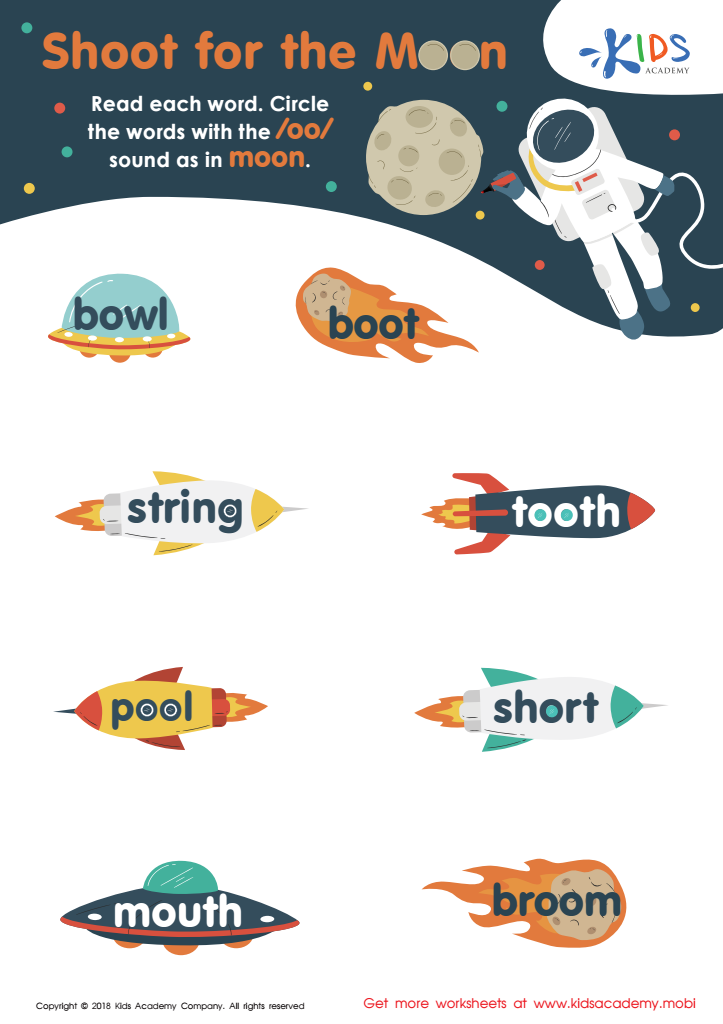
Reading: Shoot for the Moon Worksheet
Ask your kids if they can name any common words with the /oo/ sound. Read each word with them and help them pronounce it. Then, have them circle the words that have the /oo/ sound as in moon.
Reading: Shoot for the Moon Worksheet
Worksheet
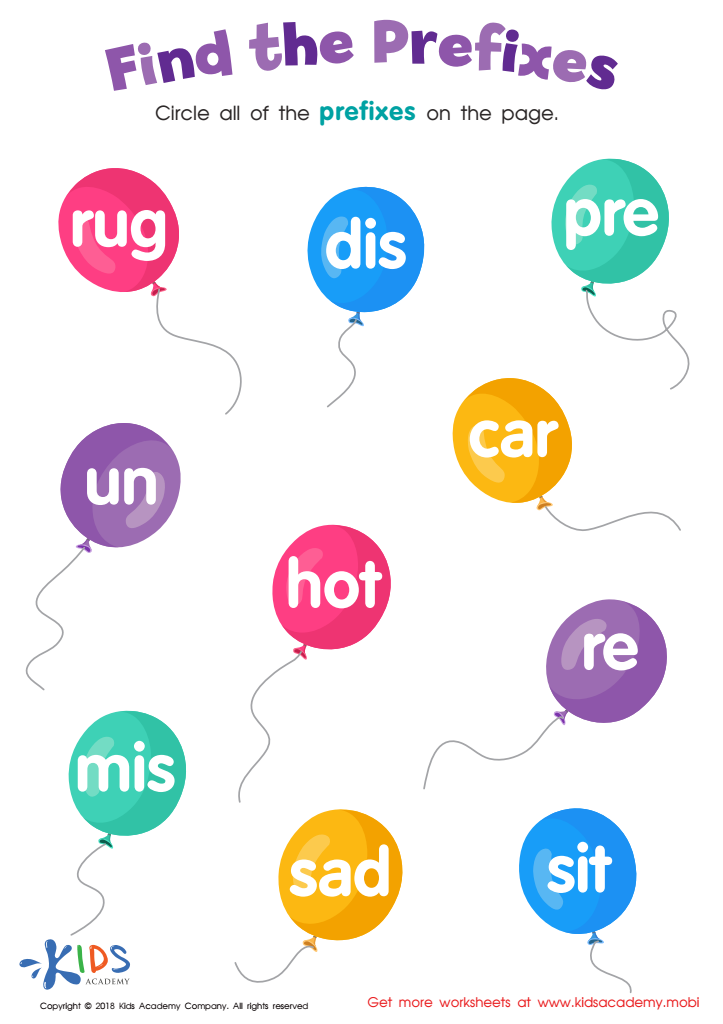
Reading: Find the Prefixes Worksheet
Students are asked to circle all prefixes on this worksheet and brainstorm a list of words that have them. It's a great tool for teaching vocabulary and helps students understand new and unfamiliar words by recognizing how prefixes change meaning.
Reading: Find the Prefixes Worksheet
Worksheet
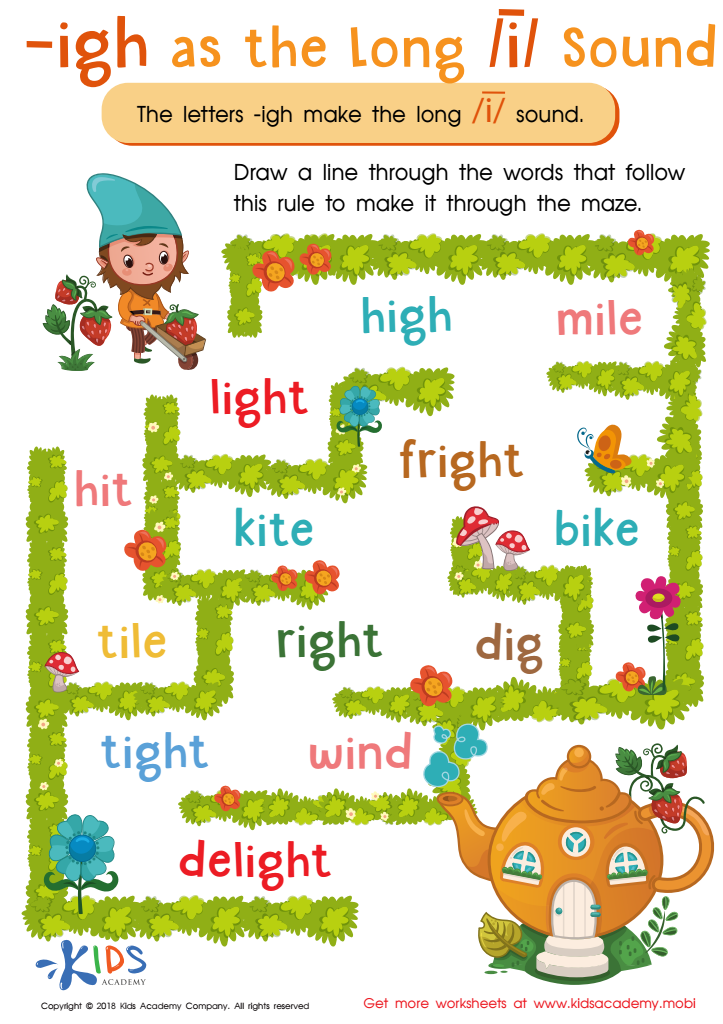
Reading: IGH as Long I Worksheet
Kids can have fun and learn with this maze! They'll look for and read words with the 'long I' sound spelled 'igh'. Most words ending with 'T' have this spelling. Decode words while learning about long vowel sounds and their spellings.
Reading: IGH as Long I Worksheet
Worksheet
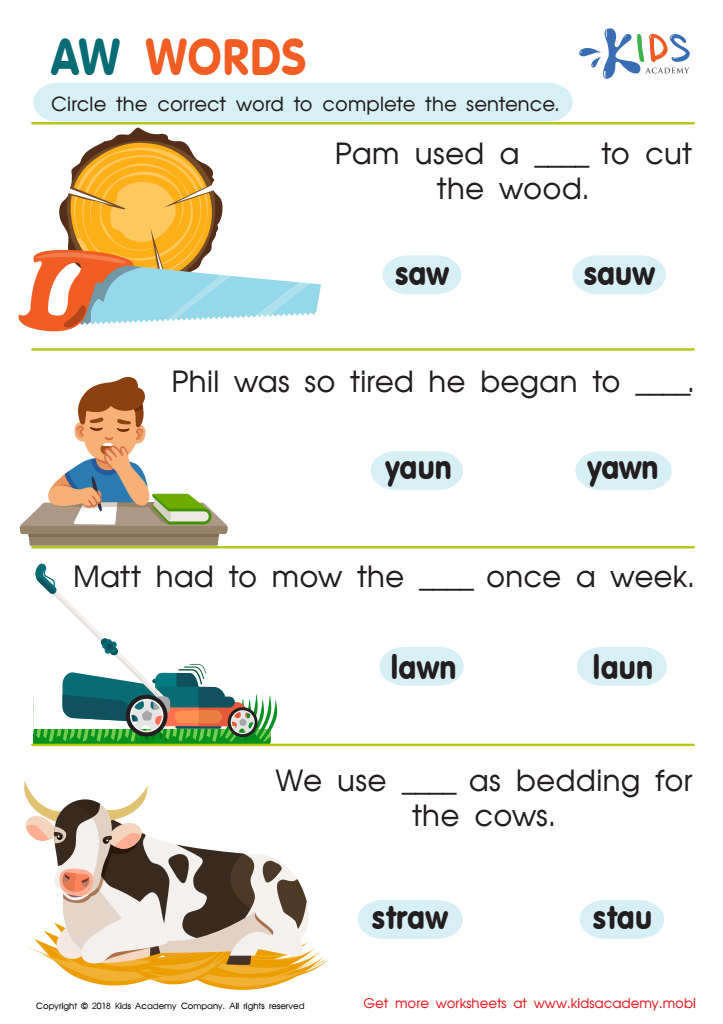
Reading: AW Words Worksheet
Practice decoding the /aw/ digraph with this printable. Students read sentences and select the word with the correct spelling to complete each one. Note, /aw/ is sometimes spelled /au/, so this worksheet helps prevent confusion. Have fun, and practice hard!
Reading: AW Words Worksheet
Worksheet
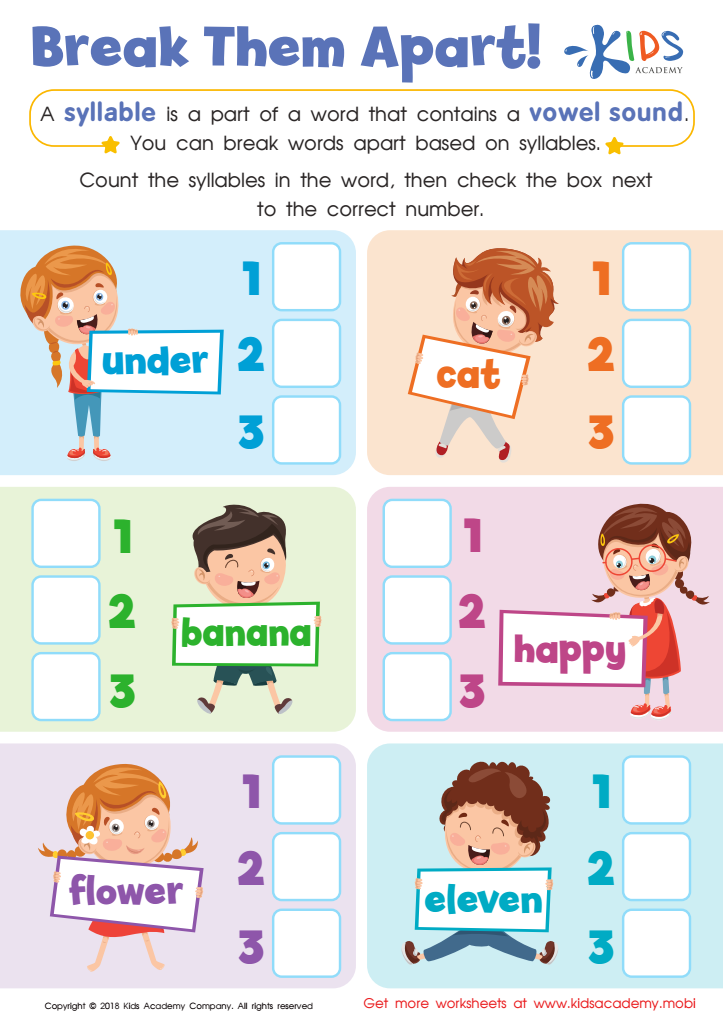
Reading: Break Them Apart Worksheet
See if students understand syllables with this fun worksheet. It teaches them that a syllable is a word part with a vowel sound. Kids read each word and choose how many parts it has. Doing this often helps them decode new words and gain confidence.
Reading: Break Them Apart Worksheet
Worksheet
Join Kids Academy for Free
Who is primarily going to use this learning content?





.jpg)










