Normal Letter E Worksheets for 8-Year-Olds
3 filtered results
-
From - To
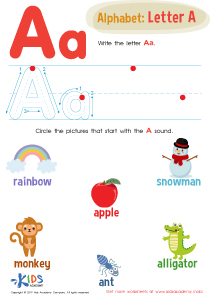
Introducing our engaging collection of Normal Letter E worksheets, meticulously crafted for 8-Year-Olds! These worksheets are designed to enhance your child's understanding and recognition of the Normal Letter E, making learning both fun and effective. Through a variety of creative activities, including tracing, identification, and matching exercises, your child will develop essential reading and writing skills. Perfect for both classroom and at-home learning, our worksheets cater to the educational needs of young learners, ensuring a solid foundation in letter recognition. Dive into our Normal Letter E worksheets and watch your 8-Year-Old excel in mastering this fundamental aspect of literacy with confidence and ease!
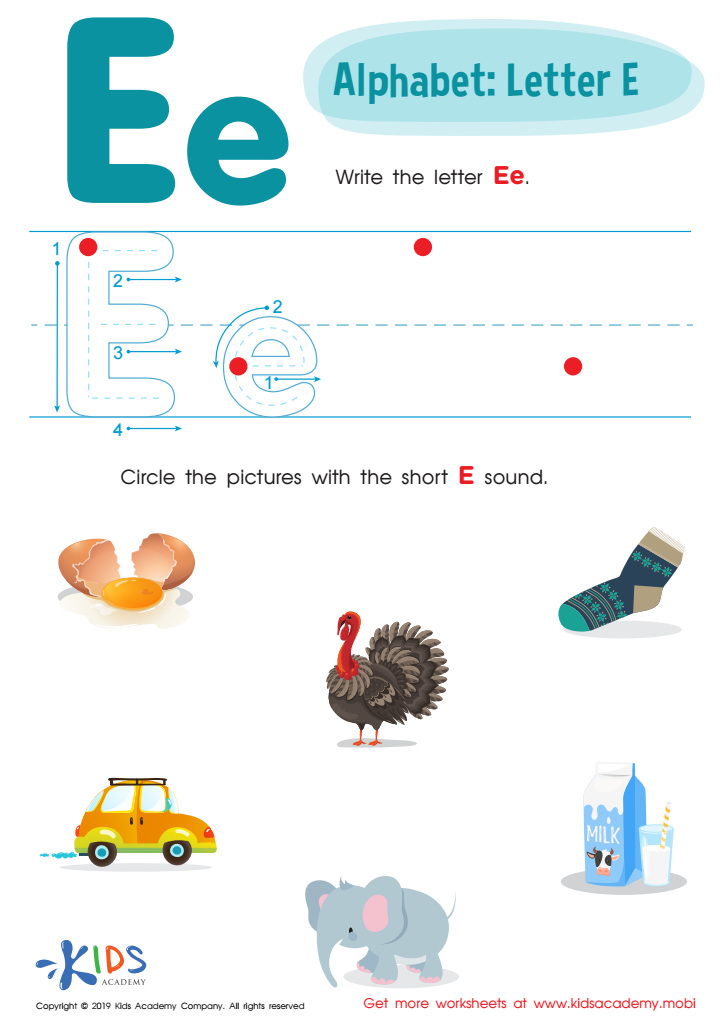
Letter E Tracing Worksheet
 Assign to My Students
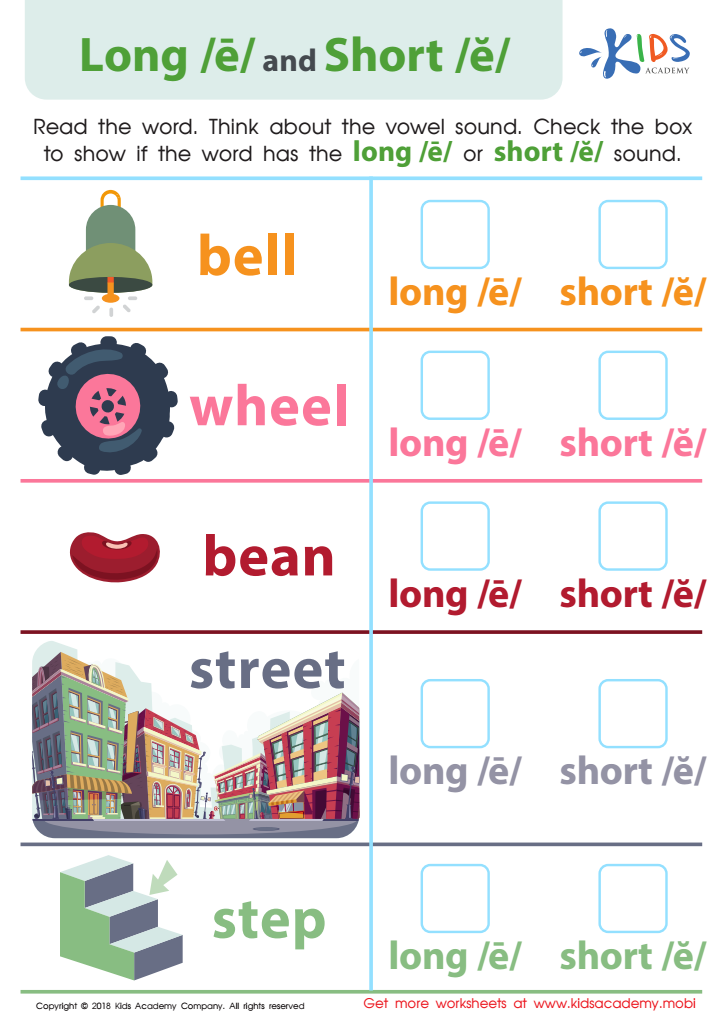
Reading: Long E and Short E Worksheet
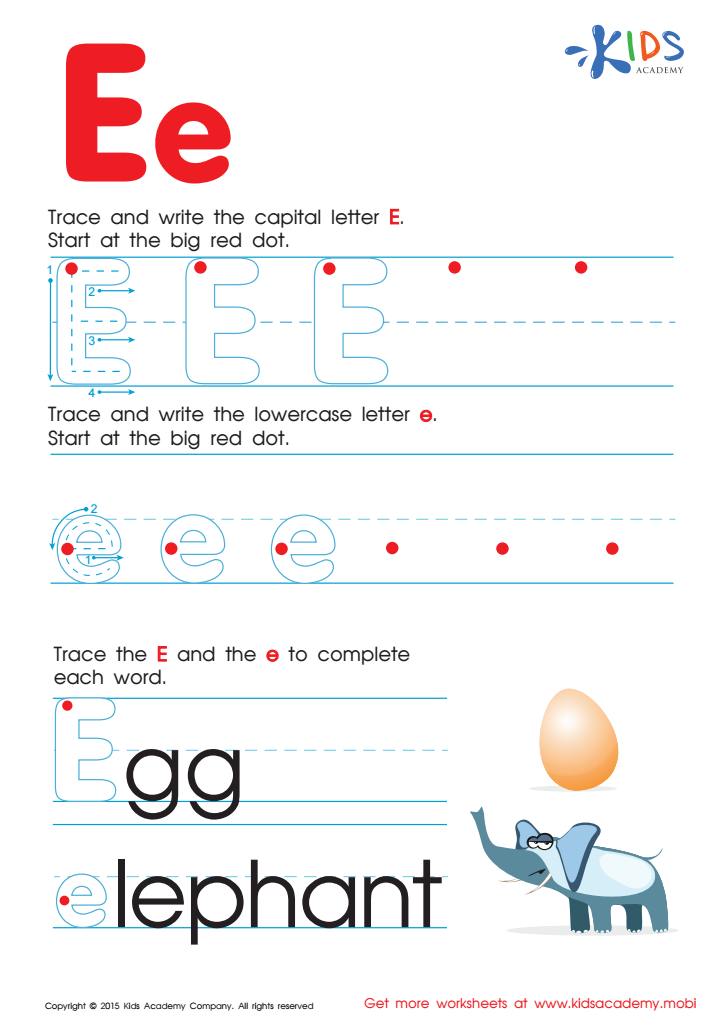
Letter E Tracing Page







Normal Letter E worksheets designed specifically for 8-year-olds offer a unique blend of learning and fun, tailored to the developmental stage of children in this age group. These worksheets are incredibly useful for a multitude of reasons. To start, they focus on the Letter E, a vowel that appears frequently in the English language and forms the foundation for many words children encounter daily.
For 8-year-olds, mastering the Letter E is not just about recognizing it on paper but understanding its various sounds and how it behaves in different words. Normal Letter E worksheets provide a structured approach, introducing children to both the short and long sounds of E, which is crucial for their reading and spelling skills. Through a variety of engaging activities, children learn to differentiate when E changes its sound and how it interacts with other letters in a word.
Additionally, these worksheets support the development of fine motor skills. As children trace, write, and color Letter E activities, they enhance their hand-eye coordination and pencil grip, which are essential for good handwriting.
Moreover, Normal Letter E worksheets for 8-Year-Olds are designed to align with their curiosity and capacity for learning, making these tools not just educational but also enjoyable. By integrating fun with learning, children become more engaged and are likely to retain the information better. This balanced approach fosters a positive learning environment, encouraging children to explore the world of letters with excitement and confidence.