Normal Difficulty Online Worksheets for Grade 1 - Page 11
613 filtered results
Difficulty Level
Grade
Age
-
From - To
Subject
Activity
Standards
Favorites
With answer key
Interactive
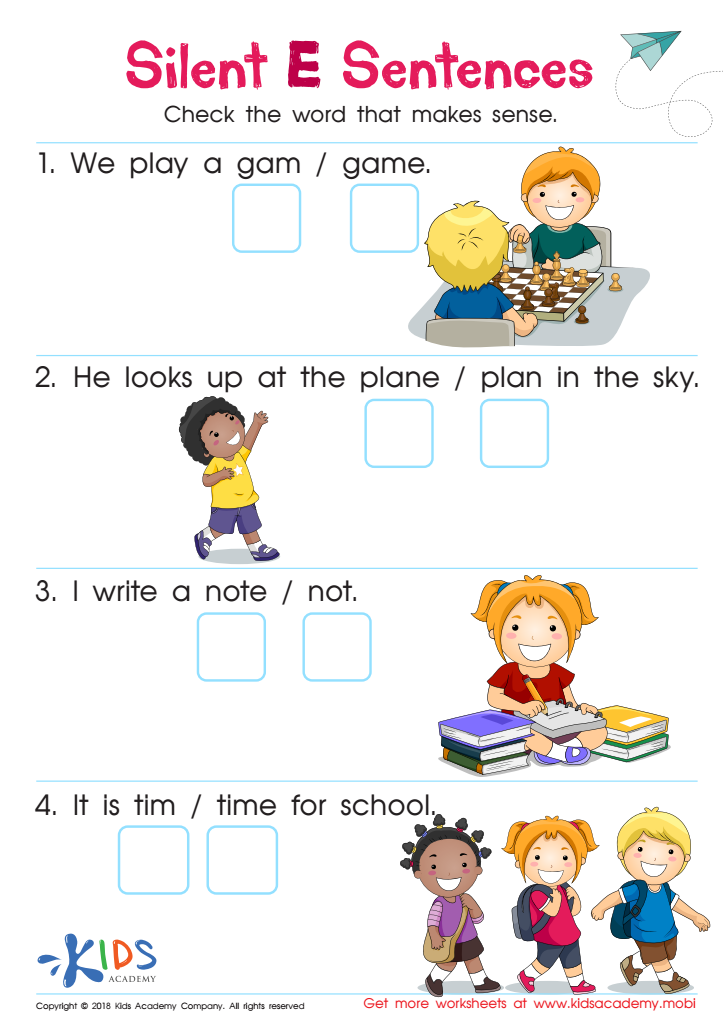
Silent E Sentences Worksheet
Young readers can find learning Silent E tricky, so this helpful worksheet can help! It teaches them to distinguish words that look the same but for the Silent E and choose the right word for sentence blanks. Kids can mark the correct answer and become familiar with closed syllables and words that require the E.
 Assign to My Students
Silent E Sentences Worksheet
Worksheet
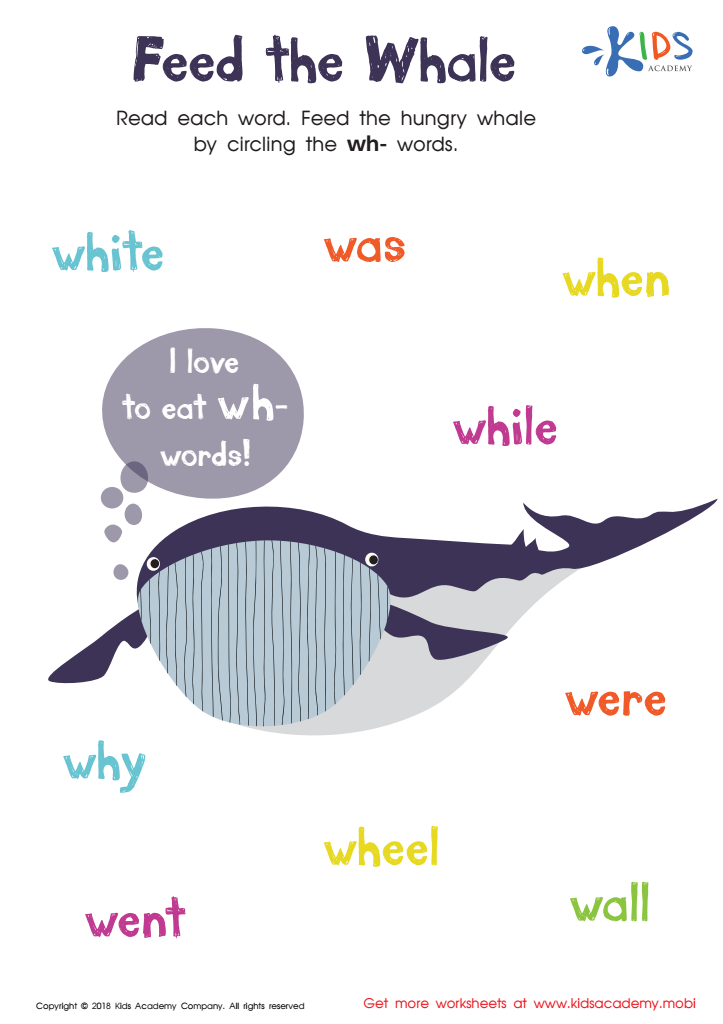
Feed the Whale Worksheet
Help your early reader build beginning consonant and blend recognition with this fun whale worksheet! They'll feed the whale wh- words, circle sight words, and build fine motor skills—all while discriminating between differently colored words.
Feed the Whale Worksheet
Worksheet
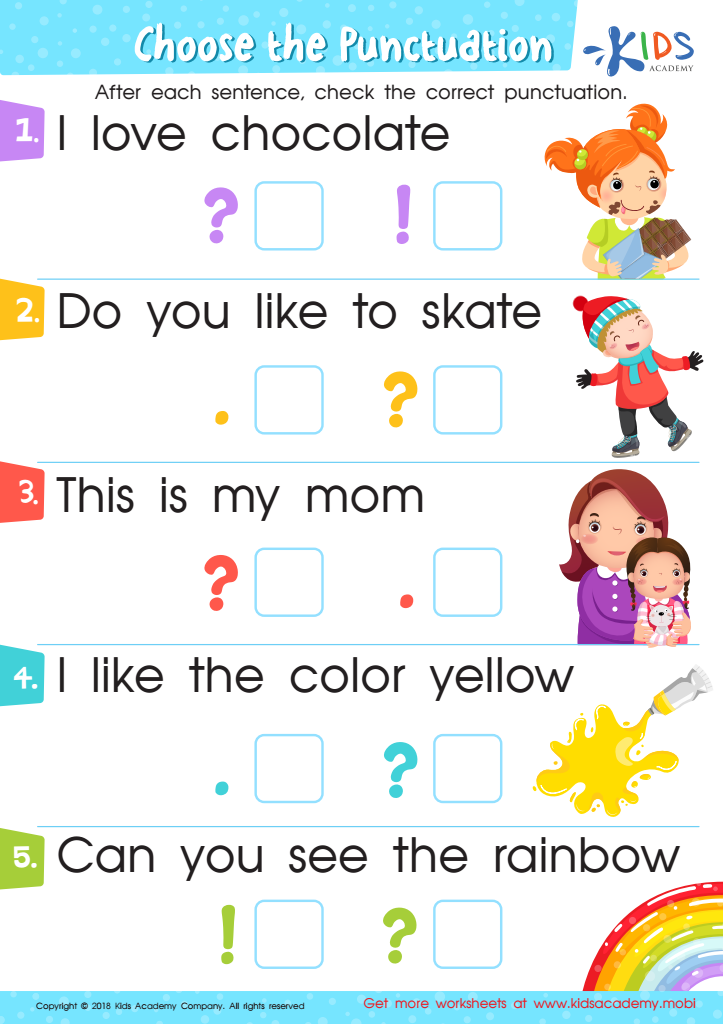
Choose the Punctuation: Assessment Worksheet
Does your child know punctuations? Found at the end of words, they signify the tone of the sentence. Ask them which punctuations they use daily. With your little one, look at a worksheet. Read each sentence aloud and ask them to identify the two punctuations given. Instruct them to choose the correct one. 80 words.
Choose the Punctuation: Assessment Worksheet
Worksheet
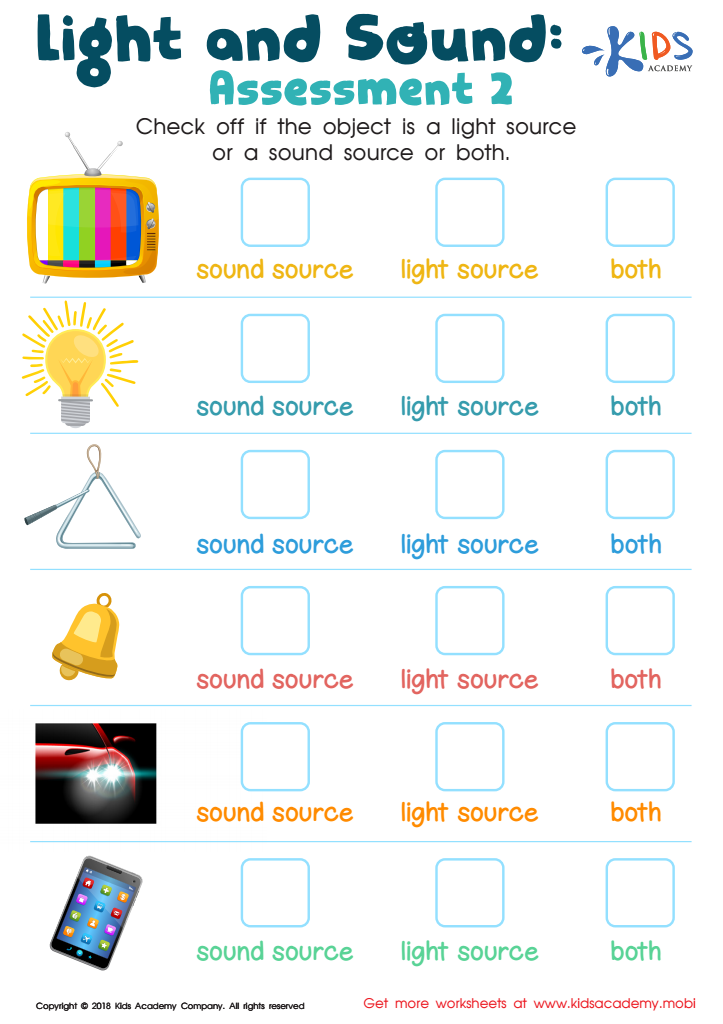
Light and Sound: Assessment 2 Worksheet
This worksheet introduces your kids to light and sound, with common sources of each. Identify the objects and help them check if it's a light source, a sound source, or both. Colourful and simple, it's a great way to teach your little ones! (80 words)
Light and Sound: Assessment 2 Worksheet
Worksheet
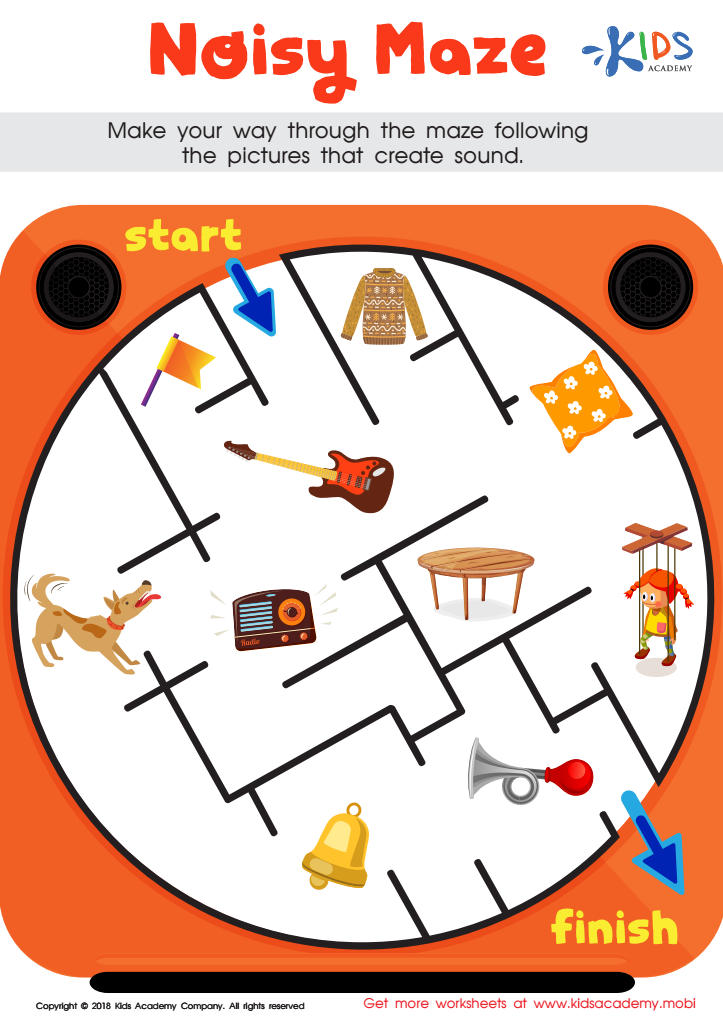
Noisy Maze Worksheet
Have your kids name some objects that make noise? Then, look at the worksheet with them and help them identify each object. Guide them through the maze, following the sound-producing pictures.
Noisy Maze Worksheet
Worksheet
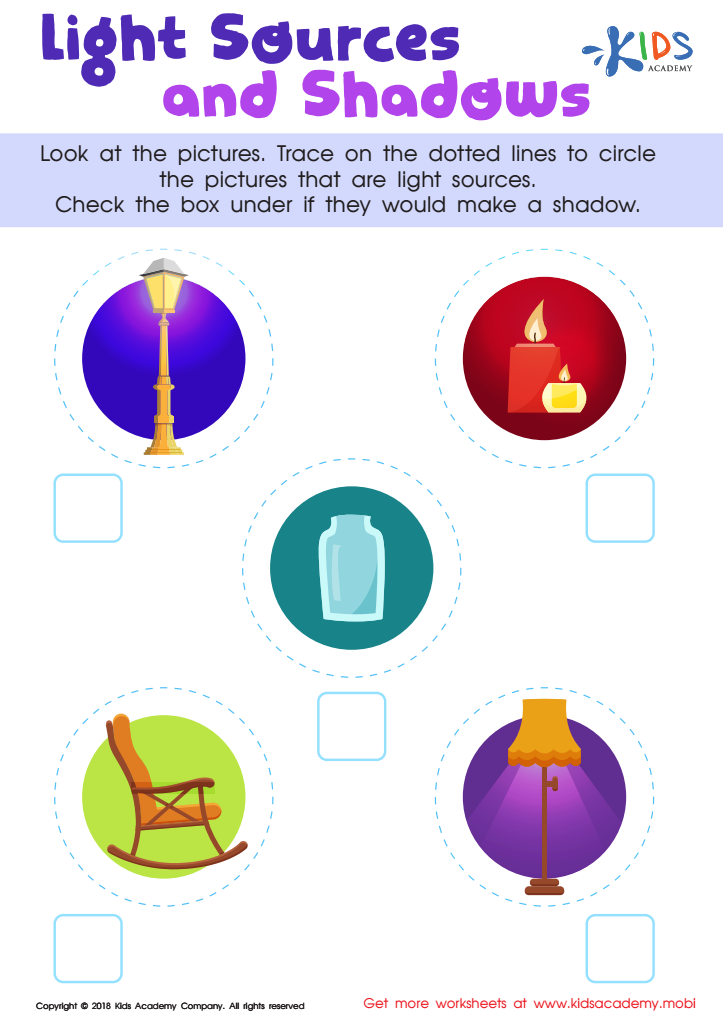
Light Sources and Shadows Worksheet
During the day, the sun radiates bright light. At night, when it's time for bed, the sun sets and darkness takes over. To light our way, we use other sources of light. With your students, trace the dotted lines around the pictures of light sources and check the boxes under the objects that will cast shadows.
Light Sources and Shadows Worksheet
Worksheet
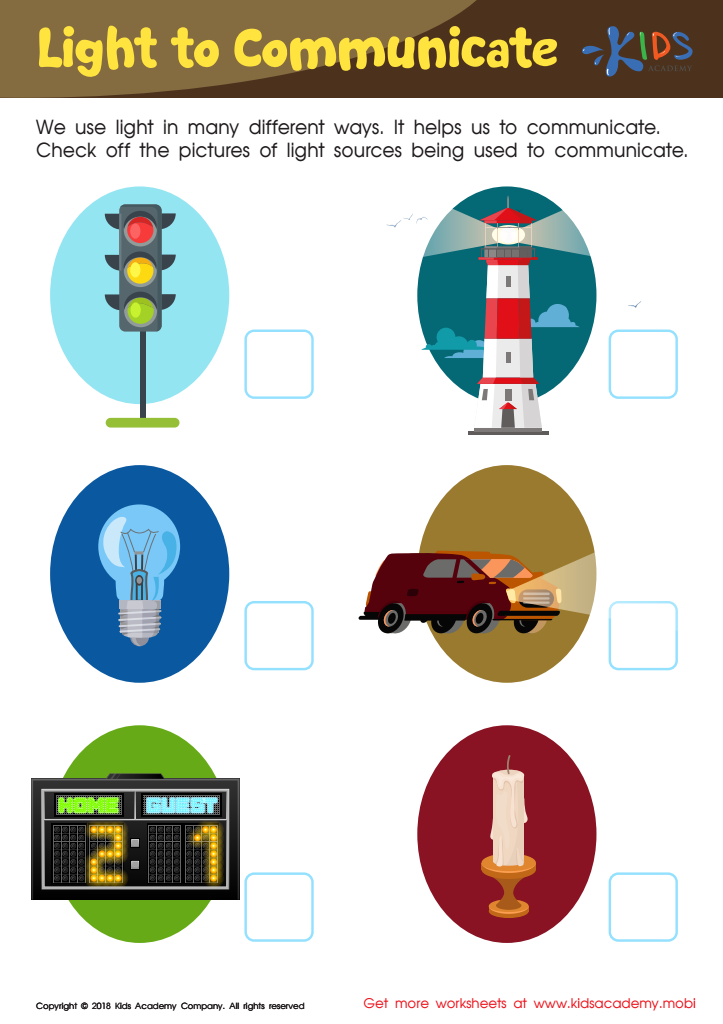
Light to Communicate Worksheet
We can use lights to communicate effectively, like we use sounds. Ask your kids for examples and then help them tick off the pictures of light sources in the worksheet. This exercise will help them understand how light can be used to communicate.
Light to Communicate Worksheet
Worksheet
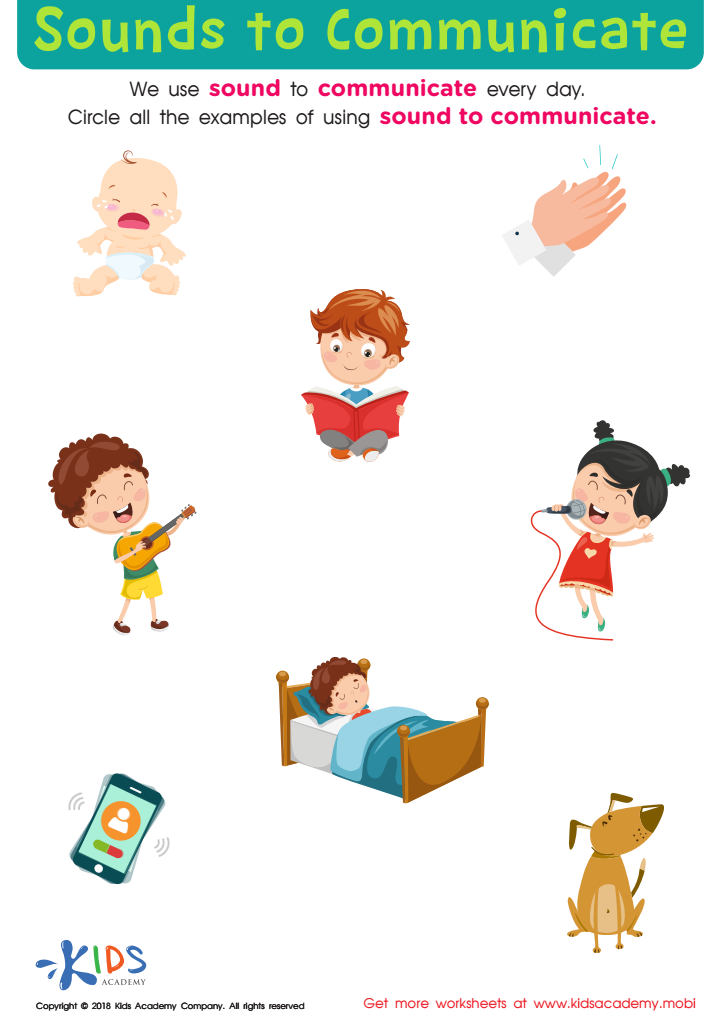
Sounds to Communicate Worksheet
Sounds are important for communication. Ask your students to name sounds people, animals and things make. Then, review this worksheet with them and see if they can identify the activities. Ask them to circle examples of sounds used to communicate.
Sounds to Communicate Worksheet
Worksheet
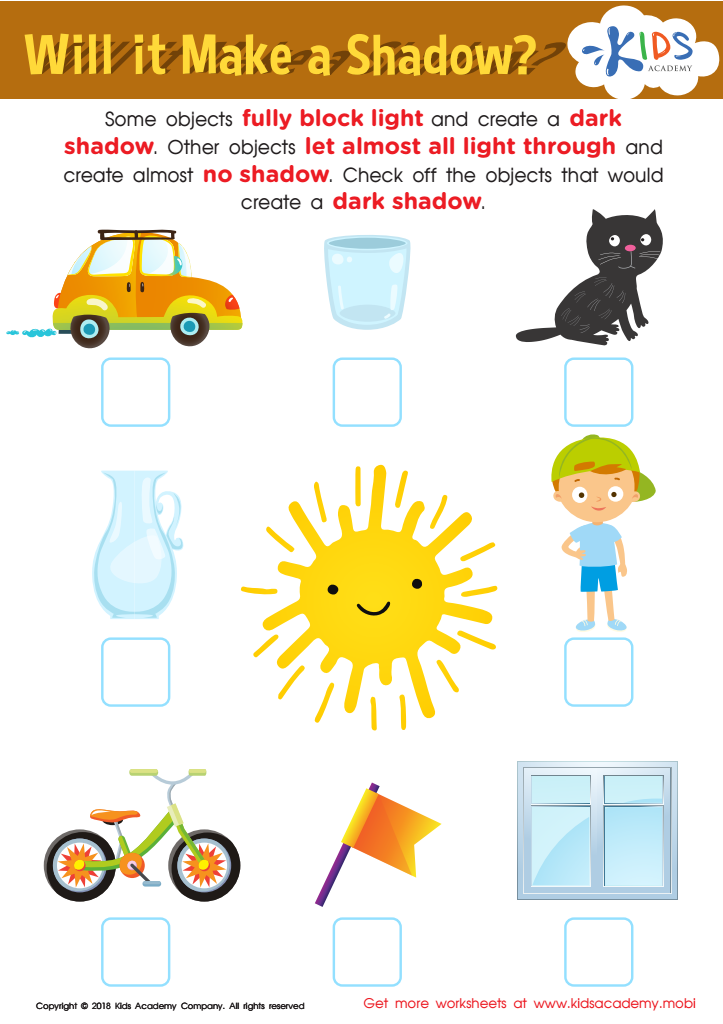
Will It Make a Shadow? Worksheet
Teach your students about shadows with this printout. Ask them to check off the boxes next to the pictures that create a shadow. Explain that some objects block light, forming a shadow, while others don't and thus don't create a shadow. Your students are likely already familiar with their own shadow.
Will It Make a Shadow? Worksheet
Worksheet
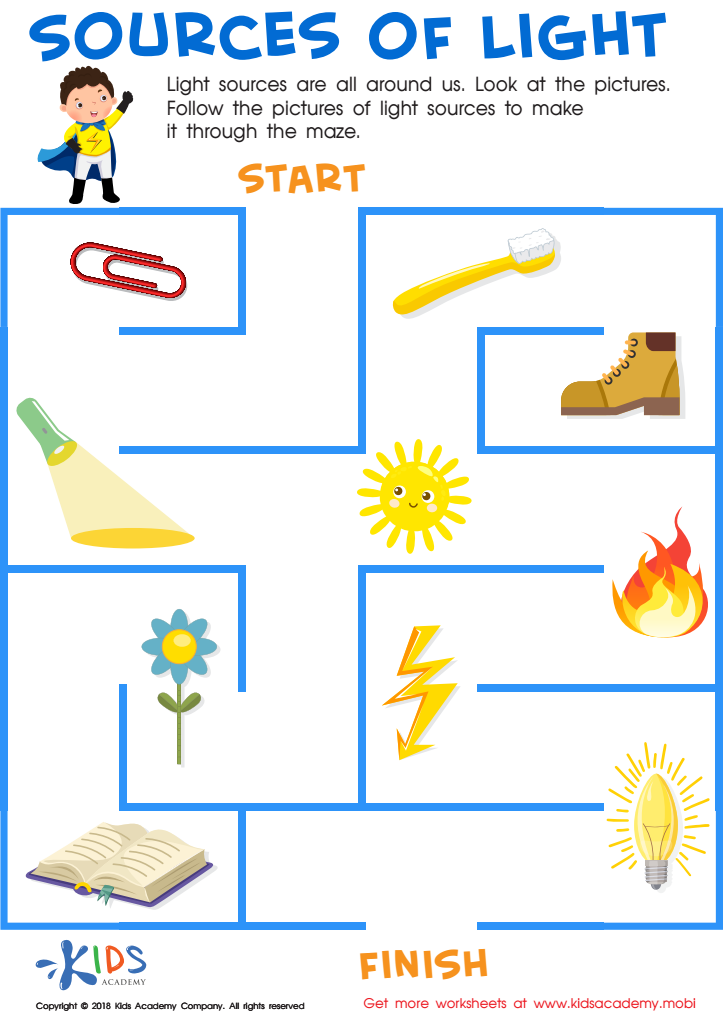
Sources of Light Worksheet
Help your child explore sources of light with this printout exercise. Ask them if they know the sun is the reason for day and night. Then point out other common light sources, then work together to guide them through the maze from start to finish.
Sources of Light Worksheet
Worksheet
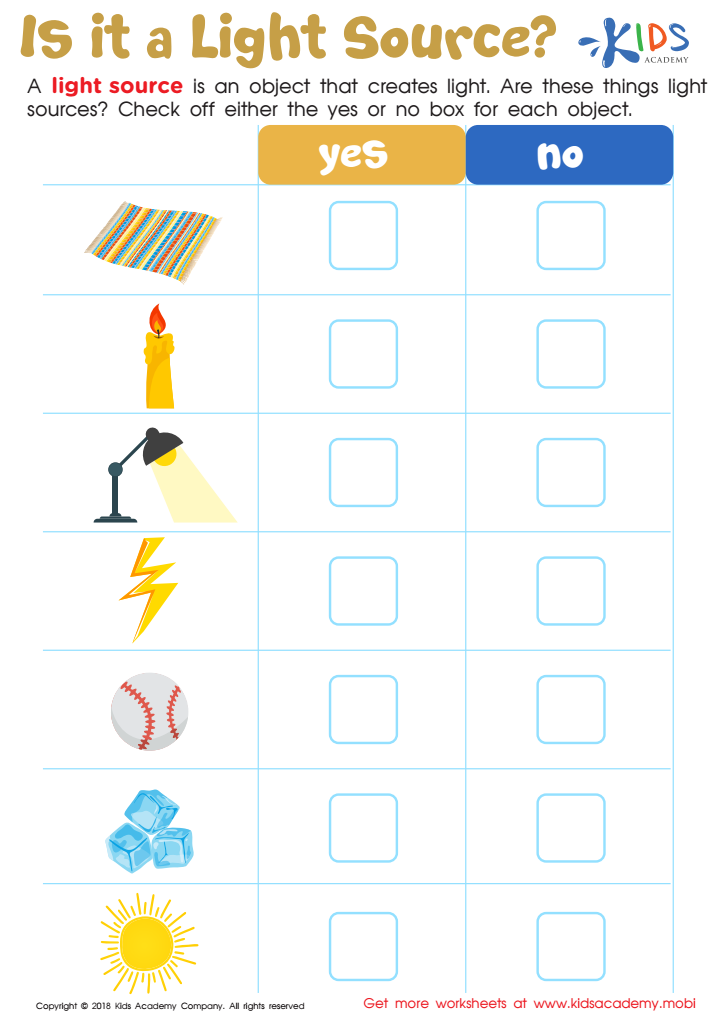
Is It a Light Source? Worksheet
This worksheet is a fun way to teach kids about light sources. Children must identify natural sources like the sun and lightning, and man-made sources such as candles and lamps. Ask them to look at each object and check the box to indicate if it's a light source or not.
Is It a Light Source? Worksheet
Worksheet
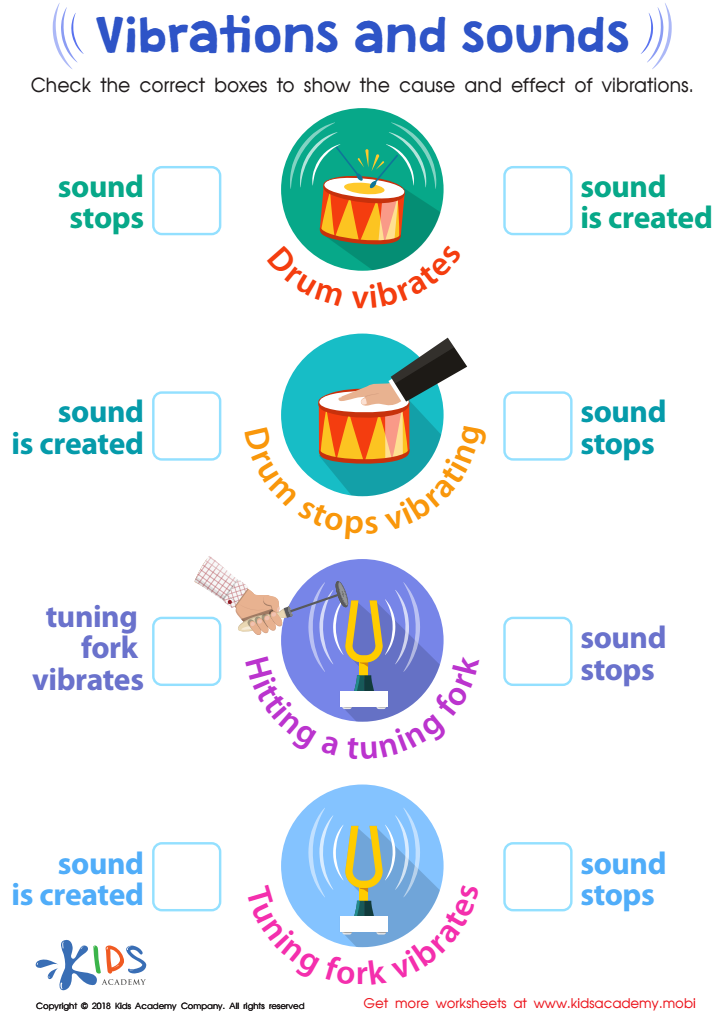
Vibrations and Sounds Worksheet
Many objects, creatures, and things make sounds. People talk, animals bark, hiss or meow, and things make sounds too. Ask your students to name others that produce sounds and why they do, such as when a drum is hit with a stick. Get them to learn about vibrations and cause/effect in this fun worksheet and check the answers.
Vibrations and Sounds Worksheet
Worksheet
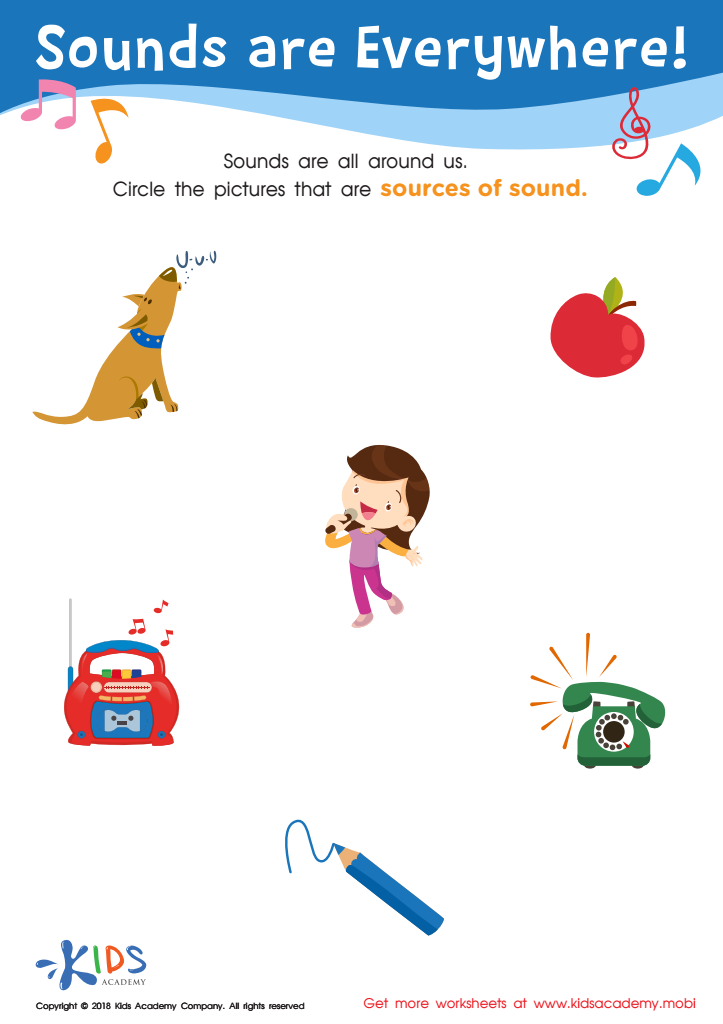
Sounds Are Everywhere! Worksheet
Ask your students to recall objects that make sound. Then, help them identify the sources of sound in the pictures of this worksheet.
Sounds Are Everywhere! Worksheet
Worksheet
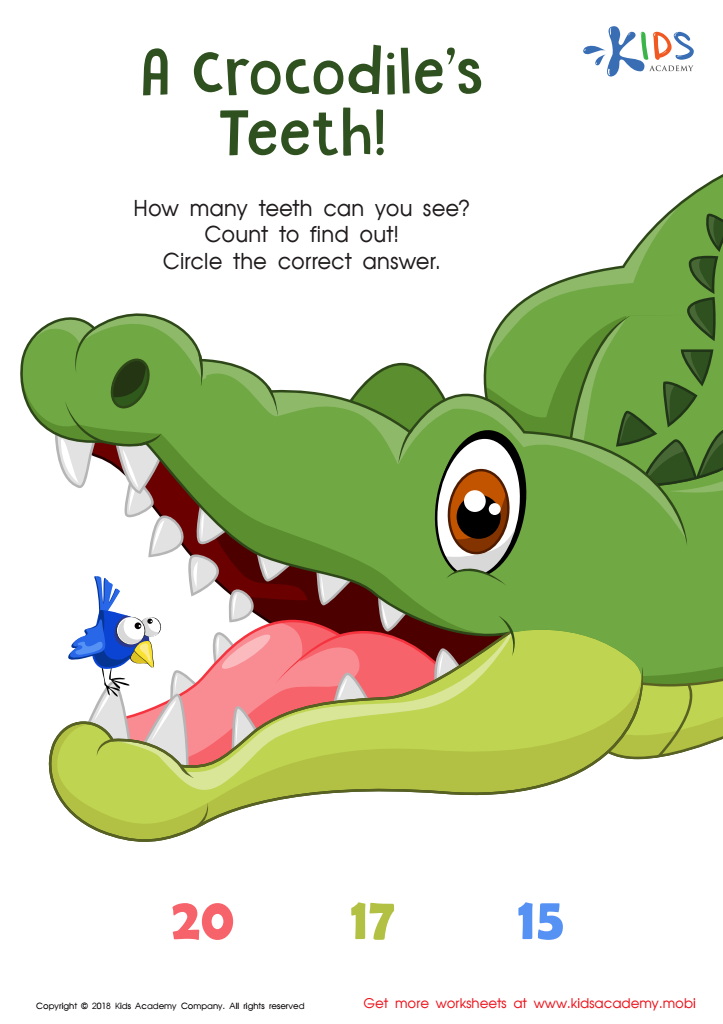
A Crocodile's Teeth Worksheet
Show your child the animal image and ask them to identify it. If they watch animal shows, they'll likely be interested. Count the teeth together, then look at the options and help them circle the right one.
A Crocodile's Teeth Worksheet
Worksheet
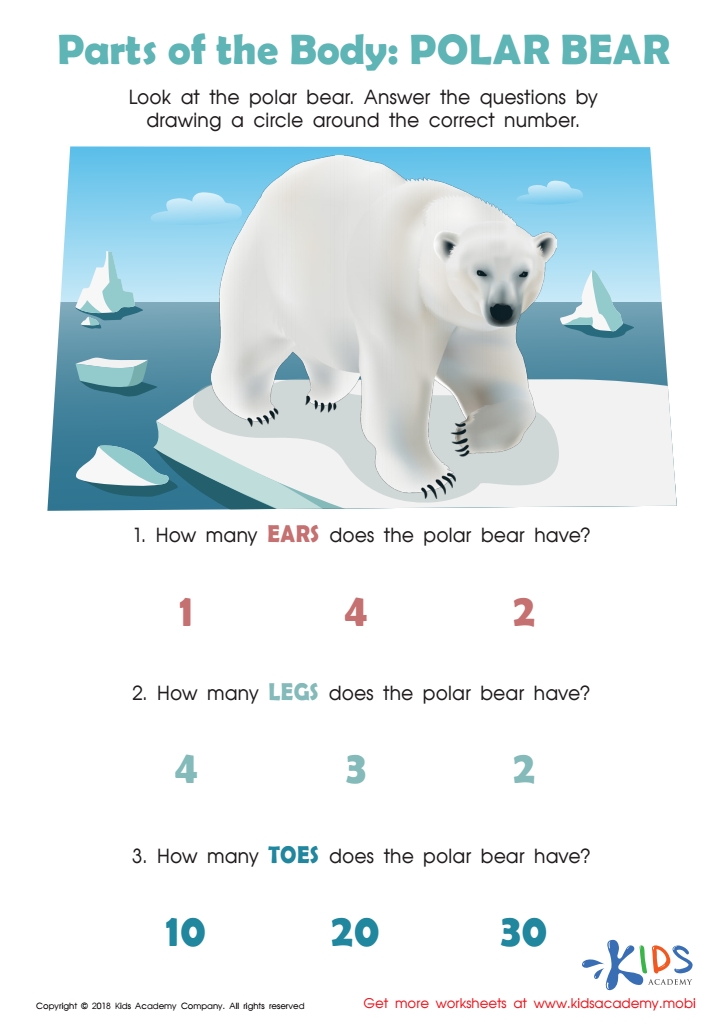
Parts of the Body: Polar Body Worksheet
Start by showing your kid a picture of a Polar Bear. Explain that it's a member of the bear family with white fur and a large size. Use this worksheet to teach them more about the animal. Go through the questions together and have them draw a circle around the correct number for each one.
Parts of the Body: Polar Body Worksheet
Worksheet
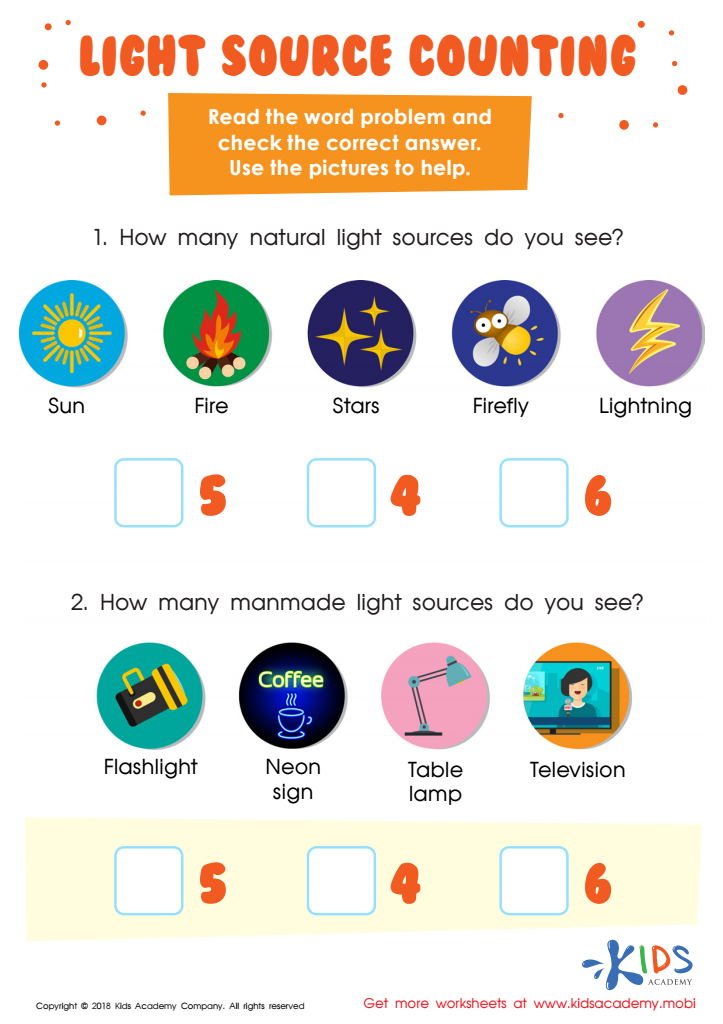
Light Source Counting Worksheet
Help your students properly understand and interpret word problems with this worksheet. Read each problem aloud and have them check the correct answers. Pictures are included to aid in problem-solving. If they're still struggling, be sure to provide guidance and support.
Light Source Counting Worksheet
Worksheet
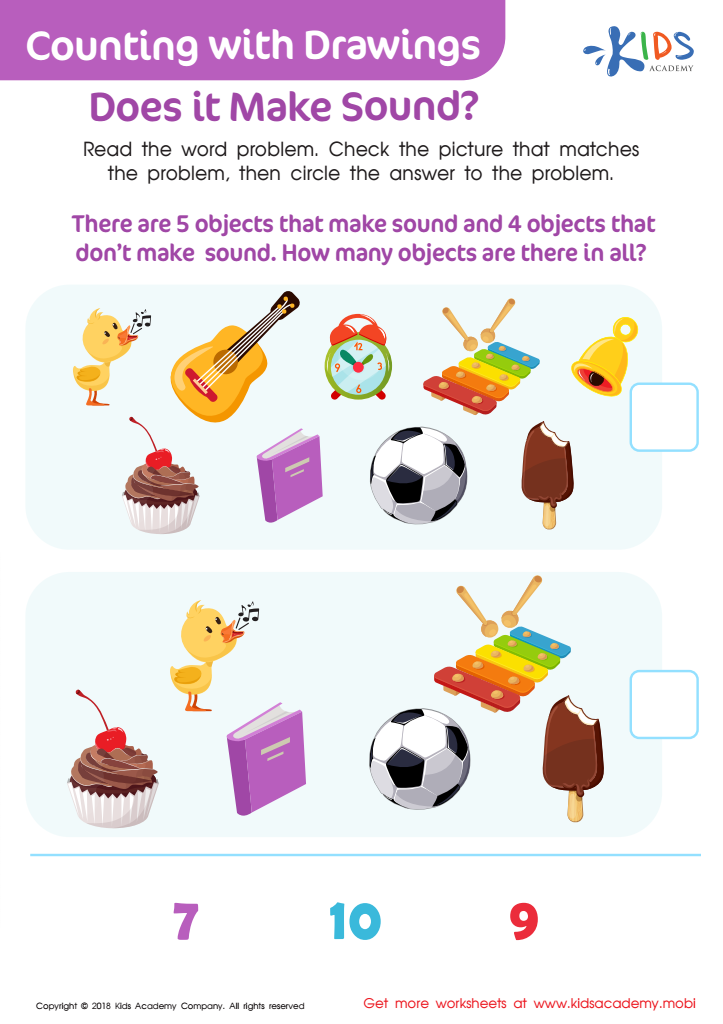
Counting With Drawings. Does It Make Sound? Worksheet
Introduce word problems with this simple worksheet. Ask your students to name the objects pictured, then read the word problem and ask them to circle the answer. With practice, it'll help them scale this challenging area of math.
Counting With Drawings. Does It Make Sound? Worksheet
Worksheet
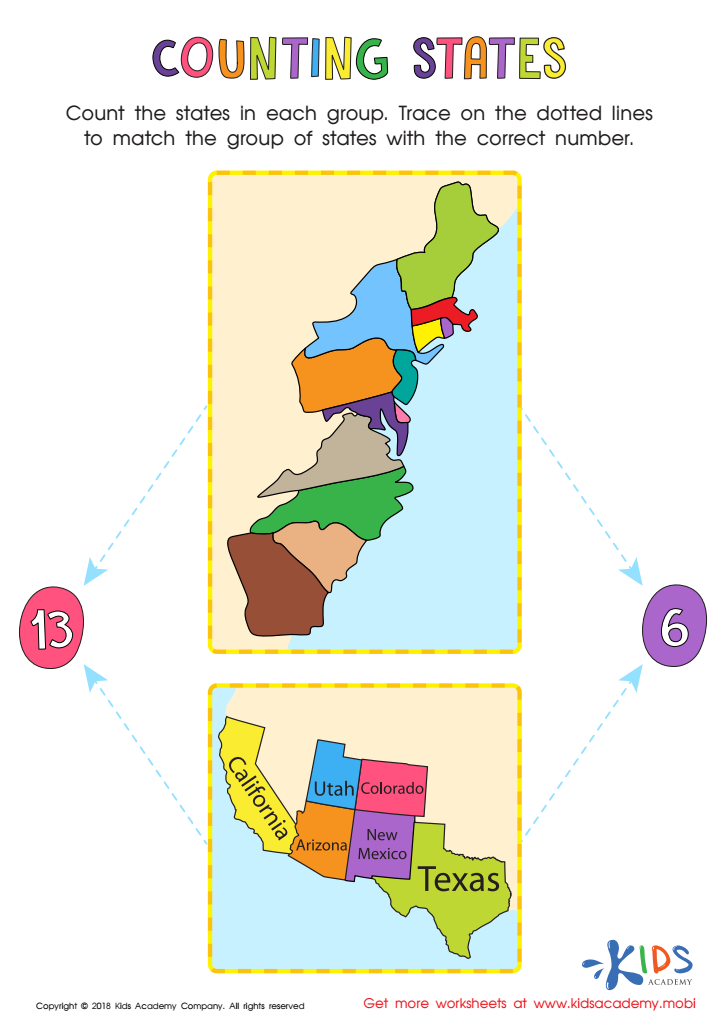
Counting States Worksheet
This fun and educative worksheet helps your kids learn more about their country. Ask them if they can name all the states, then help them trace on the dotted lines to match each state group to the correct number. Counting together is a fun way to reinforce learning.
Counting States Worksheet
Worksheet
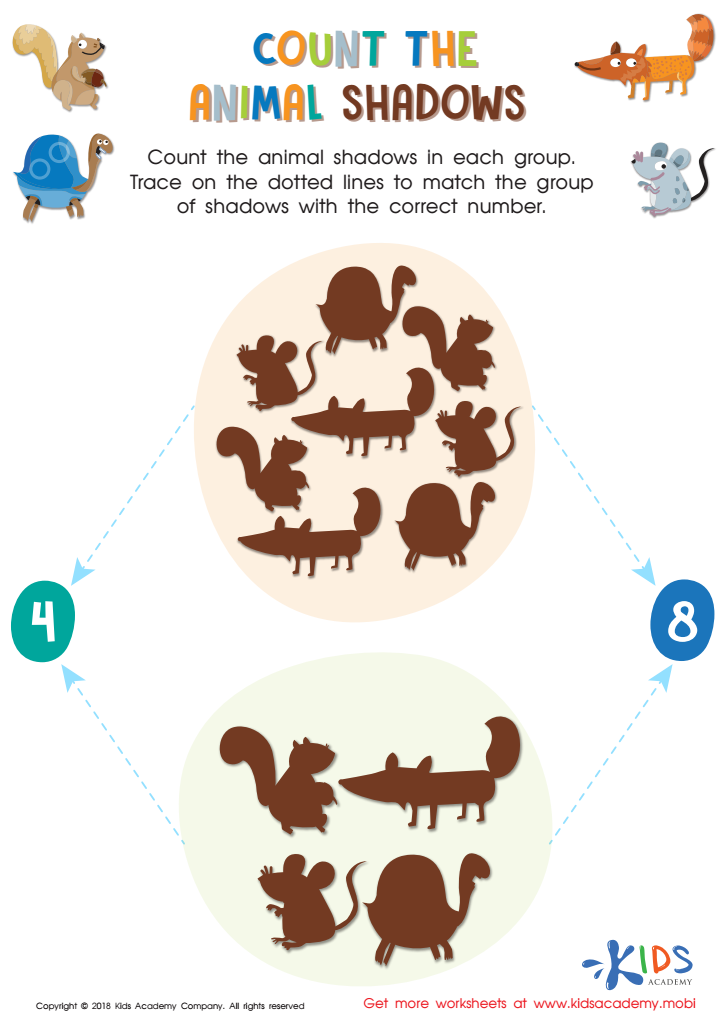
Count the Animal Shadows Worksheet
Our shadows accompany us wherever we go. Even your kids have seen theirs! Did they know that animals have shadows too? Count the animal shadows in each group with this worksheet. Ask your child to identify the animals pictured, then help them trace the dotted lines to match with the right number.
Count the Animal Shadows Worksheet
Worksheet
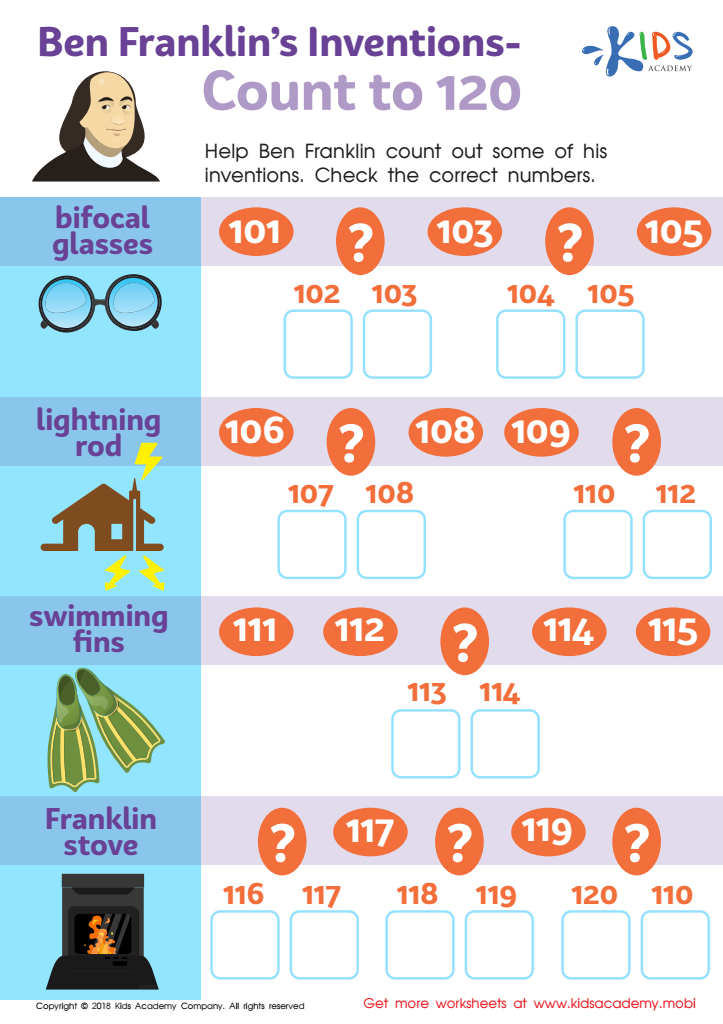
Ben Franklin’s Inventions – Count to 120 Worksheet
Benjamin Franklin is a significant figure in US history. He invented objects we use daily. If your child is interested in object history and invention, they'll love this worksheet. See if they can help Mr Franklin count his inventions and check their answers. It's a simple and enjoyable task!
Ben Franklin’s Inventions – Count to 120 Worksheet
Worksheet
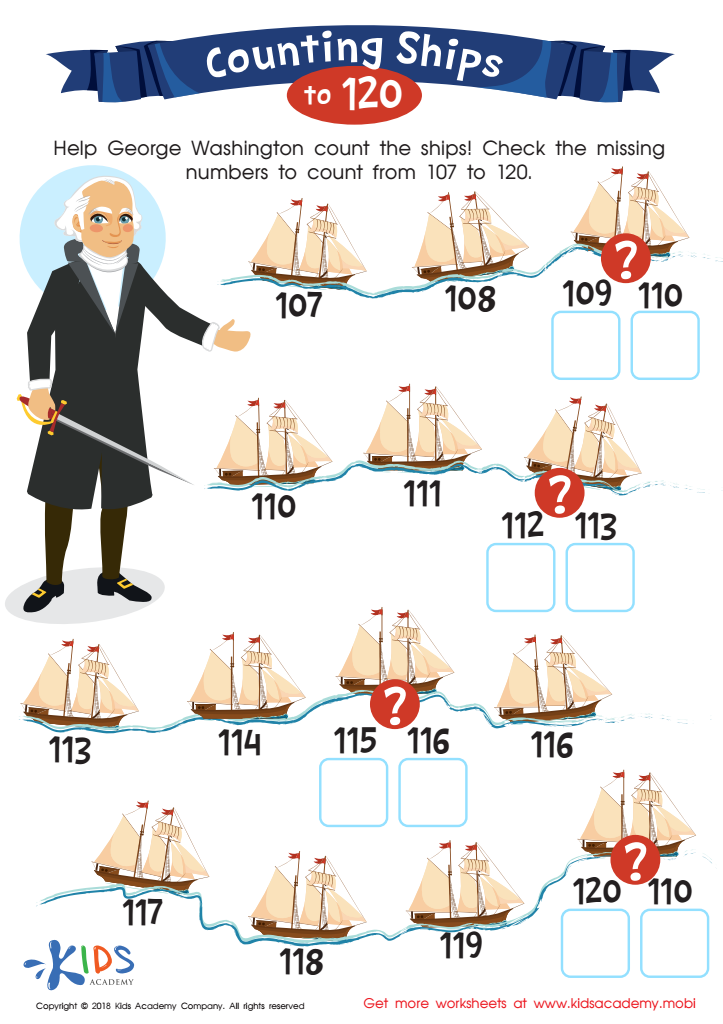
Counting Ships to 120 Worksheet
Introduce your child to George Washington and his contributions to our country's history. If they already know their numbers, have them help George count the ships! Challenge them to fill in the missing numbers between 107 and 120.
Counting Ships to 120 Worksheet
Worksheet
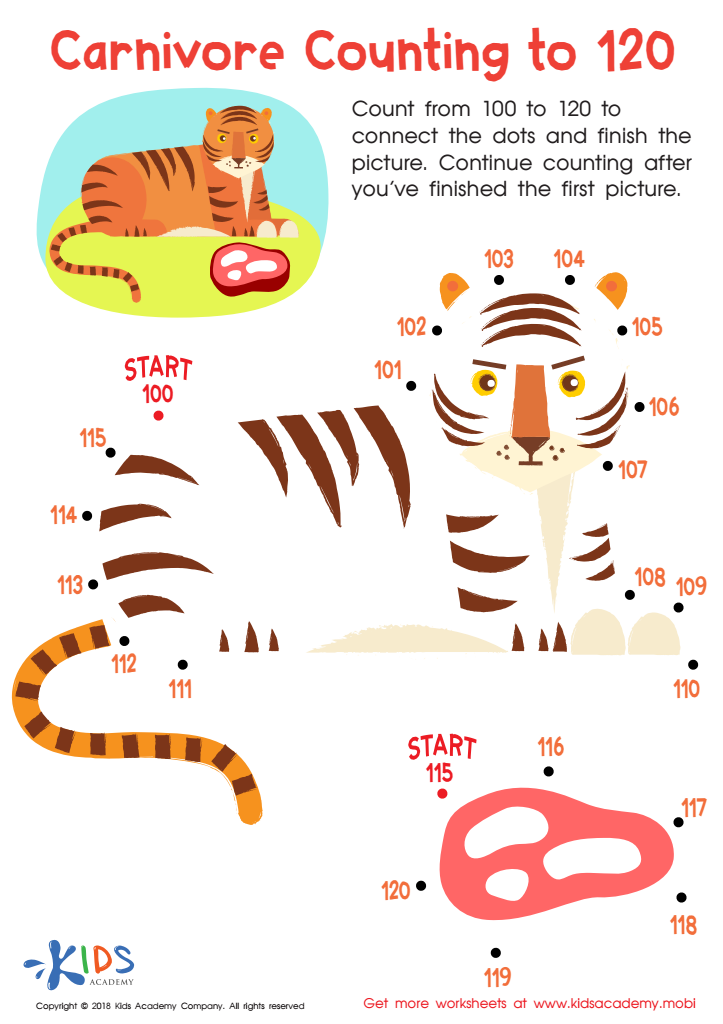
Carnivore Counting to 120 Worksheet
Ask your child to name some popular carnivores. Can they tell you what the animal in the worksheet is? A Tiger? Get them to count from 100 to 120 to connect the dots. After they finish the first picture, keep counting to help them practice!
Carnivore Counting to 120 Worksheet
Worksheet
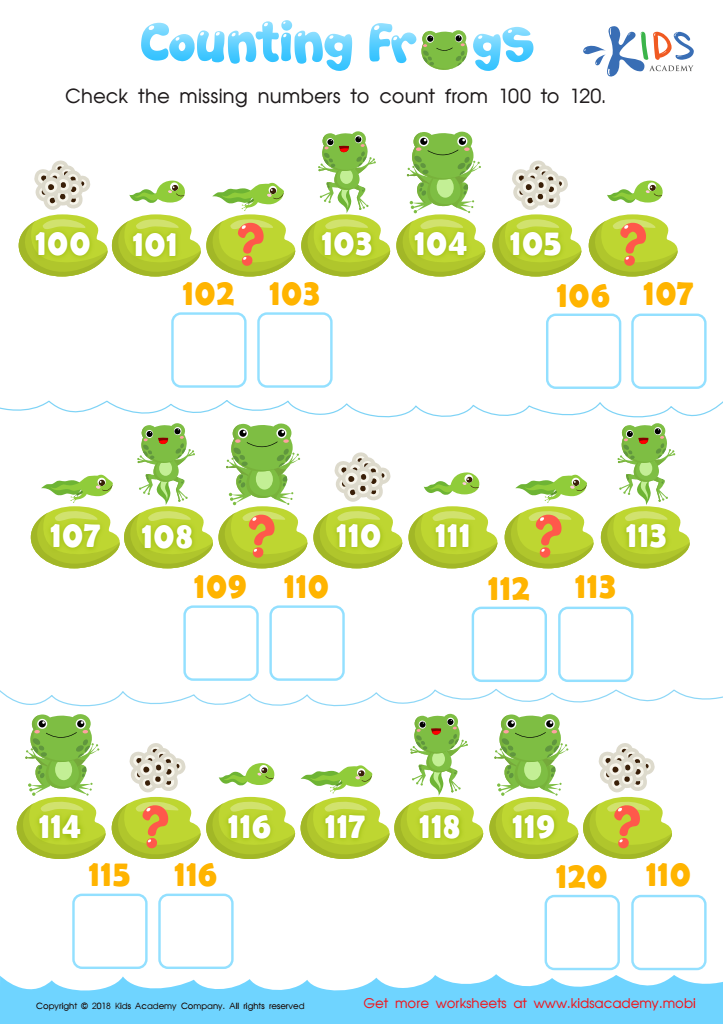
Counting Frogs Worksheet
Show your child the frog's life cycle and have them count from 100 to 120. Ask them to find the missing numbers in the picture and have them check the answers beneath the numbers. Help them get it right!
Counting Frogs Worksheet
Worksheet
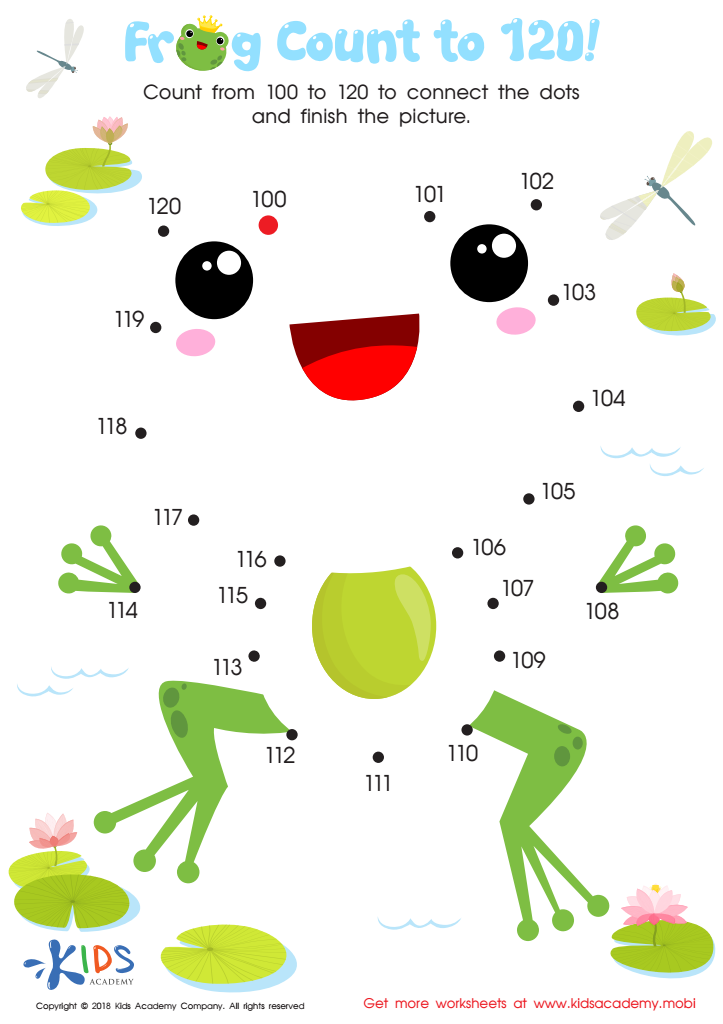
Frog Count to 120 Worksheet
Count from 100 to 120 with your child to help them finish the worksheet! Pet owners will be especially excited to help the cute frog complete its picture. With proper counting, your child will be able to easily connect the dots and finish the picture of the green frog.
Frog Count to 120 Worksheet
Worksheet
Join Kids Academy for Free
Who is primarily going to use this learning content?