Online Reading Fiction Worksheets for Kids - Page 3
161 filtered results
Difficulty Level
Grade
Age
-
From - To
Subject
Activity
Standards
Favorites
With answer key
Interactive
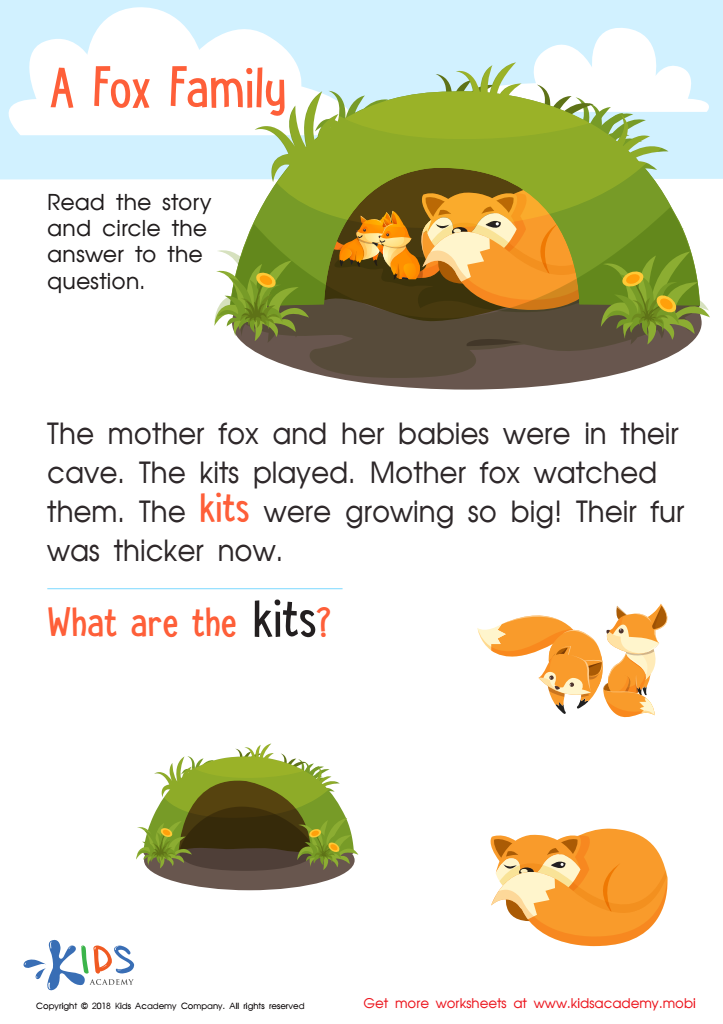
A Fox Family Worksheet
Reading is an easy way to learn new words. This worksheet introduces an interesting story about a fox family, teaching your child that "kits" refers to baby foxes. Read the text together and circle the picture to answer the question.
 Assign to My Students
A Fox Family Worksheet
Worksheet
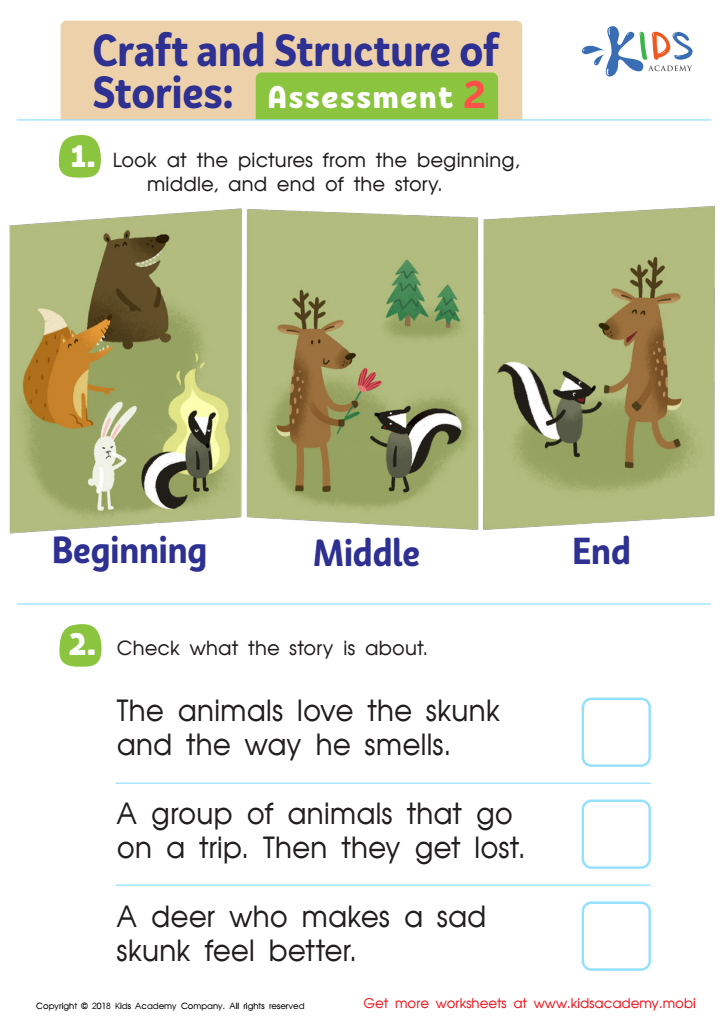
Craft and Structure of Stories: Assessment 2 Worksheet
Help your child assess their story sequencing and reading comprehension skills using this cute worksheet! It encourages them to look at the three pictures on the page, each representing a scene from the beginning, middle and end. Ask them what the story is about, then let them check the box next to the correct answer. This is a great way to ensure they understand the main events of a story.
Craft and Structure of Stories: Assessment 2 Worksheet
Worksheet
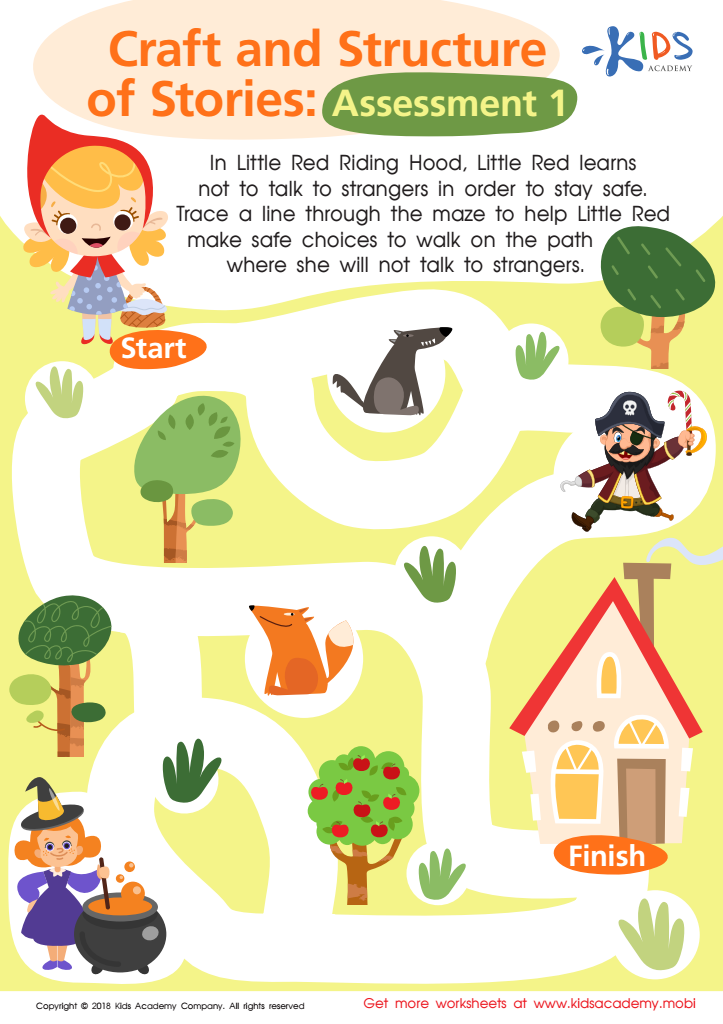
Craft and Structure of Stories: Assessment 1 Worksheet
Turn Little Red Riding Hood into a maze to review author's craft and characterization. Kids must lead her through the woods, avoiding strangers. Give them the main theme of not talking to strangers and watch as they draw a path to her grandmother's house. Fun and educational!
Craft and Structure of Stories: Assessment 1 Worksheet
Worksheet
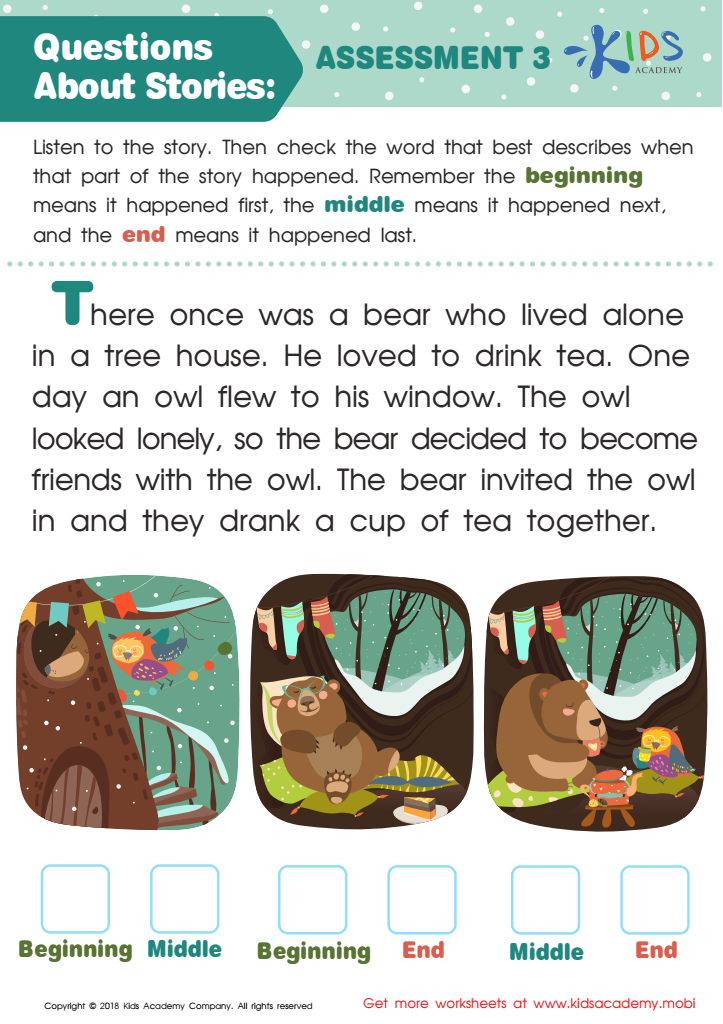
Questions About Stories: Assessment 3 Worksheet
Help kids understand stories by having them listen to a story and check boxes for the beginning, middle, and end. This worksheet makes it fun for even the youngest learners to recall story elements and sequence of events. Let them listen to the story from start to finish, then look at the pictures to check which part of the story they depict.
Questions About Stories: Assessment 3 Worksheet
Worksheet
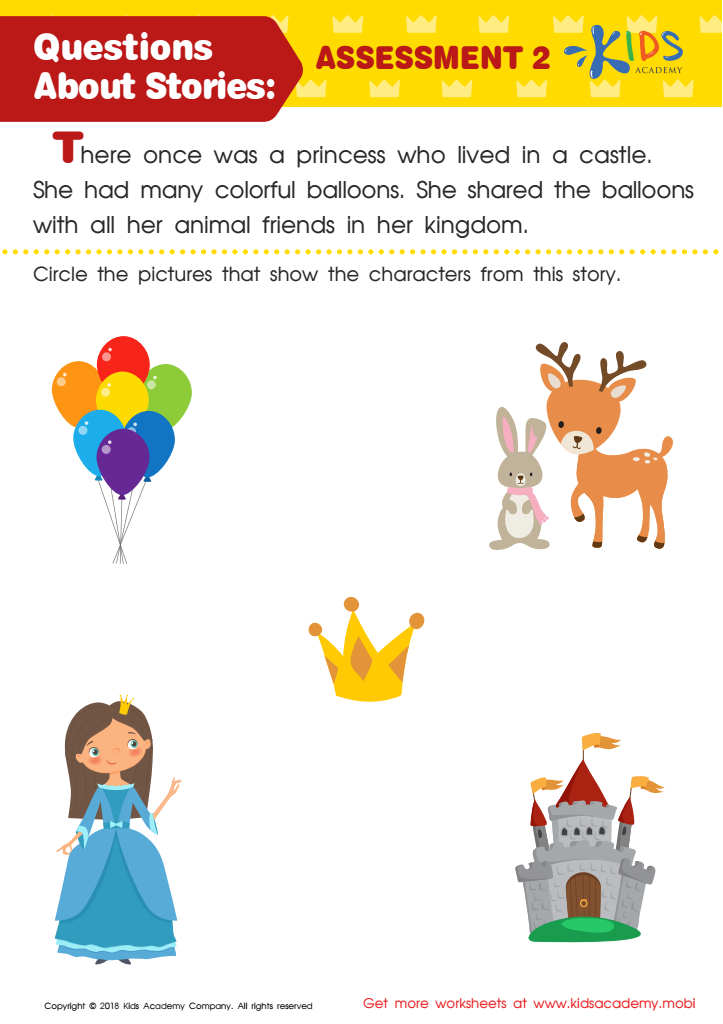
Questions About Stories: Assessment 2 Worksheet
Talk to your child about what a princess is and what activities they associate with that word. Then, read the story to them and help them identify characters in the pictures. Look out for details and ask them questions to ensure they understand.
Questions About Stories: Assessment 2 Worksheet
Worksheet
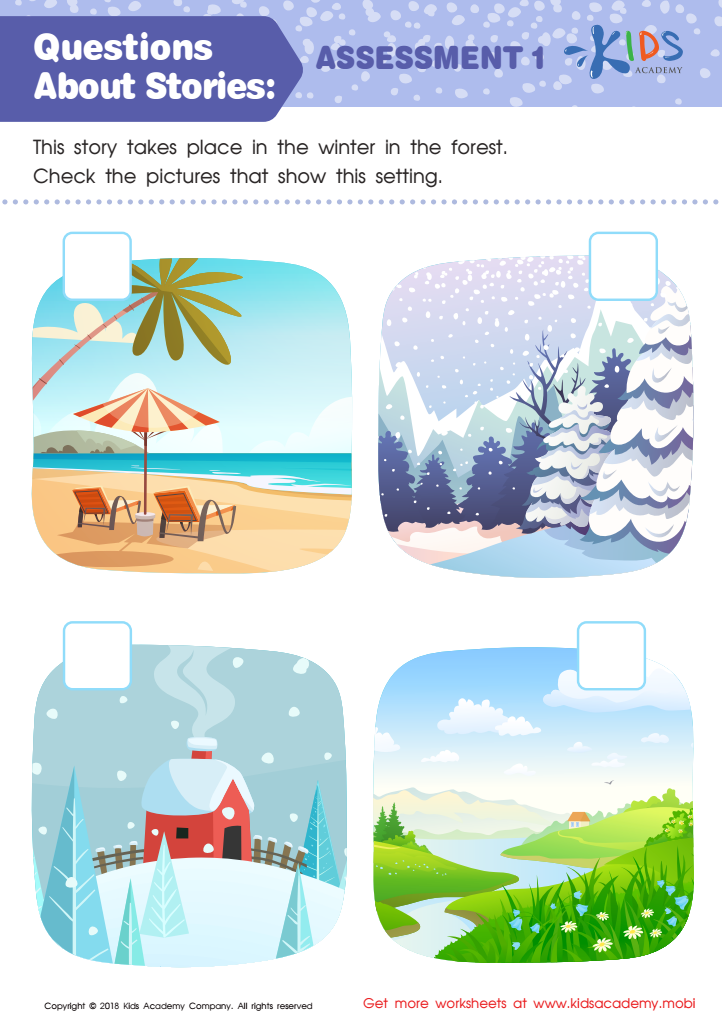
Questions About Stories: Assessment 1 Worksheet
Winter brings snow, cold, short days, and darkness. Schools can even close due to heavy snow. Ask your child what their favourite winter activities are and what color they associate with 'winter'. This worksheet takes place in a winter forest. Look at the 4 pictures with your child, and help them identify which one shows the correct setting.
Questions About Stories: Assessment 1 Worksheet
Worksheet
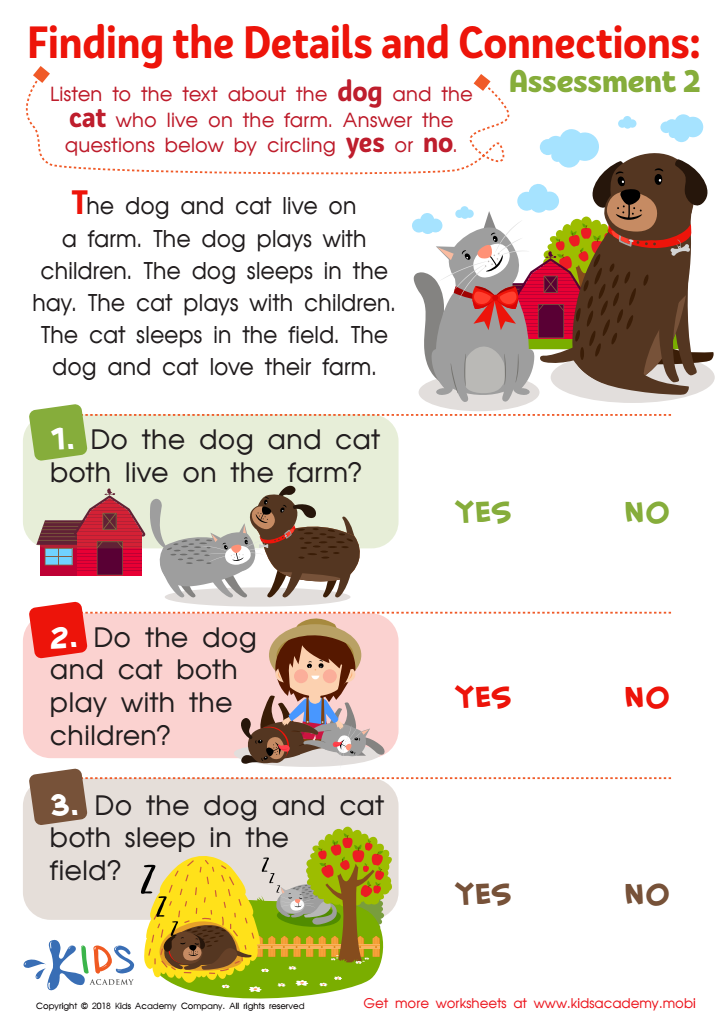
Finding the Details and Connections: Assessment 2 Worksheet
Does your child love animals? If you have pets, they'll relate to the text in this worksheet. Read it aloud to them and help them answer the simple questions by circling yes or no. The story is about a dog and cat living on a farm. Let your child read it aloud to you if they can.
Finding the Details and Connections: Assessment 2 Worksheet
Worksheet
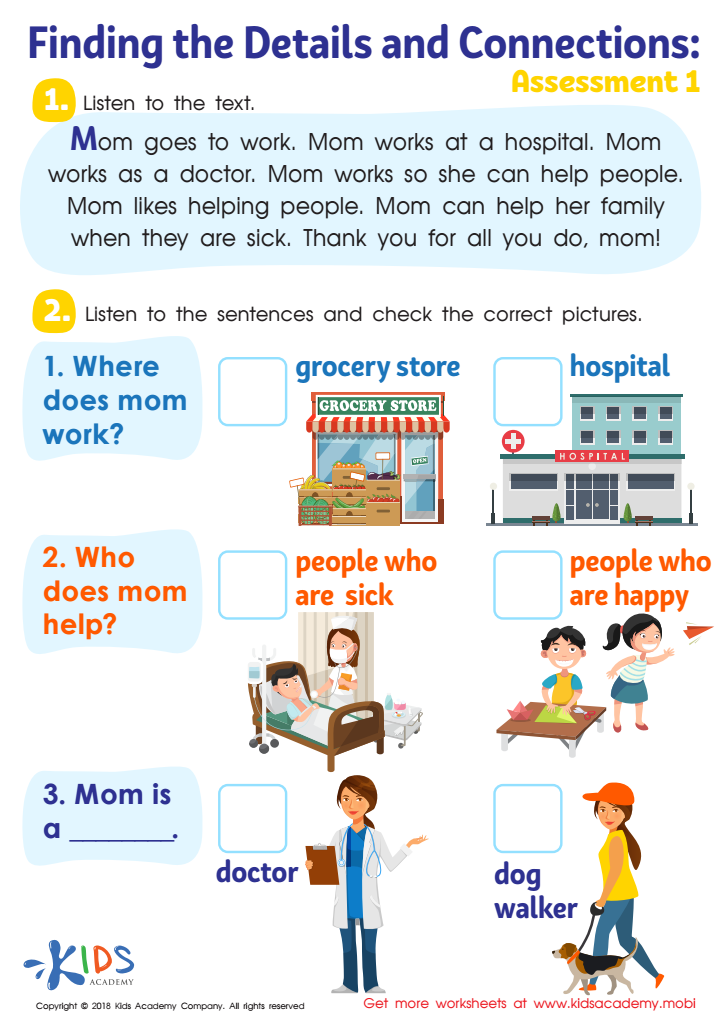
Finding the Details and Connections: Assessment 1 Worksheet
Ask your students what their parents do for a job. Do they know what profession their mom is in and where she works? Professionals have places they go to do their job. In this task, Mom goes to a hospital and is a doctor. Read the text and help them check the right pictures.
Finding the Details and Connections: Assessment 1 Worksheet
Worksheet
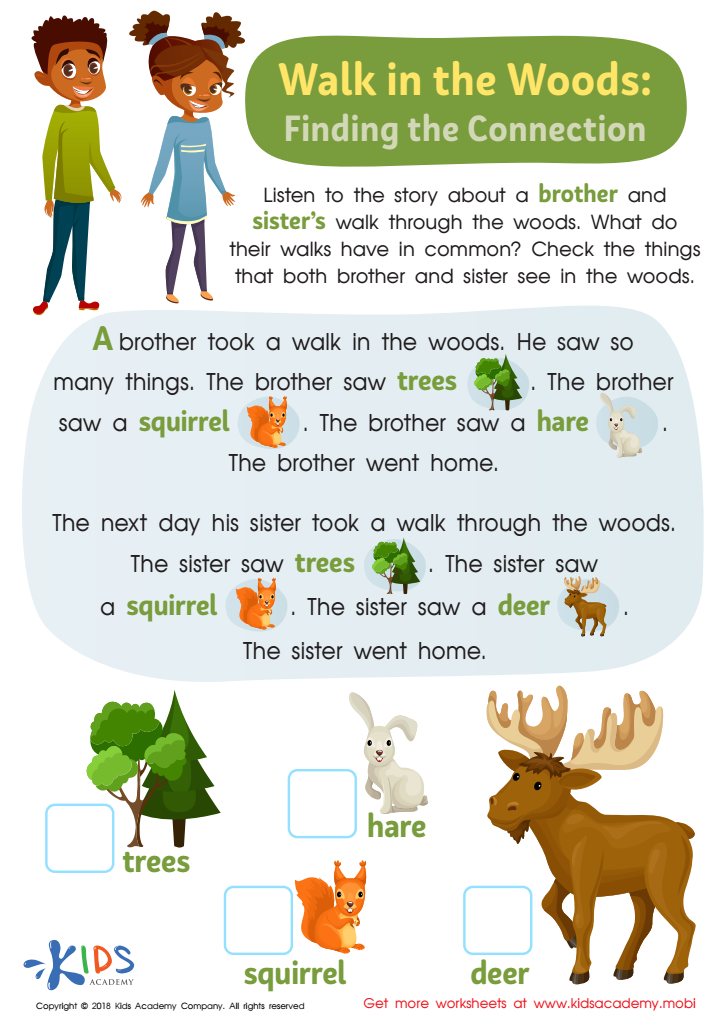
Walk In the Woods: Finding Connections Worksheet
Brother and sister took a walk in the woods to connect with nature and get some exercise. As they went, they noted different things like birds and plants, which they share in this story. Read it to your little ones, and help them check off the items the two saw. It's a great way to learn about nature and enjoy the outdoors.
Walk In the Woods: Finding Connections Worksheet
Worksheet
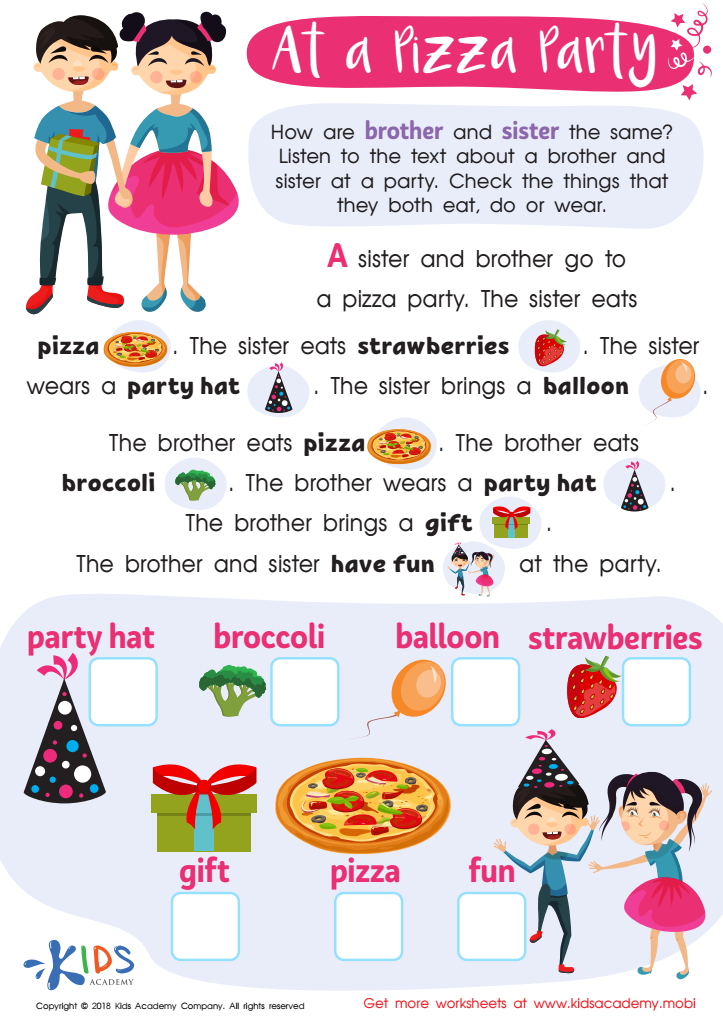
At a Pizza Party Worksheet
Parties are the best! Eating, playing, singing, dancing and gift-exchange - what's your child's fave part? In this worksheet, a brother and sister are eager to enjoy their party. Read the text to them and help them check what they do, eat, and wear. 80 words.
At a Pizza Party Worksheet
Worksheet
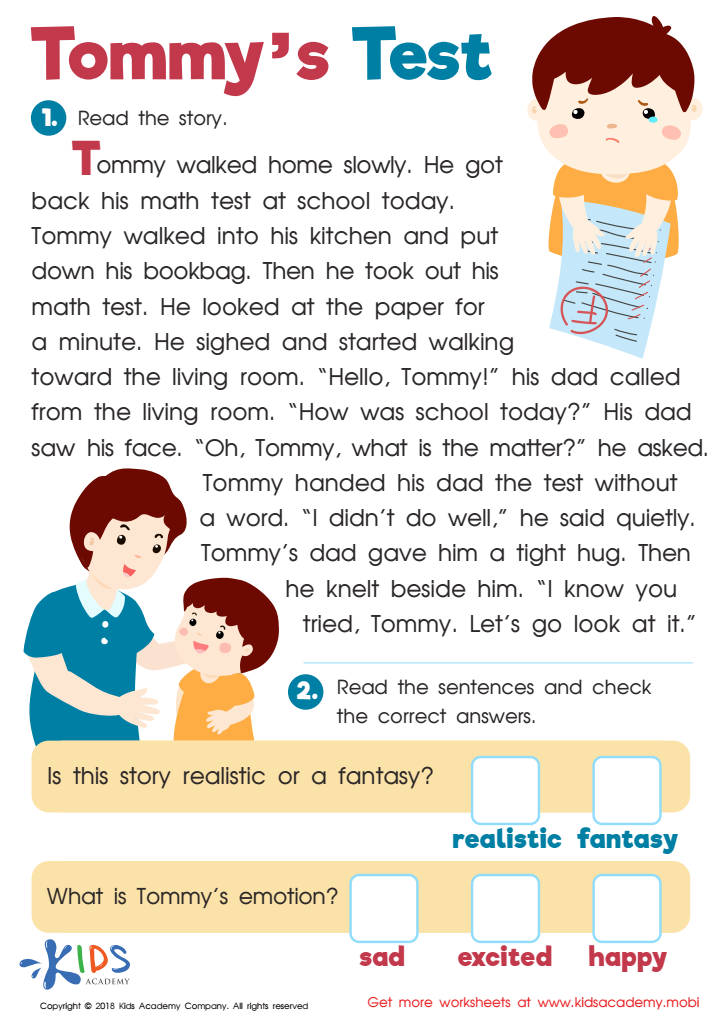
Tommys Test Worksheet
Reading short stories to your students builds a bond, teaches new words and lessons. Read the story aloud and then have them listen for details. Ask them the questions at the bottom and help them check the answers.
Tommys Test Worksheet
Worksheet
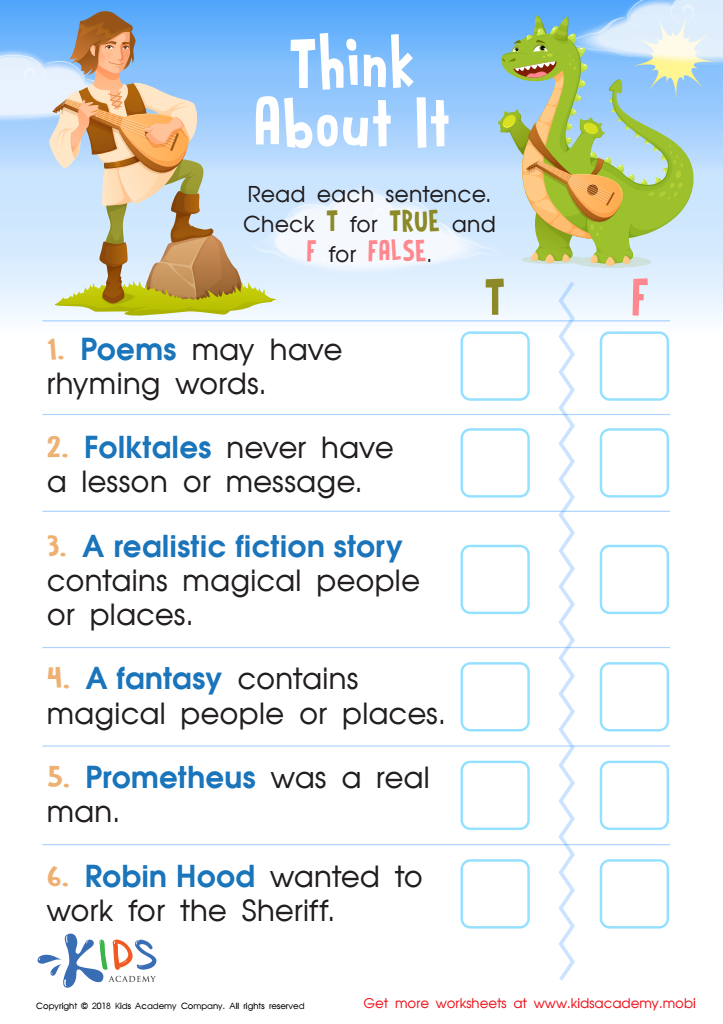
Think About It: Assessment Worksheet
Reading is a fun and important way to learn. Help your students become better readers with this simple yet colorful worksheet. Read each sentence aloud, then have them read it by themselves. Ask them to check T for True and F for False. It's a great way to practice their reading skills!
Think About It: Assessment Worksheet
Worksheet
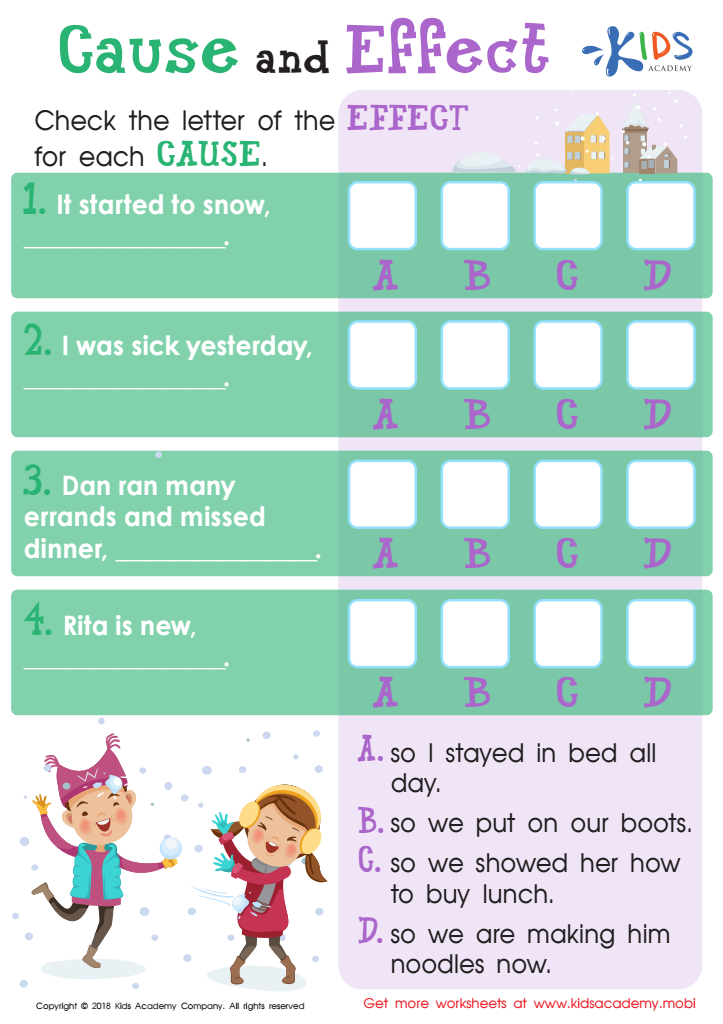
Cause and Effect Worksheet
Help your kids understand the cause-effect relationship of sentences by having them complete this worksheet. There are four incomplete sentences at the top and four options at the bottom. Have them select the appropriate letter for the effect of each cause. This will be the first step to their future of composing grammatically correct and meaningful sentences.
Cause and Effect Worksheet
Worksheet
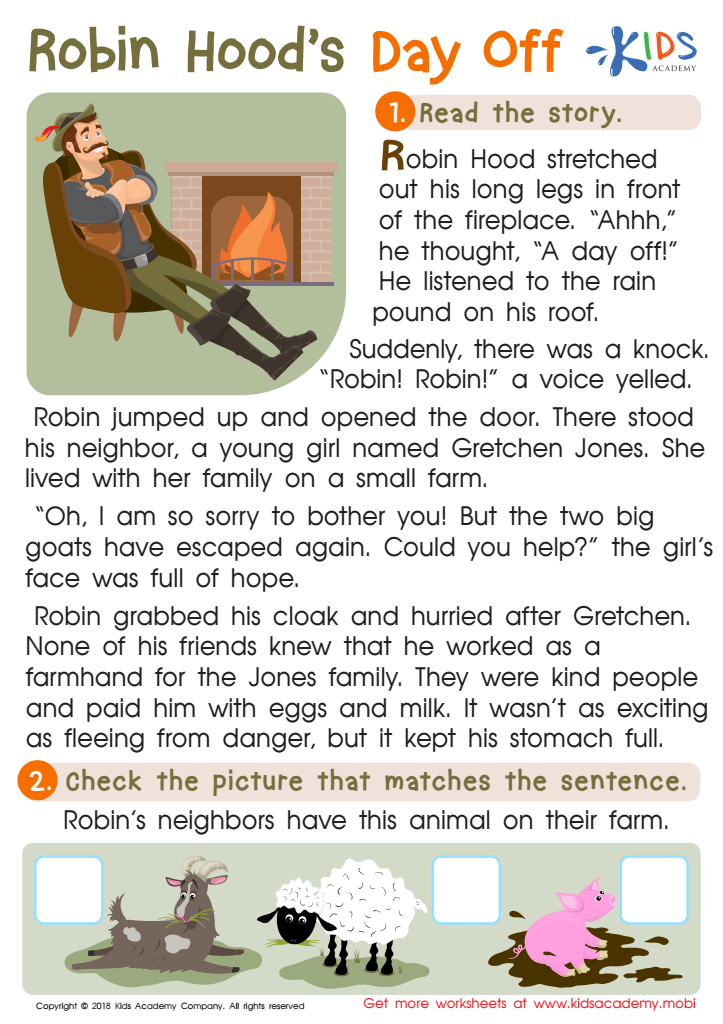
Robin Hood's Day Off Worksheet
Encourage your child to express their personality by writing stories. Show them this worksheet's short story about Robin Hood and read it slowly and carefully. Read it again if needed and ask the question below the story. This will help your child use their knowledge to answer it.
Robin Hood's Day Off Worksheet
Worksheet
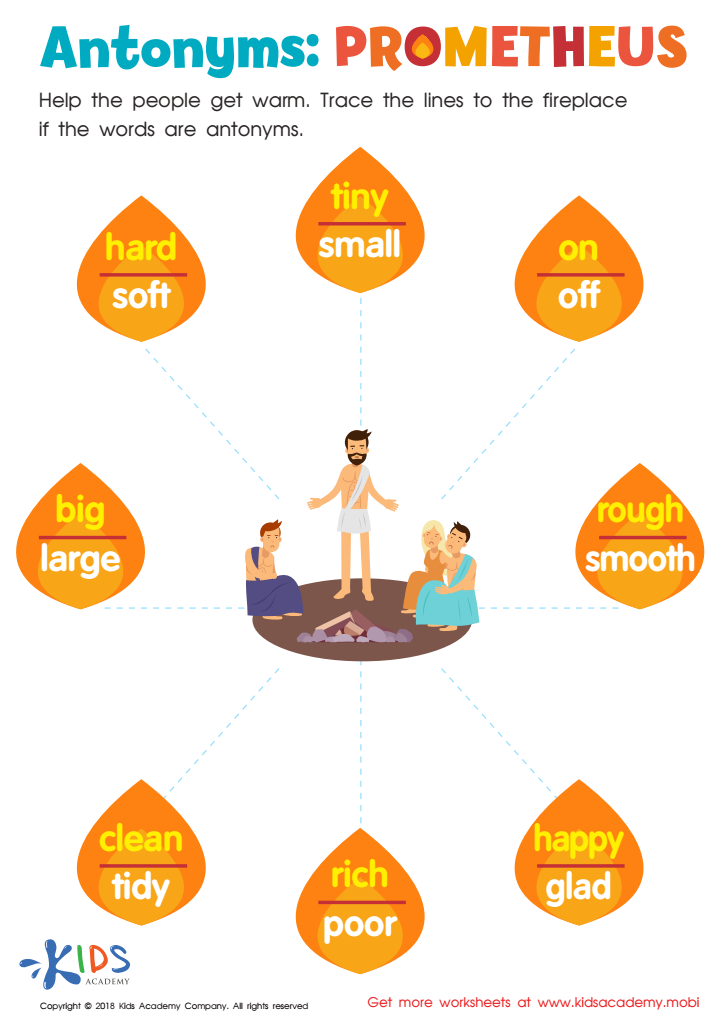
Antonyms: Prometheus Worksheet
Antonyms are words with opposite meanings to another. For example, the antonyms of 'good' are 'bad', 'poor' and 'wicked'. Ask your child to give you antonyms for 'Prometheus', which relates to fire. Invite your kids to trace the lines to the fireplace if the words are antonyms, helping the people in the tracing sheet get warm.
Antonyms: Prometheus Worksheet
Worksheet
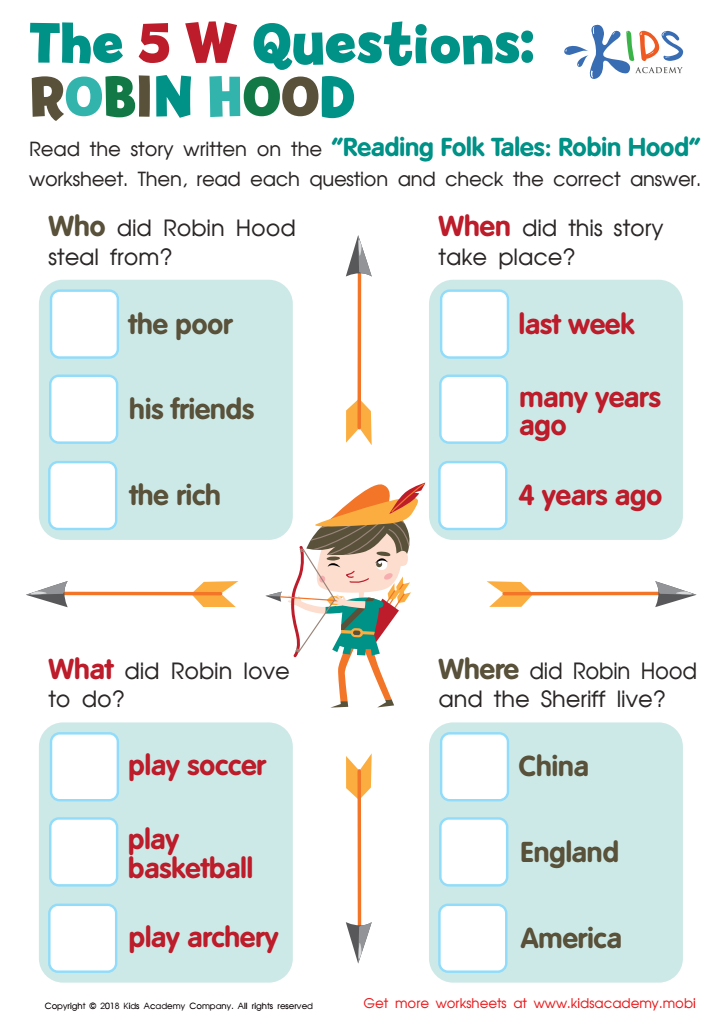
The 5 W Questions: Robin Hood Worksheet
Before embarking on this Robin Hood adventure, ensure your child reads and comprehends the 'Reading Folk Tales: Robin Hood' worksheet. Have them consider the story's lessons, and observe the details. Read the questions and help your kids select the correct answers.
The 5 W Questions: Robin Hood Worksheet
Worksheet
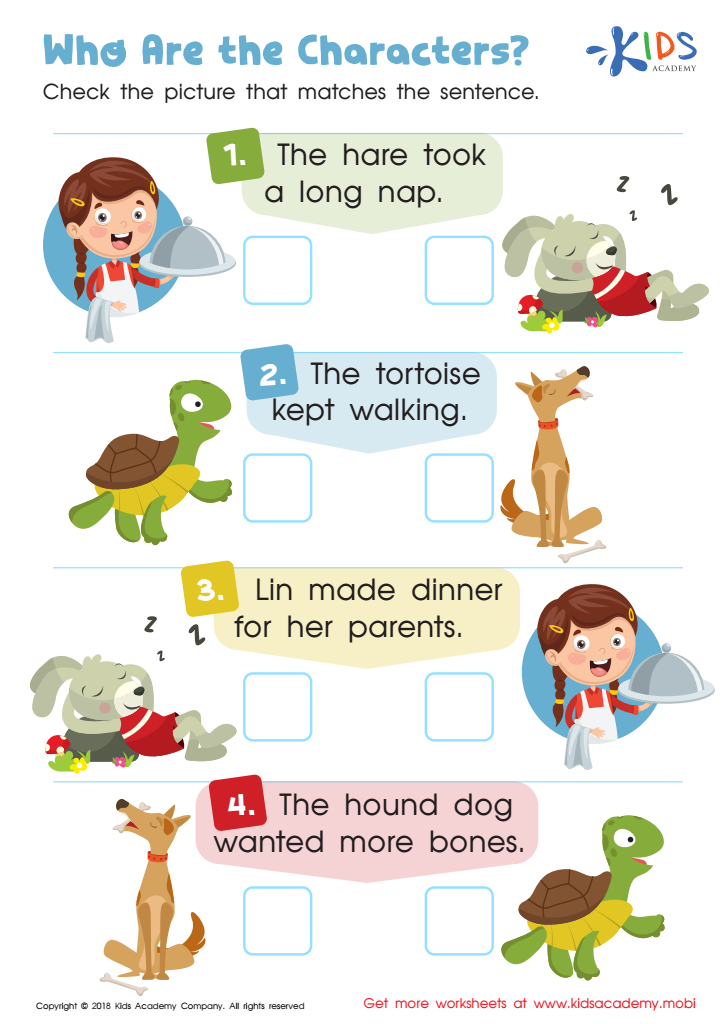
Who Are The Characters Worksheet
This worksheet tests your child's reading skills. Read each sentence out loud with them, then ask which of the two pictures match it. Help them check, then repeat this for the other sentences.
Who Are The Characters Worksheet
Worksheet
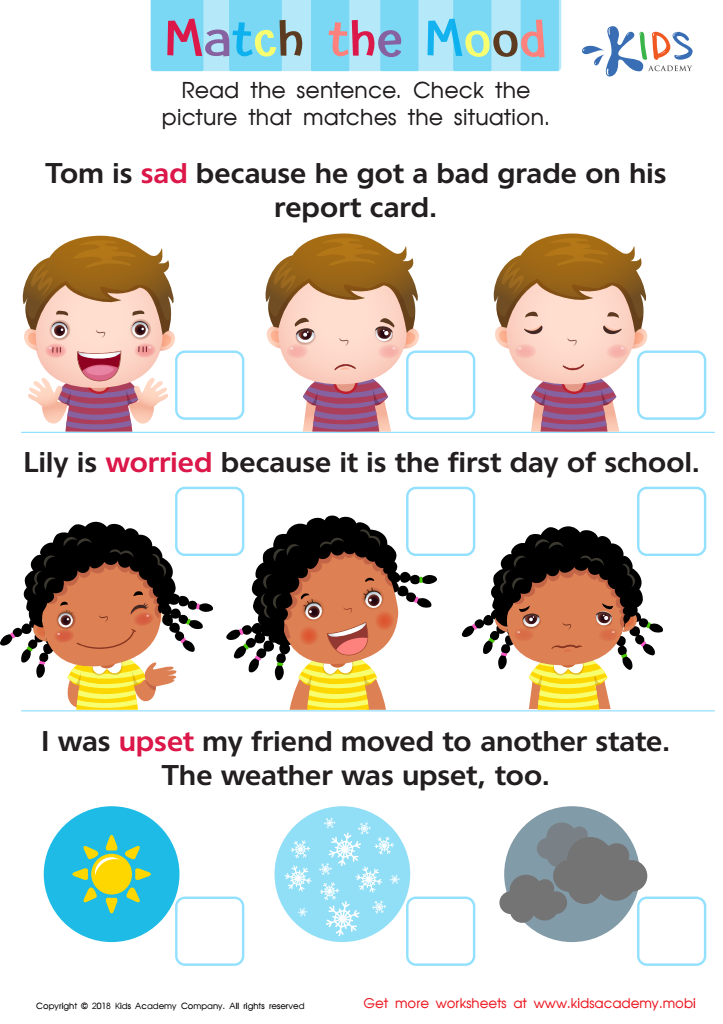
Match The Mood Worksheet
Ask your kid what kind of moods they usually experience; e.g. sad, happy, hurt or worried. Read aloud the sentences in the worksheet and help them match the situation to the picture. Max 80 words.
Match The Mood Worksheet
Worksheet
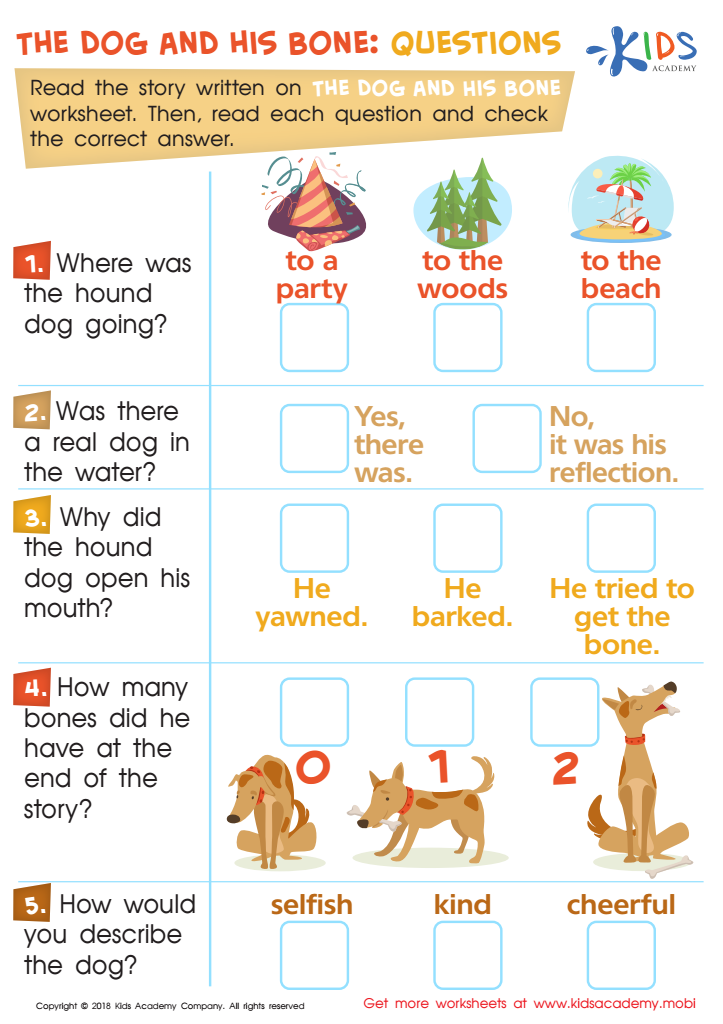
The Dog and His Bone: Questions Worksheet
Read the story of The Dog and His Bone to your child and help them understand it. Have them read it aloud if possible. Then, read the five questions on the worksheet and guide them to select the correct answers.
The Dog and His Bone: Questions Worksheet
Worksheet
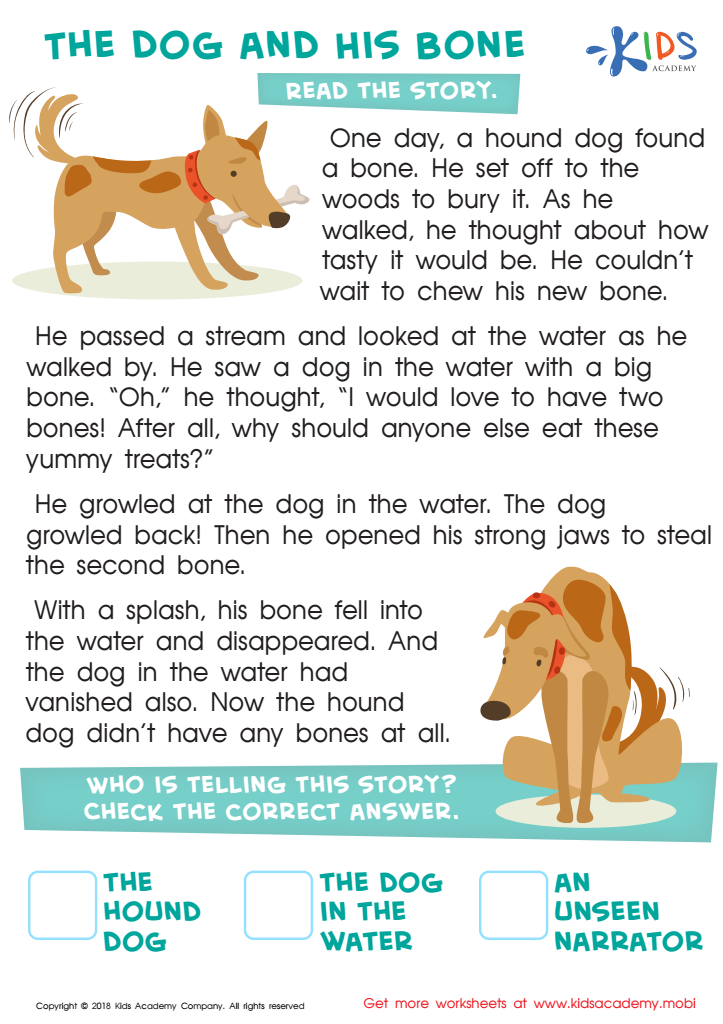
The Dog and His Bone Worksheet
Read the story of The Dog and His Bone to your kids, making sure they take in the details. Ask them the questions in this worksheet and help them check the answers. Encourage them to think carefully.
The Dog and His Bone Worksheet
Worksheet
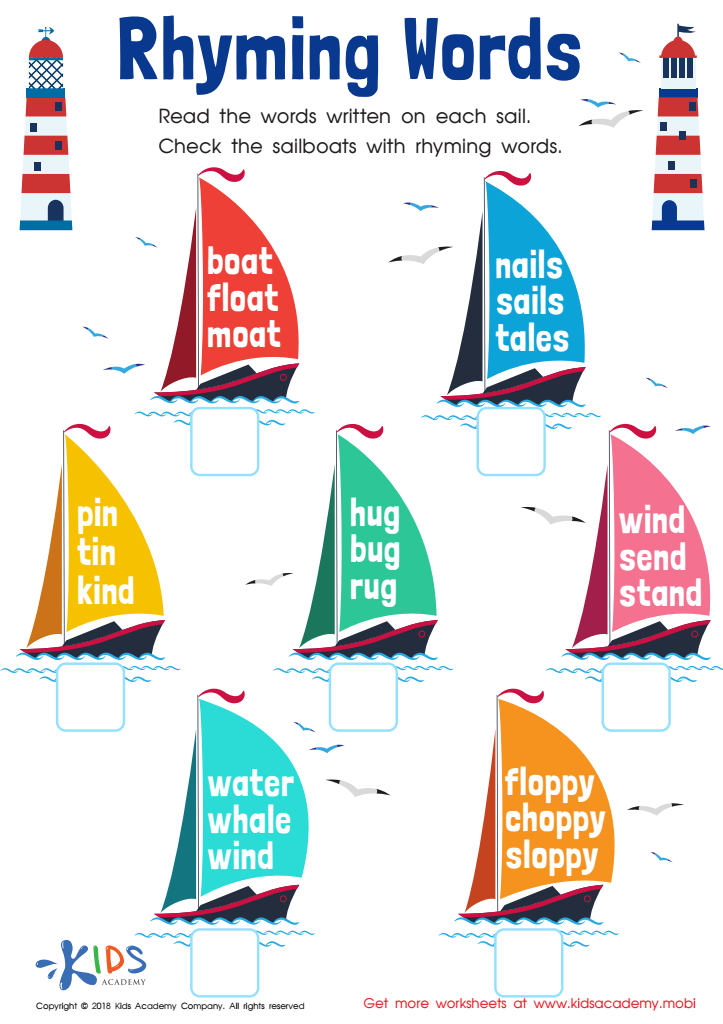
Rhyming Words Worksheet
Does your child know about rhyming words? Get them interested in poetry and explain that these words have similar sounds when pronounced. Read the words on each sailboat to your child and ask them to identify the rhyming pairs. Guide them to check the sailboats.
Rhyming Words Worksheet
Worksheet
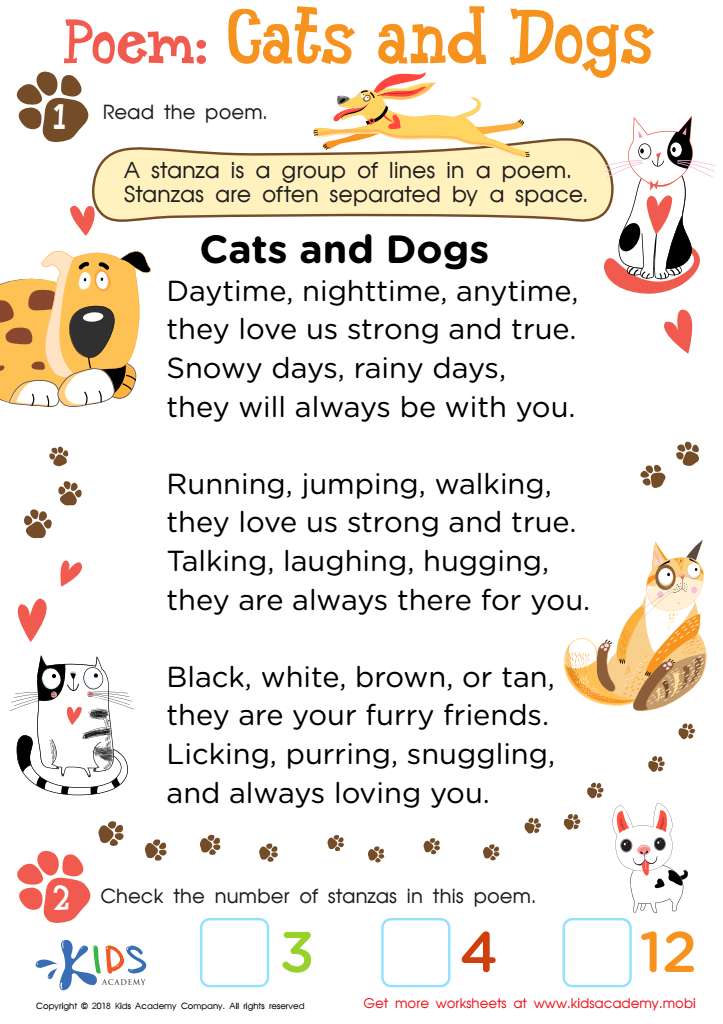
Poem: Cats and Dogs Worksheet
Read the poem to your child and point out where each stanza ends. Ask if they know what a stanza is (if not, explain it's a group of lines in a poem). Help them answer the question at the bottom of the printout. This simple, sweet poem about cats is easy for your child to relate to.
Poem: Cats and Dogs Worksheet
Worksheet
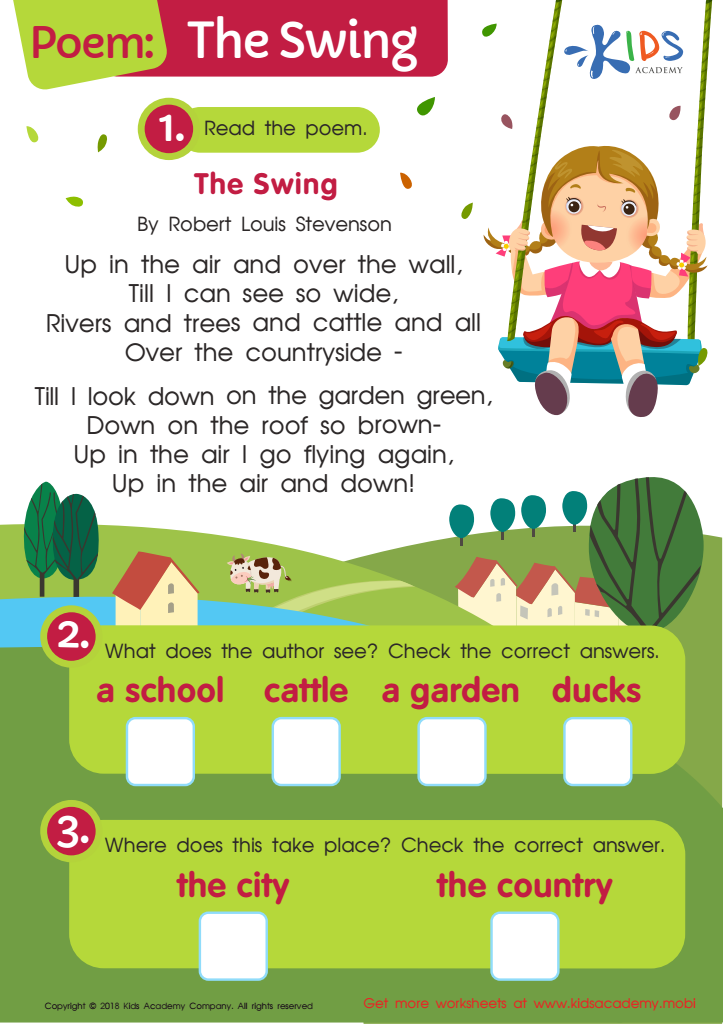
Poem: The Swing Worksheet
Encourage your child's love of writing by displaying their poems on the fridge or walls. This worksheet focuses on a swing, something your child enjoys, and contains questions to help your child think more deeply about the poem. Read it together, then answer the questions and watch as your child's creativity and writing skills blossom!
Poem: The Swing Worksheet
Worksheet
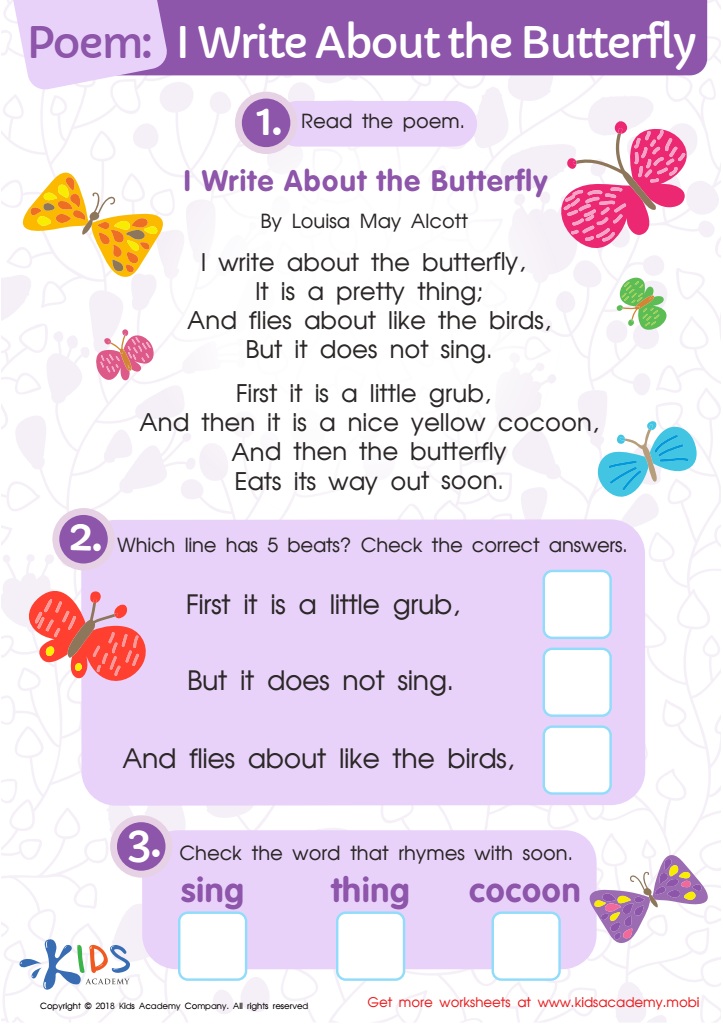
Poem: I Write About The Butterfly Worksheet
Do your kids like poetry? Encourage them to explore and connect with their poetic side! Read the butterfly poem from this worksheet aloud, then help them answer the questions. It's a great way to grow their appreciation of poetry and of the natural world.
Poem: I Write About The Butterfly Worksheet
Worksheet
Join Kids Academy for Free
Who is primarily going to use this learning content?