Fine motor skills (writing numbers) Preschool Worksheets
15 filtered results
Difficulty Level
Grade
Age
-
From - To
Subject
Activity
Standards
Help your child master the basics of writing numbers with our Preschool Fine Motor Skills Worksheets! Specifically designed for young learners, these worksheets provide fun, interactive activities to enhance fine motor control and number recognition skills. Your preschooler will enjoy tracing and writing numbers, gradually building their competence and confidence in a supportive, engaging way. Perfect for parents, teachers, and caregivers, these resources lay the foundation for future math success. Download our expertly crafted worksheets and watch your child's abilities grow while they have a blast exploring the delightful world of numbers! Start the learning journey today!
Favorites
With answer key
Interactive
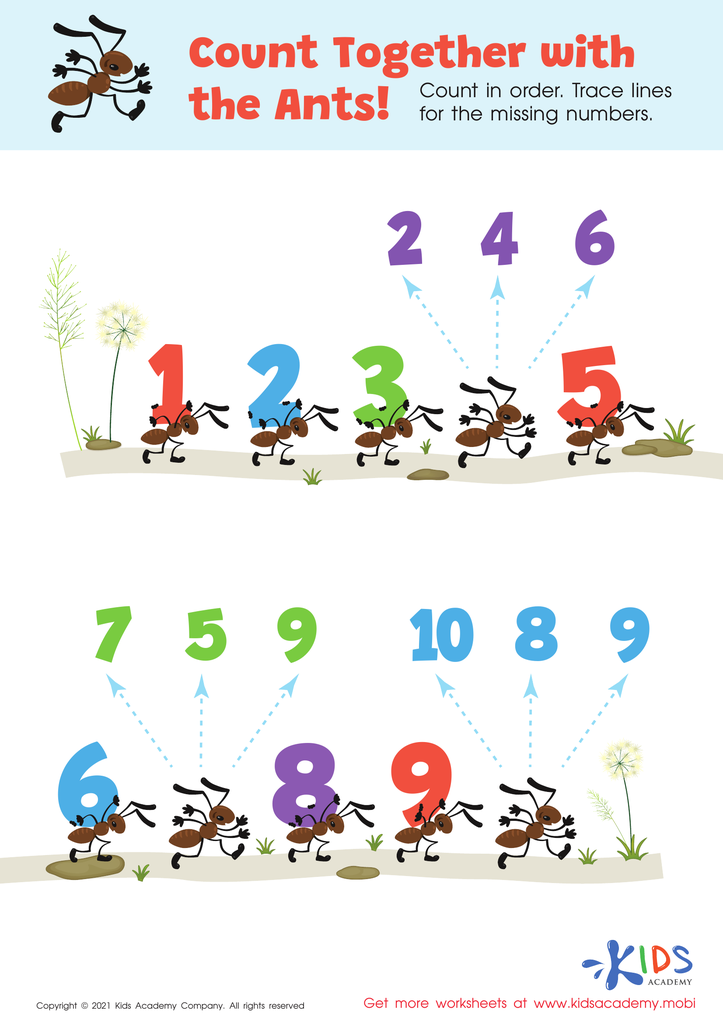
Count Together with the Ants Worksheet
Rather than letting kids get too deep in online games, keep them engaged with learning worksheets. Ask them to identify the insect in the picture, then count the ants. Help them trace lines to the missing numbers. It's simple and straightforward for young children to comprehend.
Count Together with the Ants Worksheet
Worksheet
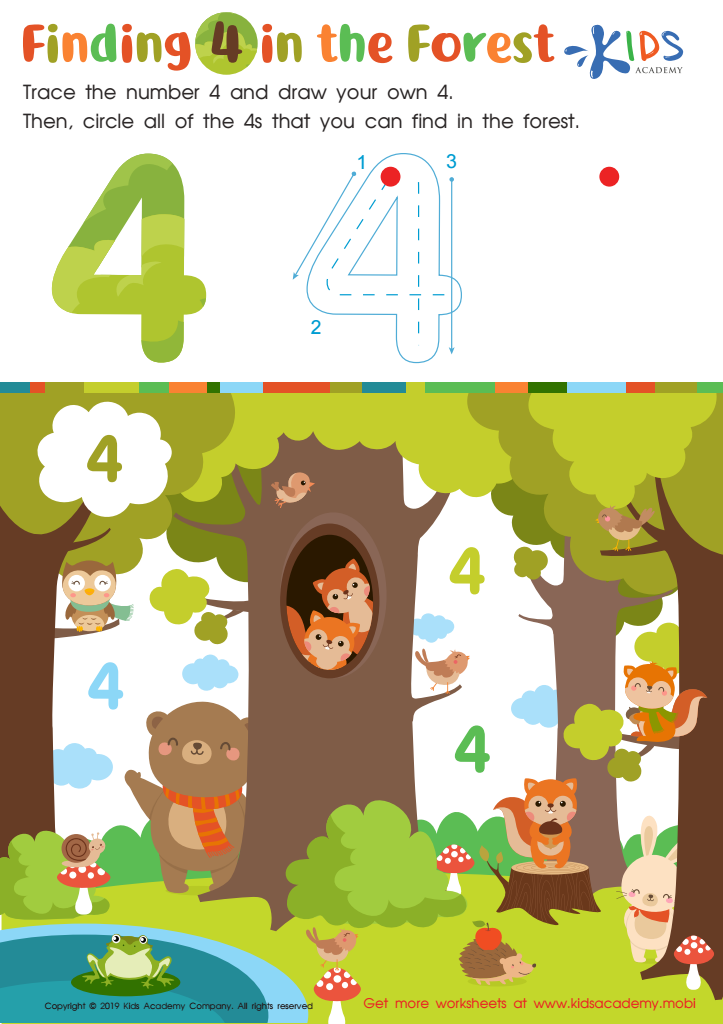
Finding 4 in the Forest Worksheet
Before starting, have your kids count as high as they can. Ask them to identify the setting and point out the 4s. Trace 4 and draw your own. Help your kids circle all the 4s they can find in the forest. How far can they count? How well did they find the hidden 4s?
 Assign to My Students
Finding 4 in the Forest Worksheet
Worksheet
Join Kids Academy for Free
Who is primarily going to use this learning content?







Fine motor skills are pivotal in a preschooler's development as they lay the foundation for many essential tasks, including writing numbers. These skills involve the coordination of small muscles in the hands and fingers with the eyes, nurturing precision and control. When children develop fine motor skills, they enhance their ability to perform not just academic tasks but also daily activities such as buttoning clothes, using utensils, and tying shoelaces, fostering independence and self-esteem.
Focusing on writing numbers is particularly significant because it integrates cognitive and motor development. This practice helps children understand numerical concepts and recognize patterns, setting the stage for future academic achievement in mathematics. Enhanced fine motor skills improve handwriting, which facilitates clearer and more effective communication and reduces frustration and errors in schoolwork.
For teachers, building these skills in preschool creates a more effective learning environment as students can better engage with the curriculum without the hindrance of motor difficulties. Parental involvement can reinforce these skills at home through play-based learning, making developmental progress a collaborative effort. Overall, caring about fine motor skills in preschoolers helps ensure a smoother transition to formal schooling and boosts educational and personal growth, providing a strong foundation for lifelong learning and daily functioning.