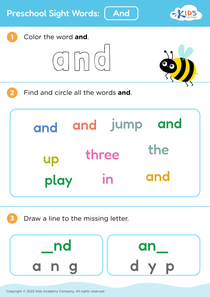
Boost your preschooler's logical thinking skills with our engaging printable worksheets! Designed specifically for early learners, these worksheets help children master essential problem-solving abilities, recognize patterns, and enhance analytical thinking. Each activity is crafted to be fun and interactive, encouraging little ones to think critically while having a great time. Ideal for home or classroom use, our worksheets cover various fun themes that keep kids engaged while they learn. Helping your child develop logical thinking at this early age sets a strong foundation for future academic success. Download our logical thinking development worksheets today and watch your child thrive!

Check out this FREE Preschool "Logical thinking development" Trial Lesson!

Power and Value of Pieces

Favorites
With answer key
Interactive
  • Preschool
  • Logical thinking development
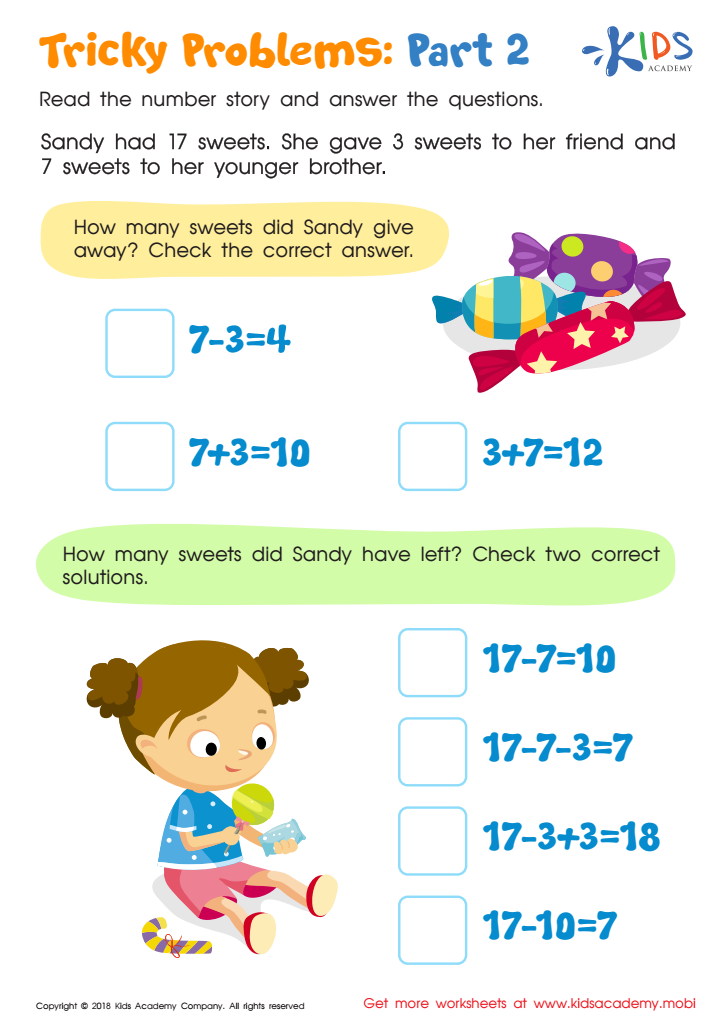
Tricky Problems Worksheet: Part 2

Tricky Problems Worksheet: Part 2

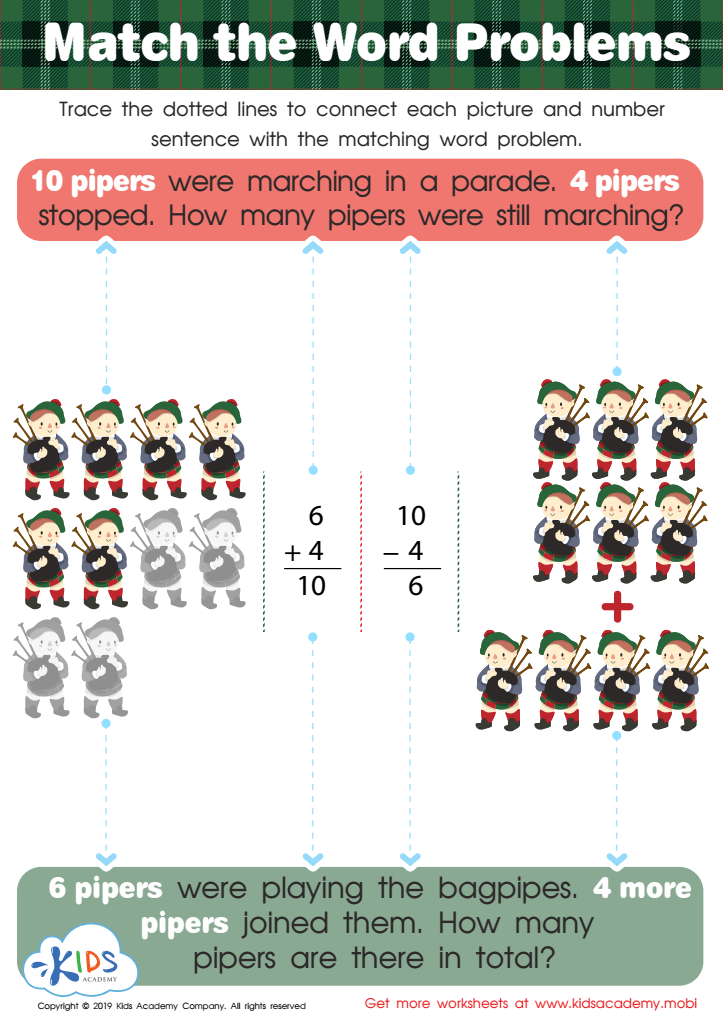
Help your little math learner visualize number stories with this engaging worksheet. They'll connect pictures to the story and use math facts to find the sums. After that, they'll be able to identify the correct number sentences to match. Let them practice and get better at problem solving!
Tricky Problems Worksheet: Part 2
Worksheet
Match the Word Problems Worksheet

Match the Word Problems Worksheet

Read this word problem to your kids: Help them understand how it can be translated into a number problem. Trace the dotted lines to see how each picture and number sentence match the problem. With this worksheet, you can show your kids how easy it is to transform a word problem into a number problem.
Match the Word Problems Worksheet
Worksheet
Find the Last! Worksheet

Find the Last! Worksheet

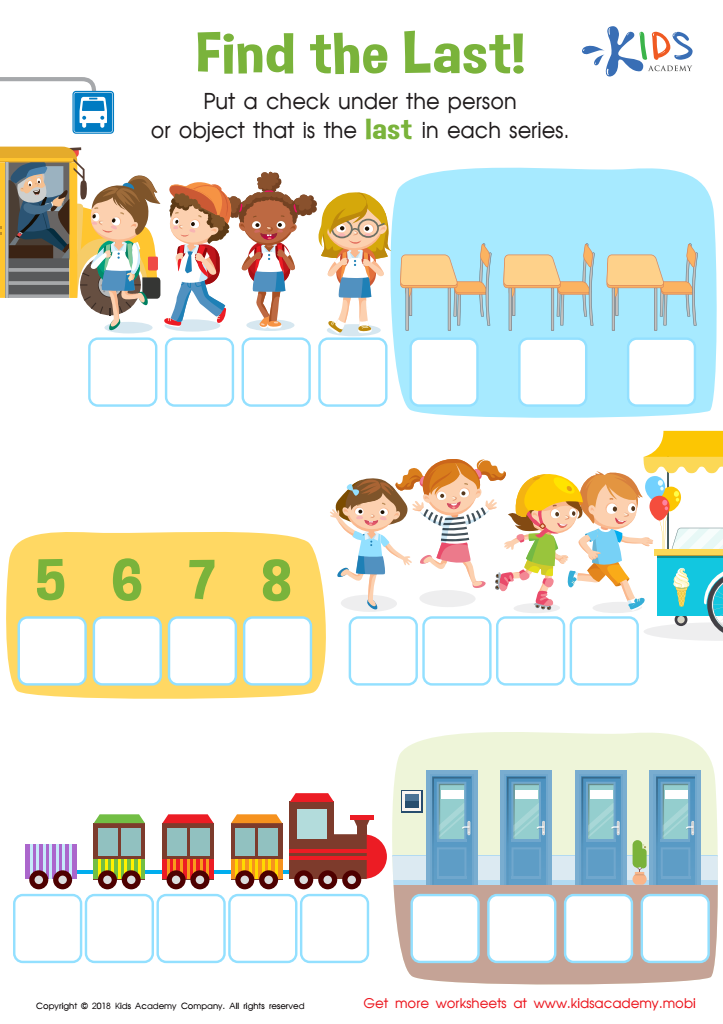
Teach young students about sequence words with this free worksheet. Have them look at sets of people or objects and choose the one that is last. Engage them further by having them describe or act out their day, and what happens last? Enjoy this printout and have fun!
Find the Last! Worksheet
Worksheet
Using Number Sentences to Solve Problems Worksheet

Using Number Sentences to Solve Problems Worksheet

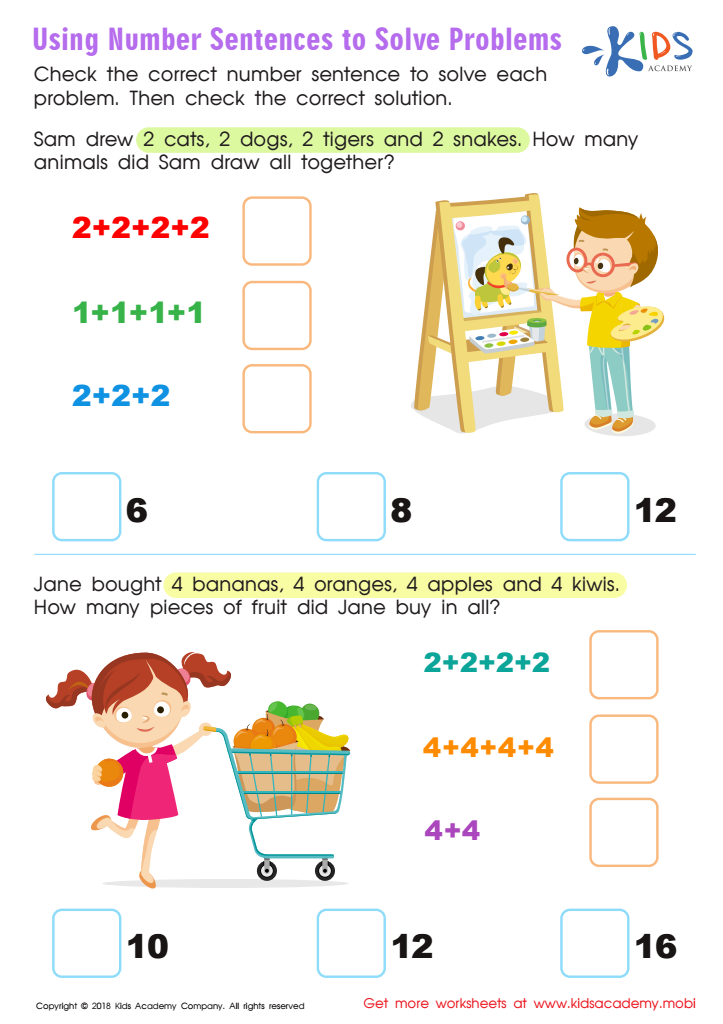
Solving math problems requires an efficient strategy. Picture representation can help young mathematicians with basic addition problems, especially when it involves repeated addends. As they gain confidence, they'll be able to apply their number sentence solving abilities to more complex equations.
Using Number Sentences to Solve Problems Worksheet
Worksheet
Chess Pieces Math Worksheet

Chess Pieces Math Worksheet

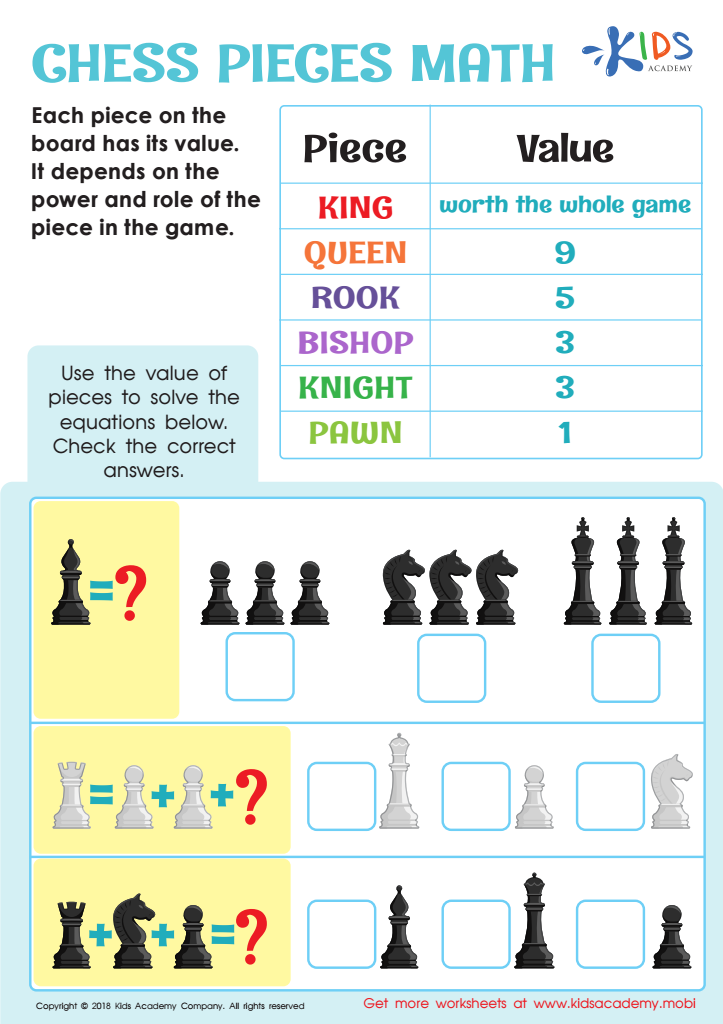
Chess involves math! Each piece has its own value, from the king (worth the entire game) to the queen (9 points), varying according to their power and role. In the worksheet, your child must use these values to solve the equations at the bottom.
Chess Pieces Math Worksheet
Worksheet
What Is a Stalemate? Worksheet

What Is a Stalemate? Worksheet

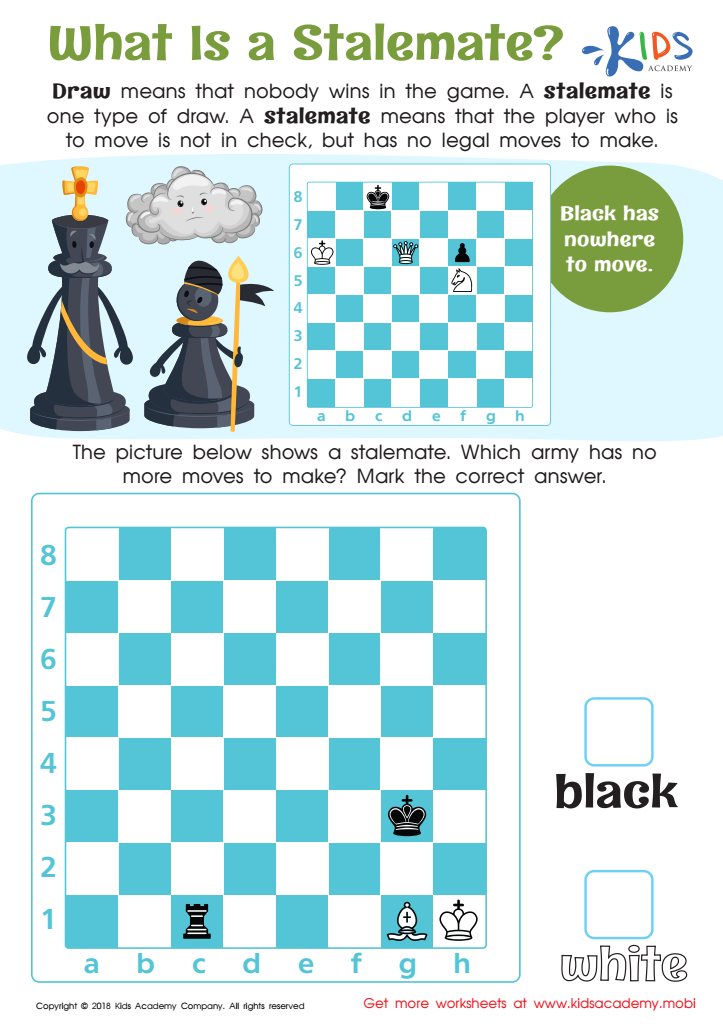
Chess is an ideal way to develop logic, strategizing, problem-solving and more! Even kids can learn it. With this worksheet, children can learn about draws and stalemates. Sample boards will help them decide which team, black or white, is at a stalemate.
What Is a Stalemate? Worksheet
Worksheet
Setting up the Chessboard: Part 1 Worksheet


Setting up the Chessboard: Part 1 Worksheet

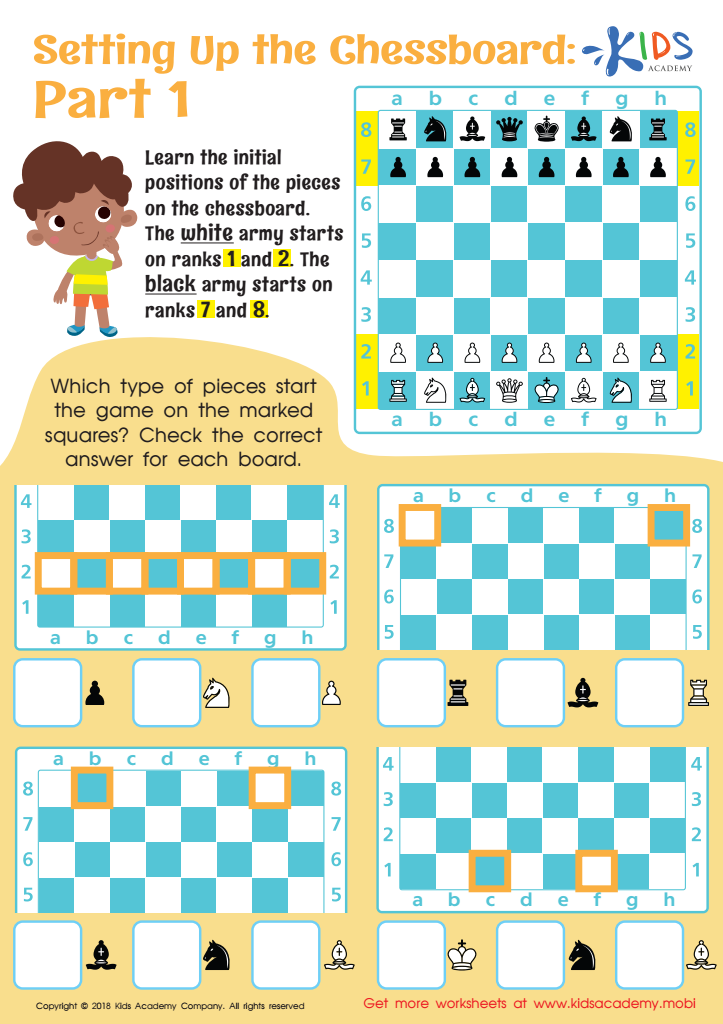
Teach your child the starting positions of the black and white armies on the chessboard. Black pieces are placed on ranks 7 and 8, and white pieces on ranks 1 and 2. Have them check the highlighted boxes on the chessboard to make sure they know the correct pieces to start with.
Setting up the Chessboard: Part 1 Worksheet

Worksheet


Parents and teachers should prioritize the development of logical thinking skills in preschool because these skills form the foundation for a child's future learning and problem-solving abilities. Logical thinking fosters critical skills such as reasoning, pattern recognition, and decision-making. These abilities are not only essential for academic success but also for everyday situations that require children to analyze, evaluate, and make informed choices.

In preschool, children are naturally curious, and by engaging them in activities that promote logical thinking—such as puzzles, categorization games, and storytelling—they learn to connect ideas and draw conclusions. These exercises enhance cognitive development, improve verbal skills, and encourage collaboration with peers, all crucial aspects of their growth.

Moreover, nurturing logical thinking helps cultivate resilience. Kids learn that encountering challenges is a part of life and that with patience and strategic thinking, they can overcome them. This sense of perseverance contributes to their emotional well-being.

In a world increasingly driven by technology and information, fostering logical thinking prepares preschoolers not only for school but for their roles as informed and competent adults. By investing in these skills early, parents and teachers are laying the groundwork for lifelong learning and successful interpersonal relationships.