Understanding fractions Preschool Worksheets
13 filtered results
Difficulty Level
Grade
Age
-
From - To
Subject
Activity
Standards
Discover engaging "Understanding Fractions Preschool Worksheets" that make learning fun and interactive! Our carefully designed worksheets introduce young learners to the concept of fractions through colorful visuals and age-appropriate activities. These resources help children grasp the basics of fractions by exploring halves, quarters, and more, enhancing their mathematical foundation early on. Perfect for at-home learning or classroom use, our worksheets encourage hands-on practice, promote critical thinking, and boost confidence in math skills. Create a playful learning environment as kids connect with fractions through games and exercises. Download your free worksheets today and watch your little ones thrive in their understanding of fractions!
Favorites
With answer key
Interactive
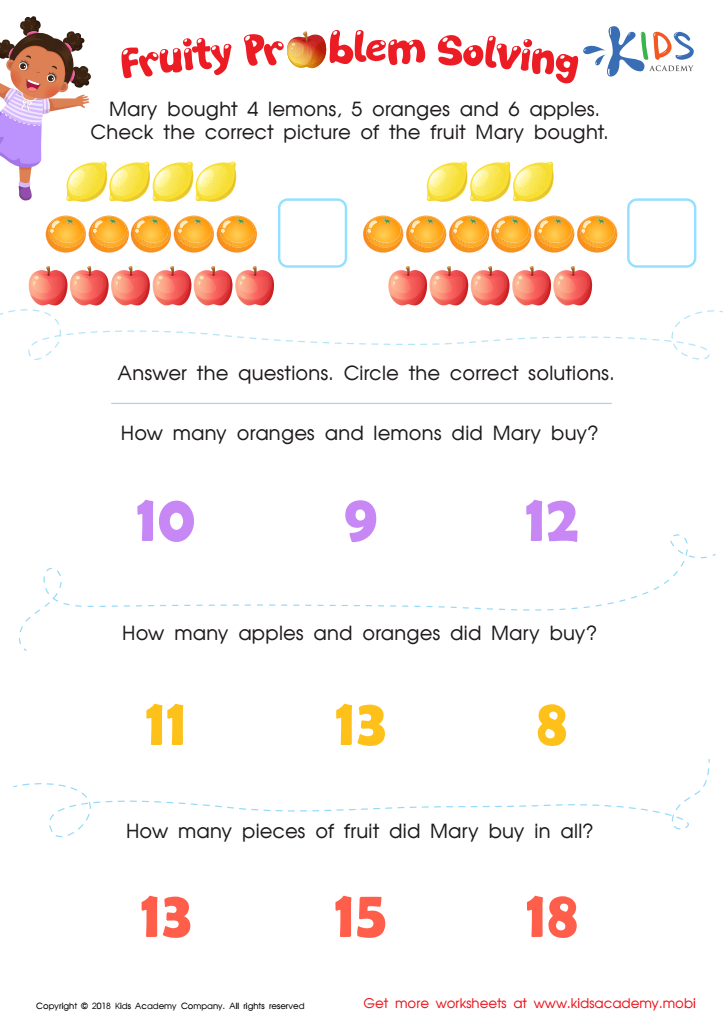
Fruity Problem Solving Worksheet
Practice addition word problems with young mathematicians using this PDF worksheet featuring fruit. As they read each problem carefully and circle the correct sums, they'll reinforce attention to detail and fine motor skills. Tangible representations are key to helping them with basic addition.
 Assign to My Students
Fruity Problem Solving Worksheet
Worksheet
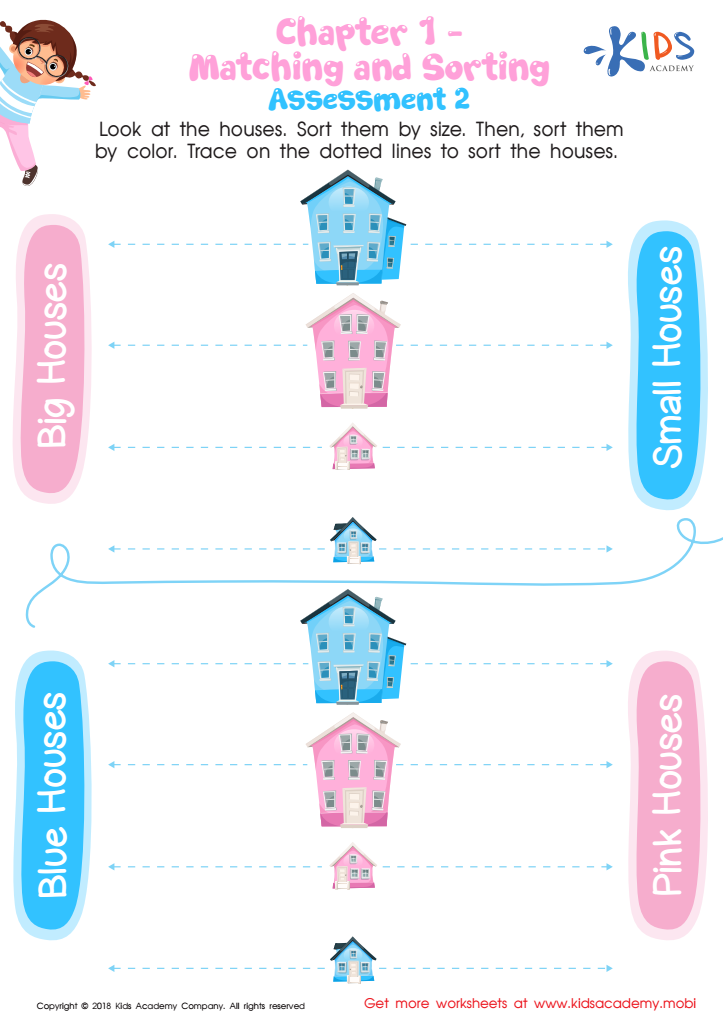
Matching and Sorting for Preschool: Assessment 2 Worksheet
Encourage your kids to take a look at the colorful pictures. Ask them to name the objects. Next, point out any differences between the houses and let them sort them according to color and size. Finally, help them trace the houses on the dotted lines.
Matching and Sorting for Preschool: Assessment 2 Worksheet
Worksheet
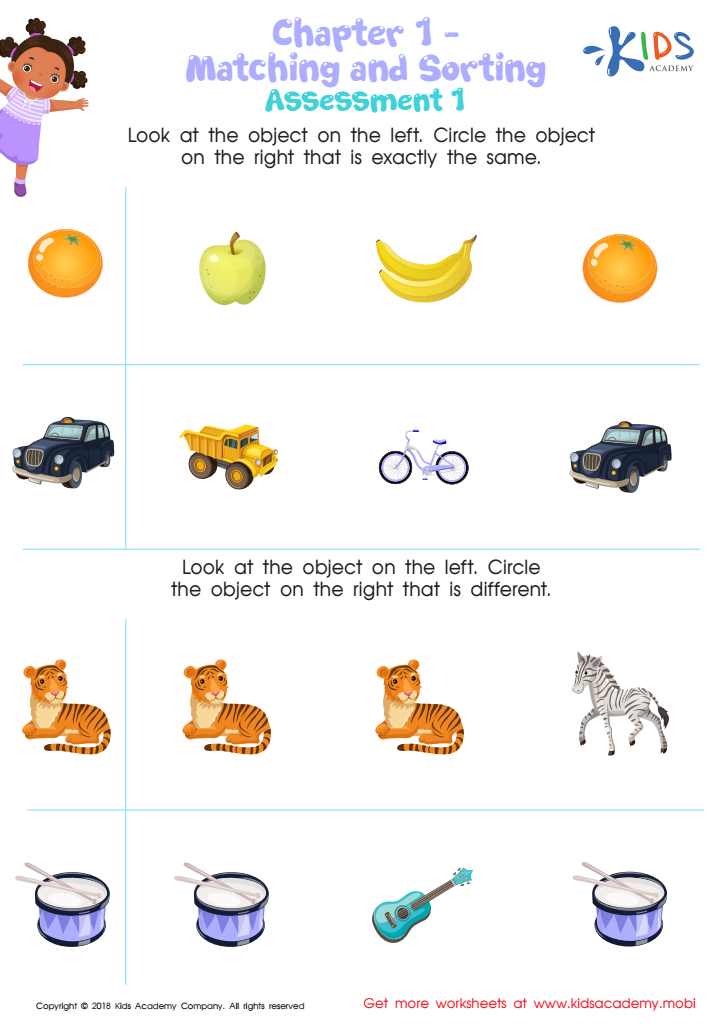
Matching and Sorting for Preschool: Assessment 1 Worksheet
Test your child's matching skills with this worksheet! Ask them to name each of the objects pictured, then circle the ones that are the same. Repeat for the second task. It's a great way to assess their skills and have fun at the same time!
Matching and Sorting for Preschool: Assessment 1 Worksheet
Worksheet
Join Kids Academy for Free
Who is primarily going to use this learning content?







Understanding fractions at the preschool level lays a crucial foundation for children's mathematical development. It introduces concepts of part-whole relationships, which are fundamental in not only math but also in daily life.
Teaching fractions early helps children make sense of how things compare in size, quantity, and quality. For instance, when children share snacks or divide toys into groups, they are naturally engaging in fractional thinking. This hands-on experience makes the concept tangible and understandable.
Moreover, a grasp of fractions fosters critical thinking and problem-solving skills. Young learners who understand fractions are better prepared to tackle more complex mathematical concepts in higher grades. Early exposure encourages curiosity and confidence in math, reducing anxiety in later years.
For parents and teachers, integrating fractions into everyday activities promotes a positive learning environment. It can be done through cooking, arts and crafts, or simple games, creating a fun and interactive way to learn. Ultimately, when caregivers prioritize early fraction understanding, they empower children with essential skills that last a lifetime, making math an enjoyable and rewarding subject. Early proficiency in fractions not only supports academic growth but also enhances cognitive development overall.