Hand-eye Coordination Preschool Addition & Subtraction Worksheets
18 filtered results
-
From - To
Discover the perfect way to enhance your preschooler's math skills with our Hand-eye Coordination Preschool Addition & Subtraction Worksheets. Designed to engage young learners, these worksheets combine captivating activities with essential math practice. By guiding children through fun, interactive tasks, kids improve their hand-eye coordination while mastering basic addition and subtraction. Each worksheet offers vibrant illustrations and age-appropriate exercises to make learning enjoyable and effective. Ideal for early childhood development, our carefully crafted printables support both educational growth and fine motor skills. Empower your child to excel in math with our expertly designed resources at Kids Academy.
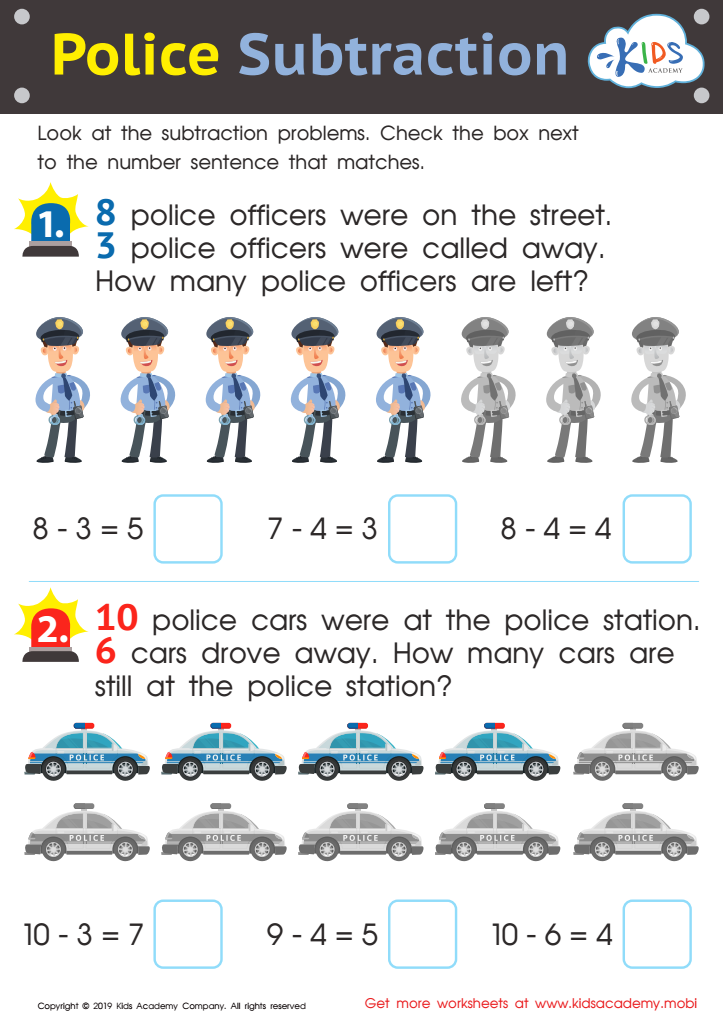
Police Subtraction Worksheet
 Assign to My Students
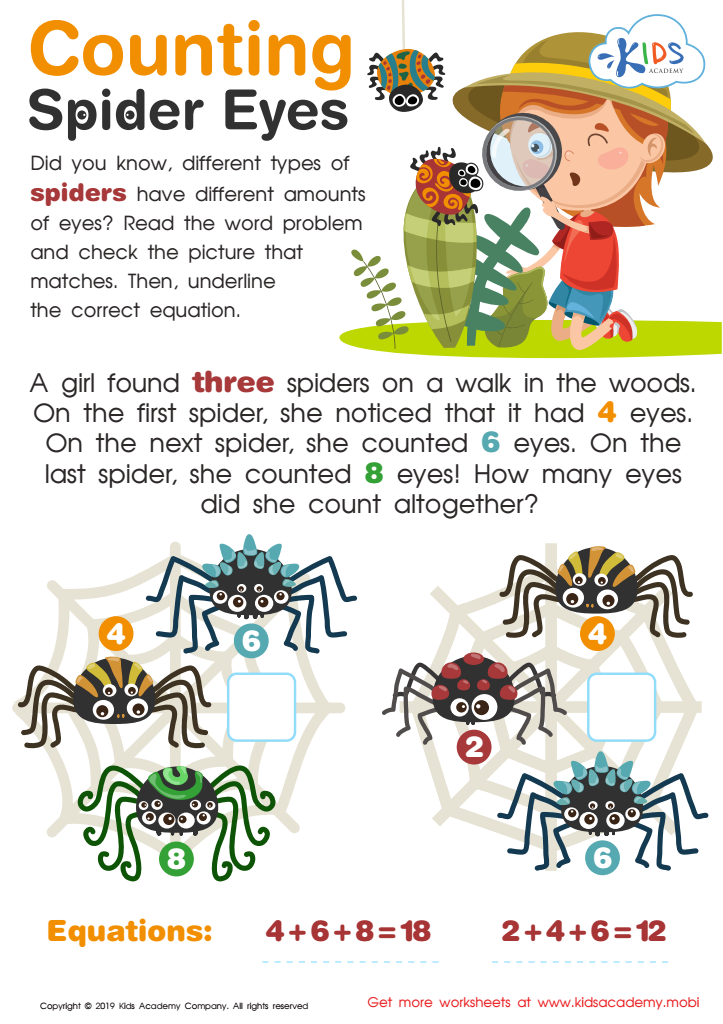
Counting Spider Eyes Worksheet
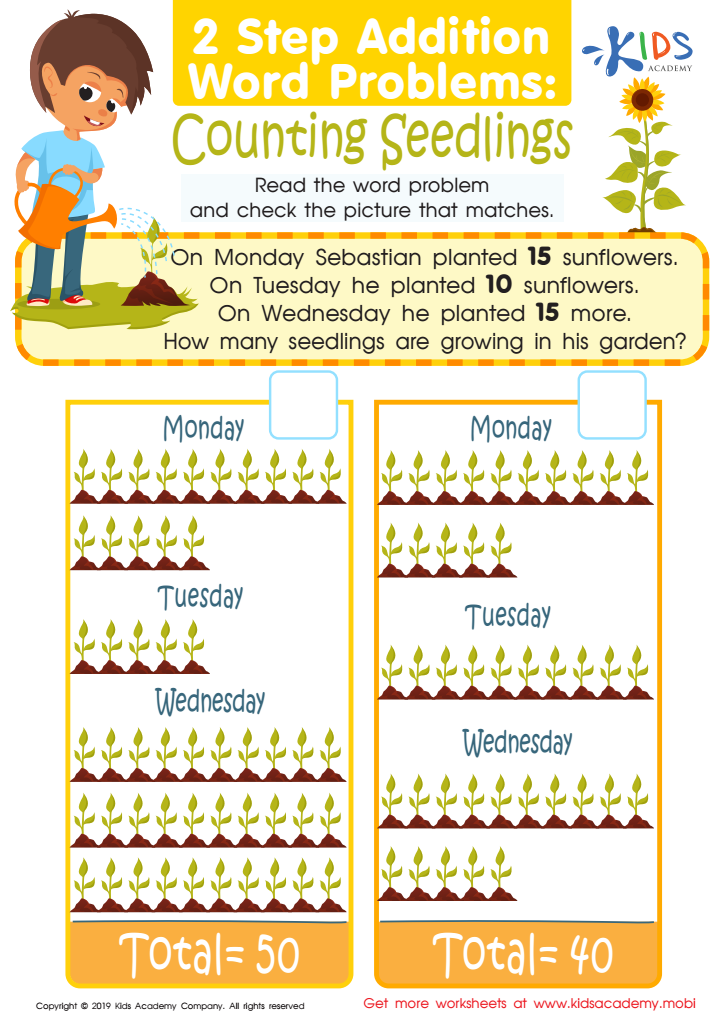
Counting Seedlings Worksheet
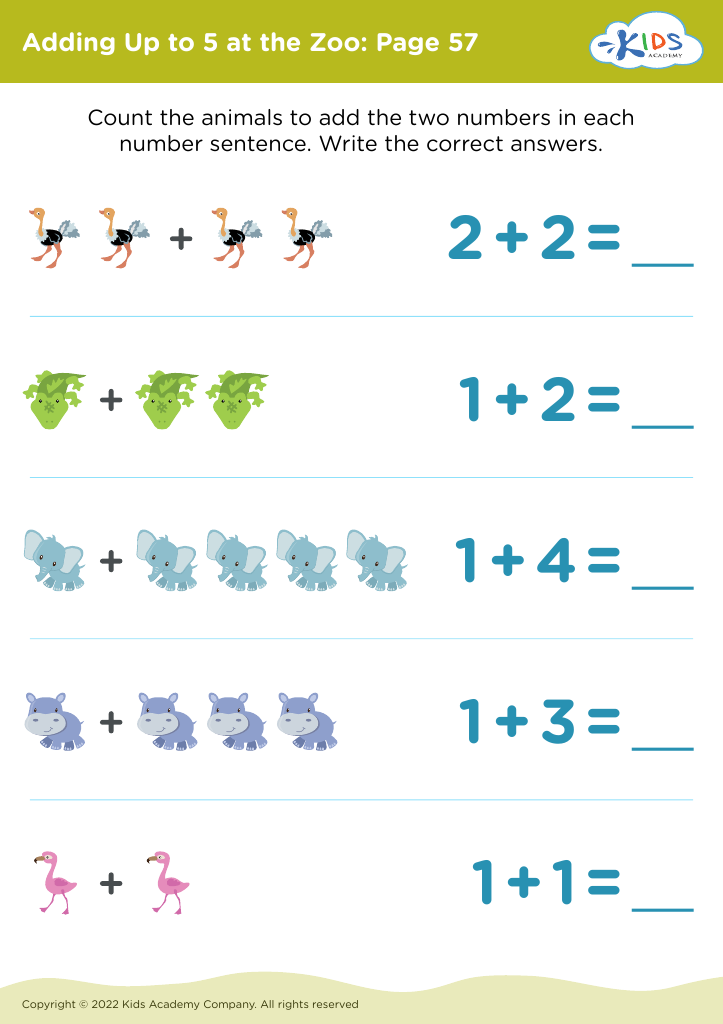
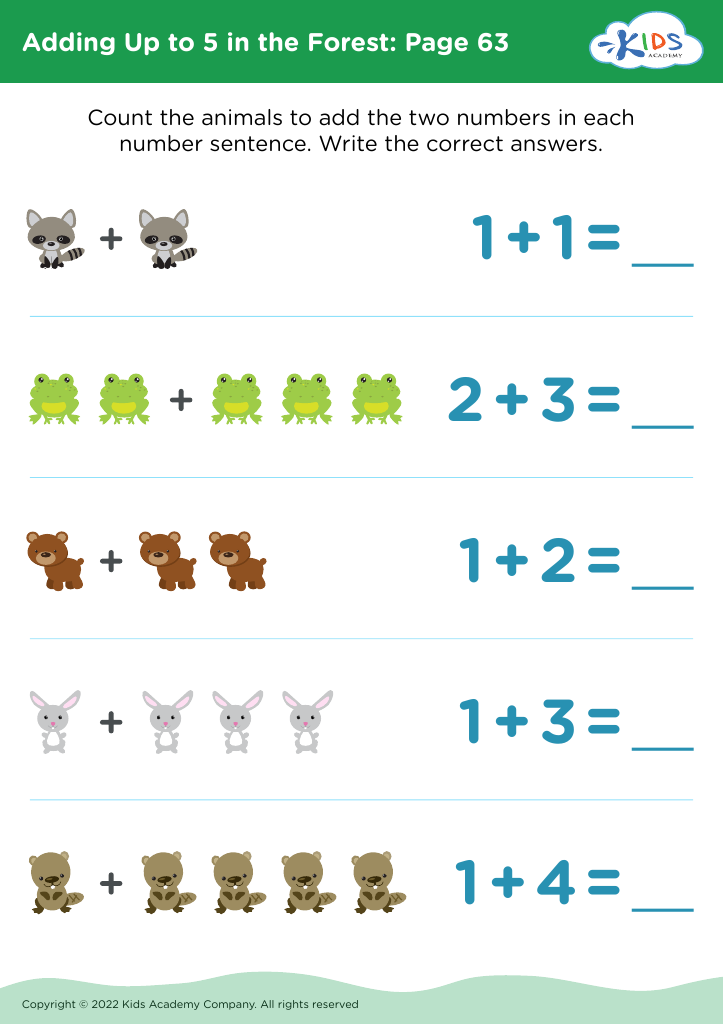
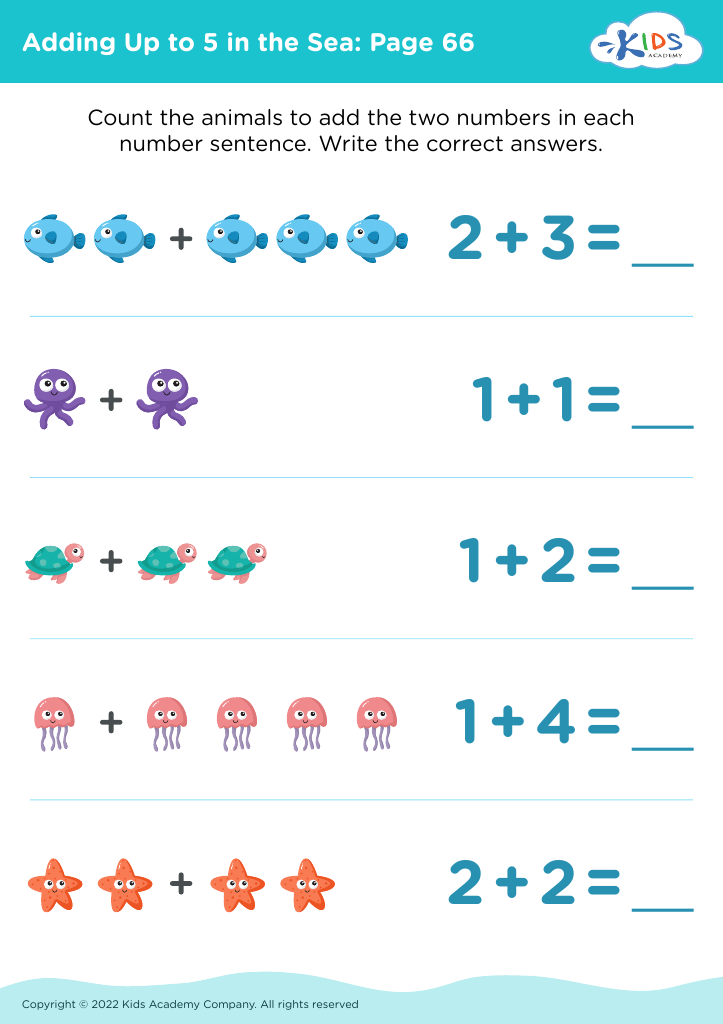
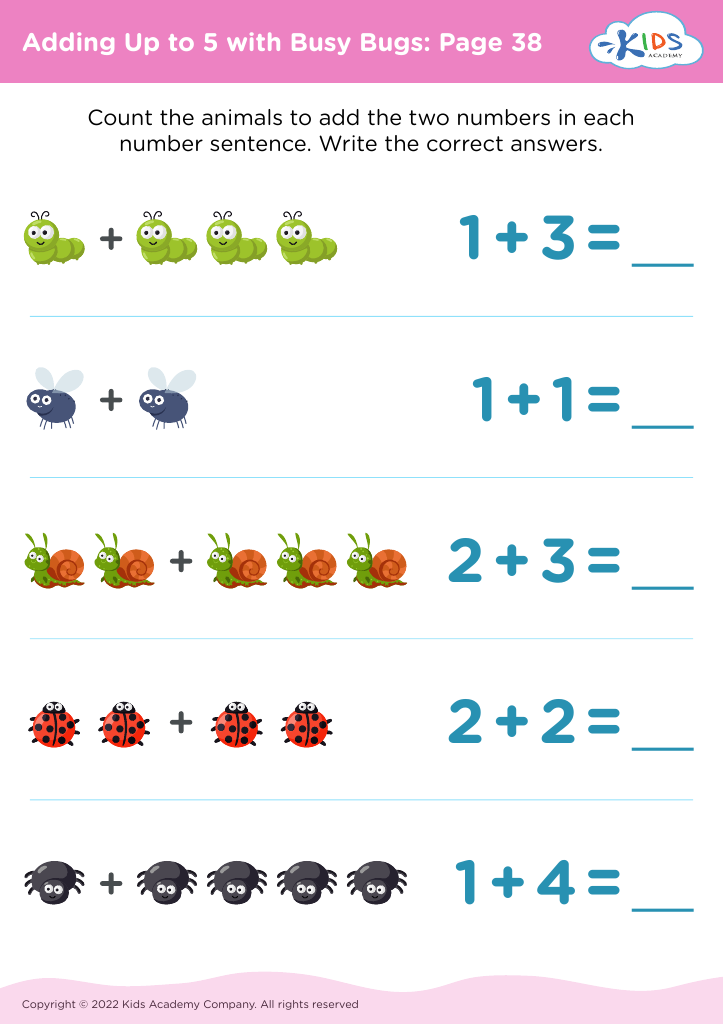
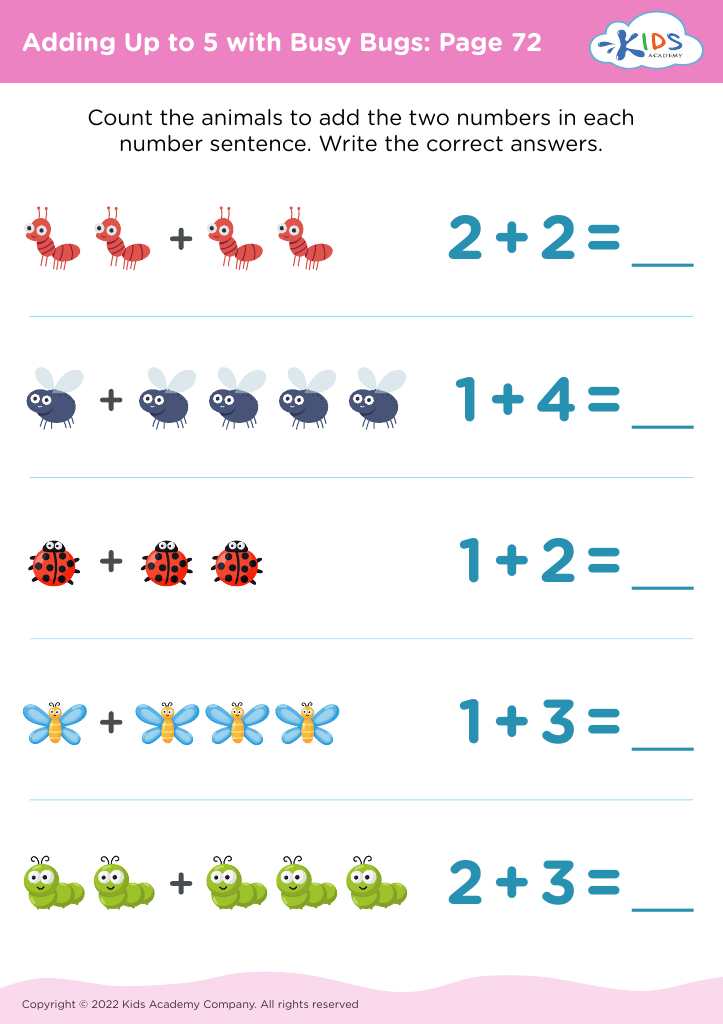
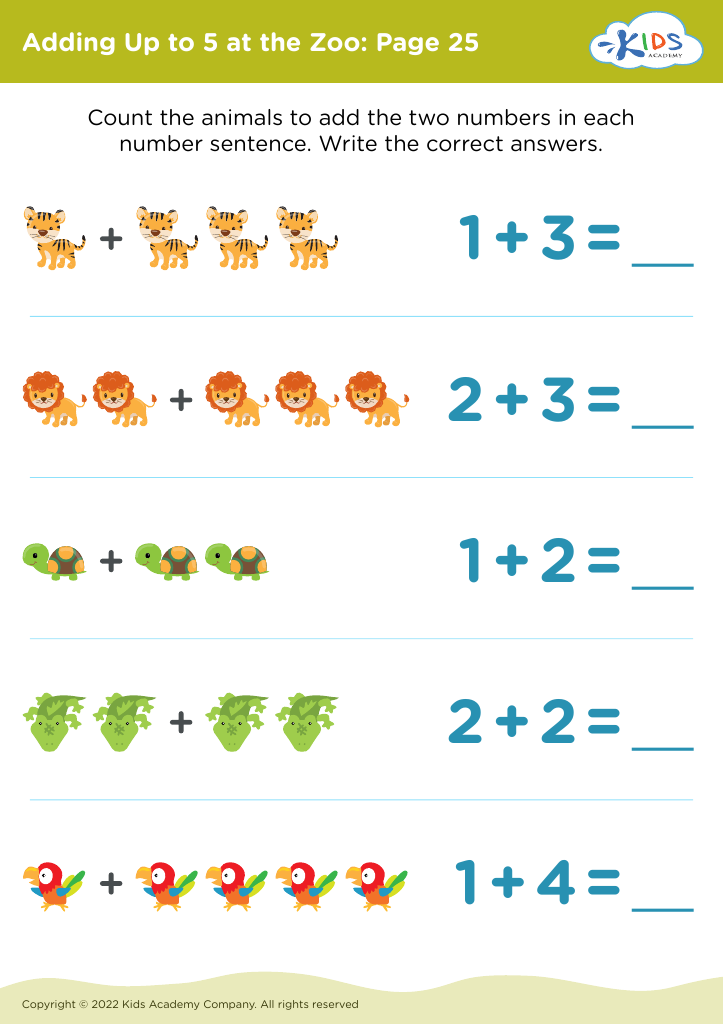
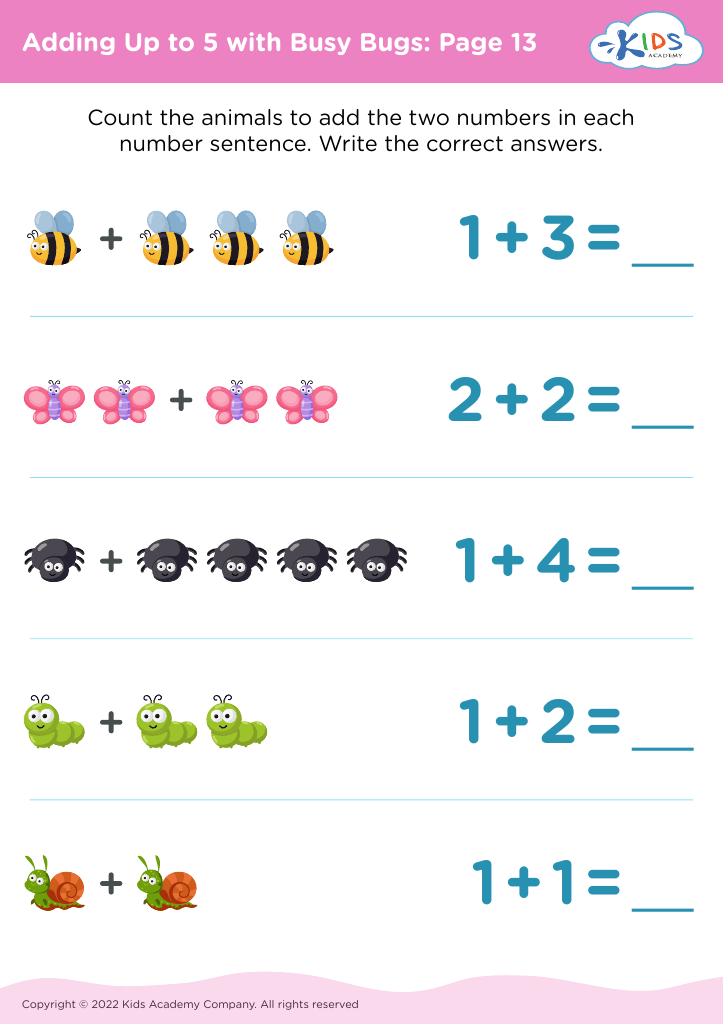
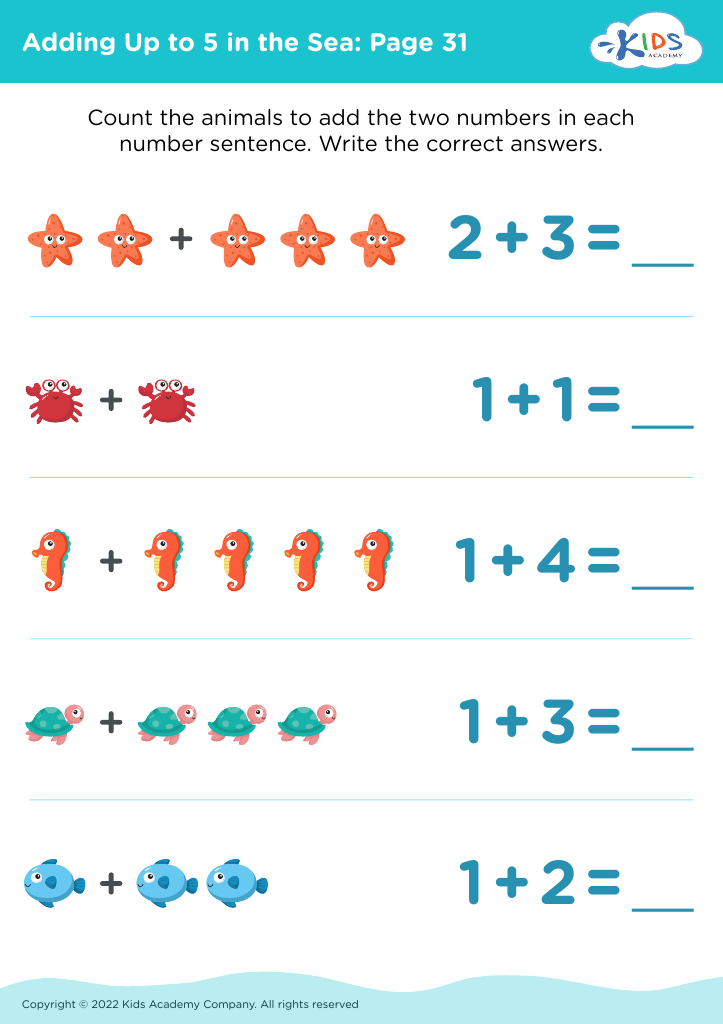
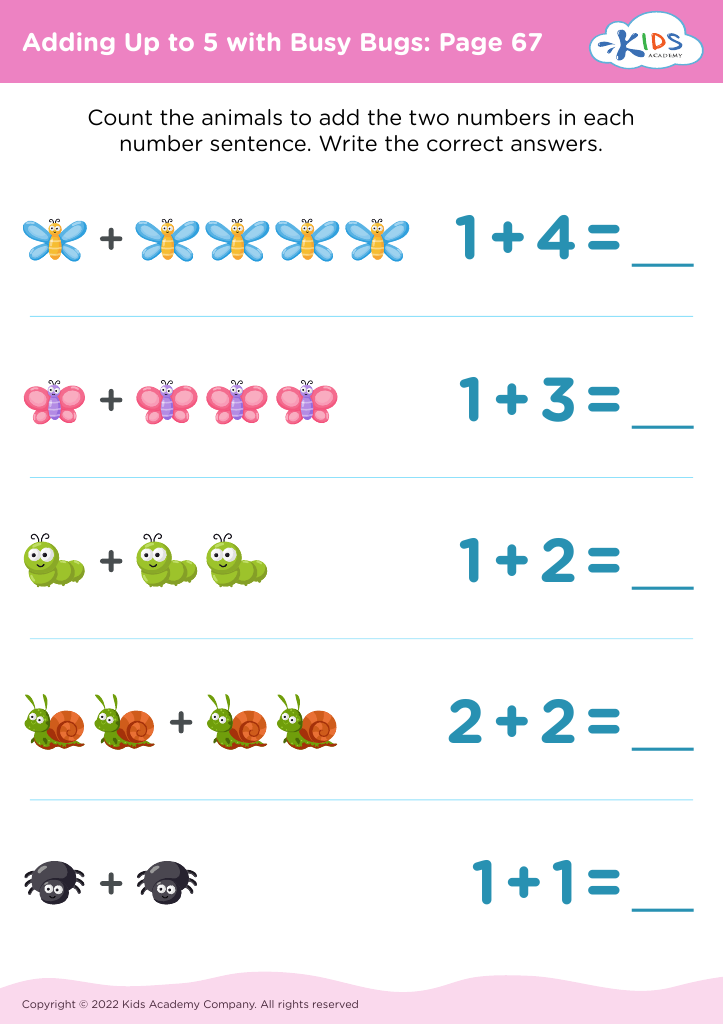
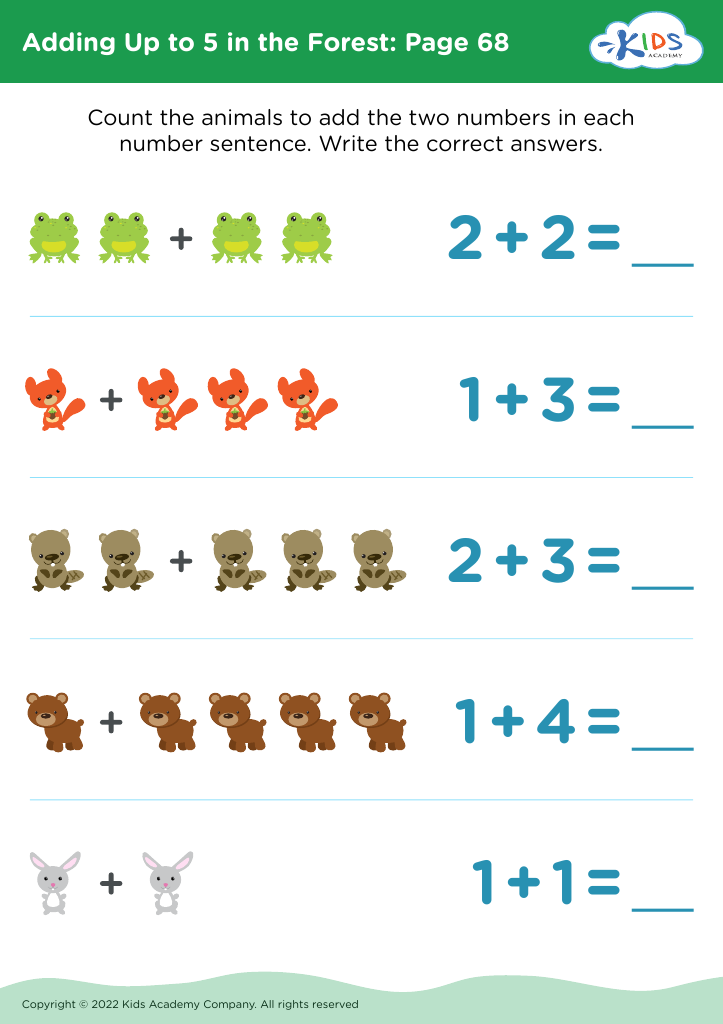
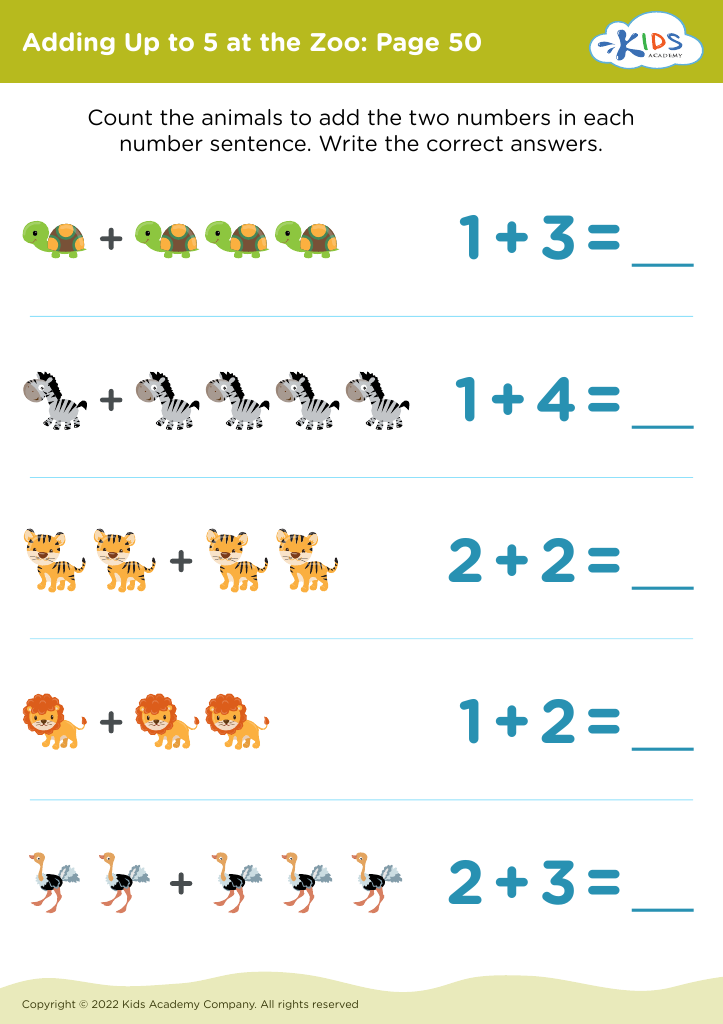








Parents and teachers should care deeply about hand-eye coordination as it relates to preschool addition and subtraction because it forms the foundation for a child's future academic and life skills. Hand-eye coordination is the ability to use our eyes to direct attention and perform tasks with our hands, crucial for almost every daily activity.
In the context of learning addition and subtraction, good hand-eye coordination helps children grasp fundamental mathematics through manipulatives like counting blocks, abacuses, and written activities. This motor skill facilitates engaging directly with objects that represent numbers, making abstract concepts tangible and easier to understand. By matching what they see with how they move objects to add or subtract, children develop a stronger conceptual understanding of mathematical operations.
Moreover, strong hand-eye coordination supports writing skills crucial for recording mathematical problems and solutions. As children write numbers and mathematical symbols, they are practicing precise hand movements that are vital for legibility—the clearer they can record their work, the better they’ll understand it and the easier it is for teachers and parents to follow their thought processes.
Supporting a child in developing these skills early prepares them for compound learning tasks later and thus boosts their confidence. A solid foundation in math and fine motor skills correlates directly with future academic success and the ability to perform everyday tasks efficiently. So, investing effort in enhancing hand-eye coordination during these formative years has long-lasting benefits.