Filters

366 filtered results

Clear all filters
Favorites
With answer key
Interactive

366 filtered results

Difficulty Level

Grade


Check out this FREE Preschool Trial Lesson on Addition!

H

Favorites
With answer key
Interactive
  • Preschool
  • Number Recognition
  • Addition
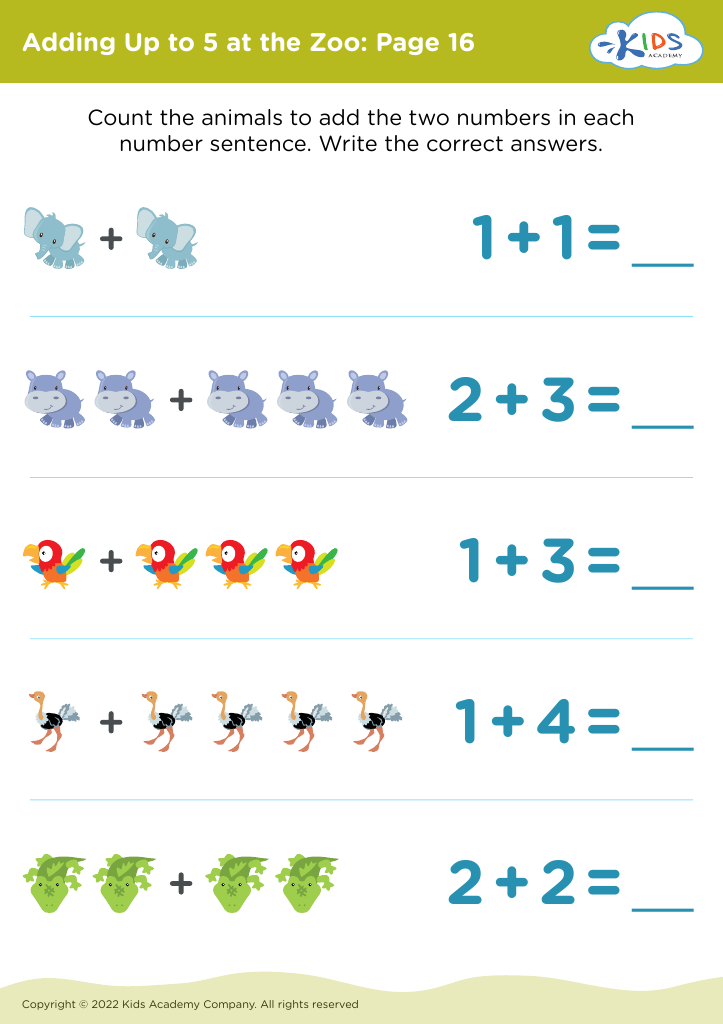
Adding Up to 5 at the Zoo: Page 16
Worksheet
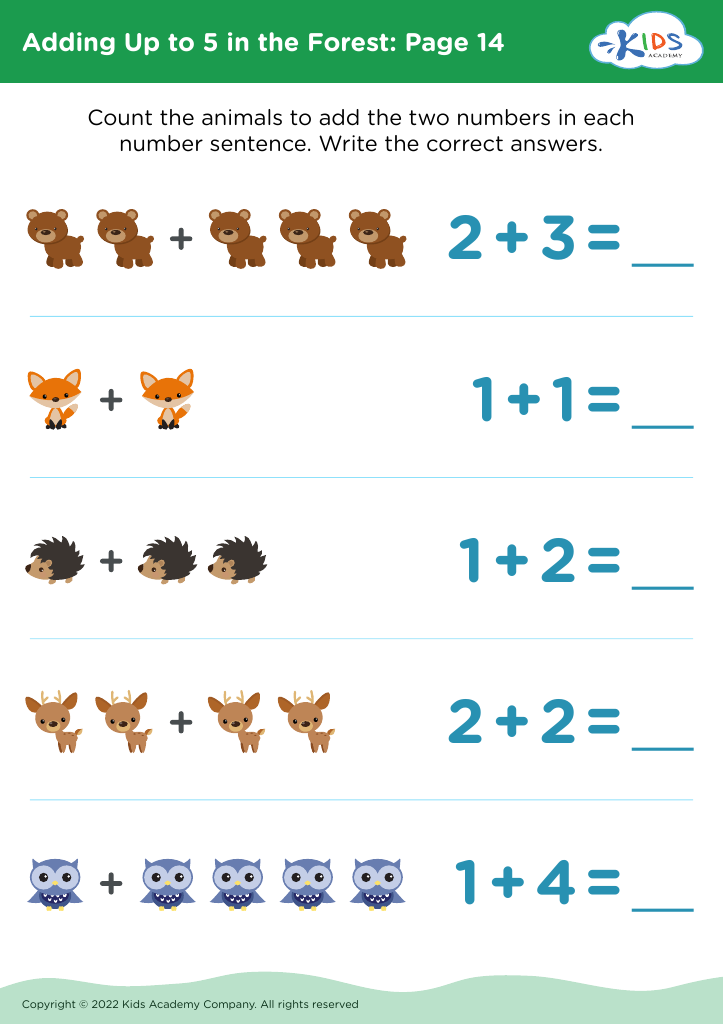
Adding Up to 5 in the Forest: Page 14
Worksheet
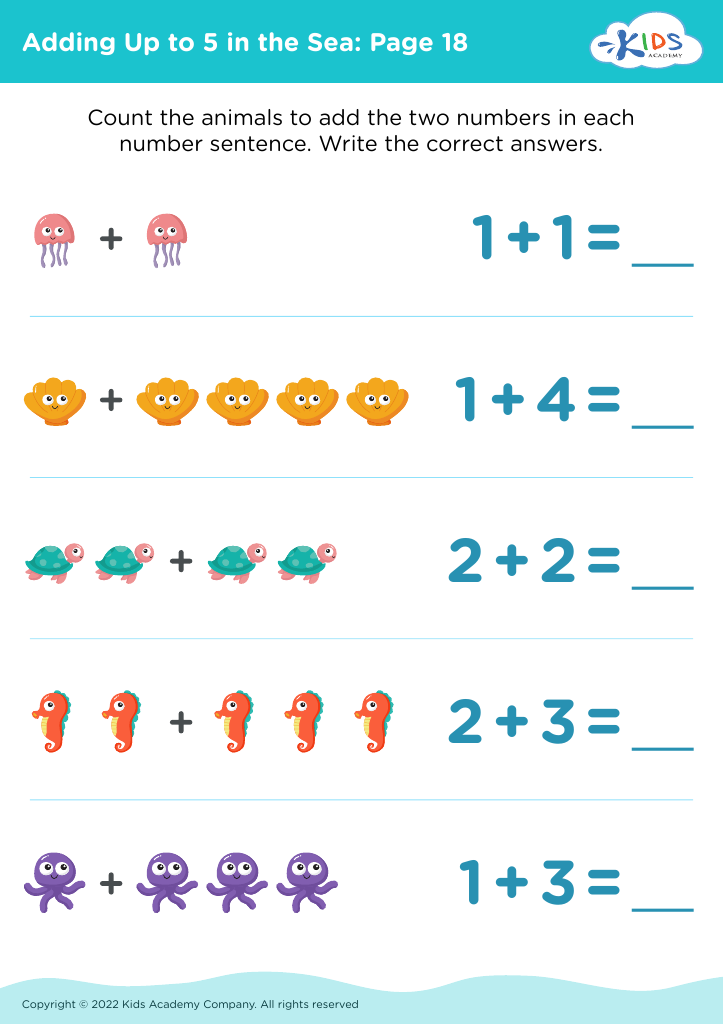
Adding Up to 5 in the Sea: Page 18
Worksheet
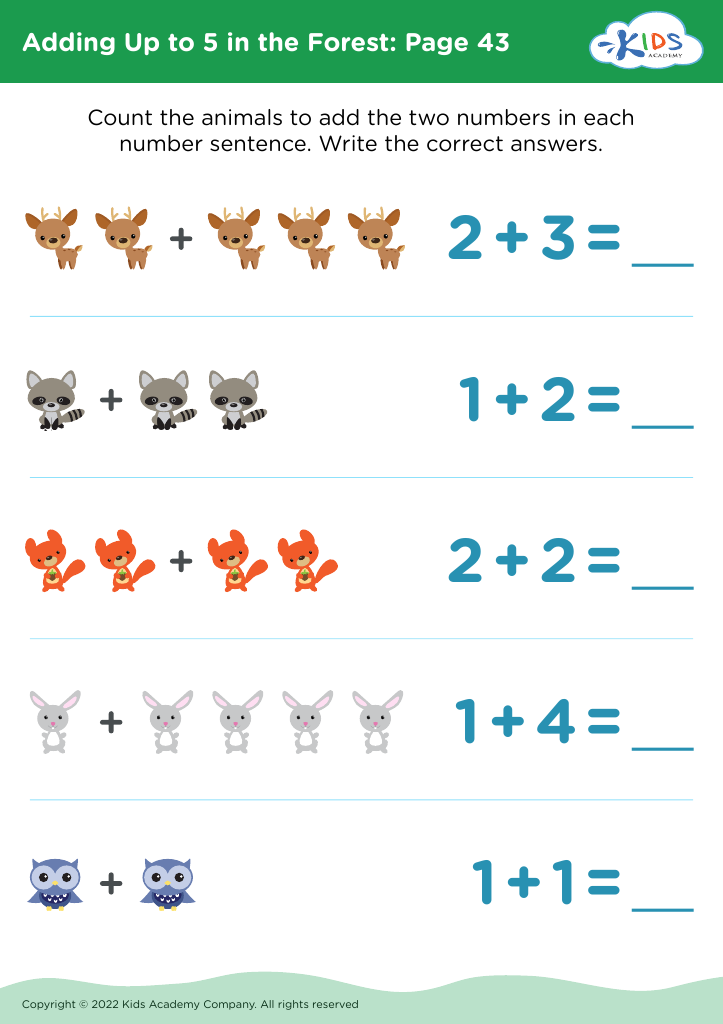
Adding Up to 5 in the Forest: Page 43
Worksheet
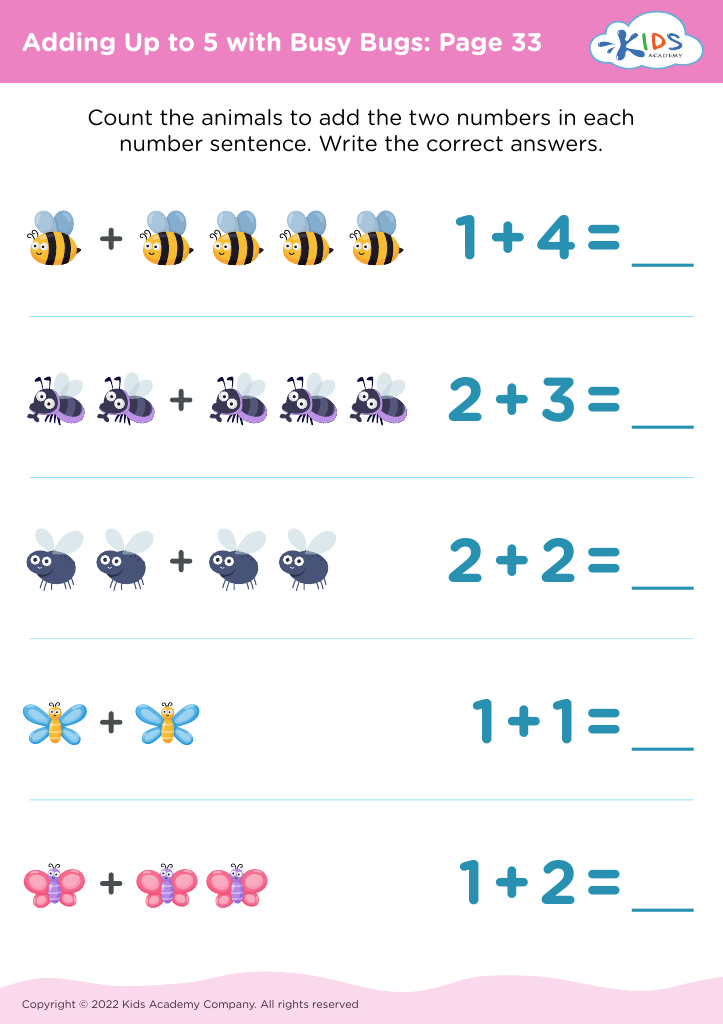
Adding Up to 5 with Busy Bugs: Page 33
Worksheet
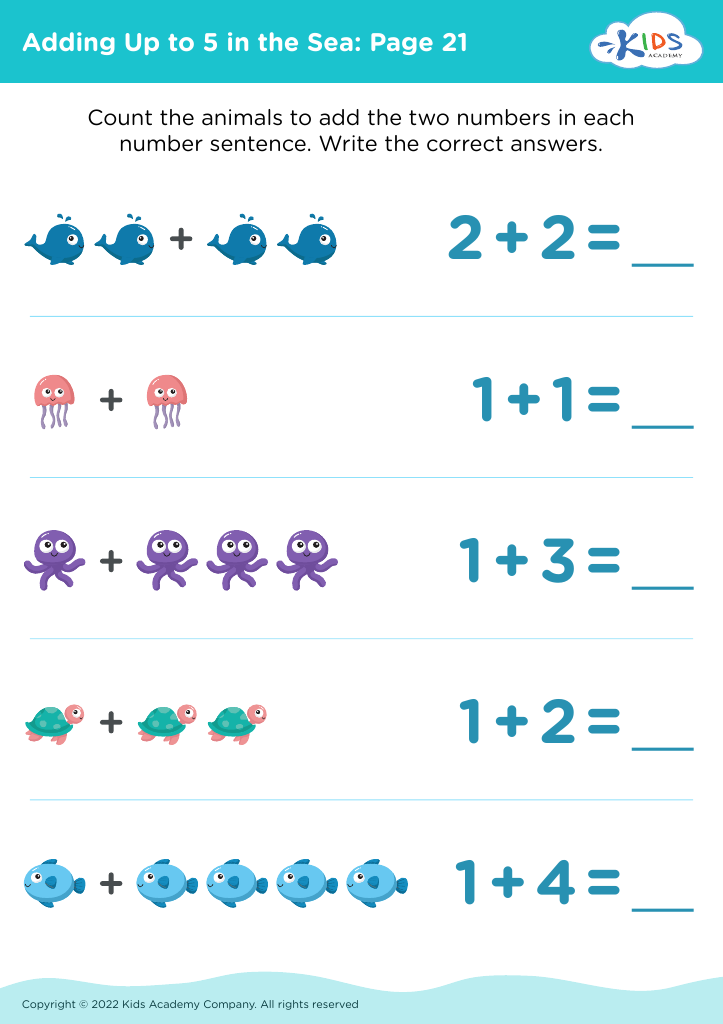
Adding Up to 5 in the Sea: Page 21
Worksheet
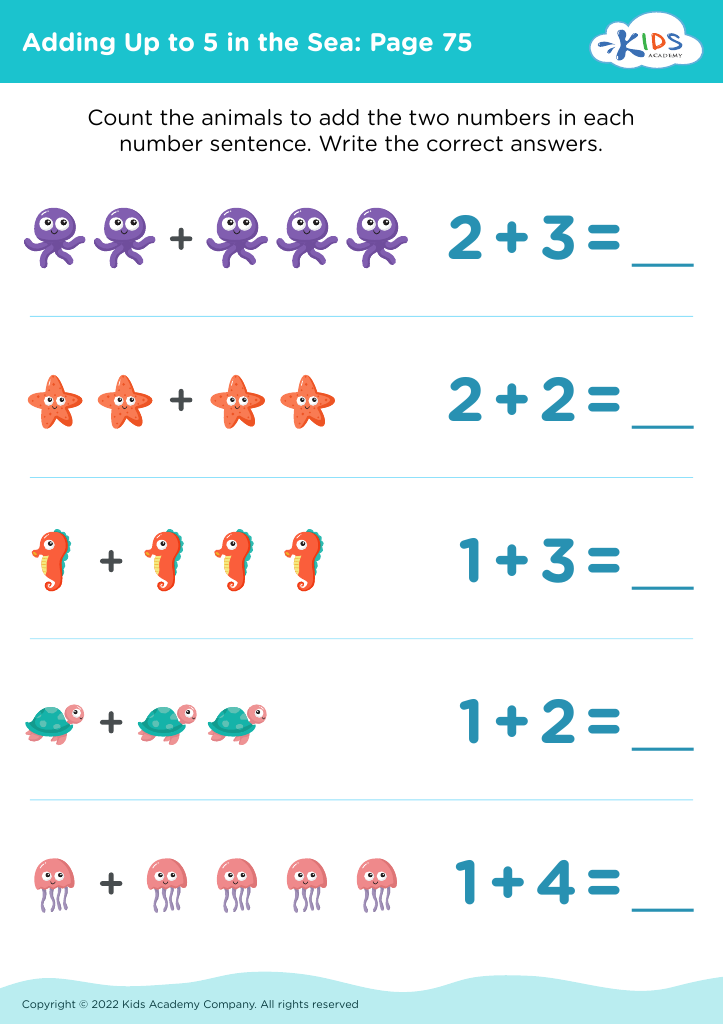
Adding Up to 5 in the Sea: Page 75
Worksheet
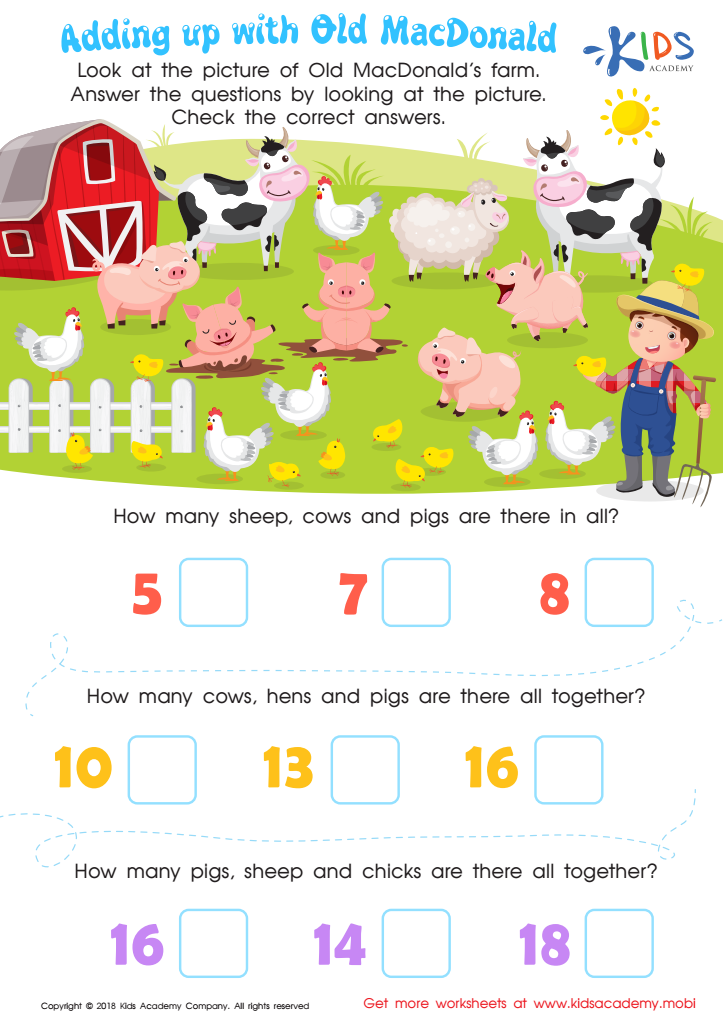
Adding Up with Old MacDonald Worksheet

Adding Up with Old MacDonald Worksheet

Old MacDonald needs help counting his animals! Give your little math whiz a fun challenge with a free PDF worksheet. They'll love counting the animals and doing basic addition with two or three addends. Who knew math could be so much fun on the farm?
Adding Up with Old MacDonald Worksheet
Worksheet
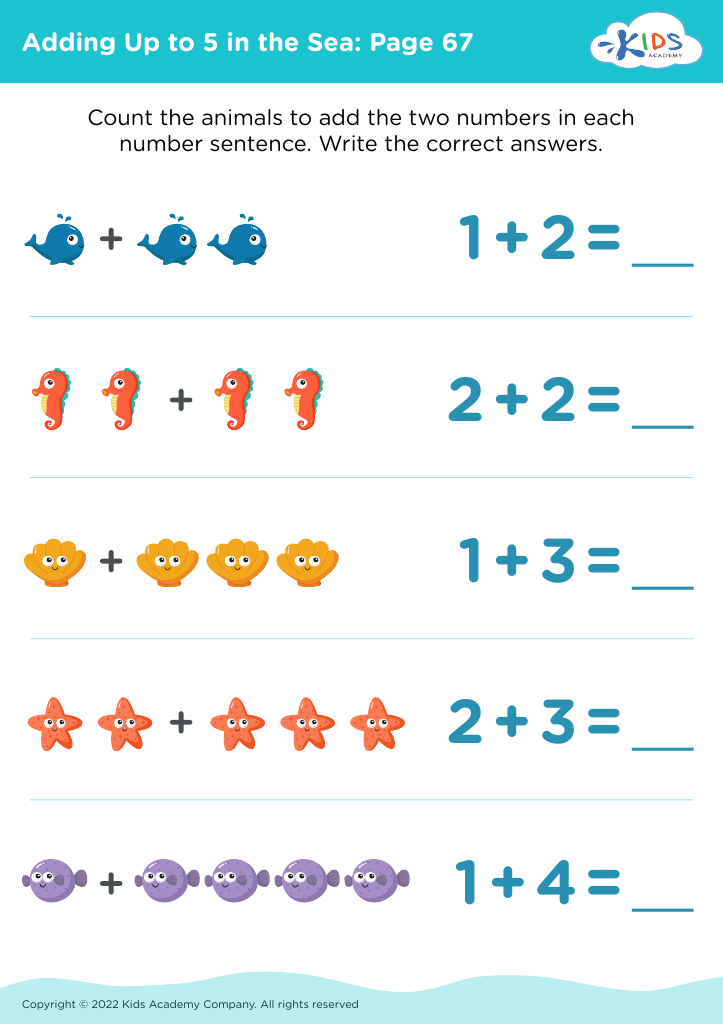
Adding Up to 5 in the Sea: Page 67
Worksheet
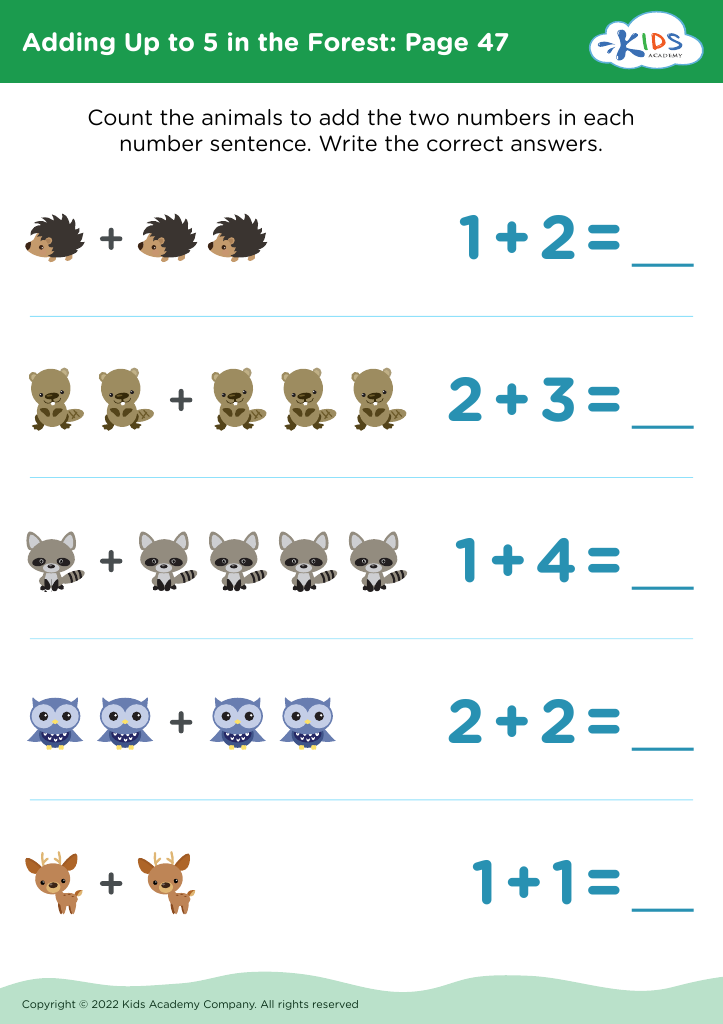
Adding Up to 5 in the Forest: Page 47
Worksheet
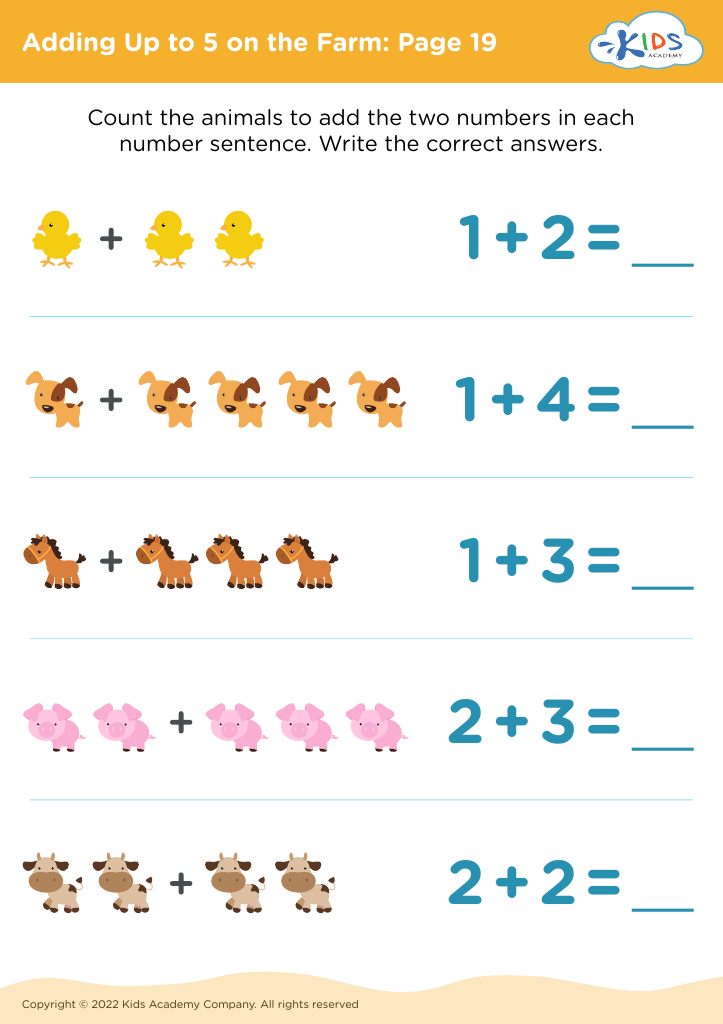
Adding Up to 5 on the Farm: Page 19
Worksheet
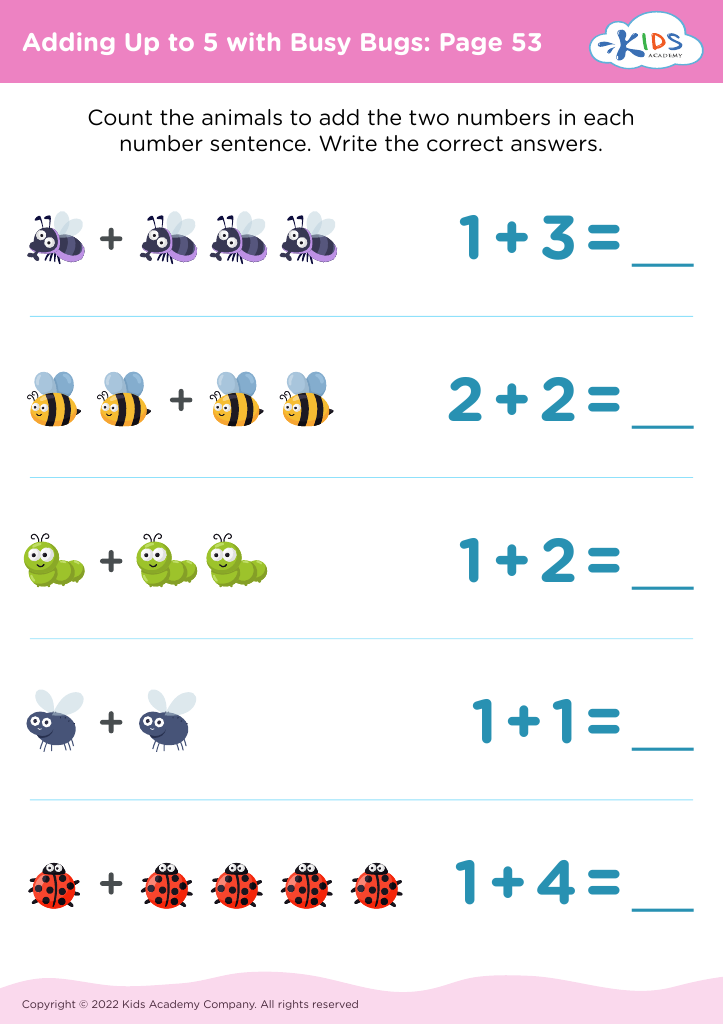
Adding Up to 5 with Busy Bugs: Page 53
Worksheet
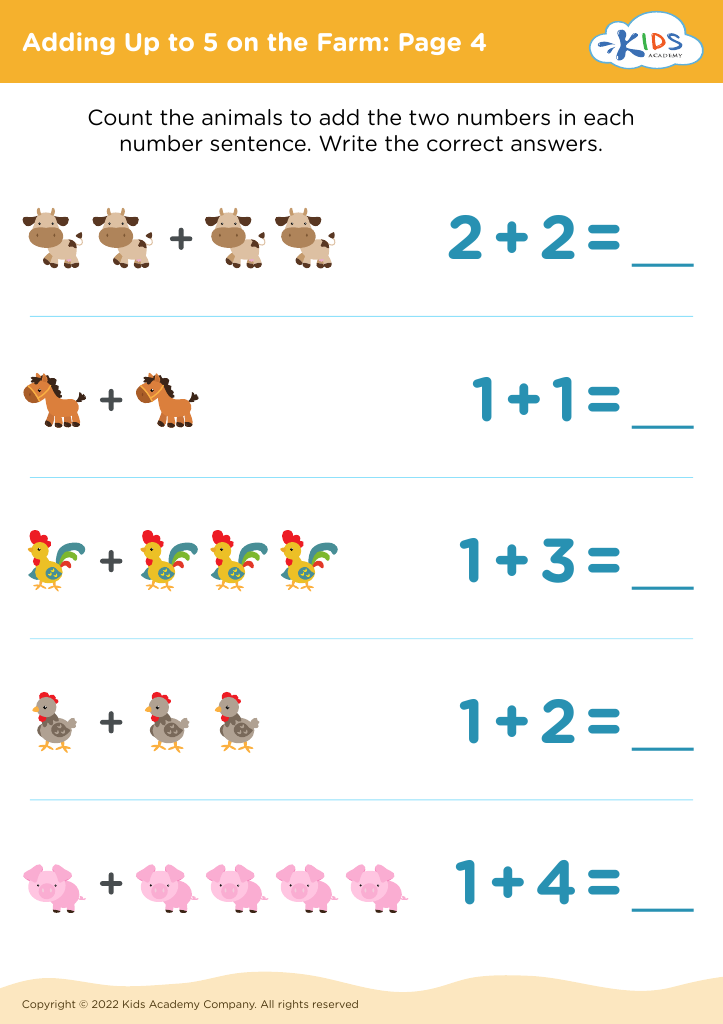
Adding Up to 5 on the Farm: Page 4
Worksheet
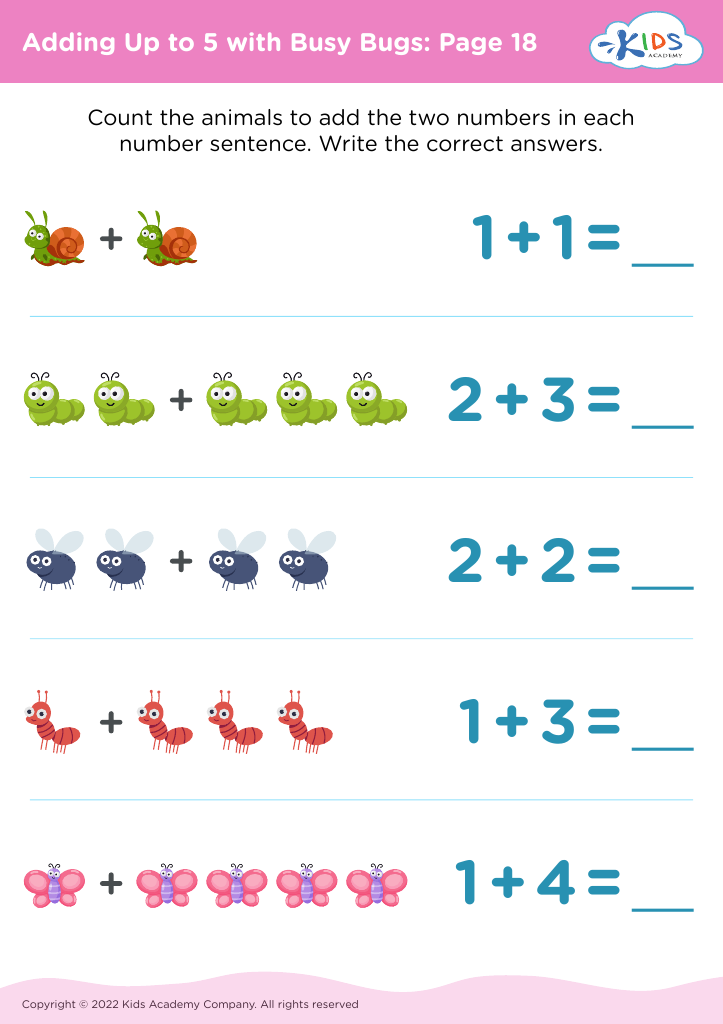
Adding Up to 5 with Busy Bugs: Page 18
Worksheet
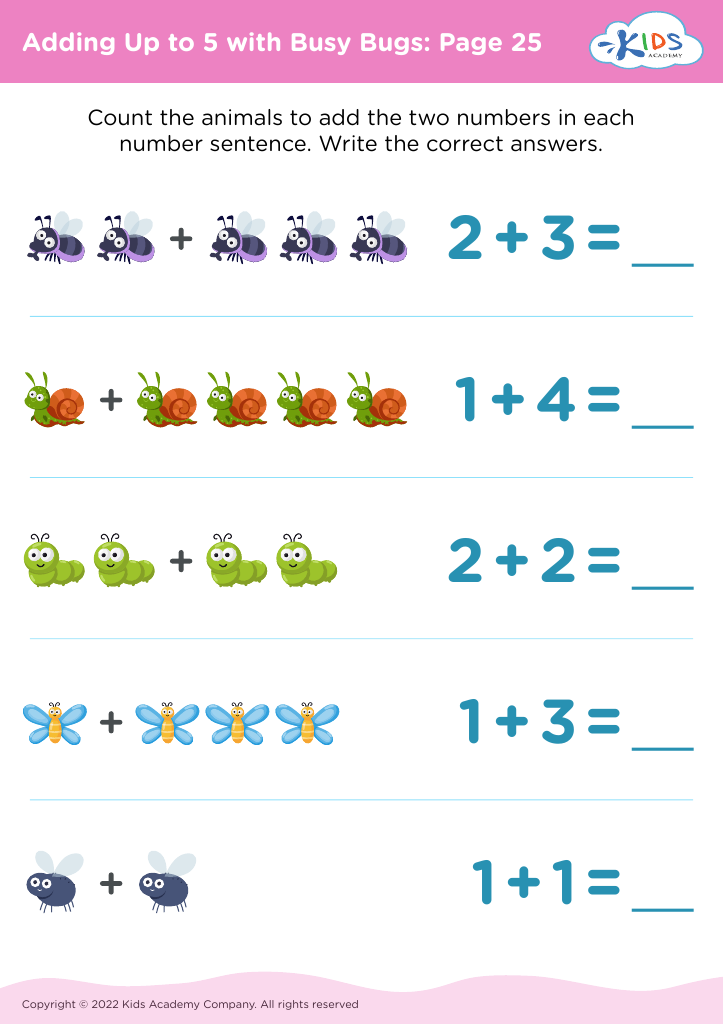
Adding Up to 5 with Busy Bugs: Page 25
Worksheet
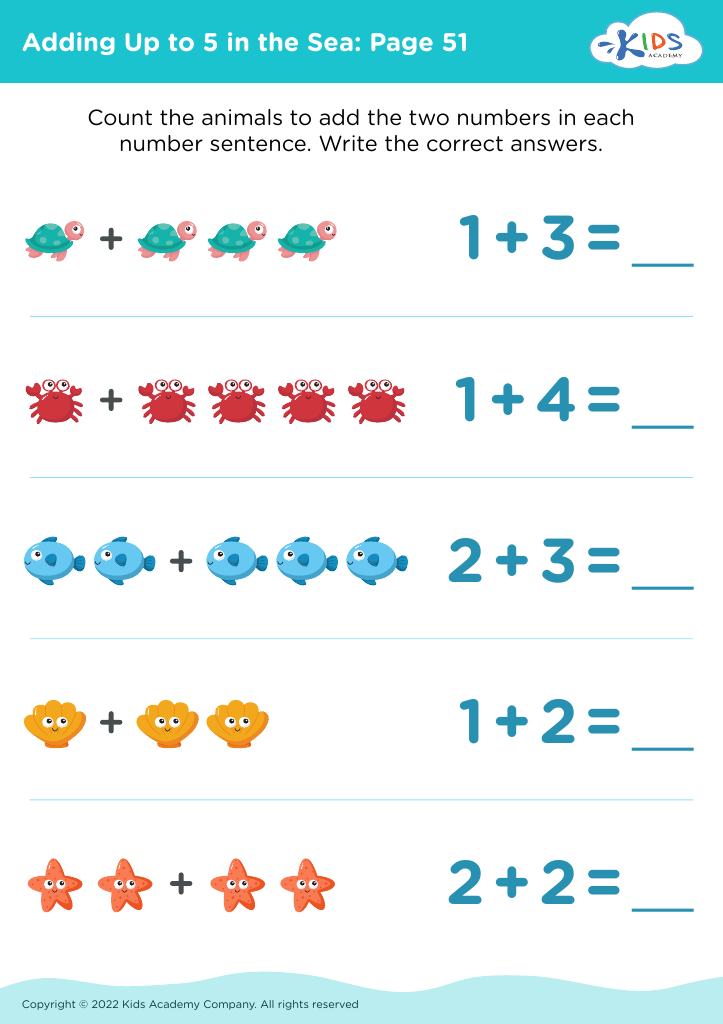
Adding Up to 5 in the Sea: Page 51
Worksheet
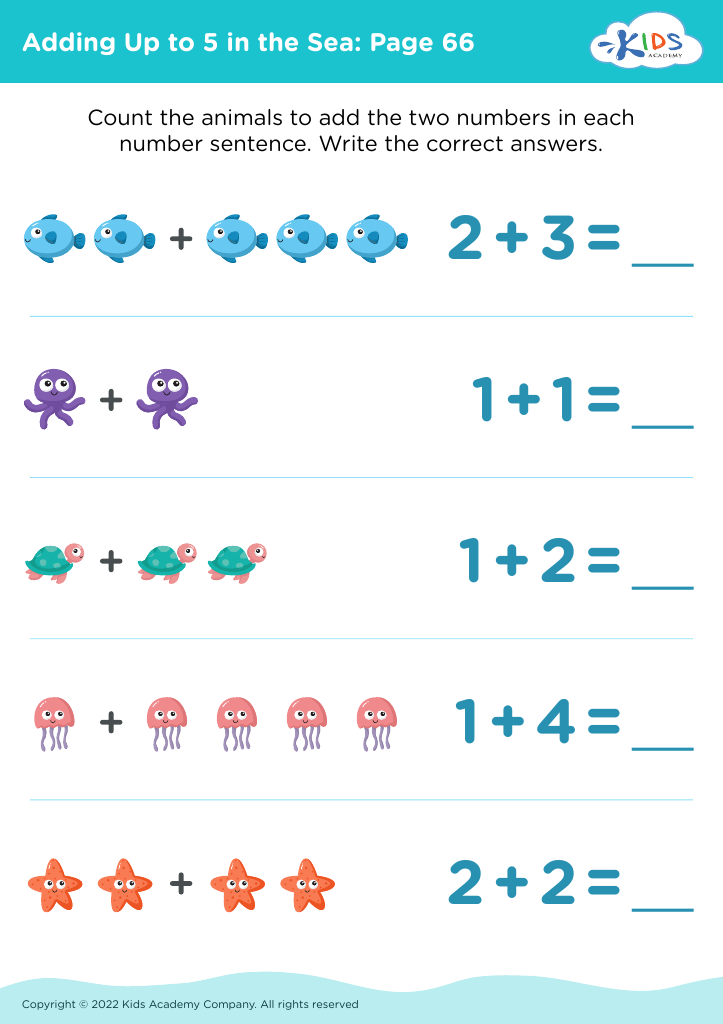
Adding Up to 5 in the Sea: Page 66
Worksheet
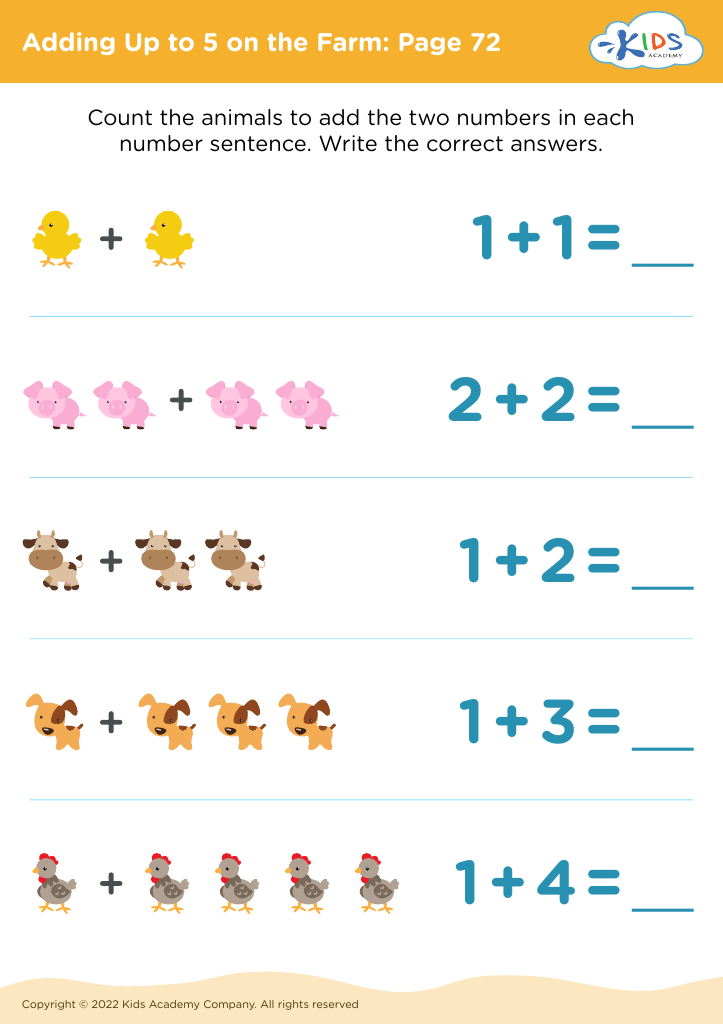
Adding Up to 5 on the Farm: Page 72
Worksheet
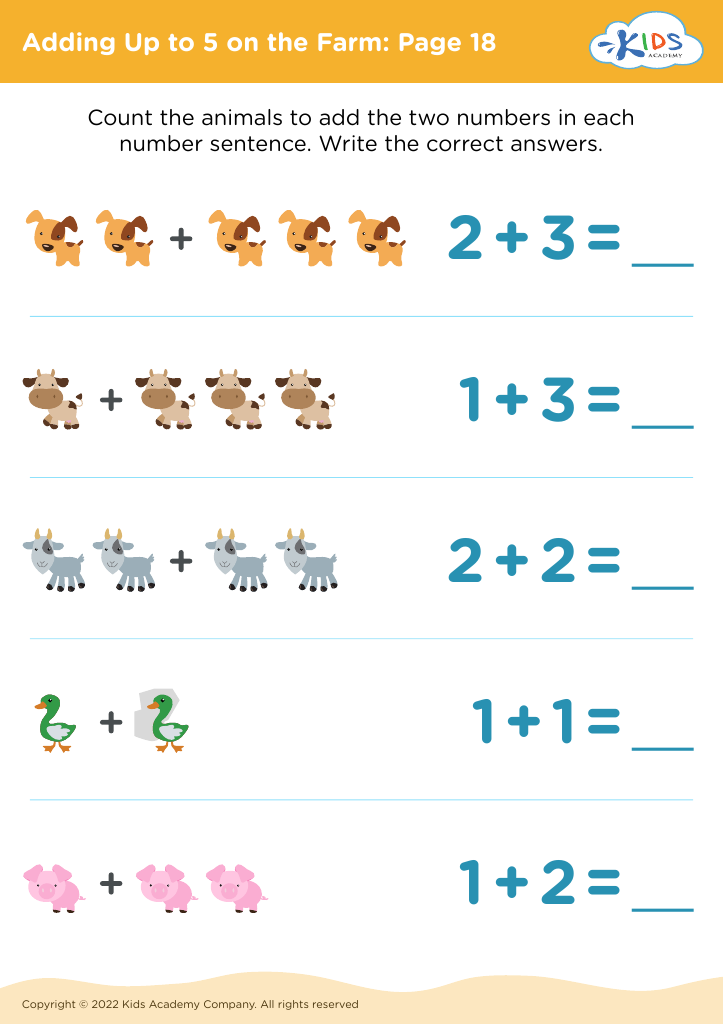
Adding Up to 5 on the Farm: Page 18
Worksheet
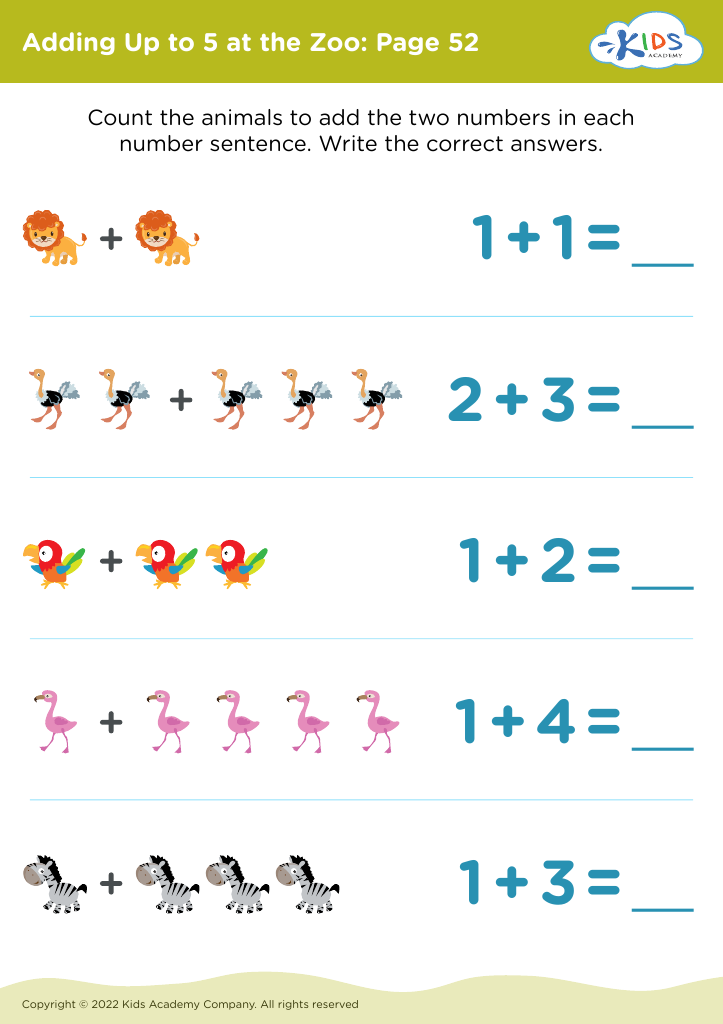
Adding Up to 5 at the Zoo: Page 52
Worksheet
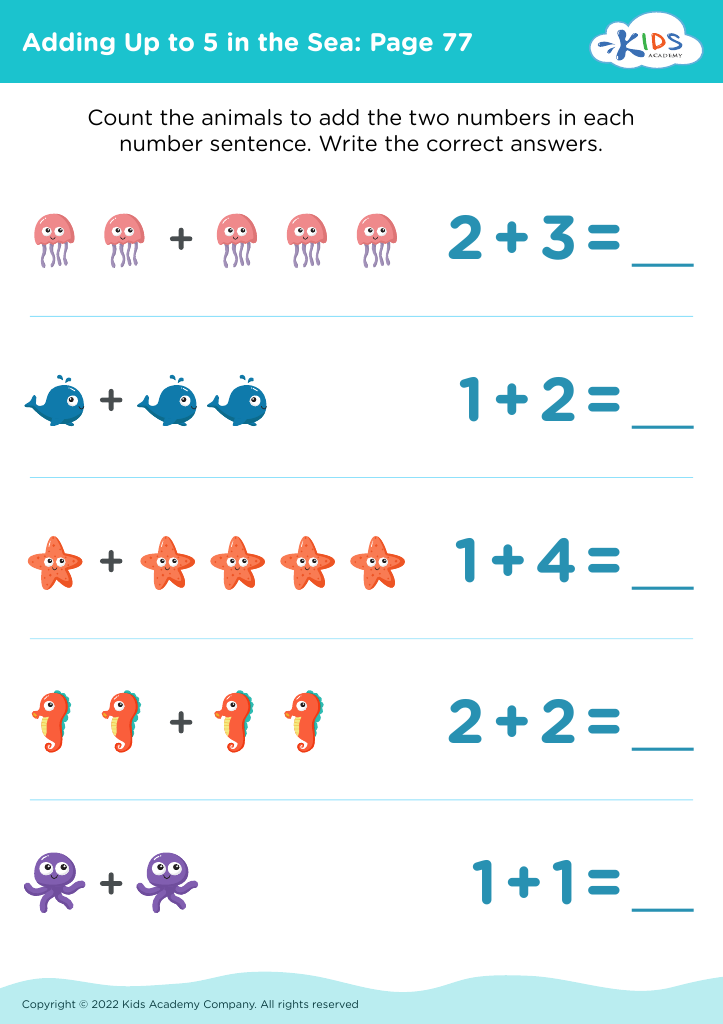
Adding Up to 5 in the Sea: Page 77
Worksheet
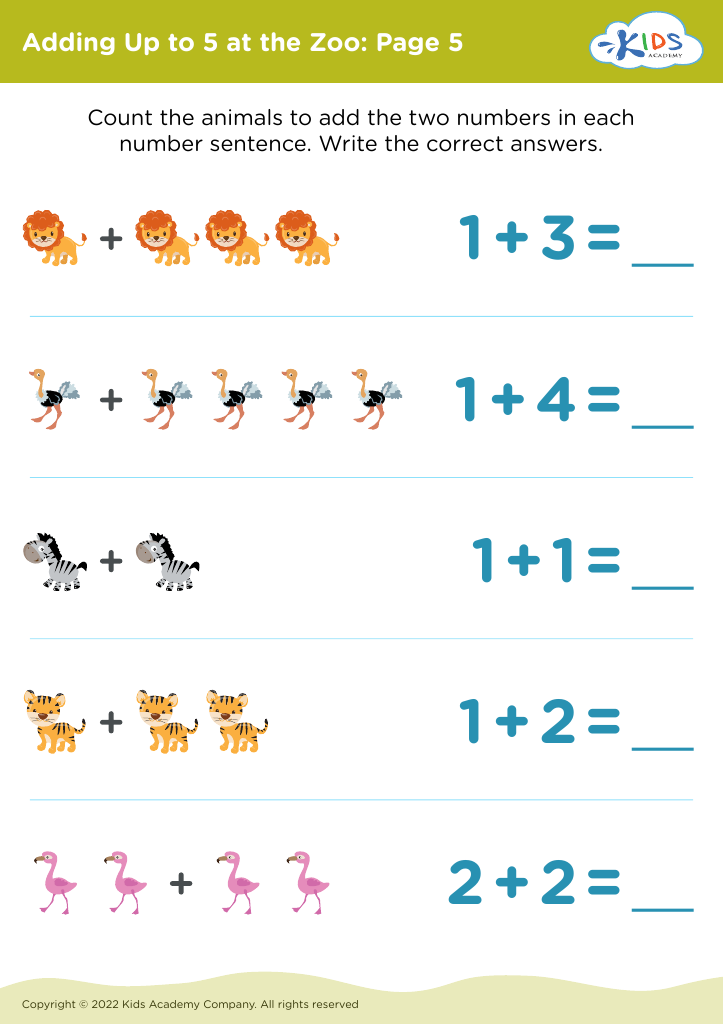
Adding Up to 5 at the Zoo: Page 5

Adding Up to 5 at the Zoo: Page 5

Adding Up to 5 at the Zoo: Page 5
Worksheet
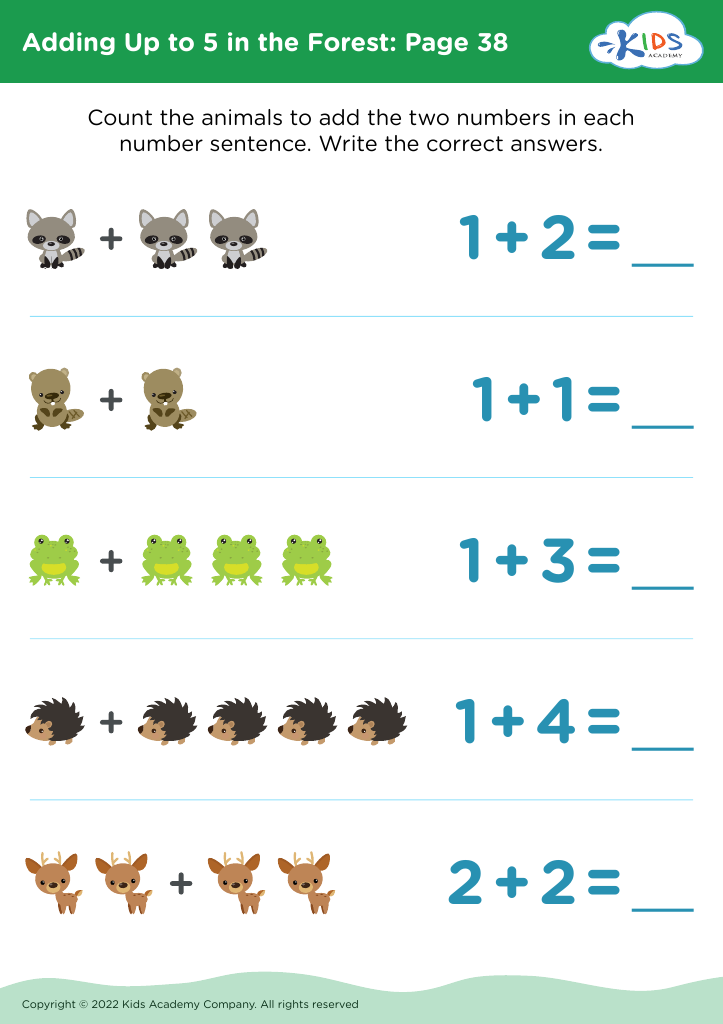
Adding Up to 5 in the Forest: Page 38
Worksheet
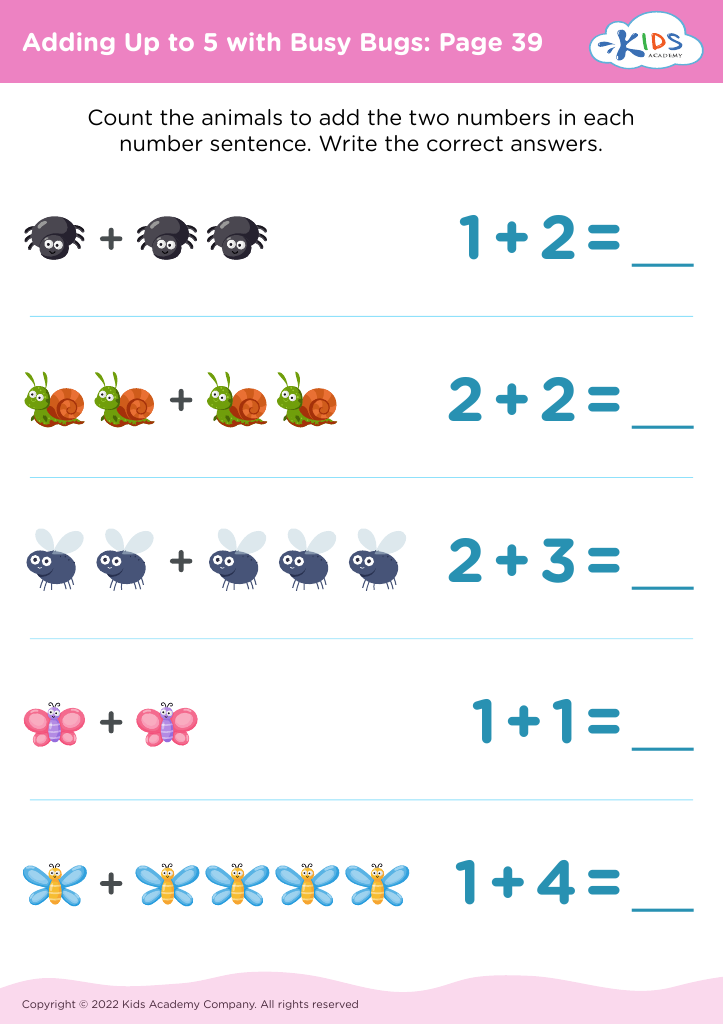
Adding Up to 5 with Busy Bugs: Page 39
Worksheet


Number recognition and preschool addition are fundamental skills that form the building blocks for a child's future mathematical abilities. Firstly, number recognition enables children to identify and understand numbers and their values. This basic skill is critical as it serves as the foundation for more complex mathematical concepts that children will encounter later in their educational journey.

Early proficiency in recognizing numbers allows children to develop a sense of quantity, improve their ability to classify and compare, and begins to instill essential problem-solving skills. Preschool addition, on the other hand, introduces children to the concept of combining quantities, which is a core concept not only in math but also in understanding logical progressions in various aspects of learning and everyday life.

The cultivation of these skills at a young age boosts cognitive development, leading to better number sense and confidence. This early competence can dramatically enhance a child's ability to grasp more advanced topics taught in higher grades. Furthermore, positive early experiences with math can lead to a lifelong interest in the subject, reducing math anxiety which is common in older students. Parents and teachers should therefore prioritize these early learning opportunities to build a solid mathematical foundation that supports overall academic growth and success.