Numeracy development Preschool Addition Worksheets
3 filtered results
Difficulty Level
Grade
Age
-
From - To
Subject
Activity
Standards
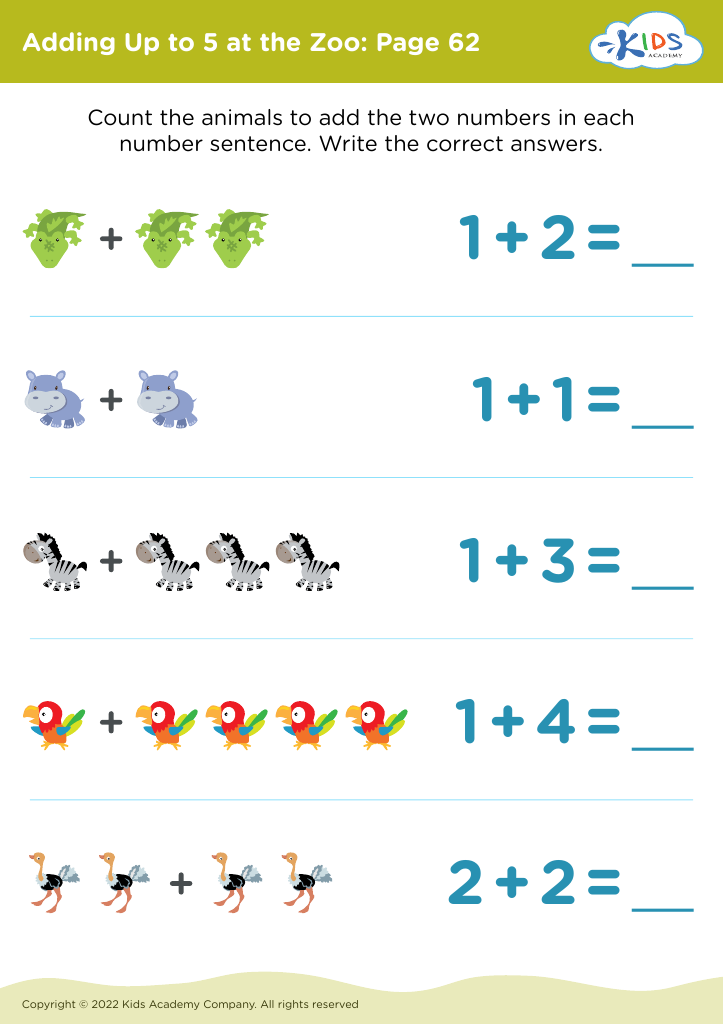
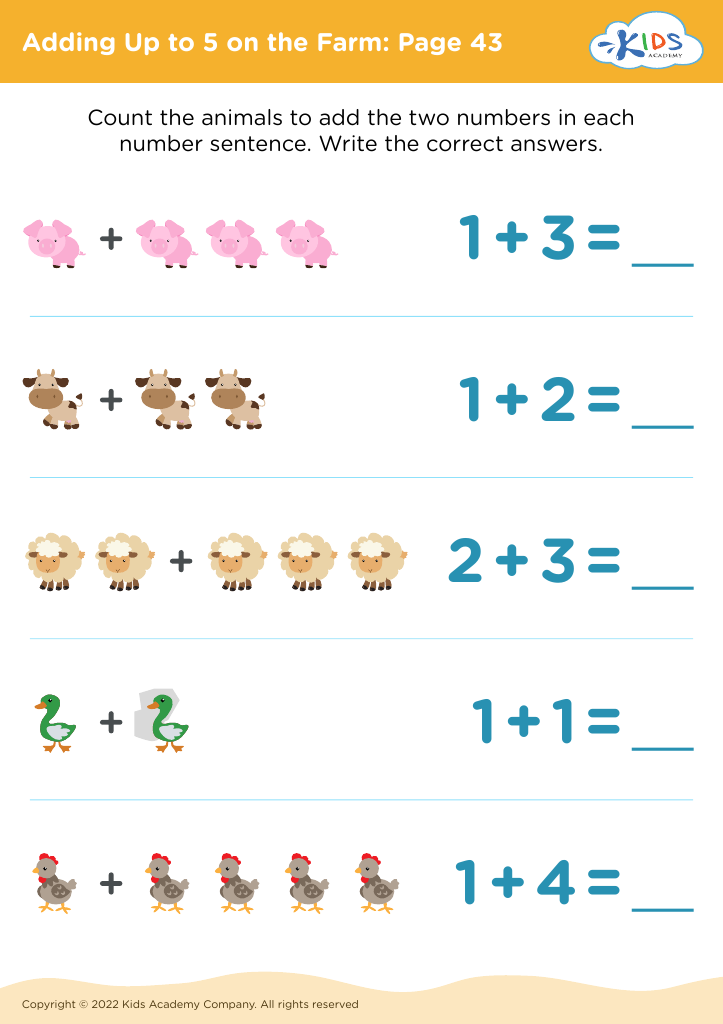
Our Numeracy Development Preschool Addition Worksheets are designed to lay a solid foundation for early math skills. These engaging and colorful worksheets help young learners understand the basics of addition through playful activities and visual aids. Each worksheet focuses on simple, age-appropriate problems that support the development of critical thinking and problem-solving abilities. Perfect for classroom use or extra practice at home, our worksheets make learning fun and interactive, ensuring kids build confidence in their numeracy skills early on. Start your child's journey to math proficiency with our expertly crafted addition worksheets today!
Favorites
With answer key
Interactive
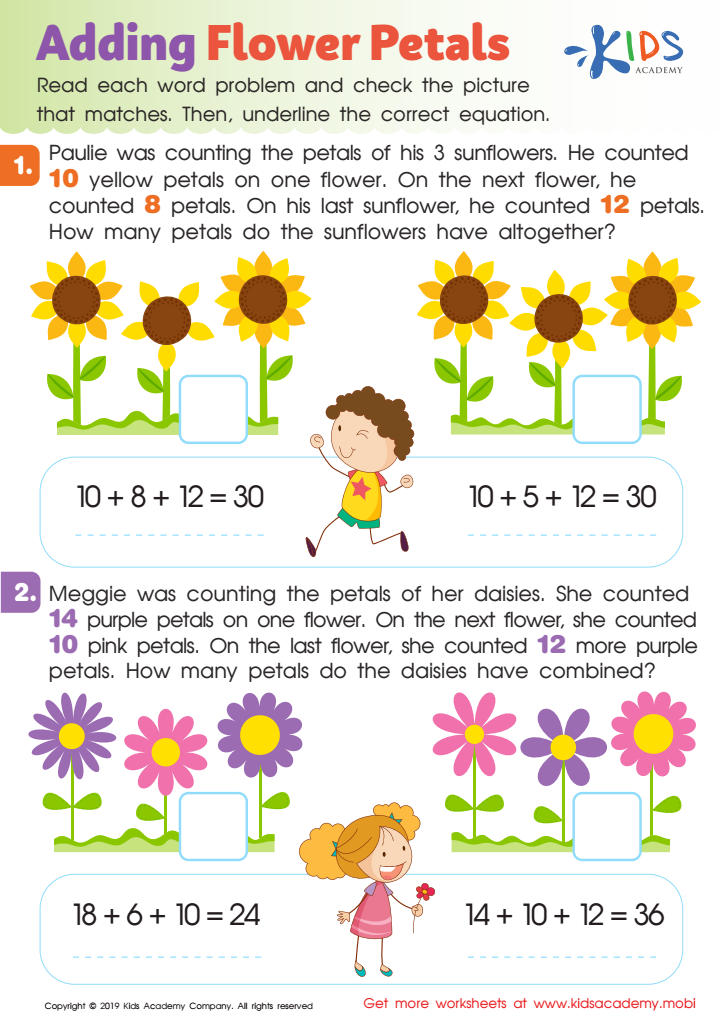
Adding Flower Petals Worksheet
This free worksheet helps little mathematicians learn to understand word problems. They'll read each one and match it to the corresponding picture. Important info is highlighted, teaching kids to look for key info when solving problems. Then they'll underline the correct number equation that matches the picture. A great way to practice problem-solving skills!
 Assign to My Students
Adding Flower Petals Worksheet
Worksheet
Join Kids Academy for Free
Who is primarily going to use this learning content?







Parents and teachers should prioritize numeracy development in preschool, particularly the foundational concept of addition, because it lays the groundwork for all future mathematical learning. Early exposure to addition helps young children develop critical thinking and problem-solving skills essential not just in mathematics but in everyday life. It enhances their ability to understand and manipulate numbers and recognize patterns, which are crucial cognitive skills.
Developing numeracy skills at a young age can positively influence a child’s confidence and enjoyment in learning, fostering a positive attitude towards math as they progress through their education. It also provides a strong base for more complex mathematical concepts that they will encounter in later years, such as subtraction, multiplication, and division.
Moreover, numeracy development promotes logical reasoning and the ability to quantitative relationships beyond academic settings, benefitting daily activities like measuring ingredients for a recipe or figuring out the right amount of money for a purchase. Early math skills are also strongly connected to literacy skills, as they share underlying cognitive processes such as recognizing sequences (like storytelling or counting).
In summary, focusing on addition during preschool helps build a solid foundation for both academic success and life skills, making it essential for parents and teachers to invest time and resources in fostering early numeracy development.