Visual learning reinforcement Preschool Addition Worksheets
5 filtered results
-
From - To
Enhance your preschooler's math skills with our engaging Visual Learning Reinforcement Addition Worksheets. Designed specifically for early learners, these worksheets introduce addition concepts through vibrant visuals and interactive activities. Children will explore addition through relatable scenarios, helping to build their understanding of numbers in a fun and enjoyable way. Our worksheets aim to reinforce visual learning techniques, making math accessible and exciting for young minds. Ideal for classroom or at-home use, these resources encourage hands-on participation and creativity. Give your child the gift of confident math skills with these beautifully crafted visual aids tailored for preschoolers. Start their addition journey today!
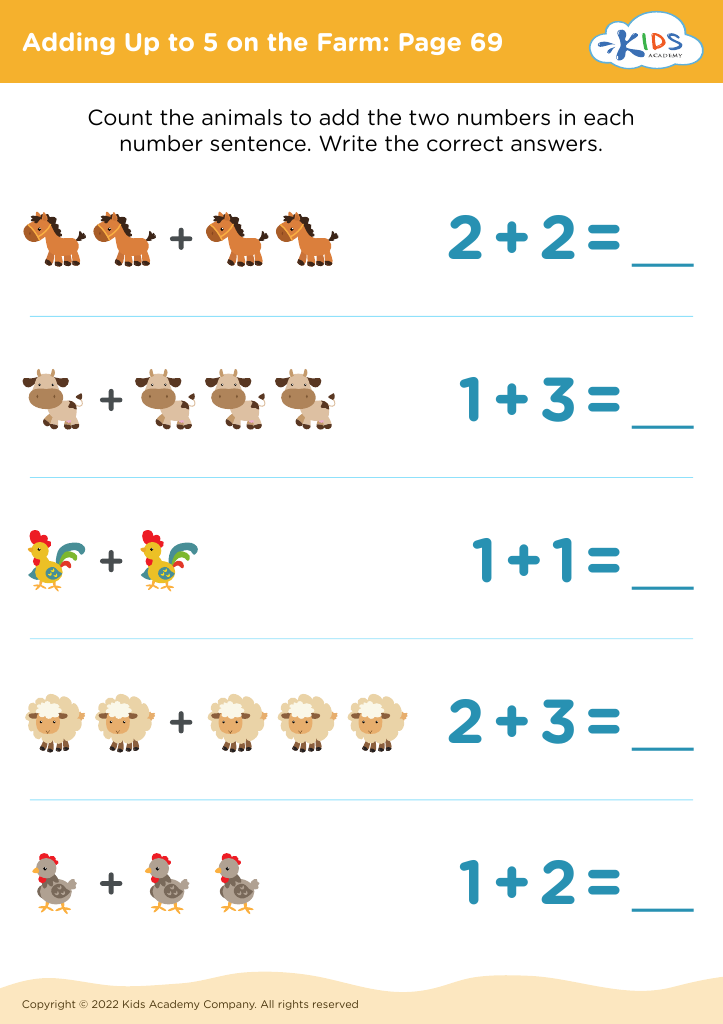
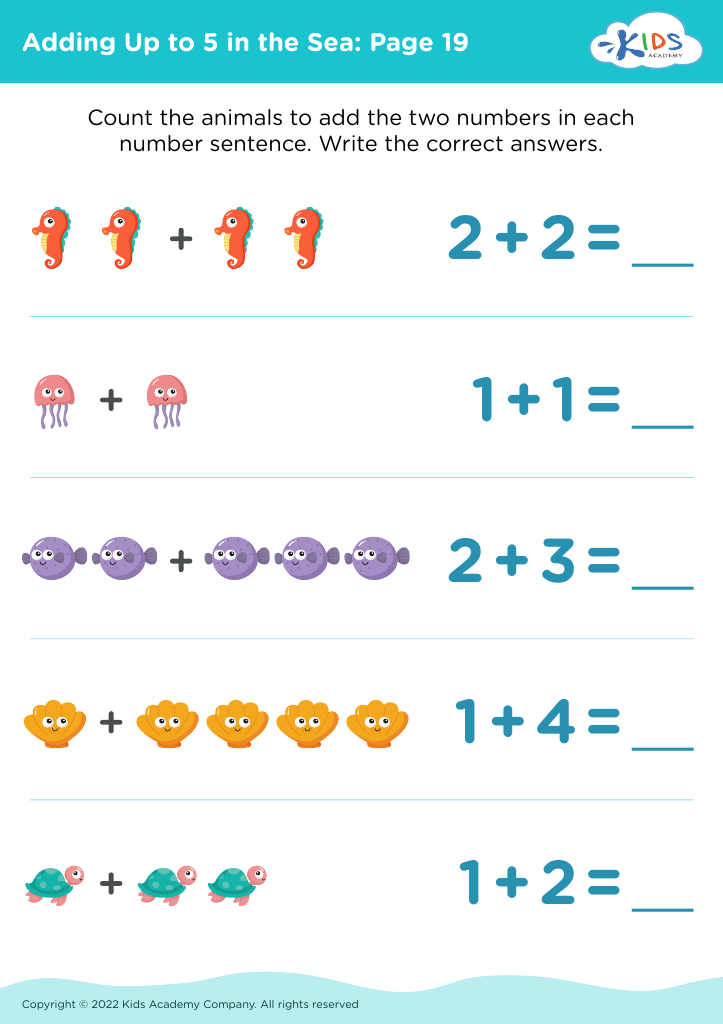
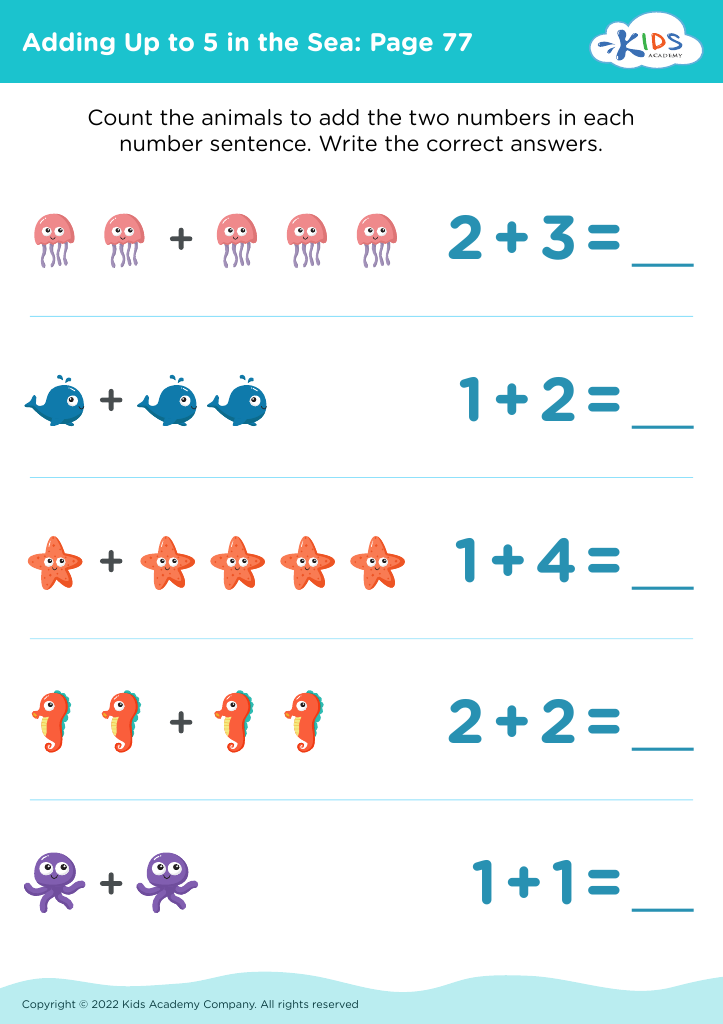
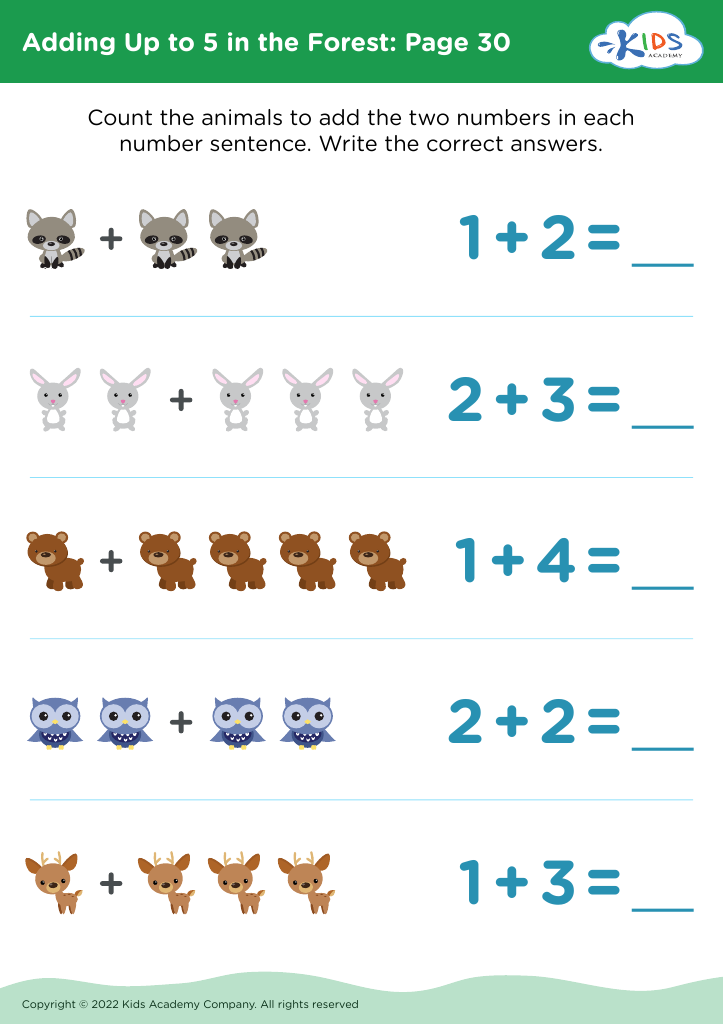
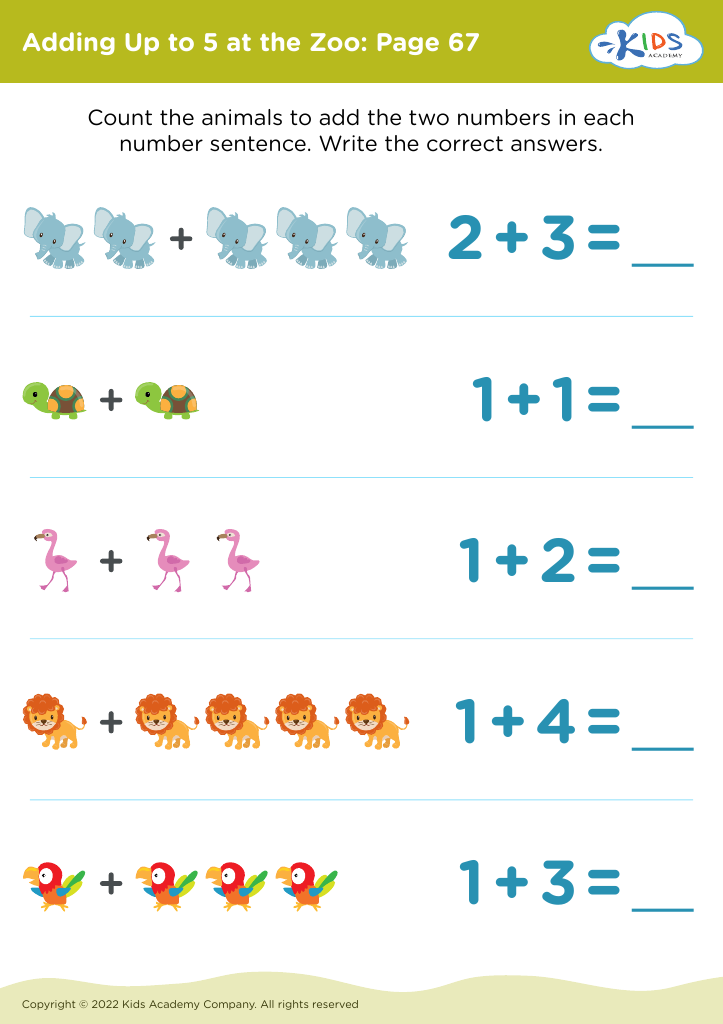








Visual learning reinforcement in preschool addition is crucial for young children's cognitive development and understanding of mathematical concepts. Young learners are often more engaged and retain information better when it is presented visually. By incorporating visual aids—such as colorful charts, manipulatives, and interactive games—parents and teachers can effectively capture children's attention and enhance their learning experience.
Visual aids help children to concretely grasp abstract concepts, making them more relatable and easier to understand. For example, using images or physical objects (like blocks or counters) allows preschoolers to visualize addition as combining items, reinforcing the idea that numbers represent quantities. This not only fosters a stronger grasp of math basics but also builds problem-solving skills as they learn to associate visual patterns with numerical concepts.
Furthermore, visual reinforcement cultivates a love for learning. When children engage with appealing visuals, they are more likely to enjoy the learning process, fostering a positive attitude towards mathematics and education at large. As early childhood educators and parents, nurturing this by emphasizing and utilizing visual strategies plays a significant role in building a strong foundation for future academic success. Therefore, prioritizing visual learning reinforcement in preschool addition can significantly impact young learners' abilities and self-confidence in math.