Visual-motor skills Preschool Addition Worksheets
3 filtered results
-
From - To
Discover how our "Visual-Motor Skills Preschool Addition Worksheets" empower young learners to seamlessly integrate visual perception with fine motor coordination. These specially designed worksheets provide engaging activities that develop key skills by guiding children through simple addition problems. As kids draw connections between numbers and objects, they enhance their observational abilities and hand-eye coordination. Ideal for preschool-aged students, our resources support foundational math understanding while making learning fun and interactive. With vibrant illustrations and age-appropriate challenges, these worksheets transform early math practice into a playful adventure, equipping children with crucial skills for future academic success.
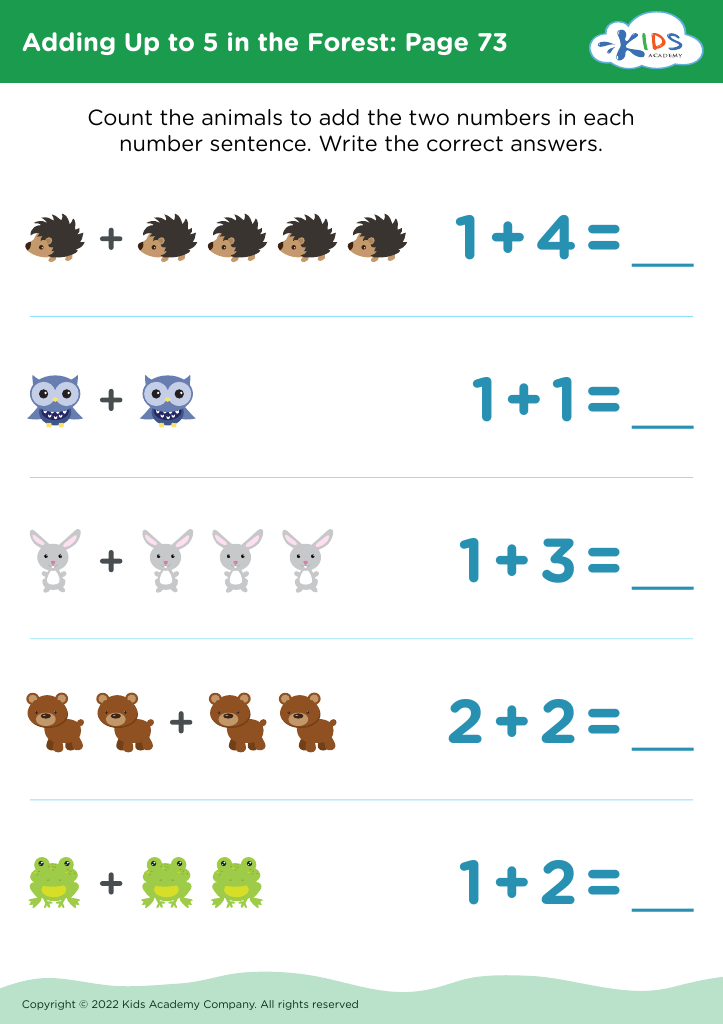
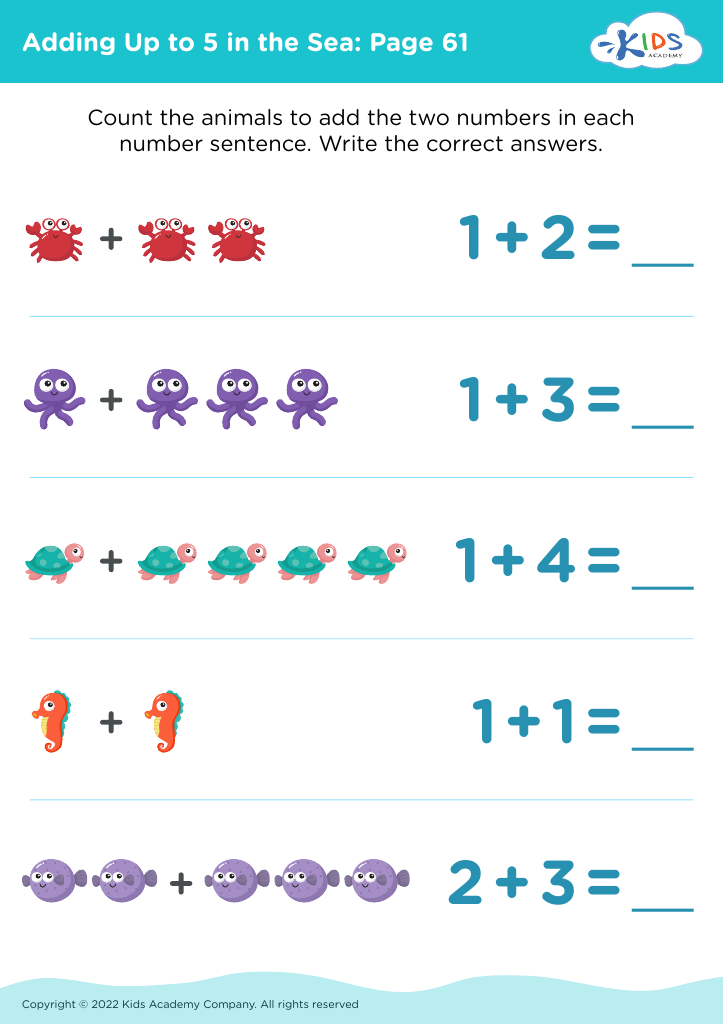
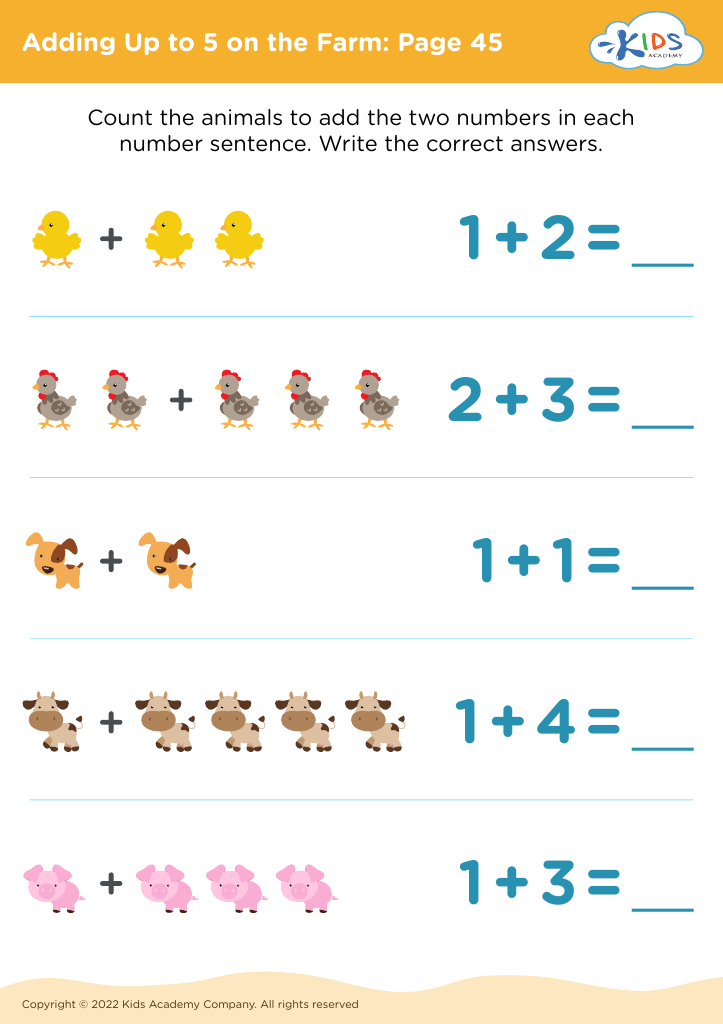








Visual-motor skills are the coordination abilities that enable children to use their eyes and hands together effectively. In early childhood, developing these skills is crucial, as they are foundational for performing everyday tasks and learning activities. Introducing preschool addition through visual-motor activities can significantly enhance a child's cognitive and physical development. When children engage in tasks such as sorting objects, stacking blocks, or matching numbers, they not only improve their mathematical understanding but also refine their ability to focus, differentiate shapes and colors, and develop spatial awareness.
For parents and teachers, fostering visual-motor skills through addition-related activities can lead to improved handwriting and better performance in school, since many classroom tasks depend on these abilities. Additionally, early success in math can boost children's confidence and foster a positive attitude toward more complex mathematical concepts in the future.
Moreover, integrating visual-motor skill exercises in learning helps address diverse learning styles, accommodating children who may find traditional numerical approaches challenging. This method ensures that every child has the opportunity to understand foundational math concepts while simultaneously enhancing their physical fine motor skills. Thus, emphasizing visual-motor skills in preschool helps create a well-rounded, supportive learning environment that sets the stage for long-term academic and personal success.