Contextual understanding Building Vocabulary Worksheets
9 filtered results
-
From - To
Enhance your child's language skills with our Contextual Understanding Building Vocabulary Worksheets. Tailored for early learners, these engaging worksheets help kids grasp the meaning of new words through context. By reading sentences and short passages, children use surrounding words to infer definitions, enriching their vocabulary and reading comprehension. Designed by educational experts, these activities contain fun visuals and relatable themes to keep young minds interested and motivated. Our worksheets develop critical thinking abilities and ensure lasting vocabulary retention. Perfect for use at home or in the classroom, they provide a robust foundation for lifelong learning. Explore our collection today!
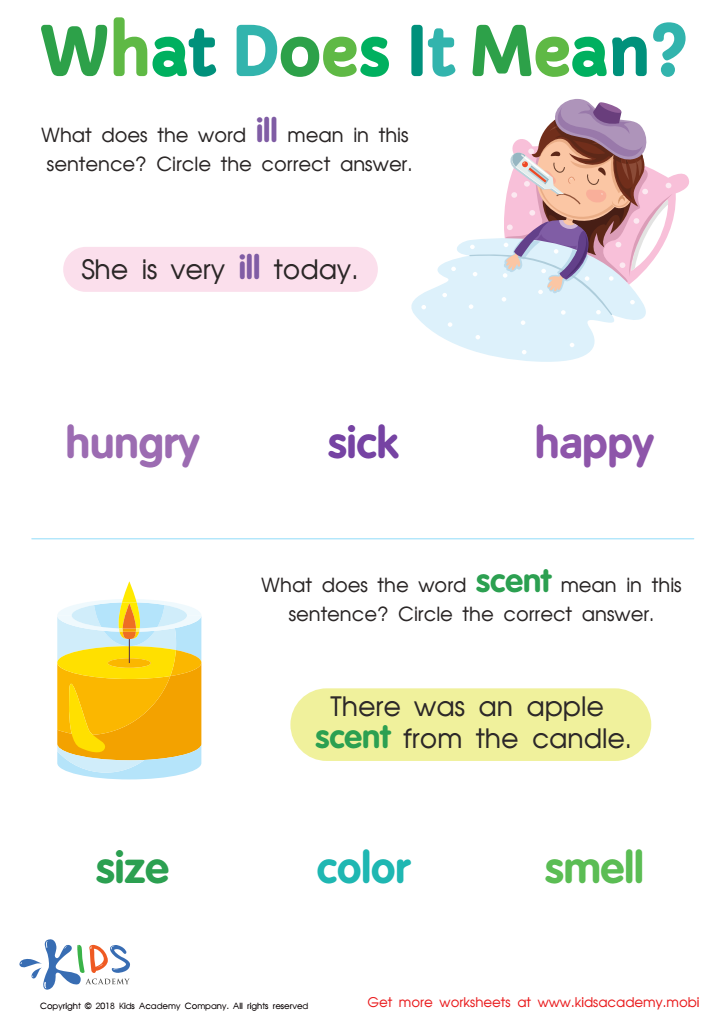
What Does It Mean? Worksheet
 Assign to My Students











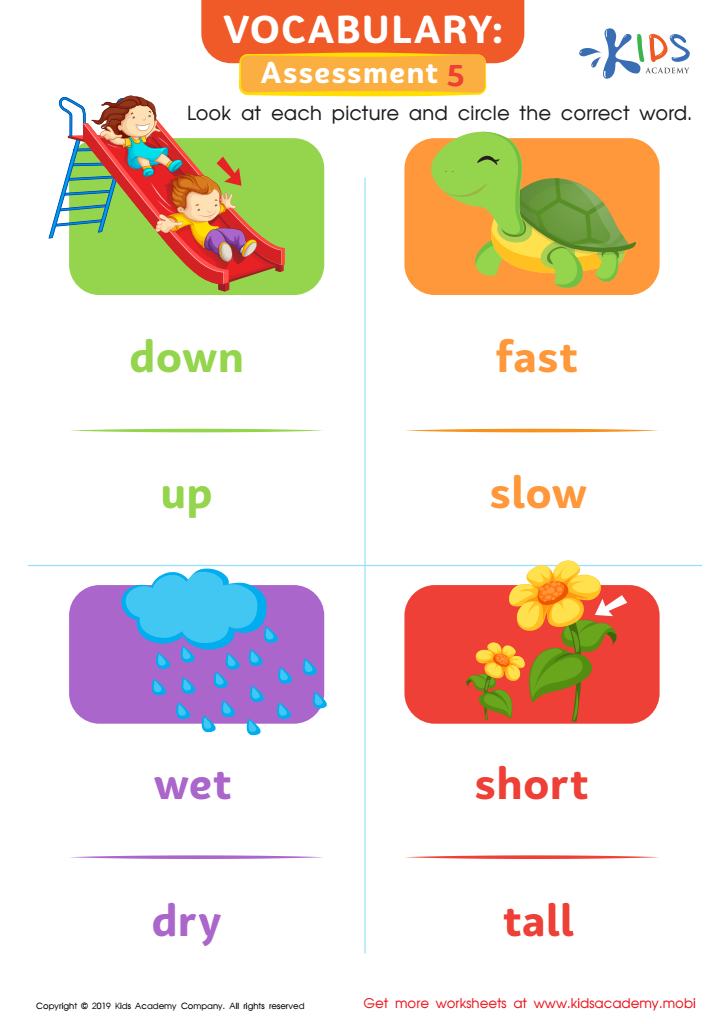
Vocabulary: Assessment 5 Worksheet
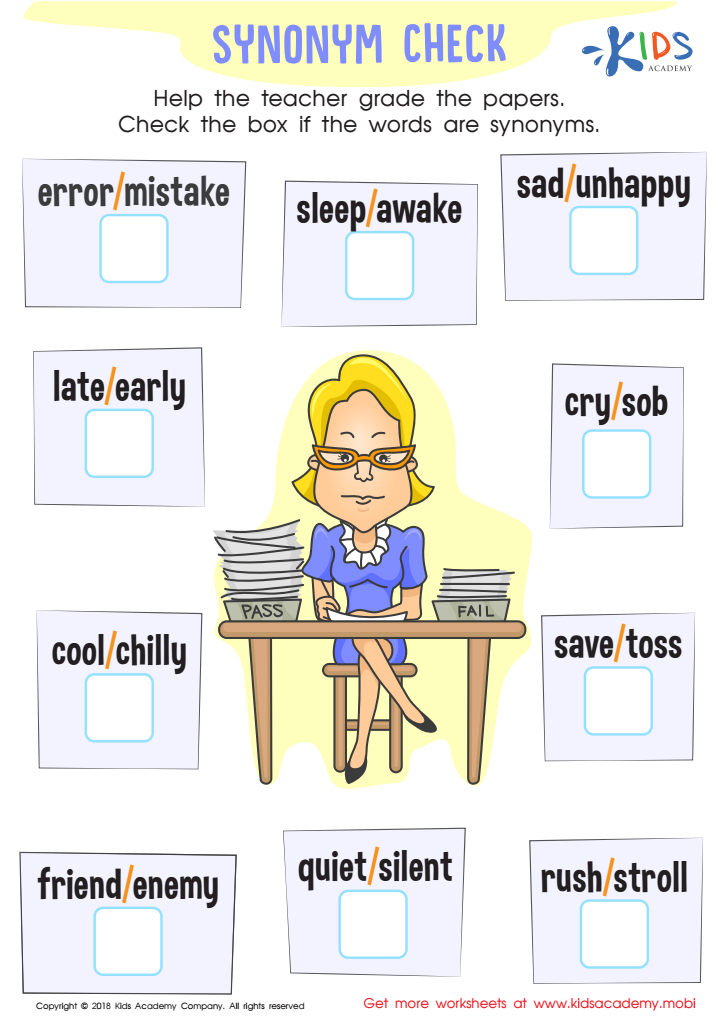
Synonym Check Worksheet
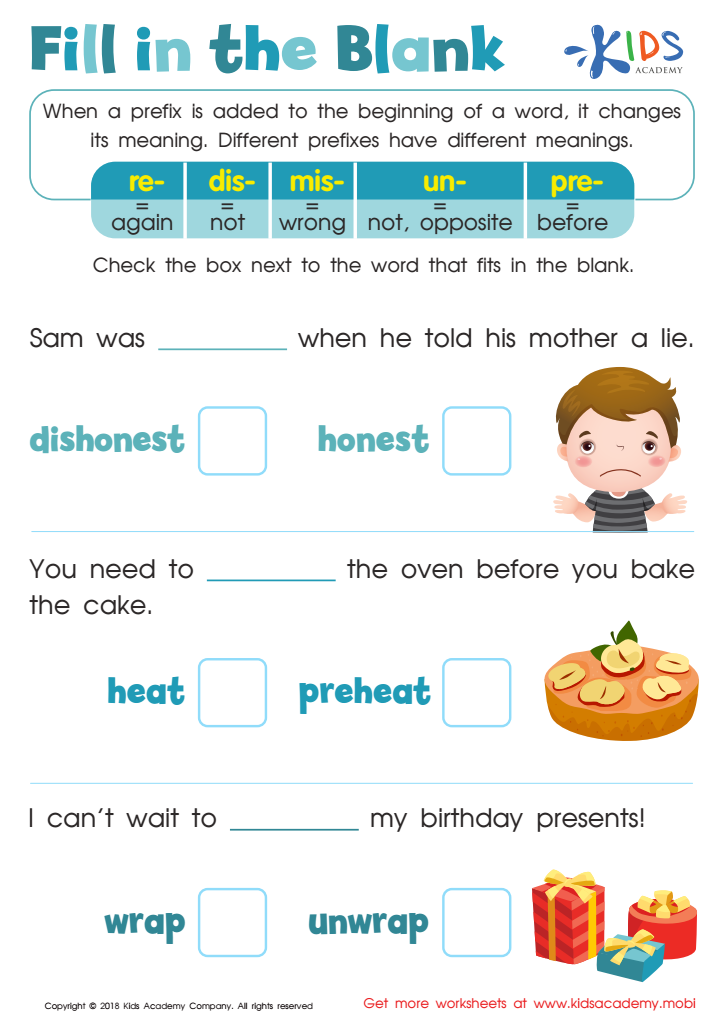
Reading: Fill in the Blank Worksheet
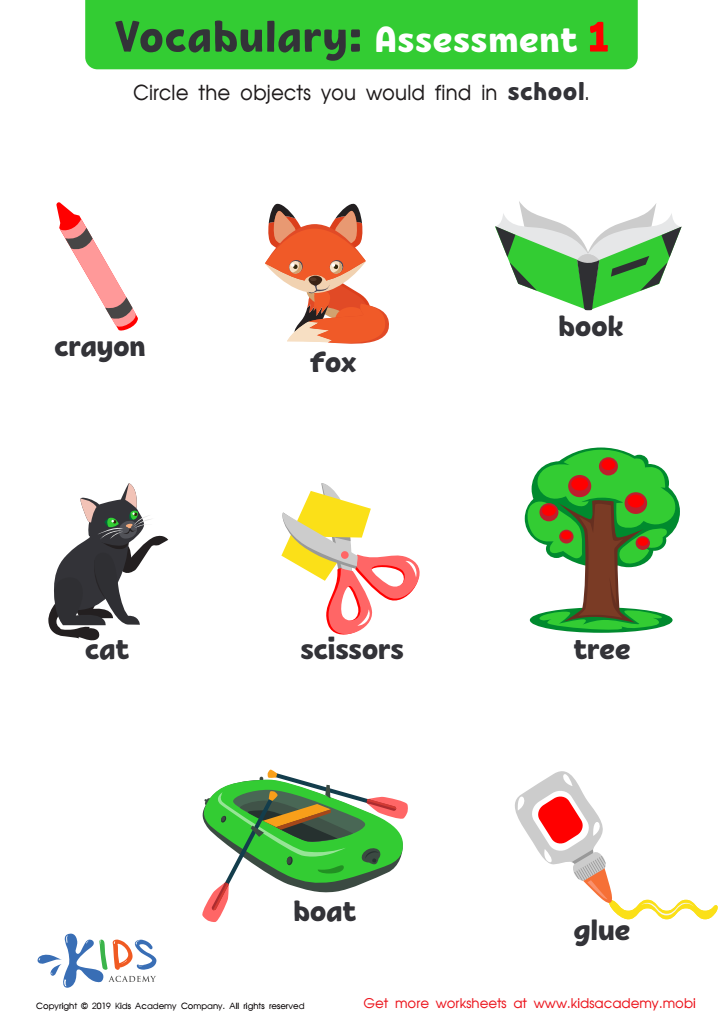
Vocabulary: Assessment 1 Worksheet
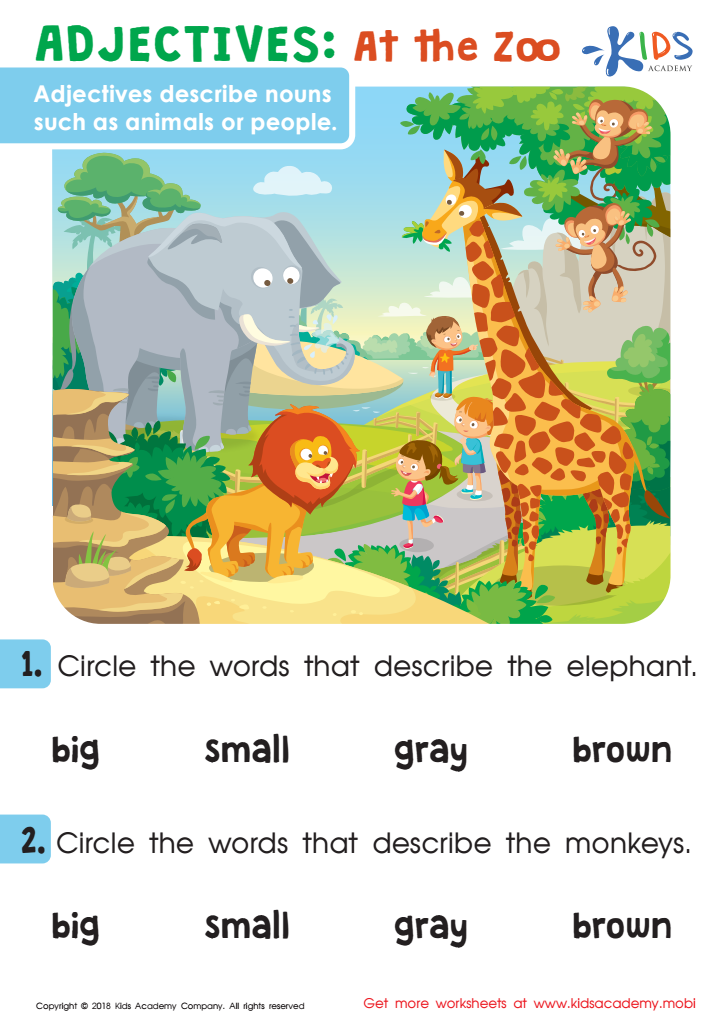
Adjectives: At The Zoo Worksheet
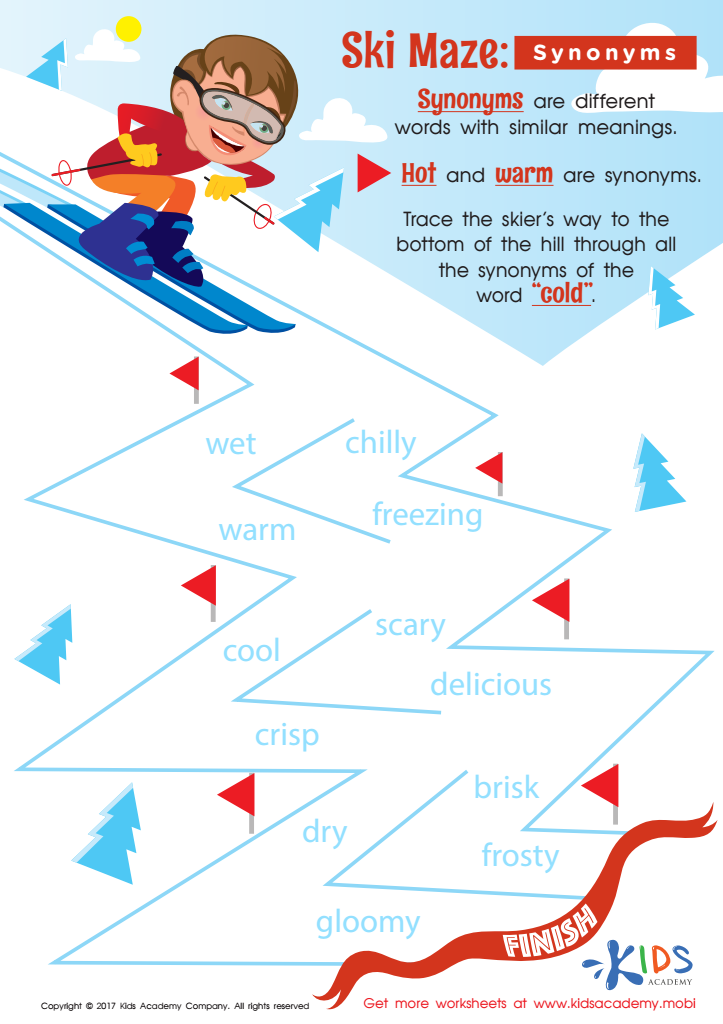
Free Printable Synonym Worksheet
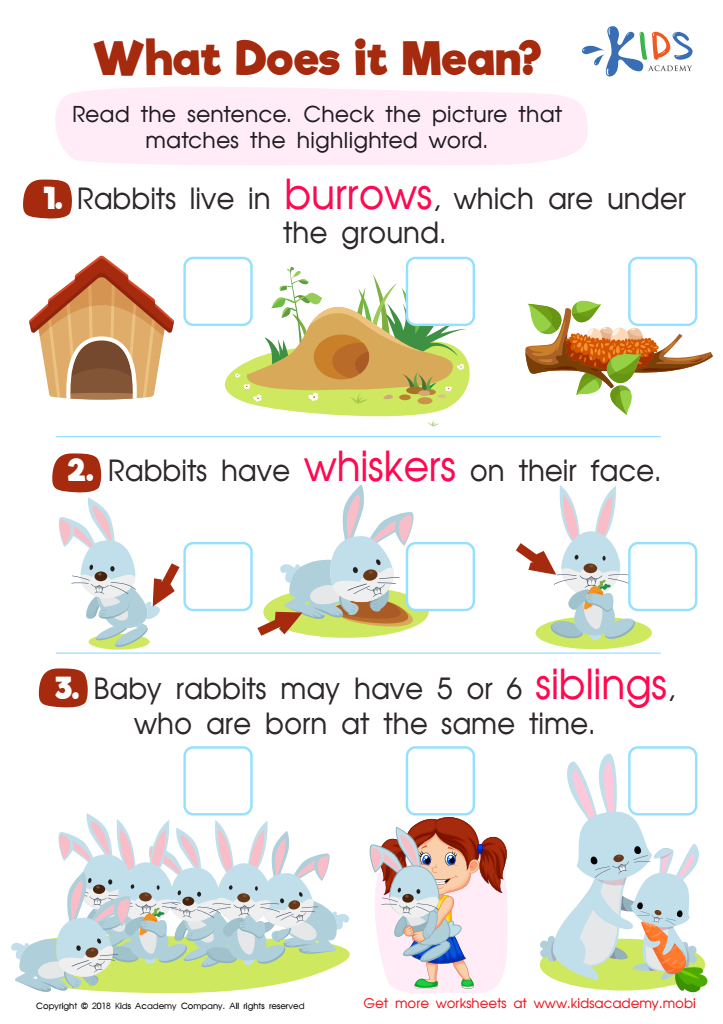
What Does It Mean? Worksheet
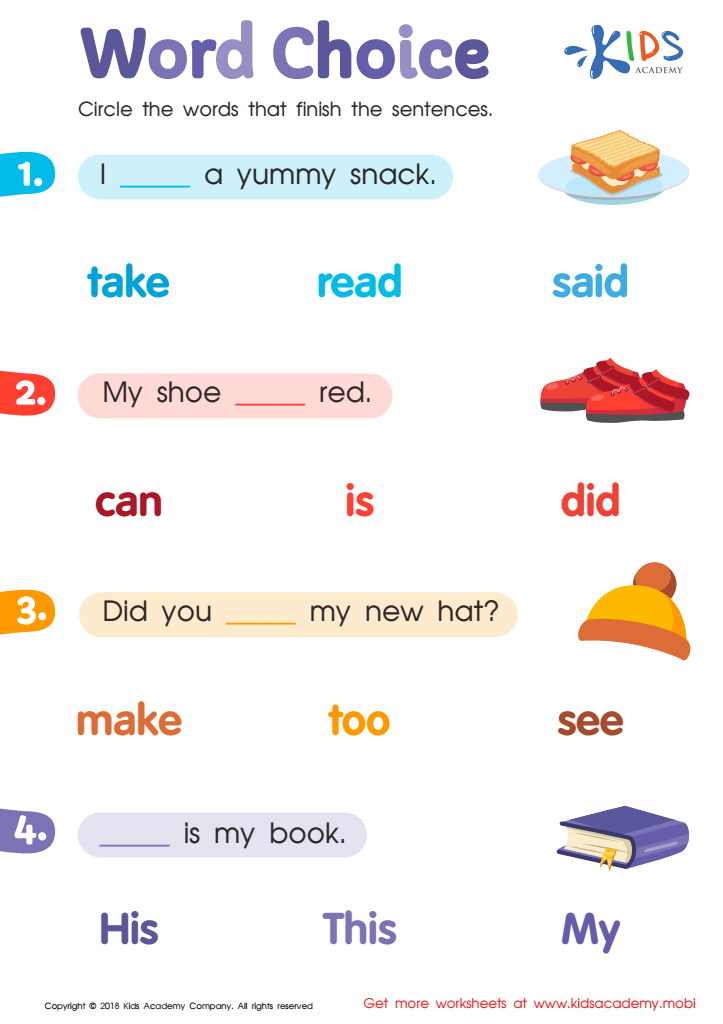
Word Choice Worksheet



.jpg)




Parents and teachers should care deeply about building vocabulary through contextual understanding because it directly impacts a child's cognitive and academic development. Contextual understanding means grasping the meaning of words within the full scope of sentences, paragraphs, or larger texts. This skill is crucial for reading comprehension and effective communication.
A rich vocabulary allows children to express themselves more clearly and understand others better, fostering better social interactions and reducing miscommunications. It enriches their ability to follow instructions, engage in discussions, and comprehend complex concepts across all subjects, from math word problems to science explanations.
When children learn new words in context, they are more likely to remember and use them correctly. Contextual learning provides meaningful connections to the words, making retention more durable than rote memorization. It encourages children to infer meanings based on surrounding text, sharpening their critical thinking and analytical skills.
Parents and teachers nurturing vocabulary in context helps bridge educational gaps, equipping children with the tools needed to tackle advanced subjects confidently. Moreover, it builds a foundation for a lifelong love of reading and learning, setting children up for future success both academically and in everyday communication. Investing in this skill is investing in a child's overall development and future potential.








