
Understanding context Building Vocabulary Worksheets
4 filtered results
Difficulty Level
Grade
Age
-
From - To
Subject
Activity
Standards
Unlock the power of vocabulary with our "Understanding Context Building Vocabulary Worksheets." Designed for young learners, these engaging worksheets help students enhance their understanding of words by exploring their usage within various contexts. Through interactive exercises, children will learn how to infer the meanings of unfamiliar words, improving their reading comprehension and overall language skills. Our worksheets support literacy development by encouraging critical thinking and context clues analysis. Perfect for homeschooling or classroom activities, these resources make vocabulary building enjoyable and effective. Equip your students with the tools they need to succeed in their reading journey and watch their confidence soar!
Favorites
With answer key
Interactive
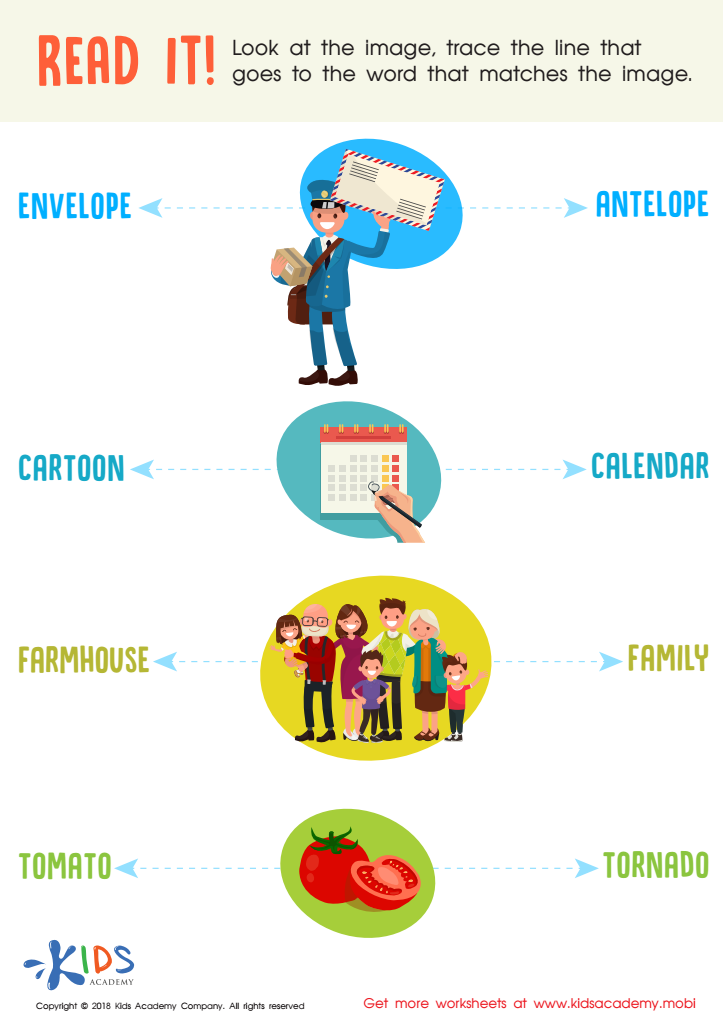
Read It! Worksheet
Point to each image on this worksheet, asking your child what it is. Read the 2 options then help your child trace the line to the correct word. It'll keep them engaged and provide visual stimulation.
 Assign to My Students
Read It! Worksheet
Worksheet











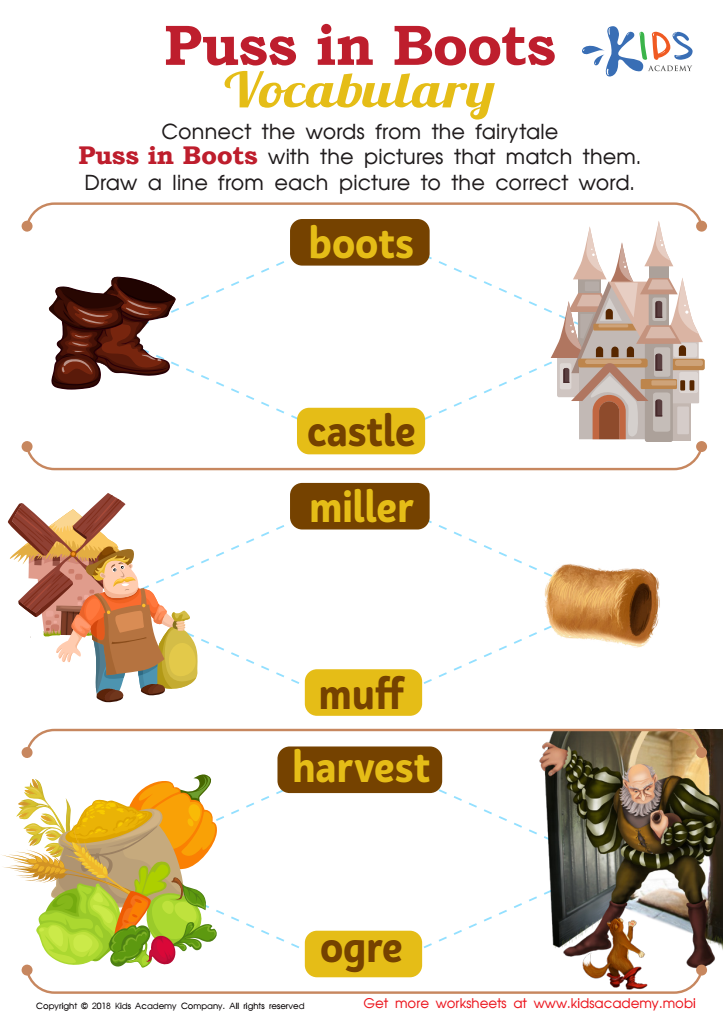
Puss in Boots Vocabulary Worksheet
Let your kids enjoy story-telling while learning at the same time. Help them learn from the fairytale, Puss in Boots, by connecting words from the worksheet with the matching pictures. Ask them to draw a line between each picture and corresponding word to build their vocabulary.
Puss in Boots Vocabulary Worksheet
Worksheet
Join Kids Academy for Free
Who is primarily going to use this learning content?






.jpg)

Understanding context and building vocabulary are critical components in a child's language development and overall academic success. When parents and teachers prioritize these skills, they enable children to make connections between words and their meanings in various situations. This understanding enhances reading comprehension, allowing children to grasp more complex texts and engage meaningfully with content.
Contextual understanding helps children discern how words function differently across various scenarios, which is crucial for effective communication. For instance, knowing how the meaning of "bat" shifts between baseball and wildlife demonstrates contextual awareness that enriches vocabulary comprehension.
Moreover, a robust vocabulary equips children with the ability to express themselves clearly and confidently. It supports not just academic performance but also social interactions, empowering students to articulate thoughts, ask questions, and participate in discussions.
Ultimately, investing in vocabulary and context comprehension fosters critical thinking skills, creativity, and emotional intelligence. By championing these aspects, parents and teachers cultivate a learning environment where children feel empowered to explore language, broaden their understanding of the world, and thrive both academically and personally. данномсоцициальныеaspirations.








