Understanding Rhymes Reading Worksheets
3 filtered results
-
From - To
Enhance your child's reading skills with our "Understanding Rhymes" worksheets! These engaging resources are designed to introduce young learners to the joyful world of rhymes, fostering phonemic awareness and improving literacy. Each worksheet offers fun activities that help students identify and create rhyming words, encouraging creativity and word play. Suitable for early grade levels, these worksheets support classroom learning and can be easily integrated into your home study routine. With colorful illustrations and simple instructions, your child will enjoy practicing reading while developing essential skills. Visit us to access a variety of printable worksheets that make learning about rhymes fun and effective!
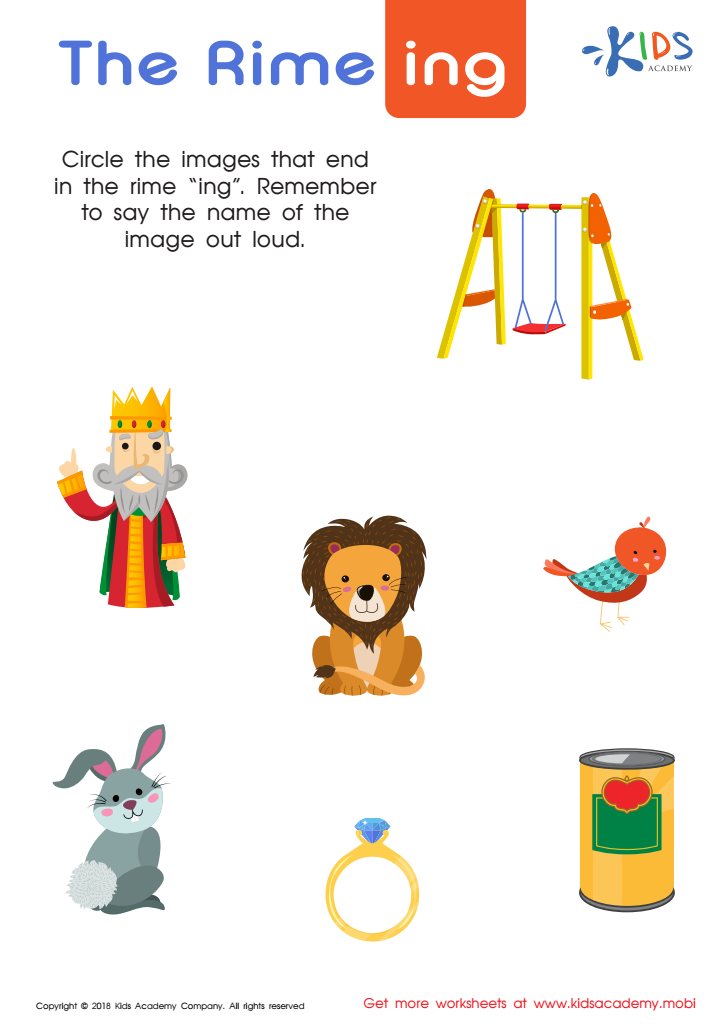
The Rime "ing" Worksheet
 Assign to My Students
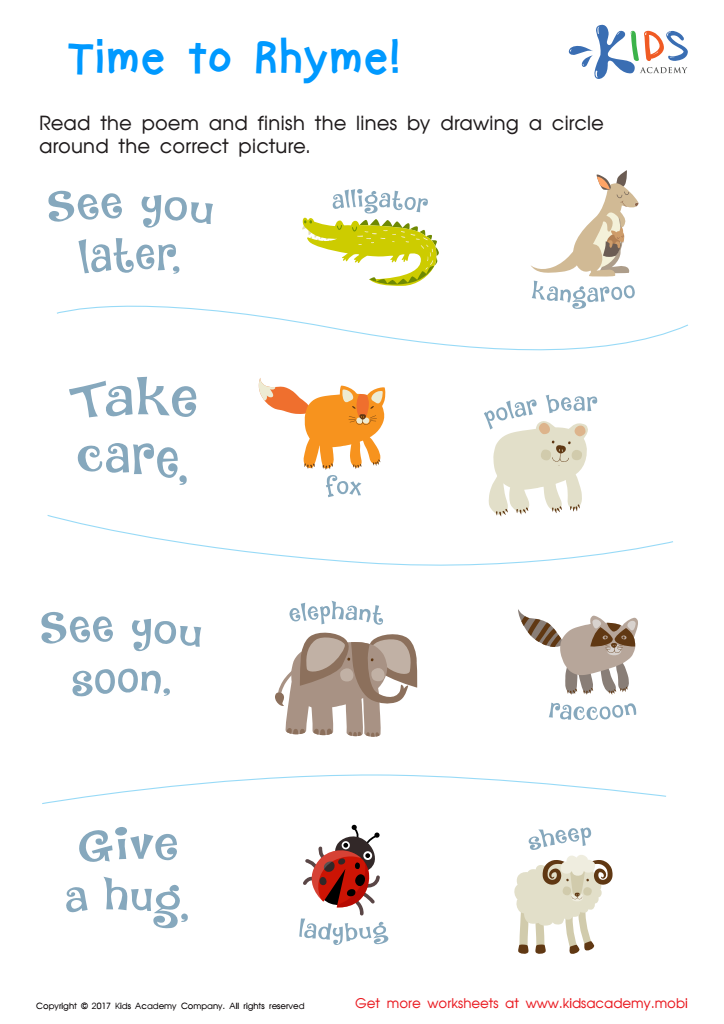
Time to Rhyme Rhyming Worksheet
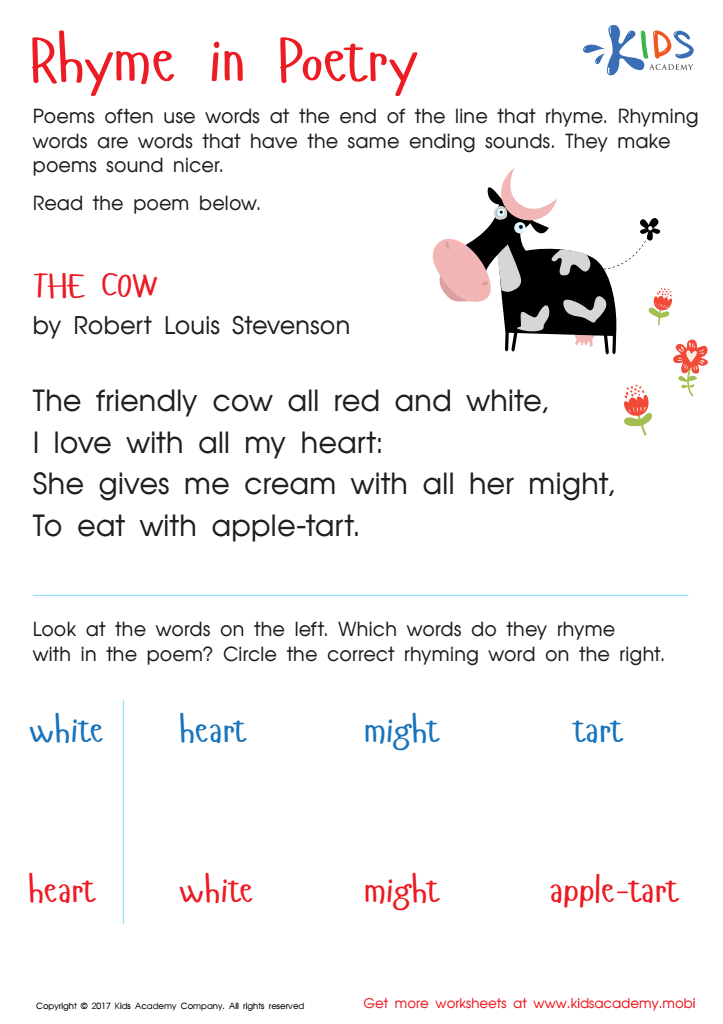
Rhyme In Poetry Worksheet








Understanding rhymes is crucial for early literacy development, which is why parents and teachers should prioritize it. Rhyming helps children recognize patterns in language, making it easier for them to decode words and develop phonemic awareness—the ability to hear, identify, and manipulate sounds in words. This skill lays the foundation for successful reading and writing.
When children engage with rhymes, they enhance their vocabulary by encountering new words in playful and memorable contexts. Rhymes also improve listening skills, as children learn to distinguish similar sounds, aiding their auditory processing abilities. Furthermore, the rhythmic nature of rhymes makes learning enjoyable, fostering a love for reading that can last a lifetime.
Incorporating rhymes into daily activities, such as reading stories, singing songs, or reciting nursery rhymes, creates rich, interactive experiences that promote cognitive and social-emotional development. These moments of shared laughter and joy also strengthen the parent-child or teacher-student bond, making learning a shared adventure.
Ultimately, an emphasis on understanding rhymes can lead to improved literacy skills, a heightened enthusiasm for reading, and a firm grasp of language—all vital components in laying a strong educational foundation for young learners.








