Animal knowledge Reading Comprehension Worksheets
3 filtered results
-
From - To
Explore our engaging "Animal Knowledge Reading Comprehension Worksheets," designed to enhance young learners' reading skills while diving into the fascinating world of animals. These worksheets offer a variety of interactive exercises that promote critical thinking and comprehension through exciting animal-themed stories and facts. Perfect for early grade levels, these resources encourage students to connect with nature as they learn to identify key details, make inferences, and answer questions. Ideal for both classroom use and home learning, our worksheets foster a love for reading and curiosity about the animal kingdom. Help your child build confident literacy skills today!
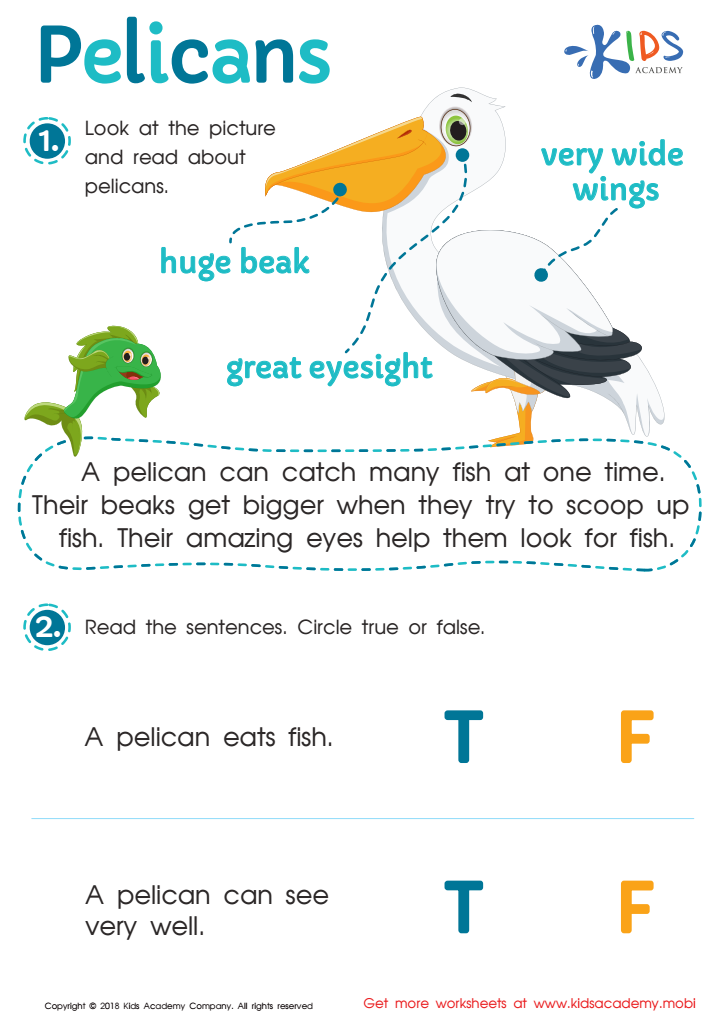
Pelicans Worksheet
 Assign to My Students
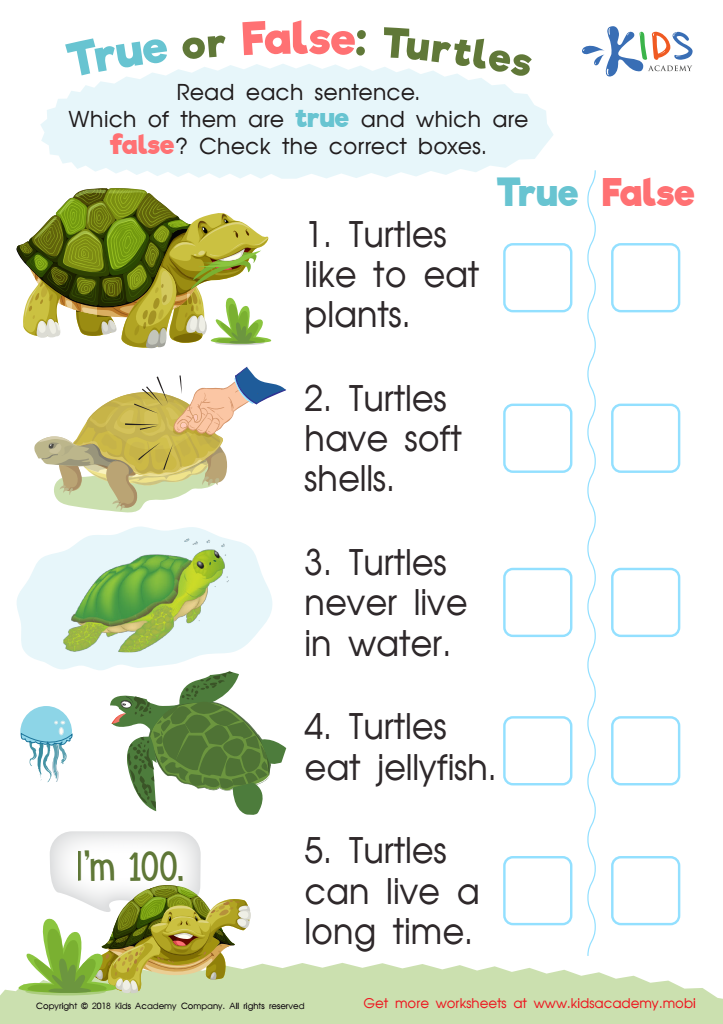
True or False: Turtles Worksheet
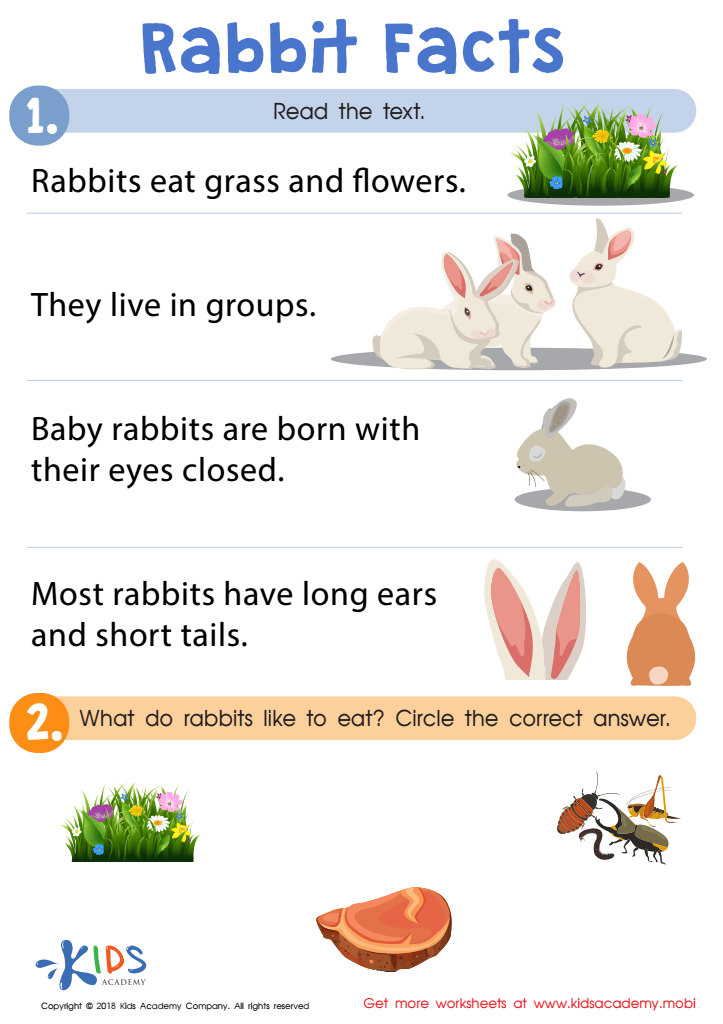
Rabbit Facts Worksheet



.jpg)




Animal knowledge reading comprehension is essential for parents and teachers for several reasons. Firstly, it facilitates children's understanding of biodiversity and the role of animals in our ecosystem. This knowledge can foster empathy and compassion towards living beings, which can translate into responsible behavior towards nature.
Secondly, animal-related reading material enhances literacy skills. Engaging stories about various animals can capture children's attention, making reading enjoyable and helping to improve vocabulary, comprehension, as well as critical thinking skills. By exploring different animal habitats, behaviors, and conservation efforts, students develop a more profound understanding of intricate texts and descriptive language.
Moreover, teaching students about animals can integrate broader educational themes such as science, geography, and environmental awareness, making learning interdisciplinary. This holistic approach encourages curiosity and creative thinking, as children learn to draw connections between the natural world and their daily lives.
Lastly, conversations about animals can connect children with real-world issues like climate change and habitat destruction, instilling a sense of responsibility. Involving parents in these discussions ensures a supportive learning environment that can extend beyond the classroom, cultivating a generation that values knowledge, compassion, and ecological stewardship. Overall, animal knowledge reading comprehension nurtures informed, empathetic, and engaged future citizens.








