Character recognition Reading Comprehension Worksheets
4 filtered results
-
From - To
Enhance your young reader's skills with our Character Recognition Reading Comprehension Worksheets. Designed for early learners, these engaging worksheets focus on identifying and understanding characters in stories. By encouraging children to delve into character traits, motivations, and relationships, our resources foster critical thinking and comprehension. The activities are tailored to improve reading skills through fun exercises that make learning enjoyable. Perfect for classroom and at-home practice, these worksheets empower students to analyze characters, enhancing their overall understanding of narratives. Equip your child with the tools to read more effectively and ignite their passion for storytelling with our creative and interactive worksheets!
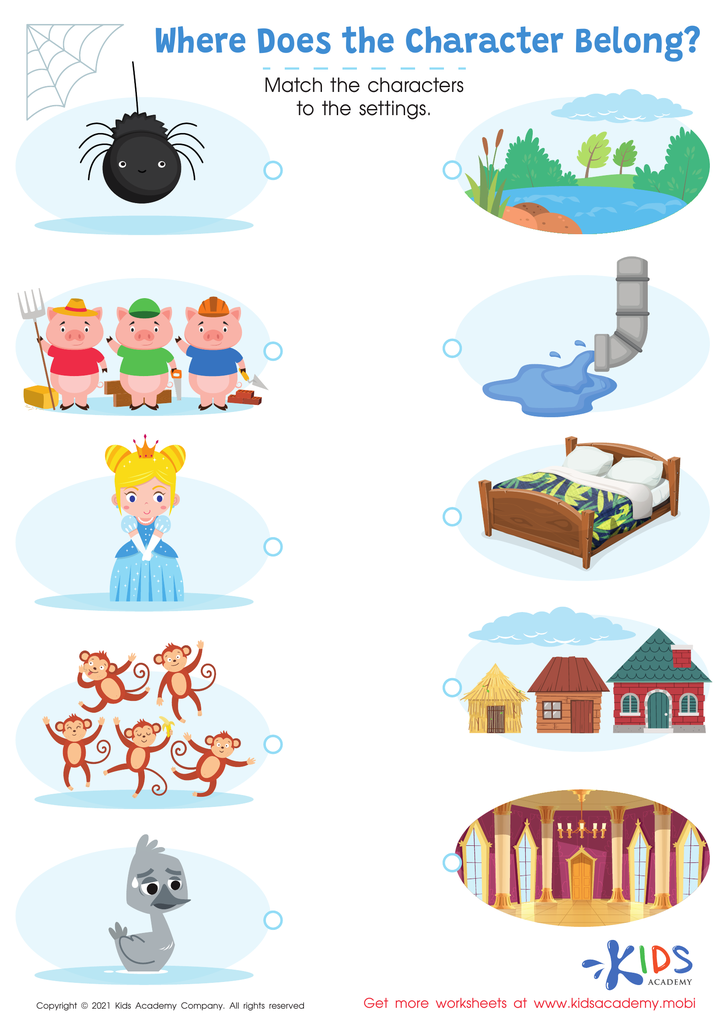
Where Does the Character Belong? Worksheet
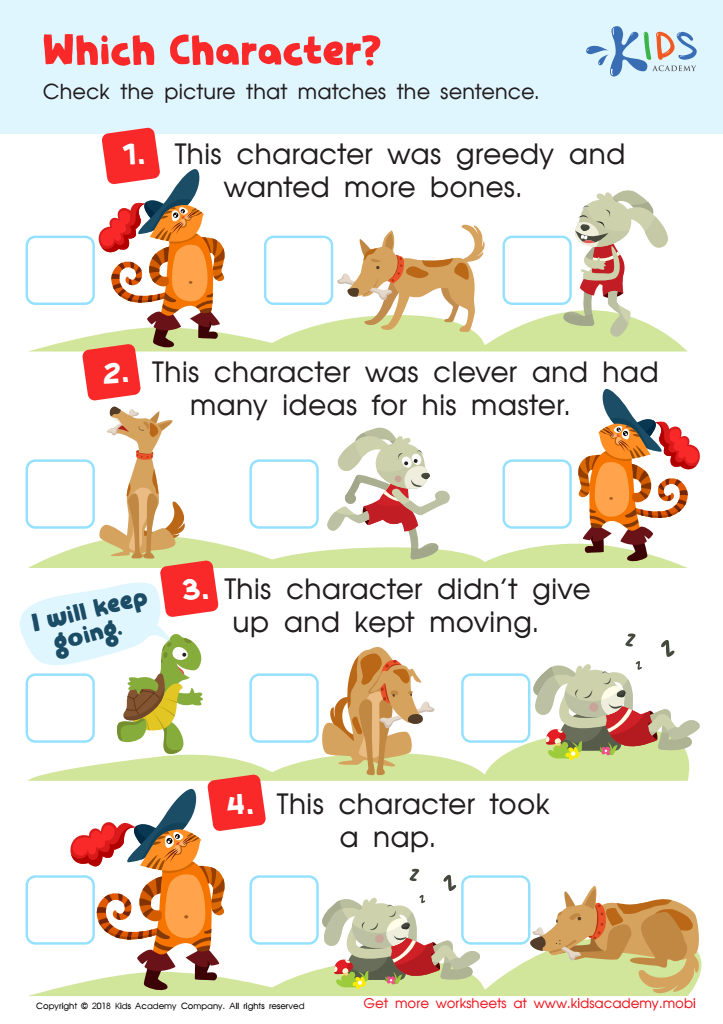
Which Character Worksheet
 Assign to My Students
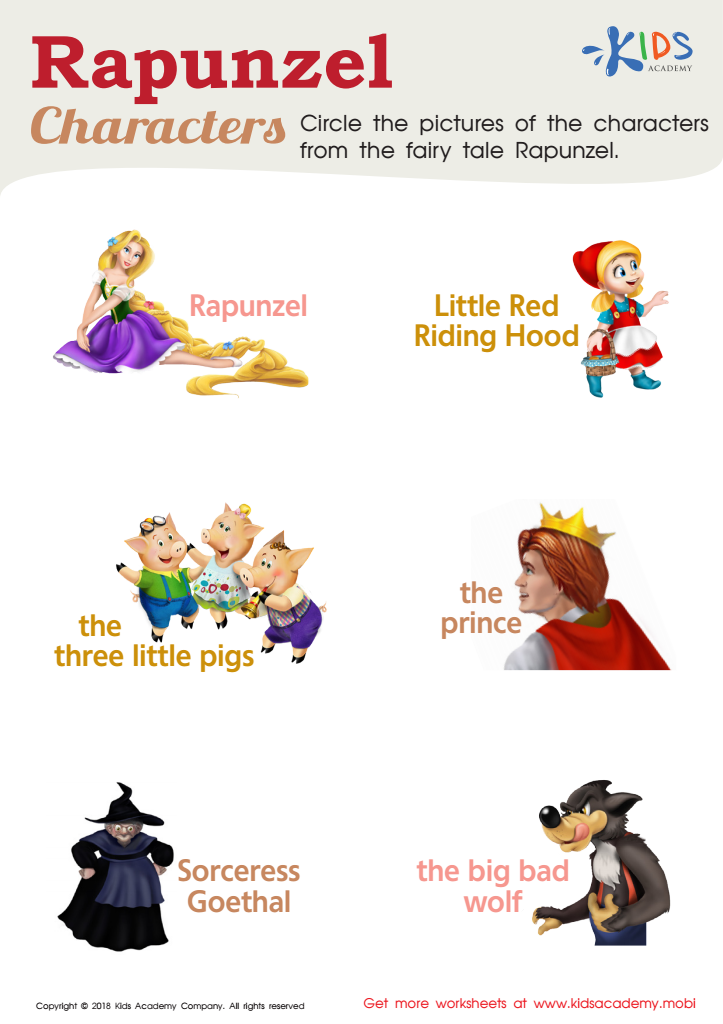
Rapunzel Characters Worksheet
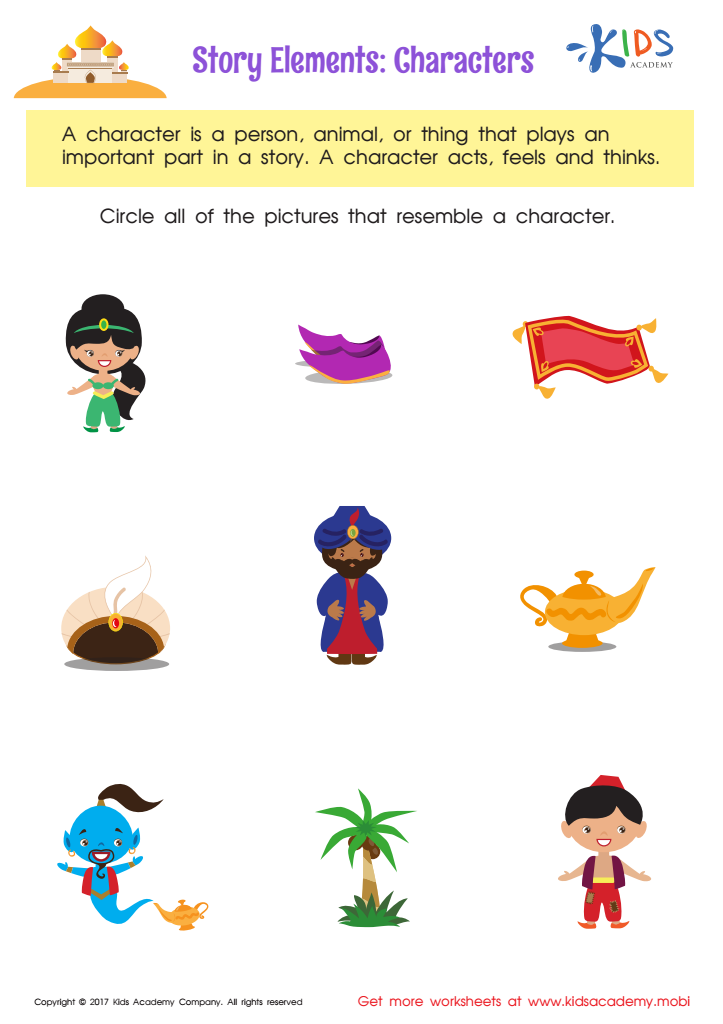
Story Elements Printable








Character recognition and reading comprehension are foundational skills critical to lifelong literacy, and therefore, both parents and teachers should prioritize them.
Character recognition is the first step toward reading. It involves identifying letters and their associated sounds, enabling young learners to decode words. Without this essential skill, students may struggle to access the vast world of written language, limiting their educational and personal growth. When children can recognize characters, they can develop a positive attitude towards reading and a genuine interest in books.
Reading comprehension goes hand-in-hand with character recognition. It involves understanding and interpreting the meaning of texts, which allows students to engage with content deeply. Comprehension transforms reading from a mechanical activity into a meaningful one, enabling children to connect new learnings to their own experiences and to think critically about information.
Parents and teachers who support the development of these skills can foster a love for reading, enhance vocabulary, and promote better academic performance across the curriculum. Encouraging strong character recognition and comprehension skills also prepares children for future challenges in both educational and real-world contexts, fostering confident, capable, and informed individuals ready to thrive in a complex society. Ultimately, prioritizing these skills sets students on a path to success.








